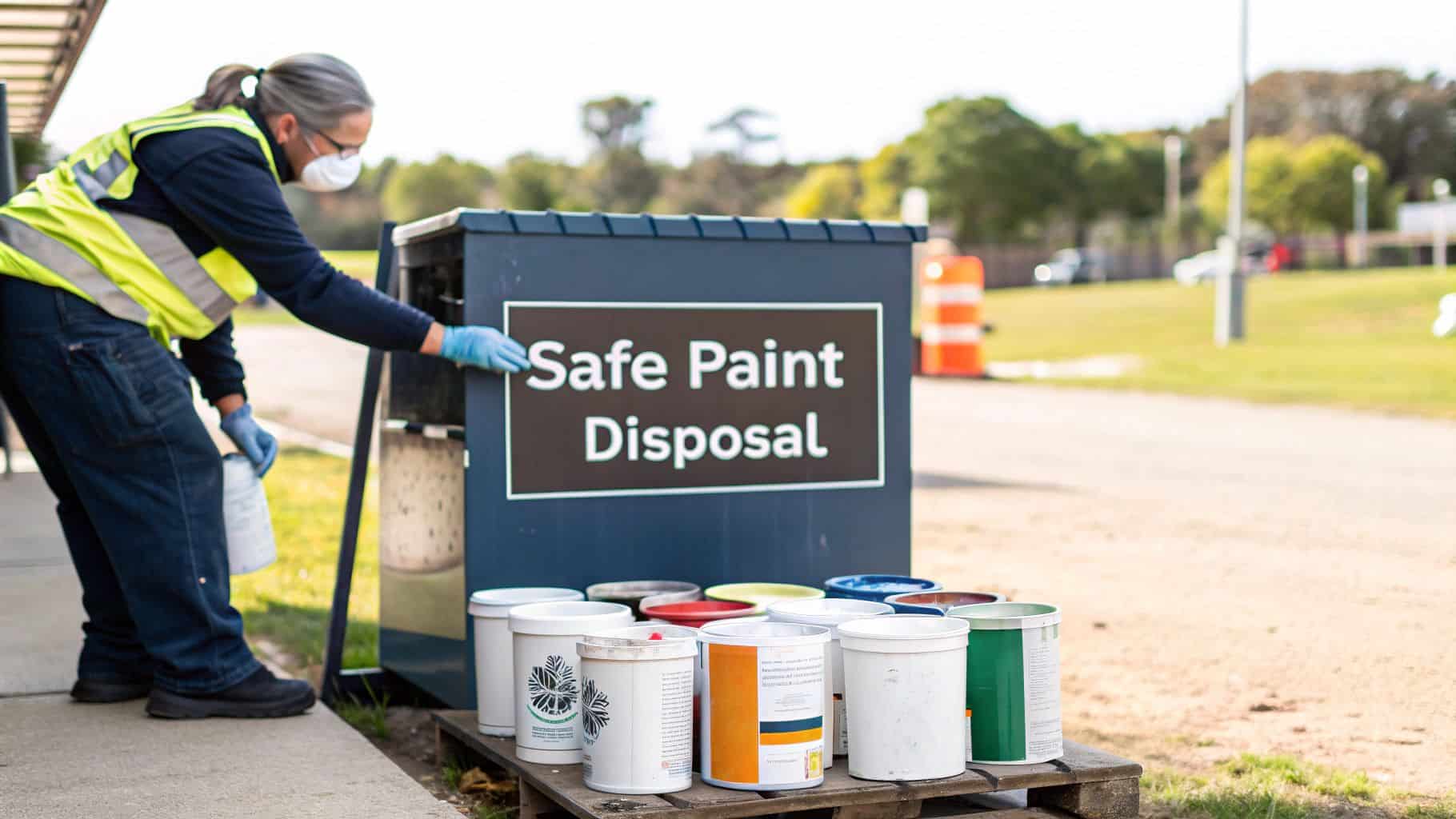
How to dispose of paint safely starts with knowing what you have. Before you get rid of that old paint, you need to know exactly what you’re dealing with. It all comes down to one crucial question: is it water-based or oil-based? The answer dictates everything that comes next, from how you handle it to where it can legally go.
First Understand What Kind of Paint You Have
Jumping the gun and trying to dispose of paint without knowing what’s in the can is a classic mistake. It’s not just messy; it can be dangerous and harmful to the environment. Different paints have completely different chemical makeups, and they need to be managed accordingly.
Think of it like sorting your household recycling – you wouldn’t just chuck plastic, glass, and paper in the same bin and hope for the best. The same logic applies here.
Reading the Label for Clues
Your first port of call should always be the paint tin itself. The label is your best friend and will almost always have the information you need. Look for a few key phrases.
- Water-Based Paint: You’ll see words like “latex,” “acrylic,” “emulsion,” or simply “water-based.” The biggest giveaway? Check the cleanup instructions. If it says to use soap and water, you’ve got water-based paint.
- Oil-Based Paint: The label will say “oil-based,” “alkyd,” “enamel,” or “solvent-based.” For cleanup, it’ll tell you to use mineral spirits or turpentine. That’s a clear sign it’s not water-based.
What if the label is covered in drips or has faded over time? No problem. Just dip a brush in and try to wash it with soap and water. If it rinses clean, it’s water-based. If it’s a sticky, stubborn mess, you’re looking at an oil-based paint.
Why This Distinction Is So Important
Getting this right isn’t just about being tidy. It’s a matter of safety and staying on the right side of the law.
Once fully dried out and solid, water-based paints are generally considered non-hazardous. In most cases, they can go into your regular household rubbish.
Oil-based paints, on the other hand, are a different story. They contain volatile organic compounds (VOCs) and are classed as hazardous waste. They must never be put in the bin or poured down a drain. It’s illegal and can cause serious contamination of groundwater and local wildlife habitats.
Knowing the difference is the absolute foundation of responsible paint disposal. It also matters when dealing with specialised coatings, like the various different container paints out there, which may have their own unique compositions.
This simple infographic is a great visual reminder of what to look for.
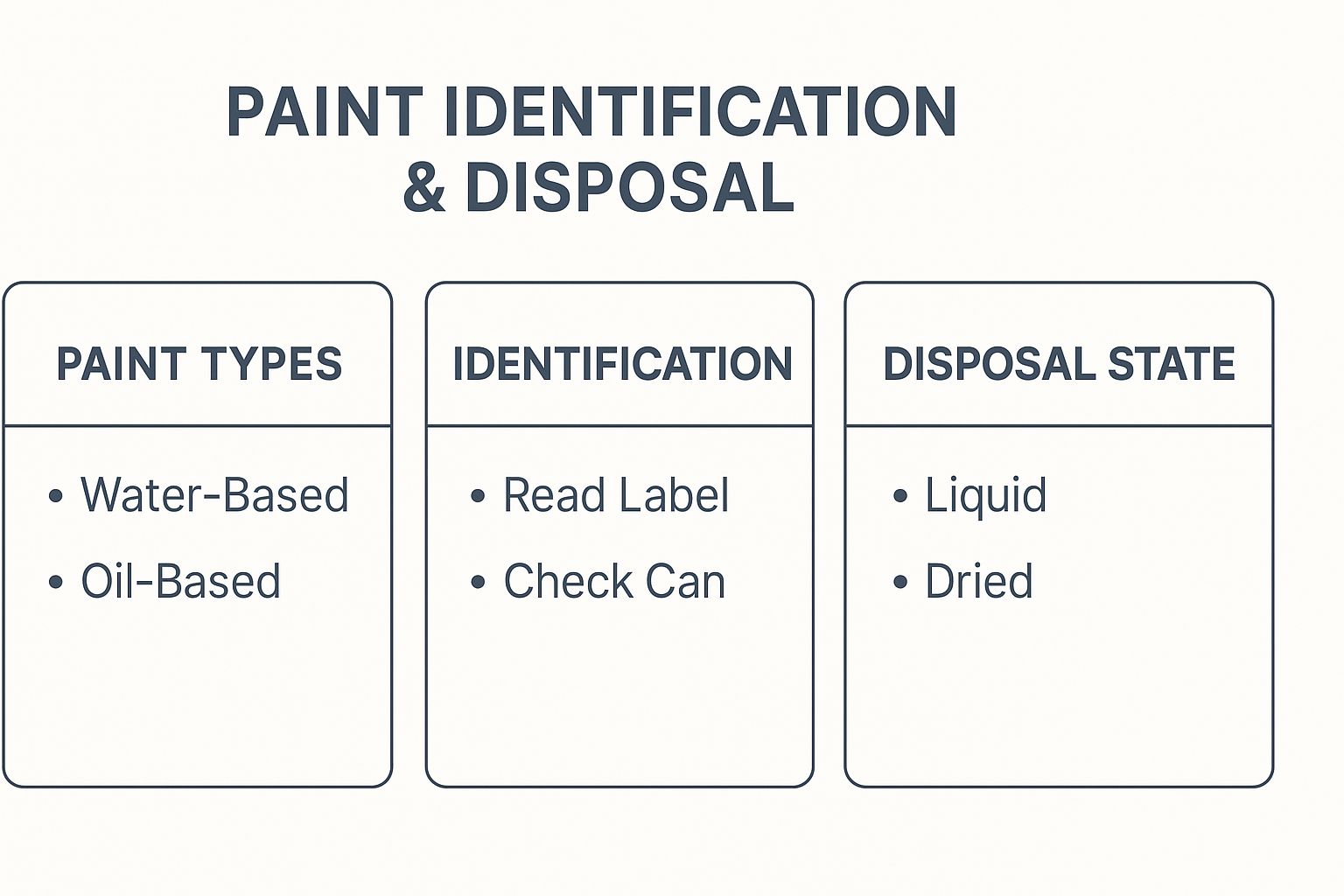
As the graphic shows, your first step is always to identify the paint’s base and then check if it’s still a liquid.
To make this even easier, here’s a quick reference table.
Quick Guide to Paint Types and Disposal Rules
Use this quick reference to identify your paint and see the correct disposal path at a glance.
| Paint Type | Also Known As | How to Identify | Primary Disposal Route |
|---|---|---|---|
| Water-Based | Latex, Acrylic, Emulsion | Cleans up with soap and water. Low odour. | Solidify completely, then dispose of in household rubbish. |
| Oil-Based | Alkyd, Solvent-Based, Enamel | Requires mineral spirits or turpentine to clean. Strong chemical smell. | Must be taken to a hazardous waste collection site. Do not bin. |
This table should help clear up any confusion and point you in the right direction.
Liquid vs. Dried: The Final Check
The last piece of the puzzle is the state of the paint inside the can. Is it still a liquid, or has it hardened into a solid block? This is just as important as the type of paint.
No matter the type, liquid paint is a major problem for waste collection. It can spill, create a huge mess in collection lorries, and contaminate landfills. For this reason, nearly all local councils refuse to accept liquid paint in general household collections.
So, your mission for leftover water-based paint is to turn it from a liquid into a solid. For oil-based paints, the goal is simply to get the liquid can safely to a proper hazardous waste facility. With both the paint type and its state figured out, you’re ready to choose the correct disposal path.
Why Proper Paint Disposal Matters for the Environment
It’s easy to see an old paint tin as just another bit of rubbish for the weekly collection, or to wash your brushes out in the garden sink without a second thought. But these small actions have surprisingly big consequences for the environment.
The truth is, the chemicals swirling around in that half-used can were never meant to break down in nature.
When paint is disposed of the wrong way, it starts a journey it was never designed for. Pouring it down the drain sends a cocktail of chemicals directly into our water systems. Tossing it in the bin just means it will eventually end up in a landfill, where it can cause some serious contamination issues down the line.
Understanding this potential for harm is the first step. It helps reframe the chore of a clear-out into something more meaningful: an act of environmental stewardship.
The Hidden Damage of Oil-Based Paints
There’s a good reason oil-based (or solvent-based) paints are officially classed as hazardous waste. They are loaded with chemicals like solvents and resins that are not only toxic to aquatic life but can also hang around in the environment for years.
When these paints are poured onto the ground or start to leak from a landfill, they don’t just vanish. The toxic chemicals can seep deep into the soil – a process known as leaching. This can end up poisoning the very groundwater we rely on for drinking and farming.
A single drop of oil can pollute a massive amount of fresh water, and the same principle applies here. The solvents in oil-based paints can create a toxic plume underground, spreading slowly and damaging entire ecosystems from the ground up.
This is exactly why you must never, ever put oil-based paint in your regular waste bin. Its journey has to end at a specialised facility that knows how to handle hazardous materials safely.
Even Water-Based Paints Pose a Threat
It’s a common myth that because emulsion paint is “water-based,” it’s completely harmless. While it’s definitely less toxic than its oil-based cousin, it’s far from benign when it ends up in the wrong place.
Washing large amounts of water-based paint down the sink can create havoc for wastewater treatment plants. The liquid latex can form thick, sludgy blockages in pipes and completely throw off the delicate balance of bacteria that facilities use to purify our water.
The scale of this problem in the UK is genuinely staggering. An estimated 34 million litres of decorative paint go to waste every year, which works out to about 10% of all paint sold. Shockingly, 98% of this leftover paint is either dumped in landfills or washed down the drain. You can dig into the data from the British Coatings Federation’s PaintCare initiative to see the full picture.
The Broader Impact on Landfills and Wildlife
Landfills are carefully managed, but they aren’t impenetrable fortresses. Over time, even the most well-designed sites can spring leaks. When liquid paint waste is part of the mix, it contributes to a toxic sludge known as leachate.
This hazardous liquid can escape and contaminate the surrounding soil and waterways, posing a direct threat to local wildlife. Birds, small mammals, and fish can all suffer from exposure to the heavy metals and volatile organic compounds (VOCs) found in many paints. To get a better sense of this, you can learn more about the environmental impact of landfills in our detailed guide.
Choosing the right disposal method is about more than just following council rules; it’s a crucial part of protecting our local ecosystems. The simple act of drying out leftover water-based paint or taking oil-based paint to a proper recycling centre stops these harmful chemicals from ever entering the natural world. Every can you dispose of correctly makes a real difference.
How to Handle Leftover Water-Based Paints
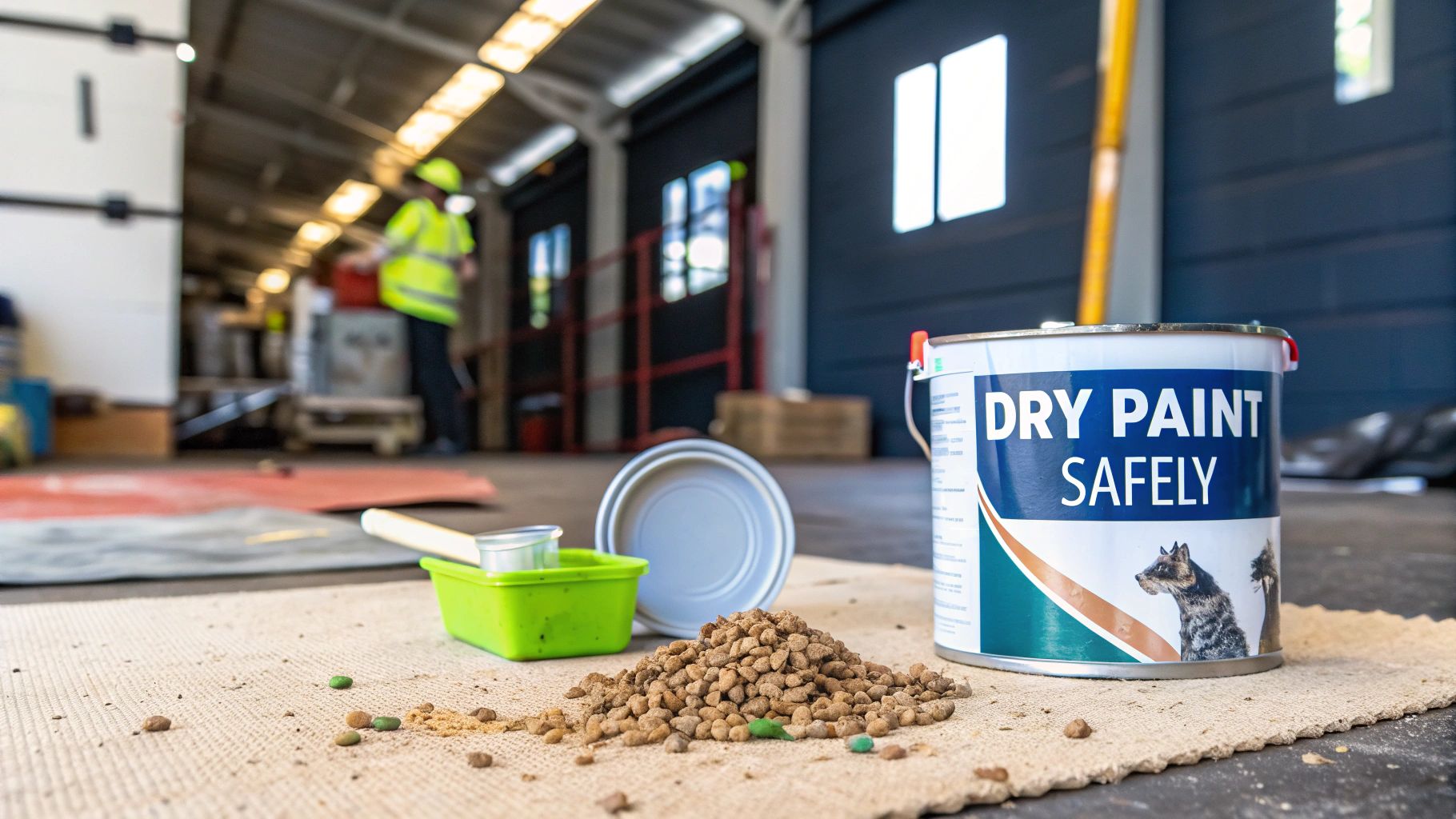
If you’ve got some leftover paint and have just discovered it’s water-based—like your common emulsion, latex, or acrylic—you can breathe a little sigh of relief. These are, by a long shot, the easiest and safest paints to deal with yourself.
The big difference is that, unlike their oil-based cousins, they aren’t considered hazardous waste once they’re completely solid.
The golden rule for getting rid of water-based paint is simple: turn the liquid into a solid. Your local council won’t touch liquid paint in household waste collections. It’s just too messy, causing spills in the collection lorries and creating absolute chaos at the depot.
So, your main job is to dry it out. Once that paint is rock-solid, it can usually be chucked straight into your general rubbish bin. This is the key to staying on the right side of local regulations and avoiding any environmental headaches.
Getting It Ready to Solidify
First things first, find a good spot to work. You need somewhere with plenty of ventilation, well away from kids, pets, and anything that could ignite it. A garage with the door open is ideal, but a shed or even a sheltered bit of the garden on a dry day will do the trick.
How you tackle this really comes down to how much paint you’re dealing with.
- Just a Smear Left: If there’s only a thin film at the bottom of the can, you’re in luck. Just take the lid off and leave it somewhere safe to air-dry. It’ll probably be solid in a day or two.
- Up to a Quarter Can: With a bit more paint in the tin, you’ll need to add something to soak it all up and get it to dry faster.
- Half a Can or More: This is where you need a bit more prep. The best bet is to find a bigger container, like a sturdy cardboard box lined with a bin bag, and create thinner layers to help it dry properly.
And a word to the wise: always put down some old newspaper or a dust sheet. No matter how careful you think you’re being, paint disposal can get messy.
What to Use to Dry It Out
You don’t need to go out and buy any fancy, specialist products for this. Everyday stuff from around the house or garden works perfectly well. You’re essentially making a sort of paint-based concrete.
Here are a few of the best options I’ve come across:
- Cat Litter: This is my go-to. It’s literally designed to absorb liquid. A simple, clay-based, non-clumping cat litter is perfect.
- Sawdust: If you’ve been doing a bit of woodwork, any spare sawdust is brilliant for soaking up paint.
- Sand or Soil: A bit of builder’s sand or even just soil from the garden can be mixed in to bulk it out and help it solidify.
The trick is to add your chosen material bit by bit. Pour some in, give it a good stir with an old stick, and see how it looks. Keep adding more until you get a thick, clumpy consistency, a bit like porridge. It shouldn’t be runny at all.
Pro Tip: Whatever you do, don’t put the lid back on a can of paint while it’s still drying. Fumes can build up and cause the lid to pop off with some force. Always leave it open to the air.
The Final Steps Before It Goes in the Bin
Once you’ve got your paint mixture sorted, you just need to play the waiting game. Leave the can or box to sit and harden completely. How long this takes depends on everything from the amount of paint to the humidity, but it could be anywhere from a few hours to a few days.
You’ll know it’s ready when you can poke it with a stick and find no liquid or gooey bits in the middle. The whole thing should be hard to the touch.
As for the now-empty metal paint tin, it can often be recycled once the paint inside is fully dried out. Most UK councils will take empty, dry metal paint cans with your other metal recycling. But it’s always a good idea to quickly check your local council’s website, as the rules can differ from one area to another.
Managing Oil-Based and Hazardous Paints
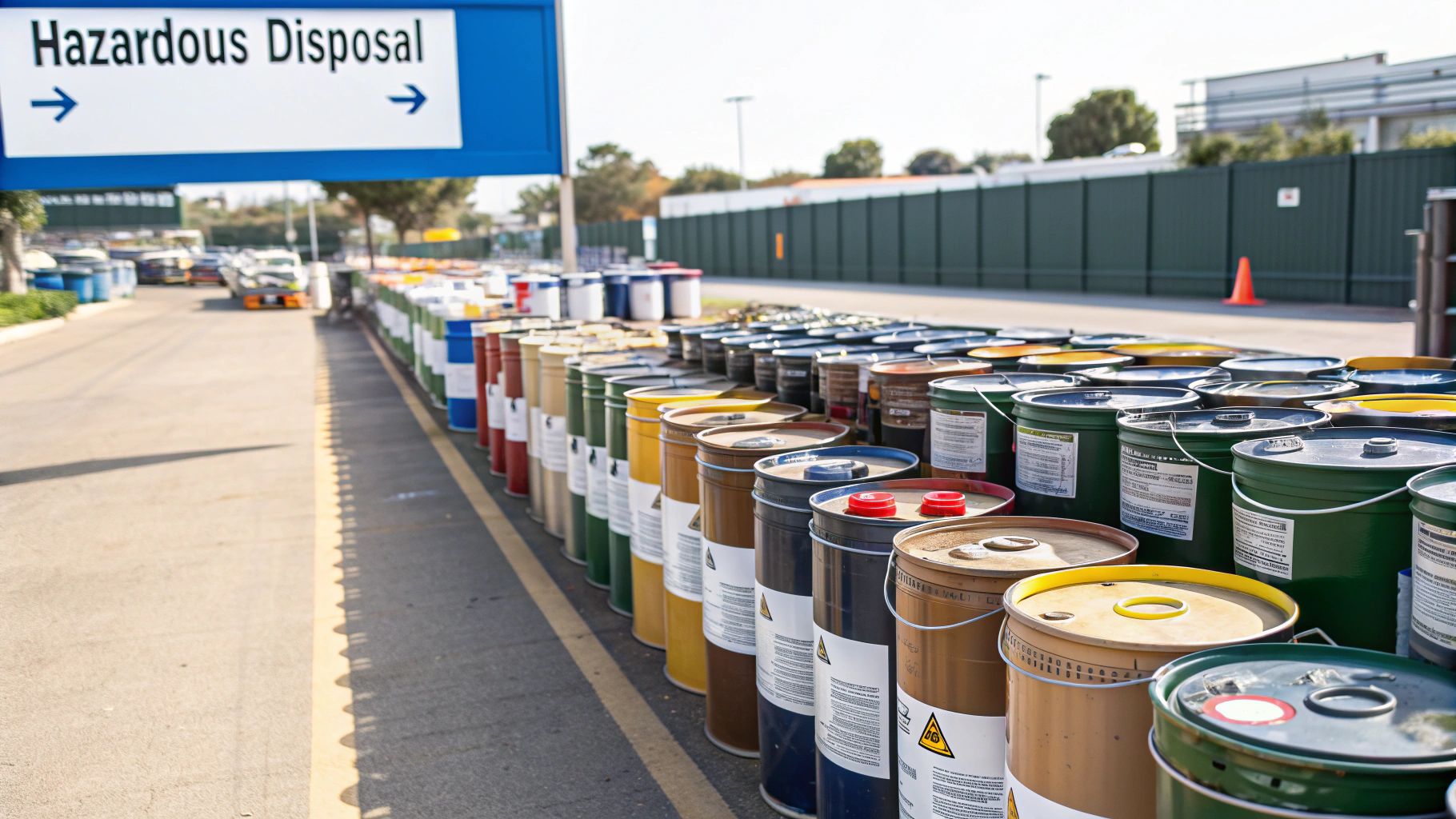
When you’re left with oil-based, solvent-based, or enamel paints, the disposal game changes entirely. This isn’t a simple case of letting it dry out. These paints are officially classed as hazardous waste in the UK, and for good reason.
Unlike their water-based cousins, these formulas are packed with volatile organic compounds (VOCs) and other chemicals. If they’re not handled properly, they pose a very real threat to the environment and our health. Simply pouring them down the drain or chucking them in the general rubbish is illegal—it can lead to serious contamination of soil and groundwater.
Understanding the Hazard
The word “hazardous” isn’t just a casual warning; it’s a strict legal classification. The solvents in these paints are potent pollutants. If they seep out of a landfill, they can poison local waterways, causing harm to fish, wildlife, and entire ecosystems.
This is exactly why they need to be treated with extra care. The golden rule is that liquid oil-based paint must always go to a facility specifically equipped to handle it. Your normal kerbside collection just won’t cut it.
Managing these materials properly is a legal duty, but it’s also part of a bigger picture. It’s about being more mindful of the substances we bring into our homes. This same thinking applies elsewhere, with many people now seeking out safer alternatives to harsh chemicals for daily cleaning to reduce their environmental impact.
Finding Your Local Disposal Point
So, what do you do with it? Your first port of call should always be your local council’s Household Waste Recycling Centre (HWRC)—what most of us just call ‘the tip’. The majority of HWRCs have a dedicated zone for hazardous household materials, including old paint tins.
Before you load up the car, a quick check on your council’s website is a must. A simple search for something like “[Your Town] council hazardous waste” should bring up everything you need to know.
Look for key details such as:
- Which specific centres accept hazardous waste (not all of them do!).
- Their opening times and whether you need to book a slot.
- Any limits on how much paint you can bring on a single visit.
Some councils also run special collection days or have mobile collection points, so doing a bit of homework first can save you from a completely wasted trip. For a closer look at the legislation, our guide on understanding hazardous waste disposal regulations goes into much more detail.
Preparing Your Paint for Disposal
Once you know where you’re going, getting the paint ready is pretty simple. The main thing is to keep it securely contained and clearly marked.
You just need to follow a few straightforward steps:
- Keep it in the Original Tin: Don’t be tempted to pour it into other containers. The original tin has all the crucial safety info and clearly identifies the contents for the waste handlers.
- Make Sure the Lid is Secure: Pop the lid back on and make sure it’s tight. The last thing you want is a spill in your car boot. If the lid is broken, find a secure replacement and label the tin clearly as “Oil-Based Paint”.
- Transport it Safely: Stand the tin upright in a sturdy box or crate to stop it from tipping over on the journey.
The goal is to get the liquid paint to the experts without any fuss. Never, ever mix different paints or chemicals together. This can cause dangerous chemical reactions, so each hazardous product must be kept separate.
While the UK has seen great success in some areas of recycling—with paper reaching an 86.4% recycling rate—our approach to hazardous household waste like paint still has a long way to go. The wider waste industry is growing, but specific, joined-up strategies for paint recycling are still in their infancy, leaving it up to us to figure out our local council’s rules.
Sustainable Alternatives: Reuse and Recycling Schemes

Before you start messing around with cat litter or taking a trip to the tip, stop and ask yourself one simple question: could someone else use this? Honestly, the most sustainable way to get rid of paint is to stop it from becoming waste in the first place.
This idea is the heart of a circular economy, where we keep resources in play for as long as possible. Instead of seeing that half-full tin as a problem, think of it as a valuable asset for your community.
It helps to zoom out and look at the bigger picture. The UK generates a frankly staggering 222.2 million tonnes of waste every single year. While our household recycling rates are getting better, creeping up towards 44%, things like paint often get missed. It’s usually just a case of people not knowing the brilliant schemes that are out there. You can get a better sense of the national scale by looking at these UK recycling statistics.
Give Your Paint a Second Life with Community RePaint
One of the best things you can do with leftover paint in the UK is connect with the Community RePaint network. This fantastic social enterprise is a game-changer. They collect usable, leftover paint and pass it on to families, community groups, and individuals for a fraction of the retail price.
Think about it: that emulsion gathering dust in your shed could be brightening up a local community hall, a classroom, or helping a family on a tight budget make their house a home. It’s such a simple idea, but the positive ripple effect is huge.
The scheme has drop-off points all over the country, many conveniently located at your local Household Waste Recycling Centre (HWRC) or even at places like Dulux Decorator Centres. Finding your nearest one is the first step to making a real difference.
For your paint to be accepted, it just needs to meet a few common-sense criteria. Generally, it has to be in the original tin with the label on, be at least a third full, and not have any rust or contamination.
It’s always a good idea to check the specific rules for your local drop-off point before you head out, as some might not take specialist products like paint stripper or industrial coatings.
Creative Reuse Ideas for Small Amounts
What about those frustrating little bits of leftover paint? Not enough to donate, but far too much to just chuck away. This is where you can get a bit creative and stop waste in its tracks.
Instead of just letting that last inch of paint harden in the tin, have a think about the little jobs around the house that could benefit from a splash of colour.
- Upcycle Old Furniture: That small bit of paint is perfect for giving a tired picture frame, a stool, or the drawers on an old cabinet a new lease of life.
- Create a Feature: Got a small alcove or a chimney breast? That leftover paint might be just what you need to create a bold accent wall.
- Refresh Skirting and Sills: These areas take a lot of knocks and scuffs. A quick touch-up can make the whole room feel cleaner and fresher.
- Paint the Inside of a Cupboard: Add an unexpected pop of colour to the inside of a pantry or wardrobe. It’s a fun detail that will make you smile.
By using up every last drop, you’re not just saving money – you’re actively reducing your household waste. It’s a hands-on, practical way to live a bit more sustainably and completely sidestep the problem of paint disposal.
Your Top Paint Disposal Questions Answered
Even with a solid plan, you’re bound to run into a few tricky situations when getting rid of old paint. To make sure you handle every can and tin correctly, we’ve tackled some of the most common questions that pop up.
Think of this as your quick-reference guide for those “what if” moments. Getting it right isn’t just about decluttering your garage; it’s about keeping your home and the environment safe.
Can I Pour Water-Based Paint Down the Sink?
In a word: no. It’s a very common mistake, but even water-based paints like emulsion have absolutely no business going down the sink or any other drain.
While it’s not as nasty as its oil-based cousins, the latex and acrylic polymers in the paint can build up and cause some seriously stubborn clogs in your pipes. If it gets further, it can wreak havoc on the delicate biological systems at local wastewater treatment plants.
Your only safe and legal move for small amounts of water-based paint is to let it dry out completely. Once it’s a solid puck of hardened paint, both the paint and the tin can generally go into your regular household rubbish bin.
What Do I Do with Empty Metal Paint Tins?
Good news – empty metal paint tins are one of the UK’s recycling success stories. The trick is to ensure they are genuinely empty and that any dregs left inside are bone dry.
Most local councils across the UK will happily take clean, dry metal tins in your kerbside recycling, right alongside your soup and bean tins. Just give them a quick scrape to get any hardened bits out first.
That said, it’s always worth a quick check. A two-minute visit to your local council’s website will tell you their exact rules. Some might prefer you to take them to a Household Waste Recycling Centre (HWRC) instead.
How Should I Dispose of Aerosol Spray Paint Cans?
Aerosol cans are a different beast altogether. Because they’re pressurised and often contain flammable propellants, they are classed as hazardous waste.
Even a can that feels empty can hold enough residual pressure and paint to be a real danger if it gets punctured or crushed in a standard waste lorry. For this reason, you must never toss them in your general rubbish or recycling bin.
The only correct way to dispose of them is to take them to your local HWRC. They have a special, designated area for aerosols and other hazardous materials, making sure they’re handled safely.
Is It Possible to Donate Leftover Paint?
Yes, and it’s a brilliant option! If you’ve got good, usable paint left over, donating it is easily the most eco-friendly choice you can make.
Schemes like Community RePaint have set up a fantastic network of drop-off points all over the UK. They collect leftover paint and pass it on to charities, community groups, and individuals who can put it to good use.
- Check the Quantity: Most schemes need the tin to be at least one-third full.
- Keep it Original: The paint must still be in its original container with the label easy to read.
- Confirm What They’ll Take: They usually accept standard decorative paints but might not take specialised industrial coatings or wood treatments.
This is a great way to give your paint a second life, cut down on waste, and help out your local community.
Knowing the rules for these items is vital, particularly during a big clear-out. It’s a crucial reminder that some things, like liquid paint, are strictly forbidden in general waste containers. You can get the full rundown by reading about what you can’t put in a skip to stay on the right side of the regulations.
For professional, compliant, and hassle-free waste management solutions for any project, trust The Waste Group. Find out more about our services and get a quote today at https://www.thewastegroup.co.uk.
How to dispose of paint tins and cans
Once your paint is sorted, you are left with the tin or can itself. Empty, fully dried metal paint tins can usually be recycled with scrap metal at your local Household Waste Recycling Centre – scrape out any dried residue and take the lid off first so it can be checked. Tins still holding leftover liquid paint should not go in your kerbside recycling or general bin: harden the paint first (leave the lid off to air-dry, or stir in a paint hardener, sawdust or cat litter), then recycle the empty tin and bin the solid block.
For a bigger clear-out – a garage or shed full of old paint cans after decorating – a skip can be the easiest option, but remember that liquid paint cannot go in a skip; it must be fully dried and solid first. If you have a lot of hardened paint and general renovation waste to shift, you can book a skip online or call our team on 0800 652 0160 and we will point you to the right disposal option.