How to Dispose of Garden Waste: Easy and Legal Methods
Figuring out how to dispose of garden waste really comes down to four main routes: getting your own compost pile going, using your local council's collection service, hiring a skip or a collection company, or popping it down to the local tip (recycling centre). What works best for you will hinge on how much stuff you've got, what you're willing to spend, and frankly, how much faff you can be bothered with.
Your Guide to Garden Waste Disposal Methods
Every keen gardener knows that great feeling after a solid day of trimming, pruning, and general tidying up. The only snag? You're often left with a small mountain of clippings, leaves, and branches to deal with. Trying to work out the best way to get rid of it all can be a bit of a headache, but once you know your options, the clean-up becomes a whole lot easier.
The trick is to match the disposal method to your specific job. A couple of bags of grass clippings from the weekly mow is a world away from clearing an entire, overgrown jungle of a garden for a landscaping project. This guide is here to cut through the noise and give you a straight-talking overview of the methods available across the UK.
Garden Waste Disposal Options at a Glance
To help you get your head around it quickly, let’s lay out the most common disposal routes side-by-side.
| Disposal Method | Best For | Typical Cost | Effort Level |
|---|---|---|---|
| Home Composting | Small, regular amounts of 'green' and 'brown' waste; eco-conscious gardeners. | Low (initial setup) | High |
| Council Collection | Regular, moderate amounts of general garden waste; hassle-free ongoing disposal. | £30 – £90 per year | Low |
| Skip / Man & Van | Large clear-outs, bulky items like tree stumps, and mixed waste projects. | £100 – £400+ | Medium |
| Recycling Centre | Occasional large loads, or items not accepted by council collections. | Free (usually) | High |
This table gives you a decent snapshot. As you can see, what you gain in convenience with something like a skip, you pay for in cost. On the flip side, composting saves you money but requires a bit more of your time and effort.
This infographic also helps break down the trade-offs between the most popular choices.
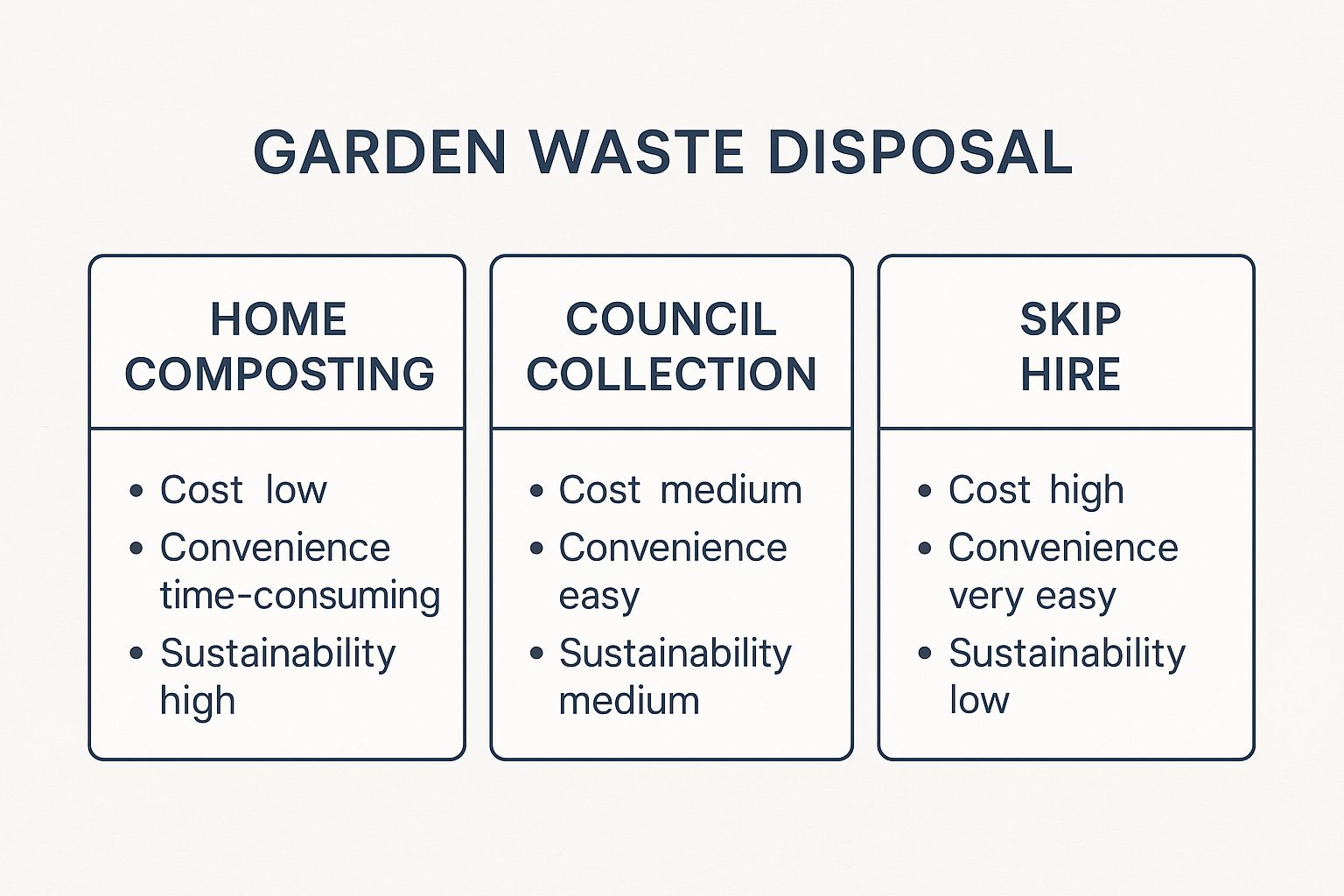
It’s clear that composting is the winner for sustainability and your wallet, but it does ask more of you. Hiring a skip, however, is the ultimate in convenience for those big jobs, though it comes with a bigger price tag.
Understanding these key differences is the first step. Whether your priority is being green, saving cash, or just getting the job done fast, there's a practical solution out there for your garden waste.
Key Takeaway: Choosing the right disposal method isn't just about getting rid of rubbish; it's about managing your time, budget, and environmental footprint effectively. A small amount of planning can turn a cleanup chore into a simple, manageable task.
Now, let's dive into each of these methods in a bit more detail, starting with the most eco-friendly option of them all: making your own 'black gold' right in your back garden.
The Eco-Friendly Choice: Home Composting
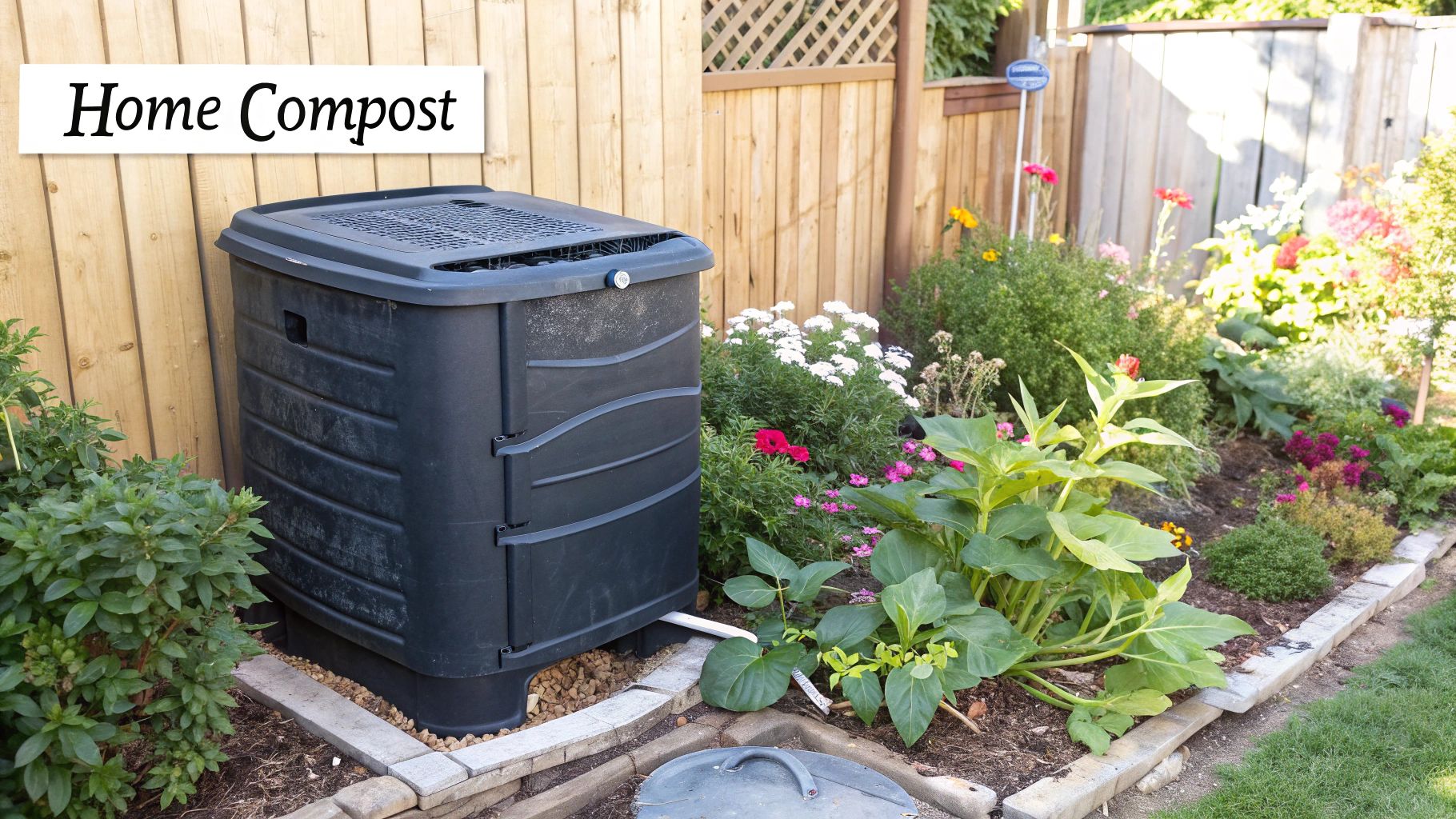
If you’re after the most sustainable way to deal with garden waste, home composting is the undisputed champion. It’s a brilliant process that transforms grass clippings, old leaves, and plant trimmings into what gardeners call 'black gold'—a nutrient-rich fertiliser that will have your plants thanking you.
Even better, it keeps your green waste out of the collection lorry and, crucially, out of landfill.
It's quite surprising to learn that only about 3% of all UK waste gets composted, a figure that includes both garden organics and food scraps. With landfills still swallowing 22% of our rubbish, garden cuttings that aren't composted at home are contributing to harmful greenhouse gas emissions.
By composting, you're not just making fertiliser; you're actively reducing your environmental footprint and creating a closed-loop system in your own back garden. You can learn more about why keeping organic material out of landfill is so important in our guide on the https://www.thewastegroup.co.uk/news/environmental-impact-of-landfills/.
Choosing Your Composting Setup
First things first, you need to decide on a composter. The right choice really comes down to the size of your garden and how much time you want to invest.
- Compact Tumblers: These are sealed drums on a frame that you can spin. They’re fantastic for smaller spaces, do a great job of keeping pests out, and the tumbling action speeds things up by mixing and aerating the contents for you.
- Traditional Wooden Bays: A classic for a reason, especially in larger gardens. These static bins can handle a much bigger volume of waste. They're often open at the bottom, which is a big plus as it lets beneficial worms and microbes in from the soil to help with the breakdown.
- Plastic Compost Bins: Often the type supplied by local councils, these are simple, effective, and a solid choice for most medium-sized gardens. They’re good at retaining heat and moisture, which helps the whole process tick along nicely.
The Art and Science of a Healthy Compost Pile
Getting good compost is all about getting the right mix of ingredients. Think of it like a recipe with two key elements: 'greens' and 'browns'.
The Golden Rule of Composting: Aim for a ratio of roughly one part 'green' (nitrogen-rich) material to every two or three parts 'brown' (carbon-rich) material. This balance is what feeds the microorganisms that do all the hard work for you.
Nailing this mix ensures your compost breaks down efficiently without turning into a smelly, slimy mess. If you want to get into the nitty-gritty of setting up a successful pile, this guide explains how to compost at home in great detail.
What to Add to Your Compost Bin
| 'Green' Materials (Nitrogen) | 'Brown' Materials (Carbon) |
|---|---|
| Fresh grass clippings | Dry leaves and twigs |
| Weeds (before they go to seed!) | Cardboard and scrunched-up paper |
| Fruit and vegetable scraps | Straw and hay |
| Coffee grounds and tea bags | Wood chippings and sawdust |
Looking After Your Compost
Once you’ve got it started, a little bit of maintenance goes a very long way.
Give the pile a turn with a garden fork every week or two. This gets oxygen in, which is vital for the aerobic bacteria doing the decomposing. You also want to keep it about as damp as a wrung-out sponge—not soggy and not bone dry.
Stick with it, and in a few months to a year, you’ll be rewarded with dark, crumbly, earthy-smelling compost ready to enrich your soil.
Using Council Garden Waste Collection Services
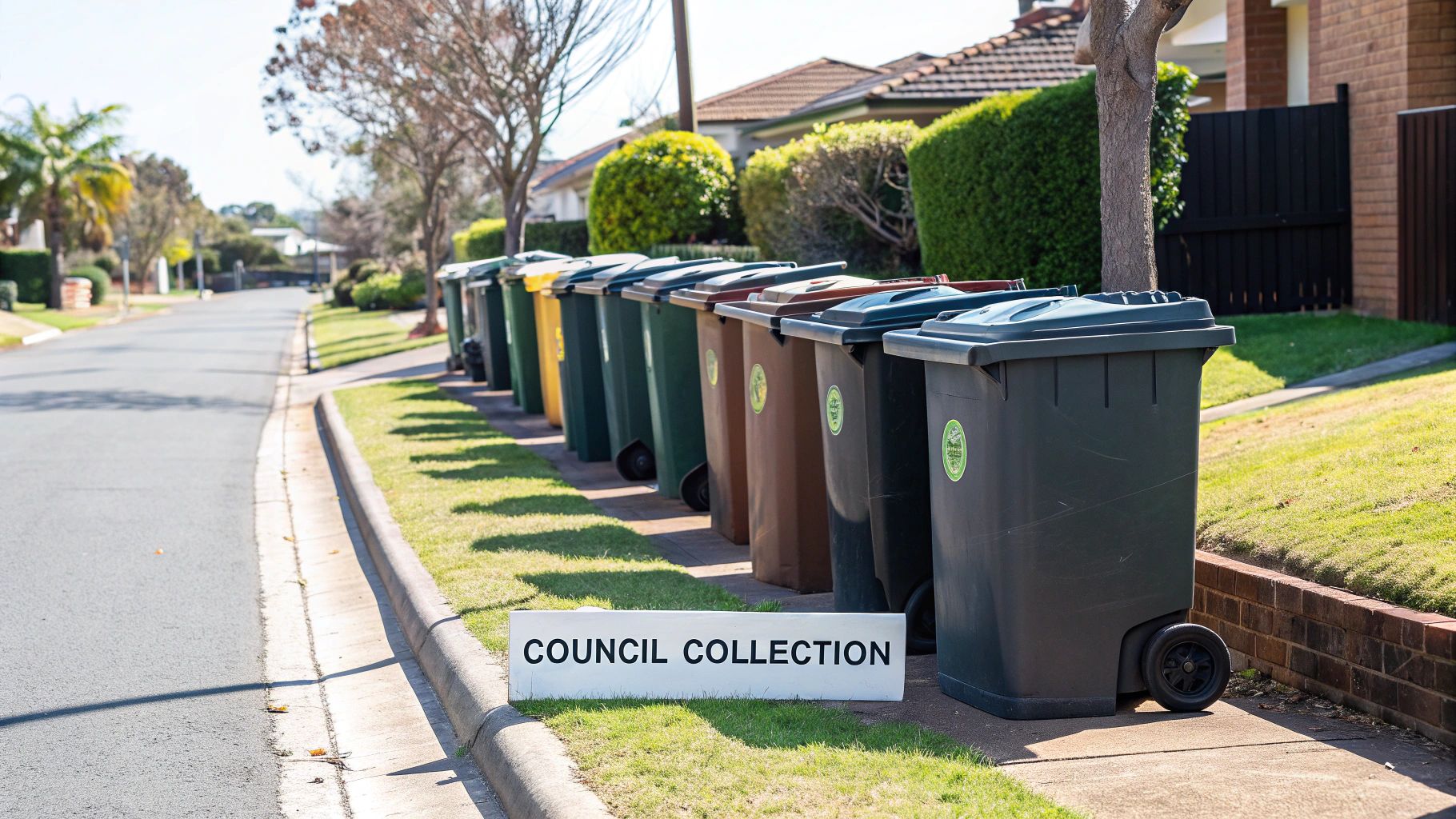
For most of us, the local council's garden waste scheme is the go-to choice for keeping on top of the garden. It's a simple, set-and-forget solution that handles the regular flow of clippings, weeds, and trimmings without much fuss.
The setup is usually a subscription service. You pay an annual fee, they give you a green wheelie bin (or sometimes reusable bags), and they pop round to collect it fortnightly. This typically runs from spring through to late autumn.
For the price, it’s often the best value for consistent, medium amounts of waste. But it’s not a given that your council offers it, and the costs vary wildly across the country, generally falling somewhere between £30 to over £90 a year.
Your first move should be to jump on your local council's website and search for "garden waste collection". That’ll tell you everything you need to know: if they run a scheme, what it costs, and how to get signed up.
Knowing What To Chuck In (And What To Leave Out)
Once you’re on board, you need to play by the rules. Getting it wrong is the quickest way to find your bin still sitting on the kerb after the lorry has been and gone.
While the specifics can differ slightly between councils, the general dos and don'ts are pretty standard.
What you can usually put in:
- Grass cuttings
- Hedge and shrub trimmings
- Leaves, weeds, and dead flowers
- Small twigs and branches (check for a diameter limit!)
What's almost always a no-go:
- Soil, turf, or large clumps of earth
- Big branches, logs, or tree stumps
- Rubble, stones, and gravel
- Nasty invasive species like Japanese knotweed or Giant Hogweed
- Food scraps (even if you have a food caddy, this is for garden stuff only)
- Plastic bags, pots, and any other non-organic rubbish
Pro Tip: Whatever you do, don't stuff your bin to the point the lid won't close. The lifting mechanism on the collection lorry needs a closed lid to work safely. If you’ve got a bit too much, just hold it back for the next collection.
Keeping Up with Collections and Charges
Most councils provide a collection calendar when you sign up, so it's easy to keep track of your dates. Remember that most services take a break over winter, so time your big autumn clear-out accordingly.
It's also interesting to see how these schemes can affect a whole area's green credentials. For instance, one London borough reported a staggering 38% drop in the amount of garden waste they collected after introducing new charges. This had a knock-on effect, contributing to a fall in the borough's overall recycling rate. It just goes to show how council policies and our own habits are closely linked. You can dig into the full details in this report on garden waste charge impacts.
At the end of the day, if you’ve got a garden that needs regular attention, your council's collection scheme is a brilliant, hassle-free option—as long as you stick to their guidelines.
Hiring Help for Large Garden Clearances
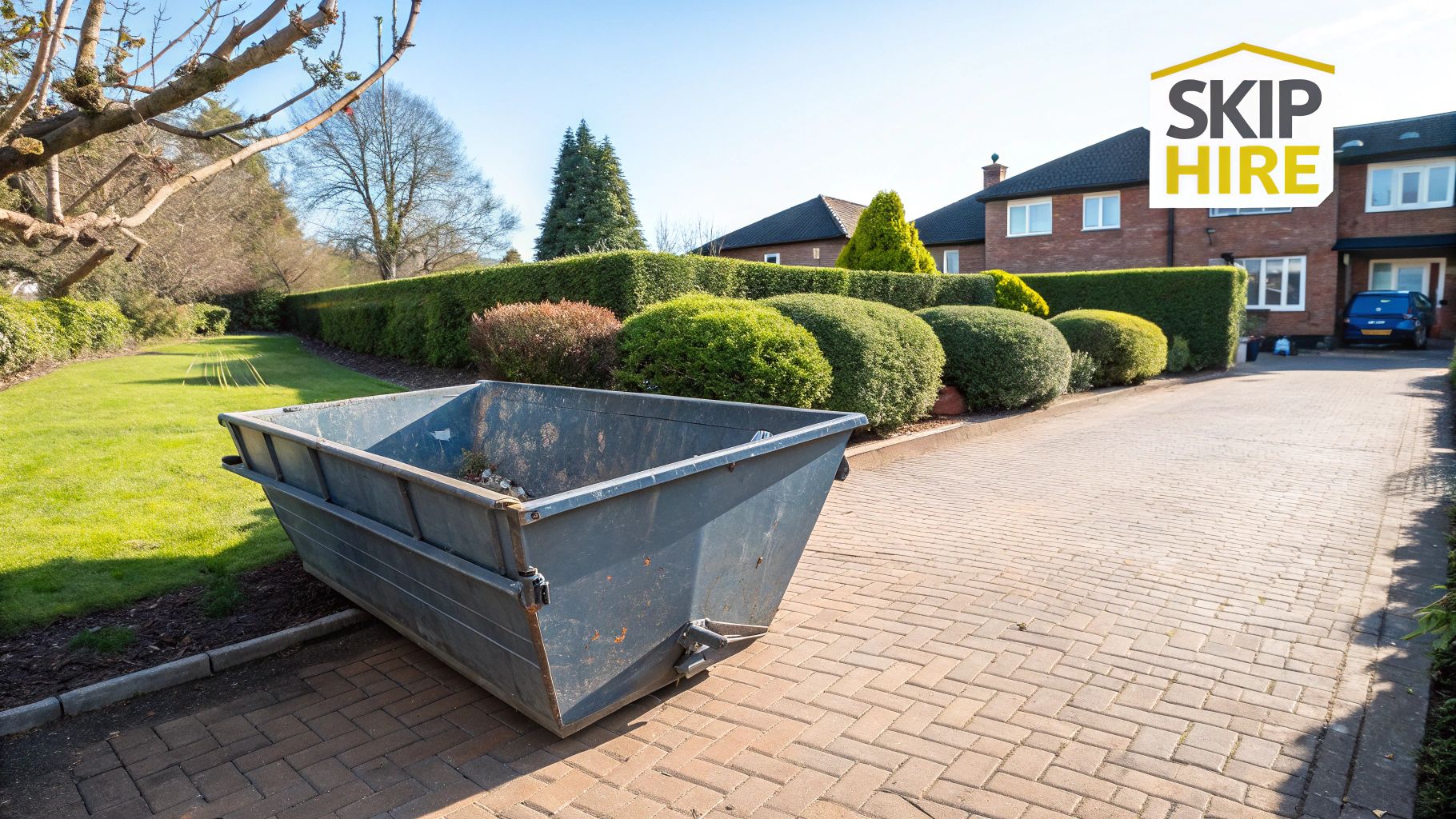
When your garden project spirals beyond what your green bin can cope with, or you're staring at a mountain of waste after a huge clear-out, it's probably time to call in the professionals. For those really big jobs, hiring a private waste removal service is often the most sensible and efficient way forward.
This route is ideal for major landscaping projects, taming a wildly overgrown garden, or dealing with the aftermath of felling a large tree. Sometimes, the unexpected happens—a major storm can leave you with a huge amount of debris in a very short space of time. In those cases, you might even need specific advice on handling storm damaged tree removal. Bringing in professional help takes all the strain off you and your car.
Skip Hire or Man and Van
So, what are your options? Your two main choices for private hire are the traditional skip and a 'man and van' collection service. They both get the job done, but each has its strengths depending on your exact situation.
- Skip Hire: The classic choice for big projects. A skip gives you a contained space to chuck waste into over a few days as you work. The main thing you need is a spot for it, like a driveway. If it has to go on the road, you'll need to sort out a permit from your local council.
- Man and Van: A brilliant alternative if you lack the space for a skip or you just want the waste gone fast. The team turns up, does all the heavy lifting for you, and drives it all away immediately. It’s often quicker and certainly saves your back.
Deciding between them really boils down to convenience versus timing. If you’ve got all your garden waste piled up and ready to go, a man and van service is perfect. But if you’re planning to tackle the clearance over a weekend, a skip offers that much-needed flexibility.
Understanding the Costs and Logistics
The price of a skip can vary quite a bit depending on its size, where you are in the country, and how long you need it for. A small 'midi' skip might set you back around £150, while a large 8-yard builder's skip could be £250-£300 or more. Don't forget to budget for a council permit if you need one, which can tack on another £30-£60.
Man and van services, on the other hand, are usually priced by the volume of waste they collect. This can be more cost-effective for smaller clear-outs, as you only pay for the space you actually use in the truck. You can find more specific details on what to expect in our guide to skip hire for garden waste.
Crucial Advice: If you take one thing away from this, let it be this: always, always verify that any company you hire has a valid Waste Carrier Licence. Ask to see their licence number and check it yourself on the Environment Agency's public register. If you unwittingly give your waste to an unlicensed operator who then fly-tips it, you could be the one held responsible and facing a hefty fine.
Taking Waste to Your Local Recycling Centre
https://www.youtube.com/embed/6Bwlii0m39M
Got more garden waste than your council bin can handle, but not quite enough to splash out on a skip? Your local tip is a brilliant, and usually free, solution.
These places are officially called Household Waste Recycling Centres (or HWRCs), and they’re perfect for those big weekend clear-outs. Think of it as the final destination for that monster buddleia you’ve finally wrestled to the ground, or for old turf that kerbside collections almost always refuse to take.
Your only real cost is a bit of time and petrol, making it a seriously cost-effective way to get rid of larger piles of garden rubbish. But you can't just rock up whenever you fancy.
Planning Your Trip to the Tip
A little bit of planning goes a long way and can save you from a completely wasted journey. Before you even think about loading up the car, there are a couple of things you absolutely must do.
-
Check Opening Times and Booking Rules: Many recycling centres now run on a pre-booked slot system. This became standard practice during the pandemic and has stuck around for good reason. Always check your local council’s website to see if you need to book a slot and to confirm their opening hours, which often change with the seasons.
-
Understand Vehicle Restrictions: This is a big one. If you're thinking of using a van, a pickup, or even a car with a trailer, you need to be careful. Most HWRCs have strict rules for 'commercial-type' vehicles to stop trade waste being dumped for free. You might need a special permit or be restricted to certain days and times.
We’ve heard it all before: a homeowner borrows a friend's van for a huge garden blitz, drives all the way to the tip, and gets turned away at the gate. A quick check of the vehicle policy on your council's website beforehand will save you a world of frustration.
What You Can and Cannot Bring
Most centres are well-organised, with clearly marked bays for different types of waste, and garden waste is almost always one of them. The staff on-site are usually pretty helpful and will point you in the right direction if you're unsure.
Typically Accepted:
- Grass cuttings, leaves, and weeds
- Hedge trimmings and small branches
- Old plants and flowers
Usually Not Accepted (in the green waste bay):
- Large amounts of soil or rubble
- Treated wood like old fence panels or decking
- Invasive species like Japanese knotweed (this needs specialist disposal!)
Giving your waste a quick sort before you leave home makes the drop-off much faster and more efficient. It also means your green waste can be composted properly, doing its bit for the environment.
Avoiding Common Pitfalls and Legal Issues
Knowing how to get rid of garden waste properly isn't just about keeping things neat and tidy—it's a legal responsibility. Get it wrong, and you could be facing anything from a falling out with the neighbours to some pretty hefty fines. Staying in the know is the best way to make sure your garden clearance goes smoothly and legally.
One of the most tempting shortcuts is the classic garden bonfire. It might seem like a quick way to deal with a mountain of branches, but lighting up is almost always a bad idea. The smoke can be a huge nuisance for your neighbours, often leading to official complaints to the council.
Beyond annoying the people next door, the smoke pumps harmful pollutants into the atmosphere. Many councils have specific rules or even designated smoke control areas that ban bonfires altogether, so it's vital to check your local authority’s website before you even think about striking a match.
The Serious Consequences of Fly-Tipping
At the much more serious end of the scale, you have fly-tipping – the illegal dumping of waste. Leaving your garden cuttings on public land, in a quiet lay-by, or anywhere that isn't a licensed facility is a criminal offence. The penalties are severe, ranging from fixed penalty notices all the way up to unlimited fines and even prison time.
It's a common mistake to think that dumping 'natural' garden waste isn't as serious as other rubbish. Legally, it's exactly the same. A pile of grass clippings on a verge is still fly-tipping and carries the same hefty penalties.
Don't forget your duty of care. This legal concept means you are responsible for your waste right up until it’s properly disposed of. If you pay someone to take your waste away and they end up dumping it illegally, you could be the one held accountable.
Handling Problematic and Invasive Plants
Not all garden waste is created equal. Some plants need very specific handling to stop them from spreading and causing serious environmental harm.
- Diseased Plants: Anything infected with things like box blight or honey fungus shouldn’t go in your home compost heap. The spores can easily survive and spread the problem. The best approach is often to burn them (where legally allowed) or double-bag them and put them in your general waste bin.
- Invasive Weeds: Plants like Japanese knotweed and Giant Hogweed are classed as controlled waste. It’s actually illegal to cause them to spread into the wild. Never, ever put them in your green bin or compost. They require specialist disposal, and you must declare them at any waste facility you take them to. Our guide on what can't you put in a skip touches on some of these difficult items.
UK regulations are getting stricter all the time. The upcoming 'Simpler Recycling' initiative means that from 2025, many businesses will have to separate their garden waste, which points to a wider push towards better management of organic waste. You can learn more about the 2025 waste management changes to see how things are likely to evolve for household collections too.
Your Garden Waste Questions Answered
Got a question about getting rid of your garden waste? You're not alone. Here are the answers to the queries we hear most often, giving you quick, practical solutions without the fluff.
Can I Put Garden Waste in My Regular Bin?
That’s a definite no-go. Almost every UK council has clear rules against putting garden waste in your general household rubbish. Why? Because it’s heavy, bulky, and perfectly recyclable.
When garden waste gets chucked into a black bin, it ends up in a landfill. There, it decomposes without oxygen and releases methane, a seriously potent greenhouse gas. The right way is to use your council's green waste collection, start a compost heap, or pop down to your local recycling centre.
The Bottom Line: Keeping garden waste separate isn’t just about following the rules. It’s a simple but powerful way to cut landfill emissions and turn organic matter back into valuable compost.
Is It Illegal to Burn Garden Waste?
This is a bit of a grey area. While a bonfire isn't strictly illegal, it's very easy to land yourself in hot water. The law is clear: you cannot cause a nuisance to your neighbours with smoke. Many areas are also designated Smoke Control Areas, where creating smoke from a bonfire is an offence.
Before you even think about striking a match, run through this checklist:
- Is the smoke going to drift over next door's fence and straight through their open windows?
- Is the material completely dry and free of anything treated, painted, or plastic?
- Have you double-checked your local council’s specific rules on bonfires?
Honestly, given the high risk of complaints and the environmental impact, it's nearly always better to find another way.
What Is the Cheapest Way to Dispose of Garden Waste?
Without a doubt, the most budget-friendly method is home composting. There might be a small upfront cost for a compost bin (many councils offer them at a discount), but after that, it's completely free. Plus, you get a constant supply of fantastic, nutrient-rich compost for your plants.
If you don't have the space or inclination for composting, your next best bet is a trip to your local Household Waste Recycling Centre (HWRC). For residents, this service is usually free of charge.
At The Waste Group, we make dealing with bigger garden clear-outs simple and affordable. Whether you need a small skip for a weekend tidy-up or a grab lorry for a major landscaping project, we provide competitive, price-matched quotes and next-day delivery across Dorset. Get your instant skip hire quote online and get it sorted.