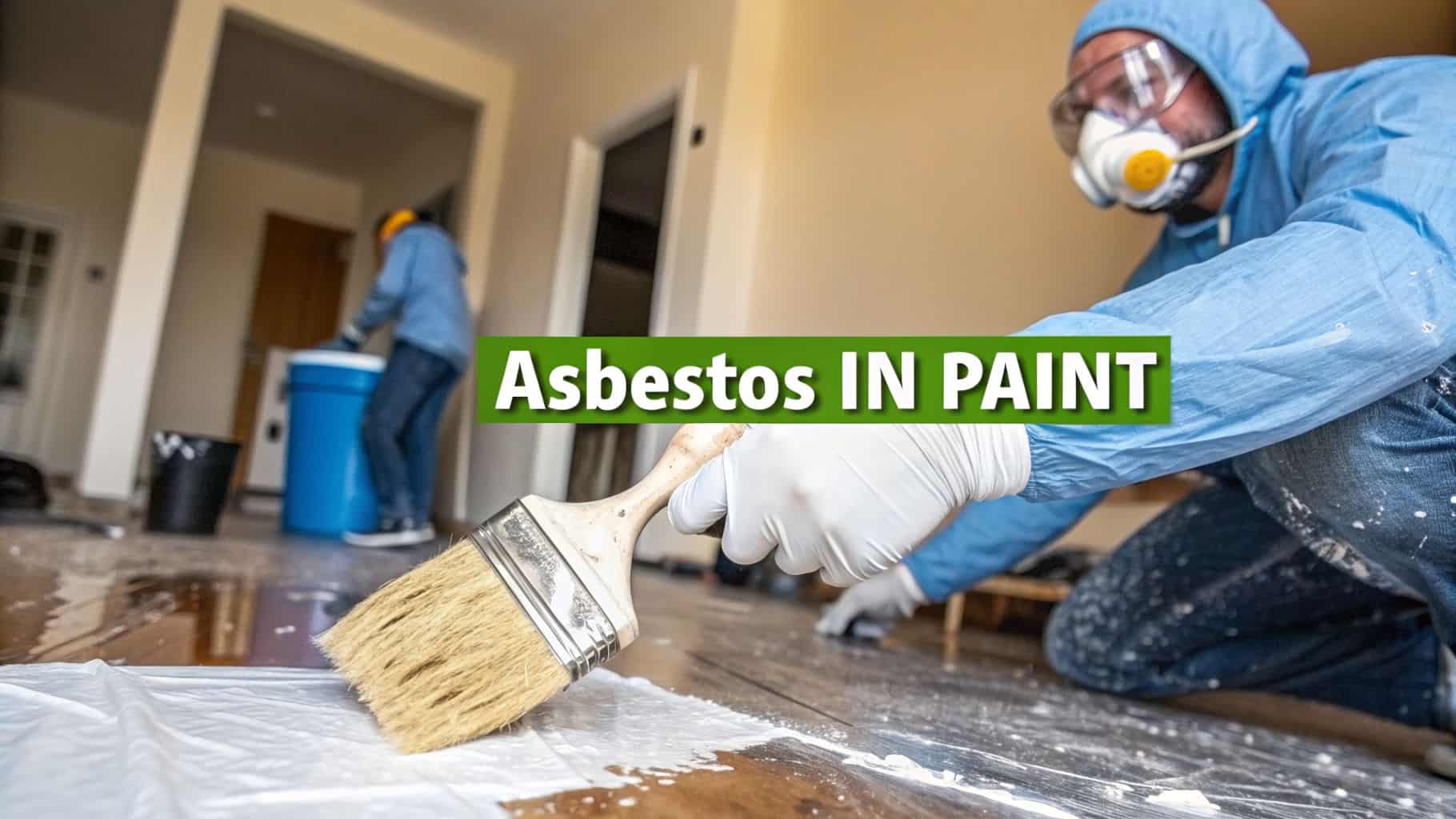
Yes, it’s a shocking thought, but some older paints can and do contain asbestos. This is especially true for the textured coatings, like the infamous Artex, that were popular in UK homes built or renovated before the year 2000.
The Hidden Dangers of Asbestos in Your Paint
The very idea of asbestos in paint is enough to make any UK homeowner feel a bit uneasy. You might be looking at your walls or that swirly ceiling right now, wondering what might be lurking in plain sight. For decades, asbestos was hailed as a wonder material, added to countless products—including certain paints—for its incredible strength and fire-resistant qualities.
Think of intact asbestos paint like a sleeping dragon. As long as it’s left alone and remains in good shape, it’s not going to cause you any trouble. The paint acts as a seal, locking the dangerous fibres safely inside.
When the Dragon Wakes
The real danger comes when that seemingly harmless layer of paint gets disturbed. Many common DIY jobs can wake the dragon, releasing a cloud of microscopic asbestos fibres into the air—fibres you can’t see but can be incredibly harmful if you breathe them in.
This could happen when you’re:
- Sanding down a textured ceiling to get a smooth finish.
- Scraping off old, peeling paint from a wall.
- Drilling holes to hang a new picture or put up shelves.
- Tearing down walls as part of a bigger renovation project.
Once these fibres are airborne, they can hang in the air for hours. Inhaling them can lead to devastating lung conditions like asbestosis and mesothelioma many years down the line. That’s why figuring out if you have asbestos in your paint isn’t just about being curious; it’s a critical safety step for you and your family.
The real risk isn’t just that asbestos is there, but what happens when you disturb it. Any job that creates dust from old paint can turn a stable material into an immediate airborne hazard.
Knowing which properties and paint jobs are most at risk is your first line of defence. To give you a head start, we’ve put together a quick guide to help you assess your situation.
Quick Reference Guide Asbestos in Paint
This table gives you the key information for making a quick, initial assessment of potential asbestos risk from paint in UK properties.
| Aspect | Key Information | Initial Action |
|---|---|---|
| Peak Usage Era (UK) | Mainly from post-WWII until the late 1980s. Banned in 2000. | Assume paint from this period could contain asbestos. |
| Common Locations | Textured ceilings (like Artex), exterior walls, older pipe coatings, boiler rooms. | Avoid disturbing these surfaces until they’re confirmed safe. |
| Key Risk Factor | Paint that is friable (crumbled, damaged) or being sanded, scraped, or drilled. | Do not sand, drill, or scrape any suspect paint. |
| First Safety Step | If you suspect asbestos, isolate the area and get professional advice on testing. | Contact a certified asbestos testing service. |
Remember, this is just for initial assessment. If you have any doubt at all, the only way to be certain is through professional testing.
Why Asbestos Was Used in UK Paints and Coatings
It might sound hard to believe now, but there was a time when adding asbestos to paint wasn’t just accepted; it was seen as a huge step forward. To get our heads around why such a dangerous material ever ended up on our walls, we need to look back at what manufacturers were trying to achieve.
It wasn’t an accident. For decades, asbestos was hailed as a “miracle” mineral. It was incredibly strong, flexible, and, most importantly, offered amazing resistance to fire, heat, and chemicals.
For paint companies, adding asbestos was a cheap and easy shortcut. It was a low-cost way to make their paint tougher, longer-lasting, and safer in a fire, giving them a real edge in a competitive market.
What Did Asbestos Actually Do for Paint?
So, what problems did asbestos solve in a can of paint? Think of it as a powerful, multi-purpose additive that boosted performance in several key ways.
Here’s what made it so appealing:
- Fire Resistance: This was the big one. Asbestos is non-combustible, so adding it to paint created a fire-retardant layer. This was a huge selling point for public buildings, factories, ships, and even ordinary homes.
- Durability and Strength: The tiny, tough fibres in asbestos acted like a microscopic skeleton within the paint. This reinforcement made the finished coat far more resistant to scuffs, scrapes, and everyday wear, helping it last for years.
- Insulation: Beyond just fire safety, asbestos offered good thermal insulation. Asbestos-containing paints were often used on boilers, pipework, and in engine rooms to help manage heat and reduce condensation.
- A Perfect Texturing Agent: Remember those swirly, stippled ceilings that were everywhere? Asbestos was a key ingredient in products like Artex, providing the body and workability needed to create those popular textured finishes.
Asbestos became one of the most widespread hazardous materials in British buildings throughout the 20th century. After being patented in 1878, its use expanded rapidly, with some paint formulas containing as much as 20% asbestos, making them a potent source of fibres. You can explore the historical timeline of its adoption by reading more about the asbestos era.
The Post-War Boom Lit the Fuse
While asbestos was used from the early 1900s, its use absolutely exploded in the UK after World War II. The construction boom of the 1950s, ’60s, and ’70s created a massive demand for fast, cheap building materials to construct new homes, schools, and hospitals.
Asbestos-containing products, including paint, fit the bill perfectly. They were affordable, effective, and widely available, quickly becoming a standard feature in millions of properties built or refurbished during this time. This is exactly why any UK building from that period needs to be treated with caution.
The very things that made asbestos paint so popular are what make it a hidden threat today. That incredibly tough, durable coating on an old wall or ceiling could be holding onto a dangerous legacy, just waiting for a drill or scraper to release it. Understanding this history is the first step toward treating these old materials with the respect they demand.
How Asbestos Exposure from Paint Happens
The real problem with asbestos paint isn’t when it’s just sitting there on your wall, looking harmless. When the paint is in good nick and left alone, it does a pretty good job of keeping the dangerous asbestos fibres locked in.
The trouble starts when you disturb it. That’s when a solid, stable surface can turn into a serious airborne hazard.
Think of it like a dandelion clock. Left alone, all the seeds are safely attached. But one puff of air—or in this case, a power sander on an old Artex ceiling—sends hundreds of tiny seeds floating everywhere. Asbestos fibres work in much the same way, only they’re invisible to the naked eye and a whole lot more dangerous.
Any DIY job that breaks the paint’s surface can release these fibres. We’re talking about common tasks like sanding down an old wall, scraping away flaky paint, or even just drilling a hole to hang a picture. These actions create a fine dust, and hidden within that cloud are countless asbestos fibres that can hang in the air for hours, sometimes even days.
The Journey of an Asbestos Fibre
Once those fibres are in the air, they’re so tiny they can be breathed deep into your lungs. The real kicker is that they are incredibly durable; your body simply can’t break them down or get rid of them. They’re like microscopic, indestructible splinters lodging themselves in the delicate lining of your lungs and other organs.
This is where the long-term health problems start. Your body’s immune system goes on the attack, trying to deal with these foreign invaders. This leads to constant inflammation and scarring. Over many, many years, this relentless irritation can cause healthy cells to mutate, leading to severe and often fatal diseases.
The widespread health risks of asbestos only really came to light in the latter half of the 20th century, even though the warnings were there much earlier. Between 1940 and 1979, millions of workers in the UK and US were exposed. Tradespeople sanding or scraping asbestos paint had no idea they were releasing particles that, when inhaled, would embed in their organ linings, causing cell damage that could one day turn into mesothelioma or lung cancer. You can read more about the troubling history of asbestos use and its health impact.
The Long-Term Health Consequences
Perhaps the most frightening part of asbestos exposure is the delay. The damage doesn’t show up overnight. It can take anywhere from 15 to 60 years after the initial exposure for symptoms to even begin to appear. A seemingly innocent DIY project you did decades ago could have serious consequences down the line.
The main illnesses linked to breathing in asbestos fibres include:
- Mesothelioma: A rare and particularly aggressive cancer that attacks the lining of the lungs, chest, or abdomen. It is almost always caused by asbestos exposure.
- Asbestosis: A chronic lung condition caused by the scarring of lung tissue. This scarring makes breathing progressively more difficult.
- Asbestos-Related Lung Cancer: Being exposed to asbestos dramatically increases your risk of developing lung cancer. That risk is even higher if you’re a smoker.
Understanding this grim journey—from a bit of dust off a wall to a life-changing illness decades later—is exactly why the UK has such strict rules for handling asbestos in paint. It’s not about ticking boxes; it’s about preventing irreversible harm. Every single speck of dust matters.
How to Identify and Test for Asbestos in Paint
Thinking you might have asbestos in your paint is a genuinely unsettling feeling. But figuring out if you’re right is a straightforward process. The trouble is, asbestos fibres are completely invisible to the naked eye – you can’t see, smell, or taste them. This means you can never be certain just by looking. However, a few tell-tale signs and the age of your house can be strong clues that it’s time to get a professional test.
Your first step is a simple visual check. You’re on the lookout for specific finishes that were all the rage during the peak asbestos years. Textured coatings, often sold under brand names like Artex, are the number one suspect. These were used to create those stippled or swirly patterns you see on ceilings and walls in countless UK homes built or refurbished before the year 2000. If that paint is cracking, flaking, or damaged in any way, the danger of fibres being released into the air goes up dramatically.
Common Places to Find Asbestos Paint
Asbestos wasn’t just for creating a textured look; its amazing fire-resistant and insulating qualities meant it was used in very specific parts of a property. When you’re doing your visual sweep, pay extra close attention to these high-risk areas:
- Ceilings and Walls: Particularly those with old, thick, and textured coatings.
- Basements and Garages: Hard-wearing, fire-retardant paints were a popular choice for the concrete walls and ceilings in these spaces.
- Around Boilers and Pipework: Insulating paints were often applied to pipes, boilers, and heating systems to help contain the heat.
- Older Bathrooms and Kitchens: In some cases, asbestos was added to paint to help it stand up to the humidity and condensation in these rooms.
This straightforward safety guide can help you figure out what to do next if you’re dealing with older paint in your home.

The bottom line is that any disturbance of old paintwork—whether it’s sanding, drilling, or even just scraping—is a serious gamble if asbestos is hiding in there.
The Only Way to Know for Sure Is to Test
While visual clues are a good starting point, they are never a confirmation. The only way to be 100% certain whether or not your paint contains asbestos is to have a sample professionally analysed in an accredited lab.
You really can’t skip this step. For anyone with a UK property, especially one with materials like textured coatings from before the 1980s, professional lab testing is the only route. Labs use a technique called Polarised Light Microscopy (PLM) to definitively spot asbestos fibres. Once confirmed, you’re legally required to follow strict rules for handling and disposal, which is where specialists come in to help homeowners and trades manage the hazardous waste correctly.
DIY Sampling vs Professional Surveys
When it’s time to test, you have two paths: you can try to take a sample yourself with a DIY kit, or you can hire a qualified asbestos surveyor. While DIY kits might seem like a cheap and easy option, they come with huge risks if you don’t follow the safety procedure to the letter. We cover the dangers in more detail in our guide on identifying asbestos in your home.
To make it clearer, here’s a quick comparison of the two approaches.
Asbestos Sampling DIY vs Professional Survey
| Factor | DIY Sampling | Professional Survey |
|---|---|---|
| Risk of Exposure | High if you don’t use the right PPE or follow every safety step perfectly. | Minimal, as surveyors are trained in safe, controlled sampling techniques. |
| Accuracy | Big risk of taking a bad sample or contaminating the area. | High, ensuring the right kind of sample is taken from the right place. |
| Cost | Cheaper upfront (just the lab fee), but the potential health costs are massive. | Higher initial cost, but it buys you safety, expertise, and a full report. |
| Legal Standing | Might not be accepted for official needs, like property sales or by contractors. | Gives you a legally recognised report for your records and for tradespeople. |
| Our Recommendation | Not recommended. The health and safety risks are just too serious. | Strongly recommended for safety, accuracy, and total peace of mind. |
Ultimately, while your worry might start with paint, it’s worth thinking about the bigger picture. Learning how to identify asbestos insulation in your home can help you understand other potential hazards lurking in your property. When it comes to your health and safety, choosing a professional survey is always the smartest and most reliable decision.
Navigating UK Asbestos Handling and Disposal Rules
Once you’ve confirmed that you’re dealing with asbestos in paint, you step into a world governed by strict UK health and safety laws. These regulations aren’t just bureaucratic red tape; they’re essential safeguards designed to prevent the release of dangerous fibres and protect public health. Getting a grip on your legal responsibilities is the first step to managing the problem correctly.
The rules you need to follow hinge on the type and condition of the asbestos. Most jobs involving asbestos-containing paints, like textured coatings that are in good shape, fall under non-licensed work. This might sound less severe, but it certainly doesn’t mean you can just scrape it off and toss it in your wheelie bin.
Even for non-licensed work, the Health and Safety Executive (HSE) demands that proper controls are in place. This means whoever does the work—whether it’s a homeowner or a contractor—must be competent, prevent asbestos dust from spreading, and dispose of the waste by the book.
Your Duty of Care Explained
Under UK environmental law, anyone who produces, handles, or disposes of waste has a ‘duty of care’. This is a legal responsibility that means you must ensure your asbestos waste is managed safely and compliantly, from the moment it’s created right through to its final disposal at a licensed site.
For a homeowner, this duty of care involves several non-negotiable steps:
- Correct Packaging: Asbestos waste has to be securely double-bagged. The inner bag must be red and clearly marked with asbestos warnings, while the outer bag must be clear and also have the right labels.
- Licensed Transport: You can’t just put asbestos waste in your car. It has to be collected and transported by a waste carrier who holds a specific licence for carrying hazardous materials.
- Authorised Disposal: The waste must be taken to a landfill or waste transfer station that is officially authorised to accept asbestos.
Failure to comply with these regulations can lead to significant fines and even prosecution. The duty of care ensures that hazardous materials like asbestos from old paint are tracked and managed safely, preventing them from contaminating the environment or harming others.
This process might seem complex, but it’s a critical chain of custody. Following it ensures you aren’t held liable for someone else’s mistake down the line. You can find more detailed guidance in our comprehensive article covering the latest UK asbestos disposal rules.
Licensed vs Non-Licensed Asbestos Work
Understanding the difference between licensed and non-licensed work is crucial, as it dictates who can legally handle the material. It really boils down to risk.
| Category | Description & Examples | Who Can Do It |
|---|---|---|
| Licensed Work | This is for the high-risk stuff that’s friable (easily crumbled), like asbestos insulation board or sprayed coatings. These release fibres very easily. | Only specialist contractors holding a licence from the HSE are allowed to touch this. |
| Non-Licensed Work | This covers materials where asbestos fibres are more firmly bound, like in asbestos cement, vinyl floor tiles, or textured paint (as long as it’s in good condition and can be removed without breaking up). | Can be done by competent, non-licensed workers who have had the right training on the specific tasks, including dust control and using correct PPE. |
Remember, even if removing asbestos paint is considered non-licensed, any significant damage or deterioration can quickly push it into a higher-risk category. If you’re ever in doubt about how to classify your asbestos waste, always play it safe: assume it requires the highest level of control and get professional advice. It’s the only way to ensure everyone’s safety.
Your Safe Options for Removal and Disposal

So, the tests have confirmed it: you have asbestos in your paint. This is the point where you need to decide how to manage the risk. If the paint is damaged or you’ve got renovations on the horizon, simply leaving it alone isn’t a safe bet. You’re looking at two main paths: encapsulation or complete removal.
Encapsulation means sealing the asbestos-containing paint with a special coating. You can think of it like putting the asbestos into a permanent, secure lockdown. It’s often quicker and more affordable than full removal, especially if the paint is in good nick, as it avoids disturbing the dangerous fibres.
But it’s not a ‘fire and forget’ solution. An encapsulated surface needs regular checks for any damage and must be clearly labelled to warn anyone working on it in the future. It’s a management tactic, not a permanent fix, and essentially passes the problem on down the line.
Professional Removal: The Safest Path
If you want total peace of mind and to get rid of the hazard for good, professional removal is the way to go. This is particularly true if the paint is already flaking, damaged, or if you know it’s going to be disturbed by upcoming work. Trying to tackle this yourself is incredibly risky, illegal for certain types of asbestos, and something we strongly advise against.
A specialist removal and disposal service takes the entire weight off your shoulders. They ensure every single step is handled with expert precision and in full compliance with UK law. This isn’t just about having the right gear; it’s a meticulous, regulated process from the very start to the final disposal.
A professional service handles it all:
- Correct Waste Bags: They provide the mandatory red and clear asbestos waste bags, which are specifically designed and labelled for hazardous materials.
- All the Paperwork: A licensed carrier will sort out the consignment note. This is a legal document that tracks the waste from your property to the disposal site, proving you’ve met your duty of care.
- Guaranteed Compliant Disposal: The collected waste is taken directly to an authorised hazardous waste facility. You get official confirmation that it has been disposed of legally and safely.
Hiring a professional isn’t just about convenience—it’s about purchasing legal and environmental compliance. You get a complete paper trail proving you’ve managed the hazardous waste responsibly, which protects you from any potential liability down the road.
Once you’ve got a plan for removal, you’ll need to budget for the work. You can get a general idea of the cost of asbestos removal, but remember that UK prices will vary based on the job. To understand what’s involved with managing asbestos waste in your area, take a look at our licensed asbestos disposal service. Handing this over to the experts ensures the job is done right, keeping everyone safe.
Common Questions About Asbestos in Paint
Discovering you might have asbestos in your home can bring up some urgent questions. We get it. Here, we’ll tackle the most common concerns, giving you the clear, practical answers you need to make safe and informed decisions.
I’ve Just Scraped Old Textured Paint. What Do I Do Now?
Finding yourself in this situation can be alarming. The single most important thing to do is stop all work immediately. Don’t be tempted to sweep or use a household vacuum to clean up the mess. This will only make things worse by spreading invisible fibres throughout your home.
Here are your immediate next steps:
- Isolate the Area: Shut any doors to the room and turn off your heating, air conditioning, or any fans to stop air from circulating.
- Prevent Access: Make sure everyone, including pets, stays well clear of the area until it’s been properly assessed by a professional.
- Seek Expert Advice: Get in touch with a certified asbestos consultant. They’ll advise you on what to do next, which may involve air testing to check the level of contamination and what decontamination is required.
Is It Safe to Live in a House with Asbestos Paint?
Yes, it is generally considered safe, but with a big “if”—if the paint is in good, stable condition. The danger from asbestos only arises when its fibres are released into the air. If the paint is sealed, completely intact, and isn’t cracking, peeling, or flaking, the risk of exposure is incredibly low.
The responsibility, however, is on you to keep it that way. You’ll need to be mindful and avoid any work that could disturb the surface, like drilling, sanding, or scraping. If you’re planning any renovations, getting the material tested first is a smart move for complete peace of mind.
“If the paint is in good condition and left undisturbed, the risk is very low. The hazard is created when the material becomes friable—easily crumbled—releasing fibres into the air. This is why professional assessment before any DIY work is not just recommended; it’s essential for safety.”
What Is the Cost of Asbestos Testing and Removal in the UK?
Costs can vary quite a bit depending on where you are in the UK, how big the job is, and the type of asbestos you’re dealing with.
As a rough guide, a single sample analysis typically costs between £40 and £80. For a full, professional asbestos survey, you could be looking at anywhere from £200 to over £800.
When it comes to removal, getting a textured coating taken off a single ceiling could set you back anywhere from £500 to several thousand pounds. It’s always best to get a few quotes from different licensed professionals and double-check that the price includes compliant disposal.
For a clear, competitive quote on the safe collection and disposal of your asbestos waste, you can trust the experts. The Waste Group handles all the necessary paperwork and guarantees fully compliant disposal, giving you total peace of mind. Learn more and book your service online.
Found asbestos? What disposal costs
Once you have identified the material, the next question is usually what it costs to get rid of. Our 2026 asbestos disposal cost guide sets out licensed van collection from £306 inc VAT, skip and RoRo prices, and what drives the total. We handle collection and disposal under licence (CBDU113405) — not removal — so if the material is already down and bagged, get a fixed quote.