Asbestos in plaster walls is more common than many homeowners realise. If you're staring at an old wall, maybe during a bit of DIY, and wondering what exactly it’s made of, you’re not alone. The simple truth is that plaster in UK homes built or renovated before the year 2000 can contain asbestos. These microscopic fibres, completely invisible to the naked eye, were a popular ingredient used to improve strength and fire resistance, turning many older walls into a hidden risk.
Found asbestos in your plaster walls?
The Waste Group arranges licensed disposal of bonded asbestos — van collection from £414 inc VAT, or skip and RoRo for larger jobs — with a Waste Consignment Note on every job.
Get an asbestos disposal quote or see our asbestos disposal service.
The Hidden Risk Lurking in Older Plaster Walls
For decades, adding asbestos to building materials wasn't a shortcut; it was standard practice. Think of it like a vintage recipe with a secret, powerful ingredient. Asbestos, particularly the common white type known as chrysotile, made plaster more durable, heat-resistant, and easier to work with. It was genuinely seen as a miracle material.
This legacy now presents a real challenge for today's homeowners and builders. The danger isn't the wall just sitting there; the problem starts when that plaster is disturbed. Simple renovation jobs like drilling a hole for a picture frame, sanding down a textured Artex ceiling, or knocking through a wall can release these tiny, harmful fibres into the air you breathe.
Why Was Asbestos Used So Widely?
The sheer versatility and low cost of asbestos made it the go-to component for a massive range of construction products. Adding it to plaster mixes served several practical purposes that were highly valued during the big mid-20th-century construction boom.
Here are the key reasons for its use:
- Enhanced Strength: Asbestos fibres acted like a microscopic rebar, binding the plaster together, reducing cracks, and improving the overall durability of the finish.
- Fire Resistance: As a naturally fire-retardant mineral, it helped walls better withstand high temperatures – a crucial safety feature back in the day.
- Insulation Properties: It offered a degree of both thermal and acoustic insulation, helping to make homes warmer and quieter.
This widespread use means that finding asbestos in plaster walls isn't some rare anomaly. It’s a common feature of properties from that era.
The scale of asbestos contamination in UK buildings is staggering. An estimated six million tonnes of asbestos are still present in approximately 1.5 million UK buildings, creating a public health challenge that continues decades after its ban.
During its peak usage between the 1940s and 1970s, asbestos was mixed into over 3,000 different products. This made it virtually impossible for builders and homeowners of that time to avoid it. You can discover more about the historical use of asbestos in UK buildings and its lasting impact.
Understanding this history is the first step towards managing the risk responsibly. The goal isn't to cause panic, but to build awareness so you can take the right precautions. This guide will walk you through the signs, the risks, and the safe, compliant steps you need to take next.
How to Spot the Warning Signs of Asbestos Plaster
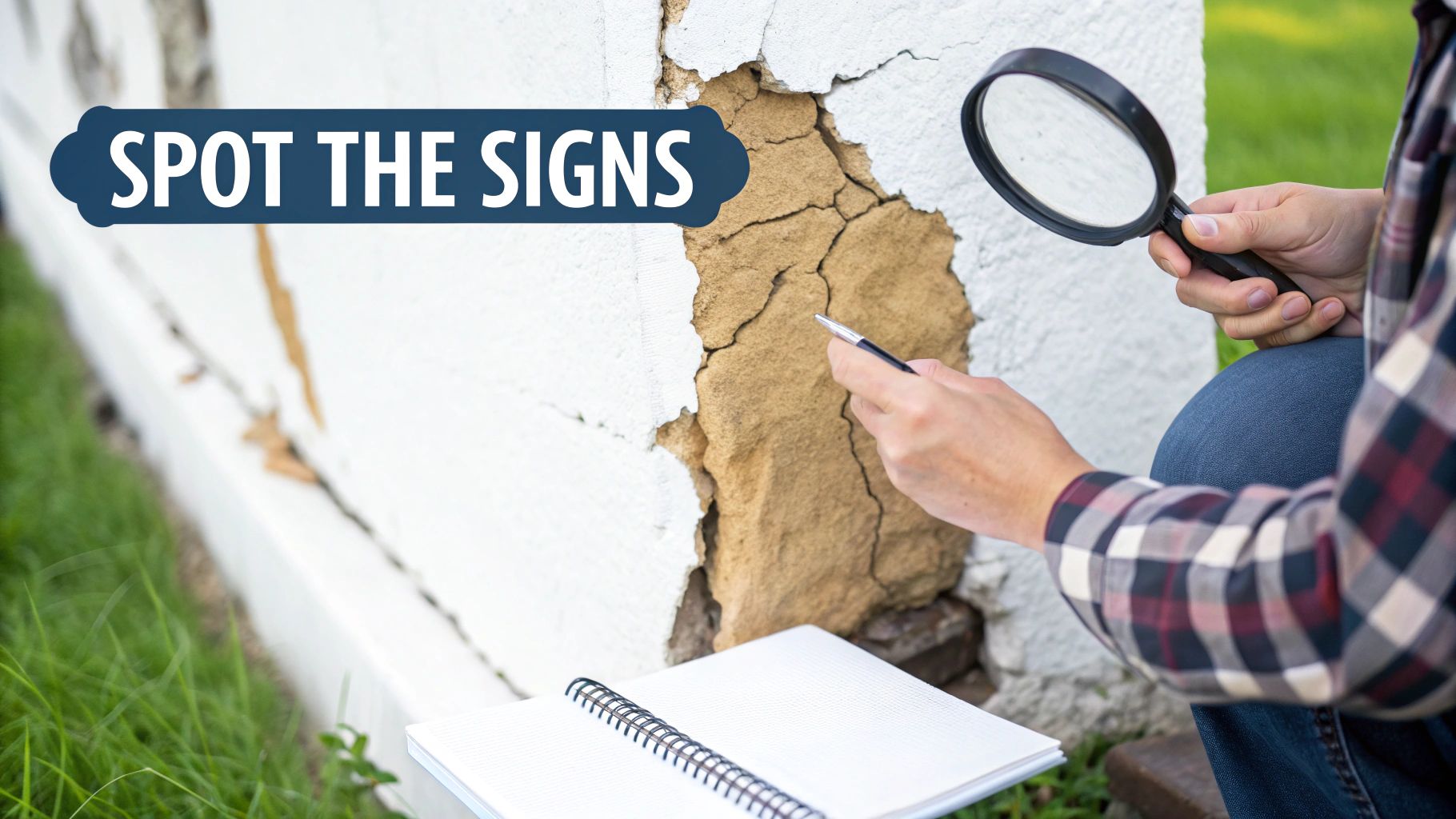
Here's the first thing you need to know: trying to spot asbestos in plaster walls with the naked eye is a fool's errand. The fibres are microscopic, completely hidden within the plaster mix. So, instead of squinting at the walls looking for fibres, you need to put on your detective hat and look for historical clues around your home.
The single biggest clue you have is the age of your property. Knowing when your house was built, or when it last had a major facelift, is the most reliable first step in figuring out if asbestos-containing materials (ACMs) might be present.
The Critical Construction Timeline
From the 1920s right up to its final ban in 1999, asbestos was a go-to ingredient for UK plaster mixes. That's a huge window of risk. But the real peak for its use was from the 1950s through the 1980s.
During these decades, all sorts of common materials like textured coatings (think Artex), skim coats, and even joint compounds frequently had asbestos mixed in. This means pretty much any property built or refurbished before the year 2000 is in the high-risk category.
Think of your home's construction date as the first chapter in your investigation. If it falls within this high-risk zone, you need to be extra cautious before starting any DIY or renovation project.
Visual Clues and Material Types
While you can't see the asbestos itself, you can spot the types of plaster and finishes that were often made with it. Older building materials just have a certain look and feel that can help you build a clearer picture of the risk.
Keep an eye out for these specific things:
- Textured Coatings: Best known by the brand name Artex, these decorative finishes with their classic stippled or swirling patterns were all the rage. From the 1960s to the mid-1980s, these coatings often contained chrysotile (white) asbestos to help create those textures.
- Cement Boards or Plasterboard: In places that needed a bit of extra fire protection, like around a fireplace or in an old airing cupboard, asbestos insulating board (AIB) was common. If you can see a grey, fibrous-looking board behind the plaster, that's a massive red flag.
- Original Lath and Plaster Walls: If you're in a very old property, the original horsehair plaster is probably fine. The danger comes from later renovations – a skim coat applied over the top during the mid-20th century could easily have introduced asbestos into the mix.
It’s vital to remember that these are just clues, not proof. For a proper, safe diagnosis, you need professional methods, as this expert guide on how asbestos is identified explains.
To help you assess the situation, we've put together a simple checklist.
Asbestos in Plaster Risk Indicator Checklist
This table is designed to help you quickly assess the likelihood of asbestos being in your plaster based on the age and appearance of your property's walls and ceilings.
| Risk Factor | Description | What to Look For |
|---|---|---|
| Property Age | The single most important indicator. | Was your home built or significantly renovated between the 1950s and 1999? If yes, the risk is higher. |
| Textured Surfaces | Decorative coatings were a very common source of asbestos. | Swirling, stippled, or popcorn-style textures on ceilings or walls, characteristic of brands like Artex. |
| Location in Home | Asbestos was often used for fireproofing and insulation. | Check walls and boards around fireplaces, boilers, airing cupboards, and in basements or attics. |
| Wall Construction | Look behind the surface plaster if possible (e.g., at damaged areas). | Grey, dense-looking insulating boards (AIB) behind the visible plaster layer. |
| Renovation History | Asbestos was frequently added during refurbishments. | Look for signs of older walls being skimmed over with a newer plaster layer, especially if done pre-2000. |
Remember, this checklist helps you gauge the risk, but it doesn't confirm the presence of asbestos. The only way to know for sure is to get a sample tested.
When to Suspect Asbestos in Damaged Plaster
The condition of your plaster is a crucial piece of the puzzle. If your walls are smooth, sealed, and in perfect nick, the risk is minimal. The danger starts when the material becomes friable – a technical term for being easily crumbled or turned to dust just by hand pressure.
Important Takeaway: The real danger isn't that asbestos is there, but that it gets disturbed. Any job that creates dust—drilling, sanding, knocking down a wall—can send those dangerous fibres airborne.
Look for signs that the plaster is starting to break down, which makes accidental exposure more likely:
- Crumbling or Flaking: Any areas where the plaster is deteriorating from age or dampness.
- Severe Cracks: Deep cracks that go through the paint and expose the layers underneath.
- Water Damage: Stains or soft spots from leaks can seriously compromise the plaster's structure.
If you spot any of these warning signs in a pre-2000 home, it’s time to stop what you're doing and get some professional advice. Getting a broader view by learning about identifying asbestos throughout your home can also be incredibly helpful. At the end of the day, only professional sampling and lab analysis can give you a certain answer.
Why Disturbed Asbestos Fibres Are a Serious Health Hazard
To get your head around the risks of asbestos in plaster, you only need to grasp one key idea: intact versus disturbed. If asbestos-containing plaster is in good nick—smooth, sealed, and with no cracks or damage—the harmful fibres are safely locked away. In this state, it’s not much of a threat.
The real danger kicks in the moment that plaster is broken. Any DIY that creates dust, like drilling a hole, sanding a surface, sawing a section out, or even just scraping off old paint, can unleash millions of microscopic asbestos fibres into your home. A solid, harmless-looking wall can become an invisible airborne hazard in minutes.
The Invisible Threat of Friable Asbestos
Picture the tiny dust particles you see floating in a sunbeam. When asbestos plaster is disturbed, it releases fibres that are just as small and light. These fibres are ridiculously tiny—up to 1,200 times thinner than a human hair—and can hang around in the air for days, drifting far from where the work was done.
This airborne state is what experts call 'friable', which is just a technical term meaning the material can be easily crumbled into a powder. Once these fibres are floating around your house, they can be breathed in by anyone nearby, completely unnoticed. It’s how a simple DIY job can turn into a serious contamination problem.
The biggest danger with asbestos is the time lag. Most asbestos-related diseases are diagnosed at least 15 years after someone was first exposed. This means the consequences of a single renovation mistake might not show up for decades.
This huge delay between exposure and getting sick is what makes asbestos so treacherous. Unlike an accident where you see the injury straight away, the damage from asbestos happens silently over a very long time, deep inside your body.
How Inhaled Fibres Damage the Lungs
When you breathe in these sharp, needle-like fibres, your body can't get rid of them. They're too small and too tough for your natural defences. Instead, they get lodged deep in your lung tissue and the delicate lining around your lungs (called the pleura).
Over the years, your body keeps trying to break down these fibres, causing constant inflammation and scarring. This damage at a cellular level can eventually lead to severe, and often fatal, lung conditions.
The main diseases linked to asbestos exposure are:
- Asbestosis: A chronic lung condition where scar tissue builds up, making it harder and harder to breathe and reducing how well your lungs work.
- Lung Cancer: Being exposed to asbestos dramatically increases your risk of lung cancer, especially if you also smoke.
- Mesothelioma: A rare but very aggressive cancer that grows in the lining of the lungs, stomach, or heart. Asbestos exposure is the number one cause.
It's vital to know that there is no known safe level of asbestos exposure. While your risk gets higher the longer and more intense the exposure is, even a short burst from a single incident can be enough to cause disease down the line. You can find out more about these conditions by reading about asbestos-related diseases and their health risks.
Understanding all this isn’t about scaremongering. It’s about having a healthy respect for the material and making safety your top priority. Before you touch anything in an older property, your first thought should always be the potential for asbestos in plaster walls and taking the right steps to protect yourself and your family.
Understanding Your Legal Duties as a UK Property Owner
Figuring out the rules around asbestos can feel like you need a law degree, but your responsibilities as a UK property owner are actually quite straightforward. At the end of the day, the law has one simple goal: to stop anyone from breathing in dangerous asbestos fibres. This applies to everyone, whether you’re a homeowner planning some weekend DIY or a contractor running a full-scale renovation.
The big piece of legislation here is the Control of Asbestos Regulations 2012 (CAR 2012). Now, while this is mainly aimed at workplaces and commercial buildings, its principles definitely filter down to domestic homes through a general "duty of care." In simple terms, this means you have a moral and legal obligation to make sure your home is safe for your family, any visitors, and the tradespeople you hire.
Think of it this way: knowingly letting a builder drill into a wall you think has asbestos, without giving them a heads-up, could land you in hot water if they get sick down the line. It's all about taking reasonable, common-sense steps to prevent harm.
Your Duty of Care as a Homeowner
The law doesn't expect you to be an asbestos surveyor. What it does expect is for you to act responsibly if you have any reason to suspect asbestos in plaster walls, especially before you start knocking things about.
Your duty of care really boils down to a few key things:
- Tell Your Tradespeople: If you know or even just suspect asbestos is in your home, you absolutely must tell any contractors before they start work. This gives them a chance to take the right precautions.
- Prevent Accidental Exposure: You need to make sure asbestos-containing materials aren't disturbed by anyone in the house, particularly if they are looking a bit crumbly or damaged.
- Manage Waste the Right Way: You can't just chuck asbestos waste in your wheelie bin or drop it off at the local tip. It’s classed as hazardous waste and has to be handled and disposed of by a licensed carrier.
The crucial thing for homeowners to remember is that you can't plead ignorance. If your house was built before 2000, you’re expected to at least consider the possibility of asbestos and proceed with caution. Not doing so can have very serious consequences.
Stricter Rules for Contractors and Tradespeople
For contractors, landlords, and anyone working on a property professionally, the legal bar is set much higher. For any building put up before the year 2000, they are legally required to assume asbestos is present until it’s proven otherwise. This "presumption" is a cornerstone of CAR 2012 and puts the responsibility squarely on their shoulders to check for asbestos before doing any work that might disturb it.
This leads to a really important distinction in how asbestos jobs are handled.
Licensed vs Non-Licensed Work
The Health and Safety Executive (HSE) splits asbestos work into two categories, which all comes down to the level of risk involved:
- Non-Licensed Work: This covers lower-risk materials that are in good nick, like asbestos cement sheets or some types of textured coatings (like Artex). A competent builder with the right training and safety gear can sometimes handle this.
- Licensed Work: This is for the high-risk stuff, like asbestos insulation board (AIB) or any asbestos material that's badly damaged and likely to release a lot of fibres. Only a specialist contractor holding a license from the HSE can legally touch this.
Trying to rip out high-risk asbestos plaster yourself, or hiring an unqualified person to do it, is a serious breach of the law.
Ultimately, the most important legal duty for everyone is the final step: getting rid of it. Any asbestos waste, whether it's from a tiny patch-up job or a massive renovation, must be handled by a registered waste carrier. This isn't just a suggestion; it’s a legal must to prevent contamination and keep the public safe. To get a better handle on your obligations, it's worth reading up on the official UK guidelines on hazardous waste disposal regulations. This ensures the material is transported and disposed of correctly at a licensed facility, with all the proper paperwork to prove it.
Safe Asbestos Testing, Removal And Disposal Solutions
So, you think you might have asbestos in your plaster walls. What now? The next steps are all about caution, confirmation, and control. It's a clear process that takes you from a nagging suspicion to a safe, legally sound solution, and it’s vital to get it right to protect your health and prevent any contamination.
First things first: confirm what you’re dealing with through professional testing. This is absolutely not a DIY job. A trained asbestos surveyor will visit your home and take a small, controlled sample of the plaster. They have strict procedures for this, like wetting the area and using special tools, to make sure no fibres get released into the air. The sample is then immediately sealed in a secure container.
From there, it’s off to a laboratory for analysis. It's crucial that the lab is UKAS-accredited – this is the UK's stamp of approval, guaranteeing it meets the highest standards for accuracy and impartiality. Using a technique called polarised light microscopy (PLM), technicians can definitively spot whether asbestos is present and, if so, which type. You'll get a formal report back with a straightforward yes or no.
Responding To A Positive Asbestos Test
Getting a "yes" can feel daunting, but it doesn't automatically mean you need to start tearing down walls. Your next move depends entirely on the condition of the plaster and what your plans are for the property. You have two main options.
- Encapsulation (Sealing): If the plaster is in good shape – solid, undamaged, and not likely to be disturbed – encapsulation is often a perfectly safe and cost-effective route. This means sealing the surface with a specialist coating that locks the dangerous fibres in place, essentially putting a permanent protective shield over it.
- Removal: If the plaster is damaged, crumbling, or in an area you’re planning to renovate (like a kitchen or bathroom refit), removal is the only truly safe answer. This is a highly specialised job that has to be done by trained professionals. In many cases, you are legally required to use a licensed asbestos removal contractor.
The flow diagram below shows the basic process of identifying, assessing, and managing asbestos risks, which forms the basis for these decisions.
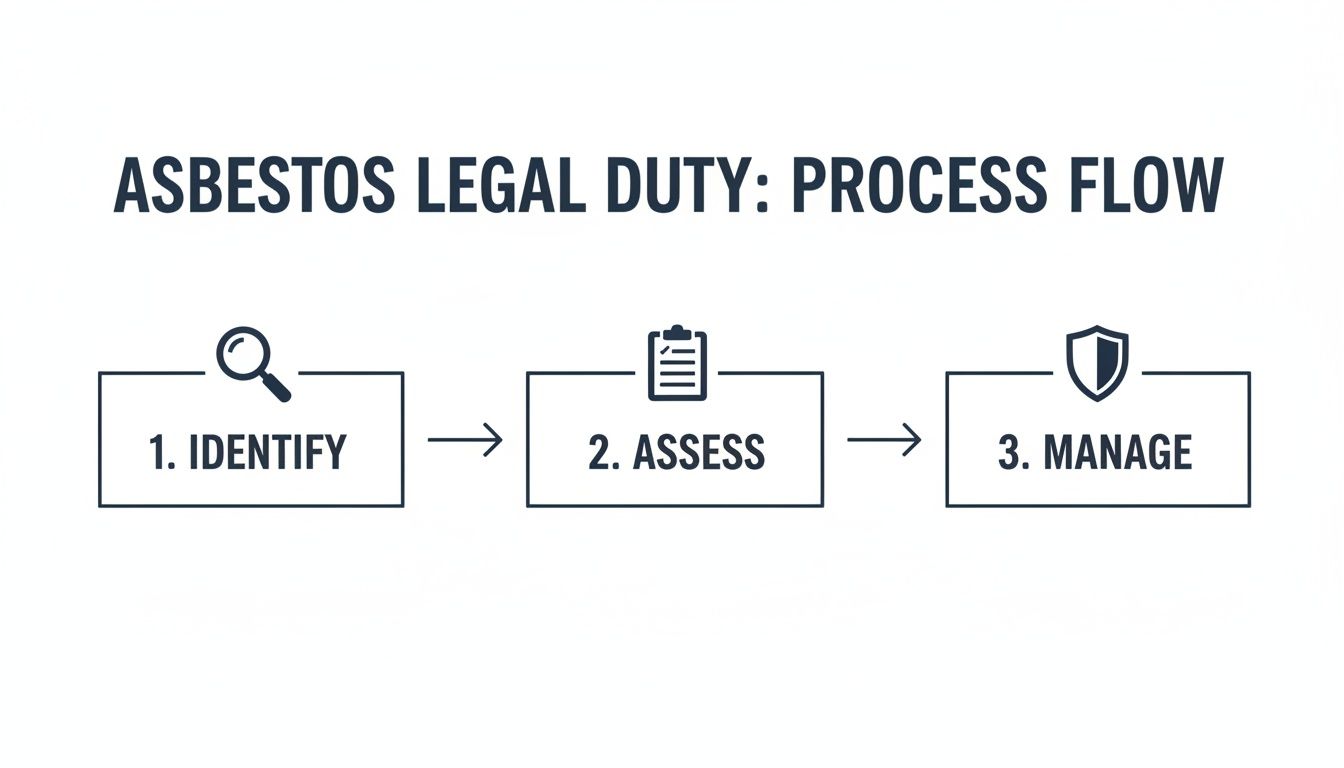
As you can see, everything starts with a proper identification and risk assessment before any action is taken.
Understanding Removal And Disposal Requirements
Removing asbestos isn't like a normal bit of demolition work; it's a specialist task with its own strict health and safety rulebook. A professional team will build a sealed, negative-pressure enclosure around the work area to contain every last speck of dust. They use specific equipment, wear full protective gear, and follow meticulous decontamination steps.
The most critical part of the process is what happens after the material is removed from the wall. Asbestos waste is legally classified as hazardous, and its disposal is tightly regulated to protect public health and the environment.
You can't just throw asbestos waste in a regular skip or take it down to the local tip. It has to be handled by a company that holds a hazardous waste carrier's licence.
Here’s what proper, legal disposal looks like:
- Secure Packaging: All asbestos waste is double-bagged in specially made, UN-approved sacks. These are thick, red and clear bags clearly marked with asbestos warnings.
- Specialised Transport: The sealed bags are then transported in a secure, enclosed vehicle or a lockable skip provided by a registered waste carrier.
- Legal Paperwork: A Hazardous Waste Consignment Note must be completed. This is a legal document that tracks the waste from your property (you, the producer) to the licensed disposal site. It’s your proof that you’ve done everything by the book.
- Licensed Disposal Site: The waste can only go to a landfill facility specifically licensed by the Environment Agency to accept asbestos.
When you're facing a situation like this, it can be useful to look at guides on general hazardous materials cleanup to get a sense of the professional standards involved. These principles ensure that dangerous materials are fully contained and removed without risk to anyone.
Using a specialist service like The Waste Group for asbestos collection and disposal takes all the stress and legal complexity off your hands. We provide the correct bags or skips, handle all the paperwork, and guarantee your asbestos waste ends up at a licensed facility. It gives you complete peace of mind and ensures you're fully compliant with the law – the only way to safely close the loop on your asbestos problem.
Partnering with Specialists for Compliant Asbestos Disposal
So, you’ve got a handle on the health risks and the legal hoops you need to jump through with asbestos. The final piece of the puzzle is getting rid of it. This is the stage where one wrong move can undo all your hard work, putting your family, the public, and yourself in a sticky legal situation. Choosing a professional, compliant disposal service isn't just a "nice-to-have" – it's absolutely essential for getting the job done right.
Trying to deal with asbestos waste yourself is a non-starter. You can't just chuck it in a regular skip or run it down to the local tip. Asbestos is legally classified as hazardous waste, and its entire journey from your home to a licensed disposal site is strictly controlled by the Environment Agency. Getting this wrong can lead to hefty fines and legal trouble, turning your project into a costly nightmare.
Why Professional Disposal Is a Must
A specialist service like The Waste Group does far more than just pick up a bag. We provide a complete, legally sound solution that gives you total peace of mind. Think of us as your logistics expert for hazardous materials, making sure every single step is handled correctly and safely. It's about protecting yourself from the serious fallout of non-compliance.
Here’s what our dedicated national asbestos collection service takes care of for you:
- The Right Gear: We deliver the correct, UN-approved, fully sealed and lockable skips or containers made specifically for asbestos waste. This is crucial for stopping any fibres from escaping while it's being stored and transported.
- All The Paperwork: We sort out the Hazardous Waste Consignment Note. This is a vital legal document that tracks the waste from your property to the disposal site, acting as your official proof that you've disposed of it lawfully.
- Guaranteed Compliant Disposal: We make sure your waste is taken by a licensed carrier straight to a facility that has the official permits to accept and process asbestos.
By bringing in a specialist, you're essentially handing over the legal and logistical headache to the experts. This frees you up to focus on your project, knowing the hazardous waste side of things is being managed properly and in line with UK law.
Moving Forward with Confidence
For homeowners, this means keeping your family and neighbours safe from exposure. For tradespeople, it's about protecting your business, your team, and your reputation. The risk of cutting corners is just too high.
Using a professional disposal partner like The Waste Group ensures that the final, critical step in dealing with asbestos in plaster walls is done perfectly. It gives you the assurance you need to close the chapter on your asbestos problem – safely, legally, and with complete confidence, letting you move on without any lingering worries.
Common Questions About Asbestos in Plaster
When you’re staring at an old wall, wondering what’s inside, it’s only natural to have a lot of questions. Dealing with potential asbestos can feel daunting, so we’ve answered some of the most common things UK homeowners ask us about plaster.
What Does Plaster with Asbestos Look Like?
This is the tricky part – you can't tell just by looking. Plaster that contains asbestos looks exactly the same as asbestos-free plaster. The fibres are microscopic and were mixed right into the plaster, making them completely invisible to the naked eye.
The best clues you have are the age of your property (anything built before 2000 is a candidate) and the style of the finish. Things like textured Artex coatings are a big red flag, but the look of the plaster itself won’t give the game away.
What Should I Do If I Accidentally Disturb Plaster?
It happens. You drill a hole for a shelf or accidentally knock a chunk out of the wall, and suddenly you’re worried. The absolute priority is to stop any dust from spreading.
- First thing’s first: stop what you’re doing immediately.
- Gently spray the area with a little water to dampen any dust.
- Use a damp cloth to carefully wipe up any debris you can see. Don't even think about using a dry cloth, a brush, or a vacuum cleaner – that’ll just send fibres flying.
- Pop the damp cloth and any debris into a plastic bag, seal it, and then put that bag inside a second one for good measure.
- Keep people and pets out of the room. If it's safe to do so, open a window to let the air circulate.
The most crucial step is to avoid making the situation worse. Damping down dust prevents it from becoming airborne, which is the primary route of exposure. Do not attempt further cleanup without professional guidance.
How Can I Be Sure My Home Is Safe After Removal?
Once the professionals have finished their work, they don't just pack up and leave. An independent analyst will carry out a process called air monitoring. This is a scientific test that measures the number of fibres left in the air to make sure it's below the legally defined safe limit.
When the test gives the all-clear, you’ll be handed a certificate of reoccupation. Think of it as an official all-clear, confirming the area is completely safe to move back into.
For complete peace of mind with asbestos disposal, you need a partner who handles every legal detail correctly. The Waste Group provides specialist asbestos collection services, managing all paperwork and ensuring compliant disposal at licensed facilities. Protect your family and your project by visiting https://www.thewastegroup.co.uk to arrange a safe collection.