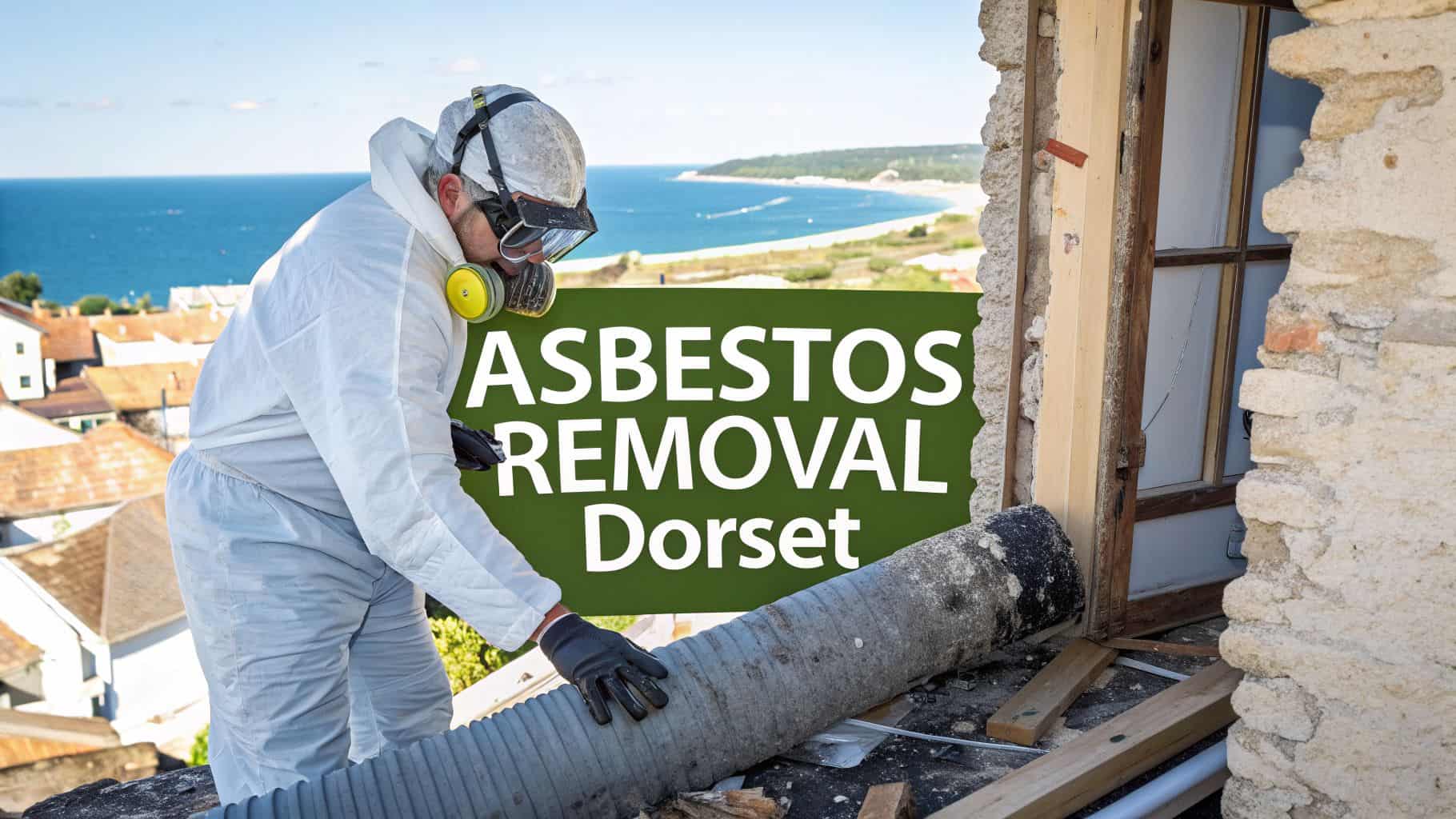
The Hidden Danger in Dorset Homes and Buildings

A Legacy Left Behind in Local Properties
The scale of the problem here in Dorset is significant. Asbestos was a go-to building material in the UK from the 1950s right through to the mid-1980s, leaving a huge number of buildings contaminated. It’s a sobering thought that nearly half of all Dorset Council buildings are still known to contain this substance, which really highlights how common it is. This history is vital for property owners to understand. If your home or business premises was built or had major work done before the year 2000, there’s a good chance it contains asbestos-containing materials (ACMs). Knowing where it might be hiding is the first step towards keeping everyone safe.Common Asbestos Hotspots in Dorset Buildings
Asbestos was incredibly versatile and was mixed into hundreds of different building products. While only a professional survey can give you a definite answer, some areas are well-known hotspots. Being aware of these can help you avoid a costly and dangerous mistake. Keep an eye out for asbestos in these key areas:- Roofs and Siding: Those corrugated cement sheets on old garages, sheds, and farm buildings often contain asbestos.
- Ceilings: Textured coatings, famously sold under the brand name Artex, frequently contained asbestos before the mid-1980s.
- Insulation: It was widely used for lagging on boilers and pipes, as well as in asbestos insulating boards (AIB) for partitions and ceiling tiles. If you’ve found something suspicious, you can learn more about what asbestos insulation looks like in our detailed guide.
- Flooring: Old vinyl floor tiles and the black bitumen adhesive used to stick them down are common culprits.
- Gutters and Downpipes: Asbestos cement was also formed into water pipes and drainage systems.
Understanding this hidden risk is paramount. It’s not about causing alarm, but about promoting awareness. Recognising the potential for asbestos in your property empowers you to take the correct, safe steps rather than making a dangerous mistake.
Getting to Grips with Asbestos Laws in Dorset and the UK
When it comes to asbestos, understanding the law isn’t just about ticking boxes. For property owners and managers across Dorset, it’s the single most important step in keeping people safe. The rules are there to shield you, your family, and the public from those hazardous fibres, with the main piece of legislation being the Control of Asbestos Regulations 2012. At its heart, the law is pretty straightforward. If you’re in charge of a non-domestic property, you have a ‘duty to manage’ the asbestos within it. This means you have to find out if asbestos is present, check the risk it poses, and put a solid plan in place to handle it safely.Licensed vs. Non-Licensed Work: What’s the Difference?
This is where things get serious. UK asbestos law makes a crucial distinction between licensed and non-licensed work, and it’s not just a technicality. It’s what determines whether a job is even remotely suitable for DIY, or if it demands a specialist. The category a job falls into depends entirely on the material and how likely it is to release fibres when disturbed.- Non-Licensed Work: This usually involves lower-risk materials where the asbestos is well-contained. Think of asbestos cement sheets on a garage roof or old vinyl floor tiles. The fibres are locked tightly in a solid matrix, so the risk is lower—as long as you handle the material carefully and don’t break it up.
- Licensed Work: This is the big one. It’s reserved for high-risk materials that crumble easily and release fibres at the slightest touch. We’re talking about asbestos insulation board (AIB), old pipe lagging, and sprayed insulation. Disturbing these can release a cloud of millions of fibres, and it is illegal for anyone but a licensed contractor to touch them.
The Role of the Health and Safety Executive (HSE)
The Health and Safety Executive (HSE) is the UK’s watchdog for workplace safety, and they take asbestos very seriously. For any high-risk licensed project, they enforce strict rules to protect the public. One of the most critical rules is the 14-day notification period. Before a licensed contractor can even think about starting work on high-risk materials, they must officially inform the HSE. This gives the authorities a two-week window to review the plan and even carry out spot-checks on the site. This is a non-negotiable step for any reputable company in Dorset. The process always starts with proper testing at a UKAS-accredited lab, followed by detailed risk assessments before anyone puts on a pair of overalls. You can learn more about how professionals plan for asbestos removal on asbestosconsultancyltd.co.uk.The 14-day rule really highlights how serious this is. It’s a clear line in the sand, showing that this kind of work is worlds away from general trades or DIY. It needs a level of planning that only licensed specialists can deliver.Of course, it’s not just about asbestos-specific laws. As a property owner or landlord, you also have broader responsibilities for maintenance and safety, which include your UK landlord repair responsibilities. Handling asbestos correctly is a huge part of that duty. Ultimately, the law is there for one reason: to stop people from being exposed to asbestos. Whether you’re a homeowner in Poole or running a business in Dorchester, working with a professional who lives and breathes these regulations is the only way to ensure the job is done safely and legally.
The Professional Removal Process From Start to Finish
Watching a professional asbestos removal team in action can be a bit of an eye-opener. It’s a world away from your typical building work. To give you some peace of mind, it helps to understand exactly what goes on. Think of it less like demolition and more like a surgical procedure for your property. Precision and containment are everything. Every single step, from the moment we arrive to the final sign-off, is designed to ensure the job is done safely and correctly. For any asbestos removal in Dorset, the goal is simple: make sure not a single dangerous fibre escapes. The whole process follows a clear, legally-defined path. This flowchart shows the core principles of asbestos law that every professional contractor must follow: establishing who has the Duty to manage the risk, carrying out an Assessment, and then taking the correct Action.
Stage 1: Site Preparation and Containment
Before anyone even thinks about touching the asbestos, the first job is to completely seal off the work area. For high-risk, licensed materials, this means building a sealed enclosure, usually with heavy-duty polythene sheeting on the walls and floors. This creates a self-contained bubble, trapping any fibres released inside. To keep this ‘bubble’ secure, we bring in some serious specialist kit:- Negative Air Pressure Units: These are powerful fans with high-efficiency filters that constantly suck air into the enclosure. This means air can only flow one way—inwards—preventing any contaminated air from getting out.
- Decontamination Unit (DCU): This is a mobile unit attached to the enclosure, and it’s non-negotiable. It has three parts: a clean end, a shower area, and a dirty end. Operatives must pass through it every single time they leave the work area to ensure no fibres are carried out on their clothing or bodies.
Stage 2: Safe Removal and Air Monitoring
Once the enclosure is up and running under negative pressure, the real work begins. Our operatives use techniques specifically designed to keep fibre release to an absolute minimum. This usually involves a method called ‘wet stripping’, where a special liquid is sprayed onto the asbestos materials to suppress dust before removal. Wearing full Personal Protective Equipment (PPE)—including specialised masks and disposable overalls—the team will carefully dismantle and remove the asbestos-containing materials (ACMs). These are immediately double-bagged in heavy-duty, red-and-clear asbestos waste sacks and sealed up, all within the enclosure. While this is happening, an independent, UKAS-accredited analyst will often be on site carrying out air monitoring. This is a crucial check. It provides impartial proof that the safety measures are working and that fibre levels outside the enclosure are well within safe limits.Stage 3: Clearance, Decontamination and Paperwork
After every last piece of visible asbestos has been removed and bagged, the enclosure gets a deep clean. We use specialist vacuums fitted with HEPA filters to clean every single surface meticulously. Only when the removal team is 100% satisfied can the final clearance process start.This is where the four-stage clearance comes in. It’s a formal inspection carried out by the independent analyst. They’ll visually inspect the area, take air samples, and do a final check to confirm the space is completely free of asbestos contamination and safe for people to use again.Once the analyst gives the all-clear, the enclosure is taken down. The very last, and legally vital, step is the paperwork. All the bagged asbestos waste is taken from your property by a licensed waste carrier to a licensed disposal facility. You are then given a consignment note. This document is your legal proof that the hazardous waste was handled and disposed of correctly from start to finish. It’s the final piece of the puzzle, giving you total peace of mind that your asbestos problem has been solved safely, professionally, and legally.
Decoding the Costs of Asbestos Removal in Dorset
When it comes to asbestos, the first question on everyone’s mind is always about cost. While it’s natural to want a straightforward price, the reality of asbestos removal in Dorset is a bit more complex. The final bill isn’t just for labour; it’s a reflection of the specialist procedures required to keep everyone safe. Think of it less like buying a product and more like paying for a surgical operation on your property. Every pound goes towards legally mandated steps designed to protect you, your family, and the wider environment from those hazardous fibres.The Main Factors That Influence Price
No two asbestos jobs are ever the same, which is why you’ll never find a one-size-fits-all price list. A quote is carefully calculated based on the specific risks involved, the resources needed, and the strict regulations we must follow. Reputable firms often use sophisticated construction estimating software to ensure their quotes are both accurate and transparent. The biggest variables that will shape your final quote include:- The Type and Condition of Asbestos: Is it a bonded asbestos garage roof? That’s generally lower risk and less expensive to handle. Or is it crumbly, friable pipe insulation? This is high-risk, demands licensed specialists and full containment, making it significantly more costly.
- The Quantity and Weight: Disposal sites charge by weight. A few old floor tiles won’t cost much to dispose of, but an entire roof can weigh hundreds of kilograms, pushing tipping fees well into the hundreds or even thousands of pounds.
- Location and Accessibility: A ground-floor shed with clear access is relatively simple. Removing the same materials from a cramped loft or a tight basement, however, requires more time, more labour, and potentially specialist kit like scaffolding, all of which adds to the cost.
Why Suspiciously Cheap Quotes Are a Major Red Flag
If a quote for asbestos removal looks too good to be true, it absolutely is. An unusually low price is a massive warning sign that the contractor is cutting corners and putting you at enormous risk.A cheap quote often means the contractor is planning to skip essential safety steps. This could involve failing to build a proper sealed enclosure, not using correct personal protective equipment, or, most commonly, illegally fly-tipping the hazardous waste to avoid paying licensed landfill fees.Don’t forget, the legal “duty of care” for hazardous waste stays with you, the property owner. If your asbestos ends up dumped in a field, you could be facing hefty fines and the bill for the professional clean-up. Investing in a compliant, professional service is your only real protection. For a more detailed look at the numbers, our guide breaks down the cost of asbestos removal even further.
How to Choose a Licensed Asbestos Contractor in Dorset

Verify Their HSE Licence
This is your first, non-negotiable check for any high-risk asbestos work. Any company removing materials like asbestos insulation board (AIB) or old pipe lagging must hold a licence from the Health and Safety Executive (HSE). This isn’t just a fancy certificate; it’s a legal requirement. Ask for their HSE licence number and don’t just take their word for it. You can, and should, check it yourself on the HSE’s public asbestos licence holder database. If they can’t show you a licence or they’re not on the register, that’s a massive red flag. Walk away.A valid HSE licence is your best guarantee that a contractor has been properly vetted and knows how to work to the highest safety standards. Without it, you have no real assurance they’re qualified to keep you safe.Proper asbestos management is a cornerstone of UK law, especially for commercial properties. In fact, for buildings known to contain asbestos, guidance often points to reinspections every 12 months to prevent decay that could release fibres. It’s a serious issue, with asbestos still present in over 1.5 million UK buildings, a topic covered in this Dorset asbestos survey guide on completeasbestos.uk.
Your Pre-Hiring Checklist Questions
Once you’ve confirmed their licence, it’s time to dig a bit deeper. A truly professional company will expect these questions and have clear, confident answers ready.- Can you show me proof of specialist insurance? Standard public liability insurance won’t cut it. They need specific insurance that covers the unique risks of working with asbestos.
- Will I get a written plan of work? A detailed plan should spell out exactly what they’re removing, the methods they’ll use, and how they’ll contain the area with sealed enclosures and decontamination units.
- How will you dispose of the asbestos waste? They must use a licensed waste carrier and take it to a licensed disposal site. Any vague answers here are a huge warning sign.
- Will I receive a waste consignment note? This is your legal proof that the asbestos was disposed of correctly. A reputable firm will always provide this document once the job is done.
Ensuring Compliant Asbestos Disposal and Site Clearance
Getting the asbestos out of your Dorset property is a massive step, but the job isn’t finished yet. What happens next is just as important: getting rid of the waste itself. This isn’t like taking a few bags to the local tip; asbestos has to be handled, transported, and disposed of under a web of strict environmental laws. Honestly, this is the stage where you simply can’t afford to take any chances. We see it all the time – this is where our expertise comes in, making sure the final, critical phase of your project is handled perfectly, whether you’re dealing with licensed or non-licensed asbestos waste.Specialist Skips and Secure Transport
The moment asbestos waste is created, the clock starts on containing it. Every fibre has to be locked down. That’s why we provide purpose-built, sealed containers and lockable skips designed specifically for the job. Once the double-bagged waste is inside, it’s completely enclosed and safe for the journey from your site. Our drivers and vehicles are all licensed waste carriers. This isn’t just a bit of company policy; it’s a legal stamp of approval from the Environment Agency to move hazardous materials like asbestos. For you, the property owner, this is your shield against the hefty fines and legal headaches that come with illegal disposal.That consignment note we give you? It’s far more than just a delivery receipt. Think of it as your legal proof of a job done right. It documents that your hazardous waste has been correctly transported and disposed of at a licensed facility, not dumped in a Dorset lay-by.
Beyond Disposal: A Full Site Solution
We know that an asbestos removal job is rarely the end of the story. It’s usually the first, messy part of a bigger renovation or demolition project. To get you to the next stage faster, we offer more than just a collection service. For bigger clear-ups, our grab lorry hire can make short work of any remaining waste, clearing the ground so you can move forward. And when you’re ready to start rebuilding, we can deliver a wide range of top-quality aggregates—like sand, gravel, or recycled concrete—straight to your prepared site.- Compliant Asbestos Disposal: Using our sealed skips and fully licensed carriers.
- Efficient Site Clearance: Clearing the way with our flexible grab lorry service.
- Project Continuation: Delivering the essential building aggregates you need to get started.
Common Questions About Asbestos in Dorset
Finding what you think might be asbestos in your home or business can be a worrying time. It’s natural to have a lot of questions. Getting clear, honest answers is the only way to move forward safely, so we’ve answered some of the most common queries we get from people right here in Dorset.What Should I Do if I Find Material I Suspect Is Asbestos?
The number one rule is simple: do not touch or disturb it. Just leave it be and assume it’s asbestos until an expert tells you otherwise. If you can, shut the door to the room and keep people out of the area. Then, your very next step should be to call a UKAS-accredited asbestos surveyor who can take a proper sample and get it tested. Trying to break, scrape, or remove it yourself is the worst thing you can do—that’s exactly how the dangerous fibres get into the air you breathe.Is It Ever Safe to Remove Asbestos Myself?
Legally, you can only handle certain non-licensed materials, and only if you’ve had the right training and have all the correct personal protective equipment (PPE). Things like asbestos cement sheets on an old garage roof often fall into this category. But for anything more friable (meaning it crumbles easily), like insulation board or pipe lagging, the law is clear: you must use a licensed contractor. Honestly, even for the lower-risk stuff, professional asbestos removal in Dorset is always the smartest and safest bet.Your health is not something to gamble on. While some DIY work is legally allowed, the specialist equipment and experience of a licensed contractor provides a level of safety that you just can’t match on your own.
How Long Does an Asbestos Survey Typically Take?
It really depends on the building and what kind of survey you need. For a standard 3-bedroom house here in Dorset, a management survey can usually be done and dusted in a few hours. A refurbishment or demolition survey is far more in-depth and invasive, so it will take longer, depending on how big and complex the property is. After the surveyor has taken samples, you can usually expect the lab results back within 24-48 hours.What Happens if My Neighbour Is Disturbing Asbestos?
It’s a genuine concern if you think a neighbour is creating a risk—maybe by smashing up an old shed roof without taking any precautions. The best first move is often just to have a quiet word. They might genuinely not know the dangers. If that’s not an option or the situation feels urgent, you should report your concerns. Your local council’s Environmental Health department or the Health and Safety Executive (HSE) are the right people to call for official advice and to step in if needed.No matter the project, making sure your waste is handled correctly is absolutely vital. The Waste Group provides fully compliant asbestos disposal services across the region, giving you total peace of mind. To talk about what you need and get a clear, no-nonsense quote, visit us at https://www.thewastegroup.co.uk.
Removal and disposal are two different jobs
It is worth being clear about where one ends and the other begins. Removal is the licensed work of taking asbestos out of a building, and for anything higher-risk that means an HSE-licensed removal contractor. Disposal is what happens next — getting the material off site legally, under hazardous waste consignment note, to a permitted facility.
The Waste Group handles the disposal half. We are an Upper Tier registered waste carrier (CBDU113405) operating under environmental permit EPR/EB3308GT, and we collect asbestos by van, skip or RoRo across Dorset. We do not carry out removal. If your asbestos is already down and safely double-wrapped, our 2026 asbestos disposal cost guide sets out licensed collection from £414 inc VAT and what drives the price — or get a fixed quote.