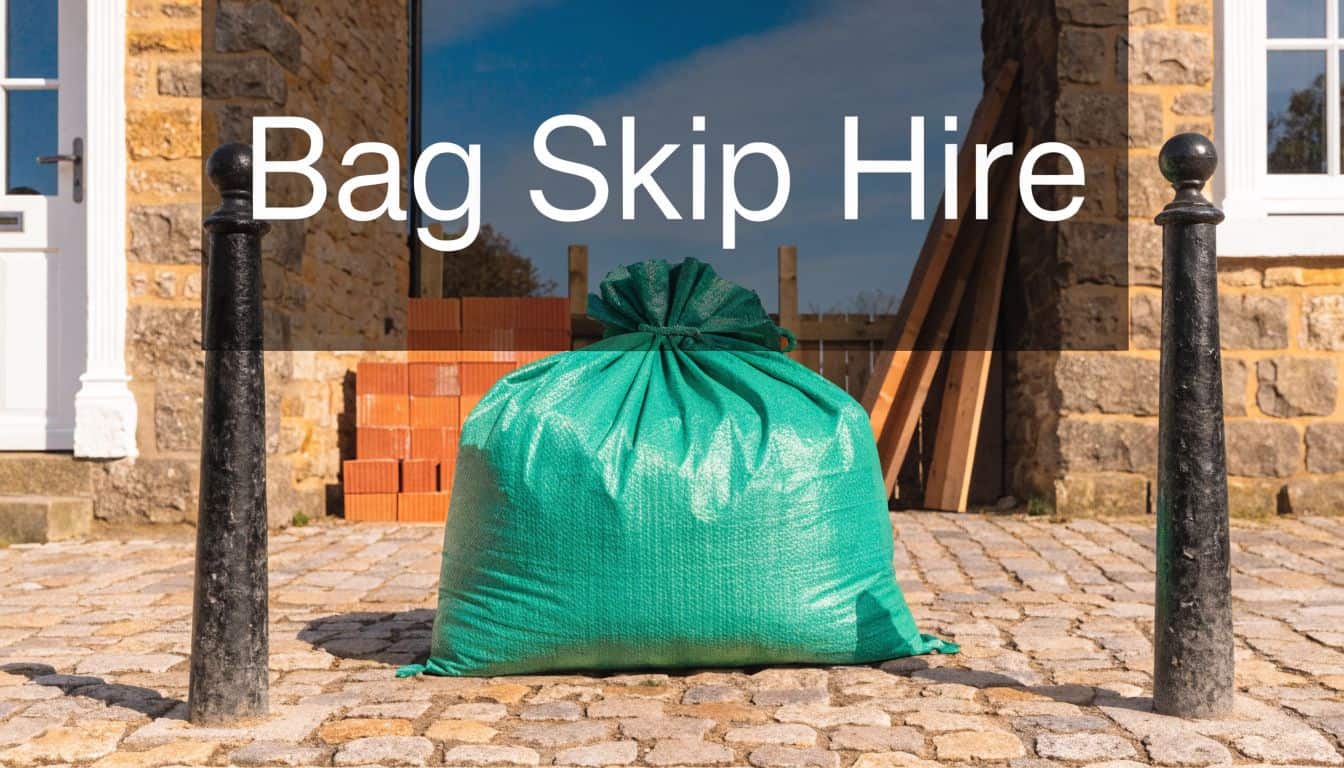
You’ve cleared the garage, pulled out broken fence panels, stacked old kitchen units by the side gate, and realised the awkward bit isn’t the job. It’s getting the waste out without blocking the drive, upsetting the neighbours, or ordering a full steel skip you don’t have room for.
That’s where bag skip hire makes sense. In Dorset, it’s often the practical answer for narrow driveways, terraced streets, shared access, and smaller jobs that don’t justify a rigid skip sitting outside for days. It isn’t the right tool for every load, and it won’t replace a builders’ skip on a heavy demolition job. But for the right kind of waste, in the right kind of location, it solves a very real problem.
What Is Bag Skip Hire An Introduction
A skip bag is best thought of as a fold-away skip. It arrives flat, takes up very little space until you need it, and gives you a flexible way to deal with waste where a metal skip would be awkward or excessive.
In practical terms, bag skip hire suits jobs like a garden clearance in Poole, a shed empty-out in Dorchester, or a light refurbishment at a Bournemouth property where there’s no sensible place to drop a rigid container. If you’ve got limited access, don’t want a skip lorry trying to place steel on a tight drive, or you’re working in stages, a bag is often easier to live with.

How a skip bag works
The process is straightforward.
Order the bag
It arrives flat-packed, so you can store it in a shed, porch, van, or garage until you’re ready.Open and position it
Put it on solid, accessible ground. Private driveways and hardstanding are usually the easiest option.Fill it at your own pace
That’s one of the biggest advantages. You’re not racing a fixed collection window in the same way many people feel they are with a traditional skip.Book the collection
Once it’s full and loaded correctly, it’s lifted and taken away.
It’s a proper lifting product, not a builder’s sack
People sometimes assume skip bags are just oversized rubble bags. They’re not. Proper skip bags are built for lifting and transport. According to ISO 21898 skip bag product specifications, they’re certified to ISO 21898 standards and typically have a 5:1 Safety Factor, with Safe Working Load ratings from 500 kg to 2000 kg.
That matters on collection day. A bag has to cope with the strain of being lifted when loaded, not just sit on the ground looking tidy.
Practical rule: A skip bag is for controlled loading. If you’re throwing in dense rubble, wet soil, or broken concrete without thinking about weight, you can turn a convenient option into the wrong option very quickly.
Where bag skip hire works best
Bag skip hire usually works well when the project is:
Small to medium in scale
Garden waste, light DIY debris, old household clutter, timber offcuts, packaging, and non-bulky renovation waste.Tight on space
Narrow drives, side access routes, small front gardens, mews properties, and locations where a skip lorry drop-off would be difficult.Carried out in bursts
Weekend DIY, phased decluttering, and jobs where waste builds gradually rather than all at once.
What it doesn’t do well is replace a heavy-duty skip on substantial construction waste. If your project involves a lot of hardcore, soil, brick, or dense mixed demolition material, a rigid skip is usually the safer and more efficient answer.
Skip Bags vs Traditional Skips The Key Differences
Bag skip hire and traditional skip hire solve the same problem, but they do it in different ways. Choosing properly comes down to access, waste type, timing, and how much material you’re producing.

Access and footprint
This is usually the first deciding factor.
A rigid 4-yard skip needs a footprint of at least 1.83m x 1.29m, while a comparable skip bag can fit in half a car park space and doesn’t need a permit on private land. In the same source, skip bags are also noted as potentially reducing project setup time and costs by over 40% because they’re easier to place and don’t involve the same delivery setup as a steel skip. That comparison is set out in these UK skip size and access notes.
If you’ve got a broad driveway and clear lorry access, this may not matter much. If you’ve got a tight residential street, overhanging trees, parked cars, or a property where every inch counts, it matters a lot.
The real-world trade-offs
A bag wins when access is difficult and the waste volume is modest. A skip wins when the job is bigger, heavier, or less predictable.
Here’s the practical comparison:
| Decision point | Skip bag | Traditional skip |
|---|---|---|
| Space needed | Smaller footprint, easier in restricted areas | Needs clear placement space |
| Best for | Light to moderate loads, smaller clear-outs | Larger refits, bulky loads, heavy waste |
| Filling pace | Fill over time | Usually tied to a hire arrangement |
| Placement hassle | Easier on private land | More planning if access is awkward |
| Heavy materials | Limited by bag load rating | Better for dense waste streams |
Cost depends on the job, not the headline price
People often ask which is cheaper. The honest answer is that it depends what you’re loading.
For a modest garden tidy, a house clearance of loose items, or a small DIY project, a bag often makes more financial sense because you’re not paying for steel skip capacity you won’t use. For larger projects, the maths can flip. Multiple bags can become less efficient than one properly sized skip.
That’s why the right question isn’t “Which costs less?” It’s “What’s the most efficient container for this exact waste?”
Flexibility is where bags stand out
A steel skip is great when you want one solid container on site and you know the job will justify it. A skip bag is better when you need breathing room.
That might mean:
- A homeowner clearing one room at a time
- A gardener finishing a tidy-up after several visits
- A decorator stripping out old materials across a week
- A landlord emptying a property between trades
You can also compare the practical pros and cons in this guide on Hippo bag vs skip, which helps if you’re deciding between a flexible bag and a rigid hire option.
What works and what doesn’t
A skip bag usually works well when:
The waste is light or mixed but controlled
Think wood offcuts, garden trimmings, packaging, old toys, broken shelving, and general household clear-out waste.The site is awkward
Narrow drive, no room for steel placement, or a property where you want less disruption.You don’t want a large container sitting outside
Bags are less intrusive visually and physically.
A traditional skip is usually the better call when:
You’re stripping out kitchens or bathrooms at scale
The waste builds faster than many people expect.You’re dealing with dense materials
Hardcore, brick, concrete, heavy spoil, and large mixed construction loads are usually more suitable for steel skips.Several trades are working at once
In that situation, a fixed container on site keeps the job moving.
The mistake people make is trying to force a bag into a skip-sized job. That’s when loading becomes inefficient, collection becomes awkward, and the convenience disappears.
Available Skip Bag Sizes and What They Hold
A Dorset householder clearing a loft and a builder finishing a small refit can both order a skip bag and still need very different sizes. The wrong choice usually shows up fast. Either the bag fills before the job is done, or the waste is so heavy that collection becomes the sticking point.
Bag size should be matched to the material, how quickly it will build up, and where the bag will sit for collection. Volume matters, but weight often decides whether a bag is practical. That is especially true with plasterboard, soil, broken paving, bricks, and wet garden waste.
Small bags for light, controlled waste
Smaller skip bags suit jobs where the waste is loose, light, and produced over several days rather than all at once. Typical examples include cupboard clear-outs, hedge cuttings, packaging, old toys, timber offcuts, and a modest shed tidy-up.
They are also easier to place on a drive without dominating the frontage.
For many homeowners, this is the point where a bag makes more sense than a steel skip. It keeps the job contained, but it does not encourage overfilling. If you are still sorting before you throw anything away, a room-by-room approach from this guide on how to declutter your home effectively can help you judge the volume more accurately before ordering.
Larger bags for bulkier clearances
Larger skip bags are better for mixed domestic waste where the material stays fairly light. That includes broken flat-pack furniture, old shelving, cardboard, plastic, timber, and general house clearance waste from one part of a property.
They are useful, but there is a trade-off.
A bigger bag gives more volume, but it can tempt people to load it like a mini builder's skip. That is where bags and traditional skips part company. A steel skip handles dense, sharp, compacted waste more reliably. A bag works best when the load has some air in it and can still be lifted safely from the collection point.
A practical guide to matching the job
| Project type | Bag size that often suits |
|---|---|
| Cupboard, loft, or small shed clear-out | Small bag |
| Garden tidy-up with branches, weeds, and cuttings | Small to medium bag |
| Single-room DIY waste with timber, fittings, and packaging | Medium bag |
| Mixed domestic clearance with bulky but light waste | Medium to large bag |
| Brick, rubble, soil, concrete, or heavy strip-out waste | Usually better in a traditional skip |
On site, I use a simple test. If two people can lift most of the waste items comfortably, a bag may be the right tool. If the material drops hard, stacks tight, and gets heavy quickly, book a skip instead.
That choice also has an environmental side. A bag can reduce the footprint of a small clearance because you are not bringing in a larger steel container than the job needs. But once the waste is dense and likely to need multiple bags or a difficult lift, the greener option can be a correctly sized skip with one clean collection. If you are unsure about the material rather than the volume, our guide to what can go in a skip helps you sort that out before you order.
In Dorset, size choice can also affect where the bag can legally go. A bag kept fully on private land is usually straightforward. If you are already close to needing highway space, permit rules and placement limits matter just as much as capacity.
Managing Your Waste Responsibly What Goes In and How
A Dorset homeowner clearing a garage or a builder finishing a small refit usually asks the same question at this stage. Will the bag take it, and will it be collected without trouble? The answer depends less on volume than on what the load contains, how it is packed, and whether problem items have been kept out from the start.

What usually goes in a skip bag
For domestic jobs and light trade work, skip bags are generally suited to dry, non-hazardous waste that crews can lift and process safely.
That often includes household clutter, garden cuttings, timber offcuts, broken shelving, old fittings, tiles, cardboard, plastic packaging, and small amounts of DIY debris. Some light rubble may be accepted, but only if the bag stays within its weight limit. That point matters more than many people expect. A half-full bag of bricks can be harder to collect than a full bag of lighter mixed waste.
If you are clearing a property before a move, sale, or renovation, sort first and load second. This guide on how to declutter your home effectively is useful for separating reusable items, donations, and true waste before the bag turns into a mixed pile.
What should stay out
The usual problem materials are the same ones that cause delays across Dorset collections.
Keep asbestos, chemicals, solvents, liquid paint, batteries, tyres, gas bottles, electrical items, plasterboard where separate handling is required, and anything hazardous or specialist out of the bag unless you have checked acceptance in advance. These items can affect transport, sorting, and disposal routes. In some cases, they can stop the collection altogether.
For a practical item-by-item check, use this guide to what can go in a skip before loading anything uncertain.
If there is any doubt, ask first.
How to fill the bag properly
A well-loaded bag is easier to collect and more likely to stay within the agreed service conditions.
Place it on firm, level ground. Put heavier material at the bottom and spread it across the base rather than dropping it all in one corner. Break bulky items down so the load sits flat. Keep everything below the top edge and make sure nothing sharp is pressing out against the fabric.
On site, poor loading causes two common problems. The first is instability during lifting. The second is hidden overweight loads, especially where soil, concrete, paving, or wet garden waste has been mixed through a general clearance.
The environmental trade-off people should know
Skip bags can be the sensible option for a small, contained job. They avoid sending a larger steel skip than the work really needs, which can reduce wasted capacity on minor clear-outs.
But bags are not automatically the lower-impact choice.
Mixed bagged waste is often harder to sort cleanly than a well-planned skip load, especially once garden waste, packaging, timber, rubble, and general rubbish are all packed together. In practice, recycling results usually improve when waste is separated properly at the point of loading. That is one reason I tell customers to decide on the waste type before they decide on the container.
How to improve recycling outcomes
A few simple habits make a real difference:
- Keep green waste separate from mixed DIY waste
- Do not mix soil, brick, or concrete into a general light-waste bag
- Set electricals, batteries, and paint aside for separate disposal
- Flatten boxes and break down bulky items to make the load easier to inspect
- Keep the bag dry where possible, because wet waste is heavier and harder to handle
The cleaner the load, the better the result. That means fewer collection issues, better sorting at the waste facility, and less chance of paying to remove material that should have gone through a different disposal stream.
Permit Rules and Placement for Skip Bags in Dorset
A Dorset driveway job can turn awkward fast if the bag will not fit fully on your land. The bag itself is not usually the problem. Placement is.
If the bag sits on private land, such as a driveway, yard, or within your boundary, highway permits are generally not part of the job. If any part of it sits on the road, pavement, or verge, treat it as a council compliance issue before delivery is booked. That is the point many homeowners and small building teams get wrong.
Private land and highway rules are not the same
For most bag collections, private land is the cleanest option. It reduces paperwork, avoids obstruction issues, and gives more control over collection timing.
Public highway placement is different. Councils can treat a skip bag much like any other waste container if it occupies highway space. The practical test is simple. Ask where the bag will rest when full, not where it starts when empty. A bag that bulges onto the pavement after loading can create the same problem as one placed there from the outset.
Local compliance point: If the filled bag will cross your boundary line, check permit requirements first.
Dorset-specific checks that matter
In Bournemouth, Christchurch and Poole, frontage is often tight. Terraced streets, narrow pavements, shared access, and on-street parking all increase the chance of a bag ending up partly on highway land. In rural parts of Dorset, the issue is often different. Soft verges, narrow lanes, and limited turning space can make an apparently simple collection unsuitable.
Permit terms, lead times, and conditions can vary by council, so it is better to confirm the current rule with the relevant local authority than rely on a generic national guide. If the property is in the BCP area, check BCP Council requirements before delivery. If the job is in the Dorset Council area, check their highway rules instead. For a broader comparison of local access constraints and container options, see this guide to skip hire in Dorset.
Placement checks that prevent collection problems
Before ordering, check these points on site:
- Will the bag stay fully within the boundary when full
- Is the ground solid enough to hold the loaded weight without sinking or leaning
- Can the collection vehicle reach the bag without lifting over walls, cars, or fences
- Will the bag block pedestrians, dropped kerbs, sight lines, or neighbouring access
- Are there overhead cables, trees, or porches that could interfere with collection
A common oversight is measuring the space for the flat bag, not the filled one. Once loaded, the footprint and shape can change enough to create an obstruction.
What works best in practice
The safest setup is a bag placed on firm private ground with a clear route for the driver and lifting equipment. On many Dorset jobs, that means a driveway rather than a frontage strip near the pavement.
Permit issues usually arise from preventable mistakes. The usual causes are partial overhang onto the highway, poor access for collection, or assuming a skip bag is exempt because it is smaller and flexible than a steel skip. A five-minute placement check before delivery is easier than rearranging a loaded bag later.
How to Order Your Skip Bag with The Waste Group
Ordering a skip bag should be easy. If it isn’t, the service loses half its value.
The practical process is usually straightforward. Choose the bag size based on the job, arrange delivery, place the bag on suitable ground, fill it correctly, then book collection when it’s ready. For homeowners, that means less pressure than trying to time a full skip delivery around a short burst of DIY. For trades, it means you can keep a smaller waste solution on hand without committing to a larger container too early.
A simple ordering process
The usual flow looks like this:
Choose the right bag
Match it to the waste type, not just the project title. A “small renovation” can produce very different waste depending on whether it’s timber and packaging or dense rubble.Arrange delivery
A flat-packed bag is easy to store if the work hasn’t started yet.Set it in the right place
Private land with clear access is normally the cleanest option.Load it properly
Keep the contents level, safe, and within the bag’s intended limits.Book collection when full
Here, the flexibility pays off. You’re not forced into loading everything in one frantic afternoon.
Why local knowledge matters
In Dorset, local conditions make a difference. Bournemouth terraces, Poole driveways, rural lanes outside Dorchester, and coastal properties with awkward frontage all create different access issues. A provider that understands the area can usually spot the problem points earlier, especially around placement, permits, and collection access.
That local judgement matters just as much as the bag itself. The wrong bag in the wrong location still causes hassle.
What makes a service worth using
A practical bag skip service should give you:
Clear size guidance
So you don’t end up paying twice for the wrong container.Straight answers on access
Not guesswork.Honest advice on permits
Especially if the bag may touch public land.Reliable collection arrangements
Because the whole point is to remove waste cleanly, not leave it lingering.
For anyone ordering locally, The Waste Group offers the kind of service customers value when they’re already busy with the job itself: straightforward online ordering, flexible delivery windows, local support across Dorset, and a price-match guarantee. The company also has a 4.9-star reputation and an environmental commitment that includes planting a tree for every skip hired, which is a practical sign that waste removal and responsible disposal should sit together, not apart.
The best waste service is the one that fits the job first time. Right size, right placement, right collection plan.
When to choose a bag from the outset
A bag is often the right first choice when:
- You know the waste volume is limited
- The property can’t comfortably take a steel skip
- You want to fill gradually
- The load is light to moderate rather than heavy demolition waste
If any of those points match your job, ordering a bag early usually keeps the site tidier and the job easier.
Frequently Asked Questions About Bag Skip Hire
How long can I keep a skip bag before collection
That depends on the collection arrangement, but one of the main benefits of bag skip hire is flexibility. You’re usually able to fill it at your own pace rather than racing through a short loading window.
Do I need to be at home when it’s collected
Not always. The important point is access. The bag needs to be visible, reachable, and loaded correctly so the driver can lift it safely.
What if it rains
Rain itself usually isn’t the main issue. Weight is. If a bag is holding absorbent or heavy material, wet conditions can add to the total load, so it’s sensible to avoid leaving dense waste exposed for long periods.
Can I put rubble and soil in a skip bag
Sometimes in limited quantities, a factor that often leads to trouble for people. Dense materials build weight quickly, so a bag that looks only half full can already be too heavy for the intended lift.
Will the collection vehicle need much room
Yes, it still needs workable access. A bag is easier to place than a rigid skip, but collection isn’t magic. Narrow roads, parked cars, low branches, and blocked drives can all cause problems.
Do skip bags need a permit in Dorset
If the bag stays on private land, that’s usually simpler. If it goes on the public highway, permit rules can apply, as covered earlier.
Are skip bags the greener option
Not automatically. They’re convenient, but the environmental result depends heavily on how well the waste is sorted. Mixed, contaminated loads are harder to recycle well than cleaner segregated ones.
If you need a practical waste solution that suits tight access, smaller clear-outs, or phased DIY work, The Waste Group can help you choose the right option for your site in Dorset. Whether you need a skip bag, a traditional skip, or advice on permits and placement, their team can point you to the most efficient and compliant setup for the job.