Broken Glass Recycle: Safe UK Handling & Disposal
Broken Glass Recycle: Safe UK Handling & Disposal
It’s a sound we all dread: the sharp, unmistakable crash of glass hitting the floor. Your first instinct is probably just to get the mess cleaned up, but what comes next? How do you handle broken glass recycle safely and correctly?
Here's a hint: just chucking the sharp pieces into your regular recycling bin is almost always the wrong thing to do. In fact, it's a pretty serious safety risk.
The Hidden Dangers in Your Recycling Bin
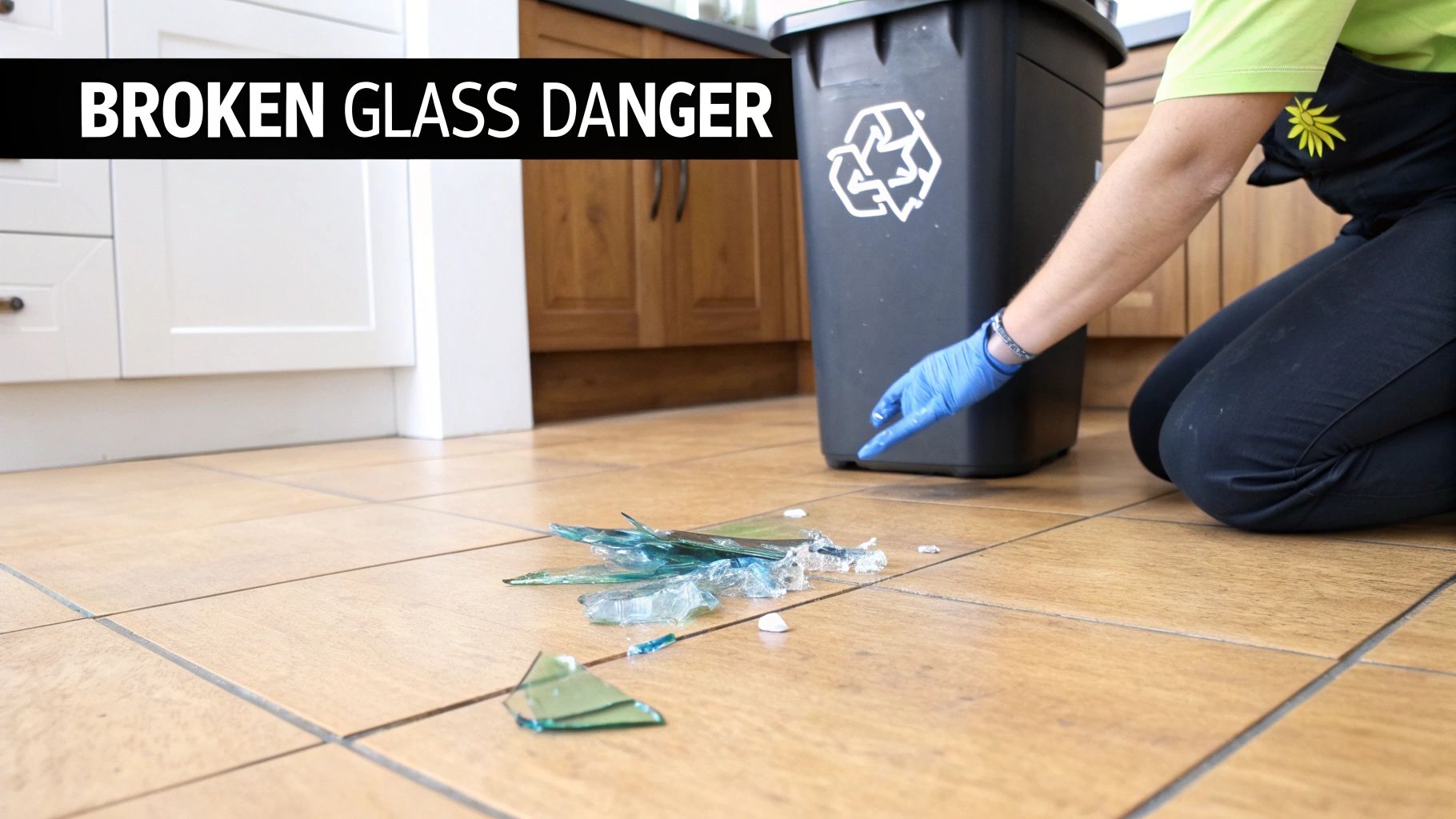
That smashed jam jar or dropped pint glass is more than just a nuisance in your kitchen. Once it leaves your property, it becomes a real hazard in the waste management system. The journey from your kerbside to a recycling facility involves a lot of people, and stray glass fragments are a major cause of injuries for collection crews and sorting staff.
Protecting Waste Management Workers
When you put loose, broken glass into a recycling bin, it’s like setting a trap. Workers at Material Recovery Facilities (MRFs) often have to sort materials by hand, and sharp shards can easily slice through standard protective gloves, causing deep cuts and the risk of infection.
It's such a significant problem that most UK councils have a strict "no broken glass" policy for their kerbside collections.
It's not just the people, either. The machinery in these facilities takes a beating from it. Small, sharp bits of glass get wedged in conveyor belts and other sorting equipment, leading to damage and expensive downtime. So, following the rules isn't just about ticking boxes – it’s about protecting the people and the essential infrastructure we all rely on.
By taking a few extra moments to contain broken glass properly, you directly contribute to a safer working environment for the people who handle our community's waste. It's a small act of consideration with a big impact.
The Problem of Contamination
Safety aside, broken glass is a huge source of contamination for other perfectly good recyclables. Just imagine thousands of tiny, sharp splinters getting mixed into a bale of paper or cardboard. It completely ruins the batch, meaning the whole lot often has to be diverted from the recycling plant straight to a landfill.
This creates a nasty ripple effect:
- Wasted Resources: Tonnes of good materials like paper, cardboard, and plastic have to be thrown away.
- Increased Landfill Burden: Diverting contaminated recyclables puts even more pressure on our already-strained landfill sites. You can learn more about the environmental impact of landfills in our detailed guide.
- Economic Loss: The value of the recyclable materials is wiped out, making the whole system less efficient and more costly.
Glass is an amazing material – it’s endlessly recyclable without losing any quality. But for it to be part of that circular economy, we have to handle it the right way. Making sure it gets into the recycling stream clean and whole is absolutely key.
Safely Handling and Containing Broken Glass
Before you even think about which bin it goes in, your absolute first priority is to manage the immediate hazard. A dropped glass or a smashed picture frame instantly creates a minefield of sharp edges. Dealing with it safely requires a calm, methodical approach to make sure nobody gets hurt.
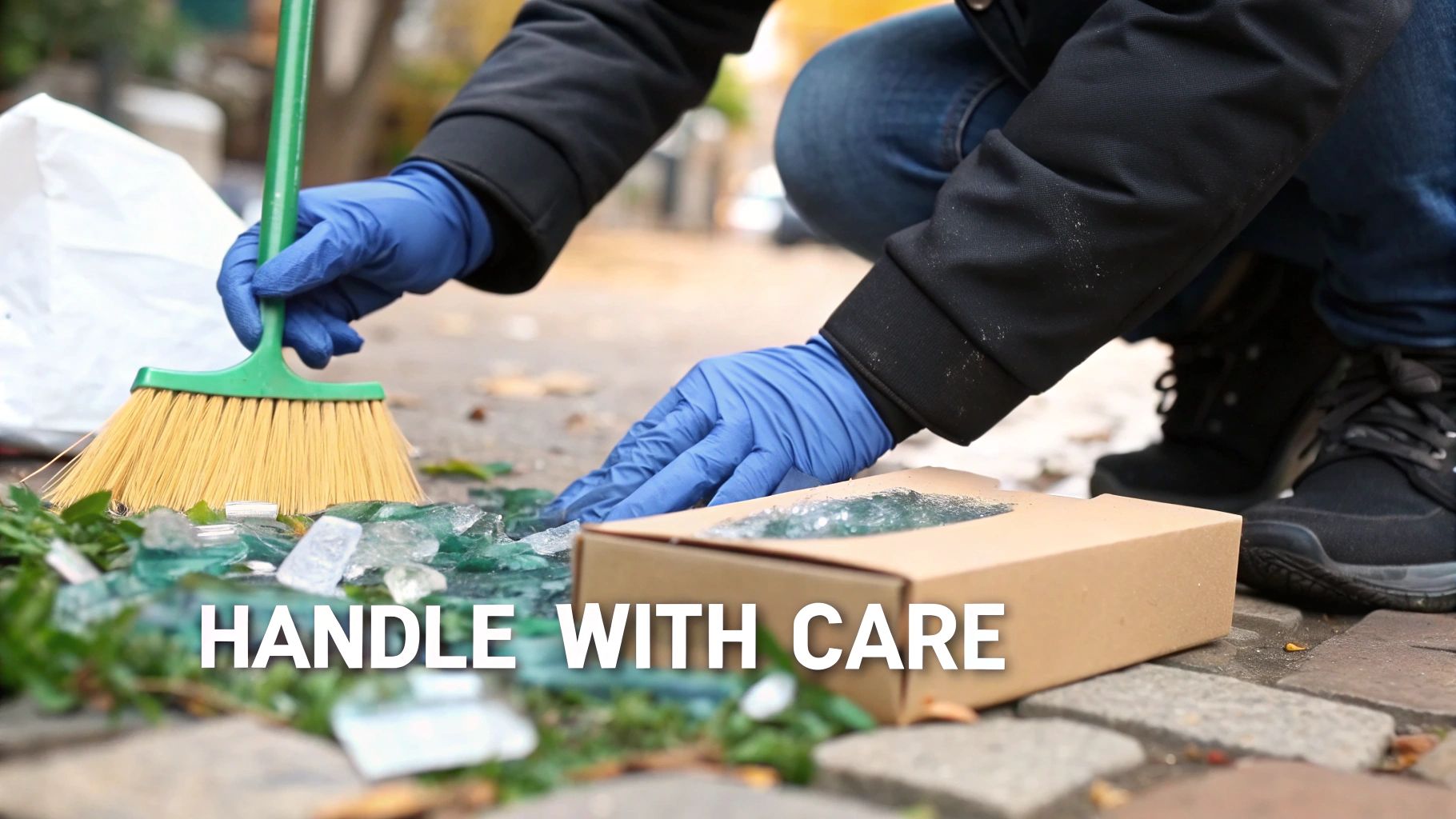
First things first: your safety. Never, ever handle broken glass with bare hands. Find a pair of thick, heavy-duty gloves—your flimsy washing-up gloves just won't cut it here. It’s also a good idea to wear sturdy, closed-toe shoes to protect your feet from any shards that might have skittered across the floor.
Collecting Every Last Piece
Start by carefully picking up the largest, most obvious chunks of glass. Place them onto a thick layer of newspaper or a few sheets of kitchen roll spread out nearby. This simple step stops you from having to carry sharp objects across the room.
Once the big fragments are out of the way, it’s time to hunt down the tiny, almost invisible splinters. These are often the most dangerous because they’re so easy to miss. For these smaller bits, you have a few surprisingly effective options right in your kitchen:
- A Damp Paper Towel: Gently press a folded, damp paper towel over the area. The tiny glass shards will stick right to it.
- A Slice of Bread: An old trick, but a brilliant one. Press a slice of soft bread onto the floor; it acts like a sponge for those little splinters.
- A Potato: Cut a raw potato in half and press the cut side down to pick up any remaining fragments.
When you think you're finished, grab a torch and hold it at a low angle across the floor. The light will catch the edges of any missed slivers, making them much easier to spot. For bigger jobs, like a broken window pane, understanding the full process for safely repairing a broken window can offer extra insight into managing the cleanup properly.
Secure Containment Is Essential
Now that you’ve collected all the pieces, your next critical job is containment. Don't just toss the wrapped glass into a bin bag. It can easily tear through and injure someone handling the rubbish later.
Your goal is to create a puncture-proof package that clearly communicates its hazardous contents to anyone who handles it later—from your family to the waste collection crews.
Take the newspaper-wrapped glass and place it inside a rigid container. A sturdy cardboard box is perfect for this. If you don't have a box handy, a solid plastic tub, like an old ice cream container, works just as well. Seal the container securely with strong packing tape.
The final, and arguably most important, step is to label the container. Using a thick permanent marker, write 'DANGER: BROKEN GLASS' in large, clear letters on all sides of the box. This simple warning is crucial for preventing injuries down the line. Our guide on https://www.thewastegroup.co.uk/news/how-do-you-dispose-of-broken-glass/ explores what to do next once your container is sealed and ready. This preparation ensures that whether it's destined for a recycling centre or general waste, it poses no threat to anyone.
Understanding Kerbside Recycling Rules For Glass
So, you've carefully and safely bundled up that broken glass. What now? It’s tempting to just toss it into the kerbside recycling bin, especially if it was a bottle or jar to begin with. But hold on – this is almost always the wrong thing to do.
Right across the UK, the vast majority of local councils are very clear: no broken glass in your household recycling. This isn’t just a bit of bureaucratic red tape; it’s a crucial rule that boils down to two serious problems: safety and contamination.
The Human Cost Of Incorrect Recycling
Picture a Material Recovery Facility (MRF). It’s a hive of activity where our recyclables are sorted, using a mix of massive machines and human hands. Even with the best protective gear, sharp shards of glass hidden amongst paper and plastic pose a huge risk to the workers.
These fragments can easily slice through gloves and cause nasty cuts, leading to injuries and potential infections. By keeping broken glass out of your recycling bin, you're doing your bit to protect the people who sort our waste day in, day out. It's a simple act of responsibility.
Why Shards Ruin Recyclables
The other big issue is contamination. When glass shatters, it doesn't just break into a few pieces; it creates thousands of tiny, razor-sharp splinters. These little shards get everywhere, embedding themselves in other materials like paper and cardboard.
Just one broken bottle can contaminate an entire bale of paper, making it completely unusable for recycling. That whole batch, instead of being turned into new products, often gets rejected and sent straight to landfill. It completely undermines the effort and wastes resources.
The UK actually has a pretty good system for recycling whole glass containers, which is why our recycling rate for glass packaging has held steady at around 76.5% between 2017 and 2024. Throwing broken pieces into the mix just disrupts a system that works. You can get a deeper dive into the numbers with these UK glass packaging statistics and their impact.
To make things clearer, here’s a quick guide on what usually goes where.
UK Household Glass Recycling Quick Guide
Use this quick reference table to see which types of glass go in your kerbside bin and which require a different disposal method.
| Type of Glass | Accepted in Kerbside Recycling? | Correct Disposal Method |
|---|---|---|
| Glass Bottles (wine, beer, spirits) | Yes (whole, unbroken) | Kerbside recycling bin |
| Glass Jars (jam, sauces, coffee) | Yes (whole, unbroken) | Kerbside recycling bin |
| Broken Bottles or Jars | No | Wrap safely and place in general waste or take to a bottle bank/recycling centre |
| Drinking Glasses/Tumblers | No | General waste bin or local recycling centre (check specific container) |
| Pyrex/Oven-Proof Dishes | No | General waste bin or local recycling centre (check for a specific hardcore/rubble container) |
| Window Panes/Sheet Glass | No | Local recycling centre (often in a specific skip for rubble or construction waste) |
| Mirrors | No | General waste (if small) or local recycling centre |
Remember to always check with your local council, as rules can vary slightly from one area to another.
Not All Glass Is Created Equal
It’s also really important to know that not all glass is the same. The jars and bottles you put in your recycling are made from what’s known as soda-lime-silica glass, which melts at a specific temperature.
On the other hand, things like drinking glasses, oven-proof dishes (like Pyrex), and window panes are chemically treated to handle big temperature swings. This means they have a different melting point. If they get mixed in with standard recyclable glass, they can cause defects and weaknesses in the new products, potentially ruining an entire batch.
This is why even an unbroken drinking glass or old Pyrex dish shouldn't go in your recycling bin. They need to go into your general waste or a designated container at your local recycling centre. Getting these distinctions right is key to making sure you broken glass recycle properly and help the system work as it should.
Your Best Options for Safe Disposal
So, if your kerbside bin is a no-go for broken glass, what are your options? The safest and most recommended route is a trip to your local Household Waste and Recycling Centre (HWRC) – what most of us just call ‘the tip’. This is hands-down the best way to handle it responsibly.
These centres are properly set up to manage different types of waste correctly. You'll find large, clearly marked skips just for glass, which keeps it safely away from other materials and lets trained staff handle it the right way. Getting it to the correct place is half the battle won.
This decision-making process is simple but absolutely crucial for safety and making sure materials actually get recycled.
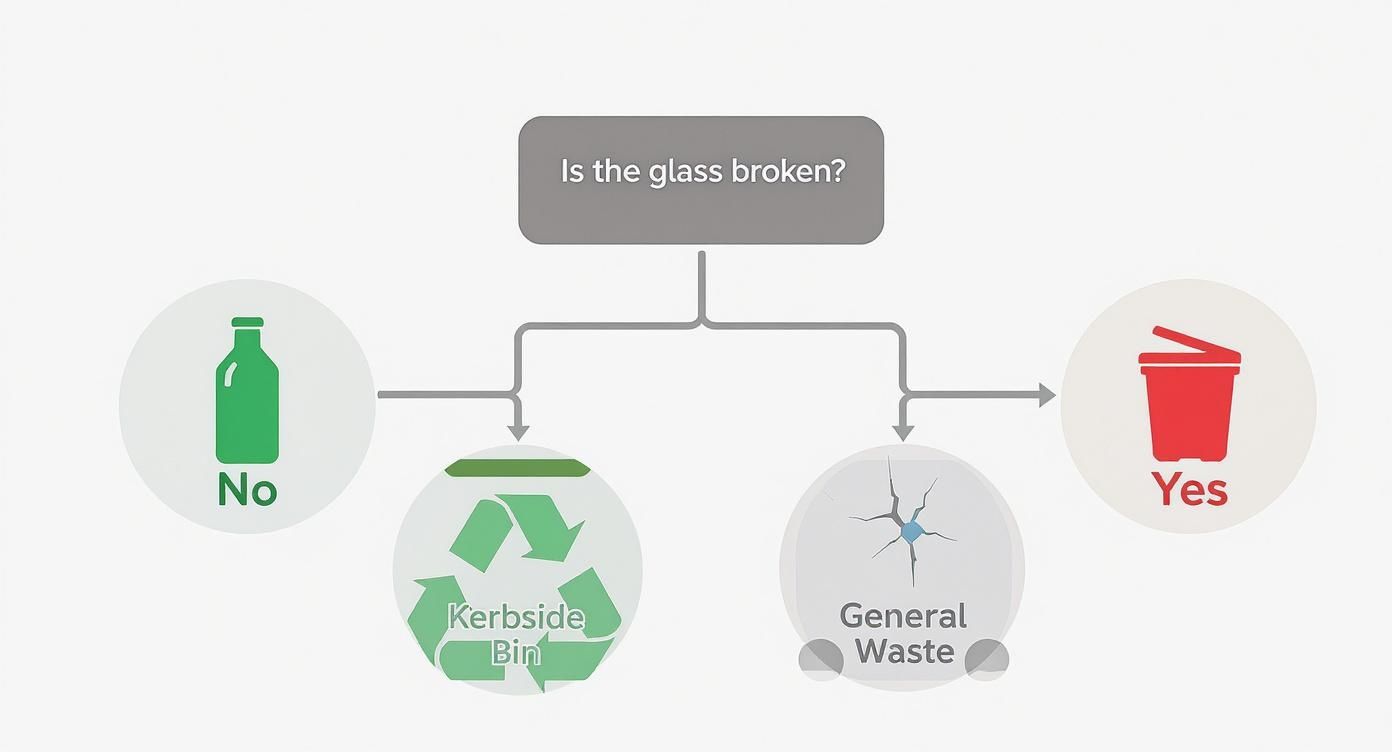
As you can see, whether the glass is broken or whole is the key detail that decides where it needs to go. Following this simple rule protects waste collection workers and keeps the recycling system running smoothly.
Visiting Your Local HWRC
Finding your nearest centre is easy enough. A quick search online for "waste disposal near me" or a visit to your local council’s website will give you all the details you need: locations, opening times, and any site-specific rules. For Dorset residents, our guide on finding the best waste disposal near me has some helpful local tips.
When you get to the HWRC, just have a word with the staff and let them know you’ve got broken glass. They’ll point you to the right skip. Some of the bigger sites even have separate containers for different glass types, which might include:
- Mixed Glass: This is for your broken bottles and jars.
- Flat Glass: For bits of window panes or shattered mirrors.
- Rubble/Hardcore: Sometimes, old Pyrex dishes or similar toughened glass will need to go in here.
This separation really matters. While the UK is pretty good at recycling bottles and jars, recycling rates for flat glass are much lower because it's harder to collect without getting it mixed up with other stuff. Proper separation at the tip makes a huge difference.
When a Trip to the Tip Is Not Possible
Look, we get it – a trip to the HWRC isn't always on the cards. If that's the case, you can put the broken glass in your general waste bin, but only if you’ve made it completely safe first. This means following the wrapping and containment steps we mentioned earlier to the letter.
The glass must be securely wrapped in layers of newspaper or an old towel, then placed inside a sturdy, puncture-proof cardboard box and sealed shut. Most importantly, you must label the box clearly on all sides with ‘DANGER: BROKEN GLASS’.
This isn't just a friendly suggestion; it's a critical safety measure. That label is a clear warning for anyone in your house who takes the bin out and, crucially, for the waste collection crews who handle thousands of bins every single day. A few minutes of your time could save someone from a nasty injury.
Why Recycling Glass Is Worth the Extra Step

Let's be honest, carefully wrapping up a broken jar to take it to the tip can feel like a chore, especially when your general waste bin is just a few steps away. But taking that little bit of extra time to handle glass properly is one of the most impactful things any of us can do for the environment.
The benefits are huge and go way beyond just keeping your bins from overflowing.
When you make sure that glass ends up in the right place, you’re feeding a powerful and continuous cycle of reuse. In the industry, recycled glass is known as cullet, and it's the single most important ingredient for making new glass containers. It’s not just a small additive; it's a direct replacement for raw, virgin materials.
This simple act of swapping old for new has a massive knock-on effect. Every time a manufacturer uses cullet, it drastically reduces the need to quarry finite natural resources like sand and limestone. It’s a straightforward conservation effort that helps protect our landscapes from more digging and extraction.
The Energy and Emissions Savings
Saving raw materials is a huge plus, but the biggest win is the incredible reduction in energy consumption. Melting down cullet to create new glass requires a whole lot less heat than making it from scratch.
The efficiency gain is massive. Energy use is slashed by about 20% when making glass from recycled cullet compared to virgin materials. This isn't just a tiny saving; for every single tonne of glass we recycle, we prevent around 246 kilograms of CO2 from being pumped into the atmosphere.
When you scale that up across the whole of the UK, the environmental benefits are enormous. If you want to dive deeper into the numbers, you can explore the full glass recycling process in this guide.
These figures really bring it home: your careful efforts to broken glass recycle correctly are part of a much bigger story of environmental protection.
The Magic of Infinite Recyclability
Here's the truly amazing thing about glass: it can be recycled over and over again, forever, without ever losing its quality or purity. A glass bottle can be melted down and reformed into a brand-new bottle an infinite number of times.
This makes glass a perfect material for what’s known as a circular economy. Unlike plastic, which often gets ‘downcycled’ into lower-grade products and eventually becomes waste, glass maintains its integrity. It’s always ready to become the exact same high-quality product it was before.
This endless loop is incredibly efficient. It means that the glass jar you recycle today could be back on a supermarket shelf as a new jar in as little as 30 days. Your small action directly fuels a sustainable manufacturing cycle that cuts waste, saves energy, and preserves our natural resources.
So, choosing to recycle glass, even when it’s broken and needs a bit of extra care, is a powerful vote for a healthier planet.
Got a Question About Broken Glass?
Even when you know the basics, certain situations can leave you scratching your head. When it comes to recycling broken glass, getting the details right is what keeps everyone safe and the system working properly. Let's tackle some of the most common questions we hear.
We often get asked about everyday glass items that aren't your typical bottles or jars. It's a great question because it gets right to the heart of a key recycling rule: not all glass is created equal.
Can I Recycle Broken Drinking Glasses Or Pyrex Dishes?
The short answer here is a definite no.
Things like drinking glasses, Pyrex dishes, glass cookware, and even mirrors are made differently from packaging glass. They’re chemically treated to handle big temperature swings without shattering. This treatment gives them a completely different melting point than the standard soda-lime glass used for bottles and jars.
If these items sneak into the recycling stream, they cause major headaches. Because they don’t melt at the same temperature as the bottles, they create flaws and weak spots in the new glass products. A single piece of Pyrex can ruin an entire batch of recycled bottles, meaning the whole lot gets thrown out.
For these types of glass, the safest bet is to wrap them securely, clearly label the package "BROKEN GLASS," and pop them in your general waste bin. Alternatively, your local Household Waste and Recycling Centre (HWRC) might have a specific container for rubble or hardcore where they belong.
What’s The Official Rule For Broken Glass In Dorset?
Local rules are king, and knowing the specific guidance for your area is the best way to avoid any mix-ups. For anyone living in Dorset, the council's advice is clear and puts safety first.
Dorset Council is very direct: no broken glass of any kind should go into your kerbside recycling bin. This isn't just a preference; it's a critical rule to protect the collection crews and staff at the sorting facilities from nasty cuts.
Their official instructions are to:
- Carefully wrap the broken shards in several layers of newspaper or an old towel.
- Put the wrapped bundle inside a sturdy cardboard box or another container that can't be punctured.
- Seal the container up tight with strong tape.
- Clearly label the box on every side with 'BROKEN GLASS' using a permanent marker.
Once it's safely packed up, the best place for it is any Dorset HWRC. If you can't get to one, it can be placed in your general rubbish bin for your normal kerbside collection.
Should I Put Broken Glass Bottles In A Bottle Bank?
This is another common point of confusion. While bottle banks are obviously for glass, they are really intended for whole, unbroken bottles and jars. Tipping loose, sharp fragments into a public bottle bank creates a serious and hidden danger for someone else.
Think about the workers who have to empty these massive containers. They're at risk of serious injury when they encounter sharp glass they weren't expecting. The machinery and collection process simply isn't designed to handle loose, fragmented pieces safely at that stage.
Because of this, it's far safer and more considerate to keep broken items out of bottle banks. The right place for a broken bottle or jar is the designated glass skip at an HWRC, where the staff are properly equipped and expect to be handling this kind of material.
Why Is Broken Window Glass Recycled Differently?
Window glass, sometimes called 'flat glass', is chemically distinct from the 'container glass' used for your food and drink packaging. It often has special coatings for UV protection, laminates for safety, or other treatments that make it totally incompatible with the standard bottle recycling process.
Mixing these two types of glass leads to contamination, just like the problem with Pyrex. The different chemical makeups and melting points would completely ruin the quality of the new recycled material. This is precisely why flat glass needs its own separate recycling stream. You’ll need to take broken window panes, old mirrors, or other sheet glass to the specific container for it at an HWRC.
Trying to figure out all the waste disposal rules can feel like a chore, but The Waste Group is here to make it simple. For those bigger clear-outs or renovation projects in Dorset involving all sorts of different waste, hiring a skip is the easiest way to manage everything safely and responsibly. Have a look at our easy online booking for skip hire services from The Waste Group and let us take care of the heavy lifting.