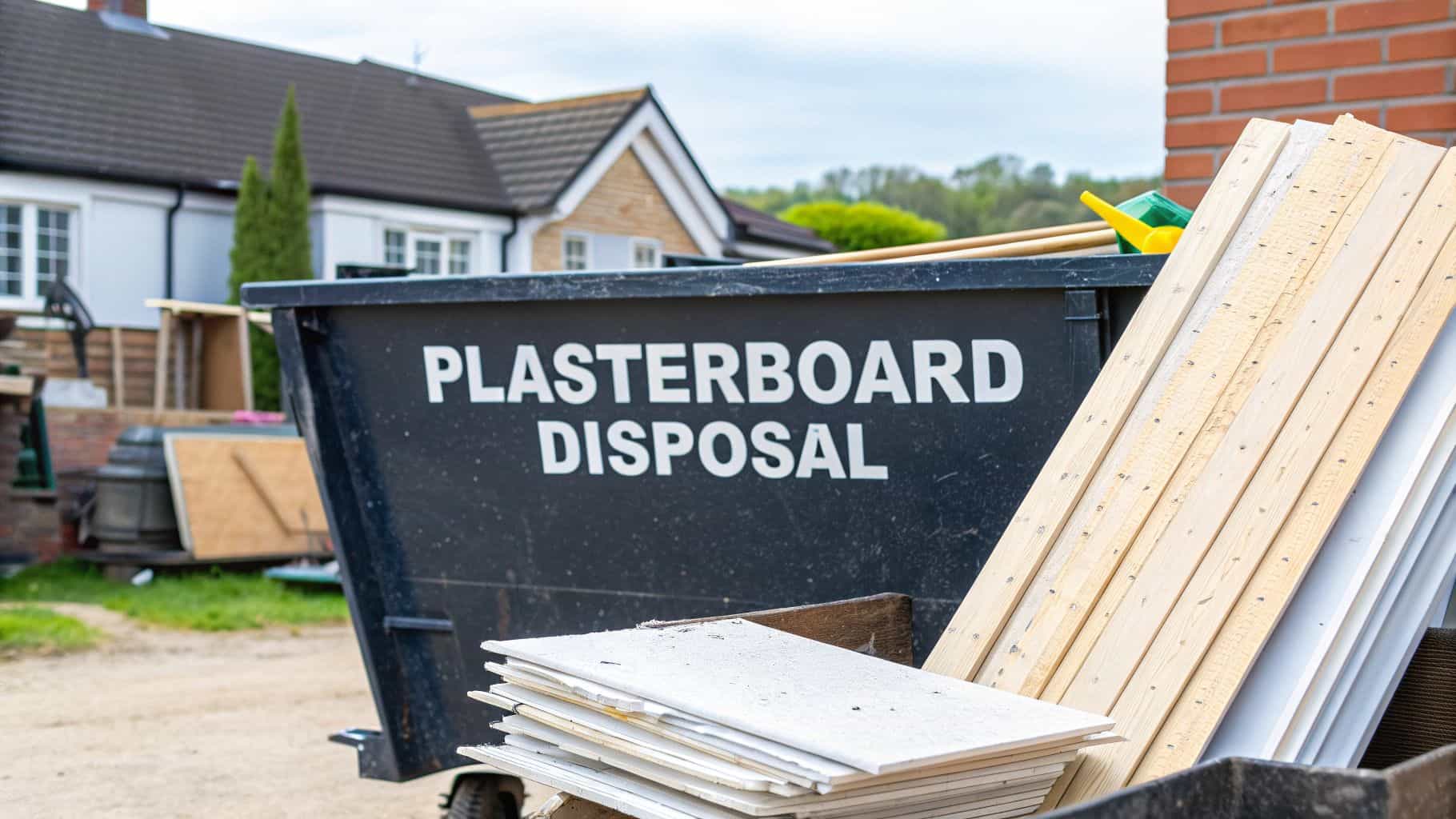
Let’s get straight to it: no, you cannot put plasterboard in a mixed waste skip. It’s one of those non-negotiable rules in the UK waste industry. Due to strict environmental regulations, this incredibly common building material must always be kept separate from the general junk you’re throwing out.
Think of it just like your household recycling—you wouldn’t chuck glass bottles in with your paper waste, and the same principle applies here. Certain materials just don’t mix.
Your Quick Guide to Plasterboard Skip Rules
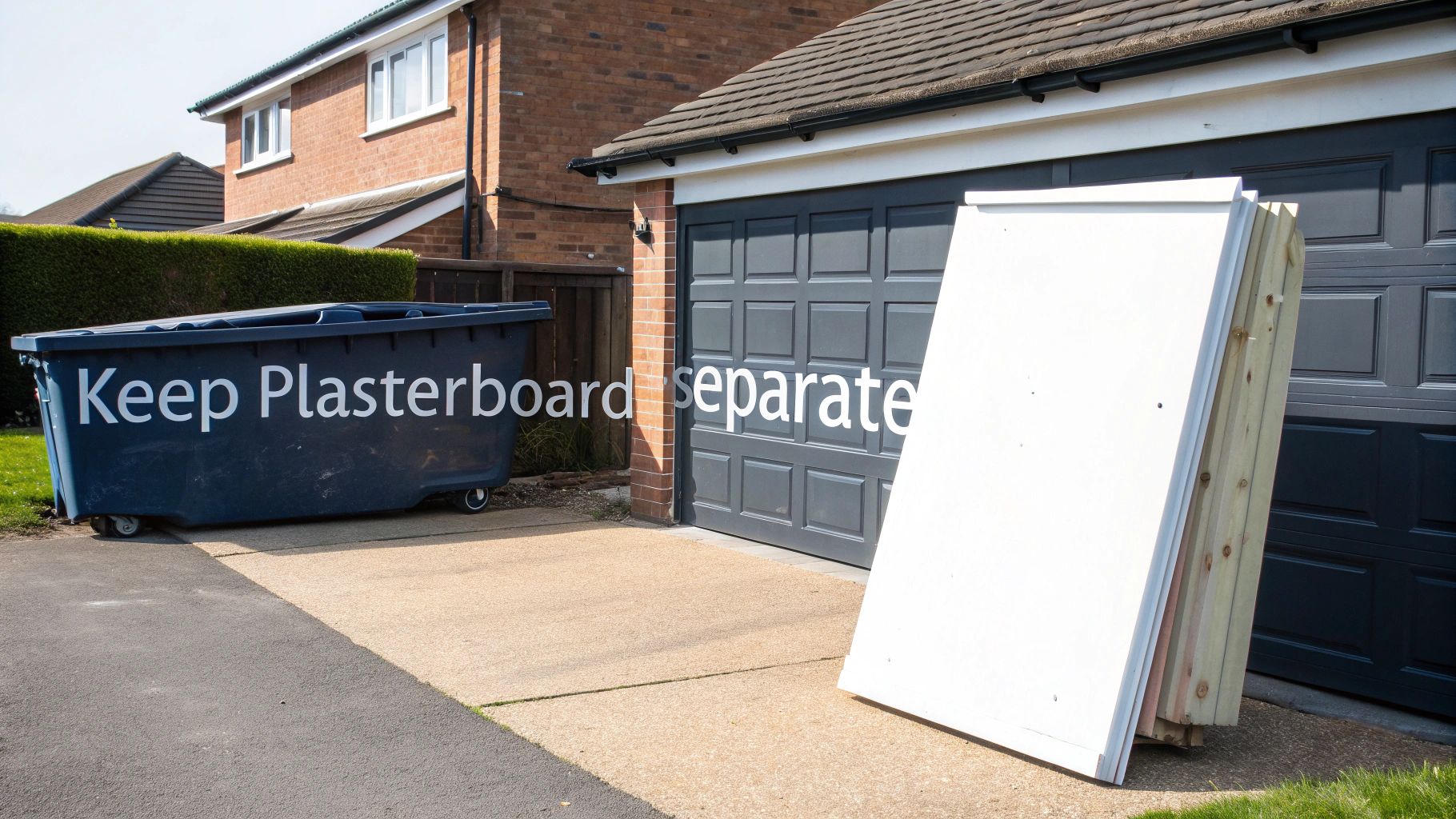
When you’re knee-deep in a renovation or even just a small DIY job, you’ll inevitably have a pile of waste to deal with. Knowing what to do with it isn’t just good practice; it’s the law. Plasterboard, sometimes called drywall, is one of those items that needs special attention, much like electronics or chemicals. You can find a broader list of restricted items in our guide on what can’t you put in a skip.
So, what’s the big deal with plasterboard? It all comes down to its chemical makeup. Plasterboard is made with gypsum, a mineral that’s rich in sulphate.
When gypsum gets buried in a landfill and starts mingling with all the other biodegradable waste (think food scraps, garden cuttings, paper), a nasty chemical reaction kicks off. This reaction produces hydrogen sulphide, a highly toxic gas that smells exactly like rotten eggs. It’s a serious environmental and public health risk.
To tackle this problem head-on, the Environment Agency brought in a rule back in 2009 making it mandatory for all gypsum-based materials to be disposed of separately.
This leaves you with two main ways to handle plasterboard waste when hiring a skip:
- Order a dedicated plasterboard-only skip. This is hands-down the best option if you’re ripping out walls and have a large amount to get rid of.
- Bag it up separately. Some skip hire companies will let you place plasterboard in sealed, heavy-duty bags inside a general skip. However, you must check with them first, as they need specific procedures in place to keep it segregated at their facility. Never just throw it in loose.
Plasterboard Disposal at a Glance
To make it crystal clear, we’ve put together a simple table that summarises the rules you need to follow.
| Aspect | Can You Mix It in a General Skip? | Primary Reason | Correct Disposal Method |
|---|---|---|---|
| Plasterboard Disposal | No – must be kept separate. | Gypsum reacts with other waste to produce toxic hydrogen sulphide gas. | Use a dedicated plasterboard skip, specialist collection service, or separate bags. |
Ultimately, keeping plasterboard separate isn’t just about following the rules—it’s about protecting our environment from harmful pollutants. It’s a small step that makes a big difference.
Why Plasterboard Needs Specialist Disposal
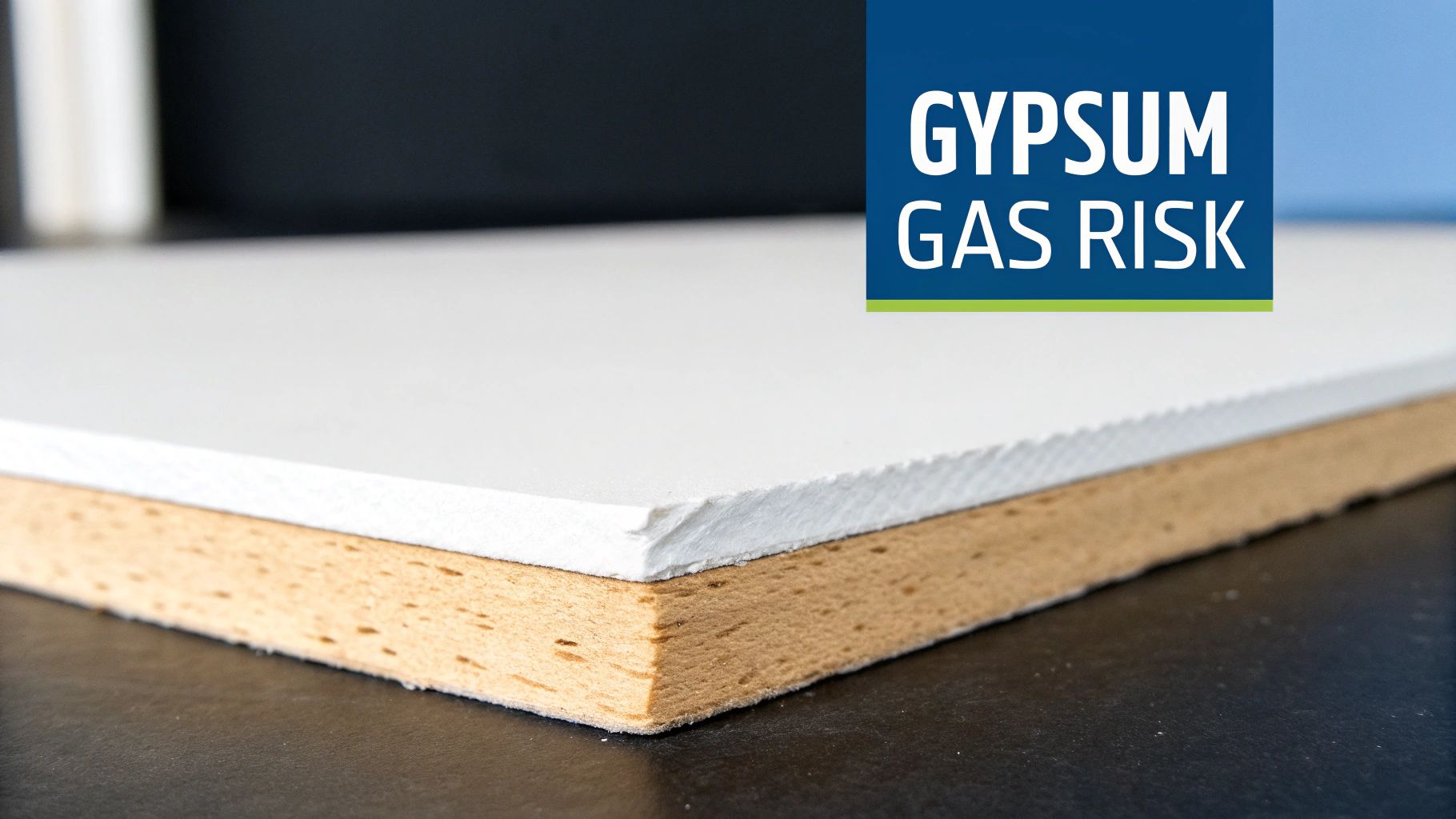
It seems a bit odd, doesn’t it? A simple building material like plasterboard causing all this fuss. On your wall, it’s completely safe and inert. The trouble starts when it gets mixed in with other rubbish in a skip or landfill. In that environment, its entire chemical nature flips, turning from harmless to genuinely hazardous.
The culprit is a mineral called gypsum, which is the main ingredient in plasterboard. While harmless on its own, gypsum is packed with sulphates.
Imagine you toss your old plasterboard into a general skip. It gets buried under garden clippings, leftover food, and other biodegradable waste. As all that organic stuff starts to rot in the damp, airless conditions of a landfill, it creates the perfect storm for a nasty chemical reaction.
The Unseen Chemical Reaction
Think of it like accidentally mixing the wrong cleaning chemicals under your sink. The sulphates in the gypsum react with the decomposing organic waste, and the result is a foul-smelling and highly toxic gas: hydrogen sulphide (H₂S).
This isn’t just a minor inconvenience. Hydrogen sulphide gas is corrosive, flammable, and heavier than air, which means it can dangerously pool in low-lying areas. It poses a real risk to public health and the local environment, which is exactly why the UK has such strict rules about it.
That unmistakable “rotten egg” smell is the most obvious sign, but the dangers you can’t see are far worse. To get a handle on this widespread chemical hazard, the Environment Agency brought in specific regulations back in 2009. These rules state that any gypsum-based materials must be kept separate from other types of waste.
This legal requirement is the simple reason you can’t just chuck plasterboard into a mixed waste skip. It’s all about stopping this chemical reaction before it even has a chance to start, protecting our air and water from contamination.
Compliance and Environmental Responsibility
Despite these rules being in place for over a decade, getting it right is still a challenge. When plasterboard ends up in a landfill with rotting organic waste, that toxic hydrogen sulphide gas is the inevitable result. It’s estimated that a staggering 1 million tonnes of gypsum waste still goes to landfill every year, which tells you that even with regulations, a huge amount isn’t being disposed of correctly.
Understanding how to handle materials like plasterboard is a key part of modern sustainability in facility management. For both homeowners and professional tradespeople, separating your plasterboard isn’t just about dodging a fine—it’s about doing your bit and managing waste responsibly.
The Real Costs of Getting Plasterboard Disposal Wrong
Ignoring the rules on plasterboard disposal isn’t just a minor slip-up. It can hit your wallet hard and throw your entire project schedule off track. This goes way beyond simply being bad for the planet; we’re talking about legal and financial penalties that can turn a straightforward clear-out into a major headache.
It all comes down to a legal principle known as the Duty of Care. This is a critical piece of legislation that makes you—the person creating the waste—legally responsible for it from the moment it’s made until it’s properly handled at a licensed facility.
And this isn’t just for big construction firms. The responsibility falls on homeowners doing a bit of DIY, too. It means you have to take every reasonable step to ensure your waste is managed correctly, even long after the skip has been driven away from your property.
The Financial and Practical Fallout
Failing to meet your Duty of Care can have some pretty severe consequences. Tossing plasterboard into a general waste skip isn’t just bending the rules; it’s setting yourself up for a world of trouble. The fallout usually happens in a few predictable ways:
- Rejected Skips: The waste transfer station can flat-out refuse your entire skip if they find plasterboard mixed in. The skip hire company has no choice but to bring the whole contaminated load right back to you, leaving you with the messy job of sorting it all out.
- Contamination Charges: To sort out the mess themselves, the skip company will almost certainly hit you with a hefty contamination charge. This fee covers their extra time, labour, and costs to manually separate the plasterboard so the rest of the waste can be processed.
- Hefty Fines: For more serious breaches, particularly on commercial projects, the Environment Agency can step in and issue some seriously big fines for improper waste disposal.
Any of these scenarios will lead to unexpected costs and painful delays, blowing a hole in your budget and messing up your project timeline.
The legal framework is crystal clear: you are accountable. If your waste is fly-tipped or handled by an unlicensed carrier, the responsibility—and the fines—can be traced directly back to you.
These financial and practical risks are why proper plasterboard disposal is so crucial for households and businesses across the UK. While the exact penalties can vary, breaching your Duty of Care can lead to significant fines and even legal action. Any reputable waste company you use must hold a valid waste carrier licence and give you a waste transfer note as proof of correct disposal. For a deeper dive into the industry standards, you can check out this detailed construction waste report.
Your Guide to Correct Plasterboard Disposal
Now that you’ve got your head around the rules and potential pitfalls, let’s talk about the practical side of things. Getting rid of your plasterboard waste safely and legally is actually pretty straightforward once you know how. The golden rule is simple: keep it separate from the very beginning.
There are three main ways to dispose of plasterboard correctly. The best one for you will really depend on the size of your project, whether you’re just patching a small hole or gutting an entire house. No matter what you’re doing, even preparing basement drywall, knowing the right way to handle the waste is key.
Choose Your Disposal Method
The scale of your job is the biggest factor here. A single broken board needs a completely different plan than a truckload of waste from a demolition.
Here are your main options:
Dedicated Plasterboard Skips or Bags: If you’re generating a fair bit of waste from a renovation or extension, hiring a plasterboard-only skip is easily the most efficient way to go. Some companies also offer huge, heavy-duty bags just for this purpose. This is the best way to guarantee your waste stays separate and compliant all the way from your site to the recycling facility.
Specialist Collection Services: Think of this as a “man and van” service that knows exactly how to handle plasterboard. This can be a more flexible option than a skip, particularly if you’re tight on space or need the waste gone quickly from a tricky spot. They do all the heavy lifting and make sure it gets to the right place.
Local Recycling Centres: For those tiny amounts – a few offcuts or one damaged board from a DIY job – your local Household Waste Recycling Centre (HWRC) is perfect. Most councils provide a specific container just for gypsum-based materials like plasterboard.
Crucial Tip: Always, always check your local council’s website before you head to the tip. Many HWRCs limit how much DIY waste you can bring, require you to book a time slot, or want to see proof that you’re a local resident. Turning up without checking first could mean a completely wasted journey.
A little bit of planning makes all the difference in managing your waste properly and responsibly. If you want to dive deeper into what happens next, check out our guide on how to recycle plasterboard. Thinking about separation from the get-go doesn’t just keep you on the right side of the law; it helps support a circular economy where old gypsum gets a new life in brand-new products.
Comparing Your Plasterboard Disposal Options
Feeling a bit stuck on the best way to get rid of your plasterboard? Choosing the right method – whether that’s a dedicated skip, a specialist collection, or just a trip to the tip – can save you a world of time, money, and hassle.
Ultimately, the best option really just boils down to how much plasterboard waste you’re dealing with. A full-room renovation is going to leave you with a serious amount of board, making a dedicated plasterboard skip the most sensible and cost-effective choice. On the other hand, if you’ve just done a small DIY repair and have a few offcuts, a quick run to your local recycling centre is all you need.
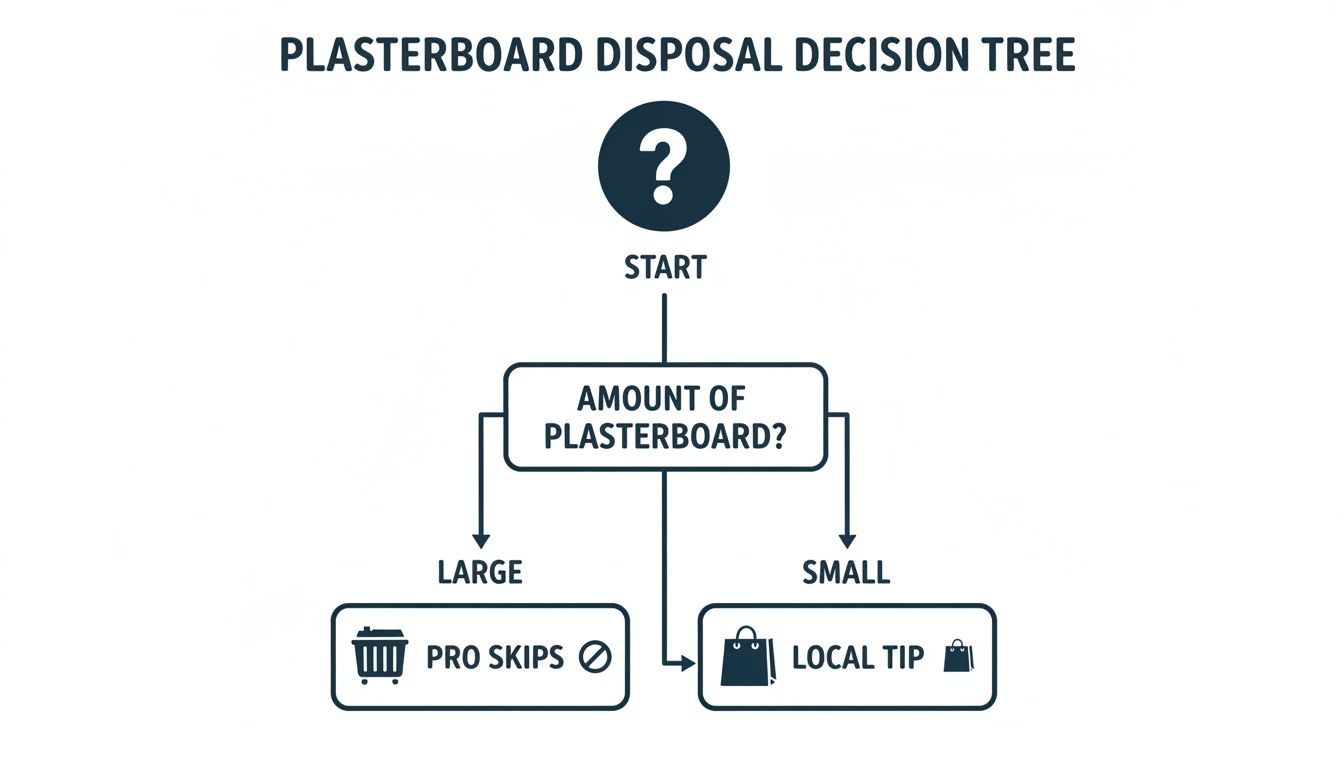
This simple decision tree helps visualise the process. If you have a large amount of plasterboard, professional skip services are your best bet. For smaller quantities, the local tip is the way to go.
Weighing Up the Main Methods
To make things clearer, let’s take a closer look at the most common disposal routes and see which one fits your project.
Dedicated Plasterboard Skips
This is your go-to for the big jobs: major renovations, extensions, or commercial projects where you’re tearing out multiple walls or ceilings. It’s the ultimate set-and-forget option for dealing with a high volume of plasterboard waste.
Specialist Collections
A great, flexible choice for medium-sized projects. They also work well for sites with tricky access where dropping a skip just isn’t possible. If you need waste gone quickly without a skip taking up space on your drive, this is a fantastic solution. For really large jobs, you could even look at something like our grab lorry waste removal services.
Household Waste Recycling Centres (HWRCs)
Perfect for the small amounts of waste that come from little DIY tasks. This is the ideal option for homeowners with just a couple of boards or a handful of offcuts. Just be sure to check your local council’s rules on volume limits and whether you need to book a slot first.
Comparing Your Plasterboard Disposal Methods
Here’s a quick overview of the different ways to dispose of plasterboard waste, helping you choose the best option for your project.
| Disposal Method | Best For | Typical Cost | Convenience Level |
|---|---|---|---|
| Dedicated Plasterboard Skip | Large renovations, commercial jobs, high-volume waste | £150 – £400+ (depending on size) | Very High |
| Specialist Waste Collection | Medium projects, sites with poor access, quick removals | Varies (often by weight/volume) | High |
| Household Waste Recycling Centre | Small DIY jobs, a few boards or offcuts | Free (for residents, but check limits) | Low to Medium |
| Reusing or Donating | Clean, undamaged offcuts or full boards | Free | Low |
Each method has its place, but the most important thing is to match the solution to the scale of your waste.
No matter which path you take, the golden rule is always the same: segregation is non-negotiable. Whether you’re filling a skip or loading up your car, plasterboard must always be kept completely separate from your general waste to stay on the right side of the law.
By the end of 2019, the UK was generating over 300,000 tonnes of plasterboard waste every year. The Environment Agency brought in these strict regulations specifically to tackle this growing challenge, which is why it’s so critical for everyone to understand why mixing is forbidden.
Failing to separate your plasterboard isn’t just a bit irresponsible—it’s a legal breach that can land you with some hefty fines.
Your Plasterboard Disposal Questions Answered
Getting your head around waste disposal rules can sometimes feel like a chore, but it’s pretty straightforward once you know the basics. Here are our answers to the questions we get asked most often about getting rid of plasterboard.
Can I Chuck Just One Small Bit of Plasterboard in a Skip?
In a word, no. The Environment Agency’s rules on this are crystal clear: zero gypsum-based material is allowed to be mixed with general waste.
Even a single, tiny offcut can contaminate the entire skip. If the waste transfer station finds it, they can reject the whole lot, leaving you to deal with extra charges and the headache of sorting it all out. It’s always best to keep plasterboard completely separate from the get-go.
How Much Does it Cost to Get Rid of Plasterboard?
The final bill really depends on how much you have and which method you go for. If you’ve got a decent amount from a renovation, a dedicated plasterboard skip is usually the most wallet-friendly way to go. The price is simply based on the size of the skip you need.
A few other options are:
- Plasterboard Sacks: You’ll often see these priced per bag, which is great for smaller jobs.
- ‘Man and Van’ Services: These guys typically charge you based on the weight or volume of plasterboard they take away.
- Your Local Tip: For a couple of sheets from a small DIY job, your local household waste recycling centre might take it for free. But always, always check your local council’s policy before you load up the car.
What Actually Happens to Plasterboard After it’s Collected?
When it’s separated properly, plasterboard doesn’t just get buried in a landfill. Instead, it’s sent off to a specialist recycling plant to be given a new lease of life.
At the facility, the paper lining is stripped off the gypsum core. This recovered gypsum is then processed and used to make brand-new plasterboard sheets. It can also be used in other products, like cement or even as a soil conditioner for farming. It’s a great example of a circular economy in action.
Could My Old Plasterboard Have Asbestos in it?
This is a really important one. If your house was built or had work done on it before the year 2000, there’s a chance that materials like plasterboard or textured coatings (think Artex) could contain asbestos.
If you have even the slightest doubt, don’t touch it. Don’t break it, drill it, or disturb it in any way. The only safe way forward is to have a sample professionally tested. If it comes back positive for asbestos, you absolutely must use a licensed asbestos removal service to handle its disposal safely and legally.