
Can You Recycle Glass? A Simple Guide for the UK
Can You Recycle Glass? A Simple Guide for the UK
Yes, you can absolutely recycle glass in the UK. In fact, it's one of our biggest recycling success stories. Glass is a pretty amazing material with a truly infinite life—it can be recycled endlessly without ever losing its quality or purity.
The Clear Case for Recycling Glass
When you toss a glass jar into your recycling bin, you're plugging into a powerful system called the circular economy. Unlike other materials that break down or degrade over time, that same piece of glass can be melted down and turned into a brand-new bottle or jar, again and again. It's a simple act that prevents glass from ever becoming waste, turning what was once rubbish back into a valuable resource.
And this isn't just wishful thinking; the numbers back it up. The UK has an impressive glass recycling rate of around 76.5% for all used glass. This makes it the champion among common packaging materials, easily beating metals (68.4%) and leaving plastics far behind. If you're interested in the nitty-gritty, you can dig into more glass waste insights on BusinessWaste.co.uk.
To give you a clearer picture of where glass stands, here’s a quick comparison of UK recycling rates for common packaging materials.
UK Recycling Rates at a Glance
| Material | Recycling Rate | Key Takeaway |
|---|---|---|
| Glass | 76.5% | The clear leader, thanks to its infinite recyclability. |
| Metal | 68.4% | Strong performance, but still behind glass. |
| Plastic | ~44.2% | Significantly lower, highlighting the challenges with plastic recycling. |
| Paper/Card | ~65.7% | A solid rate, but fibres degrade over time. |
As you can see, our efforts with glass are really paying off. This high success rate is a huge win for a few key reasons:
- It conserves raw materials: For every tonne of recycled glass we use, we save over a tonne of natural resources like sand and limestone from being quarried.
- It saves energy: Using recycled glass, known as 'cullet', melts at a much lower temperature than the raw ingredients. This drastically cuts down the energy needed to make new bottles.
- It reduces carbon emissions: Less energy used means a smaller carbon footprint for every single new bottle that hits the shelves.
The big idea here is that glass has an infinite life. Realising this helps you see how your small actions fit into a much larger, sustainable cycle. Each bottle and jar you recycle helps ease the pressure on our landfills and supports a stronger, more resilient manufacturing industry.
Here at The Waste Group, we're all about making this process as easy as possible for everyone in Dorset. Whether it's your weekly household collection or a big clear-out that needs a skip, we provide the right tools to get your glass into the circular economy. It’s a great way to boost your positive environmental impact, right here in our local community.
Understanding the Two Types of Glass
A common stumbling block when it comes to recycling glass is the idea that all glass is the same. It’s a bit like baking – you wouldn't use the exact same ingredients and method for a biscuit as you would for a sponge cake. The chemistry is different, and mixing them up would be a disaster. The same logic applies to glass.
At its core, glass falls into two main camps based on its chemical makeup and the temperature it melts at. Throwing the wrong type into the mix at a recycling plant is like chucking that biscuit dough into your cake batter – it ruins the entire batch. Getting this distinction right is the key to making sure your glass actually gets recycled.
Container Glass: Recyclable Bottles and Jars
This is the stuff your local council is after for your kerbside bin. Container glass is made specifically for food and drink packaging, like your jam jars, pasta sauce jars, wine bottles, and beer bottles.
It has a very consistent chemical recipe and melts at a predictable temperature. This makes it perfect for a circular economy, as recycling facilities can easily crush it, melt it down, and reform it into brand-new containers without any loss of quality.
Treated Glass: Not for Your Kerbside Bin
The second category is treated glass, which covers pretty much everything else. This type of glass has been specially treated with chemicals or subjected to intense heat to give it special properties, like being super strong, heat-resistant, or having a reflective coating. This treatment completely changes its melting point.
Common examples of treated glass you'll find around the house include:
- Window panes (often coated or laminated for insulation)
- Mirrors (which are backed with a reflective coating)
- Pyrex or borosilicate glass cookware (engineered to handle extreme temperatures without shattering)
- Drinking glasses and crystal (often contain lead or other additives to make them sparkle)
- Light bulbs (contain tiny metal parts and specific gases)
If these items make it into a batch of recyclable container glass, they cause serious problems. They can create weak spots and defects in the final recycled product, making the whole lot unusable. For big projects involving this kind of glass, like replacing windows during a renovation, the correct and safest way to dispose of it is with a dedicated service like a skip hire.
To help you quickly tell what goes where, we've put together a simple table.
Recyclable Glass vs Non-Recyclable Glass
| Item | Can It Be Recycled in Kerbside Bins? | Why or Why Not? |
|---|---|---|
| Wine & Beer Bottles | Yes | Standard container glass with a consistent melting point. |
| Jam & Sauce Jars | Yes | Made from the same recyclable container glass as bottles. |
| Drinking Glasses | No | Often treated or contain additives (like lead in crystal). |
| Pyrex or Cookware | No | Borosilicate glass; heat-resistant with a much higher melting point. |
| Window Panes | No | Often laminated or coated, contaminating the recycling process. |
| Mirrors | No | The reflective coating cannot be separated during recycling. |
| Light Bulbs | No | Contain metal components and sometimes hazardous materials. |
| Perfume Bottles | Check Locally | Some are fine, but complex shapes or mixed materials can be an issue. |
This table should make it easier to sort your glass, but when in doubt, this simple flowchart is a great visual guide.
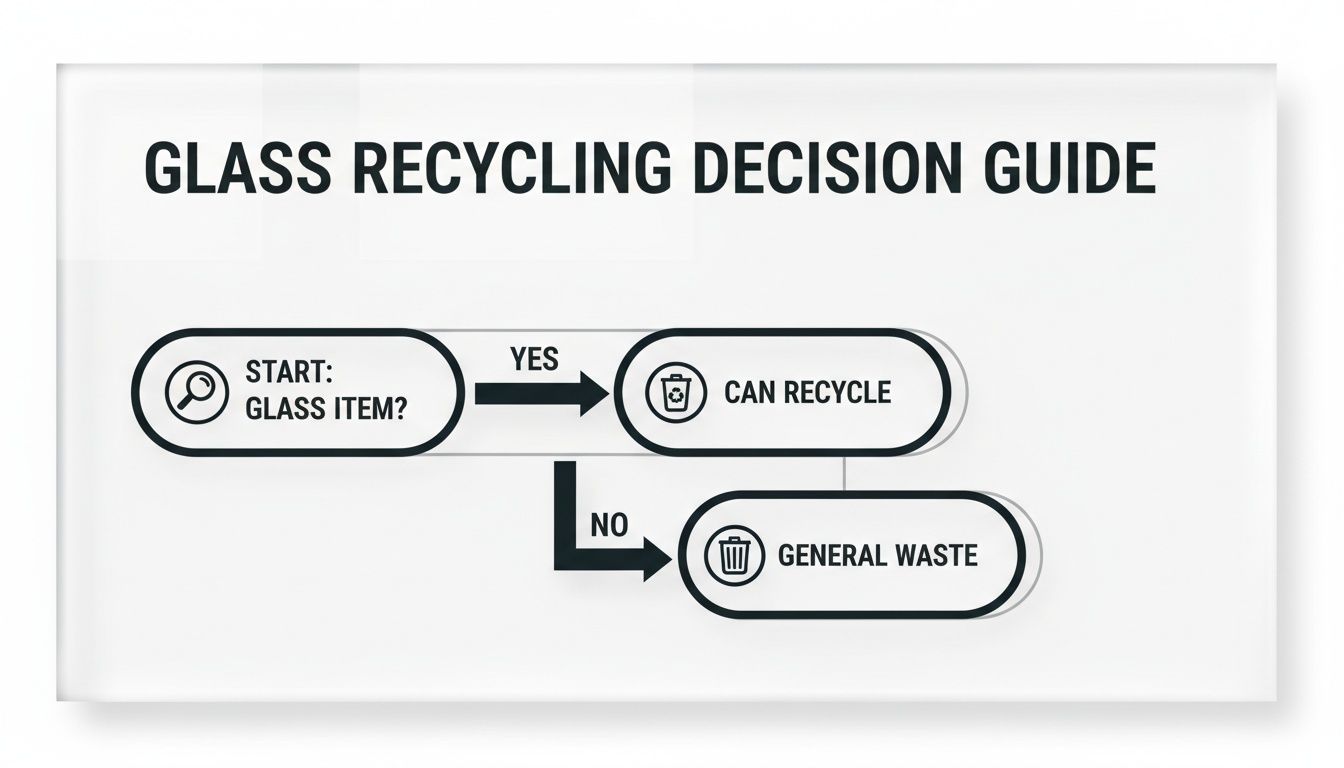
It really boils down to separating your standard bottles and jars from everything else. For those interested in the science behind it, even the way glass interacts with water can differ; understanding the properties of hydrophilic and hydrophobic glass gives you a deeper appreciation for just how specialised this material can be.
How to Prepare Your Glass for Recycling
Knowing which glass to recycle is the first step, but how you prepare it is just as crucial. One wrong move can contaminate an entire batch of otherwise good material, sending it all straight to landfill. Think of it like washing your dishes before putting them away; a little effort beforehand makes all the difference.
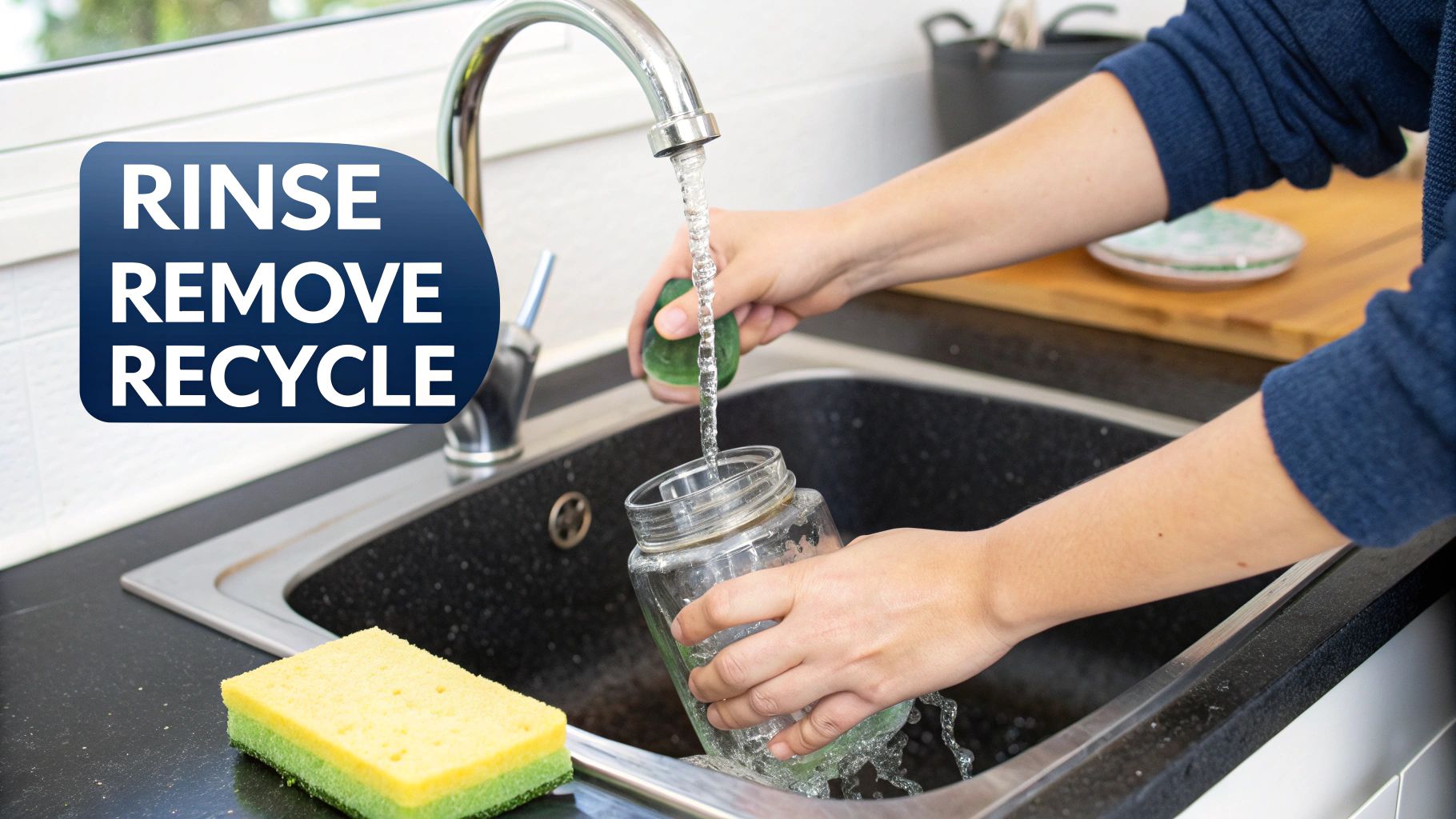
Thankfully, getting your glass ready is a simple three-step process: Rinse, Remove, and Recycle. Following these guidelines ensures your recycling efforts genuinely count. It’s a simple routine that helps make the entire recycling system more efficient, whether you’re managing household waste or clearing out a site.
Step 1: Rinse Out Residue
This is the most important part: give your glass bottles and jars a quick rinse. You don't need to scrub them until they sparkle, but getting rid of food and drink residue is essential. Leftover bits can attract pests and create some pretty nasty odours at recycling facilities.
A quick swirl of water is usually enough to clean out a pasta sauce jar or wine bottle. This simple action prevents contamination, which is one of the biggest reasons recyclable materials get rejected at sorting centres.
Step 2: Remove Lids and Corks
Next up, you need to deal with the lids. This is a common point of confusion, but the rule is straightforward: remove all lids and corks before recycling the glass container.
- Metal Lids: These can often be recycled, but not when they’re still attached to the glass. Pop them loose into your recycling bin. A good tip is to group smaller metal lids inside an empty tin can to help them get sorted correctly.
- Plastic Lids: These should typically go into your general waste, unless your local council specifically says they accept them.
- Corks: Natural corks can be composted, while any plastic ones should be thrown away.
What about labels? Good news. In most cases, you can leave paper labels on. The recycling process involves extremely high temperatures that will simply burn them away without causing any issues.
Step 3: Recycle Correctly
Finally, place your clean, lid-free glass into the correct recycling bin. It's vital to keep glass separate from other materials to avoid contamination right at the source.
For a complete approach to responsible disposal, it's also worth learning how to recycle other materials the right way, as this prevents cross-contamination and improves recycling rates for everything. And if you're dealing with broken glass, it's vital to handle it safely; our guide on how do you dispose of broken glass provides all the instructions you need.
The Real Impact of Recycling Glass
It’s one thing to know what you can recycle, but understanding why it matters is what really makes a difference. When you pop a glass bottle into the recycling, you’re not just keeping it out of the bin. You're kicking off a powerful chain reaction of environmental and economic wins that benefits the whole of the UK.
The impact isn’t some abstract idea; it's tangible. Recycling just a single glass bottle saves enough energy to run a laptop for nearly half an hour. Think about that for a second. Now scale it up by the millions of bottles we get through every day. That’s a massive energy saving, one that directly cuts our national energy bill and our reliance on fossil fuels.
Saving Energy and Slashing Emissions
Making new glass from scratch using raw materials like sand and limestone is a seriously energy-hungry process. The furnaces have to reach blistering temperatures to get the job done. But using recycled glass, known in the industry as 'cullet', is a different story. It melts at a much lower temperature.
This simple fact leads to some huge environmental victories. For every tonne of glass we recycle in the UK, we slash CO2 emissions by a whopping 580kg. That huge reduction helps push the UK closer to its Net Zero targets. Even with this success, there's still a massive opportunity on the table, as around 600,000 tonnes of perfectly good glass go unrecycled each year. If you want to dive deeper, you can read the full report on UK glass packaging recycling from Glass Online.
Recycling glass is a direct action against climate change. By reducing the energy needed for manufacturing, we cut down on greenhouse gas emissions, preserve air quality, and lessen our collective carbon footprint.
Every recycled bottle also helps protect our natural landscapes. It reduces the need to quarry for virgin materials like sand—a resource that, surprisingly, isn't infinite. This protects natural habitats and avoids the environmental damage that comes with mining. To get a clearer picture of what happens when things aren't recycled, have a read of our article exploring the environmental impact of landfills.
Partnering for a Greener Dorset
Picking the right waste partner can amplify all these positive effects. Here at The Waste Group, we don’t just collect your waste and call it a day. We make sure it’s managed in the most sustainable way possible, pushing recycling rates up and keeping environmental harm down.
Our commitment goes beyond just the bins, too. For every single skip hired through us, we plant a tree. This initiative directly helps with reforesting efforts, boosts local biodiversity, and captures carbon right here in our community.
When you work with The Waste Group, you’re not just recycling your glass and supporting the circular economy. You're also actively helping to restore our natural environment. It's a partnership that makes your positive impact go even further, building a healthier, greener Dorset for everyone.
Common Glass Recycling Mistakes to Avoid
Even when we have the best intentions, a few small recycling mistakes can cause massive problems down the line. It's a frustrating thought, but a single incorrect item can contaminate an entire lorryload of glass, forcing it all to be diverted from the recycling plant straight to a landfill. This means that knowing what not to do is just as important as knowing what you can recycle.
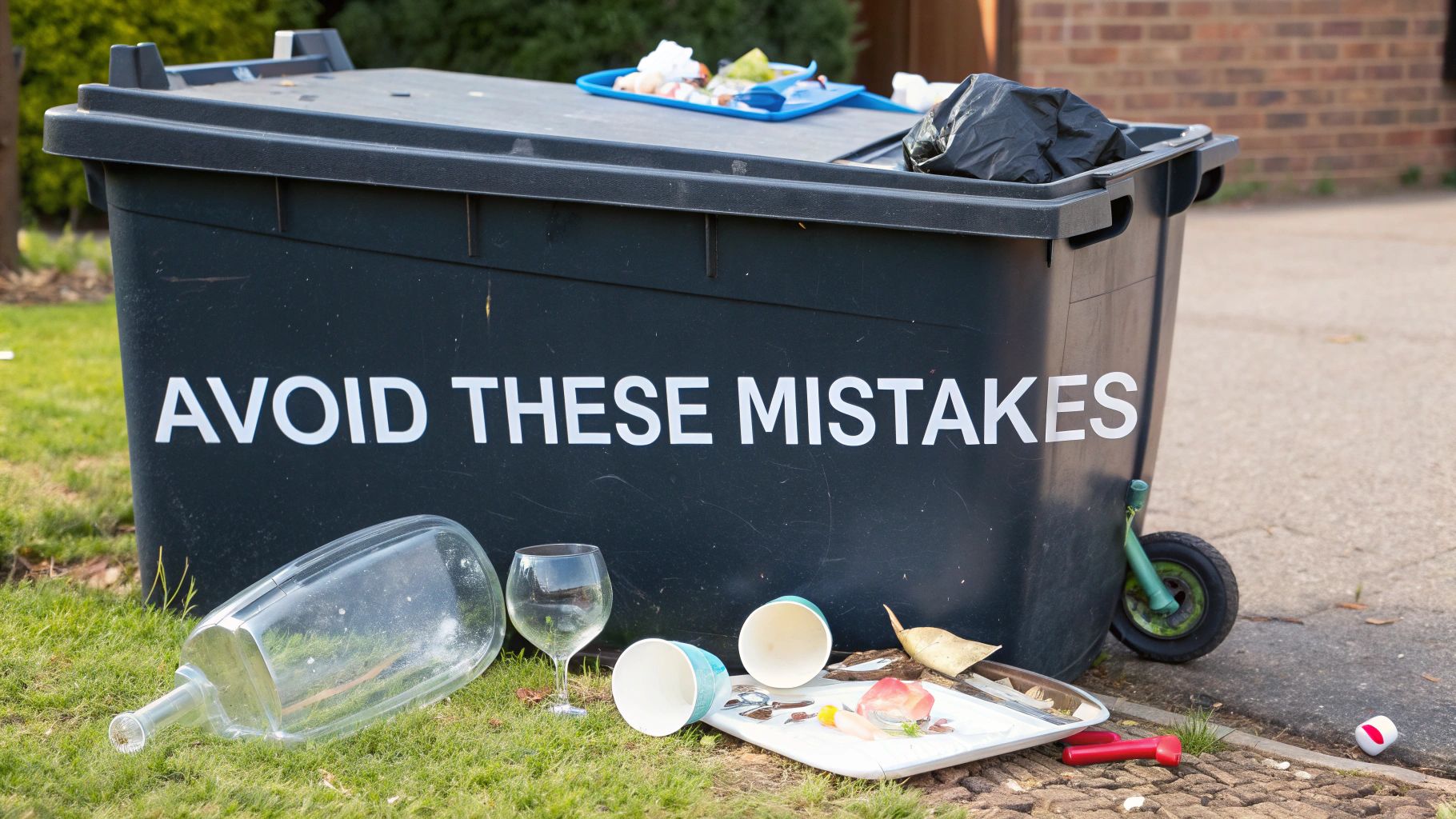
Many of us accidentally toss non-recyclable glass into our kerbside bins, completely unaware of the issues it creates. These simple slip-ups contribute to a much bigger problem. Despite our best efforts as a nation, around 14 million bottles still end up in UK landfills every single day. That's a huge missed opportunity. If you're curious about the scale of the challenge, you can explore the latest UK recycling statistics from Cladco.
To help you get it right every time, let's walk through the most common mistakes and what to do instead.
Mistake 1 Including Broken Drinking Glasses or Cookware
It just feels wrong to throw any kind of glass in the general waste bin, doesn't it? But items like drinking glasses, Pyrex dishes, and other heat-resistant cookware are major contaminants. As we've touched on, this type of glass is chemically different and melts at a much higher temperature than jars and bottles.
- What Not to Do: Never put drinking glasses, Pyrex, or any oven-proof glass dishes into your household recycling bin.
- What to Do Instead: If it’s broken, wrap the pieces carefully in paper or a plastic bag to keep everyone safe from injury, and then place it in your general waste bin.
Mistake 2 Adding Window Panes and Mirrors
For all the DIY enthusiasts and contractors out there, getting rid of old window glass or a broken mirror is a pretty common job. The key thing to remember is that this type of glass can't be recycled with your bottles and jars. Window glass is often treated with special coatings or is laminated, while mirrors have that metallic backing.
When these materials are melted down with standard container glass, they create imperfections that can render the entire new batch of recycled glass completely useless. Their inclusion is a significant headache for recycling facilities.
If you’re dealing with a large amount of this glass from a renovation, the safest and most compliant way to handle it is with a dedicated waste service. A professional service like The Waste Group ensures these materials are managed correctly, which protects the recycling streams and keeps waste workers safe.
Mistake 3 Forgetting about Light Bulbs and Vases
A couple of other common culprits often found sneaking into recycling bins are old light bulbs and decorative glass items like vases or perfume bottles.
- Light Bulbs: These contain tiny metal filaments and sometimes other materials that simply can't be processed with normal glass. They need to be taken to a designated collection point, often found at supermarkets or local recycling centres.
- Vases and Perfume Bottles: While they're made of glass, these items can contain different additives or have complex shapes that the machinery at recycling plants just can't handle. It's always worth checking with your local council, but the safest bet is usually to put them in the general waste.
By steering clear of these simple errors, you can make sure all your good efforts to recycle glass pay off, making a real contribution to the circular economy.
Your Local Recycling Options in Dorset

Alright, you've mastered how to prep your glass, so what's next? Let's get it into the recycling stream here in Dorset. For the everyday stuff like jam jars and wine bottles, the process is thankfully straightforward for both homes and businesses.
Your easiest and most common option is the kerbside collection service run by your local council. This is set up specifically for your container glass, making it a breeze to recycle bottles and jars with your regular rubbish collections. Just put them in the right bin, and you're sorted.
Another great option is the local bottle banks. You’ve probably seen them dotted around supermarket car parks and at recycling centres across the county. They're perfect if you've had a party and have more glass than usual, or if you simply missed your collection day.
Handling Larger Glass Waste Projects
But what happens when you’re dealing with more than just a few bottles? Think about the waste from a big home renovation, a garden overhaul, or a shop fit-out. You’ll quickly find yourself with a mountain of glass and other materials that your regular bins just can't handle.
This is where calling in the professionals becomes the smartest, most efficient choice. At The Waste Group, we offer a whole range of solutions tailored to the size of your job:
- Skip Hire: Absolutely ideal for home renovations, big garden clearances, and smaller construction projects.
- Roll-On/Roll-Off Bins: The go-to solution for large commercial sites that generate a serious amount of waste.
- Grab Lorry Services: A brilliant choice for sites with tricky access or when you need a lot of inert waste gone in a flash.
Using a dedicated service takes all the hassle away. No more endless trips back and forth to the tip. More importantly, it ensures that all your waste, including tricky items like treated glass, is managed safely and by the book. We sort out the logistics so you can get on with your project.
When you work with a professional service like ours, you also get the convenience of next-day delivery and dead-simple online ordering, all backed by our price-match guarantee. We’re all about making responsible waste management easy for everyone in Dorset. If you’re planning a project and need to get waste collection sorted, take a look at our complete guide to skip hire in Dorset.
Frequently Asked Questions About Glass Recycling
Even with a good grasp of the basics, a few questions often pop up. Let's clear up some of the most common queries so you can recycle your glass with complete confidence.
Do I Need to Remove Labels from Glass Jars?
Generally, no. Modern recycling facilities are impressively kitted out to handle things like paper labels.
When the glass is melted down at incredibly high temperatures, the labels simply burn off without causing any contamination issues. Your main job is to make sure the jar or bottle is empty and has had a quick rinse. So, while you can peel the labels off, you don’t need to for most UK kerbside collections.
What Should I Do with Broken Glass?
This one really depends on what kind of glass has broken. If a bottle or jar from the kitchen smashes, you can often still pop it in the recycling, but it’s always best to check your local council's specific safety advice first.
However, if you’ve broken a window, a mirror, or a drinking glass, that cannot go into your household recycling bin. For safety, wrap it up carefully in paper or newspaper and put it in your general waste bin. If you're dealing with a large amount from something like a renovation, a professional skip hire service is by far the safest and most responsible way to handle it.
Can I Recycle Coloured Glass?
Yes, absolutely! That green wine bottle or brown beer bottle is fully recyclable and actually in high demand.
At the recycling plant, all the glass gets carefully sorted by colour—usually into clear, green, and brown piles. This step is crucial because the colour stays in the glass even when it's melted down. Separating it ensures that new clear bottles are made from old clear glass, which keeps the quality of the final product high. It's also why you often see different bottle banks for different colours.
Understanding the rules is the final piece of the puzzle in helping build a circular economy. When you're tackling projects bigger than what your kerbside bin can handle, The Waste Group provides reliable, fully compliant solutions to manage all your waste responsibly. Find out more about our waste management services.