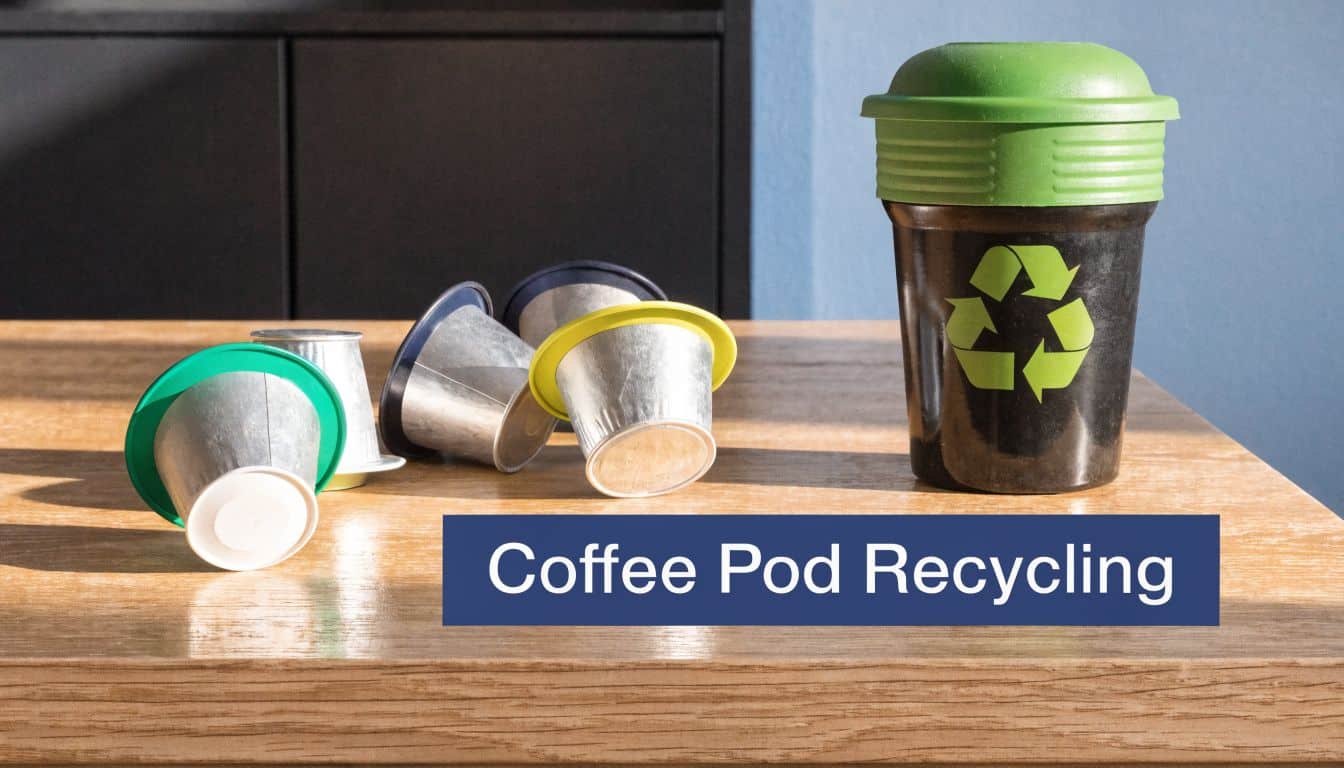
A lot of waste problems look small until you add them up. Coffee pods are a perfect example. One neat little capsule on the kitchen side doesn’t feel like much, but millions of them quickly become a serious disposal issue.
If you use a pod machine at home, in a site office, in a salon, or in a staff kitchen, coffee pod recycling matters more than widely acknowledged. The good news is that it isn’t impossible. The bad news is that it isn’t as simple as tossing pods into your usual recycling bin and hoping for the best.
From a Dorset waste point of view, that gap between what people think should be recyclable and what is recycled causes most of the confusion. Once you understand why pods are awkward, the right next step becomes much easier.
The UK’s Growing Coffee Pod Problem
An estimated 56 billion coffee pods and capsules end up in UK landfills annually, accounting for 95% of all pods produced, which adds up to 168 million kilograms of waste every year according to GreenMatch’s summary of the issue.
That figure changes the conversation. Coffee pods stop looking like a harmless convenience product and start looking like a national waste stream.

Why pods cause such a stubborn recycling headache
Pods are a modern convenience product with an old-fashioned waste problem. They’re small, mixed-material items that often still contain wet coffee grounds after use.
That combination matters. Even when the materials themselves could be recycled in the right setting, the actual journey from kitchen to recycling facility often breaks down.
The problem isn’t only what the pod is made from. It’s also how small it is, how dirty it is after use, and whether the person using it has an easy way to return it.
For many households, the confusion starts with a simple assumption. If something contains aluminium or plastic, surely it belongs in the recycling bin. With coffee pods, that’s usually where the trouble begins.
Convenience at the front end, complexity at the back end
Single-serve coffee feels tidy and efficient. You brew one drink, throw away one pod, and get on with your day.
Waste systems don’t see it that way. They see an object made from multiple parts, often sealed together, often contaminated with organic residue, and often too small to move cleanly through sorting equipment.
That’s why pod disposal has become one of those everyday issues people regularly get wrong without meaning to. It isn’t laziness. It’s a design and infrastructure problem.
If you’ve looked into the truth about K-Cup recycling, you’ll have seen the same wider theme. Pod systems often market convenience clearly, but the disposal route is far less straightforward for the average user.
What practical coffee pod recycling looks like
For many residents in Dorset, the practical solution isn’t “put them in the blue bin”. It’s one of these:
- Use a brand or scheme collection route if your pods are accepted.
- Prepare the pods properly so they’re clean enough for the chosen scheme.
- Store them separately until you have enough for a drop-off or return.
- Switch products altogether if your current setup creates more hassle than it’s worth.
For businesses, the same issue scales up fast. A small office can produce a steady stream of pods without anyone taking ownership of disposal. A café, showroom, holiday let, or hospitality site can create an even bigger problem if pods just end up in general waste.
Coffee pod recycling works best when you treat it as a routine, not a one-off good intention.
Decoding Your Coffee Pods What Are They Made Of
While often thought of as a single item, a pod is, in practice, more like a tiny sealed food container made from several bits pressed together.
You’ve usually got a cup-shaped shell, a lid, coffee grounds inside, and sometimes filters or layered packaging. That’s exactly why these products confuse householders and frustrate sorting plants.
The three things that make pods difficult
According to Recycap’s explanation of the problem, UK recycling plants typically reject items smaller than a credit card. Pods can fall through sorting screens, contaminate other recyclables, and are made of mixed materials such as plastic #7 and aluminium foil, which standard facilities can’t easily separate.
That gives you the core issue straight away:
- They’re too small
- They’re made from more than one material
- They usually still contain coffee residue
If you only remember one thing, remember that. It explains why a pod that looks recyclable often isn’t suitable for your normal mixed recycling bin.
Aluminium pods versus plastic pods
Not all pods are identical. Some are mainly aluminium. Some are mainly plastic. Some are marketed as compostable, which adds another layer of confusion because compostable doesn’t always mean suitable for home compost.
Here’s a practical comparison.
Coffee Pod Types and Recycling Methods
| Pod Type | Primary Material | Common Brands | Best Recycling Method |
|---|---|---|---|
| Aluminium pod | Aluminium body with foil lid and coffee grounds inside | Nespresso-style capsules | Brand take-back scheme or specialist pod collection |
| Plastic pod | Plastic shell, foil or plastic top, coffee grounds inside | Keurig-style and other single-serve plastic pods | Specialist pod recycling scheme if accepted |
| Compostable pod | Compostable plant-based material, still filled with coffee grounds | Various eco-focused brands | Follow the brand’s disposal guidance carefully, not your standard recycling bin |
| Mixed-format pod | Combination of plastic, foil, filter, and grounds | Some supermarket own-brand and compatible capsules | Check manufacturer guidance and use a specialist route where available |
Why the grounds matter
Used coffee grounds might seem harmless, and in isolation they often are. The issue is that inside a pod they act as contamination.
A recycling facility wants reasonably clean material streams. A pod with damp grounds trapped inside is the opposite of that. It’s one reason why councils generally don’t want them loose in household recycling.
Practical rule: If a pod still looks like a little sealed coffee container, it probably hasn’t been prepared enough for recycling.
Why “recyclable material” isn’t the same as “easy to recycle”
Many readers understandably find this confusing. Aluminium is recyclable. Plastic can be recyclable. So why isn’t the answer simple?
Because waste systems process objects, not just raw materials. A clean aluminium tray is one thing. A tiny aluminium capsule mixed with coffee sludge and bonded to other parts is another.
That’s the difference between theoretical recyclability and practical recyclability. Coffee pod recycling lives in that gap.
A Dorset household example
Say you’ve got a pod machine in a home in Dorchester or a flat in Bournemouth. You make a few coffees a day and toss the used pods into the kitchen recycling bag with tins and cardboard.
It feels sensible. But if those pods are small, dirty, and mixed-material, the system won’t handle them the way you expect.
That’s why the right question isn’t “Can this material be recycled?” It’s “What route does this exact pod need?”
Your Step-by-Step Guide to Preparing Pods for Recycling
If coffee pod recycling feels fiddly, that’s because it can be. But once you’ve done it a few times, it becomes a short kitchen habit rather than a chore.
The key is to prepare pods in a way that gives your chosen scheme a fair chance of accepting and processing them.

Let them cool first
Freshly used pods can still be hot. The foil lid can also be sharp once you start peeling it back.
Leave them to cool fully before handling. A small bowl or old food tub beside the machine works well for this. That stops you trying to deal with them while rushing around the kitchen.
This sounds basic, but it makes the rest easier. People usually make mistakes when they try to recycle pods immediately after brewing.
Empty the grounds
Once the pod is cool, open it and tip out the used coffee. A teaspoon, butter knife, or a dedicated pod opener can help.
You don’t need laboratory-level perfection. You do need to remove the bulk of the grounds.
Try this simple routine:
- Peel or pierce the top carefully.
- Tap out the loose grounds into a food waste caddy or compost route if suitable for the grounds themselves.
- Scrape the inside lightly if the coffee is compacted.
If you use a lot of pods, keep a small container near the sink for the emptying stage. That keeps the mess in one place.
Coffee grounds and coffee pods are not the same waste item. The grounds may have one disposal route. The pod shell often has another.
Rinse away the residue
After emptying, give the shell a quick rinse. You’re trying to remove the leftover sludge, not make it spotless.
A brief rinse under the tap is usually enough. If you leave pods stacked up for days before rinsing, the residue dries on and the job becomes far more annoying.
For households already separating rigid plastics, it’s also worth understanding the wider issue of awkward plastics in waste systems. This guide to hard plastics recycling gives useful context on why shape, size, and material type matter so much.
Separate parts if your scheme requires it
Some schemes accept the whole pod. Others work better if you remove the foil lid or split materials before storage.
This is the point where many people give up, so keep it practical. Don’t overcomplicate it. Check the brand or scheme instructions once, then repeat the same method each time.
A simple home setup might look like this:
- Container one for cleaned shells
- Container two for foil lids or separated parts
- Food waste caddy for grounds
That’s enough to stop pods ending up in the wrong bin.
Dry and store them neatly
A wet bag of rinsed pods can become unpleasant quickly. Let them drain before storing.
You can spread them briefly on an old tray, in a colander, or on a bit of kitchen roll. Once they’re mostly dry, transfer them to the return bag or collection tub.
Short-term storage tips:
- Use a lidded container if you don’t want the area to smell.
- Keep collection bags near the machine so the habit sticks.
- Label the container if several people in the house use the same kitchen.
Make it easier for the whole household
The biggest obstacle isn’t usually the preparation itself. It’s inconsistency.
One person rinses pods. Another throws them in general waste. A guest puts them in the recycling bin. Suddenly the system breaks down.
A short note inside the cupboard door helps. So does choosing one simple rule, such as “all used pods go in the silver tub first”.
Don’t aim for perfect. Aim for repeatable.
Coffee pod recycling succeeds when the process is easy enough to repeat on a busy weekday morning. If your method takes too long, you won’t keep doing it.
Start with the version you can maintain:
- Cool
- Empty
- Rinse
- Separate if needed
- Store for collection
That’s the whole rhythm. Not glamorous, but effective.
Finding Your Recycling Route National and Local Options
Once your pods are prepared, the next question is the one that matters most. Where do they go?
For many UK households, good intentions often fall apart in practice. There may be a national scheme on paper, but using it in real life can still be awkward, especially outside larger urban areas.

The main routes people use
Most pod users end up with one of four practical options:
| Route | How it works | Best for | Main drawback |
|---|---|---|---|
| Brand take-back scheme | You return pods through the manufacturer’s system | People loyal to one pod brand | Only works if your pods are accepted |
| Podback or similar scheme | Use drop-off points or approved return methods | Mixed households already willing to sort pods | Access can be patchy |
| Mail-back service | Fill a bag and send pods back through a set service | Households without easy drop-off access | Requires admin and storage |
| General waste | Dispose with residual waste | People with no realistic recycling route | Lowest environmental value |
Podback and the Dorset reality
A key difficulty for Dorset residents is access. According to a source discussing UK pod disposal, a 2024 WRAP UK survey indicated that 28% of rural households participate in pod recycling versus 42% of urban households, often due to transport barriers. The same source notes that for Dorset, this often means relying on specific drop-off points or mail-back services rather than kerbside collection, despite Podback’s wider network growth. That summary appears in this article on responsibly disposing of single-serve coffee pods.
That rings true on the ground. If you live in a town centre, a return route may be manageable. If you’re further out, the effort can outweigh the habit.
What Dorset households often get wrong
The most common mistake is assuming local kerbside recycling will sort it out. In most cases, it won’t.
A second mistake is holding onto pods for months because the return plan is vague. Once bags start piling up, people understandably default to general waste.
The better approach is to choose a route based on your location, not just the brand’s marketing.
- Town-based households may find a drop-off point realistic.
- Rural households may prefer mail-back if it fits their routine.
- People already visiting a recycling centre may combine the trip with other waste tasks.
- Heavy users may decide the best route is switching away from single-use pods.
For local recycling centre users, it also helps to understand the wider waste options available in the area. This guide to the Blandford Forum recycling centre is useful if you’re planning trips for multiple waste types and want to avoid wasted journeys.
Manufacturer-led programmes
Some brands offer their own returns. These can be one of the easiest options if you consistently buy the same compatible pod type.
The benefit is clarity. The downside is limitation. If the house uses several pod brands, or if office staff bring in different pods, a single-brand scheme can quickly become messy.
The test is simple. Can everyone using the machine follow the same disposal method without checking labels every time? If not, the system probably won’t last.
Mail-back can work better than people expect
Mail-back doesn’t sound exciting, but it often suits Dorset homes better than a special drive for a handful of pods.
It works best when you build it into another routine. Fill the bag steadily, keep it somewhere dry, and return it when full rather than making separate journeys.
This short video gives a useful visual look at pod recycling and disposal habits.
A simple decision rule for local residents
If you’re not sure which route makes sense, use this test:
Local rule of thumb: If recycling the pod requires a special journey you wouldn’t otherwise make, your current setup probably isn’t practical enough.
That doesn’t mean don’t recycle. It means choose a route you can maintain.
For many Dorset residents, the most realistic pod plan is a mix of careful preparation, occasional return trips, and honest assessment of whether single-use pods still suit the household.
Commercial Coffee Pod Recycling for Dorset Businesses
Coffee pods create a different kind of problem in a business setting. At home, the issue is often confusion. At work, it’s volume plus responsibility.
An office kitchen, holiday park reception, sales suite, or staff cabin can generate a steady stream of used pods with no clear owner. Everyone uses the machine. Nobody manages the waste.
Why businesses struggle more than households
According to the British Beverage Industry Association document cited above, some experts estimate actual coffee pod recycling rates at no higher than 5% in the UK, despite the materials being recyclable in theory, which highlights the need for structured collection in business settings (BBIA PDF).
That matters because commercial sites usually have less excuse for ad hoc disposal. Once pods enter a workplace waste stream, they become part of the organisation’s wider waste handling duty.
What a workable business system looks like
The businesses that handle pods well usually do three simple things:
- Choose one pod format instead of allowing a random mix.
- Set up one visible collection point near the machine.
- Assign responsibility for emptying, storing, and arranging onward disposal.
That’s it. Not a complex sustainability strategy. Just clear ownership.
A few local examples show how this plays out:
- Office kitchen: Staff use one machine, pods go into a labelled caddy, and the facilities lead manages returns.
- Holiday let or serviced accommodation: Cleaning staff collect pods separately rather than dropping them into mixed waste from guest rooms.
- Construction site office: Temporary welfare units often rely on pod machines because they’re quick. Without a collection tub, used pods end up in general site waste almost immediately.
Why mixed waste is the costly default
Businesses often lose good recycling opportunities through simple friction. If the pod bin is further away than the general waste bin, people will use the general waste bin.
If staff need to rinse pods but there’s no sink nearby, they won’t do it. If the accepted brand list keeps changing, compliance drops.
Good waste systems are boring by design. They remove decisions.
Keep the pod process simpler than the coffee order. If disposal takes more thought than making the drink, staff won’t follow it consistently.
Build pod handling into wider commercial recycling
Pods should never sit outside the rest of your waste planning. They belong inside the same conversation as food waste, dry mixed recycling, plastics, and residual waste.
If your business is tightening up waste processes generally, this guide to recycling for businesses is a useful place to start. Pods are only one awkward stream, but they’re a good test of whether your whole system is clear enough for staff to follow.
For many Dorset businesses, the best move isn’t just “recycle more pods”. It’s “design a coffee setup that creates less confusion and less mixed waste in the first place”.
Beyond Recycling Sustainable Alternatives to Single-Use Pods
Recycling is worth doing. But it’s not the top of the waste hierarchy.
The better long-term question is whether you can reduce the need for single-use pods at all. That can save hassle as much as waste.

Reusable pods
Reusable pods are the closest direct replacement for many machine owners. You keep the machine but stop throwing away a capsule every time you brew.
They suit people who want convenience with less waste, but they do ask more of the user. You need to fill them, empty them, and wash them properly.
They’re usually best for:
- Regular home users who make similar coffees each day
- People already comfortable cleaning coffee kit
- Households frustrated with storing used pods
They’re less ideal if you bought a pod machine specifically to avoid any prep or cleaning.
Compostable pods need careful checking
“Compostable” sounds like a perfect answer. It often isn’t that simple.
Some pods need industrial composting conditions, not a home compost bin. Some can’t go in ordinary recycling. Some still confuse local disposal systems because the branding sounds greener than the actual route available.
That doesn’t make them pointless. It means you should treat compostable claims carefully and follow the maker’s disposal instructions rather than guessing.
A pod isn’t automatically low-waste just because the box says compostable. The real test is whether you have access to the right disposal route.
Traditional brewing methods still solve the problem best
If your aim is to cut single-use waste, old-school coffee methods still do the heavy lifting.
Consider these options:
| Option | What it changes | Best for | Main trade-off |
|---|---|---|---|
| Cafetière or French press | Removes pod waste completely | Households that make several cups at once | More washing up |
| Espresso machine with ground coffee | Gives control over coffee and waste | Keen coffee drinkers | Higher effort and equipment cost |
| Bean-to-cup machine | Cuts pod waste while keeping convenience | Offices and serious home users | More maintenance |
| Pour-over or filter coffee | Simple, low-packaging brewing | Slower mornings and batch brewing | Less instant than pods |
Packaging matters too
The pod itself isn’t the only issue. Outer bags, boxes, refill packs, and shipping materials all add to the footprint of your coffee routine.
If you’re comparing alternatives, it helps to look at the broader packaging question as well. This overview of sustainable packaging solutions is useful for thinking beyond the single item in your hand and looking at the whole product journey.
The best choice is the one you’ll actually keep using
A lot of people switch with good intentions, then drift back to pods because the replacement doesn’t fit their routine.
So be honest:
- Do you want the fastest morning coffee possible?
- Are you willing to rinse and refill?
- Do you need a system guests or staff can use easily?
- Is the waste hassle now greater than the convenience benefit?
For some homes, better coffee pod recycling is the right answer for now. For others, a reusable pod or a cafetière is the cleaner long-term move.
The most sustainable option is often the one that reduces disposable packaging at the source, not the one that creates another complicated item to sort later.
Frequently Asked Questions About Coffee Pod Recycling
Can coffee pods go in my normal household recycling bin
Usually, no. Pods are often too small, too mixed in material, and too contaminated with coffee residue for standard kerbside recycling.
What should I do with the used coffee grounds
Remove them from the pod and deal with them separately if possible. The grounds and the shell usually need different disposal routes.
Do I need to rinse every pod
A quick rinse helps. It reduces residue and makes storage cleaner and more manageable, especially if you’re collecting pods for a return scheme.
Are compostable pods always the best option
Not always. Some need specific composting conditions, so they aren’t a magic fix. Always check the disposal route before buying them in bulk.
What if my brand isn’t part of a major scheme
Check the packaging or manufacturer guidance first. If there’s no clear return route, decide whether continued use is practical from a waste point of view. In many cases, switching to a better-supported brand or a reusable option is the simpler answer.
Is coffee pod recycling worth the effort for a small household
Yes, if you can keep the process simple. The trick is choosing a route that fits your routine. If collection is awkward and pods keep building up, rethink the coffee format rather than forcing a system that doesn’t work.
What’s the biggest mistake people make
Putting pods in the recycling bin and assuming the council will sort them out. That’s the most common and most avoidable error.
If you’re dealing with awkward waste streams at home, on site, or in a commercial setting across Dorset, The Waste Group can help you find a practical, compliant way to manage them alongside your wider waste needs.