A Guide to Commercial Waste Collection and Compliance
A Guide to Commercial Waste Collection and Compliance
Any rubbish your business produces is classed as ‘commercial waste’, and you’ll need a specialised service to collect it. This rule applies to everyone, from a high-street coffee shop right through to a home-based e-commerce store. Why? Because council tax covers your household bins, but your business rates do not cover business waste. Getting this wrong can lead to some pretty hefty fines.
What Exactly Is Commercial Waste Collection?
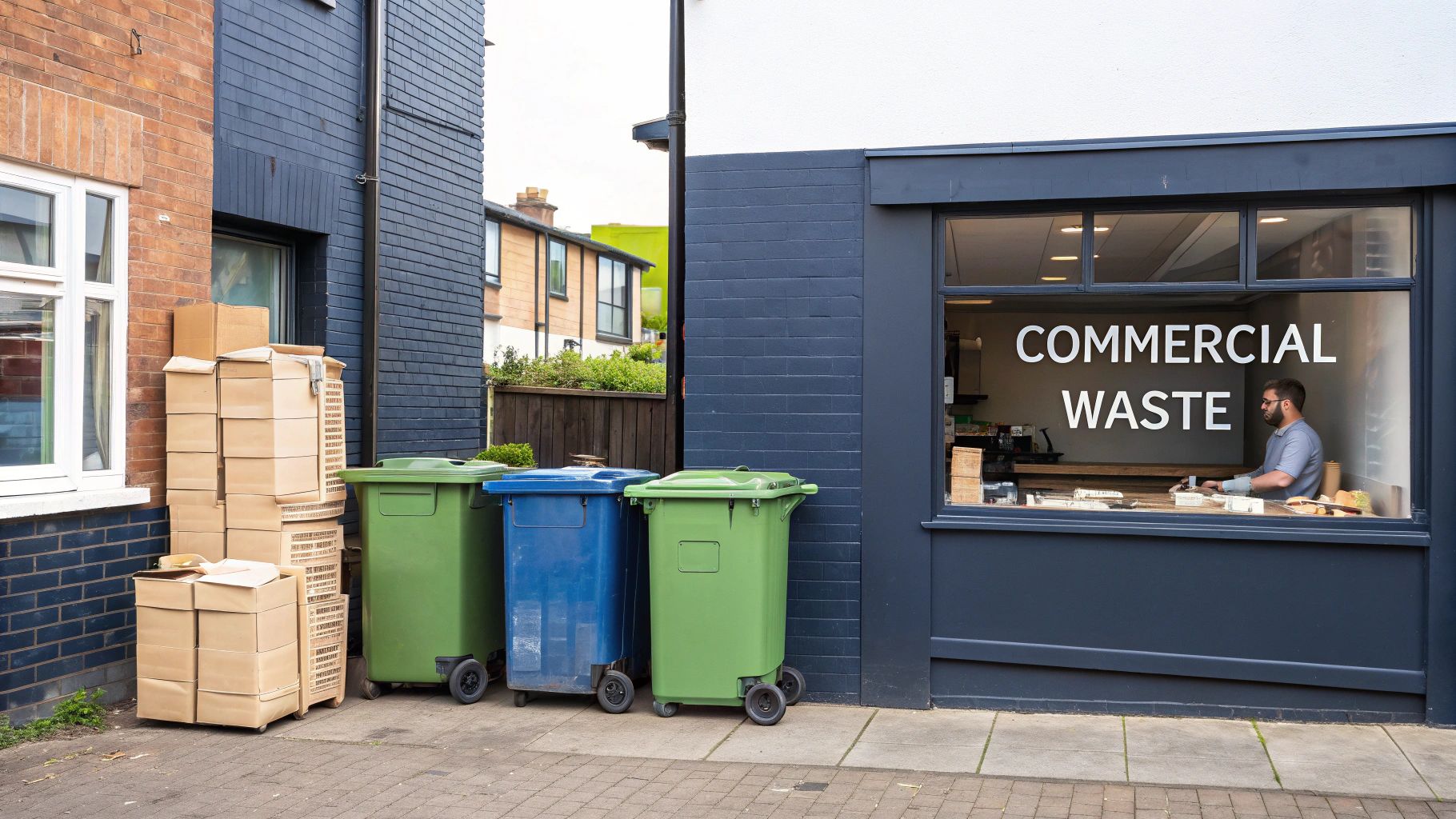
Simply put, commercial waste collection is the professional service for getting rid of any and all refuse that comes from your business activities. Unlike the rubbish from our homes, which the local council handles, business waste is entirely the responsibility of the company that creates it. This legal duty is known as the 'Duty of Care'.
This isn't just a rule for big factories or sprawling construction sites. Every single business, no matter its size or what it does, must have a proper arrangement in place with a licensed waste carrier.
Think of it this way: the leftover packaging from your online shop, the food scraps from your café kitchen, or the old paperwork from your office are all considered commercial waste. Even if you work from home, any rubbish generated by your business activities has to be handled separately from your personal household waste.
Why You Cannot Use Your Home Bins
It’s a common mistake to think that small or home-based businesses can just chuck their trade waste into their domestic bins. But the Environmental Protection Act 1990 makes this illegal. Your council tax pays for collecting household rubbish, and using that service for business purposes is a breach of the rules that can land you in hot water.
The system is set up to make sure that businesses, which often create more waste and different types of waste, pay for its management. This also encourages everyone to be a bit more responsible. For instance, commercial waste often includes things you wouldn't typically find in a home bin, such as:
- Packaging materials: Large amounts of cardboard, plastics, and polystyrene.
- Hazardous items: Things like chemicals, electronics (WEEE waste), and batteries.
- Specific industry waste: Food waste from a restaurant or rubble from a building site.
The Foundation of Good Business Practice
Sorting out your commercial waste collection is more than just ticking a legal box; it's a core part of running a responsible and efficient business. Arranging a professional service ensures you stay on the right side of the law, dodge any potential fines, and do your bit for the environment.
When you partner with a licensed provider, you get the right bins for the job, reliable collection schedules, and all the necessary legal paperwork, like Waste Transfer Notes. This guide will walk you through everything you need to know, from understanding your legal duties to choosing the right service for your business needs here in Dorset.
Understanding Your Legal Duty of Care

If you run a business, you have a legal ‘Duty of Care’ over every single piece of waste your company creates. This isn't just a bit of red tape; it's a serious responsibility that starts the moment the rubbish is made and only ends when it’s been properly and legally disposed of.
Think of it like a chain of custody. You're the first link. What happens to that waste after it leaves your site is still your responsibility, even once it’s on the back of a lorry. Getting this right isn't just about dodging fines – it's a cornerstone of running a compliant and ethical business in the UK.
The law is clear: you have to take all reasonable steps to manage your waste correctly. That means you can’t just give it to the first person with a van who offers to take it away. You must be absolutely sure that anyone handling your waste is a registered waste carrier, authorised by the Environment Agency.
The Core Principles of Your Duty of Care
At its heart, your Duty of Care boils down to three key rules. Getting any of them wrong can lead to some hefty penalties. Nail these down, and you’re well on your way to a solid waste management plan.
These duties are in place to make sure waste is stored, moved, and tracked correctly, preventing fly-tipping and protecting our environment.
- Secure Storage: You’ve got to store your waste safely. This means using proper containers, like wheelie bins or skips, that won't let rubbish escape. Bins can't be left overflowing, and they need to be secure enough to keep out pests and prevent anyone else from dumping their waste in them.
- Authorised Transport: Only a registered waste carrier is legally allowed to take your waste away. It’s up to you to check their credentials. It’s easy to do – you can verify any carrier’s licence on the Environment Agency’s public register in a couple of minutes.
- Proper Documentation: Every single time waste is collected, the handover needs to be recorded on a Waste Transfer Note (WTN). This bit of paperwork is your proof that you’ve done everything by the book.
A Waste Transfer Note is basically a passport for your rubbish. It tracks the entire journey from your business to a licensed disposal or recycling facility. It details what the waste is, how much there is, and who is handling it every step of the way. It’s your get-out-of-jail-free card if anything is ever questioned.
To make this crystal clear, here’s a simple checklist to keep you on the right track.
Your Duty of Care Checklist
This table breaks down your legal obligations into simple, practical steps.
| Responsibility | What It Means in Practice | Why It Matters |
|---|---|---|
| Store Waste Securely | Use the right bins/containers. Prevent them from overflowing. Keep them covered and locked if necessary. | Stops pollution, prevents pests, and avoids creating a public nuisance or health hazard. |
| Prevent Escape of Waste | Ensure bags are tied and lids are closed. Don't let wind blow loose items away. | You are liable for any environmental damage your waste causes, even after it leaves your site. |
| Use a Registered Carrier | Always check your provider's waste carrier licence on the Environment Agency website. | Using an unlicensed operator is illegal and could make you liable for fly-tipping fines. |
| Complete a Waste Transfer Note | Ensure a WTN is filled out accurately for every collection, describing the waste correctly. | This is your legal proof of responsible transfer. Without it, you can't prove you met your duty. |
| Keep Records | Keep copies of all your Waste Transfer Notes for a minimum of two years. | Enforcement officers can ask to see your records at any time. No records means an automatic fine. |
Following these steps is non-negotiable for any business in the UK. It protects you, your company, and the local environment.
The Importance of the Waste Transfer Note
The Waste Transfer Note is arguably the single most important document in your waste management process. It’s a legally binding record that shields your business by proving you’ve acted responsibly. If you don't have one, you have zero proof that you handed your waste over to a licensed professional.
You must keep copies of all your WTNs for at least two years. If your business produces hazardous materials, you’ll need a Hazardous Waste Consignment Note instead, and that has to be kept for a minimum of three years.
For regular, ongoing collections of the same type of waste, your provider can issue a ‘season ticket’ WTN that covers you for up to a year, saving a lot of paperwork.
To get into the nitty-gritty, have a look at our detailed guide on what a Waste Transfer Note is and what must be included. Think of it as your insurance policy against legal headaches.
Identifying Your Business Waste Streams
Before you can nail down the right commercial waste service, you need a clear picture of what you're actually throwing away. Think of it as a quick 'waste audit'. You wouldn't order stock without knowing what sells, and the same logic applies here. Getting this right isn’t just about being green; it’s the first step to cutting your costs and making sure you’re following the rules.
Most business rubbish falls into a few key categories, known as waste streams. By understanding and separating these at the source, you unlock cheaper collection rates and give your recycling figures a serious boost. Let's break down what you're likely to find.
General Waste The Non-Recyclable Basics
This is your classic ‘black bag’ rubbish – everything that’s left over once you’ve pulled out all the recyclables. For most businesses, this is the most expensive bin to have collected. Why? Because it’s heading for landfill or an energy-from-waste plant, both of which come with hefty taxes and fees.
Common examples of general waste include:
- Greasy pizza boxes, crisp packets, and other contaminated food packaging
- Non-recyclable plastics like cling film or polystyrene
- Tissues, paper towels, and other sanitary items
- Broken mugs or plates (anything that isn't a glass bottle or jar)
The goal for any smart business should be simple: make this waste stream as small as possible. Every item you keep out of this bin is money back in your pocket.
Dry Mixed Recycling The Cost-Saving Stream
Dry Mixed Recycling, or DMR, is where the real savings are. This stream is for all the clean, dry materials that can be easily turned into new products. Honestly, setting up a dedicated DMR bin is one of the simplest and most effective ways to slash your waste collection bills.
Think of it this way: separating your recyclables is a direct investment in your bottom line. Every piece of cardboard or plastic you divert from the general waste bin is a small saving that quickly adds up over the year.
This category usually covers:
- Paper and Cardboard: Office paper, newspapers, magazines, and flattened delivery boxes.
- Plastic Bottles: Drinks bottles and milk containers (just give them a quick rinse and squash them).
- Plastic Pots, Tubs, and Trays: Think yoghurt pots and food trays (clean and dry, of course).
- Metal Cans: Aluminium and steel drink cans or food tins (rinsed out).
Keeping these materials clean and separate isn't just a box-ticking exercise; it's the foundation of any good waste management plan.
Food Waste The Organic Stream
If you’re in the hospitality game – running a cafe, pub, or restaurant – food waste is a big one. This covers everything from veg peelings and plate scrapings to out-of-date stock. Sending food waste to landfill is a real environmental problem, as it rots and releases methane, a powerful greenhouse gas.
Because of its weight and environmental impact, you'll often find that dedicated food waste collections are a legal and practical must. This waste gets sent for anaerobic digestion, a clever process that turns it into biogas for energy and a nutrient-rich fertiliser for farms.
Glass Collections A Common Requirement
Glass is heavy, and it really doesn't play well with other materials in a recycling collection. That's why it's almost always collected separately, especially for pubs, bars, and restaurants that get through a lot of bottles and jars. Keeping it separate means it can be properly recycled by being melted down and reformed into new containers.
The sheer volume of waste from UK businesses is huge. In 2020, the UK generated 40.4 million tonnes of commercial and industrial waste, with England responsible for most of it. Fast forward to 2023, and England's commercial sector was the main source of its 32.6 million tonnes of waste, showing just how vital effective collection services are. You can dig deeper into the official numbers on the UK waste generation on gov.uk.
Hazardous and Specialist Waste
Finally, we have the stuff that needs special handling. These are materials that pose a risk to our health or the environment, and they absolutely cannot be mixed in with your general waste or recycling. It's a legal requirement to handle them properly, and understanding what qualifies as Understanding Hazardous Waste is critical.
Examples include:
- Chemicals, solvents, and old tins of paint
- Batteries and fluorescent light tubes
- Waste Electrical and Electronic Equipment (WEEE), like old computers, kettles, and fridges
- Asbestos, which requires a highly specialised and licensed disposal team
If you're in construction or demolition, you’ll also be dealing with specialist streams like concrete, soil, and rubble. These need their own dedicated skips or grab lorry services. The first step is always to identify exactly what you're dealing with to make sure it's managed safely and legally from start to finish.
Choosing the Right Bins for Your Business Needs
Once you’ve got a handle on your different waste streams, the next practical step is picking the right containers to put everything in. This isn’t just a trivial choice; it’s a decision that directly impacts your costs and whether you’re staying on the right side of the law. Get it wrong, and you could be paying for empty space or, even worse, dealing with overflowing bins that put you in breach of your Duty of Care.
Think of it like choosing a delivery van. You wouldn’t use a massive lorry for a small, local drop-off, and you definitely wouldn't try to cram a whole pallet of stock into a tiny car. The exact same logic applies to your waste containers. Each one is built for a specific job, volume, and type of material. Matching the container to the task is the bedrock of a smart waste management plan.
Everyday Solutions: Wheelie Bins
For the vast majority of businesses—from high street shops and offices to bustling cafes and restaurants—the humble wheelie bin is the workhorse of waste management. They are the perfect tool for handling day-to-day general waste, dry mixed recycling, and food waste collections. Because they’re mobile and don’t take up a huge amount of space, they’re ideal for sites where every square foot counts.
Wheelie bins come in a few standard sizes, so knowing their capacity is key to making the right call.
- 240L Wheelie Bin: This is the same size as your standard domestic bin and holds about 3-4 regular bin bags. It’s perfect for small offices or shops that don't produce much waste.
- 660L Wheelie Bin: A solid mid-size option that can hold around 10-12 bin bags. This is a great choice for medium-sized businesses like cafes or small retail stores.
- 1100L Wheelie Bin: The largest of the standard four-wheeled bins, this container holds approximately 15-20 bin bags. It’s the go-to for larger restaurants, busy offices, and retail outlets with a lot of daily waste.
When you're looking at different types of Waste Receptacles, it really pays to do your homework to find the best fit. For a detailed look at all the different sizes we offer, you can explore our complete guide on commercial wheelie bins to find your perfect match.
This flowchart gives you a simple way to think about sorting your waste into the right streams before it even hits the bin.
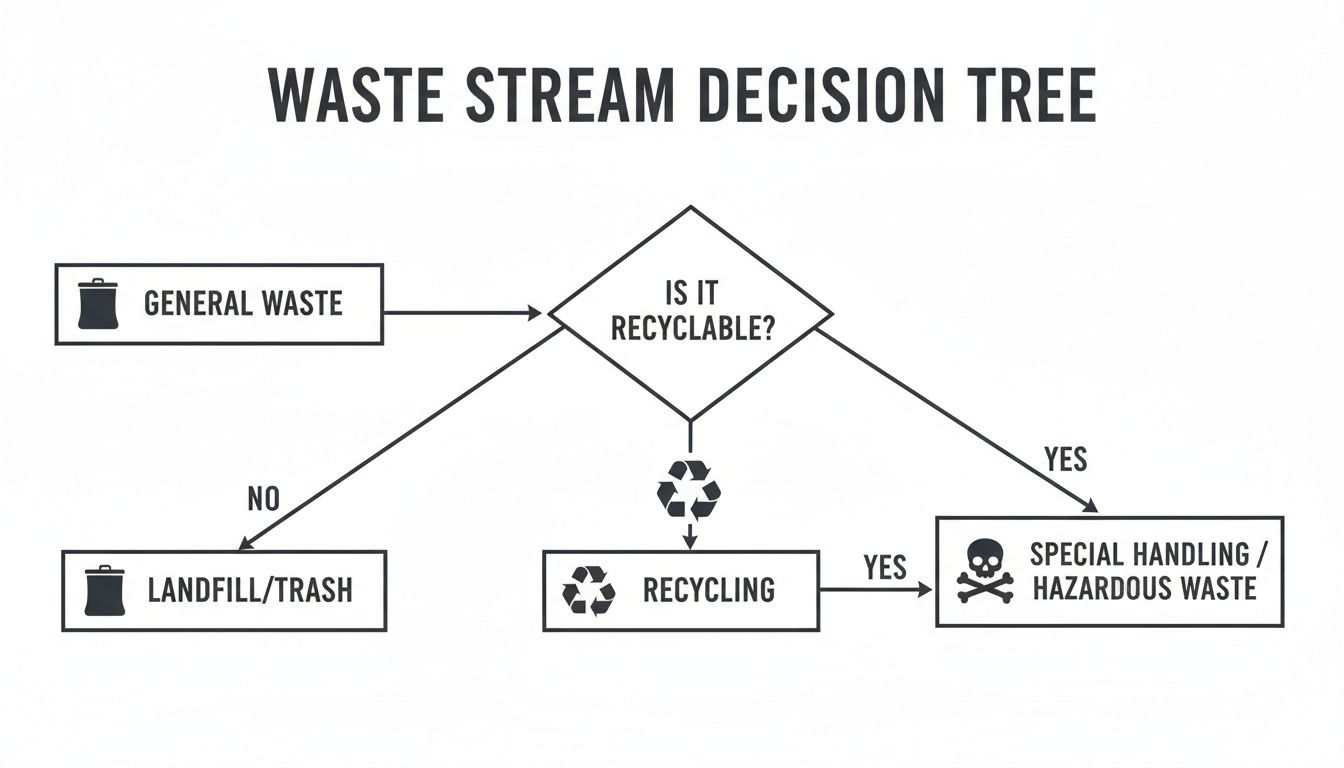
Following a visual guide like this makes it much easier to segregate materials correctly, which is absolutely vital for staying compliant and making sure your recycling efforts count.
Heavy-Duty Containers for Bigger Projects
There comes a point when a wheelie bin just won’t cut it. For industries like construction, demolition, manufacturing, or for large-scale site clearances, you need to bring in the big guns. These are the jobs where waste volumes are huge and the materials are often bulky and heavy.
Before we dive into the options, here's a quick comparison to help you see what might work best for you.
Commercial Waste Container Comparison
| Container Type | Typical Size/Capacity | Best For | Example Use Case |
|---|---|---|---|
| Wheelie Bins | 240L, 660L, 1100L | Daily operational waste (general, recycling, food) | A restaurant needing separate bins for food scraps and glass bottles. |
| Skips | 2 – 16 cubic yards | Mixed heavy waste from renovations or clear-outs. | A shop undergoing a complete refit and gutting the interior. |
| RORO Bins | 20 – 40 cubic yards | Very high volumes of bulky, non-compactable waste. | A large construction site generating tons of demolition debris daily. |
| Grab Lorries | ~16 tonnes payload | Large piles of loose, inert materials like soil or rubble. | Clearing a large pile of excavated earth from a landscaping project. |
This table should give you a good starting point, but let’s look at the heavy-duty options in a bit more detail.
When you're dealing with waste on this scale, it's about more than just volume. You have to consider the container's design, how it's collected, the type of material you're getting rid of, and the logistics of your actual site.
Here are the main players for substantial commercial waste needs:
-
Skips: We all know what a skip is. These open-topped metal containers are delivered right to your site and are brilliant for mixed heavy waste like construction debris, soil, wood, and metal. They come in a whole range of sizes (usually measured in cubic yards), making them a really flexible choice for renovations, shop refits, and big clear-outs.
-
Roll-on/Roll-off (RORO) Bins: For truly massive waste volumes, ROROs are the only way to go. These are colossal containers, often stretching up to 40 cubic yards, and are used for major construction projects, huge factory clearances, or any business with an ongoing, high-volume waste stream. As the name suggests, they’re "rolled on and off" a specialised lorry, which means you need a fair bit of space for delivery and collection.
-
Grab Lorries: A grab lorry is a totally different kind of solution. Instead of a container you fill up over time, it’s a vehicle that comes to you. It's kitted out with a hydraulic grab arm that can scoop up huge quantities of loose materials like soil, rubble, or green waste directly from your site. This is a game-changer for sites with tricky access where dropping a skip just isn’t an option, or for when you need to get rid of large piles of inert waste in a hurry.
How Collection Schedules and Costs Are Determined
Getting your head around the cost of commercial waste collection is a must for managing your business budget. The final figure on your invoice isn't just plucked out of thin air; it’s a direct reflection of several key factors that dictate the cost of handling your rubbish responsibly. Understanding what drives these costs puts you back in the driver's seat.
Think of your waste management bill not as a fixed overhead, but as a variable expense you can actually influence. Once you grasp what shapes the price, you can make smart changes to your operations that lead to real, noticeable savings.
The Core Factors Influencing Your Price
The price you pay for waste collection is built on a few fundamental pillars. Each one plays a part in the final calculation, and tweaking any of them can have a knock-on effect on your monthly bill.
It's important to remember these components are all linked. For instance, if you get better at recycling, you don't just change your waste type. You'll probably find you can get away with a smaller general waste bin and have it collected less often, which creates a fantastic compounding effect on your savings.
The main cost drivers are:
- Waste Type: What you’re throwing away is the biggest piece of the puzzle. General waste is the most expensive to get rid of because it’s slapped with Landfill Tax. On the other hand, clean, separated recycling like Dry Mixed Recycling (DMR) or glass is far cheaper to process.
- Container Size and Quantity: It stands to reason that the size and number of bins you have are directly linked to cost. Bigger bins or more of them will naturally push the price up, so it’s vital to make sure your bin capacity actually matches what you're producing.
- Collection Frequency: How often we pop by to empty your bins—whether that's daily, weekly, or fortnightly—is a major pricing factor. More frequent collections mean higher running costs for us, which is reflected in your fee.
- Your Business Location: Where you are in the world matters. Your proximity to recycling facilities or disposal sites plays a role, as collection routes are optimised to be as efficient as possible. Things like fuel costs and travel time are baked into the pricing structure.
External Pressures on Waste Management Costs
Beyond the things you can directly control, there are bigger economic and regulatory shifts that affect commercial waste prices. These external pressures are pushing costs up across the whole industry, making efficient waste management more critical than ever before.
Recent policy changes and tax hikes are all designed to push businesses towards recycling and away from landfill. UK waste management costs are on an upward trend, with 50% of waste handlers expecting landfill disposal tax increases to hit hard. Gate fees are predicted to jump from £103.70 to £126.15 per tonne—a sharp rise driven by policies aimed at kickstarting the UK's stalling recycling rates.
This brings us to a crucial point: cutting down the amount of waste you send to landfill isn't just an environmental nice-to-have anymore—it's a direct financial strategy. The less general waste you produce, the more you shield your business from these climbing taxes.
Optimising your service is the key to keeping these expenses in check. A proper review of your setup can often uncover simple changes that make a huge difference. You can learn more by reading our complete breakdown of commercial waste disposal costs and how to control them. By focusing on better segregation and smarter scheduling, you can actively cut your outgoings and run a much tighter ship.
Finding a Reliable Waste Management Partner in Dorset
Choosing the right company for your commercial waste collection is about far more than just chasing the lowest quote. It's about finding a genuine partner who gets the unique demands of your Dorset business. The right provider should feel like an extension of your own team, keeping your operations compliant, smooth, and free of headaches.
A great waste management partner offers the full package. They should be able to handle everything from your weekly wheelie bin collections to providing a big skip for a shop refit, and even manage tricky disposals like asbestos. This kind of flexibility means that as your business evolves, your waste partner can grow right alongside you.
Look for Operational Excellence
When you're flat out running your business, the last thing you need are missed collections or clunky booking systems. That’s why the operational strength of a provider is a massive clue to how reliable they’ll be.
Keep an eye out for the hallmarks of a well-oiled machine:
- Guaranteed next-day delivery on services like skip hire, which is crucial for keeping your projects on track.
- Simple online booking systems that save you precious time and paperwork.
- A solid local reputation, backed by positive reviews from other businesses in places like Poole and Bournemouth.
These things aren't just nice-to-haves; they show a company has invested properly in its service and is serious about making your life easier.
Transparency and Trust
Clear, honest pricing is completely non-negotiable. A provider you can trust will be upfront about all their costs, with no nasty surprises or hidden fees buried in the small print. A price-match guarantee is a great sign of confidence, showing they know their pricing is both competitive and fair.
The UK's non-hazardous waste collection industry is huge, expected to hit £12.6 billion in revenue in 2025 across more than 3,300 businesses. This just goes to show the massive demand for dependable services, especially in busy commercial areas like Dorset where businesses count on efficient skip hire and RORO solutions. You can dig into more data about the UK's waste collection industry on IBISWorld.
Choosing a partner is ultimately an investment in peace of mind. You are entrusting them with a critical, legally mandated part of your business. A company that values transparency and operational excellence proves it is worthy of that trust.
Finally, think about their commitment to the planet. In this day and age, a company’s green credentials really matter. A partner that actively champions recycling or gets involved in initiatives, like planting a tree for every skip hired, shows they share your values. It aligns your brand with a provider that cares just as much about the local Dorset environment as you do.
Your Business Waste Questions Answered
Getting to grips with the rules around commercial waste can feel a bit like navigating a maze. To help you find your way, we've pulled together straightforward answers to the questions we hear most often from Dorset businesses.
I Work From Home. Do I Really Need a Commercial Waste Service?
The short answer is yes, probably. If your home-based business creates any waste that a typical household wouldn't, you are legally required to have a commercial waste service.
Think about it this way: your council tax covers your normal domestic bins. But if you're selling products, that means packaging. If you're a crafter, that means offcuts. All of that is legally business waste. Trying to sneak it into your household bin could land you with a fine, so it’s crucial to get a separate, compliant collection sorted.
What’s a Waste Transfer Note, and How Long Do I Need to Keep It?
A Waste Transfer Note (WTN) is your proof of proper disposal. It’s a legal document that shows you've handed your waste over to a licensed carrier, which is a key part of your Duty of Care. It records what the waste is, how much there is, and who's taking it away—essentially, it’s the official receipt for your rubbish.
You must keep your WTNs for a minimum of two years. If you're dealing with hazardous materials, the document is called a Hazardous Waste Consignment Note, and the retention period extends to at least three years.
This paperwork is your get-out-of-jail-free card. If fly-tipped waste is traced back to your area, your complete and accurate WTNs are what prove you acted responsibly and weren't involved.
Can I Just Take My Business Waste to the Local Tip?
Absolutely not. The local tip, or Household Waste Recycling Centre (HWRC), is strictly for household waste only. The clue is in the name!
These sites aren’t licensed to accept commercial waste, and showing up with a van full of trade rubbish is illegal. It can lead to some pretty hefty fines and even prosecution. The only legitimate way to dispose of your business waste is to hire a licensed waste carrier who will take it to a proper, authorised commercial facility.
How Can I Cut My Business's Waste Collection Costs?
The best way to bring your bill down is to produce less general waste, as it’s always the most expensive type to get rid of. It's not as hard as it sounds. Here are a few practical tips:
- Get Serious About Recycling: The first step is better segregation. Dry mixed recycling and separated glass collections are far cheaper than general waste. Make it easy for your staff to do the right thing.
- Do a Bin Dive: It might not sound glamorous, but having a quick look in your general waste bin is incredibly revealing. You’ll probably find that a huge chunk of what's in there could have been recycled.
- Right-Size Your Service: Are you paying for a weekly collection when your bin is only ever half-full? That’s just throwing money away. Make sure your bin size and collection schedule actually match what you need.
- Find a Partner, Not Just a Collector: A good waste management company does more than just empty your bins. They should work with you, almost like a consultant, to spot inefficiencies and suggest clever ways to reduce waste from the start.
By taking these small steps, you can start treating waste management less like a unavoidable cost and more like a smart part of your business strategy.
Ready to take control of your commercial waste collection and ensure your Dorset business is fully compliant and efficient? The Waste Group offers reliable, transparent, and eco-friendly solutions tailored to you. From next-day skip hire to scheduled wheelie bin services, we make waste management simple. Get an instant quote or book online today at https://www.thewastegroup.co.uk.