
Your Guide to Corrugated Roofing Asbestos in the UK
Your Guide to Corrugated Roofing Asbestos in the UK
Corrugated asbestos roofing is a term that probably brings to mind old garages, farm buildings, and sheds with those familiar wavy, greyish panels. For a huge chunk of the 20th century, it was the go-to building material for these kinds of structures all over the UK. Why? It was tough, fire-resistant, and cheap.
But as strong as it was, it carries a significant health risk. The danger isn't necessarily from the roof just sitting there; it's when the material gets broken, drilled, or starts to crumble that it releases harmful microscopic fibres into the air.
What Exactly Is Corrugated Asbestos Roofing?
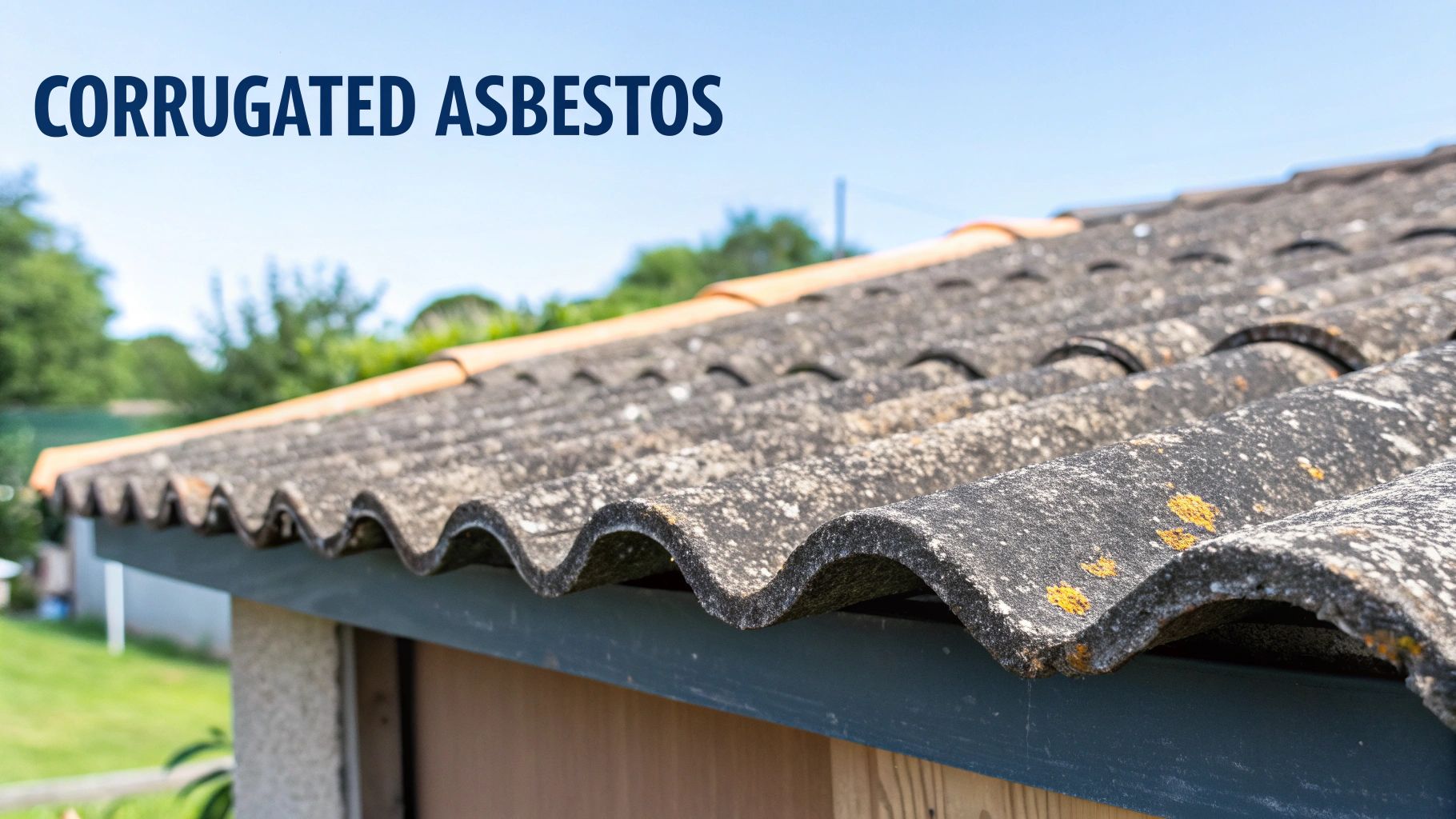
If you have a utility building on your property that was built before 2000, there's a decent chance its roof is made from corrugated asbestos cement. This stuff was a real mainstay of British construction for decades.
It's helpful to think of it not as a sheet of pure asbestos, but more like concrete that's been beefed up with tiny, powerful asbestos fibres. This mix created a composite material that was surprisingly lightweight yet incredibly resilient. The classic corrugated (wavy) shape wasn't just for looks—it added structural strength, letting the panels span gaps easily without extra support.
Why Was It So Widespread?
The massive popularity of corrugated asbestos roofing really boiled down to a few key things that made it a perfect fit for outbuildings and utility structures. Its prevalence back then means we still see it all over the place today.
Here’s why it was everywhere:
- Exceptional Durability: It could take a beating from the British weather for decades, often with little to no maintenance.
- Fire Retardant Properties: Asbestos is naturally resistant to fire, which was a huge selling point for buildings used as workshops or for storage.
- Cost-Effective Manufacturing: It was cheap to make and relatively simple to install, which kept construction costs low for everyone from homeowners to farmers.
The Hidden Danger: Undisturbed vs Damaged
This is the most critical thing to understand about asbestos roofing. When the sheets are in good condition and left completely alone, they are relatively stable. The dangerous fibres are locked tightly inside the cement mix, so the immediate risk is low.
The real danger kicks in the moment that material is disturbed. Simple actions like drilling a hole, sawing a panel, or even pressure washing it can release a cloud of microscopic, needle-like fibres. The risk is just as high when the roof gets old and starts to get brittle, cracked, or weathered.
This material was used extensively from the 1920s right up until it was totally banned in 1999. It's estimated that during this period, Britain imported over six million tonnes of asbestos, and a massive chunk of that went into asbestos cement products like these roofing sheets. You can learn more about the historical use of asbestos in the UK and its lasting impact.
Getting your head around this distinction is fundamental. It's not the roof's existence that poses the biggest threat, but its condition and anything that might break it apart. That’s precisely why getting a professional to assess and handle it isn’t just a good idea—it’s absolutely essential for your safety.
How to Spot Potential Asbestos Roofing
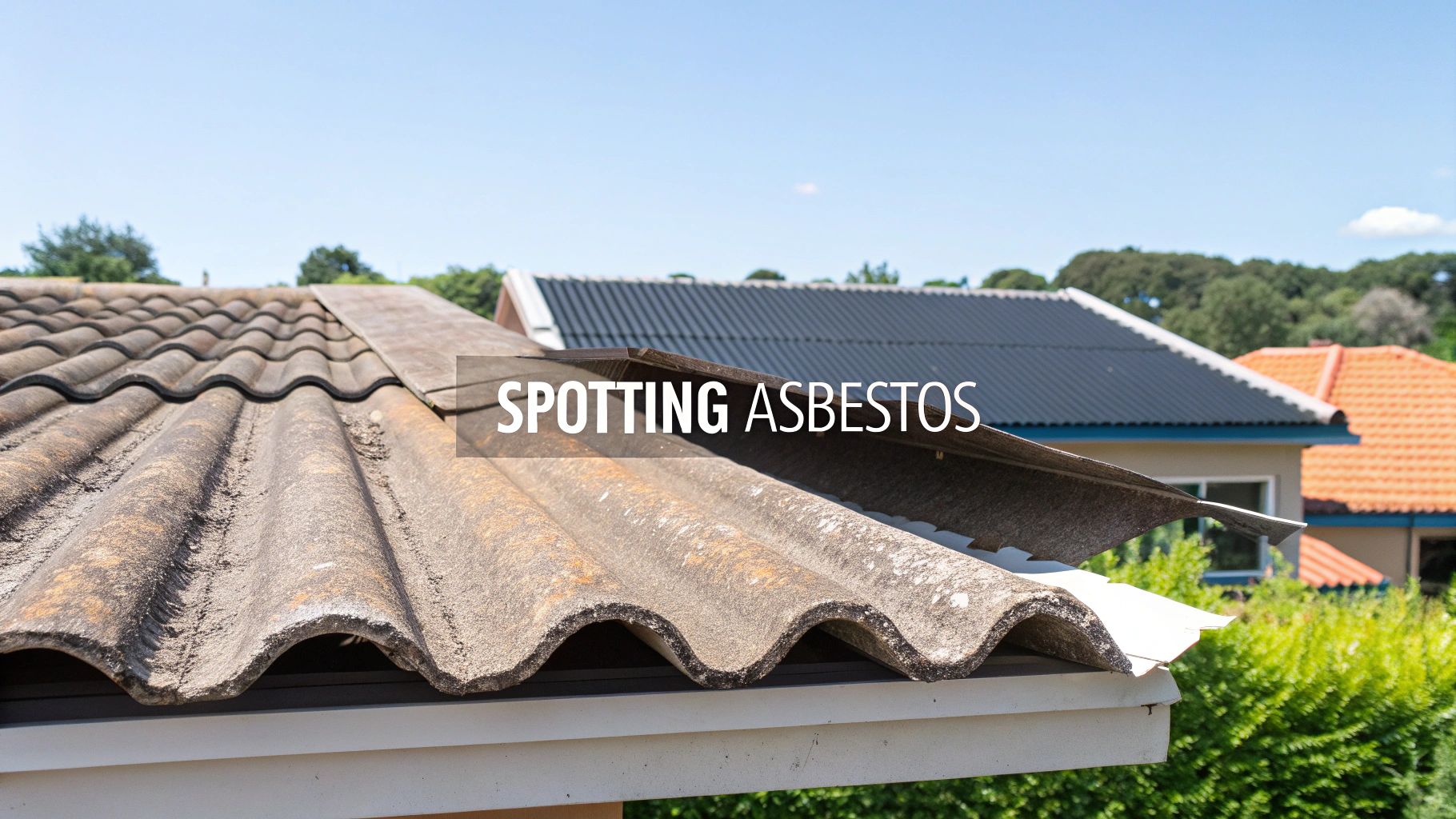
Figuring out if that old garage or shed roof contains asbestos can feel a bit like a detective job. While you can't be 100% certain without getting the professionals in, there are some very distinct visual clues that can point you in the right direction.
Knowing what to look for will help you decide if it's time to make that call. After all, when it comes to asbestos, it’s always better to be safe than sorry.
The age of the building is your first and most important clue. If the structure was built or the roof was installed before 2000, you should work on the assumption that asbestos could be present until it’s proven otherwise. This cautious approach is the absolute cornerstone of staying safe.
Key Visual Characteristics
When you're eyeing up a suspected asbestos roof, pay close attention to its appearance. Old asbestos cement has a unique look and feel that's quite different from modern materials like metal or fibre cement.
These are the main signs to watch out for:
- Wavy Profile: That classic corrugated, wavy pattern is a real hallmark of this type of roofing.
- Colour and Texture: The sheets are typically a light grey, often looking weathered and covered in moss or lichen. They have a dense, matted texture rather than a smooth or metallic finish.
- Visible Fibres: If you can safely see a broken corner or a damaged edge (without causing more damage yourself), you might spot fine, hair-like fibres embedded in the cement. This is a very strong giveaway.
Corrugated asbestos cement roofing was a composite material, mixing cement with a hefty amount of asbestos fibres to make it strong and fire-resistant. The fibre content in these sheets could vary, but it often made up a big chunk of the material, making any breakage a potential health hazard.
Identifying Potential Asbestos Roofing vs Modern Alternatives
It’s surprisingly easy to mistake modern fibre cement for its older, more dangerous cousin. However, there are subtle but important differences that can help you tell them apart. This table breaks down what to look for.
| Characteristic | Corrugated Asbestos Cement | Modern Fibre Cement | Metal Roofing |
|---|---|---|---|
| Surface Texture | Matt, often chalky or fibrous where broken. | Smoother, more uniform surface. | May have a painted finish or metallic sheen. |
| Markings | May have manufacturer codes, but often faded or absent. | Often marked with "NT" (New Technology) for non-asbestos. | Clearly branded, may show coating type. |
| Thickness | Tends to be thicker and more brittle. | Generally thinner and more flexible. | Very thin and lightweight. |
| Age Appearance | Looks weathered, brittle, and may be covered in moss. | Retains its appearance better over time. | Can show rust if the protective coating is damaged. |
Spotting an "NT" stamp is one of the quickest ways to identify newer, safer fibre cement sheets. If you can't find one, it's always best to assume the material could be the older, asbestos-containing type.
Crucial Safety Warning: A visual check is nothing more than an educated guess. You should never, ever break, drill, or disturb roofing material to get a better look. This one action could release dangerous fibres into the air.
The Only Way to Be Sure Is Professional Testing
At the end of the day, the only way to confirm if asbestos is present is through professional analysis. This is absolutely not a DIY job. Understanding how asbestos is identified by experts using safe methods is crucial for anyone dealing with a suspect roof.
A UKAS-accredited surveyor will follow strict safety rules to take a small, representative sample of the material. This sample is then sent to a lab for microscopic analysis to confirm whether asbestos fibres are there and, if so, what type. This process is safe, accurate, and gives you the definitive answer you need to plan your next steps responsibly.
Understanding the Health Risks of Asbestos Fibres
The real problem with corrugated asbestos roofing isn't its appearance; it’s what's lurking inside. The danger comes from the microscopic, needle-like asbestos fibres locked tightly within the cement. As long as the material is left completely undisturbed, those fibres are safely contained.
But the moment that material is broken, sawn, drilled, or even just crumbles with age, those tiny fibres get released into the air. They're invisible to the naked eye, so light they can float for hours, and you can breathe them in without ever knowing. This is where the serious health trouble begins.
How Asbestos Affects the Lungs
Think of it like breathing in microscopic needles. Once these asbestos fibres get into your lungs, your body has an incredibly tough time getting rid of them. Their sharp, durable nature means they can embed themselves deep inside your lung tissue, and they stay there for good.
Your body's natural defences go into overdrive trying to break them down, but they can't. This creates a state of constant irritation and inflammation around every single fibre. Over many years, this process triggers a cascade of damaging effects.
The constant biological battle against these fibres causes scarring, inflammation, and cellular damage. This process is the root cause of all asbestos-related diseases, turning what was once a useful building material into a serious long-term health hazard.
This is an insidious process because it happens silently over decades. The damage builds up slowly without any immediate symptoms, which is a big reason why the danger is so often underestimated.
The Major Asbestos-Related Diseases
The long-term irritation from embedded asbestos fibres can lead to several severe and often fatal conditions. It's vital to understand that these aren't quick-onset illnesses; they can take decades to develop.
The main diseases linked to asbestos exposure are:
- Asbestosis: This is a serious, non-cancerous respiratory disease where scarring of the lung tissue (fibrosis) makes the lungs stiff, leading to severe shortness of breath.
- Lung Cancer: Asbestos exposure significantly raises the risk of developing lung cancer. For smokers, that risk is even higher.
- Mesothelioma: A rare and aggressive cancer that attacks the lining of the lungs, chest, or abdomen. Mesothelioma is almost exclusively caused by exposure to asbestos.
The Health and Safety Executive (HSE) reports that asbestos is still responsible for around 5,000 deaths every year in the UK. That staggering number really highlights the lasting legacy of this material.
The Danger of the Latency Period
One of the most deceptive things about asbestos-related diseases is their long latency period. This is the time between first being exposed to asbestos and the first symptoms of illness appearing.
This period can be anywhere from 20 to 50 years. It means someone could have breathed in fibres from a garage roof decades ago and only start feeling ill today. This huge delay is why materials installed in the mid-20th century are still a major public health issue. You can get a more detailed look at the specific asbestos-related diseases and health risks to fully appreciate why professional handling is non-negotiable.
This sobering reality underscores why it's so important to treat any potential corrugated roofing asbestos with extreme care. The risks might not be immediate, but they can have devastating consequences decades down the line, making professional assessment and removal the only truly safe path forward.
Getting to Grips with UK Asbestos Removal and Disposal Laws
When you're dealing with corrugated asbestos roofing, you’re not just following safety advice – you're navigating strict UK law. These regulations are in place for a very good reason: to protect everyone, from the person handling the material to the general public, from the serious health risks of airborne fibres. Trying to cut corners isn't just dangerous, it comes with hefty legal consequences.
The main piece of legislation you need to know about is the Control of Asbestos Regulations 2012. Think of it as the complete rulebook for how any asbestos-containing materials (ACMs) must be managed, handled, and ultimately disposed of. It sets out clear duties for everyone involved to ensure a consistent, safe approach right across the country.
First things first, you need to understand your specific legal duties. The law makes a distinction between a private homeowner and a 'duty holder' – like a landlord or business owner responsible for a commercial property. While homeowners have a bit more flexibility, the fundamental principles of safe disposal apply to everyone.
Notifiable vs. Non-Notifiable Work
A crucial concept in the regulations is the difference between 'notifiable' and 'non-notifiable' work. This classification all comes down to the level of risk involved and dictates the legal hoops you need to jump through.
-
Notifiable Work: This is the high-risk stuff. It involves asbestos materials that are likely to release a large number of fibres when they're disturbed. This kind of job must be done by a licensed contractor and has to be officially reported to the Health and Safety Executive (HSE) before any work can start.
-
Non-Notifiable Work: This category is for lower-risk, more stable materials like asbestos cement sheets. Removing corrugated asbestos roofing usually falls into this bracket, as long as the sheets are handled with extreme care and not smashed or broken up.
But don't be fooled by the name. "Non-notifiable" absolutely does not mean "unregulated." Strict safety precautions are still mandatory. Anyone carrying out this work needs to be properly trained and competent enough to do it without putting themselves or anyone else in danger. To get a deeper understanding of the legal requirements, have a read of our guide on regulations and compliance in asbestos removal.
The Legal Chain of Asbestos Waste Disposal
Once that corrugated asbestos roof is off, it legally becomes hazardous waste. That means you can't just chuck it in a standard skip or drop it off at the local tip. The law demands a very precise, traceable journey for the waste to guarantee it's disposed of safely.
The legal requirement is crystal clear: all asbestos waste must be double-bagged or wrapped in heavy-duty, labelled polythene, moved by a licensed waste carrier, and taken to a specifically permitted hazardous waste landfill. This creates a secure "chain of custody" from your property to its final resting place.
Failing to follow this process isn't just a slap on the wrist; it's a criminal offence. As the waste producer, the 'duty of care' is on you to make sure your asbestos is handled correctly by licensed professionals every single step of the way.
Your Responsibilities and What You Can't Do
The regulations are very clear about the dos and don'ts. The number one goal is always to keep fibre release to an absolute minimum.
Here’s a simple breakdown of the key legal points for disposing of corrugated asbestos roofing:
- Professional Handling: While a homeowner isn't technically breaking the law by removing asbestos cement themselves, the HSE strongly advises against it because of the huge risks. For contractors, however, having the right training is a legal must.
- Licensed Transport: You can't just load it into your own car or van. Only a waste carrier with a specific license to handle asbestos is legally allowed to transport it.
- Designated Disposal Site: The waste has to go to a landfill that is officially licensed to accept asbestos. These sites have special procedures in place to bury the material safely and permanently.
- Consignment Notes: Every single movement of hazardous waste must be recorded on a consignment note. This is a legal document that tracks the waste from collection to disposal, giving you proof that you've followed the law.
These laws aren't there to make life difficult. They exist to prevent a future legacy of devastating diseases. By understanding and sticking to them, you ensure your asbestos problem is solved for good – safely, legally, and responsibly.
The Professional Process for Safe Asbestos Roof Removal
Getting rid of a corrugated asbestos roof isn't just a demolition job. Think of it more like a surgical procedure. It’s a careful, methodical process carried out by trained professionals, where every single step is designed to stop dangerous fibres from getting into the air. This is the gold standard for keeping workers, residents, and the wider environment safe.
The real work starts well before a single roofing sheet is even touched. It all begins with a detailed risk assessment to figure out the safest way to remove the roof, considering its condition, how easy it is to access, and what’s around the property. Getting this planning stage right is absolutely essential for a safe and legally compliant job.
Meticulous Site Preparation
Before any removal begins, the entire area has to be secured. This means setting up a clearly marked exclusion zone around the building to keep unauthorised people out. You'll see warning signs go up, letting everyone nearby know that asbestos removal is underway.
Next, the professionals will lay down heavy-duty polythene sheeting to cover the ground and any nearby surfaces that could get contaminated. It's a containment strategy that ensures if any small fragments do happen to fall, they’re caught immediately and can be wrapped up and disposed of with the rest of the asbestos waste. This level of detail is what separates a professional operation from a risky DIY job.
Suppressing Fibres at the Source
The number one priority during the removal is keeping those asbestos fibres grounded. The main technique for this is something called damping down. Before and during the removal, the corrugated asbestos sheets are gently sprayed with water, which often has a special agent mixed in to help it stick to the surface.
This simple but incredibly effective method stops any loose fibres from becoming airborne if a sheet gets scraped or bumped. It’s not a one-and-done job; the team will keep re-wetting the areas as they work to maintain complete control.
Safe Handling and Dismantling
With the site prepped and the roof dampened, the physical removal can start. The team will be kitted out in specialist Personal Protective Equipment (PPE), which includes disposable overalls with hoods and properly fitted FFP3 respirators to protect them from inhaling anything nasty.
The golden rule here is to take each corrugated sheet off whole. Professionals use specific tools to carefully undo the bolts and fixings, avoiding any pressure that might crack or break the asbestos cement.
Every effort is made to avoid breaking the sheets. Snapping, drilling, or smashing corrugated asbestos roofing is strictly forbidden, as these actions would cause a massive and uncontrolled release of hazardous fibres, defeating the entire purpose of a safe removal process.
As you plan for asbestos removal and the repairs that will follow, it's a good idea to think about how this affects your home insurance, especially the UK rebuild cost for insurance.
The Journey of Asbestos Waste
Once a sheet is carefully lifted off the roof, its journey to a secure final resting place begins. This disposal route is strictly controlled by UK law.
- Secure Wrapping: Each sheet or fragment is immediately double-wrapped in thick, 1000-gauge polythene. The inner bag is red to signify asbestos, and the outer bag is clear. Both are marked with official asbestos warning labels.
- Licensed Transport: The wrapped packages are then loaded into a secure, enclosed skip or vehicle driven by a licensed waste carrier. Only companies with the right permits can legally transport hazardous materials like asbestos.
- Permitted Disposal: Finally, the waste is taken directly to a landfill site that has a specific license from the Environment Agency to accept asbestos. It's then buried following strict rules to make sure it can't pose a risk to anyone in the future.
This infographic shows the legally required journey of asbestos waste, from your property right through to its final disposal.
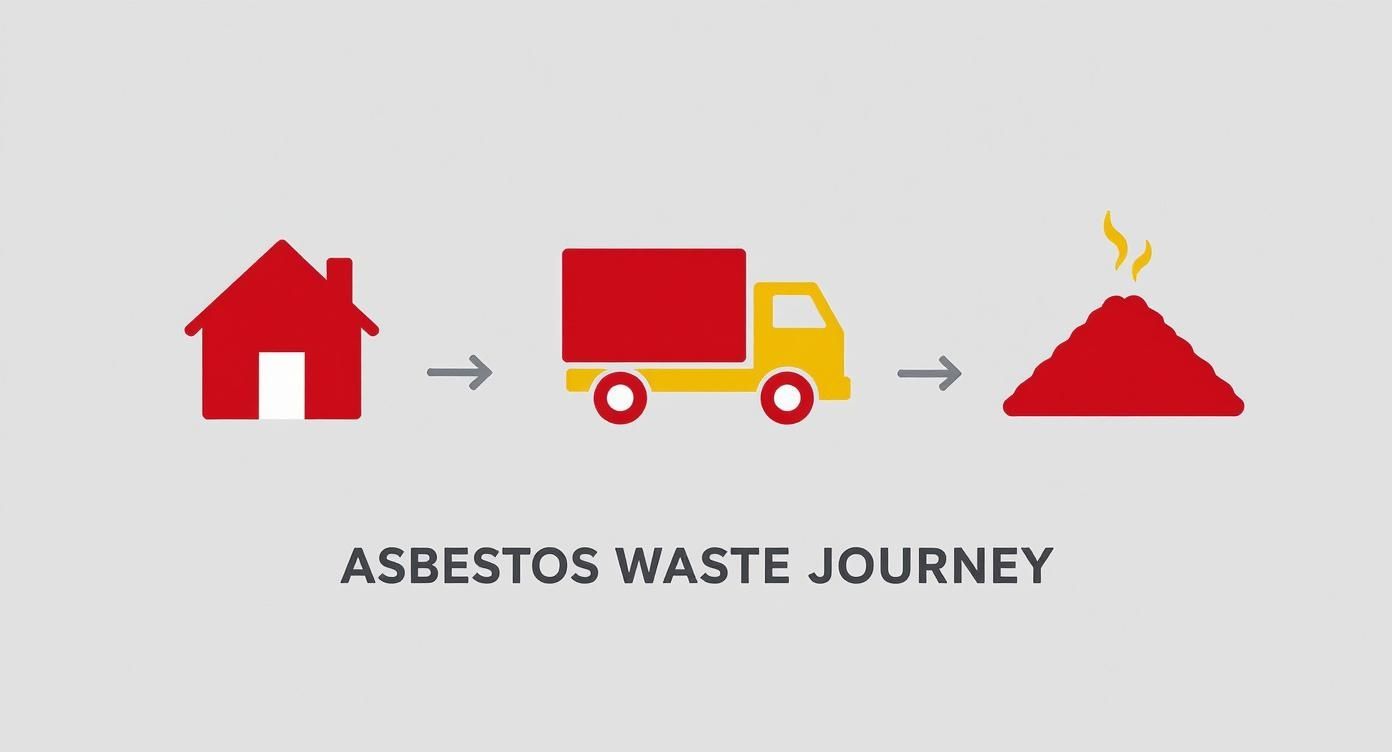
This process creates a secure chain of custody, giving you a clear, legally sound paper trail that proves public health was protected every step of the way.
Taking the Next Safe Step with The Waste Group

Navigating the world of corrugated asbestos roofing can feel like a real headache. Figuring out the risks, your legal responsibilities, and the proper way to get rid of it is a lot to take on. But you don't have to go it alone.
At The Waste Group, we offer a straightforward, safe, and fully compliant way to handle your asbestos waste. Our job is to give you total peace of mind, simplifying the whole process so you can be confident every single legal and safety box has been ticked.
Your End-to-End Asbestos Disposal Solution
We provide a complete service that takes care of the final, most critical stages of dealing with asbestos. From the moment it leaves your site, you can rest assured it's being managed with the highest level of professional care.
Here’s what our core asbestos services cover:
- Licensed Asbestos Collection: Our trained specialists will collect the correctly double-bagged and wrapped asbestos waste right from your property, using purpose-built vehicles and equipment.
- Fully Compliant Disposal: We then transport the waste to a licensed hazardous waste facility, guaranteeing it's disposed of in line with strict environmental and safety laws.
- Complete Legal Paperwork: We sort out all the essential consignment notes, giving you a full paper trail that proves you've met your legal duty of care.
Think of us as the crucial link in the chain. The Waste Group safely connects your property to a secure, licensed disposal site, closing the loop on a dangerous problem for good.
Getting started couldn't be simpler. Just get in touch with our team, let us know the rough amount of asbestos you need collected, and we'll give you a clear, no-obligation quote.
If you're still looking for a certified removal specialist, our guide to finding certified asbestos disposal near me has some great advice. Take the next safe step and contact us today.
Asbestos Roofing: Your Questions Answered
Even with a good grasp of the risks, you probably still have a few lingering questions about your corrugated asbestos roof. When you’re dealing with something this serious, practical concerns about cost, safety, and what you’re allowed to do yourself are bound to come up. Getting straight answers is the first step to making a safe, smart decision.
Let’s tackle some of the most common queries we hear from homeowners and contractors. We want to give you clear, straightforward information so you can move forward with confidence.
Can I Just Paint Over My Asbestos Roof to Make It Safe?
Painting or encapsulating an asbestos roof can seem like an easy fix, and it can work as a temporary measure, but only if the sheets are in absolutely perfect condition. This process essentially seals the surface, locking in any loose fibres and cutting down the immediate risk.
But it’s crucial to understand this isn't a permanent solution. The material underneath is still asbestos, and it will continue to get more brittle over time. The minute that painted seal is broken by a crack, a stray football, or any other impact, dangerous fibres can be released again. For real, long-term safety and genuine peace of mind, professional removal is the only truly effective option.
Is It Illegal for Me to Remove My Own Asbestos Garage Roof?
This is a common point of confusion. In the UK, it’s not technically illegal for a homeowner to remove asbestos cement sheets from their own property. However, the Health and Safety Executive (HSE) strongly advises against it, and for very good reason.
Handling this material safely isn’t a simple weekend DIY job. It demands specialist training, proper protective gear like FFP3 respirators, and very specific methods to stop fibres from becoming airborne. On top of that, you are still legally bound to dispose of this hazardous waste at a licensed facility – a complicated and difficult process for an individual to arrange correctly.
A licensed professional is the only way to be certain of both your family's safety and full legal compliance, from the first sheet removed right through to final disposal. The health risks of getting it wrong are just too severe.
What Is the Average Cost of Asbestos Roof Removal?
The cost to remove a corrugated asbestos roof can vary quite a bit. The final price depends on several factors, like the size of the roof, how fragile it is, its height, and how easy it is for the removal team to get to the site.
For a small single garage roof, you might be looking at anywhere from several hundred to over a thousand pounds. Naturally, larger agricultural or industrial buildings will cost significantly more. Any reputable, professional quote should always give you a detailed breakdown that covers:
- The cost of skilled labour and setting up the site safely
- Specialist containment materials and Personal Protective Equipment (PPE)
- Transport of the hazardous material by a licensed waste carrier
- The hazardous waste disposal fees at the licensed tip
Always get a detailed, written quote from a licensed and insured company. It’s the only way to fully understand the scope and total cost of the project before work begins.
Ready to deal with your asbestos waste safely and legally? The Waste Group offers fully compliant asbestos collection and disposal services to give you complete peace of mind. Get your free quote today.