
A Complete Guide to Disposal of WEEE in the UK
A Complete Guide to Disposal of WEEE in the UK
Proper disposal of WEEE (that's Waste Electrical and Electronic Equipment) isn't as simple as just chucking it in the bin. It means making sure things like old laptops, fridges, and phones are kept separate from your general rubbish and taken to the right recycling points. This is a big deal because your old electronics are a mixed bag – they contain valuable materials we can recover, but also hazardous stuff that needs careful handling. In the UK, getting this right isn't just good practice; it's the law.
What WEEE Is and Why Its Disposal Matters
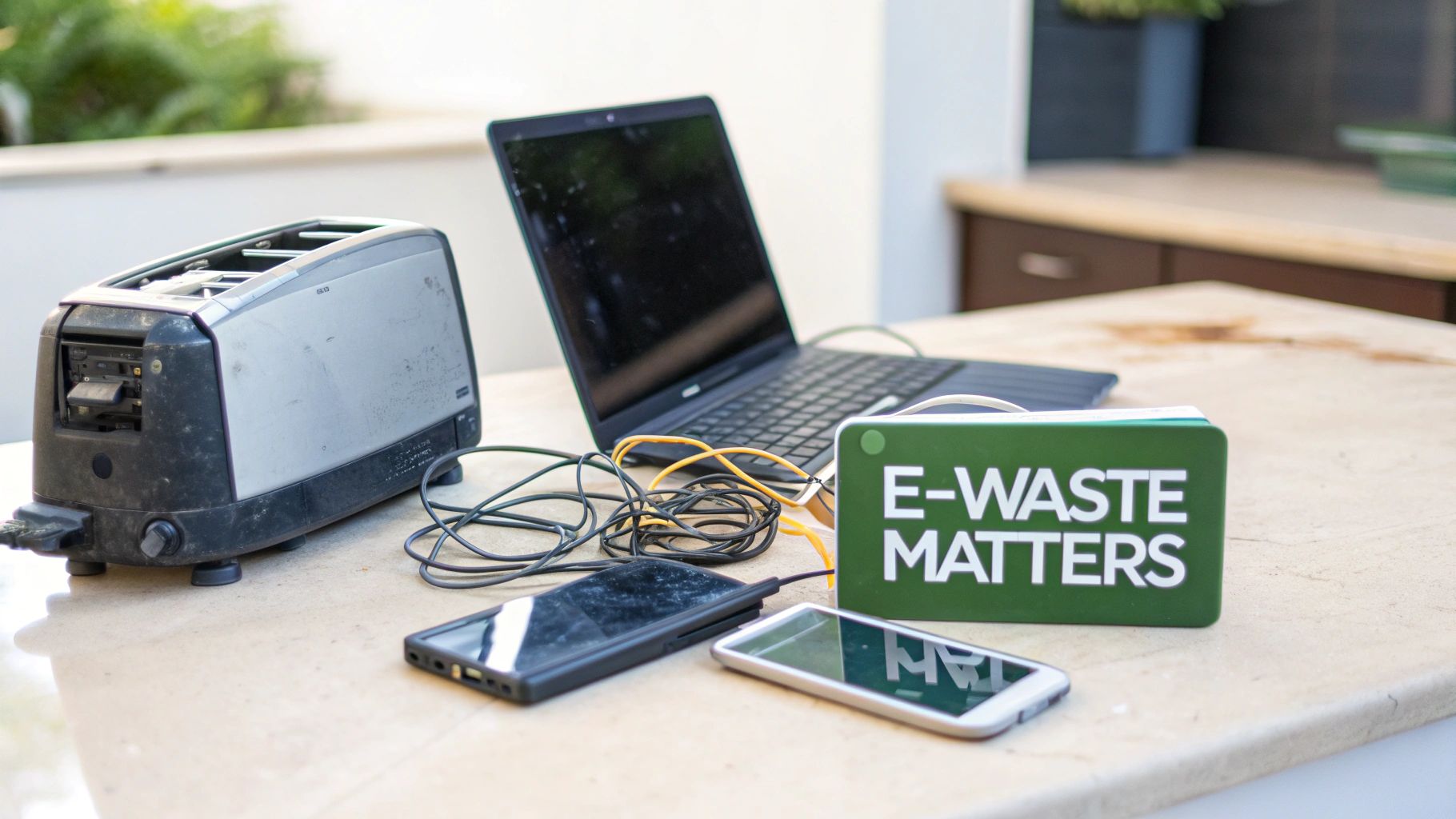
Ever stood there wondering what on earth to do with a broken kettle or that ancient computer gathering dust in the loft? These bits and pieces all fall under the umbrella of WEEE, a catch-all term for pretty much anything with a plug, a cable, or a battery. Our homes and businesses are packed with electronics, from kitchen gadgets to office servers, and they all eventually give up the ghost.
Let’s take an old smartphone. In one sense, it’s a tiny treasure chest filled with gold, silver, and copper. But its battery and circuit boards also contain nasty materials like lead, mercury, and cadmium. It’s this two-sided nature that makes proper WEEE disposal so critical.
If that phone ends up in a standard bin and gets dumped in a landfill, those toxic elements can seep into the soil and groundwater. This causes huge environmental damage and puts wildlife and human health at risk. That's why binning your old electronics isn't just a bit careless—it's actually illegal here in the UK.
To help you get a clearer picture of what counts as WEEE, here’s a quick breakdown of common items you’ll find at home and in the workplace.
Table: Common Household and Commercial WEEE Items
| WEEE Category | Household Examples | Commercial Examples |
|---|---|---|
| Large Household Appliances | Washing machines, fridges, cookers, dishwashers | Large printers, industrial kitchen equipment, vending machines |
| Small Household Appliances | Toasters, kettles, irons, vacuum cleaners | Drills, electric saws, office fans, shredders |
| IT and Telecoms Equipment | Laptops, desktop PCs, tablets, mobile phones, printers | Servers, network switches, desk phones, monitors |
| Consumer Electronics | TVs, DVD players, stereos, cameras, headphones | Projectors, PA systems, professional video equipment |
| Lighting Equipment | Fluorescent tubes, LED lamps, compact fluorescent lamps | High-intensity discharge lamps, commercial light fittings |
| Electrical and Electronic Tools | Electric drills, saws, sewing machines, lawnmowers | Welding equipment, lathes, measurement instruments |
| Toys, Leisure, and Sports | Video game consoles, electric trains, treadmills | Electric gym equipment, arcade machines |
| Medical Devices | (Varies, often specialised disposal) | Dialysis machines, cardiology equipment, analysers |
| Monitoring & Control Instruments | Smoke detectors, thermostats, heating regulators | Lab equipment, industrial control panels |
| Automatic Dispensers | (Less common in households) | Cash machines, automatic drink/food dispensers |
Recognising these items is the first step towards ensuring they don't end up where they shouldn't.
The Legal Framework Driving Responsible Disposal
The UK’s approach to e-waste is all laid out in the Waste Electrical and Electronic Equipment (WEEE) Regulations. These rules were first brought in to line up with EU directives and create a clear system for handling this rapidly growing waste stream. The whole thing is built on a simple principle: 'producer responsibility'.
This idea puts the responsibility squarely on the companies that make, import, or re-brand electrical goods. They are the ones who have to foot the bill for collecting, treating, and recycling their products at the end of their life. It’s a smart way to encourage them to design things that are easier to recycle and less damaging to the environment in the first place.
For the rest of us—households and businesses alike—this means we have a legal 'Duty of Care'. We have to make sure our e-waste is passed on to an authorised service. Correct disposal of WEEE isn’t just a nice-to-do; it’s a legal must-have to protect our shared environment.
The Scale of the E-Waste Challenge
The sheer amount of electronic waste we produce is mind-boggling. In 2023, the UK collected over 473,000 metric tons of household WEEE, making it one of the fastest-growing waste streams in Europe. This huge figure really highlights why companies like The Waste Group in Dorset are so important, offering compliant services for everything from skips and grab lorries to asbestos and WEEE disposal.
Just imagine the environmental catastrophe if all that e-waste ended up in landfill, with hazardous chemicals leaching into our soil and water. Thankfully, the regulations are pushing us towards recycling instead. You can discover more insights about the UK's WEEE landscape and how it affects businesses.
This mountain of old tech is both a major problem and a massive opportunity. By getting behind proper recycling, we can transform a legal headache into a valuable resource, recovering precious materials and helping to build a more sustainable, circular economy.
Understanding the Risks of Improper E–Waste Disposal
Choosing the wrong way to get rid of your old electronics isn't just a minor slip-up; it’s a decision that can open a can of worms, leading to serious environmental, legal, and personal security problems. It might seem easy to just toss an old charger or a broken keyboard into the general waste, but the consequences ripple much further than your kerbside bin. Hidden inside these devices is a cocktail of both valuable and highly toxic materials.
When e-waste gets dumped in a landfill, it doesn’t just sit there. As rainwater trickles through the pile of discarded gadgets, it picks up all sorts of hazardous substances. This toxic soup, known as leachate, can then seep into the ground, contaminating soil and groundwater and posing a direct threat to local wildlife and even our drinking water.
The Hidden Environmental Dangers
The real environmental menace comes from the hazardous materials locked away inside our everyday electronics. These substances are perfectly safe while a device is working as intended, but they become potent pollutants the second that device is crushed or left to rot. Think of an old laptop as a sealed container; once it's cracked open in a landfill, the seal is broken.
Here are some of the most common culprits lurking inside your e-waste:
- Lead: Found in the solder on circuit boards and old-style CRT monitors, lead is a powerful neurotoxin. It can cause severe developmental and neurological damage in both humans and animals.
- Mercury: Used in fluorescent tubes, some batteries, and the backlights of LCD screens, mercury can build up in rivers and oceans, poisoning fish and everything else in the food chain.
- Cadmium: A key component in rechargeable batteries and certain semiconductors, cadmium is a known carcinogen that can lead to serious kidney and bone damage.
- Brominated Flame Retardants (BFRs): These are mixed into plastic casings to reduce fire risk, but when they leach into the environment, they can disrupt hormonal functions in wildlife and people.
Handling materials like these properly isn't just an environmental box-ticking exercise; it’s a public health necessity. It’s why specialised handling, like knowing where to dispose of car batteries, is so crucial for certain types of waste.
Legal Penalties and Financial Consequences
The WEEE Regulations aren't just a friendly suggestion—they're the law. For both households and businesses, failing to dispose of e-waste correctly can result in some hefty financial penalties. While local councils provide options for homeowners, businesses operate under a much stricter 'Duty of Care'.
Any business caught disposing of WEEE improperly can face substantial fines. The Environment Agency has the power to issue penalties that can reach up to £5,000 for each non-compliant item. For repeat offenders or large-scale breaches, the consequences can escalate to prosecution.
These laws are in place to make sure the environmental cost of electronics is managed responsibly. Ignoring them doesn’t just hurt the planet; it can inflict serious damage on a company's bank balance and reputation.
The Critical Threat to Your Data Security
Perhaps the most overlooked risk of all is the threat to your personal and corporate data. Tossing an old computer, smartphone, or hard drive into a skip without having it professionally wiped is like leaving your filing cabinet unlocked on the street for anyone to rifle through.
Even if you perform a 'factory reset', determined individuals with basic technical skills can often recover sensitive information left behind. This could include:
- Personal photos and private documents
- Bank account details and login passwords
- Confidential business records and client lists
- Intellectual property and trade secrets
For an individual, this could easily lead to identity theft and financial fraud. For a business, a data breach from carelessly discarded WEEE can be catastrophic, leading to legal action, enormous fines under GDPR, and irreparable damage to customer trust. This is why professional WEEE collection is about so much more than just recycling—it's an essential last line of defence for your sensitive information.
Your Practical Guide to Household WEEE Disposal
For homeowners, figuring out the right way to get rid of old electronics can feel like a chore, but it’s actually simpler than you might think. With a bit of know-how, you can make sure your old gadgets are dealt with safely, legally, and in a way that’s good for the planet. It all comes down to knowing your options, and luckily, there are several convenient routes available.
The most common first stop for many is the local Household Waste Recycling Centre (HWRC), or what most of us just call 'the tip'. Every local council has these facilities, and they’re kitted out with special containers just for electrical waste. From old fridges and TVs to kettles and power tools, you can drop off nearly all your household WEEE here for free.
Exploring Your Disposal Options
Before you load up the car and head to the HWRC, it’s always a good idea to check your local council's website first. They often have specific rules on what they’ll accept and whether you need to book a time slot, especially if you’re bringing larger items or arriving in a van. A quick check can save you a wasted journey.
Another fantastic but often overlooked option is the retailer take-back scheme. Under UK law, any shop selling new electrical or electronic equipment has to give you a way to dispose of your old items.
- Like-for-Like Take-Back: If a retailer is delivering a big new appliance, like a washing machine or fridge, they have to offer to take your old one away.
- In-Store Drop-Off: Large retailers (those with an electronics sales area over 400 square metres) must let you drop off your small WEEE items in-store for free, even if you’re not buying anything from them that day.
This makes getting rid of old gear incredibly convenient, especially when you’re already upgrading. Most major high-street and online stores are part of this, so it’s always worth asking about their take-back service when you buy. You can often find details in their policies, like understanding how to responsibly dispose of your fridge through their own specific programmes.
Give Your Electronics a Second Life
Recycling is great, but finding a new home for your old tech is even better for the environment. If your old device still works or just needs a simple repair, think about donating it. Many charities will gladly accept working electronics, which they can then refurbish and sell to raise vital funds or pass on to families who need them.
Giving an old laptop or tablet a second life not only keeps it out of the waste stream for longer but also helps bridge the digital divide for someone who may not be able to afford a new device. It’s a win-win for the community and the planet.
Local repair cafés and community projects are also brilliant places to take items that need a little TLC. This supports the circular economy by making products last longer and cutting down on the need for new resources. This visual guide shows exactly what risks you sidestep when you choose these responsible disposal routes.
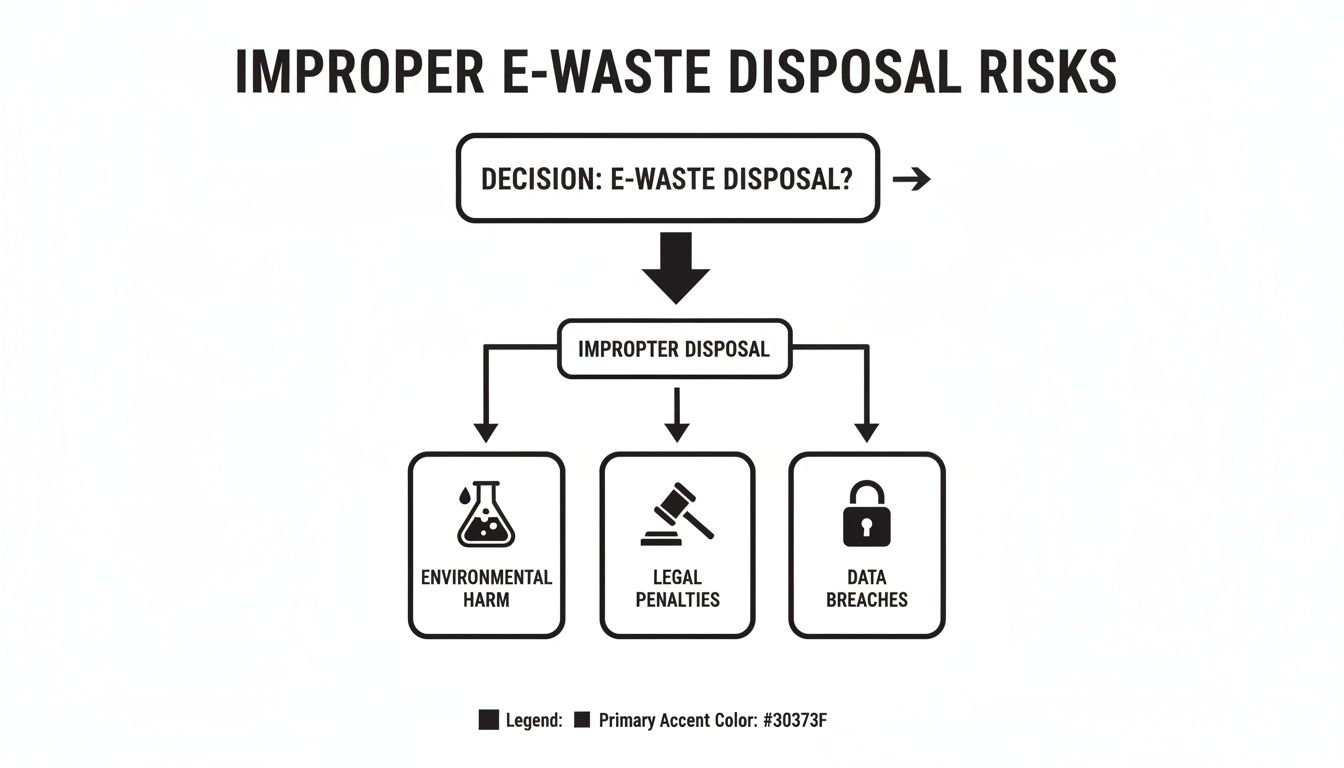
As the flowchart shows, irresponsible disposal can trigger a cascade of environmental, legal, and data security problems—all of which are completely avoidable.
Preparing Your Devices for Disposal
Before you drop off, donate, or arrange a collection for any item, it's vital to prep it properly. A simple checklist will keep your personal data secure and make the item safe for the people handling it next.
- Back Up Your Data: First things first, save any photos, documents, or important files you can't bear to lose.
- Wipe All Personal Information: For things like phones, laptops, and tablets, perform a full factory reset. If you’re getting rid of a computer, you might want to use data destruction software for total peace of mind.
- Remove Batteries: If you can, take the batteries out of the device. Many recycling points have separate collection bins just for them.
- Cancel Subscriptions: Check that any service subscriptions linked to the device have been cancelled so you don't keep getting charged.
Taking these few steps is a crucial part of responsible WEEE disposal. It protects your privacy and helps make the whole recycling process smoother and safer for everyone involved.
Ensuring Compliant WEEE Disposal for Your Business

While households have fairly straightforward ways to get rid of old electronics, the story is completely different for businesses. For any company, managing electronic waste isn't just about being green; it’s a strict legal requirement. At the heart of it all is a fundamental principle known as the 'Duty of Care'.
This duty legally binds your business to make sure all commercial waste, WEEE included, is managed, stored, and disposed of responsibly. Think of it this way: from the moment your old office PC is unplugged to the second it’s recycled, its journey is your responsibility. This is where the rules for businesses and households go their separate ways.
The Non-Negotiable Role of Licensed Waste Carriers
You can't just take old office equipment to the local tip or toss it in your general commercial bins. All business WEEE must be collected and moved by a carrier holding a valid licence from the Environment Agency. Using an unlicensed operator, even if you didn't know they were unlicensed, is a breach of your Duty of Care and can lead to some hefty penalties.
A licensed carrier is more than just a collection service; they're your compliance partner. They have the green light to handle this specific type of waste, ensuring it gets to a proper Authorised Treatment Facility (ATF) for recycling and material recovery. This shields your business from legal trouble and guarantees the waste is handled in an environmentally sound way.
Another critical piece of the puzzle is the Waste Transfer Note (WTN). For every single collection of WEEE, your business must get a WTN from the licensed carrier.
A Waste Transfer Note isn't just a receipt. It is your legal proof of compliant disposal. It details what waste was collected, how much there was, and where it's going. Without one for every collection, you have no evidence that you fulfilled your Duty of Care.
This paperwork is absolutely vital. If the Environment Agency ever decided to audit your business, these notes would be the first thing they'd ask for. Keeping meticulous records is your best defence.
Different Needs, Different Solutions
Businesses create all sorts of WEEE, and often in fluctuating amounts, so a one-size-fits-all approach just doesn't cut it. That's why professional waste management services offer a range of options designed to fit different commercial needs.
- Secure WEEE Bins: Perfect for offices that have a steady stream of smaller items like keyboards, mice, cables, and old hard drives. Dedicated WEEE bins or cages provide a secure and organised way to store it all before collection.
- Scheduled Collections: If your business consistently produces e-waste, you can arrange regular pickups. This creates a smooth disposal process that doesn't get in the way of your day-to-day operations.
- One-Off Clearances: Got a big project on the go? For office moves, refurbishments, or major IT upgrades, a bulk collection service can efficiently clear out large volumes of redundant equipment in one go.
The scale of the WEEE challenge is huge. Between 2020-2024, UK counties accumulated staggering amounts of e-waste. Essex alone reached 91,639 tonnes, and nearby Hampshire contributed 27,702 tonnes. For facility managers, these numbers show just how important it is to work with a reliable disposal partner. After all, getting it wrong can lead to fines of up to £5,000 per offence.
To give a clearer picture of the different obligations, here’s a quick comparison:
Household vs Business WEEE Disposal Responsibilities
| Aspect | Household Responsibility | Business Responsibility |
|---|---|---|
| Legal Obligation | General duty to dispose of waste correctly at designated points. | Strict legal 'Duty of Care' from creation to final disposal. |
| Disposal Options | Local recycling centres (tips), retailer take-back schemes, council collections. | Must use a licensed waste carrier. Public tips are not an option. |
| Documentation | None required. | A Waste Transfer Note (WTN) is legally required for every collection. |
| Key Risk | Improper disposal may lead to fly-tipping fines. | Non-compliance can result in significant fines (up to £5,000) and reputational damage. |
| Data Security | Advised to wipe personal data from devices. | Legally required to ensure all sensitive company and customer data is securely destroyed. |
Ultimately, for businesses, WEEE disposal is a core part of a wider strategy known as IT Asset Management. A structured approach ensures every piece of equipment is tracked throughout its life, from purchase to disposal, which helps safeguard data and maximise its value.
Working with a specialist like The Waste Group takes the guesswork out of the equation. It protects your business from legal headaches and boosts your corporate social responsibility credentials, turning a legal chore into a powerful statement about your company's commitment to sustainability.
How Recycling WEEE Supports a Circular Economy
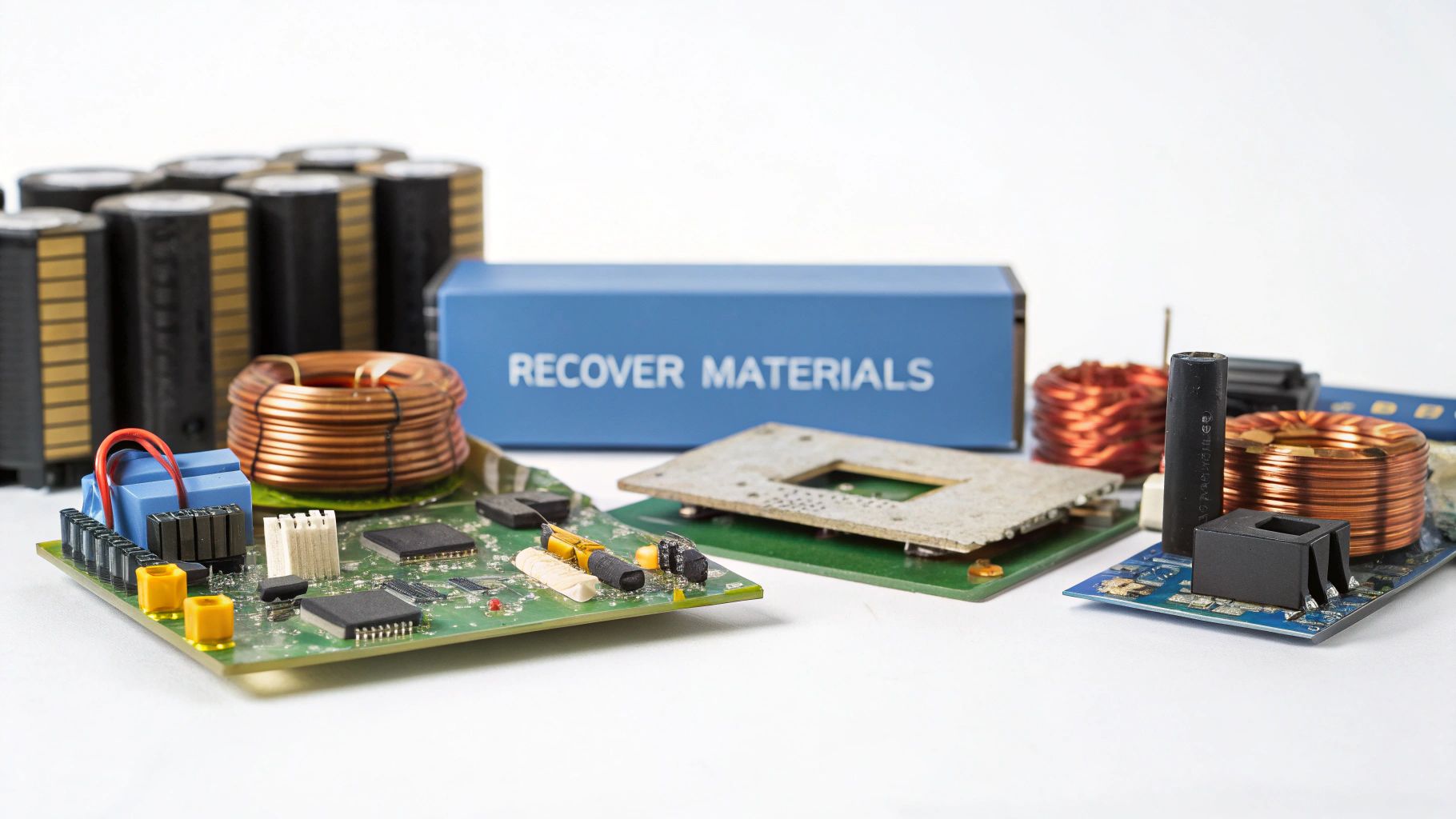
Getting WEEE disposal right is about much more than just ticking a legal box; it’s a powerful move towards a more sustainable future. Instead of the old, linear "take, make, dispose" model, responsible recycling helps build a circular economy. Think of it this way: every old device sitting in a drawer is like a tiny, untapped mine full of valuable resources.
When you recycle your WEEE, precious materials like gold, silver, copper, and aluminium are carefully recovered and fed back into the manufacturing loop. This clever process, sometimes called 'urban mining', drastically reduces our reliance on digging up new raw materials. It means less destructive mining, which in turn saves huge amounts of energy, water, and vital natural habitats.
Every single circuit board and wire that gets recycled is one less item in a landfill and one more step towards a smarter, more resourceful world.
The Waste Hierarchy in Action
The circular economy runs on a simple but incredibly effective principle: the waste hierarchy. It’s a commonsense roadmap that ranks waste management options from the most to the least sustainable.
- Reduce: The best thing we can do is create less waste in the first place. For some great tips, check out this guide on how to reduce e-waste and extend your device's life.
- Reuse: Before you even think about recycling, ask if the item can be repaired or given a second life through donation. This is one of the most effective ways to maximise its value and keep it out of the waste stream for longer.
- Recycle: When a gadget has truly given up the ghost, recycling is the final, responsible step to ensure its materials are recovered and repurposed. This is where professional WEEE disposal is non-negotiable.
This hierarchy isn't just a theory; it's a practical guide for making better choices every day.
Turning Compliance into a Positive Impact
Choosing a disposal partner with solid green credentials turns a simple compliance task into something genuinely positive. When you work with a company that puts recycling first, you're not just getting rid of waste—you're actively taking part in the circular economy. It shows that your choices, whether as a homeowner or a business leader, can help build a more resilient future. You can learn more about how waste management is key to the circular economy and its wider benefits.
A commitment to responsible recycling goes beyond just following the rules. It becomes a tangible expression of environmental stewardship, showing that your business understands its role in preserving resources for future generations.
The national push towards better recycling is clearly gaining steam. For example, recent UK data shows WEEE collections in Q3 2025 surged by 5%, adding up to nearly 7,000 extra tonnes compared to the previous year. Categories like Large Household Appliances saw an impressive 8% rise. This comeback reflects stronger compliance efforts and a collective shift away from landfill.
Finding the Right Partner for Your WEEE Disposal Needs
Choosing the right waste management partner can turn the complex task of WEEE disposal from a potential headache into a simple, straightforward process. Whether you're a homeowner tackling a big clear-out or a business managing an ongoing stream of old electronics, professional support makes achieving full compliance almost effortless.
A reliable partner gets that no two jobs are the same. They should offer flexible solutions to match what you actually need, whether that’s a small skip for a garden office refurb or a large grab lorry for clearing a commercial site. This kind of adaptability ensures you get the right service at the right time, without paying for more than you need.
Key Qualities of a Top WEEE Disposal Provider
When you’re picking a partner for your WEEE disposal, some qualities are simply non-negotiable. These are the tell-tale signs of a service that not only gets the job done but does it properly, giving you complete peace of mind. Make sure you look for a company with a solid track record in these key areas.
- Full Legal Compliance: Your chosen provider absolutely must be a registered and licensed waste carrier. For businesses, they need to provide a full audit trail, including Waste Transfer Notes, which act as your legal proof of responsible disposal.
- Transparent and Fair Pricing: You should always get a clear, upfront quote with no nasty surprises or hidden fees. A trustworthy company will offer competitive rates, often backed by a price-match guarantee, so you know you're getting excellent value.
- A Proven Reputation: Take a look at customer reviews and their history of service. A high satisfaction rating is a pretty clear indicator that they actually deliver on their promises.
Choosing a partner is about more than just collection; it’s about entrusting them with your legal and environmental responsibilities. A top-tier provider acts as your compliance shield, safeguarding you from potential fines and reputational damage.
Making WEEE Disposal Easy and Efficient
At the end of the day, the goal is to make the entire process hassle-free. A professional service like The Waste Group handles all the logistics for you. From dropping off the correct container to making sure every last item is transported to an authorised facility for recycling, they’ve got it covered. This lets you get on with your project or business, confident that your WEEE is being managed correctly.
By partnering with an expert, you turn what feels like a legal chore into a simple tick-box exercise. They bring the experience, the right equipment, and the know-how to manage your electronic waste safely and sustainably, making compliant disposal of WEEE one less thing to worry about.
Your WEEE Disposal Questions Answered
Even with the best intentions, dealing with old electronics can throw up a few questions. Let's tackle some of the most common queries we hear, clearing up any confusion so you can get rid of your WEEE correctly and confidently.
Can I Just Pop Small Electricals in the Normal Bin?
Definitely not. It might seem harmless, but you should never put any electrical items in your general household rubbish, no matter how small they are.
Anything with a plug or battery contains hazardous materials that can leak out and seriously harm the environment if they end up in a landfill. Plus, those old gadgets are packed with valuable resources that can be recovered and used again. Always take them to a designated WEEE collection point, a retailer take-back scheme, or your local tip.
How Much Does a Professional WEEE Collection Cost a Business?
The price for a business WEEE collection really depends on what you have, how much of it there is, and where you're located. You might need a one-off bulk collection for a big office clear-out, or you could need regular pickups if you’re constantly producing electronic waste.
A good, transparent waste provider will give you a clear quote based on what you actually need. This makes sure you get a service that’s not just cost-effective but also fully compliant, with all the crucial paperwork like Waste Transfer Notes sorted for you.
It's worth remembering: a compliant disposal service is an investment. It protects your business from fines that can reach as high as £5,000 for every single non-compliant item.
Do I Really Need to Wipe My Old Devices Before Recycling?
Yes, absolutely. This one is non-negotiable. You are legally responsible for making sure every last bit of personal and sensitive data is gone from your devices before they leave your hands.
Just deleting files or doing a factory reset isn't enough to stop someone determined from recovering your information. For complete peace of mind, use proper data-wiping software. If you're a business with lots of devices, many professional WEEE services offer certified data destruction, guaranteeing your information is gone for good and keeping you compliant.
What Actually Happens to My WEEE After It’s Collected?
Once a licensed carrier collects your old electronics, they're taken to an Authorised Treatment Facility (ATF). It's not just a case of crushing everything up; it's a careful process of separating everything out, both by hand and by machine.
First, any hazardous bits are safely removed and dealt with by specialists. Then, the good stuff – materials like plastics, glass, and valuable metals like copper and gold – is recovered. These materials are then cleaned, processed, and sent off to be made into brand-new products. It’s a perfect example of the circular economy in action, ensuring your old tech is handled responsibly from start to finish.
Ready to handle your WEEE disposal the right way? For a compliant, reliable, and hassle-free service for your home or business, trust The Waste Group. Get your free, no-obligation quote today!