How to Dispose of Old Paint the Right Way in the UK
How to Dispose of Old Paint the Right Way in the UK
Before you can even think about getting rid of that old paint cluttering up your garage, you need to know exactly what you’re dealing with. How you dispose of it all hinges on one simple question: is it water-based (emulsion) or oil-based (solvent-based)?
One is relatively straightforward to handle at home, while the other is legally classified as hazardous waste.
First Things First: Identifying Your Paint Type
Figuring out what kind of leftover paint is sitting in your shed is the most critical first step. It's the detail that dictates whether you can simply dry it out or if it requires a trip to a specialist facility. Trust me, getting this wrong can lead to environmental harm, and you could even face a fine.
Luckily, you don’t need a chemistry degree to work it out. The paint tin itself is your best starting point.
Check the Label for Clues
Your first port of call should always be the can. Look for a few keywords printed on the label that give the game away.
- Water-Based Paints: These are usually called "emulsion" and might also be labelled as "acrylic" or "latex." The real giveaway is in the cleanup instructions – they’ll almost always say to clean brushes and spills with simple soap and water.
- Oil-Based Paints: Often called "solvent-based," "alkyd," or "gloss." The clue here is also in the cleanup directions, which will point you towards using mineral spirits, white spirit, or turpentine.
What if the label is peeling, faded, or completely caked in paint drips? No problem. Just dab a bit on a piece of scrap cardboard. If it washes off with water, it’s water-based. If you need a solvent to shift it, it's oil-based. A clear understanding of the differences between water-based and oil-based finishes can also give you a better feel for what you're working with.
To make it even easier, this quick guide breaks down the main differences.
Water-Based vs Oil-Based Paint Quick Identification Guide
| Characteristic | Water-Based Paint (Emulsion) | Oil-Based Paint (Solvent/Gloss) |
|---|---|---|
| Common Names | Emulsion, Latex, Acrylic | Solvent-Based, Alkyd, Gloss |
| Smell | Low odour, sometimes a faint chemical smell | Strong, distinct chemical or solvent smell |
| Cleanup Instructions | "Clean with soap and water" | "Clean with mineral spirits," "turpentine," or "white spirit" |
| Drying Time | Dries relatively quickly to the touch | Takes much longer to dry, remains tacky for hours |
| Consistency | Thinner, smoother | Thicker, stickier |
This table should help you figure things out in seconds, even without a perfectly legible label.
This handy flowchart simplifies the whole process, helping you decide on the right disposal method based on the paint you have.
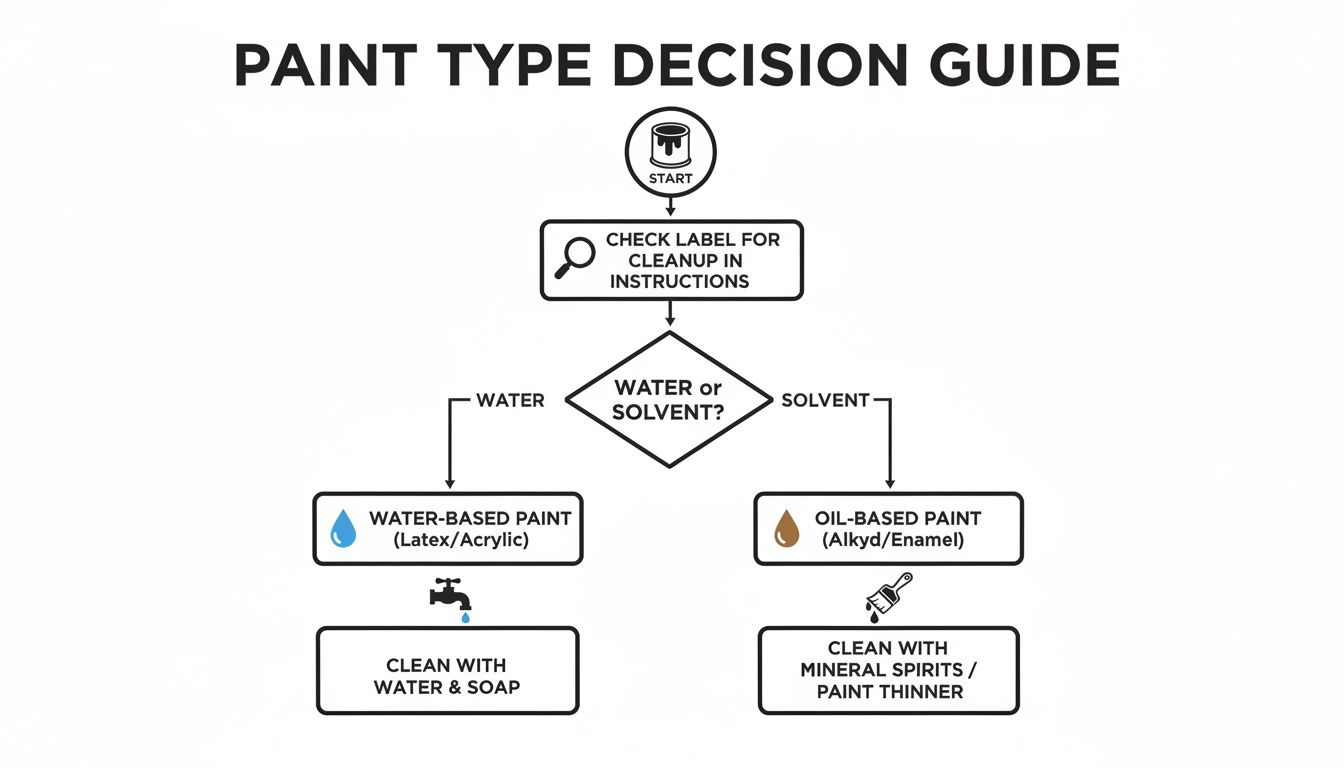
As the infographic shows, those cleanup instructions on the tin are your most reliable clue if you’re ever in doubt.
Key Takeaway: Oil-based paints are considered hazardous materials because of the solvents they contain. Their disposal is strictly regulated to prevent soil and water contamination. To stay on the right side of the law, it’s worth familiarising yourself with the UK's current hazardous waste disposal regulations. This isn't just red tape; it's a non-negotiable step for safe and legal disposal.
Give Your Paint a Second Life Through Reuse and Donation
Before you even think about the bin, hold on. The most eco-friendly way to deal with old paint is simply to make sure it gets used up. It's so easy to tuck half-empty tins away in the shed or garage, but this adds to a staggering waste problem.
Believe it or not, the UK wastes around 50 million litres of paint every single year, with the average home hoarding over four unused cans. If you want a bit of perspective, this leftover paint could fill twenty Olympic-sized swimming pools.
The good news is that giving your paint a second life is easier than you might think. It turns a disposal headache into a brilliant community resource.
Is Your Leftover Paint Still Usable?
First things first, you need to do a quick check to see if the paint is still any good. Most water-based paints can last for years if they’ve been sealed properly.
Pop the lid off and have a look. You might see a hard, leathery skin on the surface; you can usually just peel this off and chuck it. The real giveaways are the smell and the texture. If it has a foul, sour odour instead of that typical paint smell, it’s definitely gone bad.
Next, grab a stick and give it a really good stir. If it mixes back into a smooth, lump-free liquid, it’s good to go for a new project. If it stays stubbornly lumpy, stringy, or has a jelly-like consistency, it's past its prime and needs to be disposed of differently.
Pro Tip: To seal a tin properly for donation or just for storage, lay a sheet of cling film over the opening before you hammer the lid back on. Then, store it upside down for a few minutes. This creates an airtight seal and stops that skin from forming on top.
Where to Donate Your Usable Paint
Once you've confirmed the paint is still perfectly fine, there are some fantastic schemes out there ready to take it off your hands. These organisations make sure your leftovers get to community groups, schools, and families who really need them.
Your best bet in the UK is the Community RePaint Network. It’s an award-winning scheme that collects reusable paint and gets it back out into the community, brightening up local spaces and homes across the country. They have drop-off points everywhere, often at Household Waste Recycling Centres or sponsored by local businesses. A quick search on their website will point you to your nearest one.
Beyond the big national schemes, just think locally. You could offer your paint to:
- Friends and Neighbours: Someone just down the road might be planning a small touch-up job or a creative project.
- Local Community Groups: Think theatres, schools, or charities. They often need paint for stage sets, murals, or just decorating their facilities.
- Online Platforms: Websites like Freecycle, Freegle, or even local Facebook groups are perfect for connecting with people who can put your leftover paint to good use right away.
By choosing to donate, you're doing more than just clearing out some clutter. You’re actively cutting down on waste, saving resources, and helping someone else bring a bit more colour into their world. It’s a simple step that makes a real difference.
Preparing Water-Based Paint for Disposal at Home
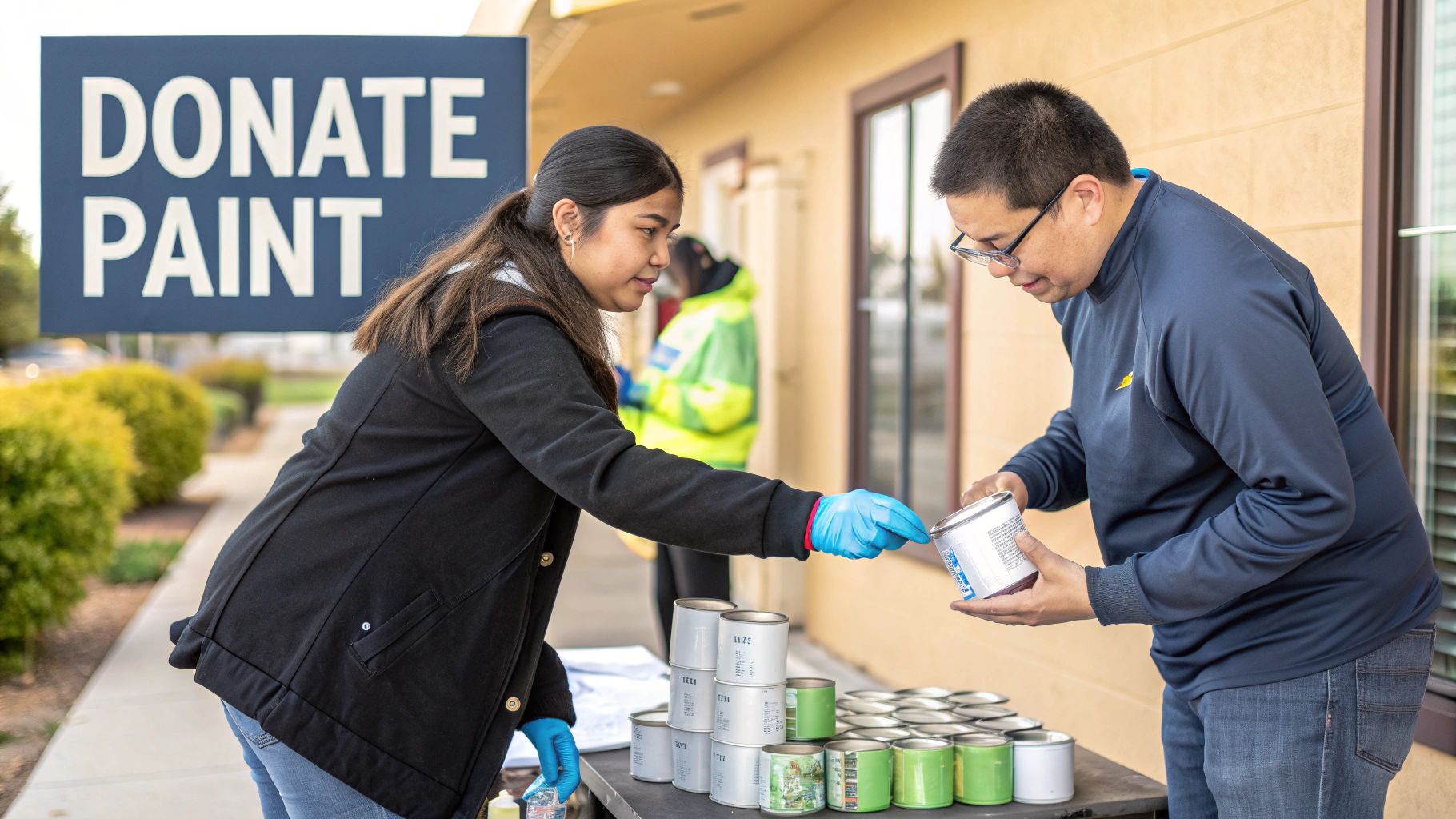
Right, so you've identified your leftover paint as water-based and realised it can't be donated. What's next? The most important thing to remember is that you absolutely cannot chuck liquid paint in your household bin or a skip.
Liquid waste is a big no-no for landfills. It can leak out, seep into the ground, and cause real havoc for the local environment by contaminating soil and groundwater.
Your mission, then, is to turn that leftover liquid into a solid, unspillable block. This simple step makes it safe to be collected with your general rubbish. Before you do, though, it’s always a good idea to quickly check your local council’s specific rules on their website. For the dregs left in a tin, this whole process is surprisingly easy and just needs a bit of patience.
Solidifying Small Amounts of Paint
If you've only got a little bit of paint left rattling around in the bottom – say, less than a quarter of a tin – solidifying it is a doddle. The trick is to add something absorbent to soak up all the moisture and help it harden up.
You’ve probably got some suitable stuff lying around the house already:
- Cat Litter: There's a reason this is the go-to choice. Just stir in enough litter until the paint turns into a thick, clumpy solid.
- Sawdust or Wood Shavings: Perfect if you've been doing a bit of DIY. It works exactly like cat litter, absorbing all the liquid.
- Sand: Another great, cheap option that mixes in well and helps the paint dry out fast.
Just tip your chosen material into the tin and give it a good stir until it’s all mixed in and there’s no liquid left. Then, leave the lid off and pop the tin somewhere safe and well-ventilated – away from kids and pets – to dry out completely.
Safety First: Always do this in a well-ventilated spot, ideally outdoors. It stops any fumes from building up and makes the drying process much quicker and safer.
Handling Larger Volumes of Leftover Paint
But what if you're dealing with half a tin or more? Trying to dry that much paint inside the can would take an age. A far better approach is to increase the surface area, which really speeds up the evaporation process.
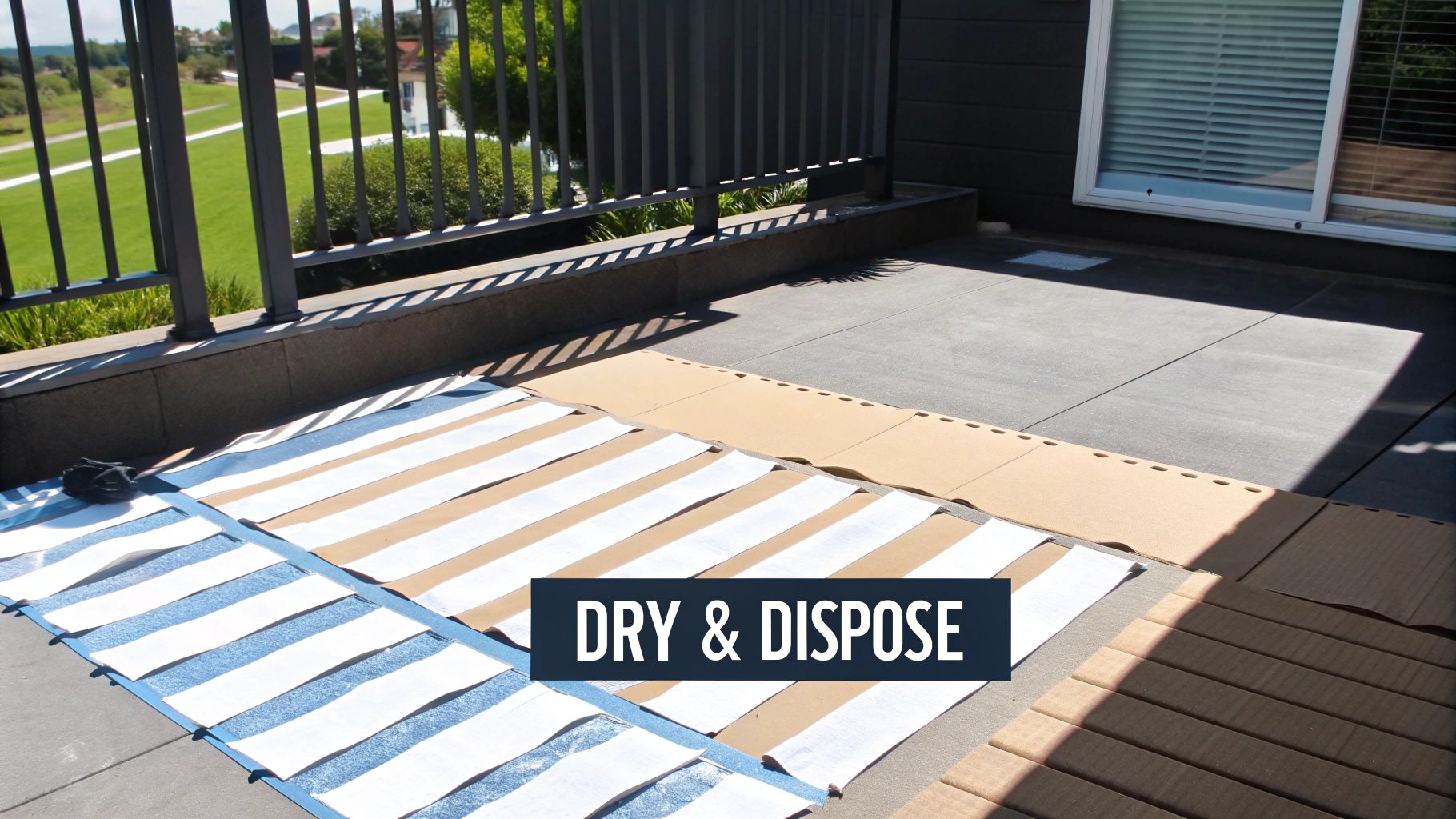
Grab a sturdy cardboard box and line it with an old plastic sheet or a couple of bin bags to stop any leaks. Pour a thin layer of paint into the box, no more than an inch or so deep. You need to let this layer dry completely before you pour the next one on top. It might take a few days, depending on the weather, but it’s the most reliable way to handle bigger quantities.
Once all the paint has become a solid, rubbery block, you can usually dispose of the whole box with your household waste. The now-empty metal paint tin can often be put in your recycling. If you're wondering what to do with the empty containers, we've got a comprehensive guide on how to dispose of paint tins that covers all the details, ensuring you handle every part of the job correctly.
Navigating Local Council Rules for Paint Disposal
When you've got old paint tins cluttering up the shed, your first thought is probably to take them to the local tip. Officially known as the Household Waste Recycling Centre (HWRC), it’s the right place to go – but it’s a big mistake to assume the rules are the same everywhere.
Every council sets its own specific guidelines. A quick check online before you load up the car can save you from a completely wasted journey.
The most important thing they’ll want to know is what type of paint you have. Oil-based paint is always classed as hazardous waste because of the chemical solvents it contains. That means you can never just chuck it in your household bin. It has to be taken to a facility that’s equipped to handle it safely, stopping those nasty chemicals from soaking into the ground and polluting our water.
Water-based paint, like emulsion, is less of a headache, but the rules still differ from place to place. Some recycling centres are happy for you to put the dried-out solids in your general waste bin at home, while others will want you to bring the hardened tins to them. It always pays to check their website first.
Understanding Your Local HWRC Rules
Before you even think about putting those paint tins in the boot, spend five minutes on your local council's website. Just look for the ‘Waste and Recycling’ section and find the page for your nearest HWRC.
Here’s a quick checklist of what to look for:
- Do they actually accept paint? Most do, but don’t take it for granted. Some sites have special drop-off points or even specific collection days for hazardous materials.
- Is there a limit on how much you can bring? Many councils cap the amount of paint you can dispose of in one go. This is usually to stop businesses from using a service that’s meant for residents.
- Do you need to book a slot? Ever since the pandemic, a lot of HWRCs have kept their online booking systems to manage traffic. Turning up on the off-chance could mean you’re politely turned away at the gate.
Getting these details sorted beforehand makes the whole process smoother and guarantees you’re getting rid of your old paint responsibly.
Improper paint disposal has a massive environmental cost. A shocking 98% of the UK's leftover paint ends up in landfill or gets incinerated. If we could reuse just half of this leftover water-based paint, we could prevent around 96,000 tonnes of CO₂ emissions every single year. Learn more about the carbon impact of paint waste.
Why Liquid Paint Is Banned from Skips
Hiring a skip for a big clear-out seems like the perfect solution, but there’s one thing you absolutely cannot put in it: liquid paint.
This isn't just a friendly suggestion; it's a strict rule that’s backed by environmental law. Skip hire companies are legally required to refuse any waste that contains liquids.
Think about it – if a tin of paint leaks in the skip, whether it’s on your drive, on the road, or at the waste facility, it can cause serious contamination. The chemicals can pollute groundwater and do real harm to local wildlife. If you’re caught trying to hide tins of liquid paint at the bottom of a skip, you could have the entire load rejected or find yourself facing some pretty hefty fines.
For a small amount of leftover water-based paint, you can get away with it by making sure it’s completely solidified before it goes anywhere. But for anything more, or for any oil-based paints, calling in a professional waste management service is by far the safest, easiest, and most compliant way forward.
Handling Large Volumes and Commercial Paint Waste
When you're dealing with the leftovers from a single room makeover, the DIY methods we've covered work perfectly. But for trade professionals, property developers, or anyone managing a large-scale renovation, those approaches just aren't practical or legally sound.
Let's be honest, trying to solidify twenty tins of emulsion in your back garden simply isn't going to happen.
This is where you cross the line from domestic convenience into commercial responsibility. For businesses, how you dispose of old paint isn't just a practical headache; it’s a matter of legal compliance. Commercial waste is governed by much stricter regulations than the stuff you put in your household bin, and getting it wrong can lead to hefty fines from the Environment Agency.
When to Call in the Professionals
In some situations, bringing in a professional waste management team is the only sensible move. If you find yourself nodding along to any of the scenarios below, it's time to get some expert help.
You should definitely be reaching out to a specialist waste service if you are:
- A painting and decorating business with a constant stream of leftover tins.
- A construction firm clearing a site piled with various types of old paint.
- A landlord or property manager renovating several units at once.
- Dealing with large quantities of mixed paint types, especially hazardous oil-based paints.
Even routine tasks like cleaning your gear need careful thought. For professional contractors, the residue washed from equipment creates its own waste stream that must be managed properly, a point well-covered in this handy guide on how to clean airless paint sprayers.
The Benefits of Using a Specialist Service
Working with a professional waste management company like The Waste Group takes all the guesswork and liability out of paint disposal. You're not just hiring someone to take it away; you're getting a fully compliant and documented solution that ensures every step is handled by the book.
One of the most crucial parts of this is the paperwork. Every single transfer of commercial waste has to be recorded on a Waste Transfer Note. This document is your legal proof that the waste was handed over to a licensed carrier for correct and proper disposal. It’s not optional. You can get the full story on its importance by reading our detailed article on what is a Waste Transfer Note.
Using a professional service gives you total peace of mind. You know your commercial paint waste is being managed legally and sustainably, which protects both your business's reputation and your bank balance.
A reputable company will figure out exactly what you need, provide the right containers (like drums or hazardous waste bins), and schedule a collection that works for you. They handle all the complicated logistics and legal bits, leaving you free to focus on your project without the nagging worry of compliance.
If you’re a business or just have a large volume of paint to get rid of, don't risk falling foul of the law. Contact The Waste Group today for a no-obligation quote and make sure your paint waste is handled safely, legally, and professionally.
Your Top Paint Disposal Questions Answered
When you're faced with leftover paint tins, it's easy to feel a bit stuck. What can you do? What can't you do? To clear things up, we've pulled together the questions we hear most often, with some simple, straightforward answers to get you on the right track.
Can I Pour Old Water-Based Paint Down the Drain?
Let's get this one out of the way first: absolutely not. It's one of the most common mistakes people make, and it's also one of the most damaging.
Even though it's called "water-based," emulsion paint is still packed with chemicals, binding agents, and microplastics. Pouring it down a sink or an outdoor drain sends all those pollutants straight into our waterways. This can seriously harm aquatic life and disrupt local ecosystems. It also creates big problems for water treatment facilities. On a more immediate level, it's a great way to cause stubborn blockages in your own plumbing. The only responsible ways to deal with liquid paint are to solidify it first or take it to a proper disposal centre.
What Do I Do with Empty Paint Tins?
Once your paint tins are completely empty and dry, what you do next depends on the type of paint they held.
- Tins from Water-Based Paint: If the tin is metal and genuinely free of any wet residue, you can usually pop it in your household metal recycling. For plastic tubs, you’ll need to check your local council's specific rules, as not all plastics are accepted in kerbside collections.
- Tins from Oil-Based Paint: These are a different story. They're treated as hazardous waste containers, even when they seem empty. That little bit of residue is still a contaminant, so they must be taken to your local Household Waste Recycling Centre (HWRC) for safe processing.
Important Takeaway: Never just guess. A quick look at your council’s website will tell you exactly what they accept. This simple check stops your recycling from being rejected and keeps hazardous materials out of the general waste system where they can cause real harm.
Is It Illegal to Put Liquid Paint in a Skip?
Yes, it is. Putting liquid paint—or any liquid waste, for that matter—into a skip is illegal in the UK. This isn't just a guideline; it's a strict environmental regulation. Any reputable skip hire company is legally required to enforce this and will refuse to collect a skip if they find liquids in it.
The reason is simple: if a paint tin gets crushed or punctured during transport, the paint will leak out. This can contaminate soil and even seep into groundwater. If you're caught, you could be looking at hefty fines or extra charges from the skip company to cover the cost of proper hazardous waste disposal.
How Do I Know if My Old Paint Is Still Good?
Before you even think about disposal, it’s worth checking if the paint can be saved. A lot of paints, especially emulsions, can last for years if they’ve been stored properly in a cool, dry place.
Pop the lid off and give it a good stir with a stick. You’ll probably see a skin on top – just peel that off and bin it. If the paint underneath mixes back into a smooth, even consistency without any weird lumps, it’s probably fine to use for a touch-up job or to donate.
But if you get a nasty, sour smell (which is very different from the normal paint smell) or if it stays lumpy and stringy no matter how much you stir, the paint has gone off. At that point, it’s no good to anyone, and you’ll need to dispose of old paint using one of the correct methods we've covered.
Tackling paint disposal, especially for bigger projects or commercial waste, needs careful planning to stay compliant. For a hassle-free, fully regulated solution in Dorset and the surrounding areas, trust the experts at The Waste Group. We handle all types of waste safely and sustainably. Get your free quote online or call us today to discuss your needs.