
Dispose old paint: The UK guide to proper disposal
Dispose old paint: The UK guide to proper disposal
That stack of half-used paint tins in your shed or garage is more than just clutter. It represents a significant, often overlooked, environmental challenge. Many of us aren't quite sure how to correctly dispose old paint, leading to choices that can have lasting negative consequences.
The scale of the issue here in the UK is staggering. Households are currently storing an estimated 55 million litres of leftover paint each year. To put that into perspective, it's enough paint to coat the iconic Forth Rail Bridge a remarkable 212 times.
Unfortunately, a shocking 98% of this leftover paint ends up in landfills, incinerated, or poured down drains, creating serious pollution. If we could reuse this paint instead, it would cut carbon emissions by over 6,300 kgCO2e per tonne.
When disposed of improperly, paint contributes directly to the contamination of soil and groundwater. As liquid paint seeps out from landfill sites, its chemical components can harm local ecosystems. Understanding the wider environmental impact of landfills really brings home why responsible disposal is so vital.
Water-Based Versus Oil-Based Paint
The first and most important step is to figure out what kind of paint you're dealing with. The chemical makeup of the paint dictates the safe and legal disposal route. The two main types you'll encounter are:
- Water-Based Paint (Emulsion): This is the most common type you'll find for interior walls and ceilings. As the name suggests, its base is water, which makes it less hazardous.
- Oil-Based Paint (Solvent-Based): Often used for trim, doors, and areas needing a more durable finish, this paint contains chemical solvents. It's classified as hazardous waste and must be handled with much greater care.
The easiest way to tell them apart is to check the tin's label. Look for terms like "latex," "acrylic," or "emulsion" for water-based products. For oil-based paints, you'll see words like "alkyd," "enamel," or "oil-based."
Another dead giveaway is the cleanup instructions. If it says to use water, it's water-based. If it recommends white spirit or turpentine, you've got oil-based paint on your hands.
This simple flowchart can help you quickly identify your paint type.

As you can see, the cleaning instructions on the label are the clearest indicator, guiding you toward the correct disposal path.
Quick Guide to Paint Disposal Rules
Sometimes you just need a quick answer. This table breaks down the basics to get you started.
| Paint Type | How to Identify It | Primary Disposal Route |
|---|---|---|
| Water-Based | Label says "emulsion," "acrylic," or "latex." Cleans up with water. | Dry it out completely, then it can often go in household rubbish. |
| Oil-Based | Label says "oil-based," "alkyd," or "enamel." Needs white spirit/turpentine for cleanup. | Hazardous Waste. Must be taken to a designated Household Waste Recycling Centre. |
Remember, this is just a starting point. Local council rules can vary, so it's always worth a quick check on their website before you head out.
By correctly identifying your paint, you’re not just following rules; you're actively preventing harmful chemicals from entering the environment. It also ensures recyclable materials, like the metal tins themselves, can be processed properly.
Taking a moment to understand what you're dealing with is the foundation of responsible waste management. It connects the simple act of clearing out your garage to the much larger responsibility we all share for protecting our local environment.
Handling Water-Based Paint for Safe Disposal
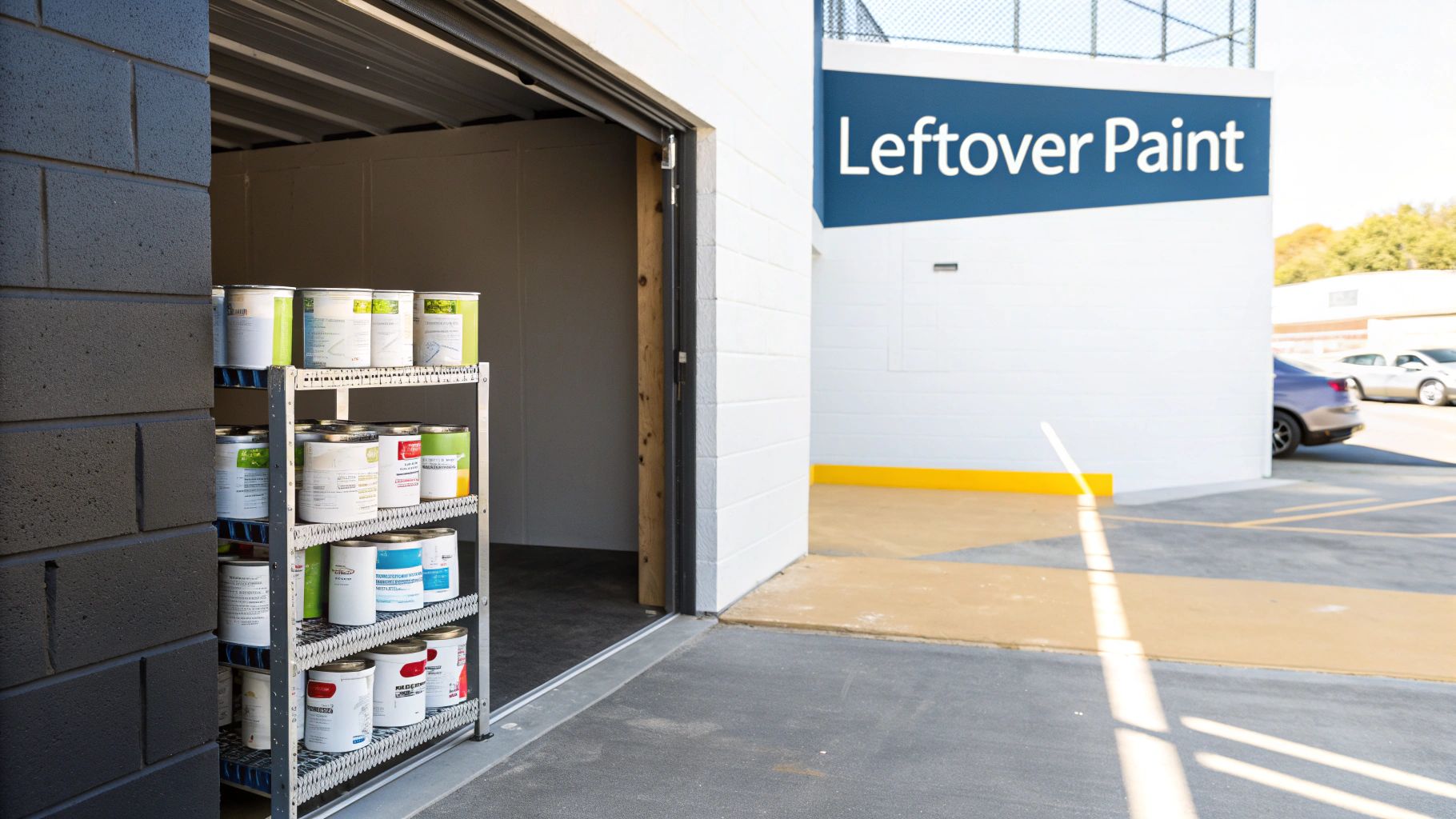
Water-based or emulsion paint is the go-to for most of us decorating our homes in the UK. But just because it's common doesn't mean you can just toss it in the bin. In fact, liquid paint is completely banned from landfills. And please, don't pour it down the drain – even small amounts can cause havoc for aquatic life and your plumbing.
The secret to getting rid of it correctly is to turn it from a liquid into a solid.
Anyone looking to dispose old paint the right way needs to dry it out first. That's the non-negotiable first step. Once it's completely solid, it’s no longer classed as a liquid waste. At that point, it can usually go into your general household rubbish or a skip you've hired.
Of course, leaving a full tin of paint with the lid off could take weeks, or even months, to dry out properly. Not exactly practical. Let's walk through a few better ways to speed things up safely.
Solidifying Small Amounts of Paint
Picture this: you've just finished touching up the skirting boards and there's less than an inch of white emulsion left sloshing around in the tin. This is the easiest scenario to deal with.
For tiny amounts like this, all you really need is air and a bit of patience.
- Find a well-ventilated spot for the open tin, well away from kids, pets, or any open flames. A corner of the shed or a secure balcony usually does the trick.
- Take the lid right off to get as much air to it as possible.
- Give it a stir every few days. This helps expose new layers to the air and will definitely speed up the drying process.
This little trick is perfect for the dregs at the bottom of a can. It makes sure nothing goes to waste and gets the container ready for recycling.
Dealing with Larger Quantities of Emulsion
What about that half-full 5-litre tin of "Magnolia" that’s been gathering dust since you did the living room? Leaving that to air-dry on its own is going to take forever. The solution here is to add something absorbent to soak up the liquid and give it some bulk.
Chances are, you've got the right materials lying around the house already:
- Cat Litter: A brilliant, super-absorbent choice. Just add it gradually to the paint, stirring as you go, until you're left with a thick, clumpy mixture that's definitely not a liquid anymore.
- Sawdust or Wood Shavings: If you do a bit of woodworking, this is a free and effective alternative that works in exactly the same way.
- Sand: Another common material that will mix into the paint and help it solidify into a single mass.
A good tip is to find a bigger container, like an old cardboard box lined with a bin bag. Pour in a layer of your chosen material, then a layer of paint, and keep repeating until all the paint is gone. Give it a final, thorough mix until it’s solid.
The goal here is simple: create a solid block of dried paint. It needs to be so solid that if you tipped the container over, absolutely no liquid would run out. That’s the legal standard for putting it in your general waste.
When to Use a Commercial Paint Hardener
If you're faced with several large tins of paint or you just want the job done quickly, a dedicated paint hardener is your best bet. You can pick these up from most DIY and hardware shops, and they're made specifically for this task.
They usually come as a powder or crystals that you just stir straight into the leftover paint. The chemicals get to work on the water in the emulsion, causing it to solidify really quickly – often within just a few hours.
While it’ll cost you a few quid, a paint hardener has some clear advantages:
- Speed: It’s miles faster than air-drying or using stuff from around the house.
- Effectiveness: It guarantees you get a consistently solid result every time.
- Convenience: It’s a clean, straightforward job with very little mess.
This is a particularly great option after a big decorating project where you might have a few half-used tins of the same colour. Just make sure you follow the instructions on the packet and do it in a well-ventilated area to avoid breathing in any fumes. Once it’s solid, you can dispose old paint in your household waste or skip, knowing you're fully compliant with all the waste regulations.
Dealing with Oil-Based and Solvent Paints

Unlike their water-based cousins, oil-based paints are a completely different challenge. Their chemical makeup, full of solvents and volatile organic compounds (VOCs), means they are officially classified as hazardous waste. This isn't just a bit of jargon; it's a legal classification that dictates exactly how you must handle them.
You absolutely cannot dry them out with cat litter or just leave the lid off in the shed. Doing so releases harmful fumes, and worse, it doesn't change their hazardous status. Tossing a tin of oil-based gloss into your general waste bin, even if it’s ancient, is illegal and environmentally reckless.
The solvents in these paints can contaminate soil and seep into groundwater if they end up in a landfill. This poses a direct threat to wildlife and our ecosystems. Because of these risks, there's a clear legal duty of care for anyone looking to dispose old paint of this type.
Your Local Recycling Centre Is Key
For homeowners with a few leftover tins of oil-based paint, varnish, or wood stain, the only correct disposal route is your local Household Waste Recycling Centre (HWRC) – what most of us just call 'the tip'. These facilities are specifically equipped to handle hazardous materials safely.
Most councils have designated areas at their HWRCs for things like paint. When you arrive, you’ll likely be directed to a specific container or a member of staff who can take the tins from you. It’s a pretty straightforward process, but you need to be prepared.
Before you set off, it's always wise to:
- Check Your Council's Website: A quick search will give you opening times, the exact location, and specific rules. Some sites even require you to book a slot in advance.
- Confirm Quantity Limits: Many centres have a limit on how much hazardous waste they’ll accept from one household in a single visit, often around 5-10 litres. If you have more, you may need to make a couple of trips or ring them for advice.
- Keep It Secure: Make sure all paint tins are sealed tightly with their original lids to prevent any spills on the journey. It's a good idea to place them upright in a sturdy box in your car boot.
Do not mix different types of oil-based paints together. Keep them in their original, clearly labelled containers. This is crucial as it helps the staff at the recycling centre identify the contents and process them correctly – a critical part of safe hazardous waste management.
Solutions for Tradespeople and Commercial Waste
If you're a painter, decorator, or contractor, the rules become much stricter. You cannot use the local HWRC for commercial waste; these facilities are strictly for household use only. Trying to pass off trade waste as domestic is illegal and can land you with some hefty fines.
For professionals, the legal responsibility is clear: you must use a licensed waste carrier to dispose old paint and other hazardous materials from your work sites. This is a non-negotiable part of your professional duty of care.
There are two main compliant options for tradespeople:
- Specialist Hazardous Waste Collection: You can arrange for a licensed company, like The Waste Group, to collect the specific hazardous materials directly from your site or yard.
- Compliant Skip Hire: For bigger projects generating mixed waste, hiring a skip from a reputable provider is often the most practical solution. However, you must declare the presence of hazardous materials. Liquid paint can never go in a skip, but your waste provider can advise on the proper procedures for including other hazardous items or arrange a separate collection for them.
Ultimately, for any business, partnering with a professional waste management service isn't just about convenience. It’s about compliance, safety, and protecting your professional reputation.
Give Your Unused Paint a Second Life

Before you start looking up drying agents or planning a trip to the tip, it's worth asking one simple question: could someone else use this paint?
Quite often, the most responsible way to dispose old paint is to not dispose of it at all. Giving it a second chance is by far the most eco-friendly choice you can make, saving resources and helping others in the community.
Many tins of leftover paint are perfectly usable, especially if they’ve been stored properly in a shed or garage. We’ve all been there—you finish decorating and you're left with half a tin. It feels incredibly wasteful to just let it go hard. Instead of seeing it as waste, think of it as a resource just waiting for a new project.
This approach doesn't just prevent pollution; it also supports community projects and people who might not be able to afford brand-new materials. It’s a simple, effective way to turn your clear-out into a genuinely good deed.
Is Your Old Paint Still Usable?
First things first, you need to check the paint is actually in good nick. Nobody wants a lumpy, unusable mess, but luckily, it’s pretty easy to tell.
Pop open the tin and give it a good, proper stir. Here’s what you should be looking for:
- Consistency: A great sign is if the paint mixes back into a smooth, even liquid after you've stirred it for a minute or two. A bit of separation is totally normal for paint that's been sitting around.
- The Smell Test: This one is crucial. Good paint has that typical chemical smell. If it smells sour, rancid, or musty, it's gone bad and isn't fit for donation.
- Texture: Keep an eye out for any hard lumps that just won't mix back in, or a weird, stringy texture a bit like cottage cheese. That's a sure sign the paint has spoiled.
If it passes these simple checks, it’s ready to be passed on. Just make sure you hammer the lid back on properly to avoid any spills on its journey.
Where to Donate Your Leftover Paint
Once you've confirmed your paint is good to go, you’ve got several excellent options for finding it a new home. These community-focused routes are always a better choice than any disposal method.
A fantastic nationwide initiative is the Community RePaint network. They collect reusable, leftover paint and redistribute it to individuals, families, and charities at a very low cost. Their schemes stop thousands of litres of paint from ending up in landfill every year, using it instead to brighten up community centres, schools, and homes.
Donating to a scheme like Community RePaint is a powerful form of recycling. It ensures the energy and resources used to create the paint aren't wasted and directly benefits local projects that might otherwise struggle for materials.
Beyond the formal schemes, think a bit more locally:
- Neighbours and Friends: Someone down your street might be planning a small DIY job and would be grateful for a free tin. It's always worth asking.
- Local Community Groups: Have a look on social media. Local Facebook pages, "Buy Nothing" groups, or a Freecycle network are perfect for this. A quick post offering free paint usually gets a response in no time.
When you do pass it on, do everyone a favour and clearly label the tin with the colour and type of paint (e.g., "Matt Emulsion – Pale Blue"). This little step ensures your generosity doesn't become someone else's headache.
You can find out more about preparing tins and other containers in our detailed guide on how to dispose paint tins. Passing on good-quality paint really is a win for everyone involved.
Disposal Rules for Businesses and Trade Projects

If you're a professional contractor, decorator, or property manager, the rules to dispose of old paint are a different ball game entirely. It’s no longer about simple household guidelines; you've got serious legal responsibilities.
That leftover paint from a commercial job isn’t considered household waste. Thinking you can just drop it off at the local tip is a costly mistake waiting to happen.
For any business, the legal principle of 'Duty of Care' is absolute. This means you are legally on the hook for all the waste your business produces, from the moment you create it until its final, compliant disposal. This isn't a friendly suggestion; it's a legal obligation. Get it wrong, and you're looking at significant fines and a serious dent in your reputation.
This duty of care covers everything from seemingly harmless leftover emulsion to, critically, hazardous oil-based paints. Understanding your obligations is the first step. For a deeper dive, check out our guide on hazardous waste disposal regulations.
Professional Solutions for Commercial Paint Waste
Dealing with commercial paint waste needs a proper, structured approach. A homeowner might only have a couple of tins to worry about, but a trade project can generate a huge volume of waste that demands professional handling. Trying to manage this yourself often just leads to logistical headaches and legal risks.
The scale of waste we produce in the UK is massive. By 2023, household waste alone hit 25.9 million tonnes. While the national recycling rate is around 44.6%, the commercial sector is under intense pressure to manage its own waste streams responsibly. This is why professional services are no longer a luxury but a flat-out necessity for any compliant business.
So, let's look at the practical, compliant options on the table.
- Licensed Waste Carriers: This is non-negotiable for any hazardous waste, including liquid oil-based paint. You must use a carrier licensed by the Environment Agency. They’ll give you the correct containers and, most importantly, the consignment note – the legal paperwork that proves you've done everything by the book.
- Skip Hire for Mixed Construction Waste: A skip is often the most straightforward way to manage waste on a renovation or building site. You can throw empty or completely solidified water-based paint tins in a general mixed-waste skip, just as long as there’s zero liquid left.
- Dedicated Hazardous Waste Collection: Got a large quantity of oil-based paints, solvents, and other chemicals? Arranging a dedicated collection with a specialist like The Waste Group is easily the safest and most compliant way to go.
The Benefits of Using a Professional Service
Trying to handle waste disposal in-house might seem like a good way to cut costs, but it often ends up being the complete opposite. The time you'll sink into it, the risk of getting compliance wrong, and the general hassle can quickly cancel out any savings you thought you were making.
Working with a waste management expert just makes the whole process smoother.
A professional waste service isn't just about picking up your rubbish. It's about ensuring you're compliant and giving you peace of mind. They handle the documentation, meet environmental regulations, and take the burden of waste logistics off your shoulders, letting you focus on the job.
Picture this: a team of decorators finishes a large office refurbishment, leaving behind dozens of half-empty tins of various paints. A professional service can come in, assess the waste, provide the right containers for segregation, schedule a collection that works for you, and sort out all the legal paperwork.
This professional approach avoids the all-too-common risks of improper storage and illegal disposal. For businesses in the trade, the rules can be tough, and getting expert guidance is often essential. Learning more about professional commercial and industrial painting services helps to understand the operational scale that demands this level of compliance.
Ultimately, investing in professional waste management is an investment in your business's efficiency, reputation, and legal security. It ensures every part of your project, right down to the cleanup, is handled to the highest standard.
Common Questions About Paint Disposal
Even with the best plan, you'll likely run into a few specific questions when it’s time to actually dispose old paint. Let's tackle some of the most common queries we hear from customers, giving you straight, practical answers for those tricky situations.
Can I Pour Leftover Water-Based Paint Down the Drain?
The short answer here is a hard no. It’s easy to think "water-based" means it’s harmless, but emulsion is much more than just coloured water. It’s actually packed with liquid plastics (polymers), pigments, and other chemicals that are seriously toxic to aquatic life.
Pouring this stuff down the drain can cause havoc for your plumbing and the local sewer system. Those polymers can harden inside your pipes, creating stubborn blockages. Worse, the chemicals mess with water treatment processes and pollute our rivers and streams. In the UK, it's illegal to pour paint down any drain—you’ve got to solidify it first or take it to a proper disposal facility.
What Do I Do with Empty Metal Paint Tins?
Empty metal paint tins are a great resource for recycling, but only if they’re prepped correctly. Chucking a tin with a layer of wet paint into the recycling bin will just contaminate the whole load.
First, get the tin as empty as you possibly can. A thin, completely dry film of paint on the inside is usually fine for recycling.
- For water-based paint tins: Just leave the lid off in a well-ventilated spot and let the residue dry rock-solid.
- For oil-based paint tins: That residue is still hazardous waste. You'll need to wipe the inside clean with a rag, and that rag then has to be disposed of as hazardous waste along with any leftover paint.
Once the tin is empty and dry, most council Household Waste Recycling Centres (HWRCs) will take them in their metal recycling containers. Don't just pop them in your kerbside recycling unless your local council has specifically told you it's okay.
Taking a few minutes to prepare your tins properly makes a massive difference. It means the metal can be recovered and turned into new products, which is a big win for the environment.
How Much Does It Cost to Dispose of Paint?
For most homeowners dealing with a few tins from a DIY project, the cost is often nothing at all. Taking your leftover paint to the local HWRC is a free service provided by your council. Donating usable paint through a scheme like Community RePaint will only cost you a bit of time. The only real expense you might face is a few quid for a tub of paint hardener.
For businesses and tradespeople, it's a different story. Commercial waste comes with costs, as you're legally required to use licensed waste carriers.
| Disposal Method | Typical Cost for Homeowners | Typical Cost for Businesses |
|---|---|---|
| Donation (e.g., Community RePaint) | Free | Free (for usable paint) |
| Household Waste Recycling Centre | Free | Not permitted for trade waste |
| Using Paint Hardener & Binning | £5 – £10 per product | Not suitable for large volumes |
| Licensed Waste Carrier/Skip Hire | N/A | Varies by volume and location |
For tradespeople, hiring a skip is often the most cost-effective and compliant way to handle mixed waste, which can include your fully solidified paint tins. It’s the smart way to avoid fines and meet your legal Duty of Care.
Is It Okay to Use Very Old Paint?
We all have that one decade-old tin of paint lurking in the shed. Is it still any good? It really depends on the type of paint and how well it's been stored. A good quality water-based emulsion, kept in a tightly sealed tin away from frost, can last for years.
The best way to know for sure is to give it a quick check.
- Open and Stir: Pop the lid and give it a really good stir. It's normal for a layer of liquid to have separated on top.
- Check the Smell: Good paint has a standard chemical smell. If it stinks—sour, foul, or mouldy—it’s been contaminated with bacteria. Time to get rid of it.
- Assess the Texture: If it mixes back into a smooth, usable consistency, you're probably good to go. If it’s lumpy, stringy, or has hard bits that won't break down, it's past its prime.
Oil-based paints tend to last longer but can form a thick skin on the surface. If you can peel this off and the paint underneath stirs smoothly, it should be fine. I'd always recommend doing a small test patch on some cardboard or a hidden area first to make sure it dries properly.
Of course, paint isn't the only tricky item to dispose of around the house. For a look at how to handle other common household items, this guide to recycling old domestic appliances is a really useful read.
Sorting out waste disposal can feel like a headache, but it doesn't need to be. Whether you're a homeowner with a few tins to clear out or a contractor managing a big site, The Waste Group offers simple, compliant, and reliable solutions. From skip hire to specialist collections, we make responsible waste management easy. Get your instant quote and book online today at https://www.thewastegroup.co.uk.