Disposing of old paint: A Simple UK Guide to Safe Disposal
Disposing of old paint: A Simple UK Guide to Safe Disposal
We’ve all seen it: that leaning tower of half-used paint tins tucked away in the shed or garage. It’s a common sight in homes up and down the country. But when it’s finally time for a clear-out, there's one critical thing to remember: liquid paint is classified as hazardous waste. That means you cannot legally toss it in your regular household bin. Getting your head around this simple rule is the first step to disposing of old paint safely and responsibly.
Why You Can't Just Bin Old Paint Tins
It’s tempting, isn’t it? Just chucking the old tins into the wheelie bin seems like the easiest option. But doing so creates some serious risks for the environment and public health. Liquid paint is packed with chemicals, solvents, and microplastics that can cause major contamination if they end up in a landfill.
Think about what happens when it rains. As water seeps through a landfill, it can pick up these toxins, carrying them into the soil. From there, they can leach into the groundwater that eventually feeds our rivers and local ecosystems. This is exactly why local authorities and environmental agencies have such strict rules in place.
The Two Main Types of Paint
The right way to dispose of your old paint really comes down to what kind you’re dealing with. Your approach will be very different depending on whether it's water-based or solvent-based.
- Water-Based Paint: This is your typical emulsion, often labelled as latex or acrylic. It’s the stuff most of us use for interior walls and ceilings. While it's less hazardous, it still can't be binned in its liquid form.
- Solvent-Based Paint: This covers things like gloss, satinwood, undercoats, and other speciality paints. You'll see them labelled as "oil-based" or "alkyd". These contain volatile organic compounds (VOCs), which makes them much more hazardous to handle and dispose of.
The core principle is simple: liquid paint does not belong in your general waste. Solvent-based paints, in particular, require specialist handling as hazardous materials, while even water-based emulsions must be fully hardened before they can be considered for binning.
Your Legal Responsibilities
For homeowners, the responsibility is fairly straightforward. You need to follow your local council's guidelines, which usually means taking the paint to a Household Waste Recycling Centre (HWRC) or using a licensed collection service.
For tradespeople and businesses, however, the rules are much stricter under what’s known as the 'Duty of Care'. This is a legal obligation requiring businesses to ensure their waste is managed and disposed of correctly by a licensed waste carrier. Getting this wrong can lead to some hefty fines.
So, whether you’re a DIYer in Dorset with a few tins to clear or a contractor wrapping up a big project, understanding these rules is crucial for staying compliant and protecting our local environment.
Identifying and Preparing Your Leftover Paint
Before you even think about getting rid of that old paint, you need to play detective with what's lurking in your shed or garage. Knowing exactly what you have is the crucial first step, as it dictates everything that comes next. Getting this right saves a ton of time, avoids hassle, and most importantly, keeps you on the right side of waste regulations.
The main job is to sort your collection into two piles: water-based and solvent-based paints. This one distinction changes everything about your disposal options.
How to Tell Your Paints Apart
Figuring out what’s what is usually pretty straightforward. Just grab a tin and have a good look at the label for clues.
- Water-Based Paint (Emulsion): You're looking for words like "acrylic," "latex," "vinyl matt," or "silk." The biggest giveaway is usually in the cleanup instructions. If it says to clean brushes with soap and water, you've got a water-based product.
- Solvent-Based Paint (Oil-Based): These tins will often be labelled "gloss," "satinwood," "undercoat," "primer," or "alkyd." The label will tell you to use white spirit or a specific brush cleaner, confirming it's solvent-based.
What if the label is a peeling, unreadable mess? A quick sniff can often solve the mystery. Solvent-based paints have that classic strong, chemical smell, while emulsions are much milder.
Tackling leftover paint is a huge issue across the country. In the UK, a staggering 34 million litres of decorative paint goes to waste each year – enough to fill more than 13 Olympic-sized swimming pools. What's worse is that 98% of this leftover paint is chucked out incorrectly, often ending up in landfills or poured down drains where it causes serious environmental damage.
Dealing with Partially Full or Dried-Out Tins
Once you've sorted your paints, it's time to prep them based on their condition. The goal here is to make them safe for whatever comes next, whether that's being reused, recycled, or collected by a specialist.
For tins that are still perfectly good, think about giving them a second life. We’ll get into community reuse schemes a bit later on. It’s also worth remembering that looking after your gear properly can cut down on waste in the first place. For example, knowing how to clean your airless paint sprayer effectively can minimise what's left over.
For the paint that’s definitely unusable, preparation is key.
To help you get started, here's a quick checklist to run through.
Paint Identification and Initial Preparation Checklist
This table is a simple guide to help you quickly identify what type of paint you have and what immediate preparation steps you should take before deciding on the final disposal method.
| Paint Type | How to Identify | Safe Preparation Method |
|---|---|---|
| Water-Based (Emulsion) | Label says "acrylic," "latex," "vinyl." Cleans up with soap and water. Mild smell. | For small amounts, mix with sawdust or cat litter and allow to dry solid. For large quantities, secure the lid and prepare for collection. |
| Solvent-Based (Oil-Based) | Label says "gloss," "alkyd," "primer." Cleans up with white spirit. Strong chemical odour. | Do not attempt to dry out. Secure the lid tightly. Keep separate from water-based paints for specialist collection. |
| Dried-Out Paint | Paint is completely solid in the tin, with no liquid remaining. | If it's fully hardened water-based paint, it can often go in general waste (check local rules). If it's oil-based, it still needs specialist disposal. |
Using this checklist will ensure you're handling each tin correctly from the get-go, making the entire process smoother and safer.
Hardening Small Amounts of Emulsion
If you've only got a small amount of water-based emulsion left (think less than a quarter of a tin), you can often prepare it for your general household waste. Never, ever do this with solvent-based paints.
- First, find a well-ventilated spot, preferably outside.
- Tip in a bulking agent like cat litter, sawdust, or even soil.
- Give it a really good stir until all the paint is absorbed and it starts to solidify.
- Leave the lid off and let it dry out completely. This can take a few days.
Once the paint is a solid block with no liquid left, it can usually be placed in your regular bin. It’s always a good idea to double-check with your local council's specific rules first, though. Our guide on how to properly dispose of paint tins offers more detailed advice on this.
Preparing Tins for Professional Collection
For any solvent-based paints, or for larger quantities of emulsion, your only safe and legal route is a specialist collection or a designated drop-off point. Preparing them is simpler but just as important.
- Secure the Lids: Make sure every lid is hammered on tightly to stop any leaks during transport. A gentle tap with a mallet usually does the trick.
- Check for Damage: If you've got any leaking or badly rusted tins, pop them into a sturdy plastic bag or a larger, secure container to contain any mess.
- Keep Them Separate: Don't mix different types of paint. Group your solvent-based tins together, away from the water-based ones.
By taking these simple steps, you're making sure the paint can be handled safely by the waste management pros, which makes the whole disposal process much more efficient for everyone.
Exploring Your Disposal Options, From Reuse to Recycling
Once you've sorted through your paint tins and prepped them properly, it's time to figure out what to do with them. Tossing them in the general waste bin should always be a last resort. Instead, focusing on reuse and recycling not only keeps potentially hazardous stuff out of landfill but also helps your local community and the environment.
Before we get into the "how," it's worth understanding the scale of the problem. While the UK's overall municipal waste recycling rate hit 44.6% in 2023, old paint is a stubborn exception. A jaw-dropping 98% of the 34 million litres of leftover decorative paint ends up in landfill, gets incinerated, or is poured down the drain each year. You can read the latest UK recycling statistics to see the full picture.
Give Your Paint a Second Life Through Reuse
The absolute best thing you can do with usable, leftover paint is to give it a second home. What might be an unwanted tin of magnolia to you could be a godsend for a local project desperate to freshen up its space.
- Community RePaint Network: This is your first port of call. It's the UK’s main paint reuse network, collecting leftover paint and getting it into the hands of families, individuals, and community groups who need it. It’s a brilliant scheme that cuts waste and makes decorating affordable for everyone.
- Local Charities and Social Enterprises: Plenty of local charities, especially those that upcycle furniture or support low-income households, would be grateful for a donation of good-quality paint.
- Theatres and Schools: Local amateur dramatics groups, schools, and colleges are often crying out for paint for their sets and art projects. A quick phone call is all it takes to see your leftovers help create a masterpiece.
Always make sure the paint is still in good nick before you offer it up. A good rule of thumb is that the tin should be at least a third full, the paint should be free of lumps, and the lid needs to be on tight.
This handy flowchart can help you quickly decide what to do with any leftover liquid paint you've got.
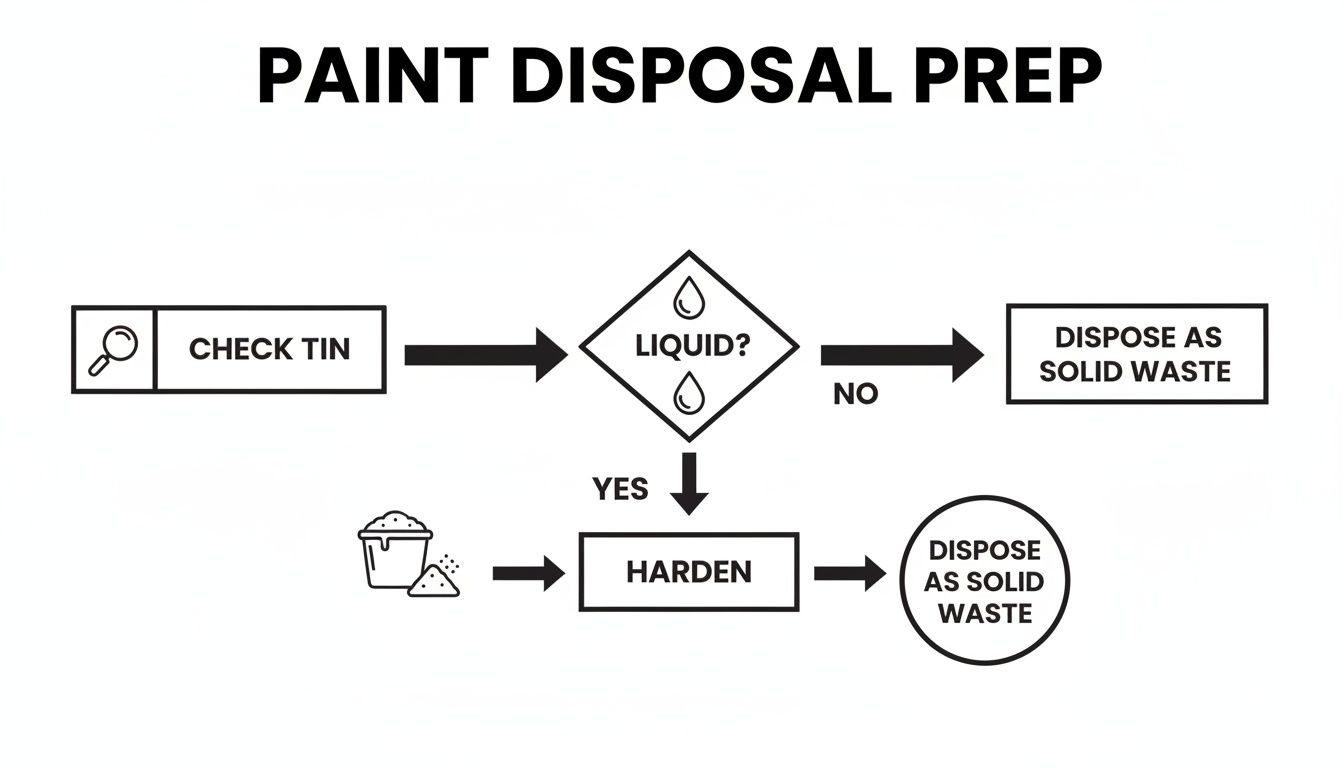
The main takeaway here? Liquid water-based paint must be solidified before it ever goes near a general waste bin. It’s a critical step to avoid contaminating the environment.
Navigating Paint Recycling at Your Local Tip
If your paint is past its best and can't be reused, recycling is the next best option. This is where things can get a bit tricky, though, as what your local council allows can vary massively from one area to another. Your local Household Waste Recycling Centre (HWRC), or 'the tip', is where you'll need to go.
Many HWRCs do accept paint now, but they almost always have strict rules.
- Check First, Travel Later: Don't just load up the car and hope for the best. Always check your local council's website first. They’ll have specific pages telling you if they take paint, what types, and if there are any limits on how much you can bring.
- Solvent-Based vs Water-Based: Most tips that do accept paint will have separate bins for solvent-based (hazardous) and water-based types. It is absolutely vital that you don't mix them up.
- Restrictions May Apply: Some sites will only take paint from residents, not from businesses or tradespeople. They might also limit you to just a few tins per visit.
A Look at Dorset Council Services
For anyone living in Dorset, the local rules are a perfect example of why you need to check first.
For instance, BCP Council (covering Bournemouth, Christchurch, and Poole) accepts both types of paint at their recycling centres, but you have to put them in the designated hazardous waste containers. Meanwhile, Dorset Council’s facilities also have provisions, but again, you have to follow the on-site instructions to the letter to ensure it's segregated correctly.
This kind of local variation is completely normal. What's fine in Poole might be handled differently at a site near Weymouth or Dorchester. The golden rule is simple: always confirm the details with your specific local authority before you head out. A quick check can save you a wasted journey or, worse, accidentally disposing of your paint improperly.
When reuse or a trip to the tip isn't on the cards, a professional waste service becomes the most reliable and compliant way to get rid of old paint.
When to Call a Professional Waste Service
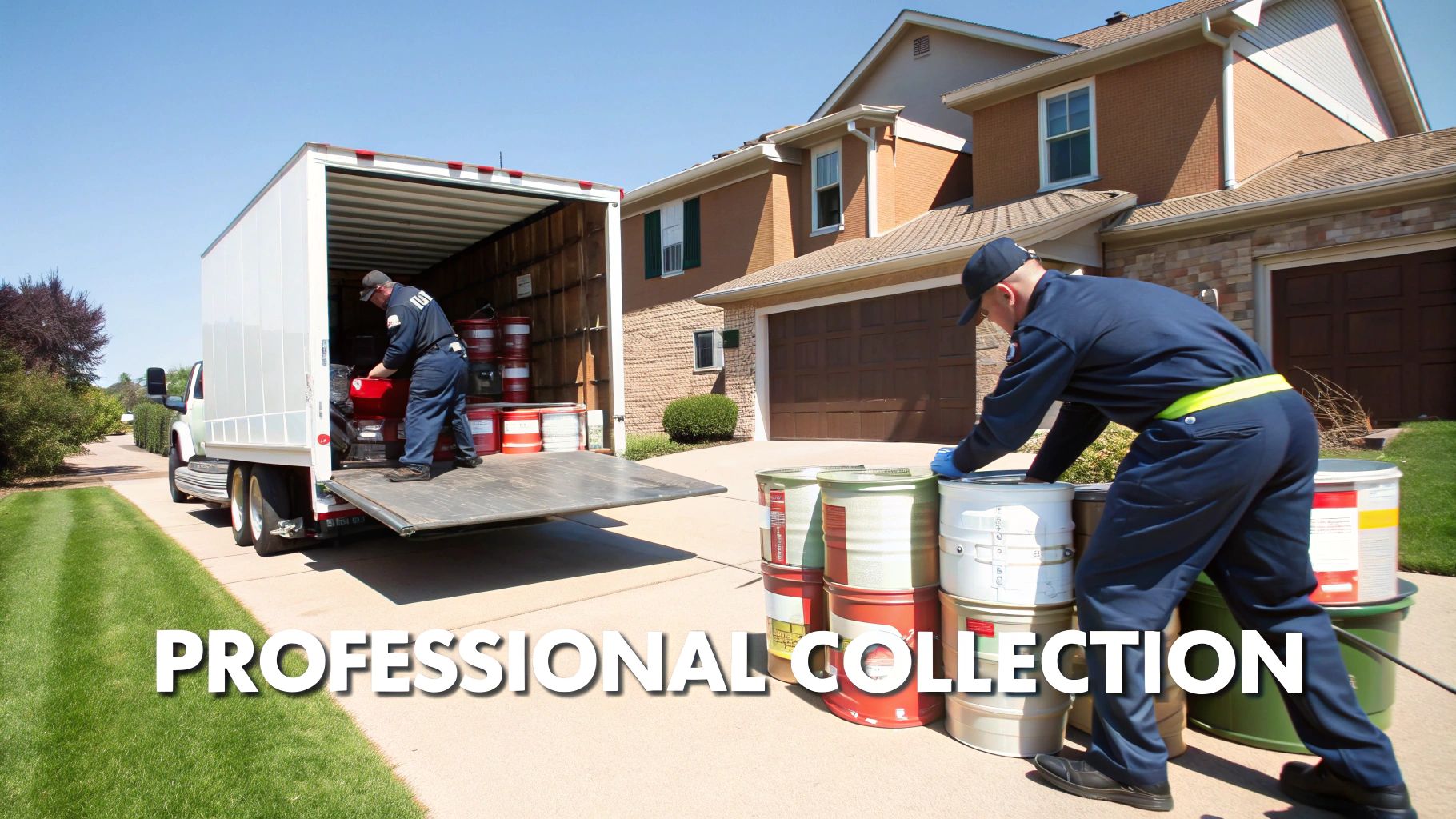
While drying out a small tin of emulsion is a perfectly manageable weekend task, there are plenty of times when dealing with old paint yourself is impractical, unsafe, or even illegal.
For bigger volumes, commercial jobs, or any hazardous solvent-based paints, calling a professional waste service isn't just a matter of convenience—it's an absolute necessity. Knowing when to make that call is the key to a safe, compliant, and stress-free clear-out.
Think about it. You’re clearing out a relative's garage in Dorchester and find two dozen half-used tins of god-knows-what. Or you’re a decorator finishing a big office refurb in Bournemouth with a pallet of leftover gloss and primer. In these real-world scenarios, a trip to the local tip is simply not an option. This is exactly when a specialist service becomes the only sensible choice.
The Commercial Duty of Care
If you're a business producing waste—from a sole trader decorator to a large building firm—you are bound by a legal principle known as the 'Duty of Care'. This isn't a vague guideline; it’s a set of legal responsibilities covering how you store, move, and get rid of any waste your business creates, including paint.
Get it wrong, and you could face hefty fines or even prosecution. A crucial part of this duty is making sure your waste is only ever handled by a licensed waste carrier. You must also get a Waste Transfer Note, which is the legal document proving you've handed your waste over to an authorised company for proper disposal. Our guide to hazardous waste disposal regulations dives deeper into these critical business obligations.
The proper handling of materials like old paint is a vital and growing sector. The UK's hazardous waste collection industry has seen significant expansion, reflecting a greater awareness from businesses and homeowners about the need for correct disposal.
Skip Hire Versus Hazardous Waste Collection
When you bring in the professionals, you generally have two routes, and picking the right one comes down to the state of your paint. It’s vital to know the difference to stay compliant and avoid unnecessary costs.
- Skip Hire for Solid Paint Waste: A standard skip is ideal for mixed building or renovation waste. This can include empty or fully hardened paint tins. Once your leftover water-based paint has turned into a solid block, it can go in a skip with other general waste.
- Hazardous Waste Collection for Liquid Paint: Liquid paint of any type, especially solvent-based glosses and varnishes, must never be poured into a general skip. This needs a dedicated hazardous waste collection. A specialist team will show up with the right containers to take the liquid paint away for safe, compliant treatment.
Getting this right is crucial. Tipping liquid paint into a skip can contaminate the entire load, instantly classifying it as hazardous and leaving you with unexpected charges and potential fines.
When Is a Professional Service Non-Negotiable?
So, how do you know for sure it's time to call in the experts? The decision becomes pretty clear-cut in a few common situations.
Here are the main triggers that mean you should pick up the phone:
- You Have Any Solvent-Based Paint: Because it’s hazardous, any amount of liquid oil-based, solvent-based, or gloss paint needs professional handling. You shouldn't try to air-dry these paints because they release harmful volatile organic compounds (VOCs).
- You're a Business or Tradesperson: Your Duty of Care obligations mean any commercial paint waste must be collected by a licensed carrier who provides the correct paperwork.
- You Have a Large Quantity: If you're looking at more than five or six tins, a professional collection is far more practical than juggling multiple trips to a Household Waste Recycling Centre, which may have limits anyway.
- The Paint Tins Are Damaged or Leaking: Professionals have the right gear (like overdrums) to safely contain leaking tins, preventing messy and hazardous spills during transport.
For paints classed as hazardous, understanding the protocols for professional hazardous waste and spill cleanup is vital for safe and compliant disposal. The UK's hazardous waste collection market is expected to reach £5.7 billion by 2025. This growth is a direct response to the 41,000 tonnes of decorative paint we throw away each year, much of which needs specialist handling.
Ultimately, choosing a professional service gives you complete peace of mind. It guarantees you're meeting your legal duties and protecting the environment from nasty chemicals, making it the most responsible choice for any significant paint disposal job.
Navigating Costs and Local Dorset Services
When you get to the pointy end of a project, two questions always pop up: how much is this going to cost, and who can sort it out for me here in Dorset? Whether you're a homeowner staring at a few half-empty tins or a contractor managing a full site clearance, getting a handle on the costs and local services is key to getting the job done without any fuss.
Let's be honest, the cost of getting rid of old paint really depends on the path you take. Your local Household Waste Recycling Centre (HWRC) might offer a 'free' drop-off for residents, but this often comes with strings attached. Think limits on how much you can bring, specific drop-off days for hazardous stuff, and the time you'll spend queuing. For many, the hassle just isn't worth the perceived saving.
Understanding Professional Service Costs
Choosing a professional waste service is a much more straightforward and reliable way to go, especially if you're dealing with larger amounts or those tricky solvent-based paints. The price you'll pay generally boils down to a few simple things:
- How much paint you have: The main cost driver will be the number and size of the tins.
- What kind of paint it is: Solvent-based paints need special handling as hazardous waste, which naturally costs more than water-based emulsions.
- The service you need: A dedicated hazardous waste collection is priced differently than, say, hiring a skip where you're putting fully hardened tins in with other rubbish. For a good look at local pricing, you can find out more about skip hire prices in Dorset.
Yes, there's an upfront cost, but what you’re really buying is convenience, speed, and total compliance. It's not just about removal; it’s about peace of mind.
For any tradesperson or business, there's one piece of paper that's absolutely vital: the Waste Transfer Note. This is your legal proof that you've handed your waste over to a licensed carrier. Without it, you can't prove you've met your 'Duty of Care' obligations.
Why Your Waste Transfer Note is So Important
A Waste Transfer Note is much more than a simple receipt. It's a legally required document that tracks the waste from you to its final destination. It details what the waste is, who created it, and who collected it. For any commercial paint disposal, this paperwork is non-negotiable and is your shield against potential fines.
Think of it as the formal handshake that confirms your waste has entered a safe and compliant disposal chain. Any reputable provider, like The Waste Group, will issue one as standard for every single commercial collection, giving you a clear, auditable trail.
Local Services for Dorset Residents and Businesses
Here in Dorset, finding a service that fits your needs is simple. Whether you're based in Poole, Weymouth, Bournemouth, or Dorchester, there are flexible solutions ready to go.
For example, if you're in the middle of a big renovation with a mix of waste that includes fully hardened paint tins, a skip could be the perfect solution. Many local firms offer next-day skip delivery, so your project doesn't have to stall while you're waiting around.
But what if your site access is a nightmare? A property tucked away on a narrow lane in rural Dorset might not be able to fit a large skip lorry. This is where grab lorry hire comes into its own. These vehicles have a crane that can reach over fences and walls, making them a brilliant alternative for those hard-to-reach spots.
To make the decision a little easier, here’s a quick look at the main options.
Comparing Paint Disposal Methods for Dorset Residents
This table gives you a at-a-glance comparison to help you choose the best route for your paint disposal needs, depending on what you have and how much of it.
| Disposal Method | Best For | Typical Cost | Key Consideration |
|---|---|---|---|
| Local HWRC | Small quantities of household paint from residents. | Free for residents. | Check local council rules for limits and accepted paint types. Can be time-consuming. |
| Skip Hire | Mixed renovation waste including empty or hardened paint tins. | Varies by skip size. | Liquid paint is strictly forbidden. Ideal for large clear-outs. |
| Hazardous Waste Collection | Any quantity of liquid solvent-based paint or large volumes of emulsion. | Quoted per collection. | The only legal and safe option for hazardous liquid paint. Essential for businesses. |
Ultimately, choosing a professional local service doesn't just solve your waste headache—it supports responsible environmental practices. When you work with a company that puts recycling and compliance first, you're making sure your old paint is handled in a way that protects Dorset's beautiful countryside. Booking a compliant service means you can be confident the job is done right, from start to finish.
Got Questions About Paint Disposal? We’ve Got Answers.
Even with a plan, you're bound to run into a few head-scratchers when you’re staring at a pile of old paint tins. It’s completely normal. Getting clear, straightforward advice is the key to getting the job done right. We've pulled together some of the most common queries we hear from homeowners and tradespeople to help you out.
Can I Pour Leftover Emulsion Down the Drain?
Let's make this one crystal clear: no, absolutely not. You should never pour any kind of paint down a drain, whether it’s the sink in your house or a storm drain on the street.
It's easy to think that because emulsion is water-based, it's harmless. But it's packed with chemicals, binding agents, and microplastics that create a real mess for the environment. When this stuff gets into the water system, it harms aquatic life and can throw a wrench in the works at local wastewater treatment plants. Always aim to use it up, give it away, or let it harden completely before disposal.
The biggest misconception we see is that 'water-based' means it’s safe to wash away. The truth is, the only thing that should ever go down your drain is water.
What’s the Best Way to Dispose of Empty Metal Cans?
Good news here! Once a metal paint tin is totally empty and dry, it can usually join the rest of your household metal recycling. The key word here is dry. A thin, dried-out film on the inside is generally fine.
Before you pop it in the recycling, just run through these quick checks:
- Give it a scrape: Use an old screwdriver or scraper to get out any last flakes of dried paint.
- Lid off: This is a simple signal to the collection crews that the tin is empty and safe to take, preventing them from rejecting it.
- Check with your council: This is the most crucial step. Every council has slightly different rules. A quick look at your local authority’s website will tell you if they accept empty paint tins with your kerbside collection or if you need to take them to the tip.
Is It Illegal to Put Liquid Paint in My Bin?
Yes, it is. It's actually illegal to put liquid paint of any kind into your general household waste bin here in the UK. This is because liquid paint is banned from landfill sites to stop it from seeping into the ground and contaminating soil and water supplies.
Solvent-based paints are officially classed as hazardous waste and have to be dealt with properly, either through a specialist collection service or at a designated point at your local tip. For small amounts of water-based paint, you can only put them in your general waste bin once they are completely solid. If there's any liquid sloshing about, it doesn't belong in your wheelie bin.
Do I Need a Specialist for Just One Tin of Gloss Paint?
It might feel like a bit much, but even a single tin of gloss paint (or any solvent-based paint) is considered hazardous waste. Legally, you can’t just chuck it in the bin.
Your proper, compliant options are to take it to your local Household Waste Recycling Centre (HWRC) – assuming they have a facility for hazardous items – or to use a professional hazardous waste collection. It might be a small amount, but mixing it with your regular rubbish just isn't an option.
Sorting out old paint doesn't have to be a headache. If you're in Dorset and looking for a simple, compliant, and hassle-free solution, The Waste Group has you covered. We offer everything from skip hire for hardened paint tins to specialist collections for hazardous liquid paint. Get a quote online today and make sure your paint waste is handled responsibly.