
Encapsulation for asbestos: A Practical Guide to Safe and Effective Management
Encapsulation for asbestos: A Practical Guide to Safe and Effective Management
Discovering asbestos in your property is a genuinely worrying moment. For decades, it was a go-to building material, and its legacy is still tucked away in countless UK homes, schools, and offices. The immediate thought for many is the disruptive and expensive process of full removal, but there's often a much more measured and equally safe approach: asbestos encapsulation.
Understanding Asbestos Encapsulation in Your Property
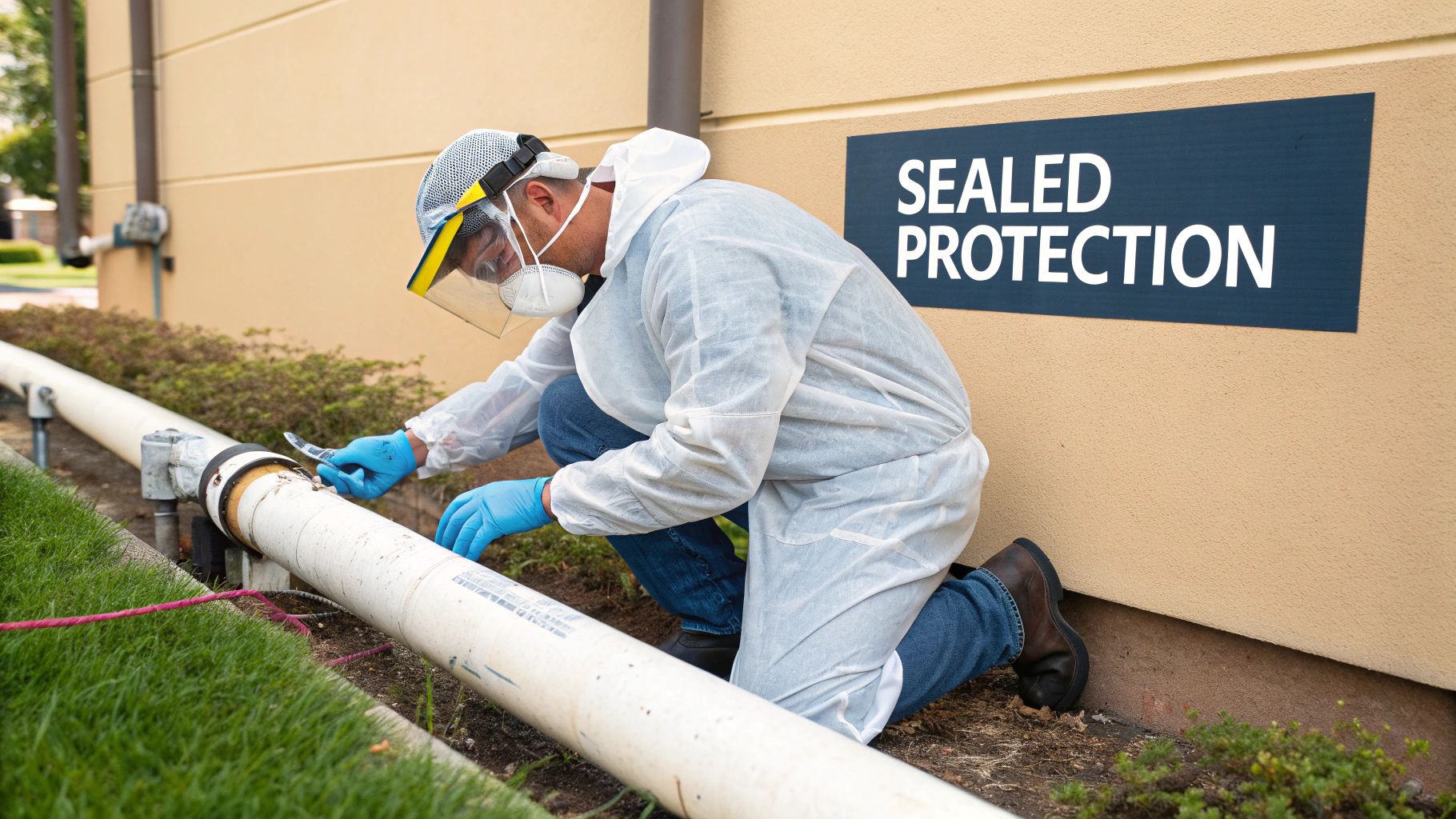
Think of it like applying a protective coat of armour. Instead of physically ripping out the asbestos, a specialist sealant is used to create a tough, seamless barrier over the material. This shield effectively locks the microscopic asbestos fibres in place, stopping them from being released into the air where they become a danger.
The Scale of Asbestos in UK Buildings
The presence of asbestos isn't a rare problem; it's a widespread issue right across the UK. The sheer scale of it is staggering. A landmark 2022 report revealed that a massive 86% of domestic properties surveyed contain asbestos.
This detailed analysis, which looked at data from over 128,000 UK buildings, found that of the 94,116 homes inspected, a huge 80,731 contained asbestos-containing materials (ACMs).
This statistic alone shows why understanding safe management methods like encapsulation is so important. With asbestos present in the majority of older properties, homeowners and building managers need effective strategies that prioritise safety without always jumping straight to complete removal.
Encapsulation Versus Removal: A Quick Comparison
While both methods are designed to deal with the risk of asbestos, they work in fundamentally different ways. Encapsulation is all about management, whereas removal is about total elimination.
- Encapsulation: This is focused on containment. It’s the perfect solution for asbestos materials that are in good, stable condition and are unlikely to be disturbed in the future. The work is typically faster, much less intrusive, and kinder on the wallet.
- Removal: This involves the complete and permanent extraction of the asbestos. It’s the only option for materials that are already damaged, crumbling (friable), or located in an area that’s about to undergo major renovation or demolition.
The core idea behind encapsulation is simple but powerful: if the fibres can't escape, they can't cause harm. It’s about managing the risk where it is, providing a long-term, compliant, and safe solution that protects everyone in the building.
For many property owners, asbestos encapsulation is the most logical way forward. It fulfils the legal "duty to manage" asbestos by preventing fibre release, all while keeping disruption and costs to a minimum. If you're concerned about materials in your property, our guide on identifying asbestos in your home can offer some valuable first steps. By understanding encapsulation, you can make an informed, safety-first decision for your property.
Exploring the Core Encapsulation Methods
Once you realise that asbestos encapsulation is all about safely containing the fibres, the next question is obvious: how is it actually done? Professionals rely on two main techniques, and the one they choose depends entirely on the type of asbestos-containing material (ACM) they're dealing with.
Think of it like choosing the right kind of armour. You wouldn’t wear a solid steel breastplate to protect a flexible joint, nor would you use chainmail on a flat, smooth wall. In the same way, an asbestos specialist picks the right tool for the job, making sure the protective barrier they create is tough, effective, and built to last.
The two primary methods are bridging encapsulation and membrane encapsulation. Let's break down how they work.
Bridging Encapsulation: Sealing the Surface
Bridging encapsulation is the go-to method for flat or textured surfaces. Imagine giving a rough, old wall a thick, industrial-strength coat of paint. That's pretty much the idea. A powerful, sticky coating is sprayed or painted directly onto the ACM.
This liquid encapsulant literally ‘bridges’ the gaps between tiny pits and fibres on the surface, drying to form a seamless, tough, and impact-resistant shell. It’s the perfect solution for materials like asbestos insulating board (AIB) on walls, asbestos cement sheets, or old textured coatings (like Artex) on ceilings.
The process creates a solid membrane that locks the underlying asbestos in place, preventing any dangerous fibres from breaking loose.
Membrane Encapsulation: Wrapping for Protection
Bridging is great for flat areas, but it’s no use for complex shapes like pipes. This is where membrane encapsulation comes into its own. The best way to picture this is like professionally bandaging a wound to keep it safe and protected.
With this method, the ACM is first wrapped in a specialised, heavy-duty material like polyethene sheeting or a resin-soaked fibreglass cloth. Every single seam, joint, and edge is then meticulously sealed with high-grade tape or adhesive. The result is a complete, airtight cocoon around the asbestos.
This is the standard technique for encapsulating asbestos pipe lagging and insulation. It moulds perfectly to the shape of the pipework, leaving no gaps for fibres to escape, and the tough outer layer protects the fragile asbestos material from getting knocked or scraped.
The goal of both methods is identical: to create an unbroken, durable barrier that isolates the asbestos from the surrounding environment. The method is simply tailored to the shape of the material being treated.
The Materials That Make It Work
The success of any encapsulation for asbestos job comes down to using the right stuff. We’re not talking about your average tin of paint from the DIY shop; these are high-performance coatings specially designed for a hazardous job. They usually fall into two main camps:
- Penetrating Encapsulants: These are thin, liquid sealants that are designed to soak deep into the asbestos material itself. They get to work from the inside, binding the fibres together into a solid lump. This is often used as a first coat to stabilise a surface before a thicker bridging coat is applied over the top.
- Elastomeric Coatings: These are flexible, almost rubber-like bridging encapsulants that form a thick, durable skin over the ACM. Their elasticity means they can handle small building movements, temperature shifts, and minor bumps without cracking, keeping that all-important protective seal intact for years.
Ultimately, a licensed professional is the only person who can properly assess the ACM’s condition and location to decide on the best mix of methods and materials. This guarantees a safe, legally compliant, and long-lasting solution.
Deciding Between Encapsulation and Removal
Figuring out how to handle asbestos-containing materials (ACMs) is one of the biggest calls a property owner has to make. This isn’t just about cost; it’s a serious judgement call that weighs up the condition of the material, the risk it poses, and your future plans for the building. You’ve got two main paths—encapsulation and removal—and while both are valid, they’re meant for completely different situations.
Getting this right all comes down to a professional, hands-on assessment of the asbestos itself. Is it solid and holding together well, or is it damaged, fragile, and starting to crumble? Encapsulation can be a brilliant management strategy, but only when the conditions are perfect for it. On the other hand, full removal is the only safe bet when the material is a current or future risk.
When Encapsulation Is the Right Choice
Encapsulation for asbestos is the go-to solution when the material is in good, solid shape. Picture an asbestos cement roof that’s structurally sound but a bit weathered, or asbestos insulating boards (AIBs) that are totally intact and fixed securely in place. In these kinds of scenarios, the asbestos isn’t actively shedding dangerous fibres.
The green light for encapsulation usually depends on a few key things:
- Good Material Condition: The ACM isn’t showing any major signs of damage like cracks, flaking, or crumbling. It's stable.
- Low Risk of Disturbance: The material is tucked away in an area where it’s not likely to get knocked, scraped, or disturbed by day-to-day life.
- No Major Renovations Planned: If you’re not planning to demolish the building or make big structural changes, encapsulation offers a fantastic long-term solution.
Think of encapsulation as a proactive safety measure. It takes a low-risk material and makes it even safer by locking it behind a protective shield, stopping any future wear-and-tear from releasing fibres. It’s a smart way to manage the situation safely and legally with minimal disruption.
This simple flowchart helps visualise how a professional decides on the right encapsulation method based on the ACM's surface.
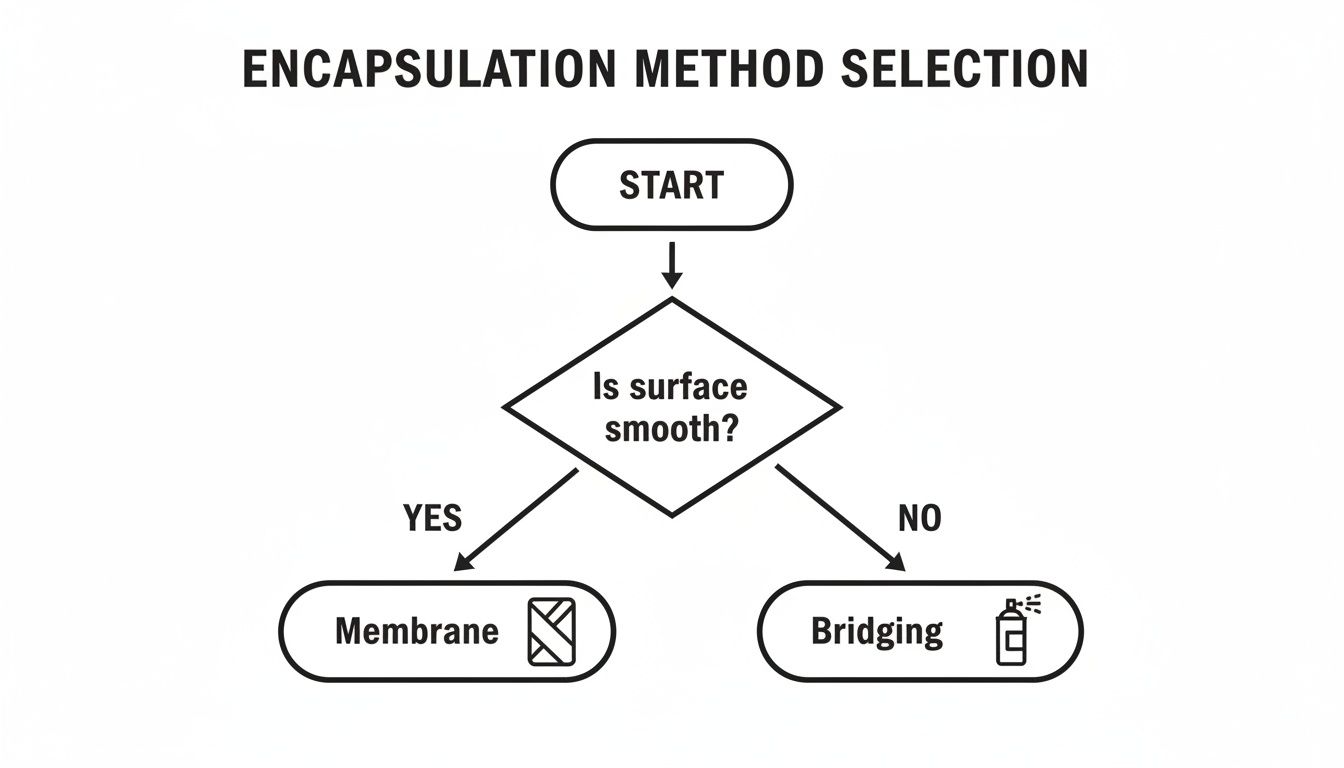
As you can see, the texture of the material itself dictates the technique used, ensuring the protective barrier is a perfect fit for the job.
When Asbestos Removal Is Essential
Sometimes, encapsulation just isn’t on the table. If an ACM is already damaged, it could be releasing fibres right now, creating an immediate health hazard. Trying to paint over a crumbling material is like putting a plaster on a deep cut—it completely misses the real problem.
Complete removal is the only safe and compliant path forward if:
- The ACM is Friable: This means the material is soft and crumbly, easily broken up by hand. Think of old, lagging pipe insulation. Friable materials are a very high-risk for fibre release.
- The Material is Badly Damaged: If the ACM is cracked, broken, or visibly falling apart, it has to go. No questions asked.
- Major Works Are Planned: If the building is set for demolition, a major refurbishment, or any work that will disturb the ACM, removal is mandatory before you start.
A professional asbestos survey is the only way to know for sure what state your materials are in. A licensed surveyor will properly assess the risk and give you a clear, expert recommendation that will form the cornerstone of your asbestos management plan.
Asbestos Encapsulation vs Removal A Decision Guide
Deciding which route to take involves carefully looking at several factors. To make it a bit clearer, we've put together a table summarising the key points that will steer your decision one way or the other.
| Factor to Consider | Favours Encapsulation | Requires Removal |
|---|---|---|
| Material Condition | ACM is solid, stable, and undamaged. | ACM is crumbling, friable, or severely damaged. |
| Location & Risk | Located where it is unlikely to be disturbed. | In a high-traffic area or location prone to impact. |
| Future Plans | No major renovations or demolition planned. | Area is scheduled for significant refurbishment or demolition. |
| Cost & Disruption | Lower initial cost and minimal disruption. | Higher initial cost and more significant operational disruption. |
| Long-Term Goal | Safe, compliant management of existing material. | Permanent elimination of the asbestos hazard. |
Ultimately, this is a decision that should never be made without guidance from an expert. For those situations where removal is the only way forward, it's just as vital to understand how to remove asbestos safely. A licensed asbestos contractor is the only person who can guarantee the job is done with the highest standards of safety and legal compliance, protecting everyone involved.
The Health and Safety Advantages of Encapsulation

At the end of the day, the number one reason we manage asbestos is to keep people safe and healthy. This is where encapsulation really comes into its own. Its greatest strength is its ability to slash health risks by stopping dangerous asbestos fibres from getting into the air in the first place.
When materials containing asbestos (ACMs) get old, damaged, or disturbed, they shed microscopic fibres. If you breathe these in, the tiny, sharp particles can get lodged deep in your lungs and other organs. The consequences can be devastating, leading to diseases like mesothelioma, asbestosis, and lung cancer, often appearing decades after the initial exposure.
Encapsulation acts as a powerful shield against this invisible danger. When a professional applies an encapsulant, it creates a tough, seamless barrier that literally locks those fibres in place. Think of it like putting a vault door on the problem – the hazard is still inside, but it's completely sealed off and can't do any harm.
Minimising Airborne Fibre Release
This isn't just a theory; it's a proven method. Proper encapsulation for asbestos is incredibly effective at cutting the health risks from ACMs in UK buildings. Evidence shows that a professionally applied sealant can reduce the risk of fibre release by up to 90%, making it a fantastic first line of defence against exposure. This is absolutely critical, especially when you consider that asbestos remains a major public health crisis in the UK, with over 5,000 related deaths still happening every year. You can learn more about the vital role of encapsulation in asbestos management on thewastegroup.co.uk.
This massive reduction in airborne particles is the core health benefit. It turns a potential ticking time bomb into a stable, managed, and safe material, protecting the health of everyone in the building for the long term.
By locking down the fibres, encapsulation directly tackles the root cause of asbestos-related diseases. It’s a proactive strategy focused on long-term, stable containment rather than aggressive, high-risk removal.
A Safer Process from Start to Finish
Beyond just keeping the material safe for years to come, encapsulation has another huge safety advantage: the actual process is far less dangerous than removal.
Let's be clear: asbestos removal is a high-risk job. It involves breaking, cutting, and disturbing the very material you’re trying to control. This naturally creates a hazardous environment where fibres are likely to become airborne. It requires complex containment setups and strict safety protocols to protect workers and stop the contamination from spreading.
Encapsulation, on the other hand, is much less invasive. The entire goal is to leave the asbestos-containing material untouched. This approach drastically lowers the risk of fibres being released during the work itself. It makes for a much safer job for the specialists and significantly reduces any potential exposure risk for people in the building.
The health benefits of containing asbestos are paramount, leading to a healthier living environment. This approach aligns with wider efforts to improve indoor air quality. For a deeper look into other common household pollutants, it's worth reading this piece on What Is Indoor Air Pollution And How It Affects Your Home. By choosing encapsulation where it's suitable, property owners aren't just dealing with the specific threat of asbestos; they're contributing to a safer, healthier space for everyone.
Understanding Your Legal Duties in the UK

Knowing how to handle asbestos isn't just about safety—it's a serious legal responsibility, especially if you're in charge of a non-domestic property in the UK. The key piece of legislation to get your head around is the Control of Asbestos Regulations 2012. This law puts a crystal-clear legal obligation on property owners and managers to get to grips with the risks posed by asbestos-containing materials (ACMs).
At the very heart of these regulations is the ‘duty to manage’. This isn’t a friendly suggestion; it's a mandatory legal requirement. It applies to the owner of any non-domestic property, or the person or organisation with direct responsibility for its upkeep and repairs. This could be a landlord, a managing agent, or a business owner.
Crucially, this duty is proactive, not reactive. It means you must find out if asbestos is there, check its condition, and then create a solid plan to manage the risk. Ignoring this duty can land you in very hot water, with consequences ranging from hefty fines to even a prison sentence.
What the Duty to Manage Requires
So, what does fulfilling this legal duty actually look like in practice? It all starts with taking reasonable steps to find out if asbestos is in your building, where it is, and what state it's in. This nearly always means bringing in a qualified surveyor to carry out a professional asbestos survey.
Once you have that information, the law requires you to:
- Presume materials contain asbestos unless you have strong, clear evidence that they don't.
- Create and keep an up-to-date written asbestos register, which details the location and condition of all known or presumed ACMs.
- Develop an asbestos management plan that clearly sets out how you're going to manage the risks from these materials.
- Take all the necessary steps to put your plan into action.
- Regularly review and monitor the plan and the condition of the asbestos materials to make sure everything is still safe and effective.
This is exactly where encapsulation for asbestos comes in as a vital, legally compliant way to manage the problem. When an ACM is in good nick, professional encapsulation is a recognised and effective method for fulfilling your duty, as it safely locks in the dangerous fibres and controls the risk.
The Role of Licensed Professionals
The law is extremely clear on one point: any work involving asbestos is a specialist job that comes with massive risks. Trying to encapsulate or manage asbestos yourself is not only incredibly dangerous but also a direct breach of the regulations.
Under UK law, any work on asbestos-containing materials must be carried out by a competent person. For higher-risk materials, this work is restricted to licensed contractors only. Using a licensed and insured professional is your only guarantee of safety and legal compliance.
These professionals have the specific training, specialist equipment, and respiratory protective equipment (RPE) needed to handle asbestos without putting themselves, or anyone else, in harm's way. They make sure the entire process meets all legal requirements, from the first assessment right through to the final paperwork. Choosing an accredited expert like The Waste Group is the only sensible way to avoid severe legal and financial trouble. For a deeper dive, you can explore the essential regulations and compliance in asbestos removal that all professionals must follow.
Ongoing Duties After Encapsulation
Just because you’ve chosen encapsulation doesn't mean your legal duties are done and dusted. The asbestos is now managed, not gone, so your ongoing responsibilities are vital for long-term safety and compliance.
Once the work is finished, you must make sure the treated area is correctly labelled with asbestos warning stickers. This gives a heads-up to any future contractors or maintenance workers about the hidden ACM, preventing them from accidentally disturbing it.
Most importantly, you need to update your property's asbestos register immediately. This document has to clearly state that the material has been encapsulated, noting the date, the method used, and its precise location. From then on, regular inspections must be scheduled to check the integrity of the sealant, ensuring that protective barrier stays intact and safe for years to come.
Frequently Asked Questions About Asbestos Encapsulation
When you’re dealing with something as serious as asbestos, it’s only natural to have a lot of questions. We get it. Here are some clear, no-nonsense answers to the questions we hear most often about asbestos encapsulation.
How Long Does Asbestos Encapsulation Last?
A professionally applied encapsulation isn’t a quick patch-up job; it's a long-term management solution designed to keep fibres safely contained. Think of it like a highly durable, protective skin painted over the asbestos material.
How long it lasts really depends on the specific sealant used and the conditions inside the building, but a high-quality job is engineered to last for decades.
However, it’s vital to remember this isn't a ‘fit and forget’ fix. To be effective and compliant with the law, the encapsulated area needs regular check-ups as part of your building's asbestos management plan. This just ensures the protective barrier hasn't been damaged and is still doing its job perfectly.
Can I Do Asbestos Encapsulation Myself?
Let’s be crystal clear on this one: absolutely not.
Attempting to paint over or seal something you suspect is asbestos is incredibly dangerous. The moment you disturb an asbestos-containing material without the right training, specialist equipment, and respiratory protective equipment (RPE), you risk releasing a cloud of invisible, deadly fibres into the air. This puts you, your family, or your colleagues at immediate risk.
UK regulations are among the strictest in the world for a very good reason. Almost all work on asbestos must be carried out by a licensed professional who knows exactly how to manage the risks. Trying to DIY this is not just illegal in many cases—it's potentially life-threatening.
Is Encapsulation Cheaper Than Removal?
In most cases, yes. Encapsulation is usually the more budget-friendly option upfront compared to a full removal, and the reasons are pretty straightforward.
- Less Labour Intensive: The whole process is quicker and requires less complex containment setups than removal.
- No Disposal Costs: A huge chunk of the cost of removal comes from the specialist transport and disposal of hazardous asbestos waste at a licensed facility. Encapsulation avoids this completely.
While removal gets rid of the problem for good, it's a much bigger, more disruptive, and more expensive job. For asbestos materials that are in good shape and aren't likely to be disturbed, encapsulation is a perfectly safe, effective, and significantly more affordable way to manage the risk.
If you have asbestos on your property and need expert guidance, The Waste Group provides fully compliant and professional asbestos management services. Contact us today to ensure your property is managed safely and responsibly.