Is Glass Recyclable? A Guide to Proper Glass Recycling
Is Glass Recyclable? A Guide to Proper Glass Recycling
Let's get straight to it: Yes, glass is one of the most recyclable materials we have. Think of it like a story that never ends—every time a glass bottle or jar gets recycled, it’s reborn as a new one without losing any quality or purity. This unique trait makes it a real champion in the world of recycling.
Why Glass Is a Recycling Superstar
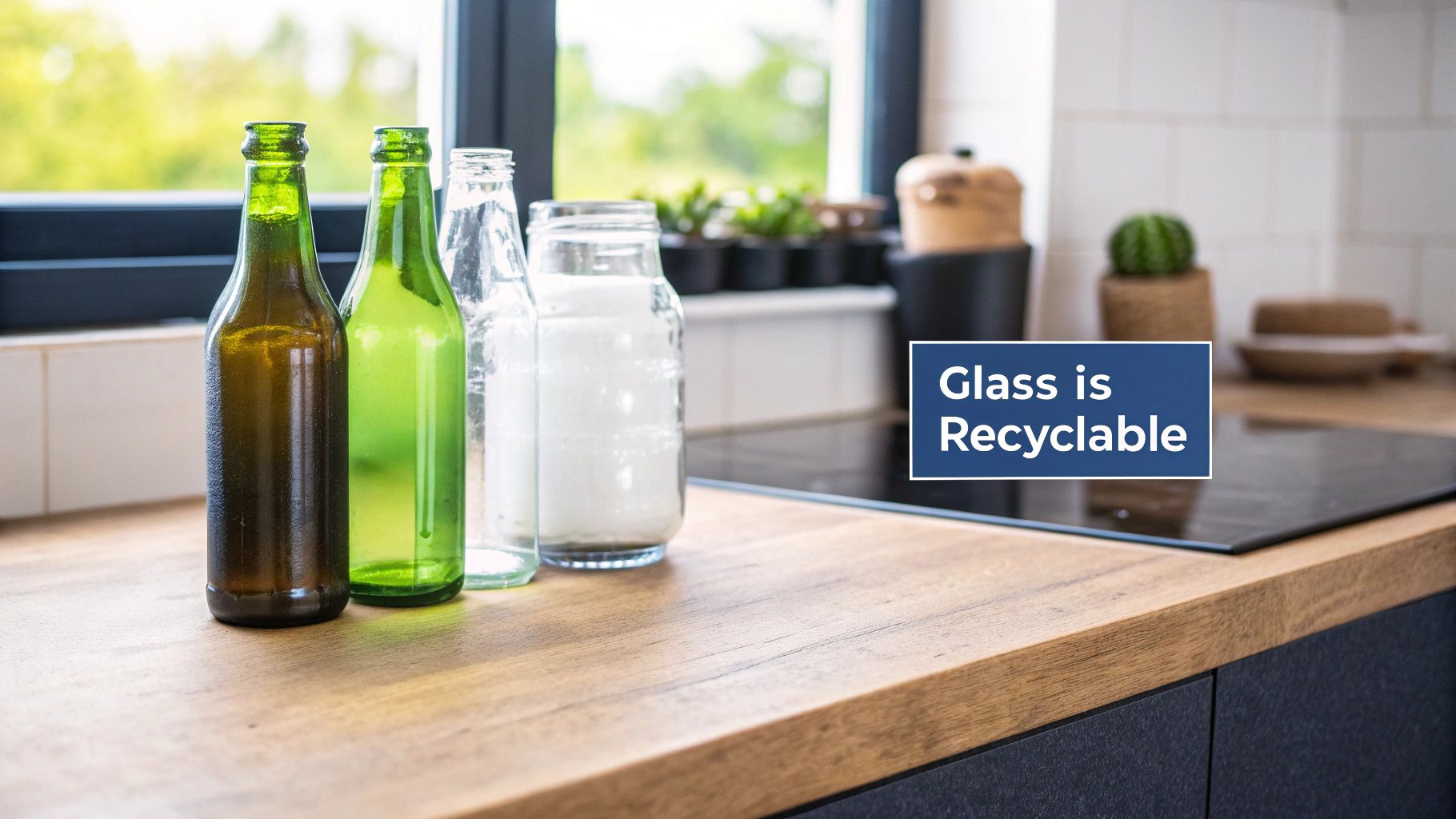
Unlike so many other materials that wear out and degrade, glass has an almost magical ability to be recycled over and over again. It’s made from simple, natural stuff like sand, soda ash, and limestone, which means its basic structure stays solid throughout the recycling process.
It’s an incredibly efficient loop. A bottle you recycle today could genuinely be back on a shop shelf in as little as 30 days, ready to start its life all over again.
The UK has really stepped up its game in harnessing this potential. Right now, we recycle around 76.5% of all our glass, a figure that keeps a staggering amount of material out of landfills. That’s about 1,500,000 tonnes of glass bottles coming from our homes alone every single year. If you're interested in the details, you can read the full report on UK glass packaging statistics.
For a quick snapshot of why this all matters, check out the key figures below.
Glass Recycling Quick Facts
| Metric | Statistic |
|---|---|
| UK Recycling Rate | 76.5% of all used glass is recycled. |
| Household Contribution | 1,500,000 tonnes of glass recycled annually from UK homes. |
| Turnaround Time | Recycled glass can be back on shelves in just 30 days. |
| Energy Savings | Using recycled glass can cut manufacturing energy needs by up to 30%. |
| Resource Conservation | Every tonne of recycled glass saves over a tonne of raw materials. |
These numbers paint a clear picture: every bottle and jar we recycle makes a tangible difference, saving energy, protecting natural resources, and contributing to a healthier planet.
The Core Benefits of Recycling Glass
Knowing that glass can be recycled is one thing, but understanding the real-world benefits is what makes it so important. The positive impact goes way beyond just freeing up space in our bins.
Here are the big environmental wins:
- Energy Conservation: Making new glass from scratch is an energy-hungry process. Recycled glass, on the other hand, melts at a much lower temperature, which slashes the energy needed for manufacturing.
- Resource Preservation: For every tonne of glass we recycle, we save over a tonne of natural resources from being quarried and mined. That means less disruption to our landscapes.
- Emission Reduction: Less energy used means fewer greenhouse gas emissions. It’s a direct and effective way to help in the fight against climate change.
For everyone in Dorset, from households in Poole sorting their weekly collection to big construction projects in Bournemouth, choosing to recycle glass is a powerful way to make a difference. Good waste management always starts with knowing what we can give a second chance.
What You Can and Cannot Recycle
Not all glass is created equal, and this is where many well-intentioned recycling efforts go wrong. Getting this bit right is crucial for keeping the whole recycling stream pure and effective.
Think of it like this: the standard glass jars for your jam and the bottles for your drinks are your recycling heroes. They're designed for one thing—to be melted down and reborn as something new. But a lot of other glass items lurking around our homes are imposters in the recycling bin. Things like drinking glasses, Pyrex dishes, window panes, and mirrors have a completely different chemical makeup. They're the rogue agents that can spoil an entire batch of perfectly good glass.
The Science Behind the Sort
So, why can’t a drinking glass join a jam jar on its recycling journey? It all comes down to their melting points.
Your average bottles and jars are made from soda-lime glass, which has a relatively low and consistent melting temperature. This uniformity is absolutely vital for the recycling process to work. In contrast, other types of glass are engineered for specific, more demanding jobs.
- Pyrex and Cookware: This is usually borosilicate glass, treated to withstand huge temperature swings from a hot oven to a cool countertop. That toughness means it melts at a much higher temperature than standard container glass.
- Drinking Glasses and Vases: These can be made from treated glass or even contain crystal, which has lead in it. Both of these are contaminants that seriously weaken the structure of new recycled bottles.
- Window Panes and Mirrors: These are almost always treated with chemicals or coatings to add strength or create that reflective surface. These additives are impossible to separate out during recycling.
Mixing these treated items into a batch of recyclable glass is like adding sand to a cake mix—it just ruins the final product, causing weaknesses and imperfections. An entire furnace-load of molten glass, enough to make thousands of new bottles, can be ruined by a single piece of the wrong kind of glass.
A single piece of non-recyclable glass can contaminate an entire batch, leading to defects or forcing the whole lot to be sent to landfill. This is why sorting correctly at home is so important for the success of glass recycling.
Common Household Glass: A Recyclability Checklist
To make it easier, here’s a quick guide to what can and can’t go into your kerbside recycling bin.
Always Recycle These:
- Food jars (e.g., pasta sauce, jam, pickles)
- Glass bottles (e.g., soft drinks, wine, beer)
- Cosmetic jars and bottles (e.g., face cream jars, perfume bottles)
Never Put These in Your Recycling Bin:
- Drinking glasses, tumblers, and wine glasses
- Glass cookware and bakeware (e.g., Pyrex, Vision)
- Mirrors and window glass
- Light bulbs and fluorescent tubes
- Vases and decorative glass items
For items like windows, especially those from a renovation, understanding the unique properties of laminated and toughened glass is essential. These specialised types require different handling and should never be mixed with household recycling.
If you’re taking on a DIY project or a larger construction job, this kind of waste needs a completely different disposal solution. For some more general guidance, our team has put together some helpful tips for improving your recycling habits. Handling large amounts of non-recyclable glass often requires a dedicated service like a skip hire to ensure it’s all disposed of safely and correctly.
Ever wonder what actually happens to that jam jar or wine bottle after the recycling lorry rumbles away? It’s not some kind of magic trick, but it is a pretty clever process that spins your old glass into a brand-new resource. That journey from your kerbside bin back to the shop shelf is a perfect, real-world example of the circular economy.
The first stop is a Materials Recovery Facility (MRF). Think of it as a giant, high-tech sorting office for all your recycling. Inside this bustling hub, a mix of machinery and sharp-eyed workers get to work separating everything out – plastics, paper, metals, and, of course, glass.
From Whole Bottles to Crushed Cullet
Once the glass is on its own, its real transformation can begin. The collection of bottles and jars gets a thorough clean to wash away any leftover bits of food or other gunk. After that, they’re sorted by colour – usually into clear, brown, and green piles. This is a crucial step because you can only make new green glass from old green glass, ensuring the final product is up to scratch.
With the sorting done, the glass is crushed down into small, furnace-ready chunks called cullet.
Cullet is the star ingredient in making new glass. It’s like using a pre-made cake mix instead of starting from scratch with flour and sugar. Using cullet is massively more energy-efficient than using raw materials from the ground.
This crushed cullet is now ready for the next leg of its journey: a trip to a glass manufacturing plant where it’ll be reborn. The infographic below gives a quick rundown of what glass items should be starting this journey from your home.
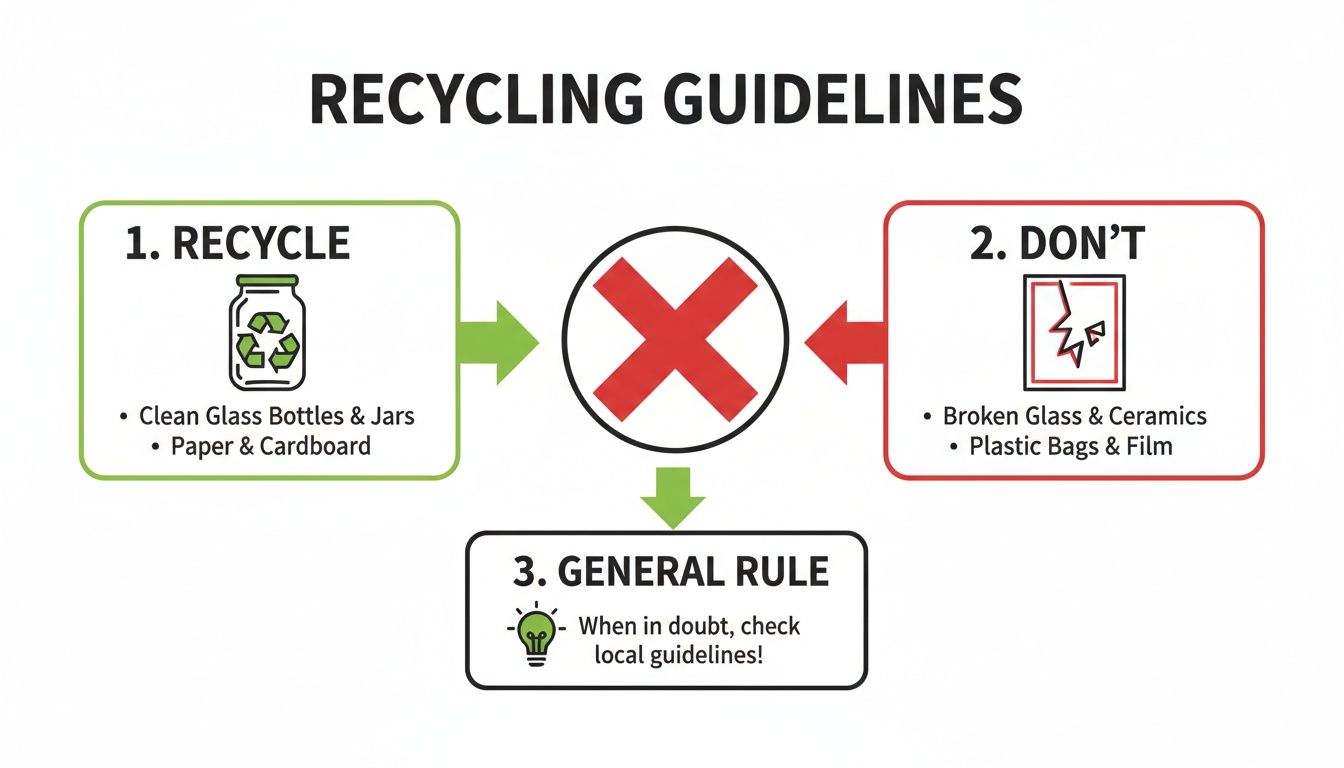
The main thing to remember is to focus on recycling glass containers like bottles and jars. Things like drinking glasses or old window panes need to stay out of your household recycling bin.
Melting and Remoulding
At the factory, the cullet gets mixed with a small amount of raw materials (sand, soda ash, and limestone) just to get the chemical balance perfect. This blend is then tipped into a massive furnace and heated to around 1,500°C until it melts into a glowing, molten liquid.
Here's the clever bit: because cullet melts at a lower temperature than the raw stuff, the whole process uses a lot less energy. It's a huge win for efficiency.
Finally, the molten glass is poured into moulds and shaped into brand-new bottles and jars. Once they’ve cooled down, they're checked for quality and sent off to be filled with everything from pasta sauce to prosecco, ready to appear on a supermarket shelf near you. The whole cycle, from your bin and back to the shop, can take as little as 30 days. It’s an efficient, endlessly repeatable loop that shows just how much of a positive impact recycling your glass can have.
Environmental and Economic Benefits of Recycling Glass

Recycling glass isn't just a box-ticking exercise for the council; it delivers real, powerful results for our planet and our wallets. Every single bottle or jar you pop into the recycling bin contributes to a much bigger story of resource conservation and economic stability.
Think about it this way: recycling just one glass bottle saves enough energy to power a standard light bulb for about four hours. That might not sound like much on its own, but imagine the millions of bottles being recycled across Dorset and the UK every single day. Those small, individual actions quickly add up to enormous energy savings.
This efficiency has a direct and positive impact on our carbon footprint. Manufacturing brand-new glass from raw materials is an incredibly energy-hungry process that pumps a significant amount of CO2 into the atmosphere. By using recycled glass (known as cullet), manufacturers can slash their energy consumption by up to 30%. That means far fewer greenhouse gases warming our planet.
Conserving Our Natural Resources
Beyond the impressive energy savings, recycling glass preserves our planet’s finite raw materials. For every tonne of glass we recycle, we prevent over a tonne of natural resources like sand, soda ash, and limestone from being quarried from the earth. This reduces the environmental strain of mining and helps protect our beautiful natural landscapes for future generations to enjoy.
It also means less waste gets dumped in our already overburdened landfills. Glass is heavy and dense, taking up valuable space. Unlike your garden waste, it doesn't break down or decompose. By keeping it in a continuous loop of use, we extend the life of our landfill sites, which is a critical piece of the sustainable waste management puzzle.
The UK's commitment to this process is clear. Glass recycling rates for packaging waste have reached impressive levels, demonstrating how our collective effort translates into national success. Choosing to recycle is a direct investment in a cleaner, more sustainable community.
Fuelling a Green Economy
The benefits don't stop at the environment, either. The recycling industry itself is a major source of employment, creating thousands of jobs in collection, sorting, processing, and manufacturing. When businesses in Poole or Bournemouth choose responsible waste management partners, they are actively supporting this vital green economy.
The numbers speak for themselves. The UK's glass recycling rate for packaging waste hit an impressive 65.7% under one methodology, soaring to 80.4% under another. These figures place glass right at the top of the list for recycled materials, creating a stable supply of valuable raw material for UK industries. If you want to dive deeper into the data, you can explore the official UK statistics on waste.
How to Prepare Your Glass for Recycling
Getting your glass ready for recycling is one of the most important things you can do to help the process along. When it's done right, it prevents contamination – a massive headache in the waste industry and a key reason why entire lorryloads of good recyclables sometimes end up in landfill.
The good news? It’s incredibly simple for most households. A few quick steps are all it takes to make sure your glass bottles and jars are clean, empty, and ready to go before they hit the recycling bin.
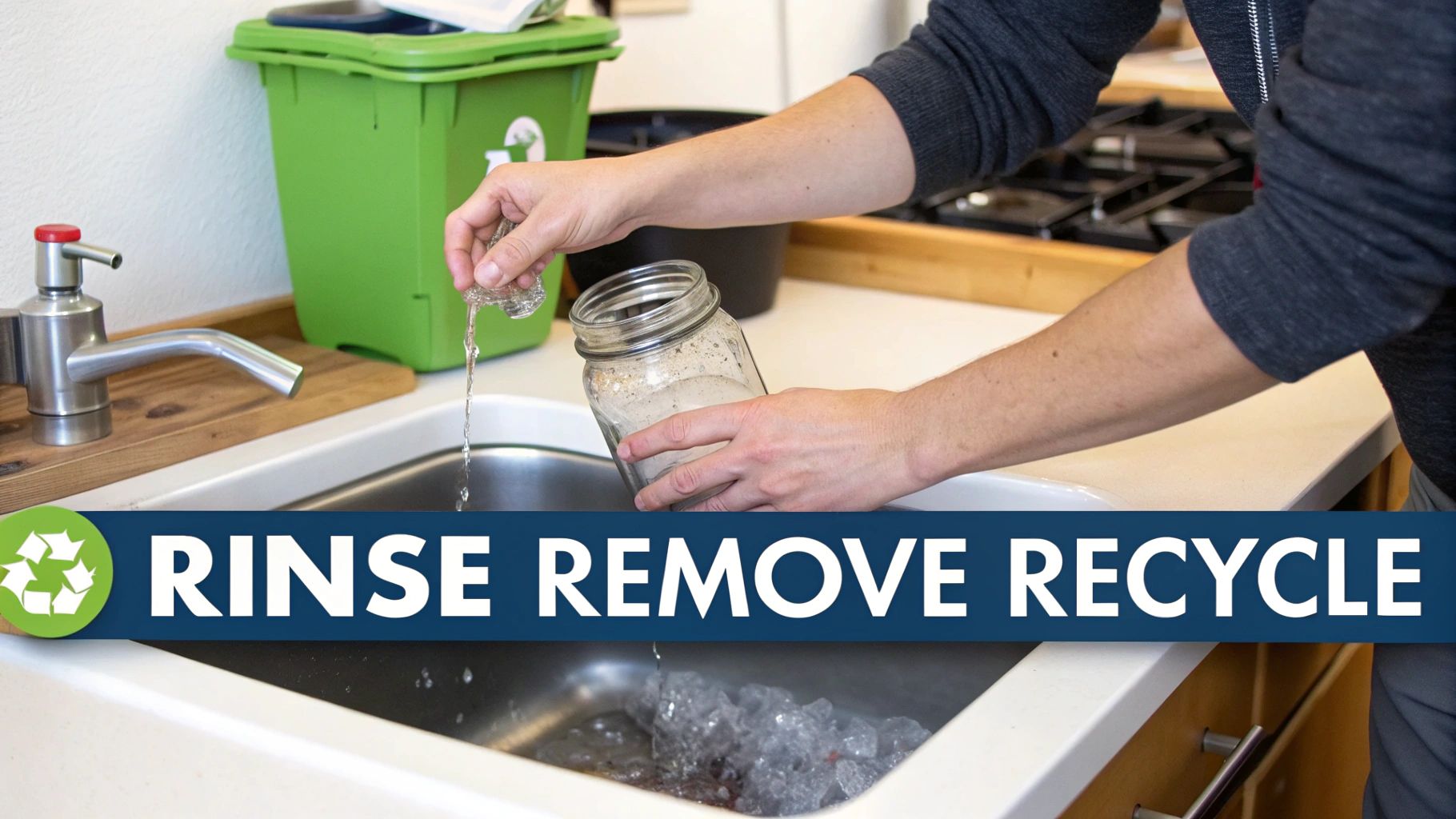
The Rinse, Remove, Recycle Method
For homes, a simple three-step habit is all you need to get your glass ready for its next life. Sticking to this helps the sorting machinery at the recycling facility run smoothly and improves the quality of the final recycled material.
-
Rinse: Give your jars and bottles a quick rinse under the tap to get rid of any leftover food or drink. They don't have to be sparkling clean, but removing the residue stops contamination and keeps your recycling bin from getting smelly.
-
Remove: Pop off any lids, caps, or corks. Metal and plastic lids can often be recycled on their own, so it’s worth checking your local council’s rules. Just be sure to put them in the recycling loose, not screwed back onto the jar.
-
Recycle: Place your clean, empty glass into your kerbside recycling bin or take it down to your local bottle bank.
We often get asked about labels. The simple answer is: you can leave them on! The recycling furnaces get so hot that any paper labels just burn off cleanly, so there’s no need to waste your time scraping them off.
It’s worth remembering that while your everyday jars and bottles are perfect for recycling, broken glass from around the house needs to be handled differently. If you need some pointers, our article on how to dispose of broken glass has all the safety advice you need.
Tips for Businesses and Trade Clients
If you’re a business, particularly in construction or renovation, you’re dealing with glass on a much bigger scale. Segregating your waste properly on-site isn't just good practice; it’s a smart move that makes your operations more efficient and sustainable.
- Use Dedicated Skips: For big projects like window replacements that generate a lot of glass waste, a dedicated skip for glass is by far the best way to go.
- Prevent Contamination: Make sure other site debris like wood, plasterboard, or rubble stays out of the glass skip. Keeping it clean is crucial.
- Prioritise Safety: Always handle large sheets of glass or broken panes carefully, and make sure your team is using the right personal protective equipment (PPE).
By keeping glass separate right from the start, you make the whole recycling chain more effective. It helps you stay compliant, bolsters your company’s green credentials, and ensures as much material as possible is recovered and put back to good use.
Managing Glass and Construction Waste with Skip Hire
When your project involves a bit more than just the week's collection of jars and bottles, you're going to need a more robust solution. Large-scale home renovations, commercial clear-outs, or construction jobs generate huge amounts of waste, and that often includes glass that isn't suitable for your kerbside recycling bin.
Just imagine you're replacing old, single-glazed windows or clearing out a dilapidated greenhouse. This isn't your standard recyclable glass; it's often treated, laminated, or simply too large and hazardous for your household collection. Trying to deal with this material piece by piece is not only a massive headache but can also be genuinely unsafe. This is where professional waste management really comes into its own.
Choosing the Right Waste Solution
For these larger jobs, services like skip hire provide a safe, compliant, and incredibly convenient way to handle mixed waste, including all those different types of glass. Instead of worrying about multiple trips to the local tip (and whether they'll even accept what you've got), you can contain everything in one place, right on site.
- Skip Hire: The go-to choice for home renovations and construction sites. Skips come in various sizes, from a handy 4-yard to a hefty 12-yard, to match the scale of your project perfectly.
- Roll-on/Roll-off Bins: For major commercial or industrial projects with a serious amount of waste, these larger containers give you the capacity you need to keep things moving.
- Grab Lorry Hire: Absolutely perfect for sites with tricky access or for quickly removing large, bulky waste without the back-breaking work of filling a skip yourself.
By choosing the right service, you ensure all your waste—recyclable or not—is managed responsibly. This not only keeps your site safe and tidy but also guarantees that materials are sorted and processed according to environmental regulations, maximising what can be recovered and minimising what goes to landfill.
Professional services streamline the entire process, taking the guesswork out of it and making sure that even difficult materials are handled correctly. If you're looking for more detailed information on this, you can explore some common glass waste questions from an industry perspective.
It's really important to remember what can and cannot be placed in a mixed waste skip. To avoid any problems, it's always best to check first. Our guide covers all the key things you can't put in a skip.
Your Top Glass Recycling Questions Answered
Even when you've got the basics down, it's easy to second-guess yourself right when you're standing over the recycling bin. Let's clear up some of those common questions to make sure every piece of glass goes exactly where it's supposed to.
Getting these little details right makes a surprisingly big difference. It keeps the recycling stream clean and helps us recover the maximum amount of high-quality glass to be made into new products, which is what the circular economy is all about.
What About Broken Glass? Is It Still Recyclable?
When it comes to the usual bottles and jars from your kerbside collection, broken bits are generally not a problem. The glass is destined to be crushed into tiny pieces called cullet at the recycling plant anyway, so a few breaks on the journey there don't really change anything.
That said, safety first. It’s always worth checking your local council’s advice just in case. But remember, larger broken items like a window pane or a smashed mirror are a completely different ball game. These should never be put in your household recycling bin because they're made from a different type of glass and can be a real hazard.
Why Do We Have to Separate Glass by Colour?
Sorting glass into clear, brown, and green piles is absolutely vital for keeping the quality high. Just think about it like doing your laundry – you wouldn't chuck a bright red sock in with a load of whites unless you wanted everything to turn pink. It's the same idea with glass.
If you want to make brand-new, crystal-clear glass bottles, you need a pure stream of clear cullet. Mixing in even a little bit of coloured glass contaminates the batch, resulting in a murky, lower-grade glass with very few uses. Colour sorting is what keeps the recycling loop clean, efficient, and valuable.
Keeping colours separate is one of the most important steps in producing high-quality recycled glass. It guarantees that a clear wine bottle can be reborn as another clear wine bottle, maintaining a pure, closed-loop system.
Can I Recycle Glass Cookware Like Pyrex?
In a word, no. You can't put glass cookware like Pyrex, or any other heat-resistant dishes, into your standard recycling bin. These products are made from something called borosilicate glass, which is specially treated to withstand massive temperature swings without cracking.
Because of this special treatment, it has a completely different melting point to the 'soda-lime' glass used for everyday bottles and jars. If a Pyrex dish sneaks into a batch of normal glass recycling, it can cause major defects and weak spots in the new products, sometimes ruining an entire furnace load of molten glass.
Dealing with large amounts of glass from a renovation or mixed construction waste needs a professional approach. Here at The Waste Group, we offer a whole range of skip hire and waste management services across Dorset to make sure your waste is handled safely, efficiently, and with the environment in mind. Find the right solution for your project at https://www.thewastegroup.co.uk.