
12 Common Items That Are Recycled: A 2026 UK Guide
12 Common Items That Are Recycled: A 2026 UK Guide
Effective waste management extends far beyond the household recycling bin. For homeowners tackling a renovation or contractors managing a construction site, knowing precisely which materials can be recovered is key to saving money, ensuring compliance, and protecting the environment. Many assume recycling is limited to bottles and cardboard, but the reality is much broader and more complex. From heavy-duty construction debris like bricks and concrete to specialised waste streams such as plasterboard and electrical equipment, a vast range of items that are recycled can be diverted from landfill.
This comprehensive guide moves past common knowledge to explore the full spectrum of recyclable materials you're likely to encounter on a project. We will detail 12 key categories, providing actionable insights into proper preparation, critical contamination warnings, and the most efficient disposal methods, including when to hire a skip. Understanding this lifecycle is not just about environmental responsibility; it unlocks the hidden value in your waste stream. By correctly identifying and segregating these materials, you turn potential landfill fodder into valuable resources, contributing directly to a circular economy and often reducing your overall disposal costs. This list provides the practical details needed to manage your waste more effectively.
1. Metal and Scrap Metal
Metals are exceptionally valuable among items that are recycled due to their ability to be reprocessed infinitely without losing quality. This category includes everything from household aluminium cans to structural steel from demolition sites. The recycling process involves collecting, sorting by type (ferrous vs. non-ferrous), shredding, melting, and purifying the metal before it’s cast into new raw materials.
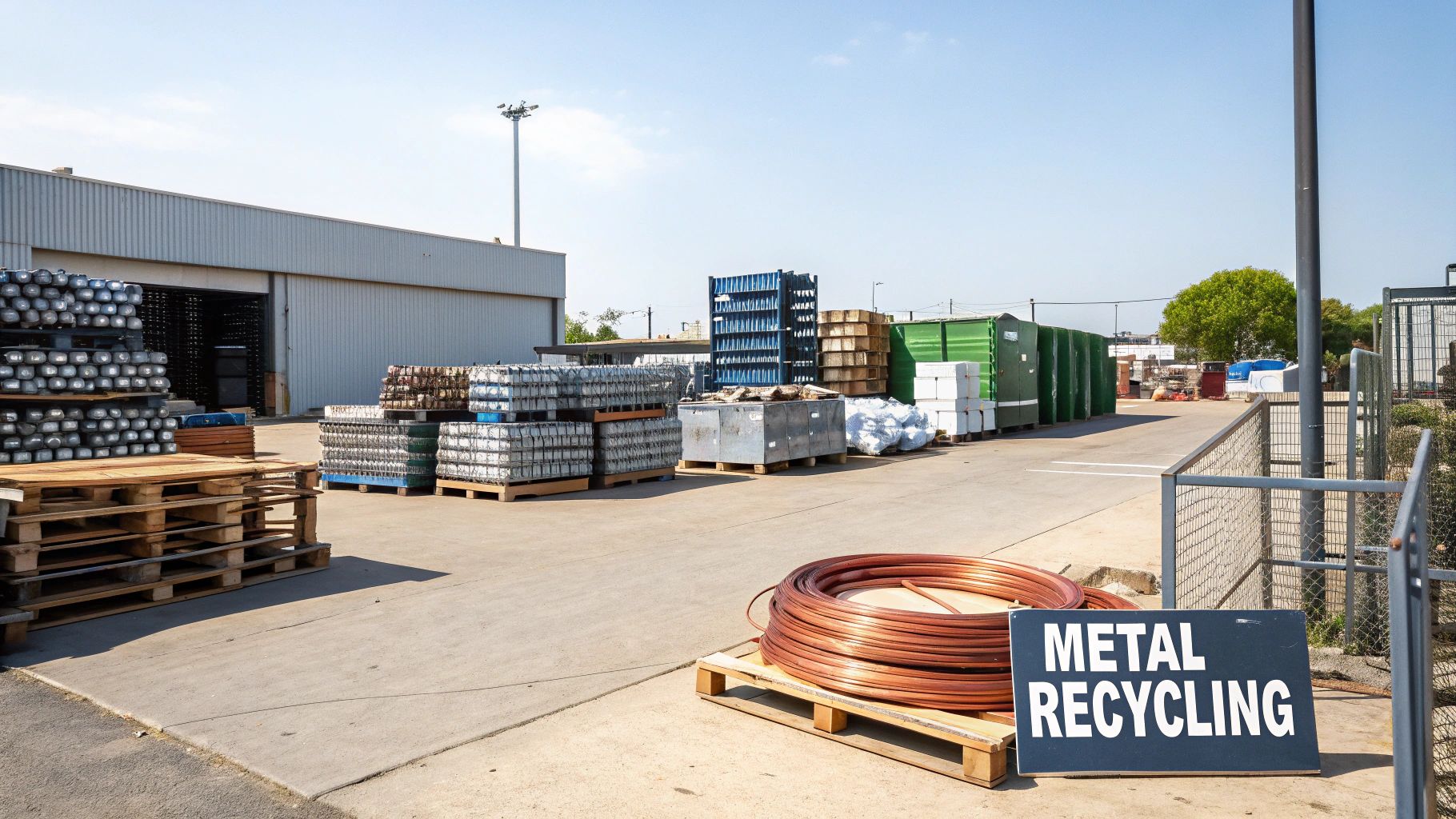
Recycling metal significantly reduces the need for mining new ore, which conserves natural resources and uses far less energy. For instance, recycling aluminium requires up to 95% less energy than producing it from its raw source, bauxite.
Practical Tips for Metal Recycling
- Separate Your Metals: Keep ferrous metals (like iron and steel, which are magnetic) separate from non-ferrous metals (aluminium, copper, brass). This simple step can increase the payout you receive from a scrap dealer.
- Clean and Prepare: Remove any non-metal attachments, such as plastic casing on copper wires or rubber handles on tools. Cleaner scrap is more valuable and easier for facilities to process.
- Safe Storage: For contractors or DIY projects generating significant scrap, designate a specific bin or area. A small 4-yard skip is often suitable for renovation projects to keep metal debris contained and safe.
- Find a Local Dealer: For large quantities, many UK scrap metal dealers offer collection services. This is ideal for heavy items like old appliances, radiators, or construction offcuts.
2. Bricks and Concrete
Inert construction waste like bricks and concrete are heavyweight items that are recycled with great success, preventing them from occupying vast landfill space. This category covers everything from broken bricks and blocks from a garden wall renovation to large concrete slabs from foundation removals. The recycling process involves crushing these materials into a recycled aggregate, which can then be used in new construction projects.
Reusing bricks and concrete as aggregate significantly reduces the demand for quarrying new stone, sand, and gravel. This conserves natural landscapes and saves the substantial energy and water required for virgin material extraction, making it a cornerstone of sustainable construction practices.
Practical Tips for Brick and Concrete Recycling
- Keep It Clean: Ensure your pile of bricks and concrete is free from other waste types like wood, plastic, soil, and especially hazardous materials like asbestos. Contamination can render the entire load non-recyclable.
- Separate Materials: If possible, keep bricks and concrete in separate piles. While they are often processed together, separating them can sometimes increase their value and efficiency at the recycling facility.
- Consider Reuse First: Before crushing, check if any whole bricks can be salvaged. Reclaimed bricks are highly sought after for their character in feature walls and landscaping projects.
- Use the Right Collection Service: For large volumes from demolition or landscaping work, a grab lorry hire is often more efficient and cost-effective than multiple skip loads for collecting heavy, bulky materials.
3. Wood and Timber
Wood is a versatile natural resource among the items that are recycled, with pathways for everything from large construction beams to garden offcuts. The recycling process depends on the wood's type and condition. Clean, untreated timber can be chipped for landscaping mulch, animal bedding, or processed into particleboard. Alternatively, it can be repurposed as biomass fuel.
Recycling wood reduces landfill waste and the demand for virgin timber, helping to preserve forests. Many construction materials, such as timber cladding, have established recycling pathways, turning project waste into valuable resources. This circular approach supports sustainable building practices and conserves natural habitats.
Practical Tips for Wood Recycling
- Segregate Treated Wood: Keep painted, varnished, or pressure-treated timber separate from clean, untreated wood. Treated wood requires specialised disposal and cannot be used for animal bedding or mulch.
- Remove Contaminants: Before disposal, take a few minutes to remove nails, screws, hinges, and other metal or plastic attachments. This prevents damage to processing machinery.
- Donate Reusable Timber: Old furniture, doors, or unused timber lengths in good condition can often be donated to community projects or reclamation yards for a second life.
- Plan for Project Waste: For renovation or construction jobs, using a dedicated 8-yard skip for wood waste makes segregation and collection efficient, ensuring the material is properly recycled.
4. Glass
Glass is one of the most sustainable items that are recycled, as it is 100% recyclable and can be remade into new glass products an infinite number of times without any loss of quality or purity. The category includes household glass like bottles and jars, as well as window panes from renovations and commercial glass containers. The recycling process involves crushing the glass into a raw material called cullet, which is then melted and moulded into new products.
Recycling glass uses significantly less energy than creating it from virgin raw materials like sand and limestone. For every tonne of glass recycled, approximately 315 kilograms of carbon dioxide are saved from being released into the atmosphere, making it a crucial part of waste management.
Practical Tips for Glass Recycling
- Rinse and Remove Lids: Clean out any food or liquid residue from bottles and jars to prevent contamination. Metal or plastic lids should be removed and recycled separately.
- Keep it Separate: Do not mix glass with other recyclables like paper or plastic in your kerbside bin unless your local council specifically allows it. Contamination can render entire batches unusable.
- Handle Broken Glass Safely: If you have broken glass from a window replacement or accident, place it inside a sealed cardboard box or sturdy container, clearly labelled, before placing it in a skip or taking it to a recycling centre.
- Exclude Non-Recyclable Glass: Items like drinking glasses, light bulbs, mirrors, and ceramics have different chemical compositions and melting points, so they cannot be recycled with standard bottle and jar glass.
5. Plasterboard and Drywall
Plasterboard, also known as drywall, is one of the most common items that are recycled from construction and renovation sites. It consists of a gypsum core pressed between two thick sheets of paper. The recycling process involves separating the gypsum from the paper lining, allowing the reclaimed gypsum to be used in manufacturing new plasterboard, as a soil conditioner in agriculture, or even in cement production.
Recycling plasterboard is environmentally critical because gypsum waste is banned from general landfills in the UK. When mixed with other waste, it can produce toxic hydrogen sulphide gas. Repurposing it conserves virgin gypsum resources and prevents harmful environmental impacts.
Practical Tips for Plasterboard Recycling
- Keep it Separate: Plasterboard must be segregated from all other waste streams. Mixing it with general waste will contaminate the entire load, making it unsuitable for recycling and potentially leading to higher disposal fees.
- Keep it Dry: Store plasterboard off-cuts and debris undercover where possible. Wet plasterboard is much heavier and more difficult to process, which can affect collection and recycling costs.
- Remove Contaminants: Before disposal, remove screws, nails, tiles, and any other non-plasterboard attachments. Clean material is essential for effective recycling.
- Use a Dedicated Skip: For renovation projects, hiring a dedicated skip just for plasterboard is often the most efficient solution. You can learn more about plasterboard in skips to ensure you comply with disposal regulations.
6. Plastics (Sorted by Type)
Plastics are a diverse group of synthetic materials found in countless everyday items that are recycled, from packaging to household goods. The key to successful plastic recycling lies in sorting, as different resin types (like PET, HDPE, and LDPE) must be processed separately. The recycling journey involves collecting, sorting by resin code, cleaning, shredding into flakes, melting, and reforming into pellets, which then become the raw material for new products.
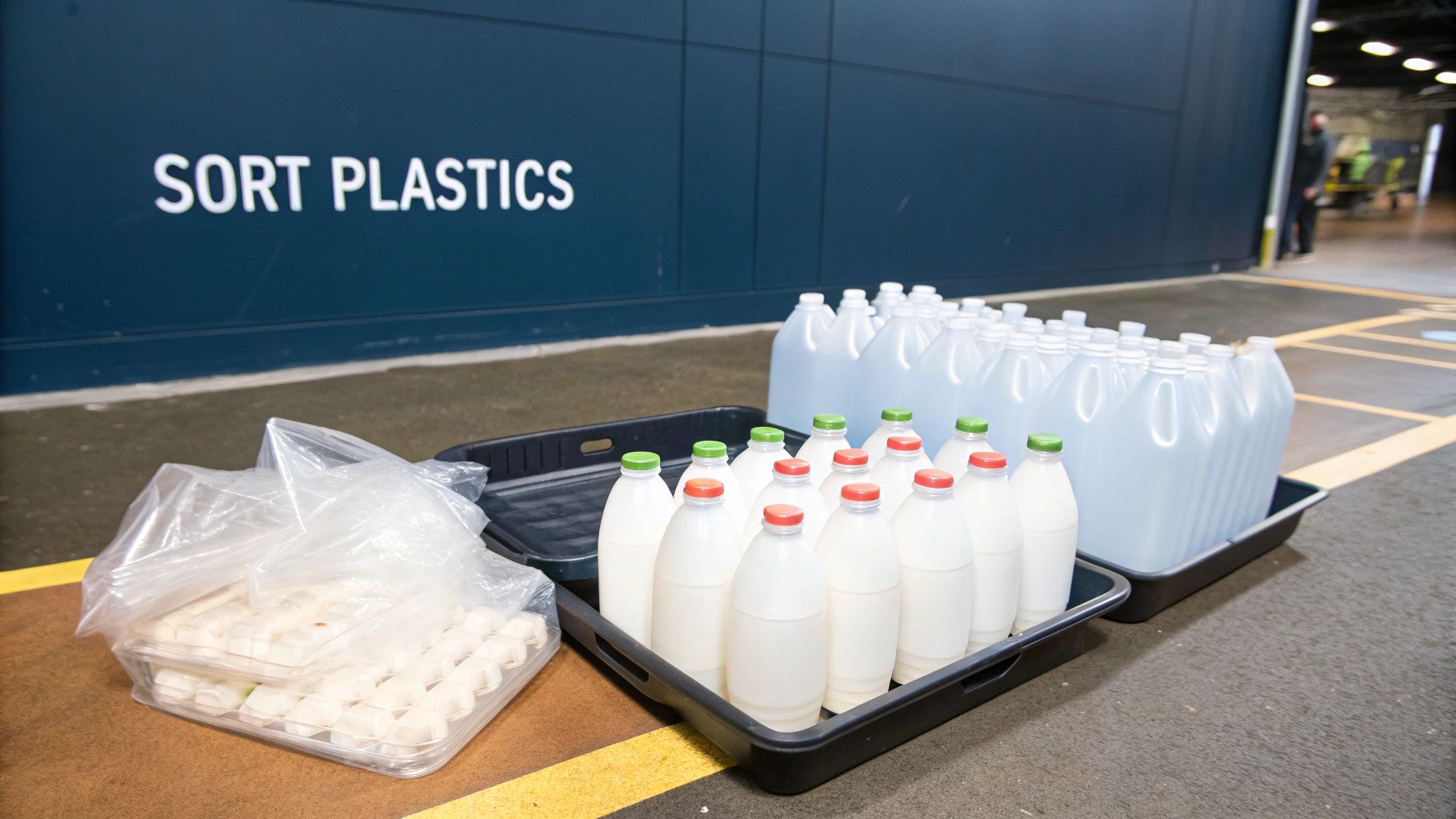
Recycling plastics conserves non-renewable fossil fuels, reduces energy consumption compared to virgin plastic production, and diverts significant waste from landfill. Recycled plastics are transformed into new containers, textiles for clothing, building materials like lumber and insulation, and even garden furniture.

Practical Tips for Plastic Recycling
- Check the Code: Look for the resin identification code (the number inside the chasing arrows symbol) to confirm if your local council accepts that specific type of plastic.
- Rinse and Clean: Remove any food or liquid residue from bottles and containers. Contamination can render an entire batch of plastics unrecyclable.
- Remove Lids and Caps: Unless your local recycling guidance states otherwise, remove lids and caps. They are often made from a different type of plastic than the container itself.
- Squash to Save Space: Flatten bottles and containers to maximise space in your recycling bin and make transport more efficient.
7. Asbestos Waste
Asbestos is a hazardous material that, while not recycled in the traditional sense, requires specialist handling and disposal to prevent severe health risks. Found in older buildings, it was used in materials like insulation, roofing, floor tiles, and pipe lagging. Safe disposal involves a highly controlled process where licensed professionals contain, remove, and transport the asbestos-containing materials (ACMs) to a designated hazardous waste landfill.
The primary goal is secure containment rather than reprocessing. Proper management of these dangerous items that are recycled ensures they are permanently removed from the environment, protecting public health and preventing asbestos fibres from becoming airborne. This process is legally mandated and strictly regulated.
Practical Tips for Asbestos Disposal
- Never Attempt DIY Removal: Asbestos is extremely dangerous when disturbed. Always hire a licensed asbestos removal contractor for assessment and removal.
- Use Specialist Services: For compliant disposal, you must use a service equipped to handle hazardous materials. The Waste Group provides specialist sealed asbestos skips for safe containment and transport. You can learn more about hiring a dedicated asbestos skip.
- Ensure Proper Documentation: Keep detailed records of the removal and disposal process, including waste transfer notes provided by the disposal company. This is a legal requirement.
- Secure the Area: During professional removal, the area must be completely sealed off to prevent the escape of harmful fibres. Ensure contractors follow all Health and Safety Executive (HSE) guidelines.
8. Paper and Cardboard
Paper and cardboard are cornerstones of recycling programmes worldwide, thanks to their high recyclability and the widespread infrastructure for their collection. These items that are recycled include everything from household packaging and newspapers to office documents. The process involves pulping the materials with water and chemicals to separate the fibres, which are then cleaned, de-inked, and screened before being reformed into new paper and cardboard products.
Recycling paper and cardboard conserves vast amounts of forest resources, water, and energy. Producing new paper from recycled fibres uses up to 65% less energy and 80% less water than making it from virgin wood pulp. It also significantly reduces greenhouse gas emissions associated with landfill decomposition.
Practical Tips for Paper and Cardboard Recycling
- Flatten and Bundle: Always break down cardboard boxes to save significant space in your recycling bin or skip. Bundling newspapers or leaflets with string makes them easier to handle and transport.
- Keep It Dry and Clean: Wet paper and cardboard can clog sorting machinery and are often rejected. Store these items indoors or in a covered container to protect them from moisture and contamination.
- Remove Contaminants: Remove as much plastic tape, bubble wrap, and polystyrene from boxes as possible. Heavily soiled items, such as greasy pizza boxes, should be placed in general waste.
- Secure Shredded Paper: Place shredded documents in a paper bag or a sealed cardboard box to prevent them from blowing away during collection and contaminating other recycling streams.
9. Electrical Equipment and E-waste
Electrical equipment, or e-waste, covers all discarded electronic devices, from major appliances to old power tools. Governed by WEEE (Waste Electrical and Electronic Equipment) regulations in the UK, these items that are recycled cannot go into general waste due to hazardous components like lead and mercury. However, they also contain valuable materials such as gold, silver, and copper, making specialist recycling both environmentally crucial and economically viable.
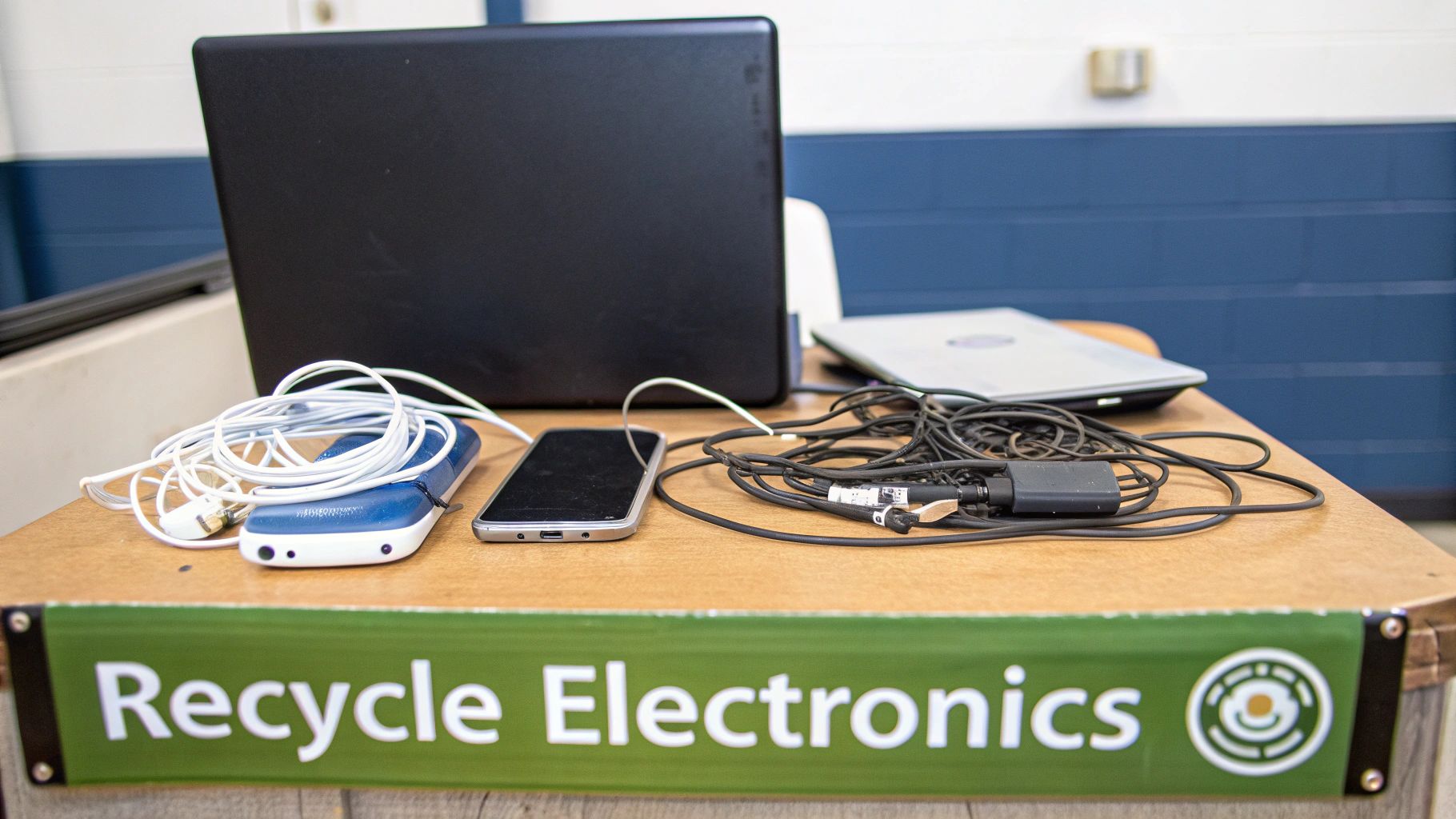
The recycling process involves manual dismantling, shredding, and then separating the mixed materials into plastics, precious metals, and other components for reuse. Specialist handling is required for items like fridges, which contain ozone-depleting refrigerants. For practical advice on managing and reducing electronic waste within your household, consider reading about how to reduce electronic waste.
Practical Tips for E-waste Recycling
- Never Mix with General Waste: E-waste must be disposed of separately. Many local authority recycling centres have dedicated sections for electrical items.
- Remove Batteries: Where possible, remove batteries before recycling a device, as they are often treated separately due to their chemical composition and fire risk.
- Use Take-Back Schemes: When buying a new appliance or electronic device, retailers are often legally required to offer a take-back service for your old one.
- Find Certified Recyclers: For businesses or large quantities of e-waste from a site clearance, use a certified WEEE recycling service to ensure compliance and proper handling.
10. Aggregates and Soils
Aggregates and soils are essential items that are recycled, particularly within the construction and landscaping industries, as they reduce the need for quarrying virgin materials. This category includes materials like crushed concrete, bricks, gravel, sand, and screened soils recovered from excavation and demolition sites. The recycling process involves screening, crushing, and sorting these materials to produce high-quality, reusable products for various applications.
Utilising recycled aggregates conserves natural resources, minimises landfill waste, and often provides a more cost-effective solution for creating base layers for roads, drainage systems, and general fill. Recovered topsoil is also highly valued for landscaping and agricultural projects, supporting sustainable land management.
Practical Tips for Aggregate and Soil Recycling
- Avoid Contamination: Keep aggregates and soils separate from other waste streams like wood, plastic, or hazardous materials. Contamination can render the entire stockpile unusable for recycling.
- Screen On-Site: Where possible, screen materials to remove oversized items or contaminants. This improves the quality of the recycled product and streamlines processing.
- Organise Stockpiles: On larger sites, create designated, clearly labelled stockpiles for different types of aggregates (e.g., crushed concrete, asphalt, topsoil) to prevent cross-contamination.
- Plan Your Logistics: For both removal of waste soil and delivery of recycled aggregates, careful planning is key. You can learn more about the benefits of recycled aggregates and how specialised services can manage these logistics for your project.
11. Textiles and Clothing
Textiles are a significant category of items that are recycled, ranging from old clothing to household linens and fabric offcuts. Once collected, wearable items are often sorted for resale in second-hand markets, while unwearable textiles are processed into new products. This involves shredding the material to create fibres that can be used for things like insulation, mattress stuffing, or industrial cleaning cloths.
Recycling textiles diverts a massive volume of material from landfill, reduces the demand for virgin resources like cotton and synthetic fibres, and saves considerable water and energy. Many fashion retailers and charities now operate take-back schemes, making it easier than ever to give old fabrics a new life.
Practical Tips for Textile Recycling
- Prioritise Reuse: Before recycling, donate good-quality clothing, curtains, and linens to charity shops or sell them online. This is the most environmentally friendly option.
- Keep it Clean and Dry: Only place clean and dry textiles in collection banks. Wet or soiled items can contaminate an entire batch, rendering it unsuitable for recycling.
- Remove Attachments: Where possible, cut off buttons, zips, and any hard plastic or metal embellishments, as these can damage recycling machinery.
- Check Local Schemes: Many local councils offer kerbside collections or have designated textile banks at recycling centres. Check your council’s website for specific instructions.
12. Garden Waste and Organic Materials
Garden waste and other organic materials are valuable items that are recycled through composting or anaerobic digestion. This process transforms biodegradable matter like grass cuttings, leaves, and small branches into nutrient-rich compost or soil improver, returning vital organic matter to the earth and reducing the volume of waste sent to landfill. This natural cycle supports healthier soil, reduces the need for chemical fertilisers, and helps to lock carbon in the ground.
Recycling garden waste significantly cuts down on methane emissions, a potent greenhouse gas produced when organic matter decomposes in landfills without oxygen. Local councils often provide dedicated green waste collections, making it easy for homeowners and businesses to participate in this circular, soil-enriching system.
Practical Tips for Garden Waste Recycling
- Remove Contaminants: Before disposal, ensure all non-organic items like plastic pots, bags, plant ties, and labels are removed. These contaminants can ruin an entire batch of compost.
- Avoid Diseased Plants: Do not place diseased or pest-infested plants into your council green bin. The composting process may not reach high enough temperatures to kill the pathogens, potentially spreading them further.
- Manage Large Volumes: For significant garden clearances or landscaping projects, a 4-yard or 6-yard skip is ideal for containing bulky waste like branches, turf, and soil efficiently and safely.
- Separate Wood: If you have a lot of woody material like thick branches or wood chips, keep them separate from softer green waste. They break down at different rates and are often processed differently.
Comparison of 12 Recyclable Materials
| Item | ? Implementation complexity | ⚡ Resources / equipment | ? Expected outcomes (impact & recycling rate) | ? Ideal use cases / tips | ⭐ Key advantages |
|---|---|---|---|---|---|
| Metal and Scrap Metal | Moderate — sorting (ferrous/non‑ferrous), shredding and melting | Shredders, magnets, balers, secure storage, transport | High recovery and market value; 85–95% recycled; large energy savings | Separate ferrous/non‑ferrous, remove attachments, contact scrap dealer | ⭐⭐⭐⭐⭐ 100% recyclable, high scrap value, ~95% energy saved vs virgin |
| Bricks and Concrete | Low–moderate — crushing and screening; heavy handling | Crushers, screens, loaders, storage area | High reuse as aggregate; >90% recyclable; reduces quarrying | Use as local roadbase/landscaping, keep clean, remove contaminants | ⭐⭐⭐⭐ Cost‑effective aggregate, reduces natural resource extraction |
| Wood and Timber | Low–moderate — sorting treated vs untreated, chipping | Chippers, nail removal tools, covered storage, drying (if reused) | Multiple reuse paths (reuse, mulch, biomass); ~65% recycled | Segregate treated wood, remove nails, donate reusable timber | ⭐⭐⭐⭐ Renewable material with diverse reuse options |
| Glass | Low — collection, colour separation; safety handling for broken glass | Colour sorting, conveyors, furnaces, protective handling | Infinite recyclability; ~80% container recycling in some regions; high quality | Separate by colour, rinse, bag broken glass safely | ⭐⭐⭐⭐⭐ Infinitely recyclable, energy and raw‑material savings |
| Plasterboard and Drywall | Moderate — separate gypsum from paper, avoid contamination | Clean storage, crushers/processors, dedicated collection | Gypsum reuse in cement/fertiliser; recycling improving (many still landfilled) | Keep clean, stack neatly, avoid asbestos contamination | ⭐⭐⭐ Reduces landfill, recovers gypsum for reuse |
| Plastics (Sorted by Type) | High — multiple resin types, complex sorting and washing | Optical sorters, wash lines, balers, segregated collection | Variable results by resin; ~45% packaging recycled (UK); quality degrades over cycles | Rinse containers, separate by resin code, remove lids | ⭐⭐⭐ Reduces single‑use waste, produces recycled plastics (value varies) |
| Asbestos Waste | Very high — specialist containment, strict controls and licensing | Licensed removal teams, sealed packaging, specialist disposal sites | Safe removal prevents severe health risks; disposal is costly and regulated | Never DIY, use licensed contractors, document removal and permits | ⭐⭐ Essential for health/safety and legal compliance |
| Paper and Cardboard | Low — simple separation and baling | Balers, dry covered storage, collection logistics | High recycling rate (~80%); well‑established markets; reduces tree harvesting | Keep dry, flatten boxes, remove tape/contaminants | ⭐⭐⭐⭐ High recyclability, easy processing, established supply chains |
| Electrical Equipment & E‑waste | High — complex disassembly, hazardous components, WEEE compliance | Specialist recyclers, secure transport, trained staff, testing equipment | Recovers precious metals, prevents hazardous pollution; regulatory requirements strict | Remove batteries, use take‑back/WEEE schemes, keep inventory | ⭐⭐⭐⭐ Recovers valuable materials and prevents contamination |
| Aggregates and Soils | Low–moderate — screening and sizing; heavy handling | Screens, crushers, stockpiling areas, loaders | High reuse (>90% possible); cost‑effective substitute for virgin aggregate | Screen to remove oversize, stockpile separately, document volumes | ⭐⭐⭐⭐ Large‑volume reuse, reduces quarrying and transport impacts |
| Textiles and Clothing | Moderate — sorting by condition/material, fibre separation challenges | Sorting lines, balers, donation/collection networks, reprocessing tech | Strong reuse potential but low recycling rate (~13%); reuse reduces demand for new textiles | Donate wearable items, separate natural/synthetic fibres, remove fixtures | ⭐⭐ Extends product life via reuse; supports circular fashion when sorted |
| Garden Waste & Organic Materials | Low — composting or mulching; seasonal variations | Shredders, composting bays/turners, storage for bulky loads | Produces compost/mulch; ~70% composted in some schemes; cuts landfill methane | Remove non‑organics, keep wood chips separate, avoid diseased plants | ⭐⭐⭐⭐ Low complexity, creates valuable soil improvers and closes nutrient loop |
Partnering for Smarter Recycling and Waste Management
Navigating the landscape of waste management reveals a fundamental truth: successful recycling is a product of deliberate action, not just good intentions. Throughout this guide, we have explored the diverse array of items that are recycled, from everyday materials like paper and glass to the more complex waste streams of a construction site, such as concrete, plasterboard, and timber. The common thread connecting them all is the critical importance of proper segregation and handling.
Understanding the specific requirements for each material transforms the act of disposal into an act of resource recovery. For homeowners tackling a garden clearance or a DIY renovation, this means knowing which plastics are accepted locally and ensuring glass bottles are clean. For contractors on a major project, it involves a strategic plan for separating heavy aggregates, wood, and metal at the source to prevent contamination and maximise the value of recoverable materials. This diligence is not just an environmental responsibility; it is a smart financial decision, often leading to reduced landfill taxes and lower disposal costs.
Key Takeaways for Effective Recycling
Recapping the core principles, several key strategies stand out for both residential and commercial projects:
- Segregation is Paramount: The single most impactful action you can take is to separate different waste types at the source. A mixed skip is often destined for landfill, whereas a skip containing only clean wood or metal can be almost entirely recycled.
- Preparation Prevents Contamination: Simple steps like rinsing containers, flattening cardboard, and removing non-recyclable components (like plastic windows from envelopes) significantly increase the quality and recyclability of materials. Contamination is the primary reason that otherwise recyclable items end up in landfill.
- Specialised Waste Needs Specialised Handling: Items like asbestos, plasterboard, and electronic waste cannot be mixed with general refuse. They require specific disposal routes to ensure safety and compliance with UK regulations. Ignoring these rules can lead to significant fines and environmental harm.
Putting Knowledge into Action
The ultimate goal is to move beyond simply knowing which items that are recycled and to implement a system that makes it a seamless part of your project workflow. This begins with planning. Before you start a renovation, demolition, or large-scale clear-out, assess the types of waste you will generate and arrange for the appropriate containers. Whether it’s a series of smaller skips for different materials or a large roll-on-roll-off bin for a specific waste stream like concrete, a proactive approach saves time, money, and stress.
By embracing these practices, you actively participate in the circular economy. You help conserve natural resources, reduce the energy consumed in manufacturing new products, and divert tonnes of waste from our already strained landfills. Every brick, bottle, and circuit board that is correctly recycled contributes to a more sustainable, resource-efficient future.
Ready to manage your project's waste with confidence and environmental integrity? The Waste Group offers a comprehensive suite of services, from next-day skip hire tailored to specific items that are recycled to compliant hazardous waste disposal. Let us help you streamline your waste management and contribute to a greener planet, one skip at a time.