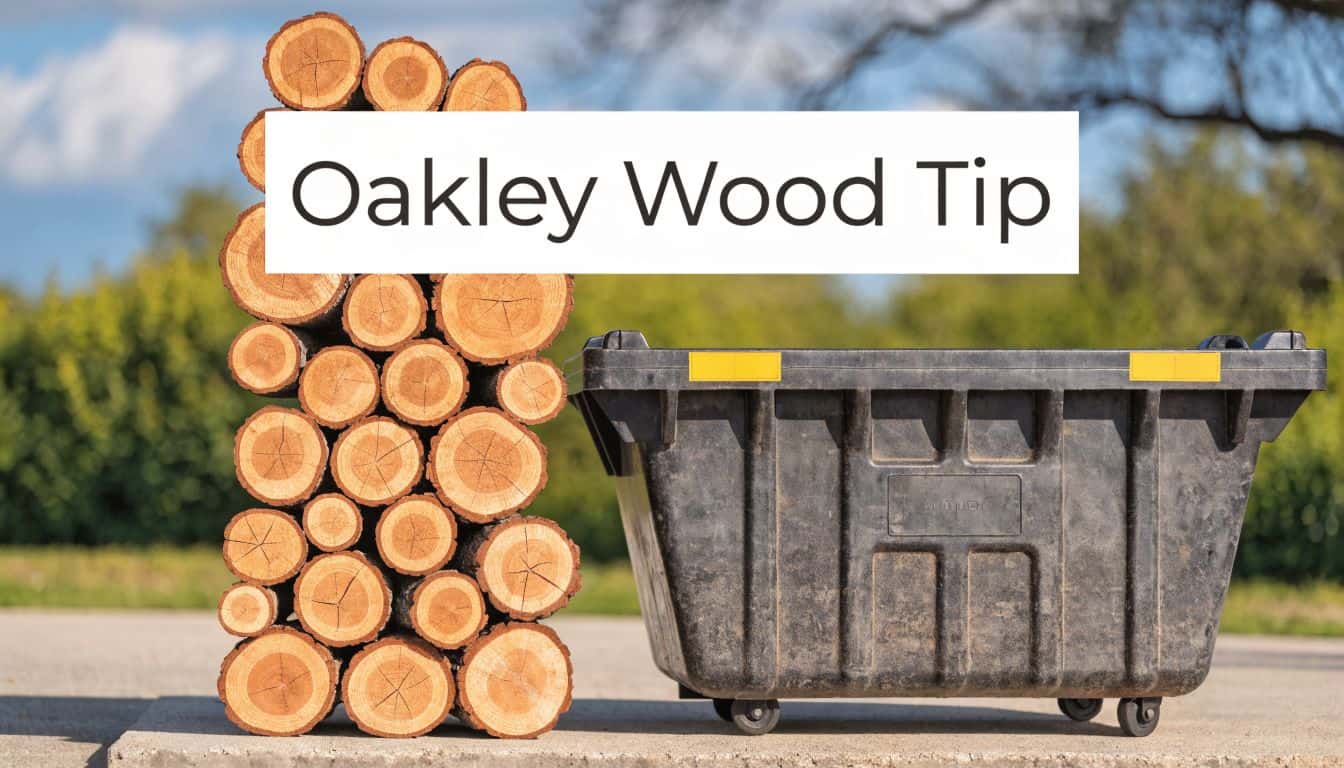
You’ve searched oakley wood tip and ended up staring at sunglasses, flooring, or results from completely different parts of the country. That usually means the internet has failed a very local question.
For Dorset residents, landlords, grounds care providers, and builders, oakley wood tip is best understood as a local shorthand for a place, load, or job involving wood waste tipping, rather than a recognised national technical term with a published specification. That distinction matters, because if you’re trying to clear timber from a garden, strip out old fencing, or dispose of joinery offcuts, the useful question isn’t what search engines think Oakley means. It’s what wood you’ve got, whether it can be separated properly, and where it can go without causing contamination problems.
Demystifying the Oakley Wood Tip
If your search for oakley wood tip brought up Oakley eyewear or vinyl flooring, your confusion is justified. The available search results don’t provide UK region specific technical data for the phrase in a Dorset waste context. They mainly point to unrelated Oakley products, not local wood disposal guidance, and no expert-level UK data for Poole or Bournemouth was identified on specs such as density, moisture content, or composting rates for an “oakley wood tip” as a material category or facility term (Oakley product page).

What Dorset people usually mean
In practice, when people in Dorset say oakley wood tip, they’re usually talking about one of three things:
- A wood tipping site where timber waste is dropped off
- A wood waste load made up mainly of oak or mixed timber
- A local nickname that’s used casually on jobs, rather than an official site name
That’s why the phrase causes problems online. Waste work is full of shorthand. Customers ask for “hardcore”, “muck away”, “green waste”, or “wood only” every day. Those terms make sense on site. They don’t always map neatly to what a search engine expects.
The real question behind the search
Those searching this phrase want one clear answer. Can this wood go in a skip or into a proper wood tipping stream without causing issues?
That depends less on whether the timber is oak, and more on whether it’s:
- clean or contaminated
- treated or untreated
- mixed with plastics, metal, plasterboard, or rubble
- loose and sortable, or smashed together as a mixed demolition load
Local rule of thumb: if the phrase is unclear, classify the waste, not the wording.
For Dorset jobs, that practical approach gets you further than chasing a perfect definition. If you need to understand how dedicated disposal sites fit into the wider system, it helps to look at how tipping facilities operate and why wood is often handled separately from general mixed waste.
What Is a Wood Tipping Facility
A wood tipping facility is a site that receives wood waste so it can be sorted, processed, and sent for reuse or recycling where possible. Think of it as a specialist stream, not just a dumping point.
A general mixed waste bin treats timber as one more item in a pile. A wood tip treats it more like a material with a next use. That’s the key difference.

What happens after tipping
Once wood arrives at the facility, the load is usually checked first. Operators look for the obvious problem items such as painted boards, laminate, fixings-heavy demolition timber, or mixed rubbish.
After that, the usable wood stream typically goes through stages like:
-
Initial separation
Clean timber is split from obvious contaminants. -
Grading
Some loads contain better-quality timber than others. Untreated offcuts are very different from old fence panels. -
Size reduction
Shredding or chipping makes timber easier to transport and easier to process for its next use. -
Dispatch into end uses
Depending on the grade, wood may go towards biomass fuel, panel products, animal bedding in some cases, or landscaping outputs such as mulch.
Why separation matters
A wood tip works well only when the incoming load is reasonably clean. One problem item can downgrade part of the load or force extra sorting time.
Here’s the simple comparison:
| Load type | What usually happens |
|---|---|
| Clean untreated timber | Easier to recycle or process |
| Mixed wood with fixings | Needs more sorting |
| Painted or treated timber mixed through | May restrict recovery options |
| Wood mixed with rubble and plastics | Often handled as mixed waste, not clean wood |
That’s why waste teams keep asking what seems like the same question in different ways. Is it treated? Is it painted? Is there MDF in there? Are the fence posts creosoted? They’re not being awkward. They’re trying to keep the load in the right stream.
A good wood load is sorted before collection, not argued over at the gate.
The practical benefit
For customers, using a proper wood tipping route usually means a cleaner site, easier loading, and fewer surprises when the waste is checked. For the wider waste chain, it helps keep recoverable timber out of the wrong disposal route.
If you’re clearing oak boards, pallets, branches, or old joinery, the next step is identifying exactly what type of wood waste you’ve got.
Identifying Correct Wood Waste for Disposal
Many avoidable problems stem from a basic misunderstanding. People often assume “wood is wood”. It isn’t. In disposal terms, clean untreated timber and treated manufactured board are not the same thing.
Wood that usually belongs in a wood waste load
The safest material is plain, untreated timber with minimal contamination.
Common examples include:
- Oak branches and cut timber from garden or tree work, if they’re free from general rubbish
- Untreated offcuts from carpentry or joinery
- Solid timber pallets, provided they’re not heavily contaminated
- Unpainted fence rails and boards if they haven’t been treated with preservatives
- Old natural timber shelving without laminate coatings
- Timber from garden projects such as raised bed planks, if it’s plain wood
Oak itself isn’t usually the problem. The problem is what’s been done to it.
Wood that needs checking before disposal
Some items sit in a grey area and should be flagged before you load them:
- timber with lots of screws, brackets, or hinges
- damp or rotten wood mixed with soil
- laminated worktops with wood cores
- demolition timber with insulation, plaster, or cables attached
If the load looks more like strip-out waste than separated timber, treat it as a mixed waste question first.
Wood that should not be mixed into a clean wood tip
These are the usual troublemakers:
- MDF
- chipboard
- laminate flooring
- melamine faced boards
- creosote-treated fencing or posts
- railway sleepers if treated
- varnished, stained, or sealed timber
- composite boards
- wood bonded to plastic, foam, or metal
Paint is a major sticking point. If you’re unsure whether old timber can be treated as clean wood, a useful primer on wood that has been painted can help you assess whether stripping is realistic or whether disposal as contaminated wood is the better route.
A quick on-site sorting test
Ask these questions before loading:
- Can you see raw timber grain clearly? Good sign.
- Is there a surface coating? Stop and check.
- Does it look manufactured rather than solid? Likely not clean wood.
- Is it mixed with other waste types? Separate it first.
For a wider view of what can and can’t go through timber recovery, this guide on whether wood is recyclable is worth reading before you book.
On-site test: if you’d be unhappy putting it through a chipper, don’t assume it belongs in a clean wood load.
What works and what doesn’t
What works is simple. Keep timber separate from rubble, bagged rubbish, and plasterboard. Stack longer pieces neatly. Knock off obvious soil if the waste came from a garden edge or old sleeper bed.
What doesn’t work is smashing everything from a shed clearance into one skip and hoping the wood can be “picked out later”. Sometimes it can. Often it can’t, at least not efficiently.
Sustainable Oak Disposal Beyond the Tip
Searching for “Oakley Wood Tip” and trying to work out what to do with a pile of oak in Dorset? Irrelevant search results often mislead many people. In practice, the useful question is simpler. Is this oak still worth using, or has it truly become waste?
Good oak holds its value longer than softwood. It is dense, hard-wearing, and often worth separating out before anything goes into a skip or timber recycling load. For homeowners, that might mean saving a few solid boards from a shed or garden project. For contractors, it can mean pulling out reusable lengths during a strip-out instead of paying to throw away material that still has a second life.

When reuse beats disposal
Reuse makes sense when the timber is sound, reasonably dry, and free from obvious contamination or heavy damage. Oak is especially worth checking because even short lengths can still be useful in joinery, garden builds, or repair work.
Typical examples include:
- old oak shelves in decent condition
- solid joists removed carefully
- hardwood gate timbers
- plain oak planks left from landscaping or workshop jobs
If you are unsure what counts as genuinely reusable stock, looking at finished examples of oak cladding gives a realistic benchmark. The point is not that every old board is fit for that standard. It helps show the difference between quality timber and wood that is only suitable for recovery or disposal.
Better outcomes for decent oak
Keep usable boards for another job
This is often the best result. Straight boards, thicker offcuts, and stable lengths can go back into storage for shelving, edging, bench tops, workshop fixes, or small outdoor builds.
I see this regularly on Dorset jobs. Timber gets removed because the layout changed, not because the wood failed.
Process clean oak as firewood
Untreated oak can be used as fuel if it is dry enough and you know its history. That rules out painted timber, coated boards, and anything with uncertain treatment. If there is doubt, it should not be cut for burning.
Chip suitable garden material on site
Small branches and clean woody arisings from garden work can sometimes be chipped for paths or mulch. That can reduce haulage and make sense on larger plots. For mixed garden clearances, a practical guide to skips for garden waste helps when chipping is not the right fit.
The real trade-off
Reuse takes space, time, and someone willing to sort properly. Disposal is quicker, which matters on a tight programme or a cramped site. That is the essential balance to make.
For a weekend domestic clearance, setting aside the best oak is usually worth the effort. For a commercial strip-out with mixed, dirty timber and labour constraints, fast removal may be the sensible choice. The job is to make that call objectively, not to assume every bit of oak should be saved, and not to throw good material away because no one checked it first.
Your Professional Disposal Options in Dorset
Need the wood gone properly, without wasting money on the wrong container or turning up with a load no one wants to take? For Dorset residents and contractors searching for “Oakley Wood Tip”, this is usually the part that matters most. The phrase causes a lot of confusion online, but the practical answer is local wood waste disposal. Choose the right collection method, prepare the load properly, and the job runs far more smoothly.

For most jobs, the choice comes down to a skip or a grab lorry.
A skip suits planned work where you want a container on site for a few days. It works well for shed strip-outs, fencing replacement, joinery offcuts, and smaller renovation jobs where timber is being cleared bit by bit. It also gives you a better chance of keeping wood separate from plasterboard, rubble, soil, and bagged waste.
A grab lorry is the better fit for loose outdoor piles that are already stacked and ready to lift. I usually recommend grabs for heavier clearances where manual loading would waste too much time, especially after garden work, boundary removals, or larger timber clear-outs with awkward access around the pile itself.
Choosing between a skip and a grab lorry
Speed is only part of the decision. Access, labour, and how mixed the load is usually matter more.
If the material is spread through a property or coming out gradually, a skip is easier to live with. If the timber is already in one place and you want it cleared in a single visit, a grab often saves time and handling. Dense hardwood matters here too. Oak and other heavy timbers can make a container feel full very quickly, even when the pile does not look especially large.
Matching the container to the job
For typical timber jobs in Dorset, this is a sensible starting point:
| Job type | Likely option |
|---|---|
| Small fence repair or shed clear-out | Smaller skip |
| Garden clearance with branches and timber | Mid-size skip |
| Renovation with timber strip-out | Larger skip, if wood is separated properly |
| Large outdoor heap of wood waste | Grab lorry |
Treat that as a starting guide, not a fixed rule. Two loads can look similar and behave very differently once they are lifted. Long fencing panels, wet timber, and mixed branches all take up space in awkward ways.
How to prepare the load properly
Good preparation prevents the usual collection problems.
- Separate wood early. Keep timber out of mixed builders waste where possible.
- Keep out the wrong materials. Coated boards, laminates, and heavily treated products often need different handling.
- Trim oversized pieces. Shorter lengths stack better and waste less space.
- Load neatly. A stacked skip holds far more than a loose one.
- Check vehicle access. Gates, parked cars, soft ground, and overhead wires regularly cause delays.
If the load comes from pruning, hedge removal, or a broader outdoor clear-out, this guide to skips for garden waste helps sort out whether you need a wood-only solution or a mixed green waste approach.
What the collection process usually looks like
Most Dorset jobs follow the same simple pattern:
- identify the wood waste type
- choose the right container or collection method
- book delivery or collection with access in mind
- load the material so it stays in the correct waste stream
- arrange removal once the job is complete
What works on real jobs
Domestic jobs usually go best when timber is kept in its own pile from the first hour of the clear-out. That avoids the common last-minute problem where usable skip space disappears under mixed waste and the wood ends up contaminated.
On trade jobs, the main issue is usually assumption. “Wood” sounds simple, but stripped doors, treated fencing, chipboard units, and clean structural offcuts should not all be handled the same way. Sorting that at the start is quicker than arguing over a rejected load later.
One rule saves a lot of grief on site. Sort on the ground before collection day, not after everything has been thrown together.
Conclusion Making the Right Choice for Your Wood Waste
Oakley wood tip isn’t a recognised technical term with a tidy national definition. In Dorset, it’s better understood as local shorthand around wood waste tipping and timber disposal.
That’s why the search results are so unhelpful. They answer the wrong question.
The useful answer is practical. First, identify the wood properly. Clean untreated oak, branches, pallets, and solid timber offcuts are very different from MDF, laminate, painted boards, or treated fencing. Second, decide whether the best route is reuse, chipping, fuel processing, or professional disposal. Third, prepare the load so it stays in the right waste stream.
Those three steps prevent most of the common mistakes. They also save time on site, reduce contamination issues, and make collection far less frustrating.
For Dorset homeowners, garden professionals, and contractors, the right approach isn’t complicated. Know what the material is. Keep it separate. Use the correct disposal route. If a load is uncertain, ask before it’s collected, not after it’s already mixed in.
Responsible wood disposal isn’t just about getting rid of timber. It’s about recognising when wood is still a resource, and when it needs to be handled as waste in the proper way.
Frequently Asked Questions about Wood Waste
Can I mix wood with general waste in the same skip
You can, but it usually reduces your disposal options and makes sorting harder. If you want the best chance of keeping timber in a recoverable stream, keep wood separate from rubble, plasterboard, plastics, and bagged rubbish.
Mixed loads are common on renovation jobs. They’re just less efficient when the goal is clean timber disposal.
Can painted wood go in a clean wood load
Usually, no. Painted timber should be treated cautiously because coatings change how the wood can be processed. If you’re unsure, assume it needs checking first.
What about nails, screws, and hinges
Small amounts of fixings are common in waste timber. A few nails in boards are one thing. Heavy metal contamination, brackets, or attached hardware throughout a load is another.
If the timber is covered in fixings, remove what you reasonably can before disposal.
Is oak too heavy for a skip
Oak is dense, so weight matters even when the skip doesn’t look full. Don’t overpack with heavy hardwood just because there’s still visual space left.
If you’ve got a lot of oak from a strip-out or tree job, mention that when booking. Volume and weight are not the same thing.
Can MDF and chipboard go with timber
Don’t assume they can go with clean timber. Manufactured boards are handled differently from plain untreated wood and often cause contamination issues when mixed in.
Separate them out and describe them accurately when arranging disposal.
Can I put fence panels in with other wood
Only if they’re untreated and free from attached contaminants. In reality, many old fence panels have paint, preservative, rot, or mixed fittings, so they often need closer checking than people expect.
Is rotten wood still recyclable
Sometimes, but condition matters. If it’s heavily soiled, waterlogged, or mixed with garden debris, it may no longer suit a clean wood stream.
Keep rotten timber separate until someone confirms the right route.
What’s the biggest mistake people make with oakley wood tip jobs
Calling the whole load “wood” without checking what kind of wood it is. That’s where most problems start.
A pile of clean oak offcuts is straightforward. A pile of old painted boards, laminate shelving, broken fence posts, and damp chipboard is not.
If you need straightforward help with wood waste in Dorset, The Waste Group can help you choose the right skip, arrange collection, and keep your load compliant without the usual confusion around local terms like oakley wood tip.