
A Homeowner’s Guide to Plaster and Lath Asbestos
A Homeowner’s Guide to Plaster and Lath Asbestos
Those charming, solid-feeling walls in older homes often hide a dangerous secret. For decades, plaster and lath construction using asbestos was a common building practice right across the UK, creating a hidden hazard that remains in countless properties today.
While this material is generally safe when left undisturbed, the real trouble starts when you drill, sand, or knock it down, releasing a cloud of harmful fibres into the air.
Uncovering the Truth About Plaster and Lath Asbestos
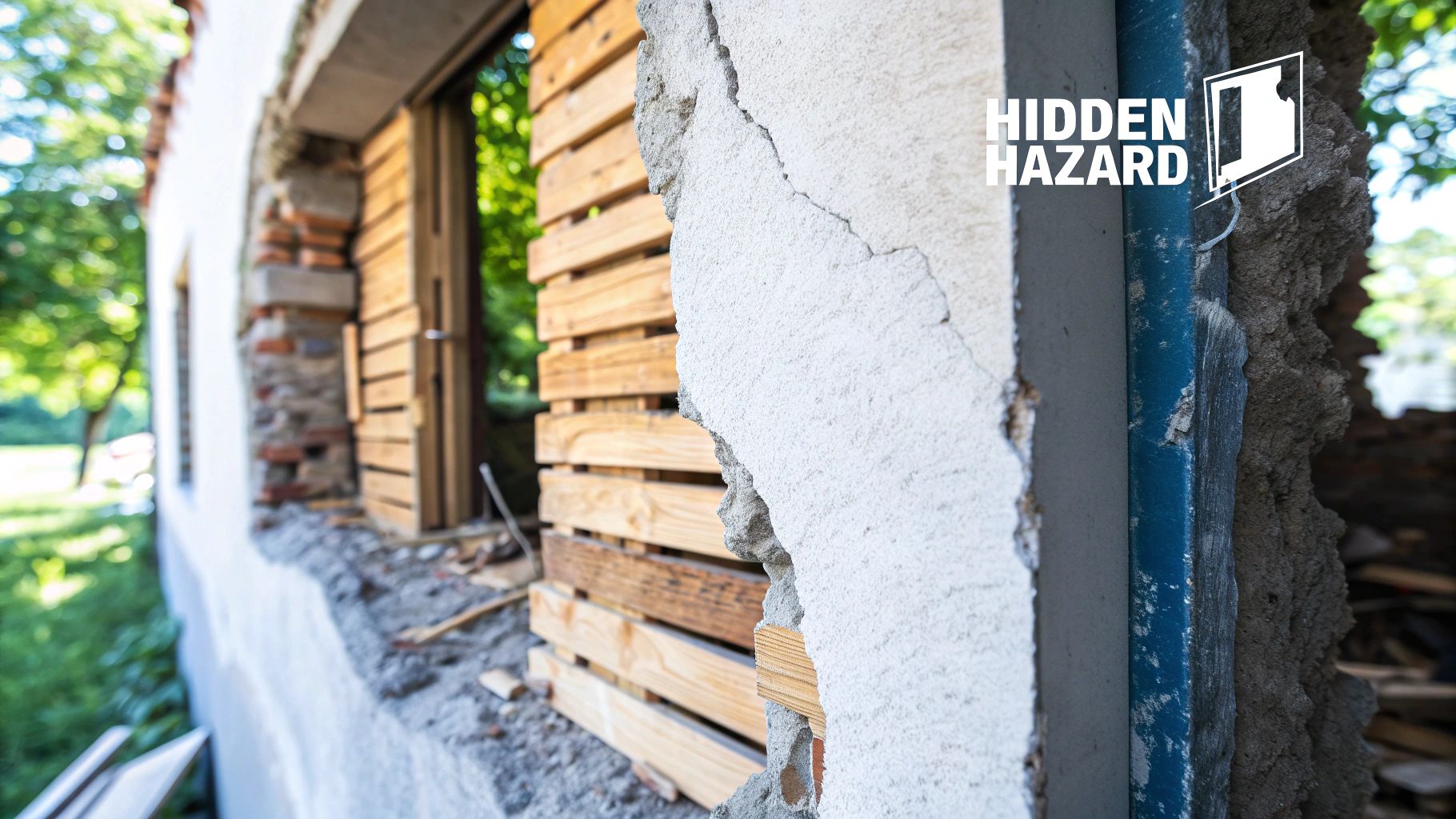
Before modern plasterboard became the go-to, builders used a more traditional method. They'd nail thin wooden strips, called lath, horizontally across wall studs or ceiling joists. A plaster mix was then trowelled over this frame, creating a tough, seamless surface.
But for a huge chunk of the 20th century, this plaster wasn't just a simple blend of lime, sand, and water. It frequently contained a dangerous extra ingredient.
Why Was Asbestos Added to Plaster?
It sounds crazy now, but asbestos fibres were deliberately mixed into plaster for what seemed like good reasons at the time. Adding asbestos, most often chrysotile (white asbestos), gave the plaster incredible strength and fire resistance. It made walls and ceilings more durable and provided a valuable layer of fire protection.
In the UK, plaster containing asbestos became a real concern from the 1920s onwards. Records show that asbestos was routinely added to plaster mixes from around 1920 right up until the final UK ban in 1999. This means any building constructed or renovated within this 79-year window could potentially have asbestos lurking in its walls.
The problem, of course, is what happens when these materials get old, crumbly, or disturbed during renovations. Even a simple job like putting up a shelf can release a cloud of microscopic fibres.
Think of it like a hidden web woven into the very fabric of your home – completely harmless when untouched, but releasing dangerous fibres the moment the structure is broken. Once airborne, these tiny fibres can be inhaled, leading to devastating long-term health issues.
Key Timelines and Risks at a Glance
To quickly gauge the potential risk in your property, understanding the key time periods is the first step. The guide below gives you a snapshot of when and where asbestos was most likely used in UK plaster and lath construction.
Asbestos In UK Plaster Quick Reference Guide
This table breaks down the key risk periods to help you assess your property.
| Time Period | Common Materials Containing Asbestos | Primary Risk Factor |
|---|---|---|
| 1920s – 1950s | Base coat plasters, lime plasters, horsehair plaster (sometimes repaired with asbestos-containing materials). | Widespread use of asbestos as a binder and fire retardant in the main plaster layers. |
| 1950s – 1980s | Textured coatings (like Artex), skim coats, joint compounds, and plaster over cement boards. | This was the peak usage period. Asbestos was a standard ingredient in many popular decorative and finishing products. |
| 1980s – 1999 | Some finishing plasters, repair compounds, and imported materials still contained asbestos until the final ban. | Although its use was declining, asbestos-containing materials were still available and used right up until the complete ban in 1999. |
For anyone thinking about a bit of DIY, it's absolutely crucial to be aware of the potential dangers. You can get more insight into the asbestos risks during DIY home improvements to fully understand what you might be dealing with.
This guide will walk you through everything you need to know about identifying, testing, and safely managing this hidden danger in your home.
How to Spot the Warning Signs of Asbestos Plaster
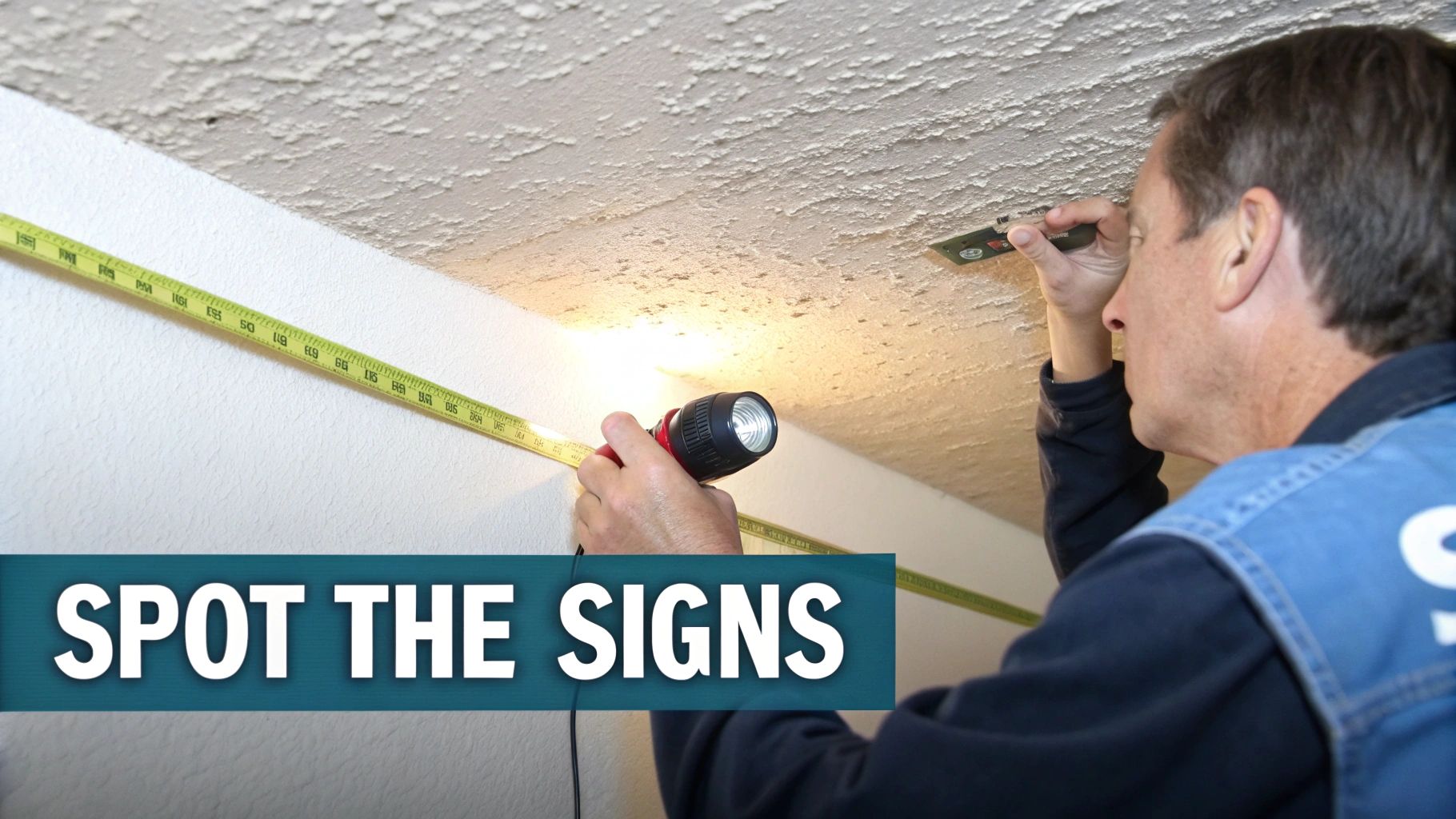
Let's get one thing straight from the start: asbestos fibres are completely microscopic. You can't see them, smell them, or taste them, which makes identifying them by eye a total non-starter.
But while you can’t spot the fibres themselves, you can absolutely learn to recognise the tell-tale signs and contextual clues that your plaster might contain them. Think of it like being a detective in your own home. It’s not about guesswork; it’s about understanding your property’s history and construction to make safe, informed decisions before you even think about picking up a hammer or drill.
The golden rule is simple: if you have any doubt at all, you must assume asbestos is present until a professional test proves otherwise.
The Age of Your Property Is the Biggest Clue
The single most reliable indicator of potential plaster and lath asbestos is the year your house was built. Asbestos was a hugely popular additive in building materials for most of the 20th century, hitting its peak usage in the UK from the 1950s right through to the 1980s.
A quick timeline can help you gauge the risk:
- Properties built before 1930: You're more likely to find traditional lime or horsehair plaster here. While these are often asbestos-free, be cautious – later repairs or skim coats could easily have introduced asbestos into an older building.
- Properties built between 1930 and 1999: This is the high-risk zone. Any original plasterwork, textured coatings, or renovation materials used during this period have a very high chance of containing asbestos.
- Properties built after 2000: It is extremely unlikely that your property contains asbestos. A final, comprehensive ban was put in place in late 1999.
If your house was built or had significant work done before the year 2000, you need to proceed with extreme caution. The older the property is within that window, the greater the probability that asbestos-containing materials were used.
Look for Telltale Materials and Textures
Beyond the construction date, certain products are notorious for containing asbestos. If you spot them, it should be a major red flag, prompting you to halt any work and get some expert advice immediately.
One of the most famous culprits is Artex, along with other similar textured coatings. Those decorative stippled or swirled finishes, especially on ceilings, frequently had chrysotile (white) asbestos mixed in to create their patterns and improve durability. If your home has ceilings that look like they haven't been touched for decades, they are prime suspects.
Remember, even a smooth-looking ceiling might be hiding a secret. It was common practice for homeowners to skim over old Artex with a fresh layer of modern plaster rather than dealing with the hassle of removing it. The danger remains, hidden just beneath the surface.
Distinguishing Lath and Plaster from Plasterboard
Understanding what your walls are made of is another crucial piece of the puzzle. If you have an existing crack or hole in a wall, take a close look at what’s behind the surface layer.
- Lath and Plaster: You will see thin, horizontal strips of wood (the lath) nailed across the timber frame. The plaster was then pushed through the gaps, creating "keys" that grip the lath and hold everything in place. This type of construction is a classic sign of an older property where asbestos plaster is much more common.
- Plasterboard (Drywall): This is the modern standard. You’ll see a solid, uniform sheet of gypsum board, usually with a paper face, covered by a thin skim coat of plaster.
If you’ve spotted any of these potential warning signs, getting a professional, third-party assessment through an independent building inspection can provide real clarity. While only a specific asbestos test can confirm its presence for sure, knowing your wall type helps build a complete picture of the potential risk. Never, ever break or disturb the material just to get a better look; only use existing damage to make your assessment.
Understanding the Health Risks of Asbestos Exposure
As long as it's left completely undisturbed, asbestos mixed into plaster isn't an immediate danger. The real problem starts the moment you try to drill into it, sand it down, or knock the wall through. That’s when a solid-looking wall can release an invisible cloud of microscopic fibres into the air you breathe, turning a simple DIY job into a serious, long-term health hazard.
Think of these fibres as microscopic needles. Once they're inhaled, your body's natural defences can't get them out. They're too small. Instead, they travel deep into your lungs and lodge themselves in the delicate tissue, where they can stay for the rest of your life.
Over many years, sometimes even decades, your body keeps trying and failing to break down these fibres. This constant battle causes inflammation and scarring, and it's this permanent damage that can lead to severe and often fatal diseases down the line.
The Devastating Long-Term Impact
The most frightening thing about asbestos exposure is the delay. The health problems might not show up for 20 to 50 years after you first breathed in the fibres. A weekend renovation project today could result in a devastating diagnosis decades from now.
The main diseases linked directly to asbestos exposure are:
- Mesothelioma: This is a rare and particularly aggressive cancer that attacks the lining of the lungs, heart, or abdomen. It’s almost always caused by asbestos exposure.
- Asbestos-Related Lung Cancer: While it looks the same as lung cancer from smoking, this form is triggered directly by the scarring caused by asbestos fibres in the lung tissue.
- Asbestosis: This is a chronic, non-cancerous lung disease. The scarring (fibrosis) of the lung tissue gets progressively worse, leading to severe shortness of breath.
The crucial thing to remember is this: there is no known safe level of asbestos exposure. Even one significant exposure during a home improvement project could be enough to cause these life-changing conditions later in life. Being cautious and bringing in professionals isn't just good advice; it's essential for protecting your and your family's future health.
The Stark Reality in the UK
The widespread use of asbestos in UK construction has left behind a serious public health problem. The plaster and lath asbestos hidden in millions of homes has led to a tragic number of illnesses and deaths that we are still seeing today.
The statistics are sobering. Asbestos-related diseases are responsible for over 5,000 deaths every year in the UK, a figure that starkly highlights the legacy of pre-2000 building materials. Cases of mesothelioma, a cancer almost entirely caused by asbestos, doubled from 1,317 in 1995 to a peak of around 2,700 by 2017. In 2019 alone, there were 2,369 fatalities. You can find more details on the profound impact of asbestos in UK statistics and facts.
This isn’t about scaremongering; it's about understanding the gravity of the risk so you can make sensible decisions. Because of the potential to release these dangerous fibres, any work on older plaster walls must be approached with extreme caution. Safety has to be the number one priority. Never, ever assume your old plaster is safe without getting it checked.
Navigating UK Asbestos Regulations for Your Property
The laws around asbestos in the UK can seem a bit daunting at first, but they all boil down to one simple goal: keeping people safe. For anyone owning or managing a property, getting your head around the basics is essential before you even think about touching old plasterwork.
The main piece of legislation you'll hear about is the Control of Asbestos Regulations 2012. Don't be fooled into thinking this is just for big commercial building sites; its principles cover any work that could potentially kick asbestos fibres into the air. It provides a clear roadmap for identifying, managing, and safely removing materials that contain asbestos (known as ACMs), and that absolutely includes plaster and lath asbestos.
For a homeowner, this means that even if you don't have the same formal duties as a business, you're still responsible for ensuring safe practices when you hire tradespeople or kick off a renovation. The regulations draw a very important line in the sand between different types of asbestos work, which determines who can legally handle it.
Licensed Versus Non-Licensed Work
Not all asbestos jobs are created equal. The Health and Safety Executive (HSE) splits tasks into categories based on how likely they are to release fibres. This distinction is critical because it dictates whether a competent builder can tackle the job, or if you legally must bring in a specialist contractor with an HSE licence.
-
Non-Licensed Work: This covers lower-risk jobs where the chance of releasing fibres is low. Think handling asbestos cement sheets that are in good nick. It still demands careful safety measures, but it doesn’t require a licensed firm.
-
Licensed Work: This is reserved for the high-risk stuff. We're talking about activities involving materials that will almost certainly release a lot of fibres when disturbed. This is the category for working on asbestos insulation board (AIB), pipe lagging, and, crucially, the removal of most types of asbestos-containing plaster.
Why is plaster and lath often licensed work? Because the process of ripping it out is aggressive. Smashing, sanding, drilling, or demolishing these surfaces is a high-risk activity that can fill the air with dangerous fibres. It's a job strictly for the pros. To dig a bit deeper on this, check out our guide on the regulations and compliance in asbestos removal.
This is why it's taken so seriously—the link between airborne fibres and disease is direct and undeniable.
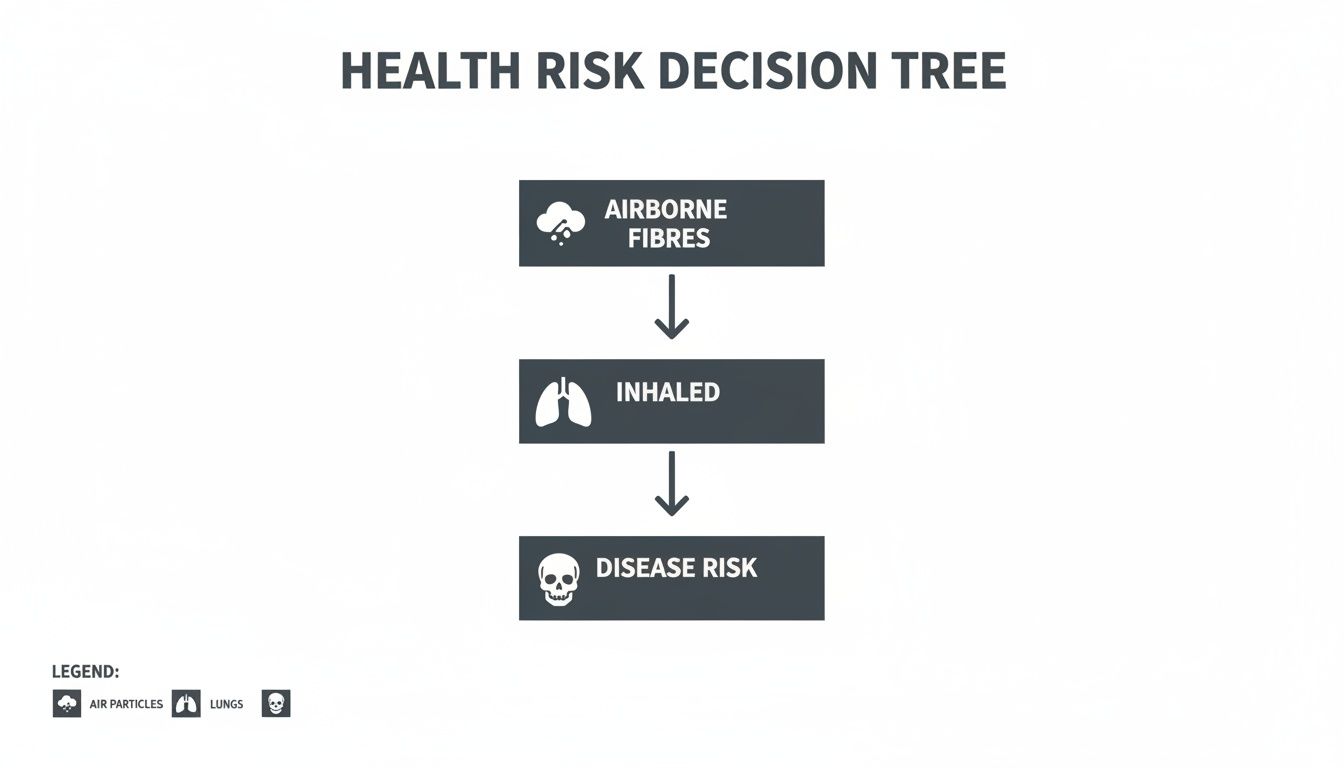
As the diagram shows, once those invisible fibres are in the air, the chain of events that can lead to devastating lung diseases has already begun.
The Duty to Manage for Landlords
If you’re a landlord or you manage any non-domestic property (which includes common areas in blocks of flats, like hallways and stairwells), your legal responsibilities are much more formal. The Control of Asbestos Regulations 2012 gives you a specific 'duty to manage' asbestos. This isn't a suggestion; it's a legal requirement to protect people from exposure in buildings you control.
This duty breaks down into a few key steps:
- Find Asbestos: You have to take reasonable steps to find out if asbestos is present and check its condition. This almost always means getting a professional asbestos survey done.
- Assess the Risk: The default assumption must be that materials do contain asbestos until you have solid proof they don't. You then need to assess the risk posed by any materials you find.
- Create a Plan: You are legally required to have a written plan that details exactly how you will manage the risks from these materials.
- Act on the Plan: Finally, you have to put that plan into action, keep an eye on it, and review it regularly to make sure it's still fit for purpose.
For landlords, this is not just a moral obligation—it is a legal mandate. Failing to manage asbestos properly can lead to significant fines and, more importantly, put your tenants' health at severe risk. This duty ensures that potential hazards like asbestos in plaster are identified and managed before they can cause harm.
Choosing Your Strategy: Encapsulation Versus Removal
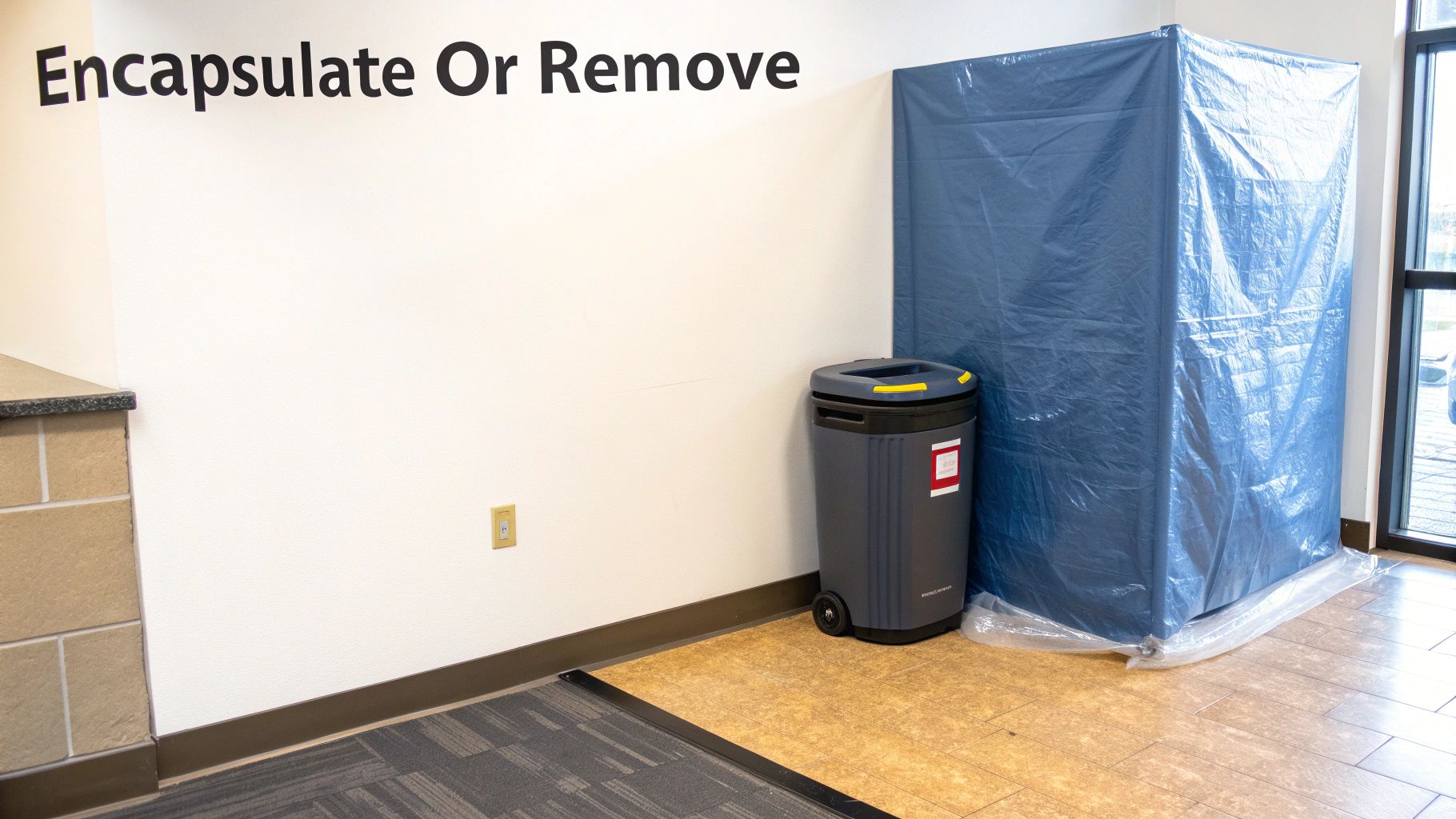
So, a professional test has confirmed you have plaster and lath asbestos. This is the point where you need to make a critical decision. You're now faced with two clear strategies for making your property safe, and each comes with its own process, benefits, and costs.
You can either manage the asbestos right where it is by sealing it off, or you can opt to have it removed completely.
Choosing the right path isn't just about the initial price tag. It's about taking a hard look at the condition of your plaster, thinking about your long-term plans for the property, and what will give you genuine peace of mind. Both methods, when done correctly by professionals, are effective at stopping those dangerous fibres from being released.
Encapsulation: Sealing the Hazard
Think of encapsulation as putting the asbestos into a permanent, secure lockdown. This method involves applying a specialist sealant over the plaster surface, which soaks into the material and hardens. It creates a tough, seamless barrier that securely locks the dangerous asbestos fibres in place, preventing them from ever becoming airborne.
This approach is a brilliant choice, but only under specific conditions. It’s best suited for plaster that's in good, solid shape—meaning no major cracks, crumbling sections, or water damage. It's also perfect for areas where the surface is unlikely to be bashed or disturbed in the future, like a stable ceiling in a spare room.
The main benefits of encapsulation are pretty clear:
- Less Disruption: It's a much quicker and far less intrusive job than a full-scale removal.
- Cost-Effective: In the short term, it's generally the more affordable option.
- Maintains Integrity: It keeps your original wall or ceiling structure intact.
But it's crucial to remember that this isn't a permanent removal. The asbestos is still there, which has to be noted for any future work. The encapsulated surface also needs to be checked regularly for any damage that might compromise the seal.
Professional Removal: The Permanent Solution
Removal is exactly what it sounds like—the complete and final elimination of the asbestos-containing plaster from your property. This is a highly controlled, meticulous process that can only be carried out by a licensed asbestos removal contractor. In the UK, this is rightly classified as high-risk work.
The process is incredibly thorough to guarantee zero contamination. Contractors will build a completely sealed enclosure around the work area, often using heavy-duty polythene sheeting. They then create a negative air pressure environment inside this "bubble," which ensures that if any fibres do become airborne, they are safely contained and filtered out instead of escaping into the rest of your home.
Specialist teams in full personal protective equipment (PPE) and respiratory gear will then carefully remove the plaster. Afterwards, the entire area is decontaminated with specialist equipment, and independent air testing is carried out to certify that the space is 100% clean and safe to re-enter. You can find out more about the strict safety measures involved in our guide on how to remove asbestos safely.
This comprehensive approach is absolutely essential. The widespread use of asbestos in UK buildings means it’s a hidden hazard in countless pre-2000 properties. What was once seen as a modern marvel is now a dangerous relic.
Comparing Asbestos Encapsulation Vs Professional Removal
To help you weigh up which route is right for your situation, this table breaks down the key differences between sealing the asbestos in and having it completely taken out.
| Factor | Encapsulation (Sealing) | Professional Removal |
|---|---|---|
| Ideal Scenario | The plaster is in good, stable condition and is unlikely to be disturbed. | The plaster is damaged, crumbling, or in an area undergoing major renovation. |
| Cost | Typically lower initial cost. | Higher initial cost due to labour, equipment, and compliant disposal. |
| Disruption | Minimal disruption to the property and household. | Significant disruption; the area will be sealed off and unusable during the work. |
| Timescale | A relatively quick process, often completed in a day or two. | A longer process that can take several days, including setup and air clearance tests. |
| Long-Term Result | Manages the risk by containment. Requires ongoing monitoring. | A permanent solution that completely eliminates the hazard and future liability. |
Ultimately, choosing between encapsulation and removal depends on your specific circumstances. A professional asbestos surveyor can give you tailored advice, but considering the condition of the plaster and your future plans is the best place to start.
Safe and Compliant Asbestos Disposal

Getting asbestos plaster professionally removed is a massive relief and a huge step towards making your property safe. But the job isn’t quite finished. Getting the hazardous material out of your home is only half the battle; disposing of it correctly is a strict legal requirement that protects the wider community and the environment.
Let's be crystal clear: you absolutely cannot just throw asbestos waste into a standard skip or your weekly council bin. Asbestos is classed as hazardous waste, and its journey from your property to its final resting place is tightly controlled by UK law. This is all to prevent those dangerous fibres from getting loose at any point, whether in transit or at a disposal site.
The Correct Packaging and Paperwork
The process for handling asbestos waste is incredibly specific. Any material containing plaster and lath asbestos has to be carefully double-bagged to stop any leaks. This isn’t just a matter of grabbing a couple of bin liners from under the sink; the law demands a very particular method.
- Inner Bag: First, the waste goes into a red asbestos sack, which is clearly marked with official warnings.
- Outer Bag: This red sack is then placed inside a second, larger clear sack. Both bags must be UN-approved.
This double-bagging system creates a secure, sealed container for the waste. But the physical packaging is only one part of the puzzle. Just as important is the official paperwork that has to travel with the waste every step of the way.
Every single collection of hazardous waste in the UK legally requires a hazardous waste consignment note. Think of this document as the material's passport. It tracks it from the moment it leaves your property to its arrival at a licensed disposal facility, proving you've acted responsibly and handed the waste over to a registered carrier.
Your Compliant Disposal Solution
Trying to navigate these rules can feel like a real headache, especially after the stress of dealing with an asbestos removal project in the first place. This is where a specialist service gives you essential peace of mind. Simply leaving bags of hazardous waste sitting on your property after removal is neither a safe nor a legal option.
At The Waste Group, we provide a fully compliant and straightforward asbestos collection service, designed for both homeowners and tradespeople. We handle everything to make sure your asbestos waste is managed safely and legally, from supplying the correct UN-approved bags to sorting out all the necessary paperwork.
Our licensed carriers ensure your waste goes directly to an authorised disposal site, and you get a completed consignment note as proof that everything was done by the book.
Our goal is to make this final, critical step as simple as possible. By managing the collection and documentation, we take the compliance headache away, allowing you to be confident that the hazard has been dealt with responsibly from start to finish. If you need to arrange a collection, you can easily find more information about asbestos disposal near you and get the process handled correctly.
Your Questions About Asbestos in Plaster Answered
Even after getting to grips with the risks and rules around plaster and lath asbestos, it’s completely normal to still have a few questions buzzing around. This section tackles some of the most common queries we hear from property owners, giving you direct, practical answers to help you figure out what to do next.
Does All Old Plaster and Lath Contain Asbestos?
Not always, but it's far safer to assume it might. Any plaster in a UK property built or touched up before 2000 could potentially contain asbestos. For decades, it was a go-to additive to make plaster stronger and more fire-resistant.
While very old, traditional horsehair plaster is less likely to be a problem, many walls were patched up or skimmed over the years with newer, asbestos-containing products. The bottom line is this: the only way to be 100% certain is to get a sample professionally tested by a lab.
Can I Take a Plaster Sample Myself for Testing?
You can buy DIY testing kits, but the Health and Safety Executive (HSE) strongly advises against taking your own samples. The moment you cut or break into the plaster to get that sample, you can easily release a cloud of dangerous fibres if you don't know exactly what you're doing.
A trained professional uses specialised gear and follows strict safety rules to take a sample without contaminating your home. This not only keeps you safe but also guarantees the lab result is accurate, which is vital for making the right call.
What Should I Do If I Disturb a Wall I Suspect Contains Asbestos?
If you accidentally drill into or crack a wall you think has asbestos, stop everything immediately. The top priority is to stop the fibres from spreading through your property.
Here are the critical steps to take:
- Leave the Area: Get out of the room straight away and close the door firmly behind you.
- Seal the Door: If you can, use tape to seal the gaps around the door frame. This helps contain any dust that's in the air.
- Do Not Vacuum: Never, ever use your regular household vacuum. Its filter isn't fine enough to catch asbestos fibres and will just pump them back into the air, making a bad situation much worse.
- Dampen Dust: If you can do it safely from a distance, use a light water spray to gently wet any visible dust or debris. This helps to weigh the fibres down and stop them from floating around.
- Call a Professional: Contact a licensed asbestos removal company right away for urgent advice. They'll tell you what needs to happen next for a professional clean-up and air safety testing.
Is It Cheaper to Encapsulate Asbestos Plaster Than Remove It?
In most cases, yes. Encapsulation is typically a more affordable and less disruptive choice than a full-on removal. It’s a process of sealing the material in place rather than going through a complex and labour-intensive removal job.
However, encapsulation is only a sensible option if the plaster is in good, solid condition and isn't in a spot where it's likely to get knocked about or damaged in the future. While removal costs more upfront, it is a permanent fix that gets rid of the hazard for good.
When you’re dealing with asbestos, getting rid of it professionally and legally isn't just a good idea—it's the law. For total peace of mind that your hazardous waste is handled safely and correctly, you can trust The Waste Group. We provide the right bags, sort out all the paperwork, and make sure your asbestos is taken to a licensed facility, giving you a fully documented and compliant solution. Find out more about our compliant asbestos collection services.