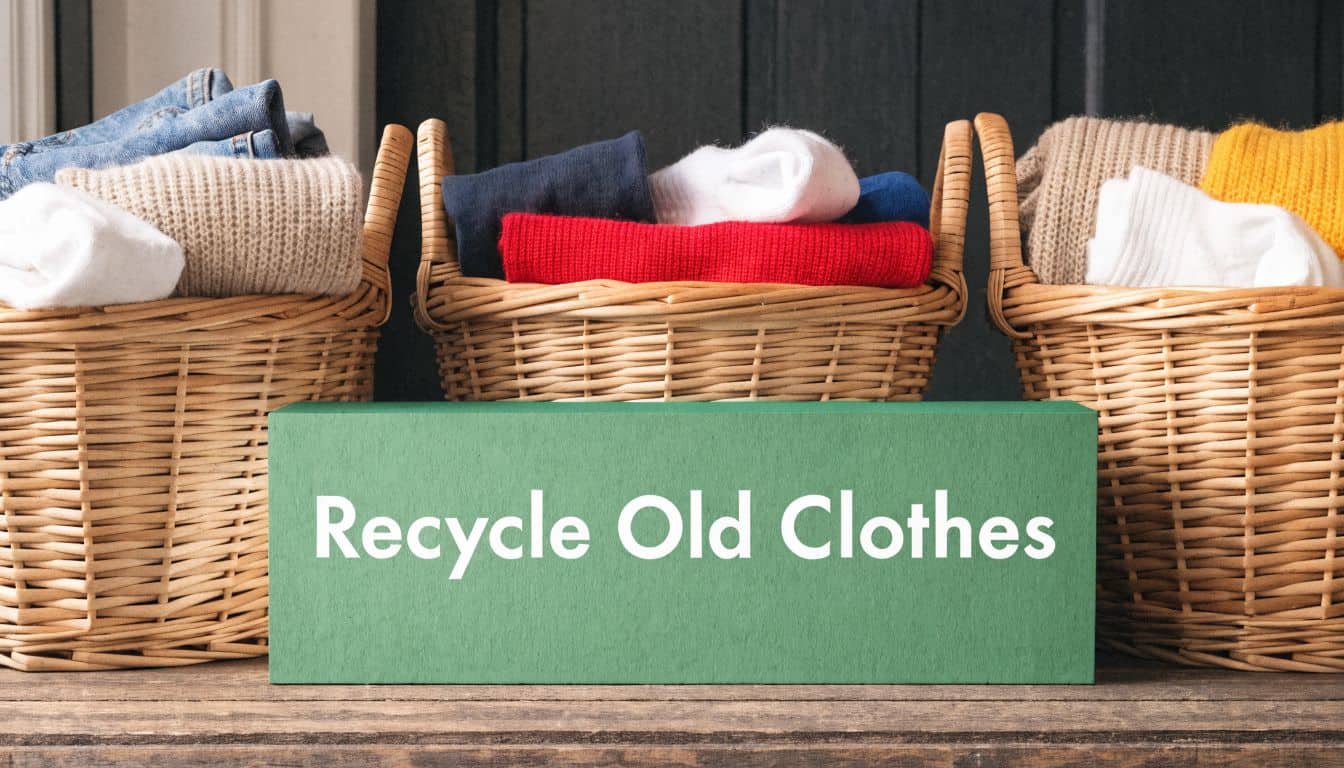
Every year, 300,000 tonnes of old clothes are thrown into UK household rubbish bins, and about 30% of unwanted clothes end up in landfill, wasting £140 million worth of clothing annually according to Business Waste’s UK fashion waste figures. This information should prompt a re-evaluation of the bag of “old stuff” sitting by the wardrobe.
In Dorset, this isn’t just a fashion problem. It’s a household clearance problem, a landlord problem, a renovation problem, and for some businesses, a compliance problem. I’ve seen the same mistake from both homeowners and tradespeople. They leave textile waste to the very end, then treat it like mixed rubbish because it’s quicker. It feels efficient in the moment. It usually isn’t.
Recycling old clothes works best when you stop thinking in one category. Some items should be sold. Some should be donated. Some should go to textile recycling. A small minority should be treated as contaminated waste and kept out of reuse streams altogether. The right route depends on condition, fibre, volume, and how quickly you need the material gone.
The Hidden Cost of Your Old Wardrobe

That waste is not limited to occasional outfits or fast-fashion mistakes. In Dorset, it usually shows up as school uniform that no longer fits, worn workwear, old towels, bed linen, charity shop bags that sat too long in a damp garage, and mixed sacks from a house move or end-of-tenancy clearance. By the time those loads reach the car, the van, or the skip, textiles often get treated as general rubbish because nobody split them out early enough.
I see the same pattern with households clearing one bedroom and with contractors emptying an entire property. Clothes and other textiles get pushed into the “deal with later” category. Later rarely comes.
Why old clothes end up in the wrong pile
The problem is usually practical. Once a load includes one good jumper, two single socks, stained jeans, a damp towel, and an old duvet cover, people stop seeing separate reuse options and start seeing one awkward bag.
Moisture makes it worse. A clean, dry coat can still be donated or sold. The same coat stored under a leaking shed roof for a few weeks may be fit only for recycling, or for disposal if mould has taken hold. That is where value drops fast, and it is why early sorting saves both money and material.
For a broader view of how small sorting decisions affect disposal outcomes, these recycling facts from The Waste Group give useful context.
Practical rule: Keep textiles dry, bagged, and separate from mixed waste from the start. Once clothing is crushed under plasterboard dust, food waste, or wet rubbish, reuse routes narrow quickly.
The local reality in Dorset
For Dorset households, the hidden cost is not only environmental. Good items lose resale and donation potential, and the rest adds weight and volume to mixed waste collections. For landlords, shopfitters, retailers, and trades clearing sites, the issue grows quickly. A few overlooked bags of uniforms, soft furnishings, or staff workwear can contaminate an otherwise tidy load and raise disposal costs.
This is also where domestic advice and commercial practice need to meet. If you have one wardrobe to clear, a simple pre-sort is enough. If you are stripping a property, closing a business unit, or managing a larger clearance, textiles should be separated before the skip is loaded, not pulled out afterwards. That approach is faster, cleaner, and usually cheaper.
A tidy wardrobe helps at the front end too. Good storage habits make it easier to spot what can be reworn, sold, or set aside before it turns into waste. If you want to organize your closet, better hanging space can make that job easier.
Some old clothes go back into use. Some become wiping cloths or fibre feedstock. Some have to be binned because they are contaminated. The cost sits in getting that decision wrong, especially when a reusable item ends up buried in a mixed load.
The Initial Sort Sorting Clothes for Their Next Life
The biggest mistake in recycling old clothes is trying to decide item by item while standing over a pile. That slows people down and leads to “just bag it all up” decisions. The better method is to create clear categories before you touch a single garment.

I recommend four routes for almost every household or small business clear-out.
Use four bags, not one
Label them before you begin.
- Sell. Put in anything current, clean, and in strong condition. Branded outerwear, quality denim, occasionwear, and barely worn children’s clothes usually sit here.
- Donate. This is for clean, wearable clothing that still has everyday use but probably isn’t worth the effort of listing individually.
- Recycle. Use this for worn-out textiles that are clean but no longer wearable. Think torn T-shirts, odd socks, stretched knitwear, faded sheets, and tired towels.
- Bin or specialist disposal. Reserve this for contaminated items. If clothing has oil, paint, chemicals, mould, or heavy damp contamination, keep it out of donation and standard textile recycling.
That structure makes the job faster because you stop debating every item twice.
What to look for as you sort
A lot of households benefit from doing this in two passes. First pass is condition. Second pass is convenience.
Here’s the condition test I’d use:
| Route | Best fit | Avoid |
|---|---|---|
| Sell | Clean, desirable, modern, strong condition | Missing parts, visible wear, stains |
| Donate | Wearable, washed, presentable, useful | Damp, dirty, ripped, heavily bobbled |
| Recycle | Clean but worn out, torn, mismatched, end-of-life textiles | Wet, contaminated, chemical-soaked items |
| Bin or specialist | Unsafe or contaminated materials | Anything still wearable or recyclable |
If the item would embarrass you to hand directly to someone, it probably doesn’t belong in the donation bag.
A tidy setup helps more than people think. If you’re doing a wardrobe reset before sorting, a guide on how to organize your closet can help you separate what you use from what’s just taking up rail space.
Keep the process moving
There’s no need to make sorting complicated. Work left to right. Start with easiest wins first, such as coats, jeans, shirts, uniforms. Leave underwear, socks, and damaged basics until the end, because those are usually lower-value decisions.
A short visual guide can help if you’re sorting with family or staff:
Clean and dry is the line that matters most. A worn textile can still be recyclable. A damp or contaminated one can spoil the whole batch.
The sorting mistakes that cause problems later
Three errors come up repeatedly:
- Bagging wet textiles. If clothes have been in a garage, shed, or outside storage, dry them first.
- Mixing shoes and sharp accessories loosely with fabric. These can snag and damage otherwise reusable items.
- Using “donation” as a catch-all label. Charity shops and textile banks don’t need rubbish disguised as generosity.
For businesses and landlords, the same principle applies. If a clearance team separates textiles at the start, the job usually runs cleaner and faster. If they leave it until the final sweep, textiles get mixed into general waste.
Giving Good Clothes a Second Chance Donation and Resale
Wearable clothes deserve a different conversation from worn-out ones. The best route depends on value, effort, and volume. Better results are achieved by not treating every garment the same.
When selling makes sense
Take a nearly new branded jacket in Bournemouth, a pair of sought-after trainers in Poole, or a bundle of good children’s clothes in Dorchester. Those are selling items, not donation items. If the garment is current, clean, and still desirable, resale can be worth the extra effort.
For online apps such as Vinted or Depop, three things matter more than people expect:
- Photos in natural light beat heavily filtered pictures.
- Clear measurements reduce back-and-forth messages.
- Honest flaws save disputes and bad reviews.
A wool coat with one tiny cuff mark can still sell if the listing says exactly that. A listing that hides the flaw often comes back to you.
When donation is the better route
Now take a different pile. School trousers, plain jumpers, standard shirts, everyday dresses, serviceable coats. Good condition, but not worth your time to price one by one. That’s where donation usually wins.
Charity shops are useful when items are:
- freshly washed
- dry
- folded or bagged neatly
- still wearable without repair
What doesn’t work is dropping off a black sack full of mixed textiles and assuming staff will sort everything for you. They can, but they shouldn’t have to deal with dirty, damaged, or unsuitable contents hidden in the middle.
Donate what someone could wear this week, not what you hope a charity will somehow rescue.
A simple effort versus return decision
A practical way to decide is this:
| Item type | Best route | Why |
|---|---|---|
| Good brand, strong condition | Sell online or via consignment | Higher value, worth the admin |
| Everyday wearable clothing | Donate | Fast and useful |
| Uniform basics or bundle items | Local giveaway or donation | Better moved in volume |
| Damaged but clean textiles | Textile recycling | Not suitable for resale shelves |
If you’ve got only a handful of strong items, selling can be sensible. If you’ve got six bags after a house move, donation and textile recycling are usually the realistic combination.
Local judgement matters
In Dorset, transport time matters too. If you’re driving across the county to maybe donate one small bag, that isn’t always the best use of your time. Wait until you have a proper batch, pair donation with another errand, or use local options close to where you already travel.
For landlords, student lets, holiday accommodation, and care settings, donation works best when staff separate reusable clothing early. Once textiles have been mixed with bathroom waste, damp laundry or maintenance debris, reuse options drop quickly.
Tackling Unwearable Textiles From Rags to Resources
People understand donation, but the greatest confusion arises when clothes are too worn to wear yet still feel wrong to throw away. They often struggle with this category, which includes torn T-shirts, stretched leggings, old socks, ripped bedding, stained towels, and worn workwear with no resale value.
The first point to understand is that collection alone doesn’t solve the problem. Only 17% of UK household textile waste is collected for reuse or recycling via kerbside or bring systems, and 70% of collected textiles are shipped abroad, so domestic recycling matters if the UK is going to deal with the 317,000 tonnes of textile waste generated in 2024, according to Defra information referenced here.

If you’re local and trying to understand where facilities fit into the wider Dorset picture, this guide to the Blandford Forum recycling centre gives useful context on how local recycling access works.
The main options and their trade-offs
There isn’t one perfect route. There are several workable ones.
Textile banks and bring sites
These suit small to medium household volumes of clean textiles. They’re straightforward when you’ve already separated wearable and non-wearable fabric. The benefit is convenience. The downside is that people often misuse them by stuffing in wet or contaminated items.
Best for:
- clean worn clothing
- paired shoes if the site accepts them
- bagged household textiles
Poor fit for:
- soaked or mouldy fabric
- paint-covered or oily items
- bulky mixed clearances
Retailer take-back schemes
Shops with take-back points can be useful for small quantities, especially if you already visit them. They’re not ideal for big house clear-outs or business waste. They work best as a drip-feed option, not as the main strategy for a garage full of bags.
Best for:
- occasional drop-offs
- lightweight clothing
- regular decluttering habits
Poor fit for:
- bedding-heavy loads
- site clearances
- mixed waste from landlords or trades
Kerbside and council-linked routes
Where available, these are convenient because they fit normal household routines. The limitation is that accepted materials and collection rules vary. Always check what your local system accepts before filling sacks.
What still works at home
Not every unwearable textile needs a formal recycling route immediately. Some items have one more practical life in the house.
- Old cotton T-shirts make good cleaning rags for decorating and car cleaning.
- Worn towels can become garage cloths, boot liners, or pet drying towels.
- Denim and heavier fabric can be reused for patching, kneeling pads, or workshop use.
That isn’t a final solution for everything, but it does reduce what you need to move elsewhere.
The best textile recycling decision is often made before disposal day. Keep one bag for reusable rags and another for actual recycling.
What not to do
Some bad habits create more trouble than they save.
- Don’t mix textiles with food waste or bathroom waste. That usually ruins reuse potential.
- Don’t assume all natural-looking fabric is safe to compost. Seams, labels, elastic and blended fibres complicate that.
- Don’t put hazardous contamination into textile banks. If an item has oil, solvents, chemicals or significant paint contamination, treat it as specialist waste instead.
A quick decision guide
| Situation | Best route |
|---|---|
| One bag of clean, worn-out clothes | Textile bank or accepted local collection |
| A few damaged basics at home | Rag bag plus textile recycling |
| Clean but bulky bedding and towels | Check local textile acceptance before travel |
| Paint, oil, mould, or chemical contamination | Specialist disposal route |
For Dorset households, the practical answer is usually a mix of methods. Donation for wearable items. Textile recycling for clean end-of-life fabric. Home reuse for rags. Specialist disposal for contaminated materials. That’s less tidy than a single-bin answer, but it’s what works.
Bulk Textile Disposal for Businesses and Tradespeople
Domestic advice breaks down once the volume increases. A homeowner might have two bags of clothes. A landlord clearing a block, a hotel replacing linen, or a contractor emptying a site can have piles of uniforms, soft furnishings, offcuts, damaged fabric, and mixed end-of-job waste all at once.
That’s where scale changes the decision.
Why bulk textile waste needs a different approach
For commercial jobs, speed matters. So does compliance. So does keeping reusable or recyclable material out of expensive disposal routes. According to WRAP-related circular economy reporting information, for UK contractors, hiring an 8-yard skip for £200-£400 to recycle 90% of contents is more cost-effective than paying £50-£100 per tonne in landfill fees, which are rising 12% annually. The same source notes that 40% of UK firms are now mandated to report textile diversion.
That changes the conversation from “how do we get rid of this?” to “how do we separate this properly and document it?”

If you manage commercial waste streams, this overview of recycling for businesses is useful background.
Matching the container to the job
Not every site needs the same setup. The wrong container size creates mess, contamination, and extra handling.
Smaller clearances
A smaller skip suits:
- retail back-room clear-outs
- office uniform disposal
- end-of-tenancy textile-heavy jobs
- small hotel or holiday let linen changes
This works when textiles are one part of the waste stream, not the whole load.
Mid-size jobs
An 8-yard or 12-yard setup makes sense where you’ve got a steady amount of bagged textiles across a short project. That could be a refurbishment, managed property turnaround, or repeated commercial clearance.
Large sites and ongoing operations
Roll-on roll-off containers are better where volume builds fast. Construction and demolition projects, large estates, warehousing, and commercial facilities benefit from larger segregation points because teams don’t keep trying to squeeze textiles into whatever space is left.
In bigger textile handling environments, warehouse systems such as textile carousel systems show how important organised storage and retrieval can be. The same principle applies on waste-heavy sites. If material is easy to separate, staff separate it.
What works on real jobs
The best-performing jobs usually do four things:
- Separate early. Staff bag textile waste at source rather than during the final sweep.
- Keep it dry. Wet loads are heavier, dirtier, and harder to divert.
- Label clearly. If a container says mixed waste, people will use it as mixed waste.
- Remove contamination. Paints, oils, and chemical residues need different handling.
What doesn’t work is expecting labourers, cleaners, or tenants to guess the right route with no signage and no collection plan.
On site, convenience decides behaviour. If the textile route is awkward, people will default to general waste.
Bulk disposal decisions by waste type
| Commercial textile type | Better route |
|---|---|
| Old uniforms and wearable stock | Donation, staff reuse, or resale if appropriate |
| Damaged linen and towels | Textile recycling if clean |
| Geotextile offcuts and mixed fabric waste | Segregated commercial disposal route |
| Contaminated PPE or chemical-marked textiles | Specialist waste handling |
For Dorset tradespeople, there’s a simple business case. The more predictable your segregation system, the less time you waste sorting at the end, and the easier it is to keep costs and paperwork under control.
Your Contribution to a Greener Dorset
The value of recycling old clothes isn’t only in clearing space. It’s in keeping useful material in circulation for longer and reducing the need for more raw production. At national level, that adds up. UK textile reuse and recycling saves 1.6 million tonnes of CO2e annually, which is the equivalent of removing 350,000 cars from the roads. Polyester recycling also yields rPET with 32% lower carbon emissions than virgin polyester, according to this textile recycling benchmark summary.
That’s the bigger picture. The local picture is simpler. One household sorting properly won’t transform Dorset on its own. Neither will one contractor separating uniforms from mixed site waste. But thousands of small practical decisions do change what gets buried, what gets reused, and what gets processed.
What actually makes a difference
The most useful actions are not complicated:
- Buy less and wear longer when you can.
- Sort before clearance day instead of during it.
- Keep textiles clean and dry so they stay acceptable for reuse or recycling.
- Use the right route for the condition, not the route that feels easiest in the moment.
For Dorset residents, businesses, landlords and trades, that’s the actual contribution. Not perfect circularity. Better handling, fewer lazy disposal decisions, and more material kept out of landfill.
If you hire services locally, it also helps to choose firms that treat sustainability as part of the job rather than an afterthought. Practical commitments matter. So does keeping disposal organised from the start.
Frequently Asked Questions About Textile Recycling
Can I recycle socks and underwear
Yes, if they’re clean and dry and the textile route you’re using accepts worn household textiles. They usually aren’t donation items unless they’re new or unused, but they may still be suitable for textile recycling.
Can duvets and pillows go in textile recycling
Often, no. Many textile banks focus on clothing, shoes, and some household linens. Duvets and pillows can be treated differently, so check the local acceptance rules first.
What should I do with clothes covered in paint or oil
Keep them out of donation and normal textile recycling. Heavy contamination can make them unsuitable for standard processing. For decorating waste, garage waste, or trade jobs, handle them through the correct disposal route for contaminated materials.
Is it better to donate or recycle old clothes
If the item is still wearable, donation or resale is usually the better route. If it’s clean but beyond wear, textile recycling is the next best option.
Can businesses recycle old uniforms and workwear
Yes, provided the textiles are separated properly and any contamination or branded handling issues are dealt with first. Bulk loads usually need a planned waste route rather than ad hoc drop-offs.
If you’re clearing old clothes, textiles, uniforms, bedding or mixed soft waste in Dorset, The Waste Group can help with practical, compliant disposal for both households and businesses. From small domestic clear-outs to larger commercial jobs, they offer skip hire and waste solutions across Poole, Bournemouth, Dorchester, Weymouth and beyond, with a strong focus on recycling and sustainable handling.