A Guide to Understanding Recycling Rates in the UK
A Guide to Understanding Recycling Rates in the UK
When we talk about the UK's recycling efforts, the headline figure sits at 44.6% for household waste. On the surface, it sounds like a decent number, representing all the rubbish from our homes that gets a second life instead of being buried in a landfill or burned.
But like any national average, that single number doesn't tell the whole story.
A Snapshot of UK Recycling Performance
To really understand what's going on, you have to peel back the layers. The UK is a patchwork of different approaches, with each of the four nations tackling recycling in its own way. This has led to what many call a "postcode lottery" – where how much you can recycle often depends more on where you live than anything else.
While there’s been solid progress over the last couple of decades, we seem to have hit a wall. The latest rate of 44.6% is a tiny nudge up from 44.1% the year before, but it shows we’re struggling to make the big leaps needed. It also means we've missed past targets, like the EU's goal of 50% by 2020, highlighting a real challenge in getting to that next level. You can dig deeper into the UK's waste journey over at wikiwaste.org.uk.
How Each Nation Compares
The gap in performance between England, Wales, Scotland, and Northern Ireland is one of the biggest factors at play. Wales has long been the one to watch, setting a blistering pace with clear, consistent strategies. Meanwhile, the other nations have taken different routes, with mixed results.
At its core, a recycling rate is a measure of our collective success. It tells us how effectively we are turning what we throw away into valuable new resources, moving us closer to a more sustainable, circular economy.
Looking at these regional differences is the first step to figuring out where the problems are and, more importantly, where the opportunities lie.
UK Household Recycling Rates at a Glance
This table breaks down the latest available data, giving a clear picture of how each nation is performing and the direction they're heading in.
| Nation | Latest Reported Recycling Rate | Key Trend |
|---|---|---|
| Wales | 56.7% | Consistently the UK's top performer, though recently dipped slightly. |
| England | 44.3% | Experiencing a plateau with minimal year-on-year growth. |
| Northern Ireland | 48.8% | Showing positive progress and closing the gap on Wales. |
| Scotland | 42.9% | Facing challenges with rates that have recently declined. |
These numbers tell four very different stories. Wales's long-running success is often put down to strong, centralised government policies that make recycling simple and uniform for everyone. England, on the other hand, has a more fragmented approach where individual councils make their own rules. This often leads to confusion for households and businesses, which is reflected in the inconsistent results.
This breakdown sets the stage for a deeper look at why these differences exist and what it's going to take to lift the UK's recycling performance across the board.
To really get a handle on where the UK is with recycling today, we need to look back at how we got here. The story isn’t a simple tale of constant improvement. It’s more a case of a massive growth spurt followed by a frustrating stall that’s left everyone from policymakers to homeowners scratching their heads.

Think back to the early 2000s. Recycling was something only the most dedicated among us did, not the everyday habit it is now. In 2000/2001, an almost unbelievably low 11.2% of household waste got recycled. This number shot up over the next decade, hitting 41.5% by 2010/2011 and eventually peaking at 45.1% in 2016/2017.
But since that peak, we’ve hit a wall. The rate even slipped back to 43.3% in 2022/2023 before a slight nudge back up to 44.0% in 2023/2024. The history shows we’ve made huge strides, but it also tells us the easy wins are well and truly behind us.
The Years of Rapid Growth
So, what lit the fire under the UK's recycling efforts? It really came down to two major policy shifts that completely changed the game. They weren't just dusty regulations; they were powerful nudges that suddenly made landfill the expensive, last-resort option.
These policies created the momentum we desperately needed:
- The Landfill Tax (1996): A beautifully simple idea. It made it more and more expensive for local councils to just bury rubbish, forcing them to find cheaper, greener alternatives. Recycling suddenly looked very attractive.
- The EU Waste Framework Directive: This set clear, legally binding recycling targets for all member states. It gave the UK a finish line to aim for, which in turn drove massive investment in kerbside collections and public awareness campaigns.
Together, these two policies shifted the national mindset. Recycling went from being a niche interest to a central part of how we manage our waste, paving the way for the collection systems most of us rely on today.
Hitting the Recycling Plateau
After years of fantastic growth, the progress started to slow and then grind to a halt in that mid-40% range. It's a bit like a marathon runner who smashes the first half of the race but finds the final miles an exhausting slog. Why did we lose steam?
The reasons are complicated, reflecting just how much the challenges have evolved.
The first big push for recycling in the UK was all about grabbing the "low-hanging fruit." Think paper, glass bottles, and metal cans – stuff that’s pretty easy to sort and has decent markets. Getting beyond that means tackling the much trickier waste, like flimsy plastics and contaminated packaging.
This stagnation marks a really important shift in the problem. The challenge is no longer just about persuading people to fill their recycling bins; it’s about improving the quality of what goes in them and ensuring there are stable markets for the recycled materials. It's a key principle we explore in our guide to the circular economy and waste management.
Understanding this history is crucial. It sets the stage for the modern challenges we face—contamination, unpredictable markets, and inconsistent policies—that we have to solve to kickstart the next wave of progress.
Have you ever noticed that your recycling rules are totally different from your friend’s, even though they only live a town over? That’s not an accident. It’s a built-in feature of the UK's waste system, and it’s why people often talk about a recycling "postcode lottery."
Simply put, where you live has a massive impact on what and how you can recycle. This directly shapes the UK’s overall recycling performance.
The difference is pretty stark. Wales is consistently out in front, with a household recycling rate of 56.7%. England, on the other hand, is quite a bit behind at 44.3%. This isn’t because the Welsh care more about the environment; it’s the direct result of two completely different government strategies.
Think of it like building flat-pack furniture. Wales was given one clear, simple instruction manual that everyone followed. England was given hundreds of different manuals, many of which contradicted each other. That’s the core of the problem.
The Welsh Model: Centralised and Clear
The secret to Wales's success is a simple one: a single, clear strategy backed by consistent investment. The Welsh Government set ambitious, legally binding targets for every single local authority, giving them a powerful reason to get it right.
But they didn't just set targets and walk away. They gave councils the tools to hit them.
This includes a national plan called the 'Welsh Collections Blueprint'. It lays out a standard system for collecting recycling, which means that no matter where you are in Wales, the service is pretty much the same. It’s simple and easy to understand. This consistency cuts down on confusion, reduces the amount of contaminated recycling, and just makes the whole thing run more smoothly for everyone.
By creating one cohesive strategy, Wales has turned recycling into a simple habit, not a weekly puzzle.
England's Fragmented Approach
England’s story is the complete opposite. Instead of one national plan, the responsibility for waste management is handed down to over 300 different local authorities. Each council sets up its own waste contracts and decides what it can collect based on things like local budgets and what kind of sorting facilities are nearby.
The result is a confusing patchwork of different rules. One council might collect glass bottles in a separate box, while its next-door neighbour tells residents to mix them in with plastics and cans. Your council might take food waste, but the one down the road doesn't.
This fragmentation is exactly what drives the postcode lottery. It confuses the public, which means more people put the wrong things in their recycling bins. This contamination lowers the quality of the materials collected, and ultimately, less gets successfully recycled.
The government is trying to sort this out with its 'Simpler Recycling' reforms, which are designed to make collections more standard across the country. But shaking off the long history of local control is proving to be a real challenge.
It's Not Just About Policy
While the national strategy is the biggest piece of the puzzle, a few other things also play a part in local recycling rates in the UK. These factors can either help or hinder a council's best efforts.
- Urban vs Rural Areas: Densely populated cities and towns often struggle with finding space for multiple bins, especially in flats and terraced houses. Rural areas might have residents who are keen to recycle, but the cost of collecting from homes spread over a large area can be much higher.
- Infrastructure Investment: Having modern Material Recovery Facilities (MRFs) nearby is a game-changer. Areas with access to up-to-date sorting technology can handle a wider range of materials and do it more efficiently, which gives their recycling figures a big boost.
- Socio-Economic Conditions: Studies have shown that recycling engagement can be linked to levels of deprivation. In areas with more transient populations or lower household incomes, recycling might not be a top priority, which shows the need for better community outreach and support.
At the end of the day, if we want to lift the UK’s national recycling average, we have to tackle this postcode lottery. It means moving away from a system that’s confusing and inconsistent, and towards one that offers clarity and convenience for every single household and business, no matter what their address is.
What Actually Gets Recycled in the UK?
Ever wondered what happens after your recycling bin is collected? It’s not quite as simple as everything being magically turned into something new. The reality is that not all recycling is created equal. When we look at the recycling rates in the UK, it's a real story of highs and lows, with different materials heading down completely different paths.
Think of it as a value pyramid. Right at the top, you've got the materials that are highly prized, easy to process, and have strong, ready markets. Down at the bottom are the items that are a real headache—difficult, expensive, or sometimes downright impossible to recycle with the technology we have today.
A simple aluminium can, for instance, is the star of the show. It's a recycler's dream. It can be melted down and reformed into a new can using just 5% of the energy it takes to make one from scratch. That inherent value is precisely why metal recycling rates are consistently so high.
The Recycling Success Stories
Some materials are genuine performers in the UK's recycling system. Their success usually comes down to a simple formula: they're easy to spot, straightforward to process, and there’s always a buyer for the recycled product.
- Metals (Aluminium and Steel): With recycling rates often pushing past 75%, metals are the gold standard. They can be recycled over and over again without losing quality, making them a hot commodity.
- Paper and Cardboard: This stream also does really well, thanks to well-established collections and high demand for recycled paper pulp. The main stumbling block is contamination – think greasy pizza boxes or plastic-coated coffee cups.
- Glass: While glass is also infinitely recyclable, its weight makes it costly to transport. Collection methods also make a huge difference. Colour-separated glass is far more valuable than mixed glass, which often gets crushed for aggregate instead of being made into new bottles.
The Problem with Plastics
Let's be honest: plastics are the biggest headache for the UK’s entire recycling infrastructure. While the headline figure for plastic packaging recycling sits around 50%, this number masks a huge gulf between different plastic types. The sheer variety of polymers, colours, and additives creates a massive sorting challenge for recycling plants.
The word 'plastic' covers a massive family of materials, and each one needs its own special treatment. A clear PET drinks bottle is a valuable resource, easily turned back into another bottle. But a flimsy crisp packet, made of multiple bonded layers, is a technical nightmare for recycling facilities.
This challenge is where government policy comes in. The way national strategies are set and filtered down through the different UK nations has a massive impact on the ground.
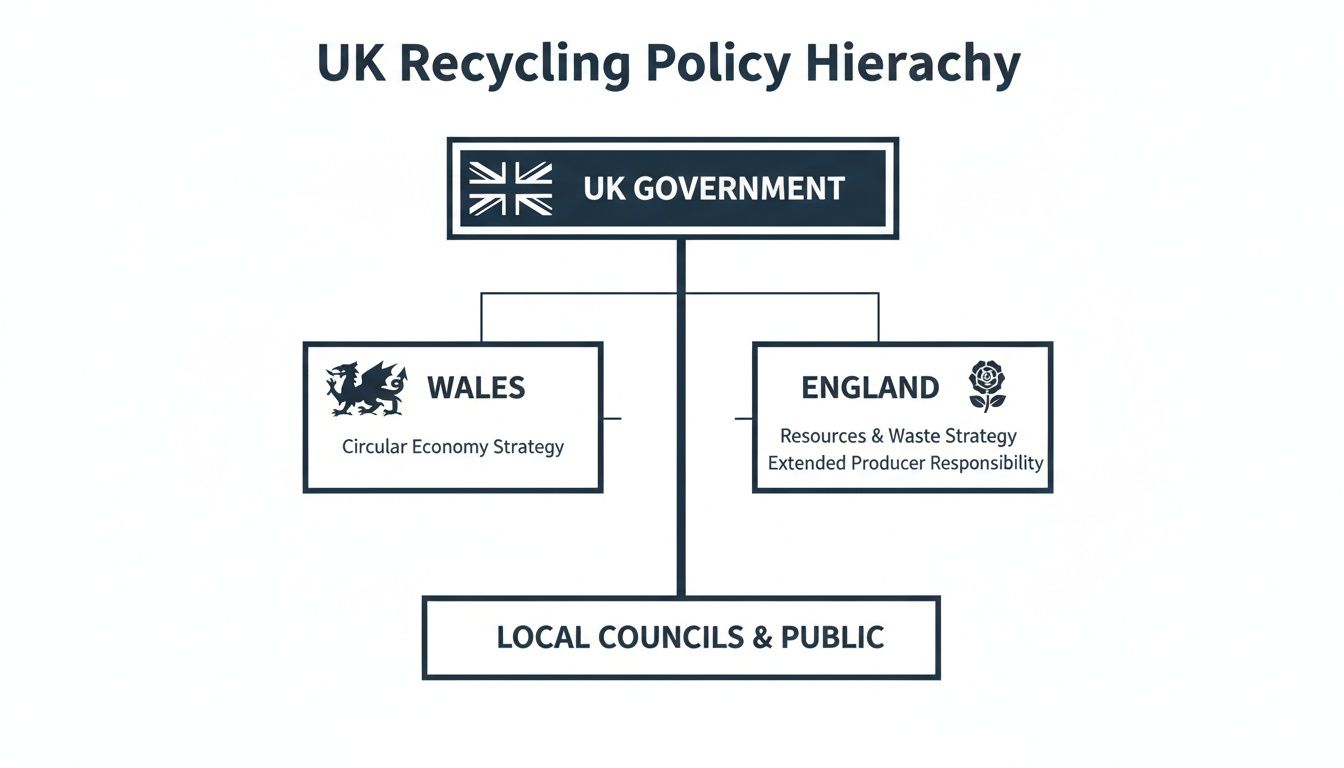
As the diagram shows, a more unified and consistent approach, like the one taken in Wales, can lead to much more effective recycling systems compared to the more fragmented strategies seen elsewhere.
UK Recycling Performance by Material
This table really lays bare the stark difference in how we handle different materials. It shows where our efforts are paying off and, crucially, where we really need to focus our attention.
| Material Type | Typical Recycling Rate (%) | Key Recycling Challenge |
|---|---|---|
| Metal Cans | 75-80% | Minor contamination from leftover food or liquid. |
| Paper & Card | 65-70% | Contamination from grease, food, and non-paper items. |
| Glass Bottles | 60-65% | Mixed-colour collections reduce value and recyclability. |
| Plastic Bottles | 55-60% | Confusion over different plastic types (e.g., PET vs. HDPE). |
| Plastic Pots & Trays | 30-35% | Black plastic is often invisible to sorting sensors. |
| Plastic Films | Less than 10% | Clogs machinery and is made of low-value, hard-to-recycle polymer. |
The incredibly low figures for things like plastic films and trays are a major drag on the UK's overall recycling performance. These items, along with tricky things like coffee cups and crisp packets, represent the next big frontier. Tackling them properly is going to take a lot of innovation in packaging design and some serious investment in advanced sorting tech.
You can dive deeper into the specific issues and potential fixes by reading our guide on plastic recycling challenges and opportunities.
The Biggest Barriers to Higher Recycling Rates
So, with all the best intentions in the world, why has the UK's recycling progress hit a bit of a wall? It feels like we've plateaued. While public support for recycling is huge, there are some serious hurdles stopping us from taking our performance to the next level. These barriers range from simple habits in our kitchens to the complex world of global economics, and they all play a part.
One of the most damaging problems is contamination. Just picture it: a single greasy pizza box or a half-empty jar of pasta sauce gets chucked into the recycling. That one small act can ruin an entire lorry-load of otherwise perfectly good paper and cardboard. Suddenly, it's all destined for landfill or incineration. Contamination costs local councils millions and throws a spanner in the works for the whole system.
Then there's its close cousin: ‘wishcycling’. This is when we hopefully toss things like crisp packets, plastic bags, or broken toys into the recycling bin, crossing our fingers that they'll somehow get sorted out. The intention is good, but the result is just more contamination, which slows down the sorting facilities and pushes up costs for everyone.
Systemic and Economic Challenges
Looking beyond what happens at our bins, there are much bigger, more complicated forces affecting the recycling rates in the UK. These are the sorts of systemic problems that can't be fixed just by getting better at sorting our plastics from our paper.
Here are three of the big ones:
- Volatile Global Markets: A huge chunk of the UK's recyclable material gets shipped abroad. When demand in other countries drops, the value of these materials tanks, making it less financially attractive for companies to collect and process them.
- Lack of Home-Grown Infrastructure: For years, we've relied on other countries to handle our waste. We simply don't have enough recycling plants here in the UK, especially for trickier materials like certain plastics. This makes our entire system vulnerable when global policies change or economies wobble.
- Confusing Messages: As we've touched on, the 'postcode lottery' of different rules from council to council just creates confusion. When people don't get clear, consistent guidance, it's no surprise that contamination rates go up.
Experts often point to these very issues when explaining why recycling rates fluctuate—it's all down to shifting collection services, contamination levels, and economic pressures. For example, the COVID-19 pandemic threw services and household habits into disarray, contributing to a 1.7-point drop in England's rate to 43.8% in 2020/21.
To get past these barriers, we need to attack the problem from all sides. That means clearer public education to stop wishcycling, serious investment in UK-based recycling technology, and smarter policies that create stable, long-term markets for recycled materials.
Finding Effective Solutions
Thankfully, it's not all doom and gloom. Smart solutions are already being put into action to tackle these deep-rooted problems. Policies like Extended Producer Responsibility (EPR) are designed to make manufacturers financially responsible for the packaging they create. The idea is to push them to design products that are easier to recycle from the very start.
At the same time, new tech like AI-powered optical sorters is making our Material Recovery Facilities much better at separating materials and kicking out contaminants. For councils and community groups wanting to make a direct impact, exploring funding like grants for waste prevention initiatives can be a game-changer. Ultimately, breaking down these barriers is the only way we're going to unlock the UK's true recycling potential.
How You Can Make a Tangible Impact
It’s easy to feel a bit disconnected when you hear about national statistics and government policy. But the truth is, the real push to improve the UK’s recycling rates starts in our homes and workplaces. The most powerful changes happen when we understand what we're throwing away and take small, consistent steps to do better. It’s all about turning good intentions into real results, one bin at a time.
The first step is a simple ‘waste audit’. Just for one week, keep an eye on what’s going into your general rubbish bin. You’ll probably be surprised by how much recyclable stuff ends up in there – things like plastic food trays, glass jars, or cardboard packaging. Spotting these missed opportunities is the key to getting more out of your recycling efforts.
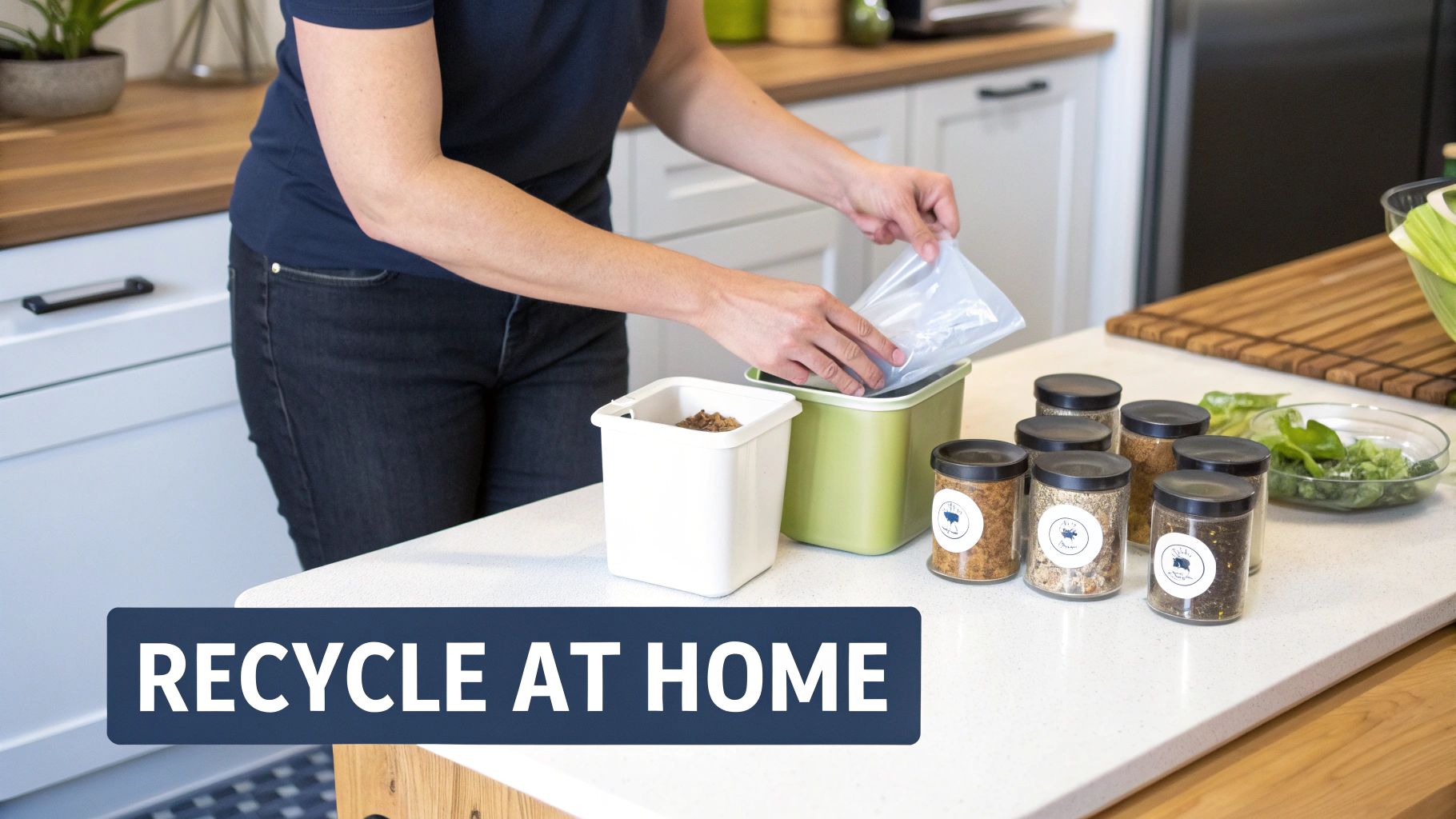
Once you know what you’re throwing away, you can start making some simple changes. These small habits make a massive difference in preventing contamination and making sure your recycling actually gets a second life.
Actionable Tips for Households
For most of us at home, boosting our personal recycling rate is all about nailing the basics and knowing what to do with the trickier items.
- Rinse and Repeat: Give food containers like yoghurt pots and tins a quick rinse. Leftover food is one of the biggest causes of contamination and can spoil an entire lorry-load of otherwise perfect recycling.
- Know Your Local Rules: Pop onto your local council’s website every now and then. The rules on which plastics are accepted can change as local facilities get upgraded, so it pays to stay in the loop.
- Handle Difficult Items Correctly: Don't just toss items like old batteries, textiles, or electronics in the bin and hope for the best (sometimes called 'wishcycling'). Instead, use the designated collection points at supermarkets or your local tip.
If you’re looking for more ideas, exploring some expert tips for recycling can clear up common mix-ups and help you recycle much more effectively.
The goal is simple: send clean, high-quality materials to be processed. A little bit of effort at home hugely increases the chances that your recycling will be successfully turned into something new, rather than getting rejected and sent to landfill.
A Strategic Approach for Businesses
For businesses, getting waste management right is more than just ticking a box – it’s a smart move. Unlike households, businesses have a legal Duty of Care to manage their waste responsibly, which is the perfect opportunity to set up some seriously efficient recycling systems.
This is where professional waste management services really come into their own. By setting up separate bins for glass, paper, cardboard, and food waste, businesses can produce incredibly clean streams of materials that are much more valuable for recycling. Not only does this look great for your environmental credentials, but it can also save you a fair bit of money.
A good waste provider will give you detailed reports showing exactly how much you’ve thrown away and, crucially, what percentage was recycled. This data is gold dust for sustainability reports and for showing stakeholders you mean business. It also helps you spot where you can cut down on waste even further. Ultimately, partnering with a waste specialist turns a legal chore into a powerful way to build a greener, more cost-effective, and well-respected company.
Got Questions About UK Recycling? We’ve Got Answers.
Let’s be honest, recycling can feel a bit confusing at times. Even when you’re trying to do the right thing, persistent myths and practical headaches can get in the way. We get it.
So, let's clear the air and tackle some of the most common questions people have about recycling in the UK. Getting to grips with these details makes the whole process much easier for everyone.
Why Do Recycling Rules Change from One Town to the Next?
This is a massive source of frustration for so many people, and it all comes down to how waste is managed in England. It’s not one single system; instead, each local council has its own separate contract with a waste management company.
These contracts are built around what the local sorting facility can actually handle. One plant might have the high-tech gear to separate yoghurt pots, while the one in the next county doesn't. This creates the infamous ‘postcode lottery.’ The good news is that the government’s 'Simpler Recycling' reforms aim to standardise collections across the country, which should hopefully put an end to the confusion.
What Actually Happens to My Recycling Bin After It’s Collected?
Once that lorry drives away, your recyclables are taken to a Material Recovery Facility (or MRF for short). It’s a busy place where a mix of machinery and human sorters work together to separate everything out – paper from plastic, metal from glass.
Once sorted, these materials are squashed into huge, dense bales. They are now a commodity, ready to be sold to manufacturers and reprocessed into brand-new products. While a lot is still exported, there's a big push to build up the UK's own reprocessing capacity. The goal is to create a more self-sufficient, circular economy right here at home.
Is It True Most of Our Recycling Just Ends Up in a Landfill Anyway?
This is probably the single most damaging myth out there. While some material does get rejected if it’s heavily contaminated (like a greasy pizza box in with clean paper), the vast majority of clean recycling is successfully processed. Recycled materials are valuable – it’s in the financial interest of waste companies to recycle as much as possible. These figures are all verified through audited reports from councils and licensed waste carriers.
How Is Business Recycling Different From What I Do at Home?
The two systems are completely separate. The bin collections at your house are paid for through council tax. For businesses, it's a different story. They have a legal 'Duty of Care' to manage their waste responsibly and must pay for their own commercial collections.
This actually allows for much cleaner and more effective recycling. Think about it:
- An office can set up a bin purely for waste paper.
- A pub or restaurant can have a separate, regular collection just for its glass bottles.
- A factory can easily segregate all its cardboard packaging.
Because the waste is separated right at the source, the materials are much cleaner and higher quality, making them far easier to recycle. Professional waste services also give businesses the paperwork—like waste transfer notes and data reports—to prove they are complying with the law and to track how well they’re doing on their recycling rates in the UK.
At The Waste Group, we specialise in making waste management straightforward, efficient, and reliable for households and businesses all over Dorset. Whether you need a skip for a weekend clear-out or a complete waste strategy for your company, we’re here to make sure your waste is handled the right way to recycle as much as possible. Find out more at https://www.thewastegroup.co.uk.