Removal of Soil: The UK Guide to Safe and Effective Cleanup
Removal of Soil: The UK Guide to Safe and Effective Cleanup
Getting rid of soil is often the very first job on the list for countless construction and landscaping projects. It involves digging up and hauling away earth to get a site ready. This is absolutely essential if you want to create a level surface, dig out foundations, or clear away contaminated ground before any new work can kick off.
When and Why Do You Need to Remove Soil?
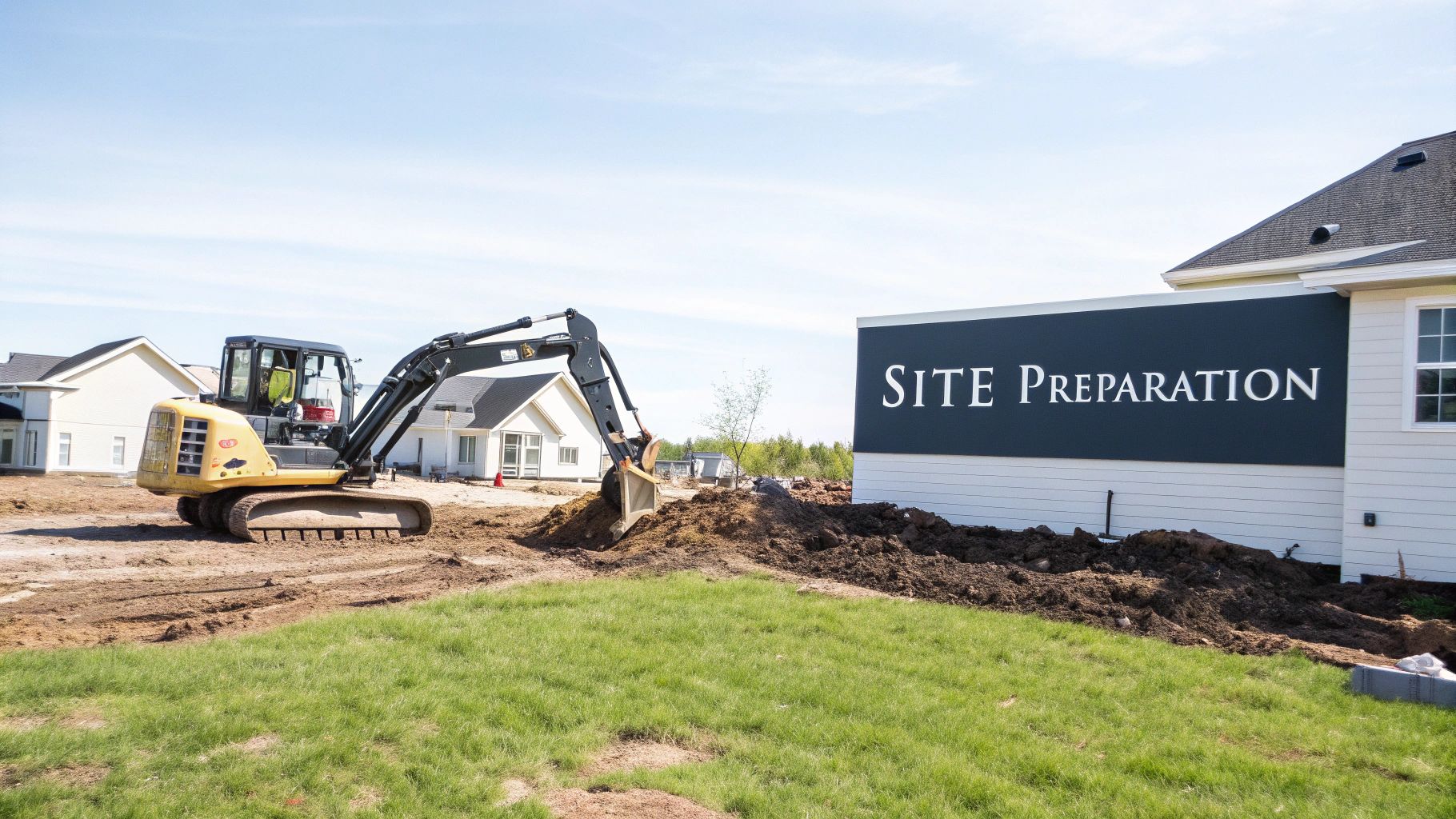
Every big project, from laying a new patio to putting up a block of flats, starts with the ground. Shifting soil, often called "muck away," is the make-or-break task that clears the path for everything else. It’s simply a job that has to be done whenever you need to alter the height, shape, or makeup of the land.
This process always creates a pile of surplus earth that can’t just be left on-site. Think of it like a sculptor carving a statue from a block of stone—you have to get rid of the excess bits to see the final shape. Whether you’re a homeowner giving your garden a makeover or a contractor managing a huge development, knowing what triggers the need for soil removal is the first step.
Common Projects That Require Soil Removal
The amount of soil you'll need to shift can vary wildly. Digging a small garden pond might only produce a few cubic metres of topsoil. In contrast, excavating a basement for a new office building can generate thousands of tonnes of subsoil and clay. The experts who handle this day in, day out are Site Preparation Contractors, and they know just how quickly the muck can pile up.
Here’s a quick look at the kinds of jobs that almost always involve getting rid of soil.
| Project Type | Typical Soil Volume | Key Considerations |
|---|---|---|
| Landscaping & Garden Redesigns | Low to Moderate: A few cubic metres | Often involves topsoil. Consider access for machinery and skips. |
| Building Foundations | Moderate to High: For extensions, new builds | Dig depth and footprint determine volume. Subsoil and clay are common. |
| Driveways & Patios | Low to Moderate: Depends on area and sub-base depth | You're digging out to create a stable, long-lasting base. |
| Drainage & Utility Trenches | Moderate: Can be surprisingly high for long trenches | Soil type affects trench stability. Backfilling might use some soil. |
| Site Clearance & Remediation | High to Very High: Can involve thousands of tonnes | Contamination is the biggest factor, requiring special handling. |
As you can see, the scale of the job has a huge impact on the logistics and costs involved.
Is It Waste or a Resource?
Here’s something crucial to think about: is the earth you’ve dug up just waste to be chucked, or could it be a valuable resource? How you answer that question will shape both the cost and the environmental footprint of your project.
Clean, inert soil—the stuff free from any nasties—can often find a new life. It can be used as fill material on other building sites, screened and sold as topsoil, or used in big landscaping jobs. This is a far more sustainable approach, and it can save you a significant amount of money.
But on the flip side, soil that’s contaminated with things like asbestos, heavy metals, or oil is legally classed as hazardous waste. Getting rid of it is a whole different ball game, tightly regulated and much more expensive.
Spotting this difference early on is fundamental. It sets the tone for everything that comes next, from soil testing to picking the right waste management partner to handle the job properly.
The Crucial First Step: Soil Testing and Classification
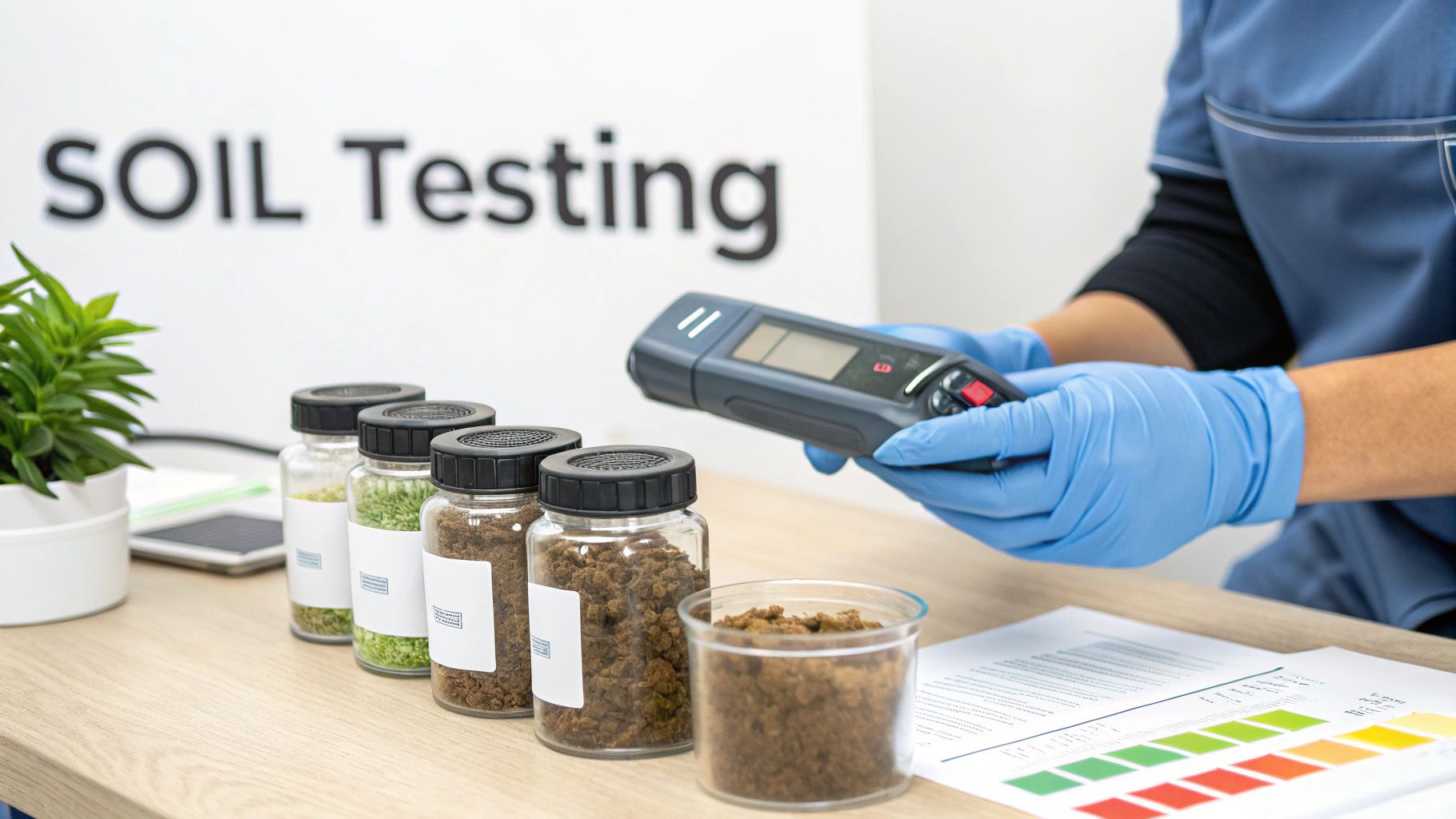
Before a single shovel hits the ground, you absolutely must know what kind of soil you're dealing with. Just digging it up and getting rid of it isn't just irresponsible – it's illegal. Going in blind can lead to massive fines and bring your project to a screeching halt. This initial step of testing and classifying your soil is your single most important duty of care.
Think of it like sorting your household recycling. You wouldn't just chuck glass bottles in with your paper and food scraps because each one has its own specific disposal route. Soil is exactly the same. Its makeup determines where it can legally go and, crucially, how much it's going to cost you to get rid of it. Get this wrong, and you’ll be paying for it later.
On bigger projects, getting a full picture of the excavation work ahead can be made much simpler with modern technology. For example, exploring the benefits of drone use in construction offers incredible insights through site surveying, helping you plan everything out before you even break ground.
The Three Main Categories of Soil Waste
Here in the UK, any soil you dig up will fall into one of three main categories. Each one reflects the potential harm it could pose to people and the environment, which in turn dictates the entire disposal process.
-
Inert Soil: This is the best-case scenario. Inert soil is clean material like clay, chalk, or subsoil that hasn't been mixed with anything else. It's chemically and biologically safe, making it the easiest and cheapest to dispose of. Often, it gets a new life as recycled aggregate or engineering material.
-
Non-Hazardous Soil: This is soil with low levels of contaminants – not enough to be deemed hazardous, but not completely clean either. You might find this on demolition sites where the soil contains small bits of concrete or brick. It needs a bit more care than inert soil but is still fairly straightforward to manage.
-
Hazardous Soil: This is the one you need to take very seriously. Soil becomes hazardous when it’s contaminated with substances that can cause real harm. It requires specialist handling, transport, and disposal at a specially licensed facility. Cutting corners here is a major offence.
Identifying Common Soil Contaminants
The presence of certain materials will immediately raise a red flag, flagging your soil as potentially hazardous. The history of the land is usually the biggest clue. For instance, soil from an old industrial site, petrol station, or garage is far more likely to be contaminated than soil from a back garden.
Common contaminants that will push your soil into the hazardous category include:
- Asbestos: A frequent discovery on older industrial sites or where old buildings have been knocked down.
- Heavy Metals: Nasty stuff like lead, mercury, and cadmium left over from old industrial processes.
- Oils and Fuels: Diesel, petrol, and other hydrocarbons, often from spills or old, leaky tanks.
- Chemicals: A whole host of things like solvents, pesticides, and other industrial by-products.
If you find any of these, your soil can't be treated like normal waste. It has to be kept separate, and you must bring in a specialist waste partner to make sure the removal of soil is done safely and in line with UK environmental law.
When is a WAC Test Necessary?
If your soil is heading to a landfill, you might need what's called a Waste Acceptance Criteria (WAC) test. Now, it's important to be clear: a WAC test doesn't actually classify your waste. All it does is confirm whether a specific landfill is permitted to accept it.
You'll generally need a WAC test if:
- You think your soil might be hazardous and it has to go to a hazardous waste landfill.
- You're confident your soil is inert, but you want to send it to an inert waste landfill to take advantage of the much lower landfill tax rates.
This test analyses how the soil will behave once it's buried in a landfill, checking for things like whether contaminants could leach out into the ground. Getting your soil identified and tested correctly is the absolute foundation of a successful, legal, and budget-friendly soil removal project. It protects you, your wallet, and the environment.
Navigating UK Soil Disposal Regulations
Shifting soil from one place to another isn’t just a matter of digging and dumping. It's a process tangled up in strict UK environmental laws designed to stop pollution and make sure waste is dealt with responsibly. Getting it wrong can land you in serious trouble. So, for any project that involves the removal of soil, understanding your legal duties isn't just a good idea—it's absolutely essential.
At the heart of it all is your Duty of Care. This is a legal responsibility that makes you accountable for the soil from the moment it’s dug up until it’s legally disposed of. It doesn't matter if you're a homeowner clearing out the garden or a major contractor on a building site; this duty applies to everyone, without exception.
Understanding Key Legal Frameworks
Two main bits of legislation dictate how soil waste is managed here in the UK. First, there's the Environmental Protection Act 1990, which is the law that created the Duty of Care. Second, you have the Definition of Waste Code of Practice (DoW CoP), which provides a route for excavated material to be reused as a resource instead of being chucked out as waste.
Here’s a simpler way to think about it: The Environmental Protection Act lays down the law for all waste, no questions asked. The DoW CoP, on the other hand, offers a more sustainable path, letting you avoid the "waste" label altogether if your soil is clean and you have a definite plan for its reuse. Making this distinction is crucial, as it has a massive impact on your project's costs and schedule.
The decision-making process can be broken down into a few key steps. This flowchart gives you a basic idea of how to figure out the right way to handle your excavated soil.
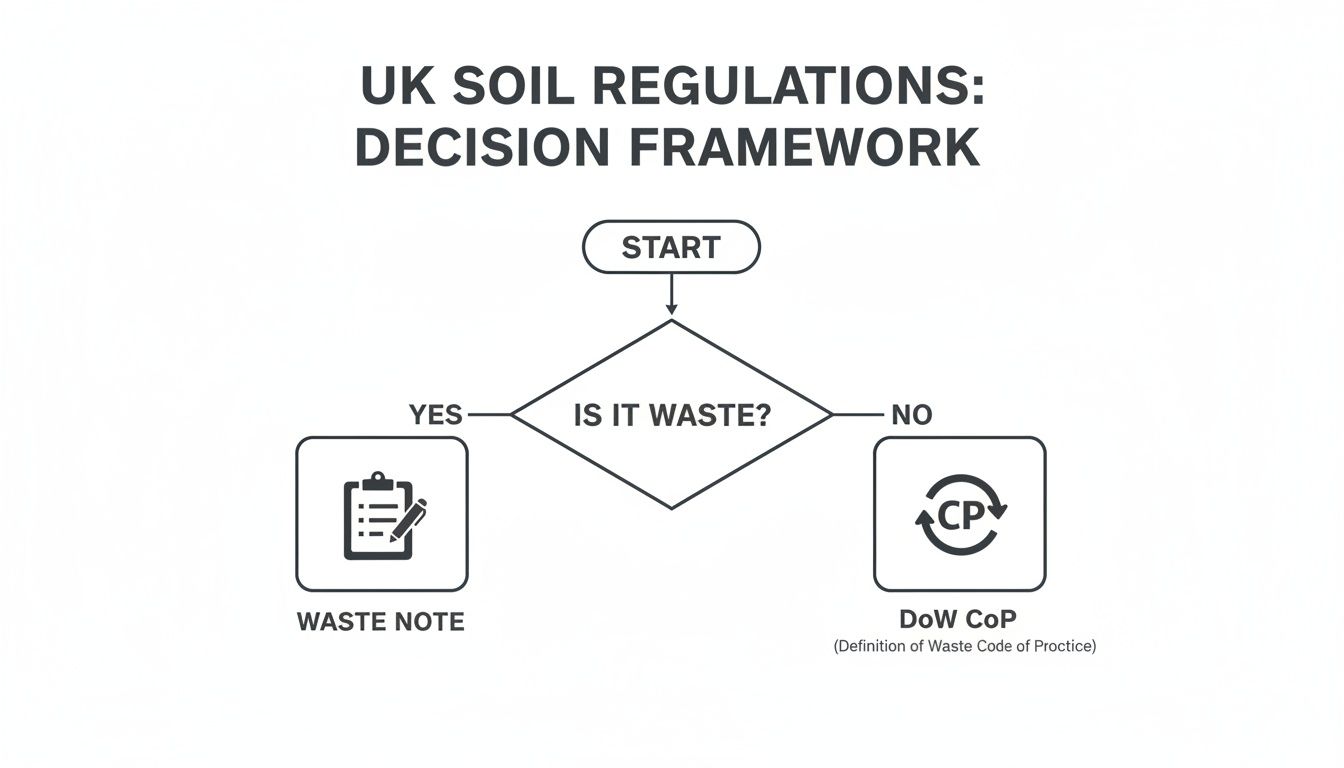
The first question you must answer is whether your soil is officially waste. If it is, you are legally bound to use the waste transfer note system. If it isn't, you can explore reusing it under the DoW CoP.
The Role of the Waste Transfer Note
When your soil is classified as waste, the Waste Transfer Note (WTN) becomes the single most important document you'll handle. This isn't just another bit of admin; it's the legal paper trail that proves you've handed your waste over to a licensed carrier.
Think of a Waste Transfer Note as a passport for your soil. It tracks its entire journey, from leaving your site to its final destination. It details what the waste is, how much there is, and everyone who's handled it. Without one, you have zero proof of legal disposal.
If your soil is found fly-tipped somewhere, the authorities will trace it back to where it came from. If you can't show them a valid WTN, you could be held responsible for the crime, even if you paid someone else to take it away. This is exactly why you can't afford to skip checking your waste carrier's credentials.
Distinguishing Between Clean and Contaminated Soil
The rules get a whole lot tighter if the soil is contaminated. While clean, inert soil is fairly straightforward to manage, the game changes completely if substances like asbestos, heavy metals, or oils are present. This kind of soil is often classified as hazardous waste, which has its own highly specialised and regulated disposal process. For a deeper dive, check out our guide on hazardous waste disposal regulations.
The amount of soil being thrown away is staggering. In the UK, soil is the single biggest waste stream heading to landfill, making up a whopping 58% of all landfill tonnage, according to 2022 Defra statistics. Most of this comes from construction and development. However, the DoW CoP has successfully diverted over 160 million cubic metres of soil for reuse since 2008, proving that there's a much better way to do things.
Working with a fully compliant and licensed waste management company like The Waste Group takes this entire regulatory headache off your hands. A professional partner makes sure every legal box is ticked, from classifying the soil correctly and handling all the paperwork to arranging transport and final disposal at a licensed facility. It protects you from fines, keeps your project moving, and ensures you’re doing right by the environment.
Choosing the Right Soil Removal Method
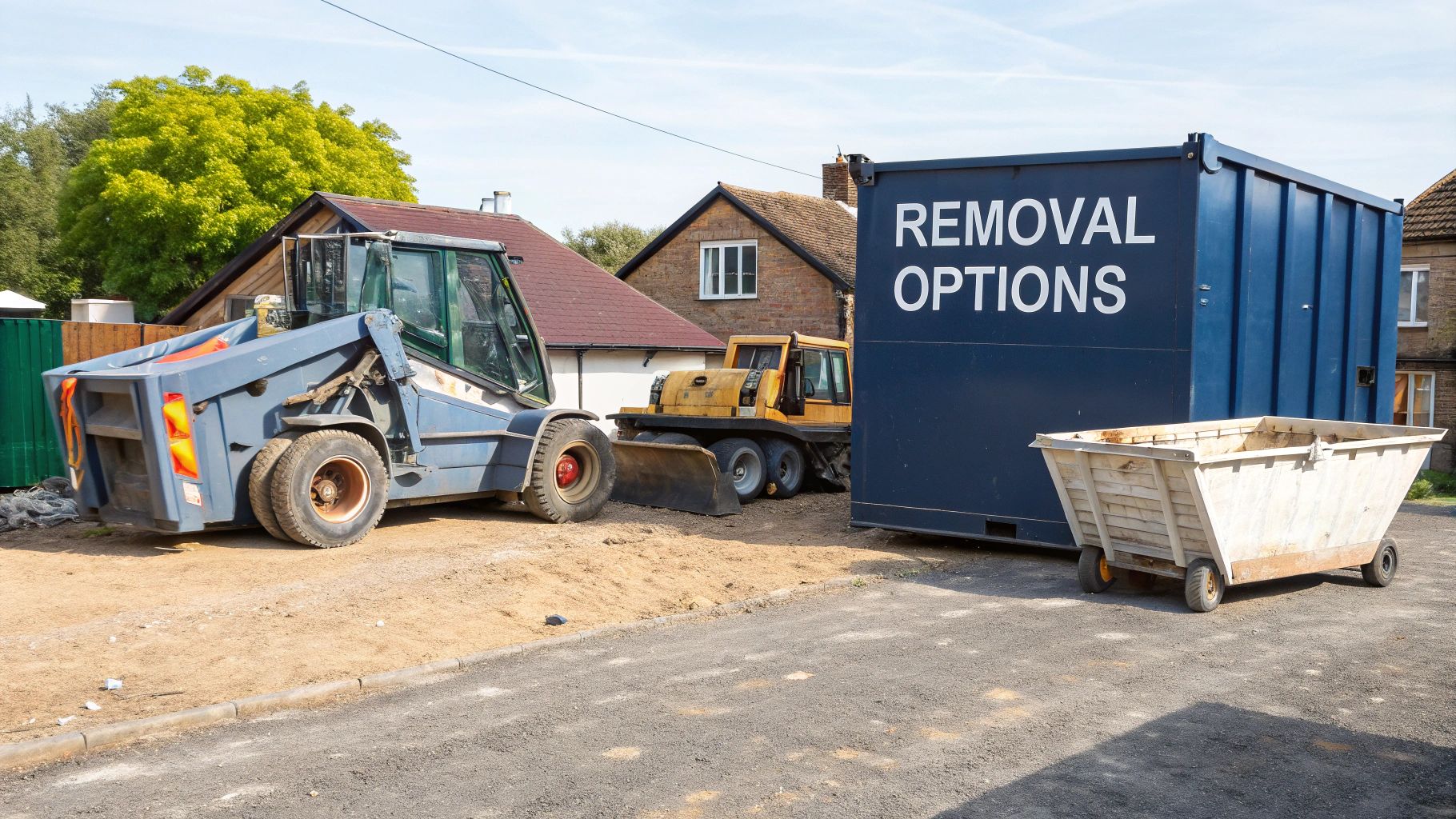
So, you’ve figured out what kind of soil you have and you’re clear on your legal responsibilities. The next piece of the puzzle is purely practical: how are you actually going to get all that earth off your site?
Think of it like choosing the right tool for the job. You wouldn't use a sledgehammer to hang a picture frame, and you wouldn't use a tiny van for a massive house clearance. Getting this decision right from the start makes everything run smoother, keeps your project on track, and stops costs from spiralling.
Your choice boils down to three simple things: the sheer volume of soil you need to shift, the access you have to your property, and how quickly you need it gone. Let's walk through the most common options, from small garden jobs right up to major construction sites.
Skip Hire: The Versatile Option
For most homeowners and smaller trade jobs, a good old-fashioned skip is the first port of call. It’s a simple, reliable way to contain and remove soil from things like a garden makeover, a new patio, or digging foundations for a small extension.
Skips come in all sorts of sizes, but when you're dealing with heavy stuff like soil, you'll usually be limited to an 8-yard skip at most. Why? Because a bigger skip filled with dense, wet soil could easily become too heavy for the lorry to legally lift and transport.
Key Takeaway: A skip is a static container you can fill at your own pace. This flexibility is brilliant for DIY projects that might take a few days, letting you chip away at the digging without feeling rushed.
The only catch is that you need a suitable, solid spot to put it. This could be your driveway or, if you get a permit from the council, the road outside. If space is tight or access is tricky, a skip might not be your best bet.
Grab Lorry Hire: For Speed and Awkward Access
When you’ve got a mountain of soil to move or your site is hard to get to, a grab lorry is an absolute game-changer. These trucks come with a hydraulic crane arm and a bucket, allowing the driver to reach over walls, fences, or other obstacles to scoop the soil up directly.
This means you don't have to spend hours breaking your back with a wheelbarrow to load a skip. A typical grab lorry can carry about 16 tonnes of waste—that's roughly the same as two big skips—making it perfect for larger projects like digging out a new driveway.
- Speed: A grab lorry can be loaded and on its way in as little as 20-30 minutes.
- Convenience: No need for a permit, as the vehicle doesn't hang around.
- Accessibility: The crane's reach solves a lot of access headaches.
This "grab and go" approach is incredibly efficient for projects that generate a lot of waste in a short time. You can find out more in our detailed guide on grab lorry waste removal.
RORO Bins: For Major Projects
For the really big jobs—think major construction sites, commercial developments, or large-scale groundworks—the Roll-On/Roll-Off (RORO) bin is the industry workhorse. These are basically giant skips, with some holding up to 40 cubic yards of material.
ROROs are built for sites that produce huge volumes of waste and have plenty of room for a large lorry to manoeuvre. They are, by far, the most cost-effective way to handle massive soil removal tasks, as their huge capacity means fewer vehicle trips to and from the site.
Comparing Soil Removal Options
Choosing the right option can feel daunting, so we've put together this quick comparison table to help you see which method best fits your project's needs.
| Removal Method | Best For | Typical Capacity | Pros | Cons |
|---|---|---|---|---|
| Skip Hire | Small to medium domestic projects (gardens, patios, small digs) | Up to 8 cubic yards | Fill at your own pace, cost-effective for smaller volumes | Requires space for placement, may need a permit, manual loading |
| Grab Lorry | Medium to large projects, sites with difficult access | 16-18 tonnes | Extremely fast, no manual loading, reaches over obstacles | Requires a pile of soil ready for collection, less flexible timing |
| RORO Bin | Major construction and commercial projects | 20-40 cubic yards | Massive capacity, most cost-effective for huge volumes | Needs significant space for delivery and placement, not for small jobs |
Each method has its place. The key is to match the tool to the scale of your job to ensure everything runs as smoothly and affordably as possible.
Where Does Your Soil Go After Removal?
Once your soil leaves your site, its journey isn't over. A reputable waste company ensures it's taken to a fully licensed facility, and its final destination depends entirely on what's in it.
- Recycling and Recovery: Clean, inert soil is a valuable resource. It's often screened and repurposed as engineering fill or topsoil, playing a part in the circular economy.
- Licensed Landfill: Soil that can't be recycled but isn't hazardous is taken to a licensed landfill. Inert landfills have lower disposal fees and taxes than general waste sites.
- Hazardous Waste Treatment: If your soil is classified as hazardous, it must be transported to a specialist facility that can safely treat the contaminants and prevent any environmental harm.
This responsible management is a legal requirement and part of a huge nationwide effort to handle waste more sustainably. Back in 2018, UK construction and excavation produced a staggering 137.8 million tonnes of waste, with soil as a massive component.
The good news? By 2022, the recovery rate for this non-hazardous waste stream in England hit an impressive 94.3%. Choosing a compliant waste partner means you’re directly supporting this positive trend and ensuring your project is part of the solution, not the problem.
Understanding the Costs of Soil Removal
Figuring out the budget for a soil removal project can feel a bit like trying to hit a moving target. The final bill isn't just about hiring a lorry; it's a mix of several interconnected factors. Getting to grips with these is the key to budgeting accurately and avoiding any nasty surprises down the line.
The price you pay is influenced by everything from the type of soil you've got to your postcode. It helps to think of it like posting a parcel: a small, light box going locally will cost far less than a large, heavy, and restricted item sent to the other side of the country. Your soil removal works on similar principles, with volume, weight, classification, and distance all playing a major role.
The Main Factors Driving Your Bill
Several key elements will directly impact your final quote. Understanding these will help you see why one quote might be miles apart from another and what truly represents good value. Believe it or not, the most significant cost often isn't the transport itself, but what happens to the soil once it leaves your site.
Here are the main things that determine the cost:
- Volume and Weight of Soil: This one's the most obvious. The more soil you need to shift, the more it’s going to cost. This simple fact dictates the size of the container you'll need (skip, grab lorry, RORO) and how many trips will be required.
- Soil Classification: This is a huge cost driver, perhaps the biggest of all. Clean, inert soil is the cheapest to get rid of because it can be easily recycled or reused. Non-hazardous is more expensive, and hazardous soil is in a different league entirely. It requires specialist transport and disposal at a licensed facility, which naturally comes at a premium.
- Removal Method: The option you choose—skip hire, grab lorry, or a RORO bin—has its own price point. A grab lorry might seem more expensive upfront than a small skip, but for larger volumes, its sheer efficiency can offer much better value for money.
- Your Location: How close you are to a suitable disposal or recycling facility really matters. The further the lorry has to travel, the higher the transport costs will be, simply down to fuel and time.
Hidden Costs and How to Avoid Them
Beyond the headline price, there are other charges that can creep in and influence your total spend. These are often unavoidable parts of the waste industry, but a transparent company will always make them clear from the start.
The two most significant background costs are landfill tax and disposal gate fees. Landfill tax is a government levy designed to stop so much waste from ending up in the ground. For inert waste like clean soil, the rate is much lower, currently around £3.30 per tonne. However, for non-hazardous waste, it shoots up to over £103 per tonne.
The "gate fee" is what the recycling facility or landfill charges your waste carrier just to accept the soil. These fees vary between facilities and are passed on to you. This is exactly why contaminated soil removal can range from £270 to £460 per tonne or more – the disposal process is far more complex and tightly regulated.
But the biggest hidden cost of all comes from non-compliance. Using an unlicensed "man with a van" service might seem like a bargain, but if your soil ends up fly-tipped, you could be facing unlimited fines. Choosing a fully licensed and insured partner is the only way to protect yourself from legal and financial headaches, ensuring your project is completed properly and without any costly delays.
How to Select a Compliant Waste Partner
Picking the right company for your soil removal is probably the most important decision you'll make. It’s not just about booking a lorry; you’re handing over huge legal and environmental responsibilities to someone else. Get this right, and your project will be smooth, safe, and above board.
A fully compliant waste partner is your shield against the nasty surprises of non-compliance, like the unlimited fines handed out for fly-tipping. They make sure every single tonne of soil is handled by the book, protecting you and the environment from any fallout.
Verifying Essential Credentials
Before you even think about agreeing to a price, you need to check a few non-negotiables. This is your first line of defence against rogue operators and the only way to be sure a company is trading legally.
Insist on seeing proof of these three things:
- A Valid Waste Carrier's Licence: This is issued by the Environment Agency. Don't just take their word for it – you can and should check their registration number online to make sure it's current. If they don't have one, they're breaking the law. Simple as that.
- Public Liability Insurance: This covers you and your property if anything goes wrong during the collection. Accidents happen, and you don't want to be left footing the bill.
- Permitted Tipping Facilities: Ask them straight: where is my soil going? A legitimate company will only ever use licensed recycling centres or landfills and won't be shy about telling you who their disposal partners are.
These aren't just bits of paper; they're your evidence of due diligence.
The Importance of Documentation
A true professional never, ever cuts corners on paperwork. The most vital document in this whole process is the Waste Transfer Note (WTN).
Think of the WTN as the official receipt for your waste. It’s a legal document that tracks the journey of your soil – detailing what it is, who created it, who picked it up, and its final destination. Without a properly filled-out WTN for every single load, you have zero proof you disposed of your waste responsibly.
Your waste partner must give you a completed copy. To get your head around this crucial document, take a look at our guide that explains exactly what a Waste Transfer Note is. This paper trail is your ultimate backup if the authorities ever come knocking.
Questions to Ask a Potential Partner
Once you've ticked off the basic credentials, it’s time to dig a bit deeper. A few simple questions can tell you a lot about their professionalism and how seriously they take their role.
A good partner will be happy to answer questions like:
- What are your recycling rates? What percentage of the soil and inert waste you collect is actually recycled or recovered? A high number shows a genuine commitment to sustainability.
- Can I see some customer reviews? What are past clients saying? Check independent review sites to get the real story.
- Have you handled a job like mine before? Experience with projects of a similar scale is a massive plus. It means they'll know what to expect.
Choosing a partner like The Waste Group means you're covered. We are fully licensed, insured, and have a solid reputation for a reason. We give you complete transparency, handle all the legal paperwork flawlessly, and always aim for the most sustainable disposal routes, giving you total peace of mind.
Got Questions About Soil Removal? We’ve Got Answers.
Even with the best-laid plans, a few questions always seem to crop up when you’re dealing with soil removal. Let's tackle some of the most common ones we hear from customers.
Can I Chuck Soil in a Skip with Other Rubbish?
It’s tempting, but we strongly advise against it. Soil is classed as 'inert' waste, which is just a technical way of saying it doesn’t decompose. To be recycled properly and cost-effectively, it needs to be kept clean and separate from other waste like plastic, wood, or general rubbish.
Mixing everything contaminates the soil, turning a simple disposal job into a complicated and expensive one. If you want to keep costs down and do right by the environment, always get a dedicated skip just for soil and other inert materials like hardcore.
How Do I Figure Out How Much Soil I Need to Get Rid Of?
Getting a rough idea is pretty straightforward. Just multiply the length x width x depth of the area you're digging out (make sure all measurements are in metres). This gives you the volume in cubic metres (m³). So, a trench that’s 10m long, 1m wide, and 0.5m deep works out to be 5m³ of soil.
But here’s the crucial bit people often forget: once you dig soil up, it 'bulks up'. It gets aerated and loosened, taking up more space. You can expect it to expand by about 20-30%. That 5m³ hole will actually produce at least 6m³ of loose soil you need to shift. Always factor this in when you’re ordering your skip or grab lorry!
What If I Find Out My Soil Is Contaminated?
This is where you need to be really careful. If testing shows your soil contains nasty stuff like asbestos, heavy metals, or oils, it’s legally classified as hazardous waste. You absolutely cannot put it in a standard skip or send it to a normal landfill.
The law says you must use a specialist, licensed waste carrier to handle it. They have the right permits to transport and dispose of hazardous materials safely at a designated treatment facility. This isn't just red tape; it's about protecting the environment and public health, and it keeps you fully compliant. A good waste partner can walk you through this process from start to finish.
For a hassle-free, fully compliant, and reliable solution for any removal of soil, trust the experts at The Waste Group. Get your instant online quote today.