A Practical Guide to Roll Off Skip Hire in the UK
A Practical Guide to Roll Off Skip Hire in the UK
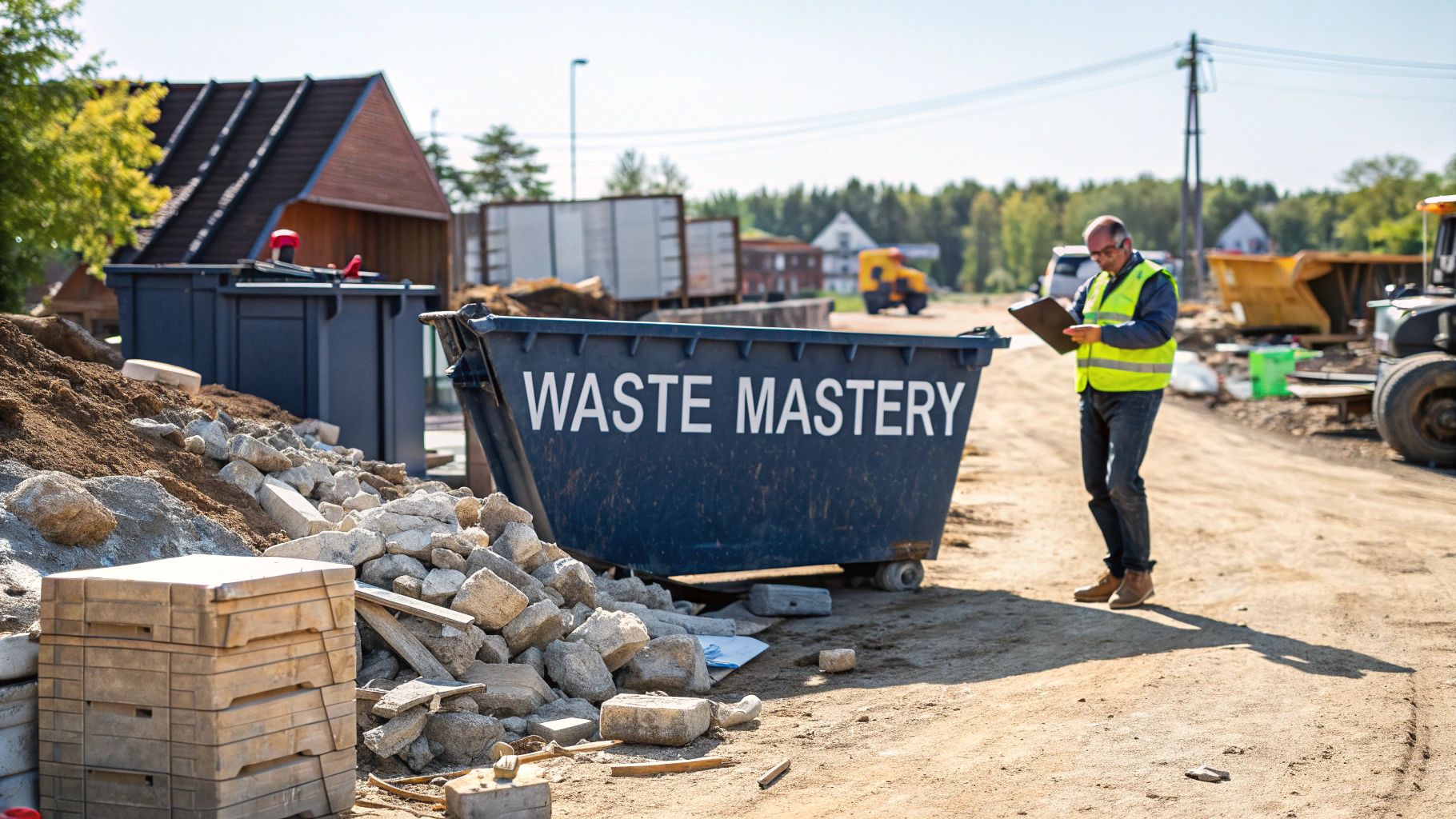
When you’re dealing with a mountain of waste from a major construction, commercial, or industrial job, a standard builder's skip just won’t cut it. That's where roll off skip hire comes in. These huge containers, often called RORO skips, are the heavy-duty solution for managing substantial volumes of waste. Unlike smaller skips, they're designed to be rolled on and off a specialised lorry, making them perfect for bulky but often lighter materials.
What Is a Roll Off Skip and When Do You Need One?
Imagine trying to clear out an entire warehouse using nothing but the boot of your car. It’d be a nightmare of endless trips back and forth. This is exactly the kind of headache project managers face when they try to use standard skips for massive jobs. A regular builder's skip is like the car boot – great for smaller tasks. A roll off skip, on the other hand, is the articulated lorry trailer, built specifically for huge amounts of waste.
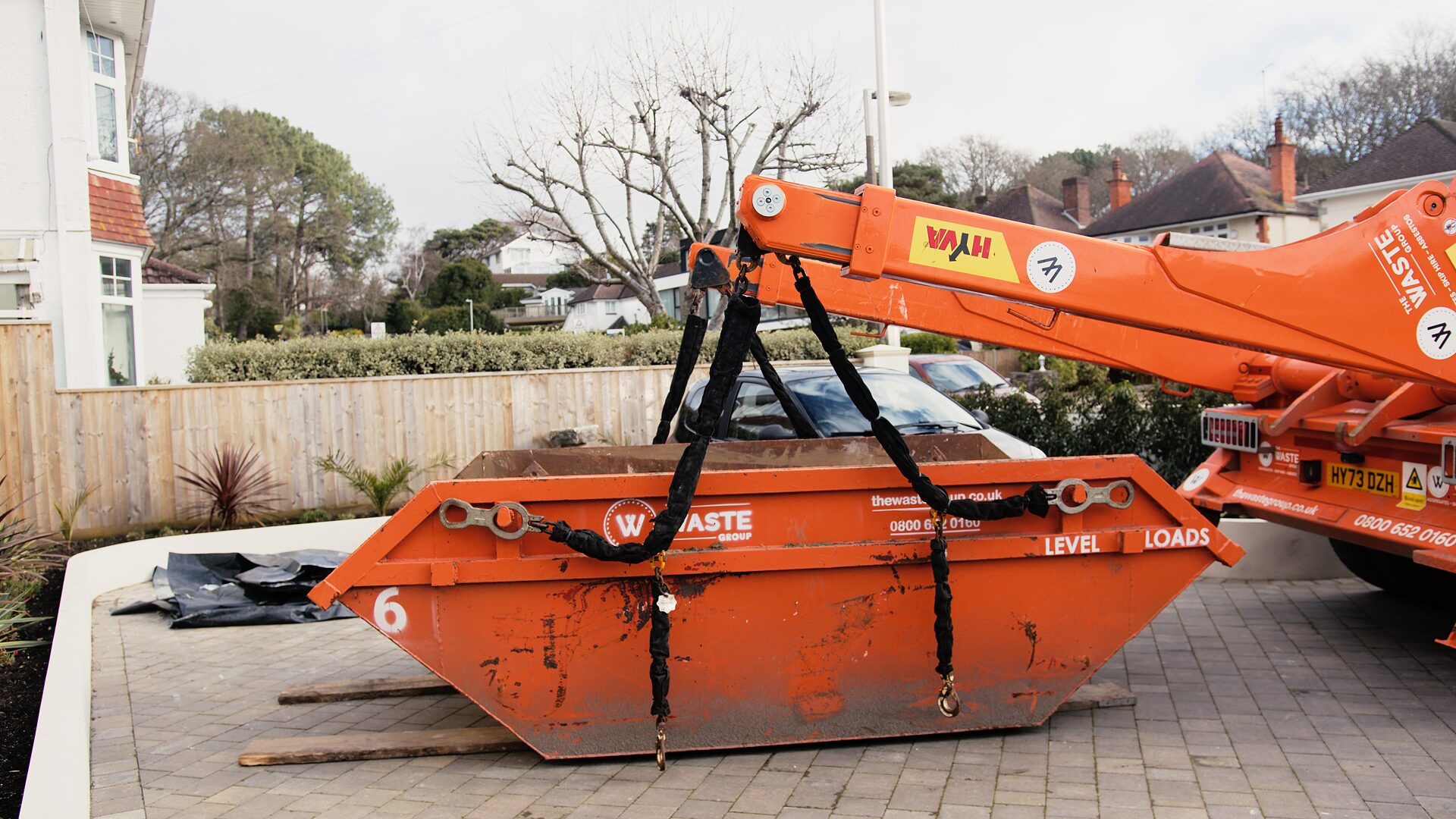
The real difference is in the design and sheer scale. Roll on roll off (RORO) skips are significantly larger, typically starting at 20 cubic yards and going all the way up to 40 yards. They’re delivered on specialist hook-lift lorries that, just as the name suggests, roll the container smoothly into place on your site. This clever design makes them the only sensible choice for specific, large-scale projects.
Scenarios Demanding a RORO Solution
Not every project needs a container this big. A roll off skip becomes non-negotiable when you’re dealing with high volumes of light, bulky waste that would swamp a smaller skip in no time.
You’ll definitely need one for:
- Major Construction and Demolition: These sites churn out enormous amounts of debris like timber, plasterboard, packaging, and scrap metal. A RORO skip consolidates all this waste, meaning fewer containers on site and fewer collections.
- Large Commercial Clear-Outs: Fitting out a new retail unit or emptying an old office space generates a ton of rubbish from old fixtures, fittings, and packaging materials.
- Industrial Waste Handling: Manufacturing plants often produce large quantities of recyclable materials like cardboard, plastics, or wood offcuts. A RORO skip handles these volumes efficiently.
Sometimes, the need for a roll-off skip also crops up during a major house clear-out or renovation, which often happens when you're moving. For a broader look at managing a big move, you might find a comprehensive moving checklist useful.
A RORO skip is a game-changer for site logistics. By holding so much more waste in a single container, it cuts down on vehicle movements, boosts safety, and keeps your project area clear and organised.
In the UK waste management world, roll-off skips are absolutely essential for large-scale commercial and construction projects, especially with the boom in housing developments. For companies like The Waste Group, offering RORO bins up to 40 yards with next-day delivery is vital for serving contractors across Dorset, even when national demand puts a strain on resources. Industry experts always advise booking well in advance to avoid delays, particularly for projects with multiple stages.
Choosing The Right Roll Off Skip Size
Picking the right size for your roll off skip hire can feel a bit like a guessing game. Get it wrong, and you’re either stuck ordering a second skip—adding cost and delays—or you've paid for a huge container that's half empty.
Luckily, it’s much simpler than it sounds.
Roll on roll off (RORO) skips are measured in cubic yards, which is just a fancy way of saying how much space is inside them. While your typical builder's skip might top out at around 16 yards, ROROs are in a different league entirely. They’re built for the big jobs, usually starting at a hefty 20 cubic yards and going all the way up to a massive 40 cubic yards.
To give you a bit of perspective, a standard 8-yard skip holds roughly 80 black bin bags. A 20-yard RORO, the smallest of the big boys, swallows around 220 bin bags. The colossal 40-yarder? That’ll take about 440 bin bags. This is exactly why they are the only sensible choice for projects that generate enormous amounts of waste.
Matching The Skip To Your Project
Knowing the numbers is one thing, but how do they translate to your actual job? The trick is to match the skip not just to the amount of waste, but also its type. Heavier stuff like soil and rubble usually has to go in the smaller RORO skips. This isn't about space; it's about weight—the lorries have legal limits on what they can lift.
Here are a few real-world scenarios to help you visualise it:
- 20-Yard Roll Off Skip: This is your workhorse for large, but not gigantic, projects. Think of a big shop fit-out, a full house renovation, or clearing out a commercial unit. It's also the perfect size for heavy inert waste like soil and hardcore from groundwork jobs.
- 30-Yard Roll Off Skip: A step up, the 30-yarder is ideal for mixed demolition waste or big construction sites producing bulky materials like timber, metal, and packaging. It's a popular choice for many commercial projects, hitting that sweet spot between size and versatility.
- 40-Yard Roll Off Skip: The biggest of them all. This skip is designed for high-volume, lightweight waste. It's the go-to for major site clearances involving huge amounts of wood, plastics, and cardboard, or general rubbish from large-scale refurbishments.
Still not sure if a RORO is right for you? This flowchart walks you through the decision, focusing on waste volume and site access.
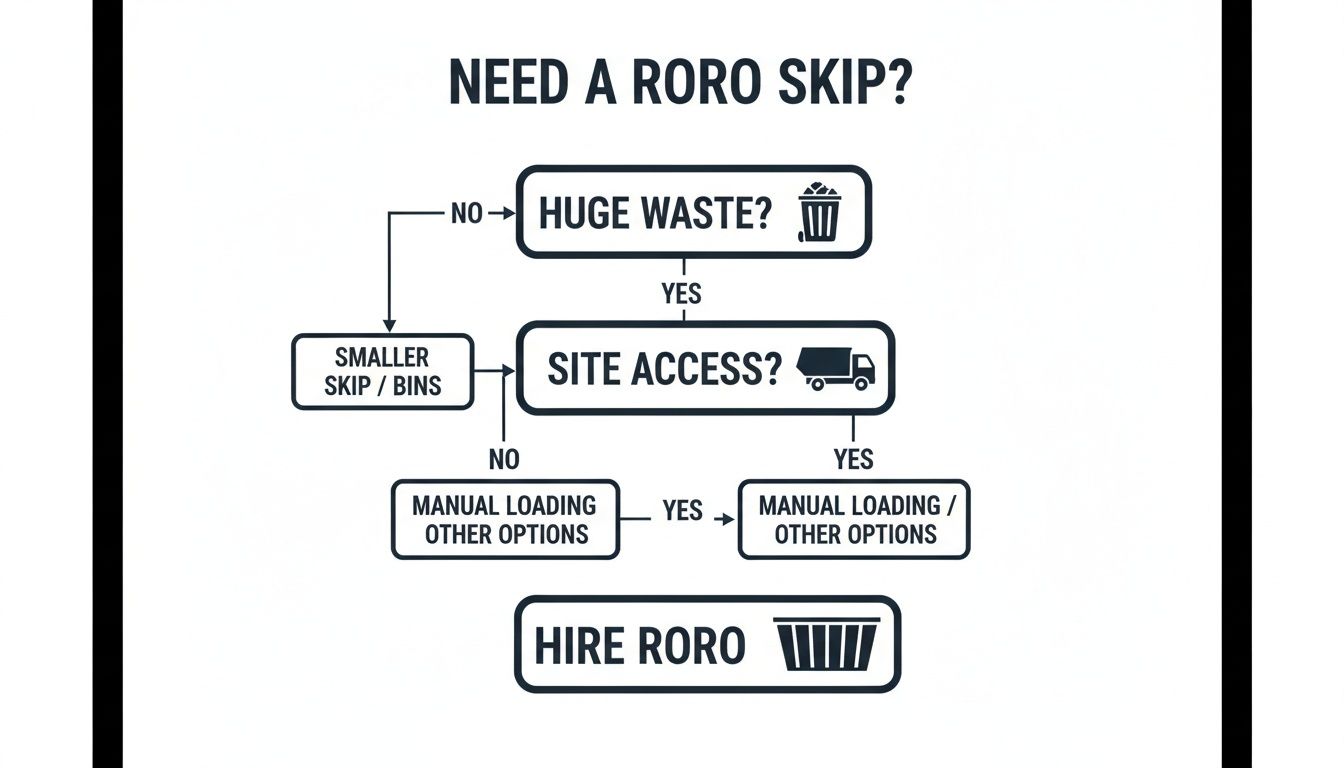
As you can see, if you've got a mountain of waste and enough room for a large lorry to manoeuvre, a RORO skip is almost always the most efficient way forward.
Roll Off Skip Sizes and Common Uses
Here's a quick reference table to help you match our RORO skip sizes to your project needs.
| Skip Size (Cubic Yards) | Approx. Bin Bag Capacity | Ideal For (Project Examples) |
|---|---|---|
| 20-Yard | ~220 | Large home renovations, shop fit-outs, commercial clearances, heavy waste (soil, concrete, hardcore). |
| 30-Yard | ~330 | Mixed demolition debris, large construction projects, bulky waste streams (wood, metal, packaging). |
| 40-Yard | ~440 | Major site clearances, high-volume lightweight waste (wood, plastics, cardboard), large-scale refurbishments. |
This table should make it easier to visualise just how much each skip can handle, preventing that classic mistake of ordering one that's too small for the job.
Common Sizing Mistakes To Avoid
The number one error people make is underestimating. A pile of loose waste on the ground looks a lot smaller than it does when it’s neatly packed into a container. This often leads to overflowing skips—which are unsafe and illegal to transport—or the need for a second, costly hire.
Another frequent slip-up is ordering a massive 40-yard skip for heavy waste like soil or concrete. It seems logical, but the combined weight would make it impossible for the lorry to lift safely and legally. Always have a chat with your hire company about the type of waste you're getting rid of.
For a more detailed breakdown of each container, check out our guide on roll on roll off skip sizes. It offers in-depth comparisons to help you choose with absolute confidence.
Top Tip: If you’re unsure, it’s always better to go one size up. The cost of a slightly larger skip is almost always less than the cost, hassle, and delay of hiring a second one.
The Hire Process: From Booking to Collection
Hiring a big roll-off skip can feel like a major task, but we’ve broken the whole thing down to be as straightforward as possible. Seeing it as four simple stages—booking, delivery, filling, and collection—takes the guesswork out of it and keeps your project running smoothly.
Knowing what to expect at each step helps you get your site ready and handle your waste like a pro from day one.

Step 1: Booking Your RORO Skip
It all starts with a quick chat. To give you an accurate quote for your roll off skip hire, we just need a few key details about your job. This initial conversation is vital to make sure you get the right container at the best price, without any nasty surprises down the line.
When you get in touch, try to have a clear idea of the type of waste you need to get rid of (like mixed construction waste, wood, or general rubbish) and a rough estimate of how much there is. This helps us point you to the most suitable and cost-effective skip for your needs.
We’ll also need the delivery address and where you’re planning to put the skip. This is crucial because it tells us if any special arrangements, like a road permit, are needed. Once that’s sorted, we can give you a clear, all-in quote.
Step 2: Delivery and Placement
This is when it gets real! RORO skips are delivered on large, specialist hook-lift lorries that need a surprising amount of room to manoeuvre safely. A bit of planning at this stage is essential to avoid any access headaches on delivery day.
Before we schedule your delivery, take a moment to check these key access points:
- Gate and Entrance Width: Our lorry needs a clear path. A typical RORO delivery vehicle requires an entrance at least 3 metres (around 10 feet) wide to get through without any issues.
- Overhead Clearance: Look up! Low-hanging tree branches, power lines, or building overhangs can stop a delivery in its tracks. The lorry’s hydraulic arm needs plenty of vertical space to lift and place the skip.
- Ground Conditions: These lorries are heavy, even with an empty skip. They must be parked on solid, level ground—think concrete or compacted hardcore—to stop them from sinking or damaging the surface. Soft ground like grass or mud is a definite no-go.
It's a common mistake to overlook the sheer scale of the delivery vehicle. Always measure your access route and discuss any potential obstacles with us beforehand to guarantee a smooth and safe delivery.
Step 3: Filling Your Skip Correctly
Once your roll-off skip is safely in position, it’s time to start loading. To get the most out of the space, it’s a good idea to load bigger, flatter items first to create a solid base. Breaking down bulky items wherever you can helps fill those awkward gaps and lets you use every bit of available volume.
Be aware, though, that there are strict rules about what can and can’t go into a skip. While they’re perfect for bulky waste from construction sites and commercial clear-outs, some materials are banned for legal and environmental reasons.
What you can generally put in:
- Wood, timber, and plasterboard
- Packaging like cardboard and plastics
- Metal, rubble, and soil (in the right type of skip)
- General waste from a site clearance
What is strictly prohibited:
- Asbestos and other hazardous materials
- Chemicals, solvents, and paint tins
- Tyres and batteries
- Electrical equipment (WEEE waste)
- Gas cylinders and medical waste
Most importantly, you must never overfill the skip. All waste has to stay below the top edge, which is known as the level load line. Overloaded skips are illegal to move on public roads, and our drivers will have to refuse collection until you’ve removed the excess waste.
Step 4: Scheduling The Collection
When your skip is full and the job is done, the last step is simply to arrange the collection. Just give us a call to book a time that works for you, and we’ll come and get the container. All we ask is that you provide the same clear, unobstructed access for our collection lorry as you did for the delivery.
From there, our team transports your waste to a licensed transfer station to be sorted, processed, and recycled. We take pride in achieving high recycling rates, diverting as much as we can away from landfill and making sure your waste is handled responsibly. This final step completes the seamless roll off skip hire process, leaving your site clean, clear, and tidy.
Getting to Grips with Permits and Legal Stuff
Hiring a big roll-off skip isn't just about finding a spot to drop it. When it comes to waste management, knowing your legal responsibilities is non-negotiable, and getting it wrong can bring serious fines and grind your project to a halt. This is the bit that makes sure your roll off skip hire is safe, responsible, and fully compliant from day one.
The rules are pretty straightforward, but you absolutely have to follow them. The first thing to think about is where the skip will live. If you can place the entire RORO skip on your own private land – think a driveway, a closed-off construction site, or a private yard – you generally won’t need a permit. Simple. But the second any part of that skip touches public land, the game changes.
Do I Need a Council Permit?
If your skip needs to go on any part of a public highway, you’ll need a permit from your local council. That includes the road itself, a grass verge, or a public pavement. Think of a permit as official permission to occupy that space for a short time, proving you’ve made all the necessary safety arrangements.
The good news is that your skip hire provider – ahem, like The Waste Group – will usually handle the whole permit application for you. That saves you a massive headache and a load of paperwork.
A few key things to remember about skip permits:
- Timing is Everything: Councils can take several days to process an application, so it’s crucial to get this sorted well in advance of your skip’s arrival.
- Safety First: The permit will come with conditions. Often, this means the skip must have reflective markings and safety lights if it’s staying overnight.
- Costs and Timelines Vary: Permit fees and how long they’re valid for can differ from one local authority to another.
Don't just think of a permit as a bit of admin. It's a legal agreement that keeps the public safe and proves you're meeting your obligations. Trying to skip this step can lead to instant fines and an order to remove the container immediately.
Understanding Your Duty of Care
Beyond permits, UK law gives everyone who produces, handles, or gets rid of waste a 'Duty of Care'. What does that mean for you? Well, from the moment you chuck the first piece of rubbish in the skip, you are legally on the hook for its contents until it gets to a licensed disposal facility. You can't pass the buck on this one.
To meet your Duty of Care, you must use a registered waste carrier and get the right paperwork. The most important document is the Waste Transfer Note, which is basically a receipt that tracks the waste's journey from your site to its final destination. You can learn more about this vital document in our article explaining what is a waste transfer note.
What You Can't Put in a Roll-Off Skip
Finally, staying compliant means knowing what you absolutely cannot throw into a general waste roll-off skip. Some materials are classed as hazardous and need specialist collection and disposal to prevent them from harming the environment or people's health.
These items are strictly forbidden:
- Asbestos: Extremely dangerous and must be handled by specialist removal teams.
- Chemicals & Solvents: This includes things like leftover paint, oils, and other liquid chemicals.
- Electricals (WEEE): Pretty much anything with a plug or a battery, from old fridges to laptops.
- Gas Cylinders & Tyres: These are a fire or explosion risk and have to be dealt with separately.
- Plasterboard: While not always classed as hazardous, it can't be mixed with other waste and needs its own disposal route.
How Roll Off Skip Hire Prices Are Calculated

So, what exactly are you paying for when you book a roll off skip hire? Getting your head around the final figure on the quote is key for budgeting any large project. The price isn't just plucked out of thin air; it’s a careful calculation based on several moving parts.
These costs reflect the entire journey your waste takes, from being collected on your site to its final, responsible disposal. Once you know what to look for, the process is actually very transparent. Let's pull back the curtain on the main factors that shape your roll off skip hire price.
The Primary Cost Factors
The final bill for your skip hire is built from a few core elements. While the skip's size is the most obvious one, what you're throwing away and where you are located play just as big a part in the overall cost.
- Skip Size: This is the starting point for your quote. A bigger skip, like a 40-yard RORO, costs more to hire and transport than a 20-yarder. It’s simple maths, really – it holds double the volume of waste.
- Waste Type: What you put inside that skip has a huge impact on the price. Different materials have different disposal costs. Inert waste like soil and hardcore, for instance, is often cheaper to process than mixed construction waste, which needs a lot of sorting.
- Location: Your distance from our waste management depot affects the final figure. The further away you are, the more fuel and time it takes for delivery and collection, and that has to be factored into your quote.
Think of it like posting a parcel. The bigger and heavier the box (your skip size and waste type), and the further it has to travel (your location), the more it costs to send. It's a straightforward calculation based on logistics and resources.
The Other Costs and Levies
Beyond the basics, other charges can influence the final bill. These often relate to government regulations and the specific details of your hire, and knowing about them is the best way to avoid any surprises.
One of the biggest external cost drivers is the UK Landfill Tax. This is a government levy designed to make sending waste to landfill less appealing. Landfill tax hikes are a major reason for rising skip hire costs across the UK, with the standard rate jumping to £126.15 per tonne as of April 2025. This makes recycling not just an environmental choice but a financial one, too. You can explore our detailed skip hire cost guide for more information on rising costs and how to manage them.
Here are a couple of other factors that can contribute:
- Council Permit Fees: If your roll off skip needs to sit on public land, like a road or verge, you legally need a council permit. We can sort the application for you, but the council’s fee is passed on.
- Hire Duration: A standard hire period is typically included in your initial quote. But if your project overruns and you need the skip for a bit longer, additional weekly rental charges might apply.
Understanding these components helps you see the true value packed into your roll off skip hire service. You’re not just paying for a big metal box; you're investing in reliable delivery, compliant disposal, and the peace of mind that your waste is being handled properly by experts.
Why Choose The Waste Group for Your Project
Choosing the right partner for your roll off skip hire is about much more than just getting a metal box dropped on your site. It’s about building reliability, value, and a sense of responsibility into your project from the very beginning. When you work with The Waste Group, you're not just hiring a skip; you're teaming up with a local Dorset expert dedicated to keeping your project running smoothly, on budget, and fully compliant.
We know that in this industry, delays cost money. That’s why our next-day delivery promise across Dorset is so crucial. When you need a RORO skip on-site to keep the job moving, we make sure it happens, plain and simple. This commitment to speed means your workflow is never held up waiting for waste management to arrive.
More Than Just a Skip Hire Company
Our goal is to be your complete site partner. Juggling different suppliers for waste, materials, and equipment can quickly turn into a logistical nightmare. We get rid of that headache by offering a whole suite of services designed to work together without a hitch.
- Grab Lorry Hire: Absolutely perfect for those sites with tricky access or when you need to shift inert waste quickly without manual loading.
- Aggregates Delivery: We can bring essential materials like sand, gravel, and crushed concrete straight to your site, often at the same time we’re managing your waste collection.
- Comprehensive Waste Solutions: From standard skips for smaller jobs to compliant asbestos disposal, we have the genuine expertise to handle all your different waste streams.
This integrated approach means fewer phone calls to make, simpler invoicing to track, and a single, reliable point of contact you can actually trust.
Our Commitment to Value and Sustainability
Budgeting for large-scale waste removal demands confidence in your pricing. Our price-match guarantee gives you exactly that, offering total peace of mind that you're getting competitive rates without ever cutting corners on service. We believe fair pricing is the bedrock of any good partnership.
But it goes beyond cost. We are deeply committed to our environmental responsibilities, and our high recycling rates are just the start.
For every single skip hired from The Waste Group, we plant a tree. This isn't just a slogan; it's our tangible commitment to offsetting the carbon footprint of our operations and making a positive contribution to the local environment.
Choosing us means your project is actively helping to build a greener future. With over a decade of local experience and a 4.9-star customer rating, we've built our reputation on being the trusted, responsible, and efficient choice for roll off skip hire in Dorset.
Frequently Asked Questions
Even with a detailed guide, there are always a few practical questions that pop up when you’re planning a roll off skip hire. We’ve answered some of the most common queries we get day-in, day-out to make sure your project runs smoothly, without any last-minute surprises.
How Much Room Does the Lorry Need for Delivery?
This is something that can easily catch people out. A roll on roll off (RORO) lorry is a seriously big piece of kit, and it needs a surprising amount of space to manoeuvre safely. As a good rule of thumb, make sure your site entrance is at least 3 metres wide.
But it’s not just about the gate. The driver needs a long, straight run-up to reverse and place the skip. You’ll want to clear a path of at least 15 metres in total length. Don’t forget to look up, either! Check for things like low-hanging branches or overhead power lines, as the lifting arm needs plenty of vertical space to operate.
Can I Mix Different Kinds of Waste in the Same Skip?
It’s a great question, and the answer is usually yes, but with a few important exceptions. For most site clearances or mixed construction jobs, you can throw a combination of materials like wood, metal, and general rubbish into a single "mixed waste" roll off skip. It’s often the easiest way to handle a project that generates all sorts of different debris.
However, for recycling and safety reasons, some waste types have to be kept separate.
- Inert Waste: Heavy stuff like soil, concrete, rubble, and hardcore needs its own skip.
- Plasterboard: This material can’t be mixed with general waste. If it ends up in a landfill, it can create harmful gases.
- Hazardous Waste: Anything like asbestos, chemicals, batteries, or old electricals is a strict no-go. These items need specialist disposal services, which we can help you arrange separately.
Always have a quick chat with us about what you’re throwing out. Getting it right from the start helps you stay compliant and can even save you money.
By keeping materials like inert waste separate, you’re not just following the rules – you could also lower your costs. Clean, segregated waste is cheaper for us to process, and we pass those savings right back to you.
What’s the Standard Hire Period for a RORO Skip?
Our standard hire period for a roll off skip hire is 14 days. We find this gives most teams more than enough time to fill the skip without feeling rushed. This two-week period is built into your initial quote, so you don’t have to worry about any sneaky daily charges.
Of course, we know that projects don't always stick to a perfect schedule. If you think you’ll need the skip for longer, just give our team a call. We can easily extend the hire on a weekly basis for a small extra charge. The main thing is to keep us in the loop – let us know what you need, and we’ll find a flexible solution that keeps your site clear and your project moving.
Ready to get your site cleared with a reliable and cost-effective waste solution? Get an instant quote from The Waste Group today and find the perfect roll off skip for your project. Book Your Roll Off Skip Hire Online