
Roro Skip Hire: The Essential Guide to Waste Removal | roro skip hire
Roro Skip Hire: The Essential Guide to Waste Removal | roro skip hire
If you’re dealing with a serious amount of waste from a major construction site, a factory clearance, or a large commercial project, your standard builder’s skip just isn’t going to cut it. This is where a RoRo skip comes in. The name stands for Roll-on/Roll-off, which perfectly describes how these enormous containers are delivered and taken away by a specialised lorry. It’s the ultimate solution for managing huge volumes of bulky waste.
What Is a RoRo Skip and How Does It Work?
Picture a large lorry, but instead of a fixed bed, it has a detachable one that it can leave on-site – that’s the basic idea behind the RoRo system. Unlike the skips you typically see on driveways, which are lifted by chains, a RoRo is a much bigger, rectangular container with wheels at one end. This simple design is key to how it works.
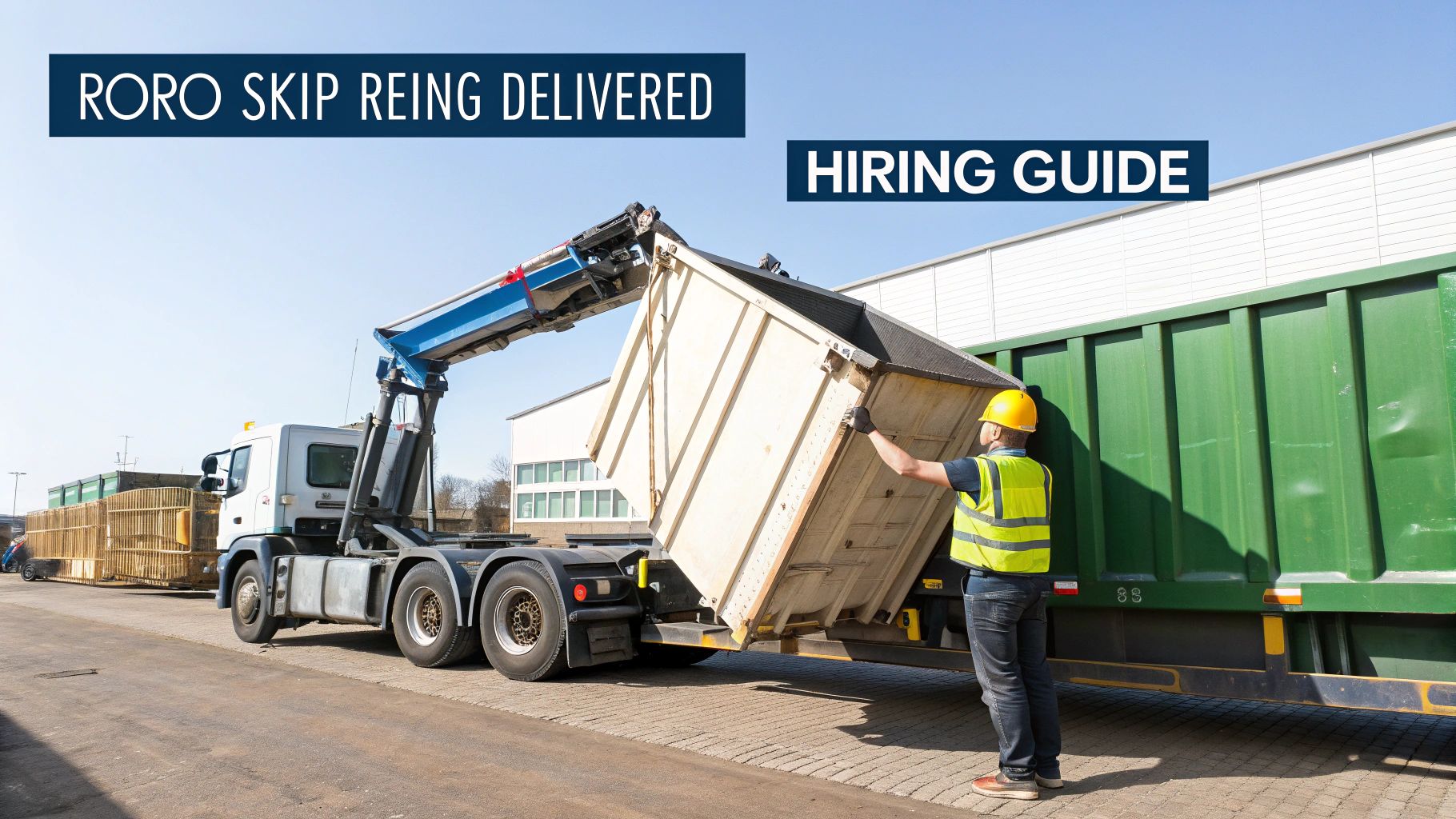
A specialised lorry, fitted with a powerful hydraulic hook-lift system, reverses into position. The driver then carefully rolls the container off the back of the truck and onto the ground. The whole process is surprisingly smooth, allowing for very precise placement exactly where you need it on a busy construction site or in a factory yard.
The Loading Advantage
Once the RoRo is in place, you’ll immediately see why it’s so popular for big jobs. Most of our RoRo skips have large, full-width doors at the back that swing wide open, creating a walk-in entrance. This is a game-changer compared to traditional skips.
Instead of the back-breaking work of heaving heavy or awkward items over high sides, your team can simply walk or use a wheelbarrow to get waste directly inside. It’s not just faster; it also massively improves on-site safety by cutting down the risk of strains and injuries.
For the biggest projects, you can even drive small machinery like mini-diggers or forklifts right into the container to dump materials. This level of accessibility makes waste management incredibly efficient and is a core reason why RoRo skip hire is the go-to for demanding projects.
The Collection Process
When the skip is full and ready to go, the process simply happens in reverse. The same specialised lorry comes back to the site. The driver will make sure the rear doors are secured, connect the hook to the front of the container, and smoothly winch it back onto the vehicle's chassis.
This "roll-off" procedure is just as methodical and controlled as the delivery. The full container is then safely transported to a licensed waste transfer station, where the contents are meticulously sorted for processing and recycling. The entire system is built from the ground up to handle massive weight and volume with minimal fuss, making it a powerful tool for serious waste management. It's a completely different league from your standard skip hire service, designed for jobs that demand serious capacity.
Choosing RoRo Skips for Maximum Project Efficiency
Picking the right waste management solution is a massive deal for keeping your project on time and, just as importantly, on budget. A standard builder's skip might be your go-to for a home renovation, but it just won't cut it when you're facing the mountain of waste from a commercial demolition or a sprawling construction site.
This is exactly where a RoRo skip hire steps in, becoming the only sensible and efficient choice.
Your decision really boils down to three things: the sheer scale of your project, the kind of waste you're producing, and how accessible your site is. If you're clearing out an old factory, knocking down a commercial building, or managing the waste from a new housing estate, you'll find smaller skips fill up in the blink of an eye. A 40-yard RoRo, on the other hand, can hold the equivalent of over 400 black bin bags. That's an incredible amount of waste handled in one efficient container.
RoRo Skips vs Traditional Skips vs Grab Hire
To really get why a RoRo is often the best bet, it helps to see how it stacks up against the other options. A traditional skip is great for smaller jobs, but for anything more substantial, you'll end up arranging collection after collection, which adds cost and hassle you just don't need.
A grab hire lorry brings a different kind of advantage to the table, especially for sites with tricky access where dropping a massive skip just isn't possible. It’s perfect for scooping up piles of waste like soil or rubble in a flash. The catch? You need to have the waste piled up and ready in a spot the lorry can easily reach. If you want to dive deeper into how they compare, you can learn more in our guide to grab lorry waste removal.
To help you decide at a glance, here’s a quick comparison to see which service best fits your needs.
RoRo Skips vs Traditional Skips vs Grab Hire
| Service Type | Best For | Key Advantage |
|---|---|---|
| RoRo Skip Hire | Large-scale construction, demolition, industrial clear-outs | Massive volume, on-site containment, fewer collections |
| Traditional Skip Hire | Home renovations, garden clearances, small building jobs | Cost-effective for smaller volumes, various small sizes |
| Grab Hire | Sites with limited access, quick removal of loose materials | No permit needed, quick collection from an accessible pile |
Each option has its place, but when volume is your main challenge, RoRos are in a league of their own.
A RoRo skip, by contrast, provides a massive, static waste station. It stays on-site, allowing your team to dispose of waste continuously and safely throughout the project's duration. This continuous access is a major efficiency booster on busy sites.
The whole process is designed to be straightforward and effective, as this flowchart shows.
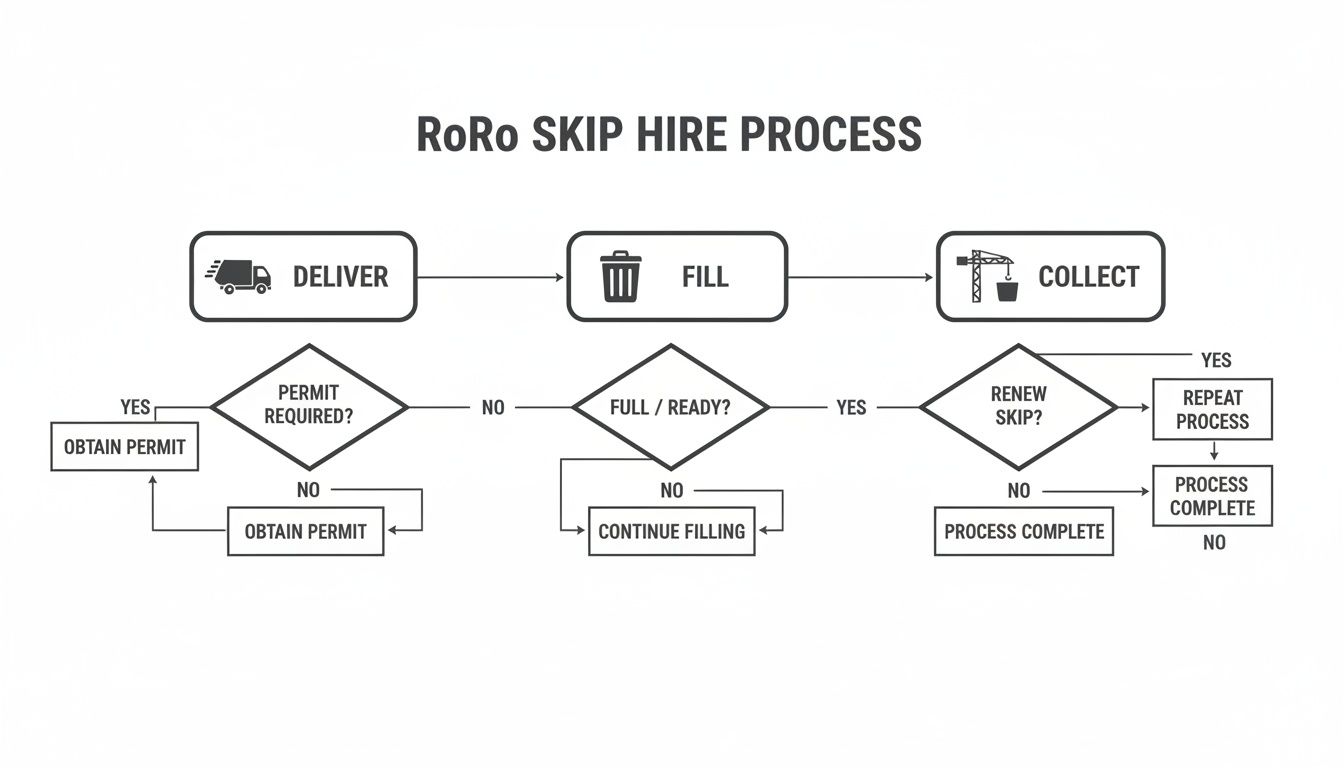
This simple deliver, fill, and collect model is built from the ground up to handle the heavy demands of major projects with as little disruption as possible.
Making the Right Call for Your Project
So, is a RoRo skip the right move for you? It's a clear winner in these kinds of scenarios:
- Major Construction and Demolition: Think about the sheer amount of mixed, bulky waste these jobs create—wood, metal, plasterboard, and concrete. A RoRo can swallow it all in one go.
- Commercial and Industrial Clear-outs: Emptying warehouses, factories, or large retail units produces a ton of light but bulky waste that needs a container with serious capacity.
- Large-Scale Landscaping: For big earth-moving jobs or land clearance projects, a RoRo gives you the volume you need for soil, green waste, and other debris.
For any large-scale project where you can't afford to waste time or money, getting your waste removal right is key. Using RoRos is a crucial step in preparing a site for the next stages, like the final post-construction cleaning. When you match the container to the job, you're setting yourself up for a smoother, safer, and far more cost-effective project from start to finish.
Matching RoRo Skip Sizes to Your Waste Stream
Choosing the right container for your RoRo skip hire isn't guesswork. It's about looking at the job in front of you and matching the skip’s capacity and design to the exact materials you need to get rid of.
Getting the size right is probably the single most important decision you'll make to keep your project on track and within budget. If you go too small, you're looking at extra collection fees and frustrating delays. Go too big, and you're just throwing money away on unused space.
Think of it like hiring a removal van. You wouldn't book a massive lorry just to move the contents of a studio flat, would you? It's the same principle here—the type and amount of your waste will point you straight to the perfect RoRo for the job.
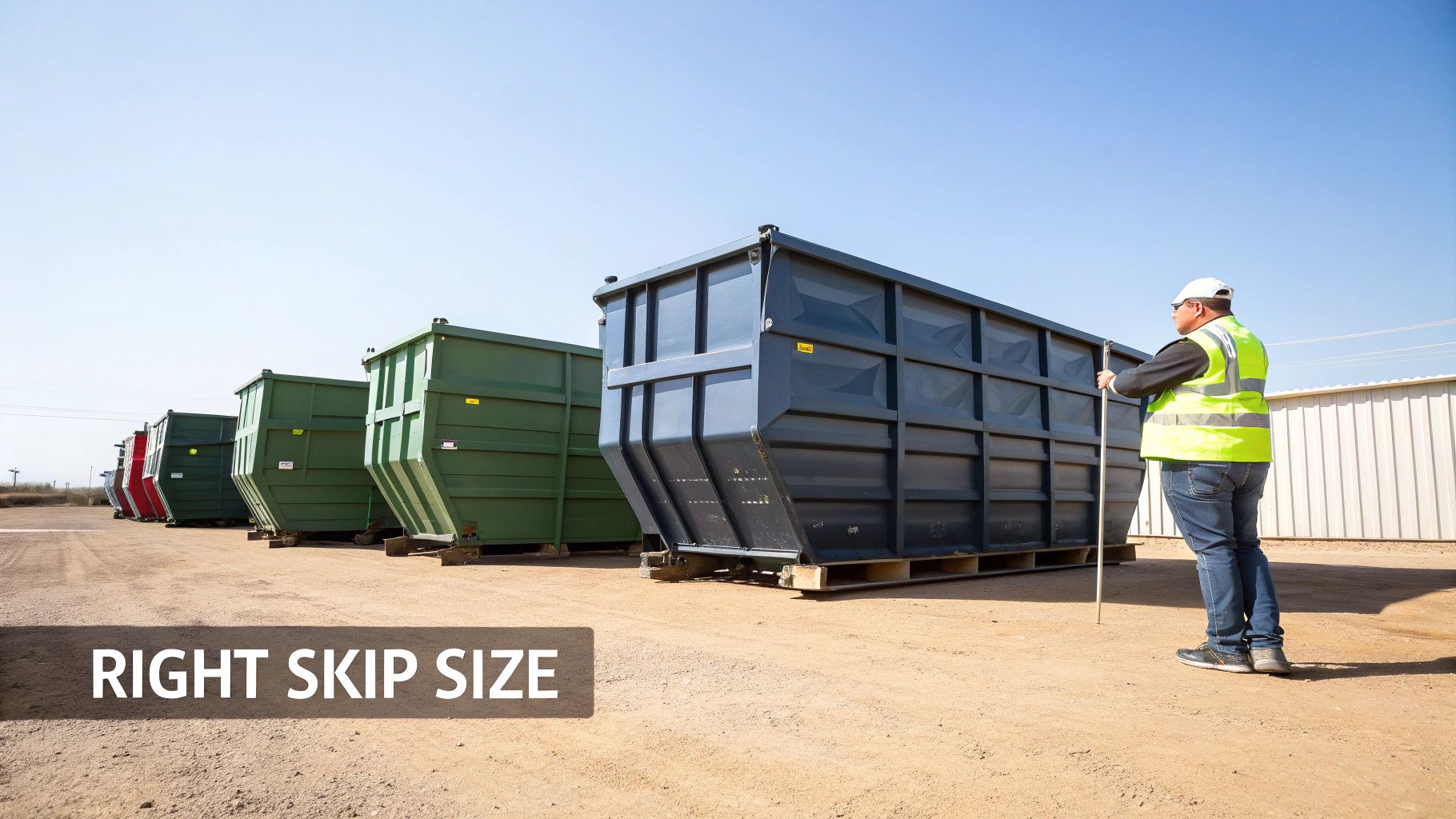
Understanding RoRo Capacities
RoRo skips are measured in cubic yards, and their sheer size can be tricky to picture in your head. To put it into perspective, a 40-yard RoRo skip can hold the equivalent of over 400 standard black bin bags. This is why they’re the go-to solution for any serious, large-scale waste management.
The two main sizes you’ll come across are the 20-yard and 40-yard RoRos, and each has its own speciality.
- 20-Yard RoRo Skip: This is the smaller of the two giants. It's the perfect choice when you’re dealing with heavy, dense materials that would quickly push a larger container over its legal weight limit.
- 40-Yard RoRo Skip: This is the absolute workhorse for high-volume projects. Its massive space is designed for bulky but lighter waste, letting you clear enormous amounts of debris in one go.
It's a common mistake to think that bigger is always better. The real secret is matching the skip not just to the volume of your waste, but to its weight. Piling heavy materials into a 40-yard skip can easily make it too heavy for the lorry to legally and safely transport.
Aligning Waste Type with Skip Size
The kind of waste you're creating is the real deciding factor. The rule of thumb couldn't be simpler: heavy waste goes in smaller RoRos, while light, bulky waste goes in the biggest ones.
Here’s a quick breakdown of what should go where:
- Ideal for a 20-Yard RoRo: This skip is in its element with heavy, inert waste. Think soil, rubble, broken concrete, and bricks from demolition or excavation work. Its lower volume capacity ensures the total weight stays well within safe, legal transport limits.
- Perfect for a 40-Yard RoRo: Use this for anything that takes up a lot of space but doesn't weigh a ton. It’s ideal for general construction debris, timber, plastics, metal, large packaging, and waste from factory clearances.
Matching the skip to your materials properly helps you avoid overloading and any potential fines. Overfilling a RoRo isn’t just about piling rubbish above the fill line; it’s also about staying under the maximum weight allowance. A correctly chosen skip makes the whole waste removal process smooth, compliant, and cost-effective.
For a more detailed comparison, our complete guide to roll-on/roll-off skip sizes can give you even more insights.
Your Step-By-Step Guide to the Hiring Process
Hiring a colossal skip might feel like a big job, but we've made the process straightforward and logical. It's designed to be efficient, so let's break it down into simple steps. This way, you'll know exactly what to expect, from that first phone call right through to the final collection.
First things first, get in touch with us for a quote. We’ll ask a few simple questions about your project – what sort of waste you're dealing with, how much you expect there'll be, and where the site is. This chat helps us recommend the perfect size RoRo and give you a clear, transparent price with no surprises.
Once you’re happy with the quote, we'll get a delivery date and time booked in that suits you. This is when we need to get into the practical side of things.
Preparing for Delivery Day
The single biggest hurdle for a smooth delivery is site access. Our RoRo lorries are seriously large, heavy vehicles, and they need a lot of space to manoeuvre safely. Before we head over, you’ll need to make sure the route is completely clear of obstacles like parked cars, low-hanging branches, or other site materials.
It's a good idea to run through this quick checklist:
- Sufficient Gate Width: Is your entrance actually wide enough for a large HGV to get through?
- Stable Ground: The ground has to be firm and level. It needs to support the immense weight of the lorry and a fully loaded skip. Soft ground or steep slopes can cause major headaches.
- Overhead Clearance: Don't forget to look up! Low cables or building overhangs can easily get in the way of the lorry's hydraulic arms.
Now, what if you need to place the skip on a public road or pavement? You will almost certainly need a permit from your local council. We can often help arrange this for you, but it’s a legal requirement that has to be sorted out before delivery day.
Keep in mind that securing a council permit can take several days, so it's vital to plan this well in advance. Placing a skip on public land without one can lead to significant fines.
Loading and Collection
With your RoRo skip safely in position, it's time to start loading. The real beauty of these skips is the huge rear door that swings wide open, giving you proper walk-in access. This makes shifting heavy or awkward items so much easier and safer for everyone.
To get the most out of the space and keep things stable, just follow these simple tips:
- Start with flat items: Lay any large, flat materials like boards or sheet metal on the bottom to create a solid base.
- Break down bulky items: Take a few minutes to dismantle furniture or break up large bits of timber. It makes a massive difference and stops big pockets of wasted air.
- Distribute weight evenly: Try not to pile all the heavy waste at one end. Spreading it out keeps the skip stable, which is crucial for a safe collection.
- Do not overfill: This is a big one. Waste must not be loaded higher than the sides of the skip. It’s a legal requirement for safe transport on the roads.
Once you’re done and the skip is full, just give us a call to arrange the collection. Our driver will pop back, safely secure the container, and roll it back onto the lorry. From there, we take it straight to a licensed facility where your waste is processed with a huge focus on recycling every possible bit of material.
Getting to Grips with RoRo Hire Costs and Rules

Figuring out the financial and legal side of a RoRo skip hire is key to keeping your project running smoothly. The price you're quoted isn't just a flat fee; it’s built from several parts that depend on the scale and details of your job. Getting your head around these factors means you’ll get a clear price with no nasty surprises down the line.
Unsurprisingly, the biggest driver of cost is the skip size you go for. A massive 40-yard container will naturally cost more to hire than a 20-yard one because it holds twice as much. The type of waste you're getting rid of is also a huge factor, as different materials need their own specific recycling or disposal routes.
Your site's location will affect delivery and collection charges, and how long you need the container for can also tweak the final bill. It can be helpful to look at general pricing guides, like these insights into dumpster rental costs, to get a broader feel for how the industry prices these things.
Staying on the Right Side of Waste Regulations
Beyond the cost, compliance is an absolute must for responsible waste management. When you hire a RoRo, you take on a legal 'Duty of Care'. This means it's your responsibility to make sure everything you put in that skip is safe, legally allowed, and correctly described.
There’s a strict list of materials that cannot go into a general RoRo skip because they’re hazardous. Trying to dispose of them incorrectly isn't just bad for the environment; it can land you with some serious fines.
It's vital to remember that a RoRo skip is intended for bulky, non-hazardous waste. Attempting to hide prohibited items among general debris is not only illegal but also dangerous for everyone involved in the waste processing chain.
Here are the main culprits to keep out of your RoRo:
- Asbestos: This needs specialist handling and disposal by licensed professionals. No exceptions.
- Hazardous Chemicals: This covers things like solvents, paints, oils, and other toxic liquids.
- Plasterboard: It has to be kept separate from all other waste.
- Electricals (WEEE): Items with a plug or batteries, like fridges, TVs, and monitors, need a separate disposal route.
- Tyres and Batteries: Both contain harmful materials and can't be mixed with general waste.
Your Legal Paperwork and Environmental Impact
Every single skip hire has to be accompanied by the right legal paperwork. When we come to collect your RoRo, you'll get a Waste Transfer Note. This is a legal document that tracks the waste from your site right through to its final destination, proving you’ve done your bit correctly. If you want to dive deeper, we have a whole guide explaining what a Waste Transfer Note is.
Choosing a reputable hire company is about more than just getting a container delivered. It’s your guarantee that your waste is being handled ethically, with a real focus on recycling as much as possible. By partnering with a responsible provider like us, you're actively helping to make the construction and demolition industry that little bit greener.
Your RoRo Skip Hire Questions Answered
When you’re faced with a mountain of waste from a big project, you’re bound to have questions. RoRo skip hire can feel like a big step up from your standard skip, but it’s actually a simple, powerful solution once you get the hang of it. We’ve pulled together the most common questions we hear to give you clear, straight-to-the-point answers.
Getting this right helps you plan your job with confidence, making sure your waste management is as smooth as the rest of your operation. Let’s jump right in.
What’s the Real Difference Between a RoRo and a Normal Skip?
It really comes down to three things: size, design, and how it gets to you. The standard skips you see on driveways are great for smaller jobs like a garden clear-out or kitchen refit. They typically range from 4 to 12 cubic yards and are lifted off the lorry with chains.
A RoRo (short for Roll-on/Roll-off), on the other hand, is a different beast entirely. These are massive containers, starting at 20 yards and going all the way up to 40 yards. They’re delivered on a specialised HGV and, just like the name says, they simply roll off the back into position. They are built from the ground up for huge volumes of commercial, construction, or industrial waste.
Can I Throw Anything I Want in a RoRo Skip?
No, and this is a really important point for keeping your site safe and legal. RoRo skips are designed for huge amounts of general, non-hazardous waste. Think of the stuff that piles up on a construction or demolition site.
Here’s a quick rundown of what you can typically put in:
- Construction Debris: Wood, metals, plastics, and plasterboard.
- Bulky Waste: Packaging, old furniture from a strip-out, and other large items.
- Inert Waste: Soil, rubble, bricks, and concrete (these heavy materials are usually best for the smaller 20-yard RoRos to stay within weight limits).
But there's a strict list of forbidden items. Anything hazardous is a definite no-go. This includes asbestos, chemicals, paints, oils, batteries, tyres, and electricals like fridges or TVs. Putting these in can cause serious problems.
Do I Need a Permit for a RoRo?
You only need a permit if the RoRo skip has to be placed on public land, like a road or a council-owned verge. If you can fit it entirely on your private property – a construction site, a factory yard, your business premises – then you won’t need one.
Getting a permit from your local council is a legal must-do, and it has to be sorted before we can deliver the skip. Not having one can lead to hefty fines and stop your project in its tracks. We can often help you with the paperwork, but it’s vital to allow enough time for the council to process it.
How Much Room Do I Need for a RoRo Delivery?
A lot more than you might think. The lorries that deliver RoRos are large HGVs, and they need plenty of space to get in, drop the container, and get out safely. You’ll need to make sure the delivery area is totally clear of obstacles like parked cars, low-hanging tree branches, or overhead cables.
The ground itself is also a big factor. It needs to be firm and fairly level to take the weight of both the lorry and a full skip. Soft ground, steep slopes, or tight, awkward corners can make a delivery impossible. It’s always best to have a good look at your site’s access before you book your roro skip hire.
Ready to get your large-scale waste project under control? The Waste Group provides reliable, compliant, and efficient RoRo skip hire across Dorset. Get your instant quote online or have a chat with our expert team today.