
Skip Hire Garden Waste – skip hire garden waste: A Practical Guide
Skip Hire Garden Waste – skip hire garden waste: A Practical Guide
Planning a big garden clear-out? Let's be honest, the aftermath of a proper garden transformation can be daunting. From piles of soil and old turf to mountains of branches and cuttings, you'll need a solid plan for the waste. A skip hire for garden waste is often the simplest and most direct way to handle it all, saving you countless trips back and forth to the local tip.
How a Skip Makes Garden Clearance a Breeze
A major garden project is always exciting, but it always generates more rubbish than you think. I've seen it time and again. Whether you're finally tackling those overgrown borders in Bournemouth or embarking on a full landscape redesign in Weymouth, figuring out what to do with the debris is a huge part of the job.
This is where hiring the right skip comes in. It turns a potentially chaotic cleanup into a straightforward, manageable process.
This guide will skip the jargon and get straight to what you actually need to know before you book. Think of it as a real-world look at the whole process, covering the key details that'll make sure your project in Dorset goes off without a hitch. We'll cover:
- Why using a dedicated garden skip is so important for proper recycling.
- How a responsible company actually handles your green waste.
- The crucial factors you need to consider, like skip size, placement, and cost.
For those really ambitious garden overhauls, you might run into bigger challenges like removing stubborn tree stumps, which is a job in itself. Getting these tougher tasks sorted first means you can get rid of all the waste in one go. A bit of forward planning makes your garden clearance simpler and more cost-effective, leaving you free to actually enjoy your brand-new space.
Choosing the Right Skip Size for Your Garden Project
Picking the right skip size is probably the single most important decision you'll make when sorting out your garden waste. Get it wrong, and you're either paying for empty space or—even worse—having to order a second skip, effectively doubling your cost. It’s vital to stop thinking in abstract cubic yards and start picturing it in real-world terms.
So many people underestimate just how much waste a garden project can create. That seemingly manageable pile of soil, weeds, and old branches has a habit of expanding once you actually start loading it into a skip. A much more practical way to figure out what you need is to think in terms of wheelbarrows or bin bags.
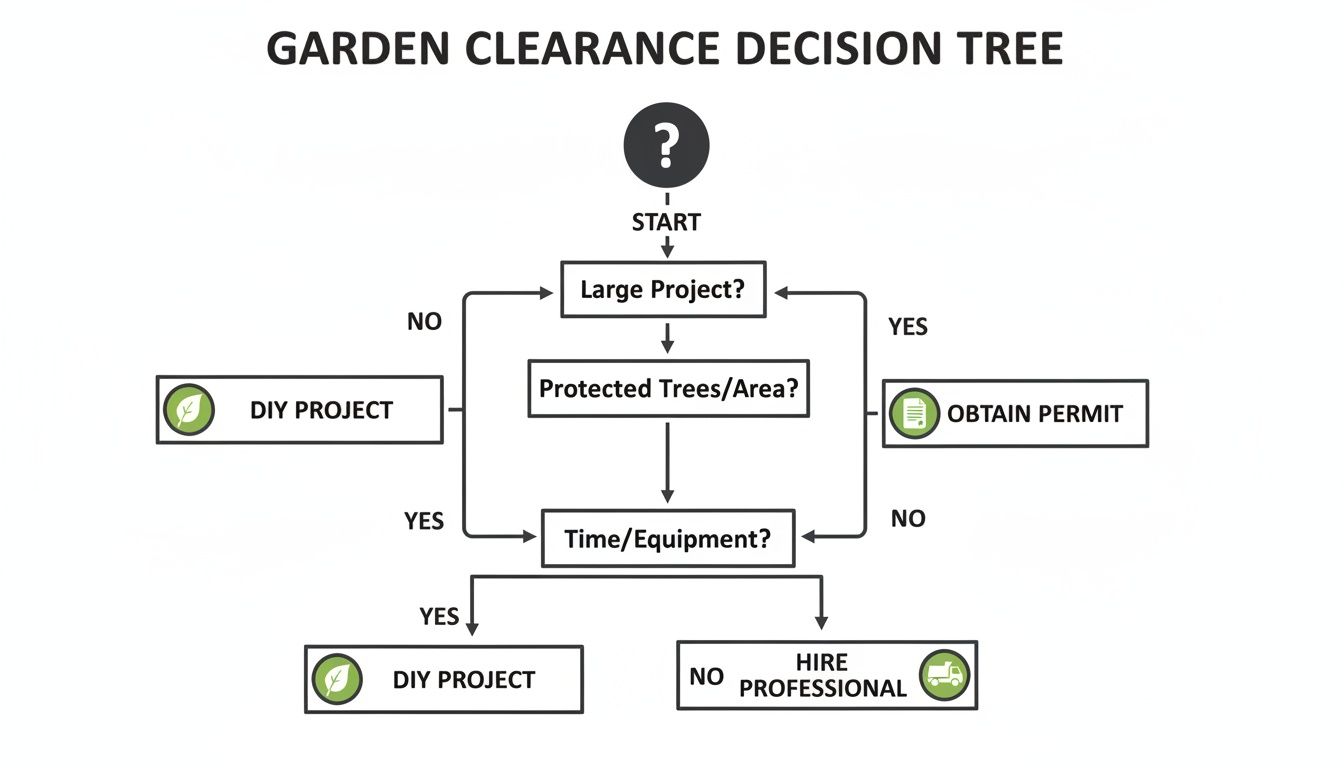
This little decision tree gives you a good visual of the choices ahead, from figuring out the scale of your job to whether you can handle it yourself or need a permit. The main takeaway is simple: a bit of planning now saves a world of logistical pain later on.
Matching the Skip to the Job
For a classic weekend garden blitz—say, clearing out some overgrown flowerbeds or giving the hedges a serious trim—a smaller skip will usually do the trick. A 4-yard skip, often called a 'midi' skip, is a firm favourite for these kinds of domestic jobs. It gives you plenty of room without taking over your entire driveway.
You’d be surprised what you can fit in one. It holds roughly 40 standard bin bags of waste, making it perfect for the soil from a newly dug flowerbed, old turf you’re replacing, or a hefty amount of hedge clippings. For a closer look at what this size can handle, our guide on 4 yard skip measurements breaks it all down.
One of the most common mistakes we see is people ordering a skip that's just big enough for the waste they can see. Always factor in about a 20% contingency. You will almost certainly unearth more stuff to clear out once you get going.
When your project gets a bit bigger, your skip needs to follow suit. Medium-sized landscaping jobs, like relaying a small patio or digging out several large shrubs, will swallow up a smaller skip in no time.
Skip Size Guide for Common Garden Projects
To make things a little clearer, here’s a quick rundown of common skip sizes and the kind of garden jobs they’re best suited for.
| Skip Size (Yards) | Approx. Bin Bags | Ideal For | Example Project |
|---|---|---|---|
| 4 Yard (Midi) | 30 – 40 | Small garden clear-outs, hedge trimming, soil removal | Clearing an overgrown allotment or digging a new border |
| 6 Yard (Builder's) | 50 – 60 | Medium landscaping, mixed heavy waste (soil, rubble) | Removing an old patio and replacing turf |
| 8 Yard | 70 – 80 | Major garden transformations, bulky waste, small tree removal | Clearing a significantly overgrown plot before redesigning |
| 12 Yard | 100 – 120 | Large-scale clearances with lots of light, bulky green waste | Stripping out a very large garden with numerous trees/shrubs |
This table should give you a solid starting point, but always try to overestimate slightly if you’re unsure.
Larger Skips for Major Landscaping
For those more ambitious garden transformations, you'll need to start looking at the bigger options. The 6-yard skip, known everywhere as the classic 'builder's skip', is the next size up and a fantastic all-rounder for mixed heavy waste like soil and rubble alongside lighter green waste.
But if you’re planning a complete garden overhaul, clearing a plot that’s been left to run wild for years, or taking out small trees and their root balls, you’re going to need an 8-yard or 12-yard skip. These are built for projects that generate a huge volume of bulky waste. Just remember, it’s always cheaper to hire one big skip than two small ones.
Navigating Skip Permits And Placement Rules
Deciding where to put your skip is a bigger deal than you might think. Getting it wrong can mean fines, delays to your garden project, or the delivery driver simply refusing to drop it off. The main thing to get your head around is whether the skip will sit on public or private land.
If you’ve got a driveway, a front garden, or some other patch of private property, you’re usually good to go without any extra paperwork. But the moment any part of that skip touches a public road, pavement, or even a grass verge, you legally need a permit from your local council.
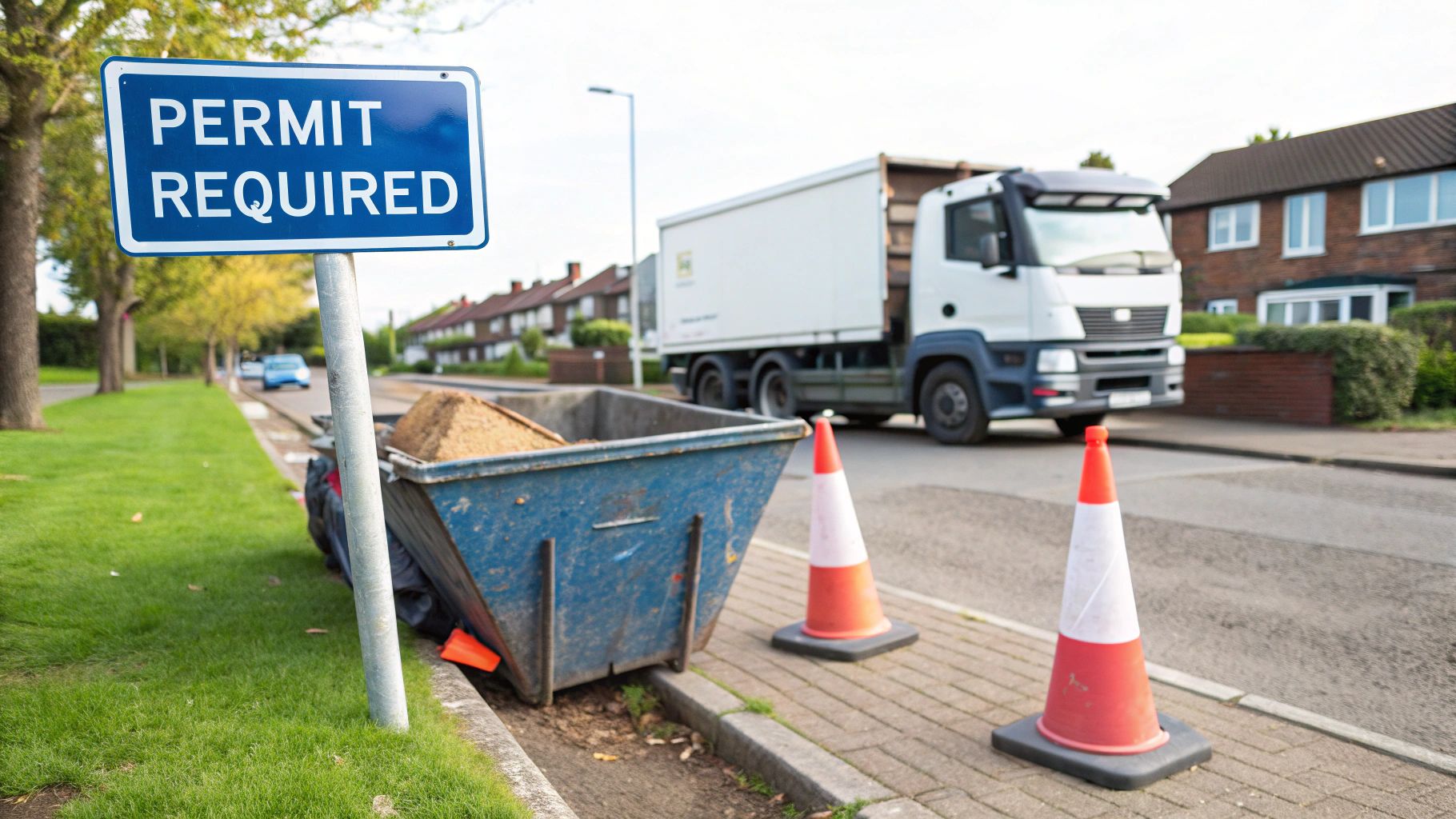
Securing A Roadside Skip Permit
The good news is you don’t have to wade through council bureaucracy yourself. Any decent skip hire company will handle the entire permit application for you. When you book your skip hire for garden waste and tell them it needs to go on the road, they’ll get in touch with the right Dorset council on your behalf.
Just be aware that this isn’t an overnight thing. A permit application usually takes 3-7 working days to get the green light. That’s a crucial detail to remember, especially if you’re trying to get your garden cleared on a tight schedule.
Permit Pro Tip: Don't get caught out by the waiting time. If you absolutely need that skip for a weekend blitz, make sure you're booking it at the start of the week. This gives the permit application plenty of time to be processed and approved.
You’ll also need to budget for the permit fee on top of the actual skip hire. The cost varies from council to council, but you can generally expect it to be somewhere between £30 and £60. This fee goes straight to the council to cover their admin and the "rent" for using public space.
For any skip on the road, there are also some non-negotiable safety rules. It will need to be kitted out with traffic cones and reflective lights to make sure it's clearly visible to drivers, especially after dark.
Preparing Your Property For Delivery
Even if your skip is going on your own land and you don't need a permit, a little bit of prep work will make everything go much smoother. If it’s destined for your driveway, take a few minutes to protect the surface.
- Protect Your Driveway: A great trick is to lay down some old wooden planks or scaffolding boards where the skip is going to land. This spreads the weight and helps prevent the metal feet from scratching or cracking your paving or tarmac.
- Ensure Clear Access: A skip lorry is a big beast. Before it arrives, double-check that there's a clear, straight path for the driver to reverse in and safely drop the skip. Look out for overhanging tree branches or parked cars that might get in the way.
A few minutes of prep can save you a lot of hassle and potential damage on delivery day. It means you can get on with the real job – filling that skip and getting your garden back.
What You Can and Cannot Put in a Garden Waste Skip
Knowing what can go into your skip is absolutely vital. Getting this wrong isn't just a minor hiccup; it can lead to extra charges or even the skip company refusing to collect it. When you hire a skip for garden waste, the whole point is to keep the "green" stuff separate so it can be properly recycled. Tossing in the wrong items contaminates the whole lot.
This is a bigger deal than you might think for waste management companies. With stricter Environment Agency regulations coming in for 2025, penalties for incorrect disposal have shot up by a massive 340% since 2023. What's really surprising is that recent surveys show 68% of customers simply aren't aware of their responsibility to sort their waste. This leads to contaminated loads that have no choice but to go to landfill, which is bad for the planet and pushes up costs for everyone.
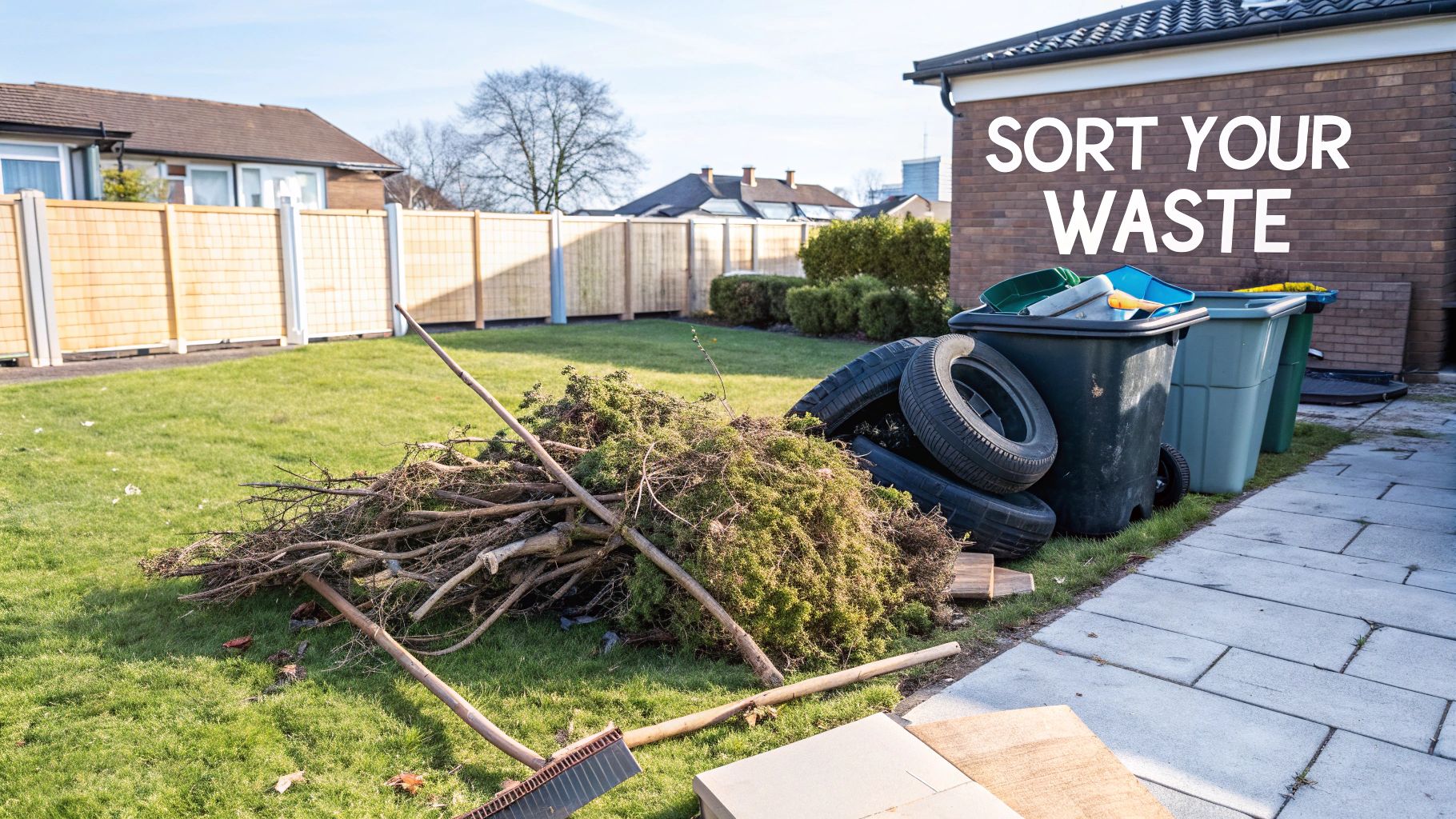
Permitted Garden Waste Items
For a standard garden waste skip, the rules are pretty straightforward. You can chuck in all the natural, organic stuff that comes from clearing out your garden.
- Green Waste: Think grass cuttings, leaves, weeds, old flowers, and small twigs.
- Branches and Stumps: Bigger branches from pruning, tree cuttings, and smaller tree stumps are usually fine.
- Soil and Turf: Earth, clay, and old turf are all good to go. Just be careful here – soil is incredibly heavy and you can hit the skip’s weight limit faster than you’d expect.
Prohibited Items You Must Exclude
Right, this is the list to pay close attention to. If any of these items end up in your garden skip, it gets reclassified as ‘mixed waste’, and that means a higher bill for you.
- Treated Wood: This is a common mistake. Old fence panels, bits of decking, or shed timbers that have been painted, varnished, or treated with preservatives are a no-go. The chemicals prevent them from being composted with green waste.
- Hazardous Materials: It should go without saying, but absolutely no pesticides, weed killers, paint tins, engine oil, or asbestos.
- General Household Rubbish: Things like food scraps, plastic bags, packaging, and old furniture have no place in a garden skip.
- Construction Waste: Bricks, rubble, concrete, and plasterboard need a different kind of skip entirely.
The golden rule is simple: if it didn't grow in your garden, it probably doesn't belong in a dedicated garden waste skip. Stick to that, and you'll have a smooth, hassle-free experience.
For a more complete list of what to avoid in any skip, our guide on what you can’t you put in a skip is a great resource.
It's also worth thinking about whether some of your waste even needs a skip. For certain biodegradable materials, composting at home can be a far better option, reducing the amount you need to throw out. There are huge benefits of composting organic waste, from creating nutrient-rich soil for your garden to cutting your carbon footprint. By sorting your waste properly, you're not just avoiding extra fees—you're playing a part in a much more sustainable cycle.
Getting to Grips with the Real Cost of Skip Hire
The price you see on a skip hire quote isn't just a number pulled from thin air. It’s a combination of several factors, and knowing what they are is key to budgeting your garden project without any nasty surprises down the line. It’s about more than just the metal box that lands on your driveway.
The most obvious driver is the skip size. A little 4-yard skip for a weekend tidy-up is naturally going to cost less than a hefty 12-yarder needed for a full-scale garden redesign. Where you are in Dorset also makes a difference, as transport and running costs can shift between towns like Poole, Bournemouth, and Dorchester.
Finally, the length of the hire and any permits needed from the council are factored in. This mix of size, location, and logistics makes up your base price. For a really detailed look at the numbers, our article exploring how much does skip hire cost breaks it all down for you.
Dodging the Hidden Costs
Beyond that initial quote, a few other things can nudge the price up. The biggest one? The type of waste you're chucking in. Here’s an insider tip that will genuinely save you cash: keep your skip hire for garden waste completely 'clean'.
A skip filled with nothing but green waste—we’re talking soil, turf, branches, and cuttings—is much, much cheaper for a waste company to process and recycle. The moment you start tossing in other bits like old plastic chairs, treated fence panels, or general household rubbish, you've contaminated the load. This 'mixed waste' costs more to sort and often has to go to landfill, a cost that unfortunately gets passed straight back to you.
The single best way to keep your costs down is to be disciplined about what goes in the skip. If it didn't grow in your garden, keep it out. This simple act can save you a significant amount on your final invoice.
Smart Ways to Get the Best Value
Getting a good deal isn't just about hunting for the lowest price—it's about finding the best all-round value. Here are a few simple tricks I've seen work time and again:
- Book Online: Many firms offer a little discount for booking through their website because it cuts down on their admin time. It's an easy win.
- Ask About a Price Match: It never hurts to ask if a company has a price-match promise. Good, reputable companies often will to secure your business.
- Team Up with a Neighbour: If you notice your neighbour is also planning a garden clear-out, why not go in together on a slightly larger skip and split the cost?
With landfill taxes constantly on the rise, recycling your waste responsibly has never been more important for your wallet. As prices for skip hire garden waste continue to climb in the UK, with 4-yard skips now anywhere from £180-£300 and the landfill tax heading for £126.15 per tonne, the financial incentive is clear. A large, contaminated skip can rack up hundreds in tax alone, which really hammers home the value of clean, green disposal. You can learn more about how these rising costs are set to impact the industry in our guide to 2025 skip hire price changes.
Why Reliable Service and Green Credentials Matter

A cheap quote for a skip doesn't mean much if the skip turns up late—or worse, not at all. Let's be honest, picking a dependable skip company is just as important as getting the size right. Bad service can completely throw your project off course, leaving you stuck with a mountain of garden waste you have no way of shifting.
This isn't just a rare frustration, either. It’s a common headache in the skip hire world. Research looking at 3,000 customer complaints found that a massive 68% of customers were left dissatisfied. A key reason for this was missed collections, with 23% not happening on the scheduled day.
During busy periods like the spring clear-out season, this figure can shoot up to an eye-watering 35%. These delays, which can average 5-7 days in some areas, are more than just an inconvenience; they can bring your entire project to a standstill. You can see the full story behind these numbers by exploring the research findings on skip hire complaints here.
Hallmarks of a Quality Skip Hire Company
So, how do you spot a reliable company and avoid the ones that will leave you waiting? The best providers are upfront, transparent, and make clear commitments they intend to keep.
Before you even think about booking, look for these signs of quality service:
- Stellar Customer Reviews: You're looking for consistently high ratings (think 4.9 stars or more) on independent review sites.
- Guaranteed Delivery Options: Many of the best firms now offer guaranteed next-day delivery. This is a real lifesaver when you're on a tight schedule.
- Flexible Booking: A company that lets you choose a specific delivery window, rather than just a vague "sometime on Tuesday," clearly values your time.
Choosing a skip hire company based purely on the lowest price is often a false economy. A slightly higher upfront cost for a reputable provider buys you peace of mind and the assurance that your project will stay on schedule.
More Than Just Service: Green Credentials
Beyond just showing up on time, a company’s approach to the environment is a massive factor. Responsible waste management isn't a "nice-to-have" anymore; it's an absolute must. A professional outfit will be proud to explain exactly what happens to your garden waste once it leaves your property.
Don't be shy about asking questions when you're vetting a company. A good provider will have a clear, transparent policy on recycling and sustainability, often aiming to divert over 95% of waste from landfill.
Your garden waste should be taken to a licensed transfer station. There, it's screened, sorted, and processed—usually for composting or to be used as biomass fuel. By choosing a company with a real commitment to the environment, you can ensure your garden clearance has a positive impact long after the skip is gone.
Got Questions About Garden Waste Skips?
It’s completely normal to have a few questions before you dive in. When you're planning a big garden clear-out, some of the details can feel a bit fuzzy. Let's clear things up with some straightforward answers to the queries we hear most often from homeowners and landscapers.
Getting these final bits of info sorted will help your project run smoothly from the moment the skip arrives.
How Do I Load a Garden Waste Skip Correctly?
Loading your skip smartly is the secret to getting the most out of every inch of space you've paid for. Think of it like packing a suitcase – a little bit of strategy makes a huge difference.
Start with the heavy, flat stuff. Things like old turf or soil should go in first to create a solid, level base. Next up are your bulkier items, like branches and hedge cuttings. If you’ve got time, it's always a great idea to chop down any larger branches before you toss them in. Finally, use loose materials like leaves and grass clippings to fill in all the gaps.
The golden rule of skip hire is simple: never fill it above the 'level load' line painted on the side. Overfilled skips are illegal to transport on public roads and downright unsafe. Your driver will either have to refuse the collection or charge you extra while you remove the excess waste yourself.
Can I Put Soil in My Garden Skip?
Absolutely. Soil is a perfectly normal part of most garden clearances, so any skip hire garden waste service will expect it.
The one thing to keep in mind is just how heavy soil is, especially when it's wet. A skip filled to the brim with dense earth can easily push the collection lorry over its legal weight limit. If your project involves digging out a serious amount of soil, it's always smart to mention this when you book.
This gives the skip company a chance to offer the best advice. They can confirm the weight restrictions for that specific skip size and make sure the right type of vehicle is sent out on collection day. A quick heads-up like this can prevent any headaches down the line.
What Are the Alternatives to Hiring a Skip?
While a skip is often the perfect all-rounder for most garden jobs, it’s not your only choice. For very small amounts of green waste, your local council’s fortnightly green bin collection might be all you need.
But what if you're dealing with a massive volume of waste or have tricky access, like a back garden with no driveway? A grab lorry could be a better fit. These vehicles use a hydraulic crane to reach over fences or walls and collect the waste. Another popular option is using large skip bags, which you can fill up at your own pace before scheduling a collection.
For the vast majority of garden clearances, though, a skip usually hits that sweet spot, offering the best balance of cost, capacity, and sheer convenience.
Ready to tackle your garden clear-out without the hassle? At The Waste Group, we make hiring the right skip for your garden waste simple and straightforward. Book online today for next-day delivery and our price-match guarantee. Visit https://www.thewastegroup.co.uk to get your instant quote.