Topsoil for Delivery The Ultimate UK Guide
Topsoil for Delivery The Ultimate UK Guide
Ordering topsoil for delivery is probably the single most important thing you can do for a lush, healthy garden or lawn. Think of it as the foundation of your entire project; without high-quality, nutrient-rich soil, your plants, seeds, and new turf will really struggle to get going. Getting this right is what transforms a patchy, frustrating garden into a space you can be proud of.
Why the Right Topsoil Delivery Matters
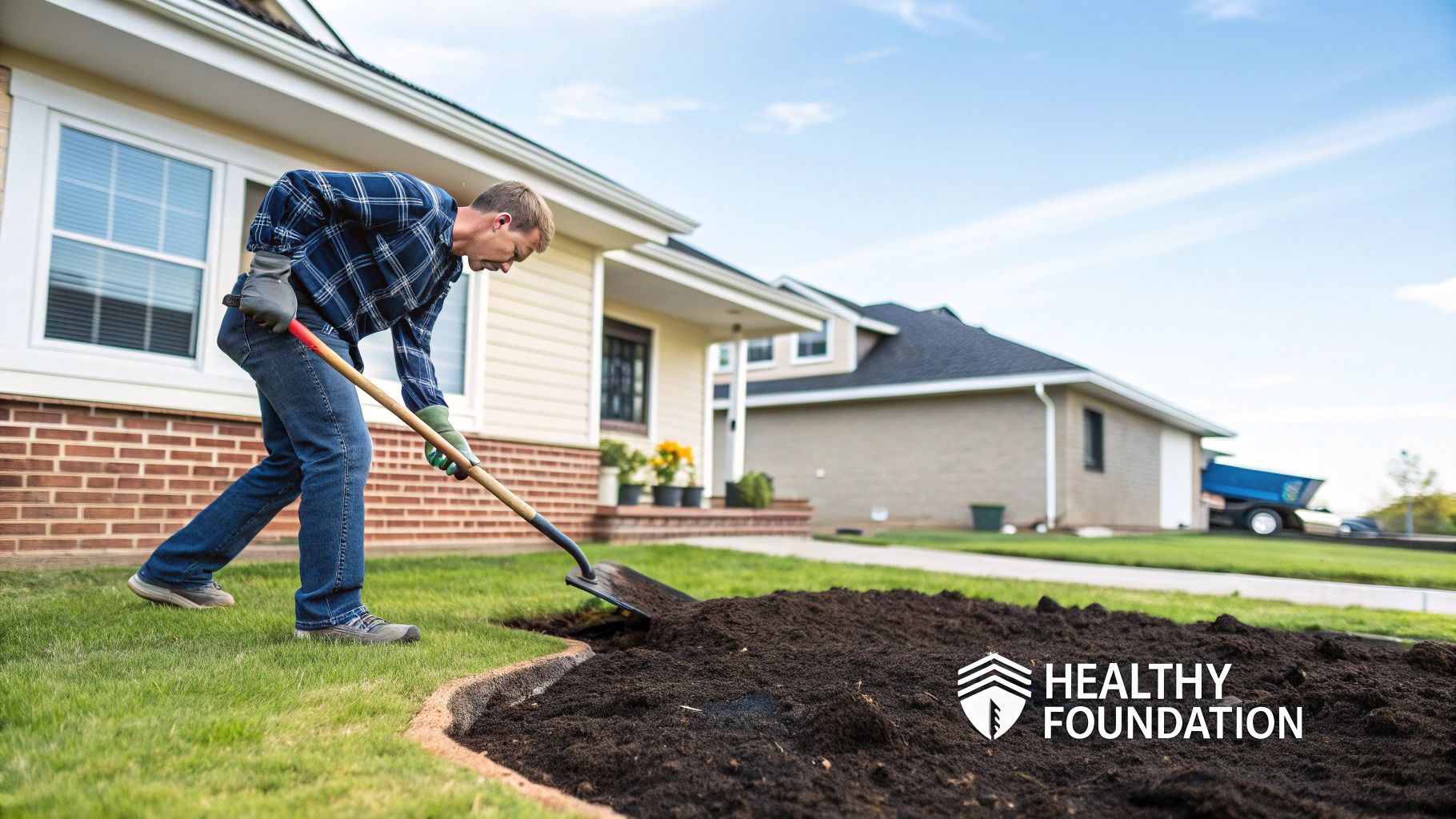
Starting a new garden bed, levelling a bumpy lawn, or filling up some raised planters? The success of your hard work hangs entirely on the quality of the soil you put in. Many gardens across the UK suffer from native soil that's less than ideal. It might be compacted like concrete, stripped of nutrients after years of planting, or have a heavy, clay-like structure that causes waterlogging.
Trying to plant directly into this kind of ground is like building a house on a shaky foundation—it's just a recipe for disappointment. Plants will struggle to send out strong roots, find it hard to get enough water, and might eventually just give up.
The Foundation for a Thriving Garden
This is where getting a professional topsoil for delivery service is a real game-changer. Good quality topsoil isn't just "dirt"; it's a carefully balanced growing medium, designed to give your plants everything they need from day one.
Just think about the key benefits:
- Optimal Nutrient Content: Good topsoil is packed with organic matter and essential minerals. This acts like a slow-release fertiliser, feeding your plants over time.
- Improved Drainage and Aeration: The lovely crumbly, loamy texture lets water drain away properly while holding onto just enough moisture for the roots. It also stops the soil from becoming compacted, letting roots breathe.
- Weed and Debris Free: Reputable suppliers screen their topsoil to get rid of stones, roots, and pesky weed seeds. This gives your new plants a clean start without having to compete for space and nutrients.
- Perfect pH Balance: Delivered topsoil is usually formulated to have a neutral pH, which is the sweet spot for the widest range of plants to absorb nutrients efficiently.
A great garden begins with great soil. Investing in a quality topsoil delivery isn't just about convenience; it's about setting your garden up for long-term health and success.
Ultimately, choosing the right soil gives you a reliable and predictable starting point. Instead of fighting against poor conditions, you're creating the perfect environment where seeds pop up readily, turf establishes quickly, and your flowers can truly flourish. This guide will walk you through everything you need to know about navigating the world of soil delivery, making sure you get the perfect stuff to bring your garden vision to life.
Choosing the Right Soil for Your Project
Picking the right topsoil is a bit like choosing the right ingredients for a recipe – the final result depends entirely on starting with the best stuff. Not all soil is the same, and what you need to level a lawn is worlds away from what a thriving vegetable patch requires. Getting your head around these differences is the first step to getting your project right.
Think of it this way: your garden has a goal, and there’s a type of topsoil perfectly suited to help you get there. Using a general-purpose blend for something specific, like an ericaceous bed for acid-loving plants, will only lead to disappointment. Let's demystify the options you’ll find when you order topsoil for delivery.
Decoding the Different Types of Topsoil
When you start looking at suppliers, you’ll come across a few common terms. Let’s break down what they actually mean for your garden, cutting through the jargon to focus on what really matters.
-
Screened Loam: This is your versatile, all-rounder topsoil. The "screening" process simply means it's been passed through a mesh to remove large stones, roots, and other debris, leaving you with a fine, consistent texture. It’s perfect for starting new lawns from seed or turf because it gives the roots a smooth, level surface to get established in.
-
Enriched or Blended Topsoil: This is screened loam that’s had a bit of a boost. It’s mixed with organic matter like compost, which basically supercharges it with nutrients. This blend is the go-to choice for new flowerbeds, raised planters, and vegetable gardens where your plants are hungry for a rich, fertile home to flourish in.
-
Specialty Mixes: Sometimes, your project needs something more specific. This category covers soils designed for a particular job, such as acidic (ericaceous) soil for plants like rhododendrons and azaleas, or a sandy loam mix for areas needing excellent drainage.
The demand for high-quality, purpose-made topsoil for delivery has been on the rise in the UK, thanks to a boom in both home gardening and professional landscaping. These soils offer a reliable foundation for any project, big or small.
Texture and Why It Matters
The texture of your topsoil—its balance of sand, silt, and clay—has a huge impact on how it performs. A sandy soil drains in a flash but won't hold onto nutrients. A heavy clay soil holds moisture and nutrients brilliantly but can easily get waterlogged and compacted.
The sweet spot is a loam, which has a healthy mix of all three. It holds just enough moisture for plant roots while letting any excess water drain away freely. When your topsoil delivery arrives, a simple "squeeze test" tells you a lot; it should crumble easily in your hand, not form a solid, muddy ball.
The right soil structure is the secret to a low-maintenance, resilient garden. It allows roots to breathe, water to penetrate, and beneficial organisms to thrive, creating a self-sustaining ecosystem beneath the surface.
For projects inside your home, like houseplants, the rules are different. You wouldn't use garden topsoil in a pot because it becomes too dense and compacted. For those situations, it's best to check out a specialised resource like an ultimate guide to indoor potting mix to find the right growing media for container gardening.
Matching Topsoil to Your Gardening Project
To make your decision easier, this table will help you quickly match the right type of topsoil to your specific goal. Getting this right from the start will save you a lot of time, money, and hassle down the line.
| Your Project Goal | Recommended Topsoil | Why It Works |
|---|---|---|
| Laying a New Lawn | Screened Loam (BS3882 standard) | Provides a fine, stone-free surface that promotes strong, even turf establishment and root growth. |
| Creating Vegetable Beds | Enriched or Blended Topsoil | The added organic matter and nutrients fuel hungry vegetable plants for a productive harvest. |
| Filling Raised Planters | Enriched or Blended Topsoil | Ensures a nutrient-dense, well-draining environment right from the start, crucial for contained roots. |
| Planting Trees or Shrubs | General-Purpose Loam | Gives new trees and shrubs a stable, fertile base to establish their root systems without being overly rich. |
| Overseeding a Patchy Lawn | Screened Loam or a Lawn Dressing Mix | A fine layer provides excellent seed-to-soil contact, helping new grass seed germinate successfully. |
How to Calculate Exactly How Much Topsoil You Need
Ordering the wrong amount of topsoil is a classic gardening blunder, one that can be both frustrating and costly. Too little, and you’re left with a half-finished project staring back at you. Too much, and you’re stuck with a mountain of soil you didn’t budget for and have to figure out how to get rid of.
Fortunately, getting it right is dead simple. Forget the guesswork – all you need is a tape measure and a calculator to make sure your topsoil for delivery order is spot on. This method works perfectly for any square or rectangular area, whether it's a new lawn, a raised bed, or a garden border.
The Three-Step Calculation Formula
First things first, you'll need to grab three simple measurements from the area you plan to cover. It's really important to take these in metres, as it makes the final sum a piece of cake.
- Measure the Length: Walk the longest side of your project area and jot down the measurement in metres.
- Measure the Width: Now, do the same for the shortest side of the area, again in metres.
- Determine the Depth: Decide how deep you want the topsoil to be. This is a crucial step that depends on your project. For a new lawn, 10-15cm (0.1-0.15m) is the sweet spot. For a brand-new vegetable bed, you'll probably want to go a bit deeper, say 20-30cm (0.2-0.3m). Whatever you decide, make sure you convert this depth into metres for the formula.
Once you have those three numbers, the calculation is just a quick multiplication:
Length (m) x Width (m) x Depth (m) = Volume in Cubic Metres (m³)
That final figure is the exact volume of topsoil you need to order, as suppliers sell it by the cubic metre. It's also handy to know how volume translates to weight, since many suppliers list their products by the tonne. If you're curious about that, our guide on the weight of common materials like sand is a great place to start.
This handy flowchart gives you a quick visual on choosing the right type of topsoil before you even start measuring.
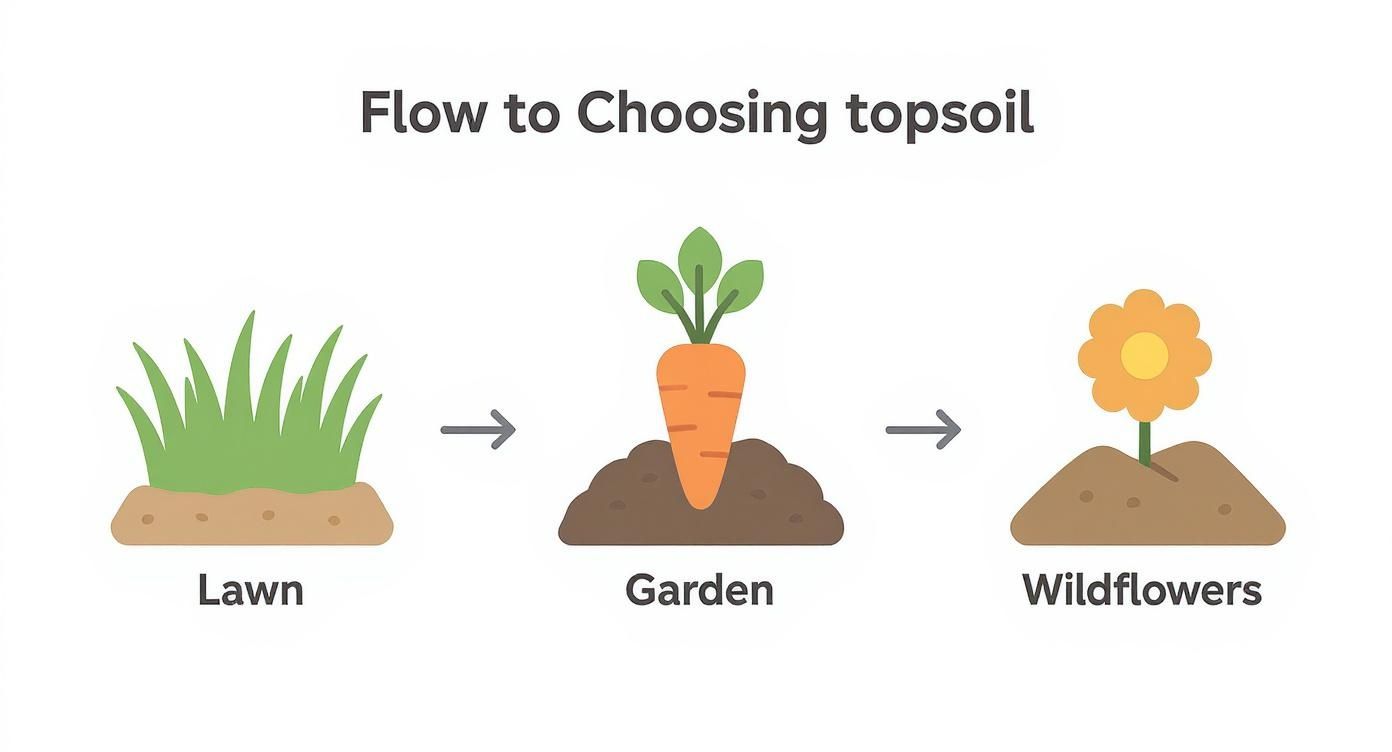
It just simplifies the whole selection process, making sure you match the soil's properties to your project's needs for the best results.
A Real-World Calculation Example
Let's put this into practice. Imagine you're building a new raised bed that is 4 metres long and 1.5 metres wide. You want to fill it with a lovely, nutrient-rich topsoil to a depth of 30cm (which is 0.3m).
Here's how the maths works out:
4m (Length) x 1.5m (Width) x 0.3m (Depth) = 1.8m³
Simple as that. You would need to order exactly 1.8 cubic metres of topsoil.
Pro Tip: It's always a smart move to add about 10% extra to your final number. Freshly delivered topsoil is usually quite fluffy and will naturally settle and compact over time. Ordering that little bit extra ensures you won't be left short after you've spread it all out.
In our example, 10% of 1.8m³ is 0.18m³. Adding this to our total gives us 1.98m³. It’s always better to round up, so ordering 2 cubic metres would be the perfect amount for this job. This little buffer gives you peace of mind and guarantees a professional-looking finish.
Understanding Delivery Options and Costs
https://www.youtube.com/embed/MgnhOD6Aun4
Once you’ve worked out how much topsoil you need, the next big question is how to get it to your property. Getting this nutrient-rich foundation delivered involves more than just a truck showing up; the delivery method you choose and a few other cost factors can really shape your budget and project timeline.
Knowing your options helps you pick the most efficient and wallet-friendly choice for your job, ensuring everything goes smoothly from our yard to your garden bed. It's really a toss-up between convenience, volume, and how accessible your property is.
Loose Tipped Loads Versus Bulk Bags
The two main ways we deliver topsoil are in bulk bags or as a loose tipped load. Each has its own clear advantages, depending on the size of your project and the layout of your site.
- Bulk Bags: You might know these as "dumpy bags" or "tonne bags." They're the big, woven bags that typically hold around 800-1000kg of topsoil. We deliver them on a pallet, which makes them perfect for smaller projects or homes with limited access, as they can be placed neatly on a driveway without making a mess.
- Loose Tipped Loads: For bigger projects, ordering a loose load is by far the most cost-effective option. The topsoil is brought in a tipper or grab lorry and simply tipped out into a pile at a convenient spot on your property. This is the best value for money when you need several cubic metres or more.
A bulk bag is a tidy, contained solution, ideal for urban gardens or just keeping your driveway clean. In contrast, a loose delivery is the workhorse option for serious landscaping jobs where the cost per cubic metre is what matters most.
Key Factors That Influence Your Final Price
The price you pay for topsoil delivery isn't just about the soil itself. A few logistical bits and pieces come together to create the final quote, and understanding them will help you budget more accurately.
After the volume, your postcode is the biggest factor. Delivery costs are all about the distance from our depot, so the further away you are, the higher the transport fee will be.
The total volume you order also plays a huge part. Suppliers often offer a lower price per cubic metre for larger orders, making it much cheaper to get everything you need in one go rather than placing multiple smaller orders.
The choice between a loose load and a bulk bag often comes down to a simple trade-off: bulk bags offer convenience and tidiness, while loose loads deliver superior value for large-scale projects. Assess your space and volume needs to make the smartest financial decision.
Finally, the type of soil and the delivery vehicle required will affect the price. A specialist blend is naturally going to cost more than our standard screened loam. And if your property needs a smaller, more nimble vehicle to get in, it might have a different delivery charge compared to a large HGV.
For large projects needing specialist equipment, it's worth exploring guides that break down the https://www.thewastegroup.co.uk/news/grab-lorry-hire-cost/ to understand the full financial picture. It's also useful to be aware of the specific DOT regulations for dump trucks, which govern the vehicles used for this kind of bulk transport.
What to Do When Your Topsoil Arrives
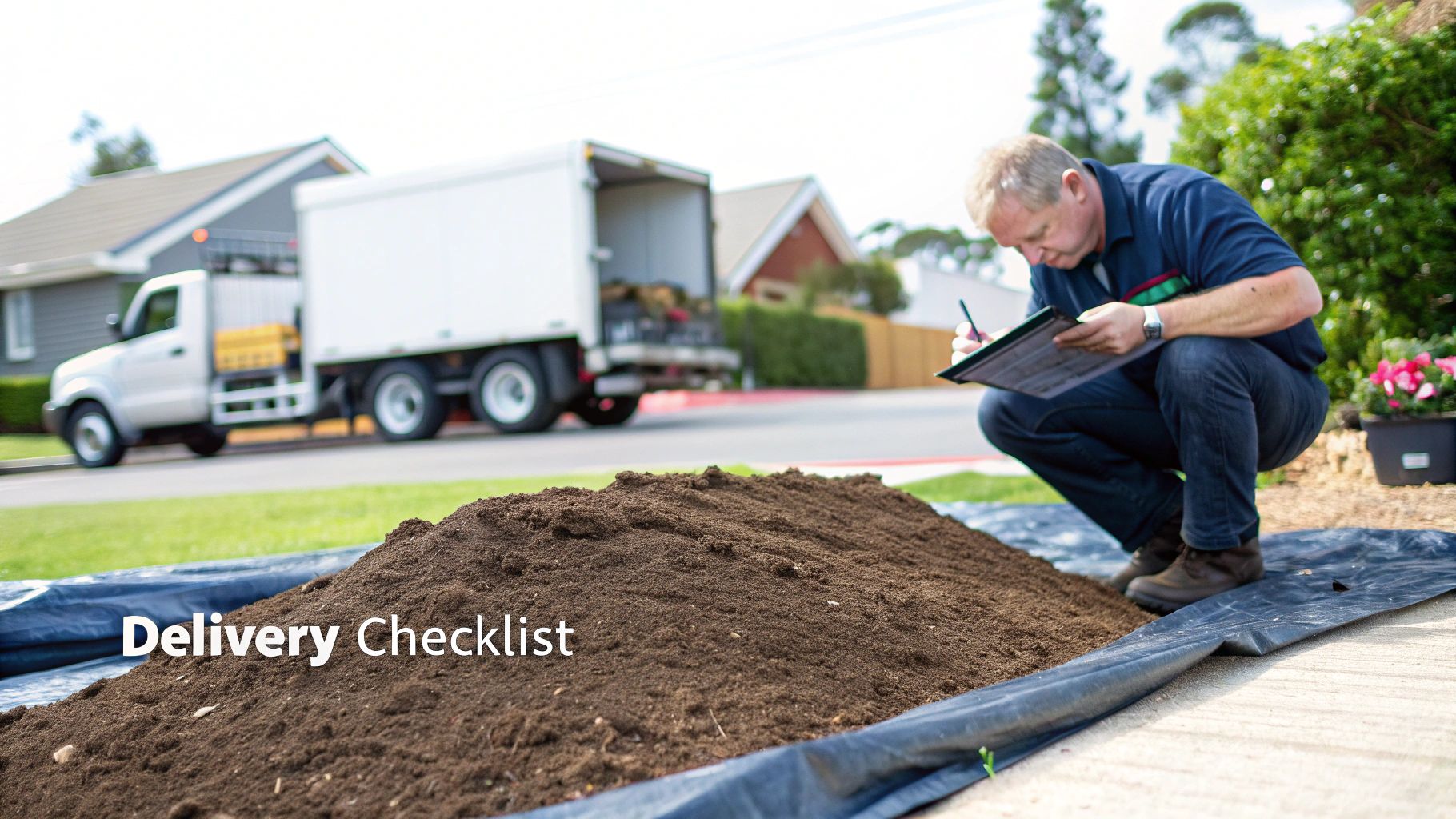
The arrival of your topsoil is an exciting moment. It’s the final piece of the puzzle before your garden project really gets underway.
A little preparation on delivery day makes sure everything goes off without a hitch. It can turn a potentially chaotic event into a smooth, stress-free process. Your goal is simple: get the soil unloaded safely and give it a quick quality check before you start spreading it.
Think of this as the final handshake of the deal. You’ve done your research and placed your order; now it’s time to receive the goods and confirm you’ve got exactly what you paid for. A few simple steps will protect your property and give you complete peace of mind.
Preparing for a Smooth Delivery
Before the truck pulls up, a bit of groundwork makes a world of difference. The main priority is creating a clear and safe path for the delivery vehicle and marking a precise spot for the soil to be dropped.
- Clear the Access Route: Delivery lorries are big. Make sure the path to your drop-off point is clear of parked cars, bins, kids' toys, or low-hanging branches.
- Protect Your Driveway: A tonne of topsoil is heavy. If it’s being delivered onto a driveway, lay down a large, heavy-duty tarpaulin first. This prevents stains, stops soil getting into cracks, and makes the final clean-up much easier.
- Mark the Spot: Use cones, a bucket, or even some chalk to clearly show the driver exactly where you want the soil pile or bulk bag placed. This takes any guesswork out of it and ensures the soil ends up right where you need it.
Your Instant Quality Checklist
As soon as your topsoil arrives, take a moment to give it a quick inspection. You don’t need to be a soil scientist to spot the signs of high-quality material. This is your chance to check that the topsoil for delivery you've received matches what you were expecting.
Grab a handful and look for these key signs:
- Colour and Scent: Good topsoil should have a dark, rich brown or black colour, which shows it’s full of organic matter. It should have a pleasant, earthy smell—not sour or foul, which could be a sign of contamination.
- Texture: Squeeze a handful of moist soil. It should bind together loosely but crumble apart easily when you poke it. If it’s sticky like clay or gritty like pure sand, it doesn’t have that ideal loamy texture.
- Debris Check: Give the pile a quick scan for excessive stones, large roots, plastic, or other rubbish. While a few small stones are normal, a quality screened topsoil should be mostly fine and consistent.
A crucial benchmark for topsoil in the UK is the BS3882 standard. This certification guarantees the soil has been independently tested for fertility, structure, and contaminant levels, ensuring it is safe and effective for your garden. Always choose a supplier who provides BS3882-compliant soil.
The reliance on certified, delivered topsoil has grown significantly for good reason. The loss of natural topsoil in the UK is a major environmental issue, with studies showing that over 85% has been lost since 1850. And if you find yourself with excess soil after your project, understanding the correct procedures is important; check out our guidance on the proper disposal of soil to handle it responsibly.
Common Questions About Topsoil Delivery
So, you've picked your soil type and measured up your garden. You're almost ready. But before you hit that 'order' button for your topsoil for delivery, a few last-minute questions often come to mind.
Getting these final details sorted is the key to feeling confident in your purchase and making sure delivery day is a breeze. Let's run through the most common queries we hear from gardeners, so you're fully prepared.
What's the Difference Between Topsoil and Compost?
It's a great question, and the answer is simple. Think of topsoil as the sturdy foundation of a house, and compost as the high-quality food you stock in the kitchen.
Topsoil provides the physical structure, minerals, and stable base that plants need to anchor their roots. It’s the essential growing medium. Compost, on the other hand, is pure, concentrated organic goodness. You mix it into the topsoil to give it a massive nutrient boost, improve how it holds water, and encourage all that healthy microbial life.
Starting a new vegetable patch? You'd lay down a quality topsoil first, then work in plenty of compost to give those hungry plants the richest start possible.
Do I Need a Permit to Leave a Bulk Bag on the Pavement?
In most places, the answer is yes. Dropping any large item like a bulk bag of topsoil onto a public path or road usually requires a nod from your local council. The reason is simple – it can get in the way of pedestrians and traffic, which can be a real hazard.
It's always your responsibility to check your local council's rules beforehand to dodge any potential fines. The easiest and safest route is to have the bag delivered straight onto your property, like a driveway or front garden.
This way, you avoid any legal grey areas and keep public walkways clear for everyone.
How Do I Know if Topsoil Meets the BS3882 Standard?
The BS3882 standard is your stamp of quality. It’s an independent certification that confirms the soil has been properly tested for its fertility, structure, pH balance, and contamination levels. It’s the best way to know you’re getting a product that’s safe, healthy, and up to the job.
Any reputable supplier will be upfront about whether their topsoil meets this standard. They should also be able to provide a certificate of analysis if you ask for it, which breaks down the soil's composition. If a supplier gets cagey or can't give you this info, treat it as a big red flag. Always go with suppliers who are transparent about their quality and certification.
Can Topsoil Be Delivered in Bad Weather?
Deliveries can usually go ahead in a bit of light rain, but heavy downpours or stormy weather can cause a few problems. The main issue is that topsoil gets incredibly heavy and waterlogged when it’s completely saturated.
All that extra weight makes it a real mission to move and spread. Plus, delivery lorries can struggle to get access on soft, muddy ground, which could chew up your lawn or verge. It's always a good idea to chat with your supplier about the forecast beforehand. A smart move is to have a big, heavy-duty tarpaulin on standby to cover the soil as soon as it arrives, keeping it protected from the elements.
Ready to create the perfect foundation for your garden? The Waste Group offers high-quality, certified topsoil delivered directly to your door. With our reliable service and expert advice, you can get your project started with confidence. Order your topsoil for delivery today and watch your garden thrive.