You’ve probably seen the problem already. A lawn that never greens up properly, a flowerbed that dries out fast, or a patch you’ve levelled three times and still can’t get right.
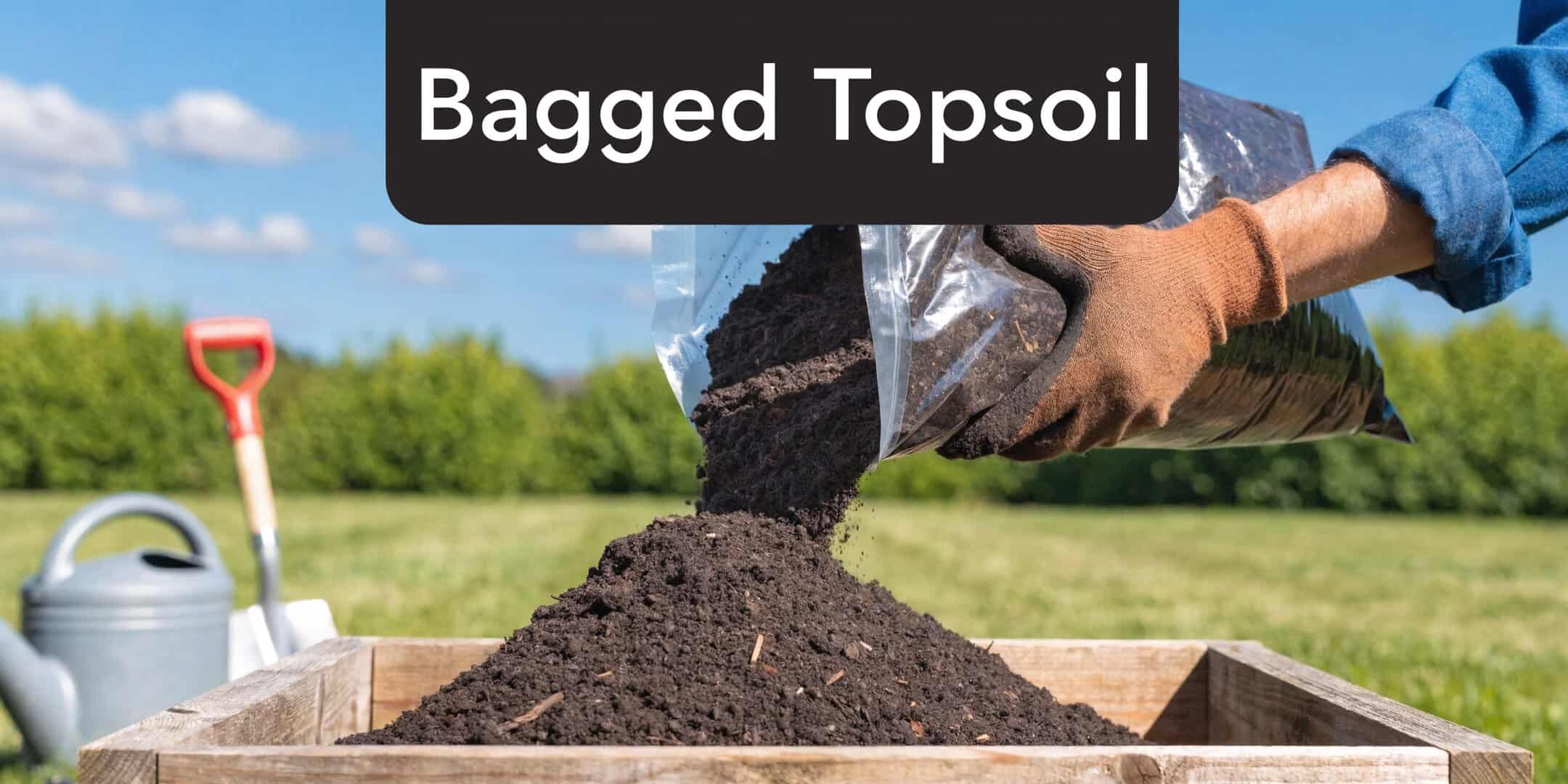
That’s usually when people start looking for topsoil in bag. Not because they want something fancy, but because they need a practical fix they can carry, store, and use in stages without ordering a full loose load. For small garden jobs, bagged topsoil is often the simplest way to get decent ground back where it’s missing.
The bigger issue is that good topsoil isn’t endless. In the UK, topsoil loss is a serious problem, with 81% of UK topsoil predicted to be lost by 2050 and annual erosion averaging 1.5 to 2.5 tonnes per hectare, according to the Soil Association. That matters on farms, building sites, and in ordinary back gardens. If the soil in your garden is tired, compacted, shallow, or full of rubble, replacing or improving it properly makes a visible difference.
Why Your Garden Needs More Than Just Dirt
A lot of garden problems get blamed on the wrong thing. People blame bad seed, too much rain, not enough rain, slugs, shade, the neighbour’s tree. Sometimes those are part of it. But very often the issue is the soil underneath.
If the top layer is thin, compacted, sandy, sticky, or contaminated with bits of builders’ waste, plants struggle from the start. Grass roots stay shallow. Borders dry out unevenly. Water either runs off or sits on the surface.

Dirt and topsoil aren’t the same thing
Topsoil is the workable upper layer that supports roots, air movement, moisture retention, and soil life. Dirt is just a loose word people use for anything brown on the ground.
That difference matters when you’re buying. A bag labelled topsoil should help create a growing surface. A poor bag just fills a hole.
Here’s where bagged topsoil earns its place:
- For patch repairs it’s easy to move through side gates and around a finished garden.
- For raised areas and beds you can add it in stages instead of committing to a large delivery.
- For tidy DIY jobs it keeps the site cleaner than loose heaps on a driveway.
Good gardens don’t start with feeding the plants. They start with giving roots somewhere decent to grow.
When bagged topsoil makes most sense
Bagged topsoil is usually the right choice when the job is modest, access is awkward, or you want control over how much arrives. That includes lawn repairs, bed topping, turf prep in small areas, and levelling low spots.
It also suits people who want to check the product before spreading all of it. Open one bag, inspect it, and decide whether the rest is worth using. That’s much harder once a loose load is tipped.
A common mistake is thinking any bagged product from a garden centre will do. It won’t. Some bags contain decent loam. Others are little more than filler. If you want roots to establish properly, the material has to be right.
What Exactly Is in a Bag of Topsoil
Topsoil is often described as the living skin of the earth, and that’s a fair description. It’s the upper growing layer where roots, moisture, air, microbes, and organic matter all interact. Strip that away and you’re left with ground that’s much harder to work with.
For a DIY gardener, the confusing part is that not every bag called topsoil is the same product. The label might say topsoil, lawn soil, enriched soil, screened soil, or blended topsoil. They sound similar, but they behave differently.

Think of it like flour
The easiest way to understand the types is to think of them like baking flour.
Screened topsoil is the plain flour of the group. It’s the base material. It has had larger stones, clods, and debris taken out, which makes it easier to spread and rake. This topsoil is suitable for levelling, under turf, and general garden improvement.
Enriched or blended topsoil is closer to self-raising flour. It starts with topsoil and then includes compost or other organic matter to improve structure and fertility. That can be useful for beds and planting areas, but it still needs to feel like soil, not pure compost.
Lawn dressing or lawn topdressing is the more specialised version. It’s generally finer and intended for thin surface applications over existing grass. It’s not the same as a bag meant to build depth in a border or under new turf.
What a quality product sheet can tell you
Some of the better products come with actual specification details. For example, a UK bulk bagged topsoil product such as SupaGrow Standard Topsoil is described as a medium loam screened to 15mm, with compost compliant with BSI PAS100:2018 and analysis to BS3882:2015, according to the product information sheet.
That same sheet gives practical clues about what the material is meant to do:
| Feature | Why it matters |
|---|---|
| Medium loam | A balanced texture is easier to work than soil that is too sandy or too clay-heavy |
| Screened to 15mm | Helps with levelling, raking, and seedbed prep |
| Peat-free blend | Better fit for gardeners trying to reduce peat use |
| PAS100 compost content | A sign the composted element has been processed to a recognised standard |
If the bag tells you nothing beyond “topsoil”, you’re buying on trust alone.
What topsoil in bag is not
It isn’t the best stand-alone choice for most pots and containers. Containers usually need a lighter, freer-draining mix than ordinary ground soil.
It also isn’t the same thing as compost. Compost improves soil. Topsoil provides body and structure. Many successful garden jobs use both, but they play different roles.
Decoding Quality How to Spot a Good Bag of Topsoil
A lot of people assume all bagged topsoil is more or less interchangeable. In the UK market, that’s not a safe assumption.
Topsoil sold in bags doesn’t have the same straightforward, mandatory framework many buyers expect. BS3882:2015 exists as a benchmark for topsoil quality, but it’s voluntary. That means some producers work to it, and some don’t. A 2023 report highlighted that only 15% of tested bagged topsoil from UK retailers met basic nutrient and contaminant thresholds, while products using compost compliant with BSI PAS100:2018 offer a stronger indicator of quality and sustainability, as noted in this topsoil product information sheet.
That single fact explains a lot of disappointing garden results.

Start with the label
A decent bag should tell you more than the product name. Look for references to:
- BS3882 as a benchmark for topsoil quality
- PAS100 if compost is part of the blend
- Screened soil rather than unscreened fill
- Peat-free if environmental impact matters to you
- Intended use such as lawns, beds, borders, or general landscaping
If the packaging is vague, treat that as a warning sign rather than a minor omission.
Use your senses before you spread it
Once the bag is open, the soil should tell you a lot.
- Texture matters. It should feel crumbly and workable, not like sharp sand or greasy clay.
- Colour gives clues. A rich brown tone often suggests organic matter, though colour alone doesn’t guarantee quality.
- Smell is revealing. Good soil smells earthy. Sour or foul smells usually point to a problem.
- Debris shouldn’t dominate. A few small stones are normal. Bits of plastic, brick, glass, or timber are not.
- Moisture should be balanced. Slightly moist is fine. Waterlogged sludge or bone-dry dust is poor to work with.
For gardeners growing specialist plants in containers, texture matters even more. If you’re comparing soil behaviour across different uses, a practical resource like this guide to the best soil for potted cactus is useful because it shows how drainage needs can change completely depending on the plant.
A short visual guide can help if you want to compare what you’re seeing in the bag with a trade-style inspection:
What works and what doesn’t
What works is buying from suppliers who state what the material is, how it’s screened, and what standard it is working to.
What doesn’t work is choosing by price alone, especially for anything that will sit under turf, around edible planting, or in a front garden you don’t want to redo.
Buy one bag to test if you’re unsure. It’s cheaper than spreading ten bad ones and trying to fix the ground afterwards.
Choosing and Using Bagged Topsoil for Your Project
Different jobs need different approaches. The mistake I see most often is using one bagged product for everything, then wondering why the finish is poor.
For small garden work, the best results usually come from matching the topsoil to the task and not rushing the prep.

New lawn patches and lawn repairs
If you’re repairing worn grass or filling shallow dips, use a screened topsoil in bag that rakes out easily. Break up the surface first with a fork or rake so the new layer doesn’t just sit like a cap on top.
Then:
- Spread a thin, even layer over the patch.
- Rake it level with the surrounding lawn.
- Firm it lightly with the back of a rake or your boots.
- Add seed or prepare for turf.
Don’t bury existing grass under a heavy layer and hope it will push through. That usually leaves a lumpy finish.
Flowerbeds and border improvement
Beds often need structure more than sheer depth. If the existing soil is poor, mix the new topsoil into the upper layer rather than dumping a neat layer on top and planting straight into it.
That blending matters because roots don’t like a sudden change from one texture to another. Water can also behave badly where two very different layers meet.
A simple approach is:
- Loosen the old ground before adding anything
- Remove visible rubble and weeds
- Blend bagged topsoil through the upper layer
- Finish with compost if the bed needs more organic matter
Under turf and for levelling
Fresh turf shows every mistake. If the base is rough, compacted, or full of stones, you’ll see it once the grass knits in.
For turf prep, use a screened soil that can be levelled precisely. Rake it, walk it, rake it again. Then check the surface from several angles. What looks flat standing over it often isn’t flat once the turf is down.
If your project is moving beyond a few bags and into larger amounts, this guide on topsoil for delivery helps explain when delivered material becomes the more practical option.
Raised beds and small garden builds
Bagged topsoil is handy for raised beds because you can control the fill as you go. But don’t treat topsoil as the only ingredient by default. For planting beds, the final blend should suit what you’re growing.
For example:
| Project | Best use of bagged topsoil |
|---|---|
| General planting bed | Use as part of the main fill, then improve with organic matter if needed |
| Levelling a lawn edge | Use screened topsoil and rake to a fine finish |
| Turf base on a small area | Create an even surface and remove clods before laying |
| Border renovation | Blend into existing ground rather than layering it sharply |
The neatest gardens usually come from patient groundwork, not expensive planting.
Calculating How Much Topsoil You Need to Order
Most ordering mistakes happen for one reason. People guess.
Topsoil is easier to buy when you treat it like volume, not just bags. The working formula is simple:
Area x depth = volume
Measure the length and width of the space in metres. Multiply those together to get square metres. Then convert your planned depth into metres and multiply again.
A simple example
Say your patch is 10m² and you want a 2cm layer.
The depth in metres is 0.02m.
So the calculation is:
10 x 0.02 = 0.2m³
That gives you the volume you need.
The next step is turning volume into bags. According to this guide on how many bags of topsoil are needed, UK gardening households buy an average of 8 bags a year, 71% buy 10 or fewer, and a standard 20L bag covers about 1m² at 2cm depth. The same source notes that it takes about 50 bags to cover 1 cubic metre.
A quick conversion table
| Volume needed | Approximate 20L bags |
|---|---|
| 0.1m³ | About 5 bags |
| 0.2m³ | About 10 bags |
| 0.5m³ | About 25 bags |
| 1m³ | About 50 bags |
That won’t replace checking the product label, but it gives you a reliable starting point.
When bags stop making sense
For a quick lawn patch or one border, bags are tidy and manageable. Once your project gets larger, the handling becomes the bigger issue.
You’re not just paying for soil at that point. You’re lifting, opening, emptying, storing, and disposing of a pile of packaging as well.
If you’re planning a bed build or a larger garden refresh, our raised garden planting guide is a useful companion because it helps you think about depth, planting layout, and how the soil volume translates into an actual growing space.
For bigger quantities, it also helps to understand what a larger single unit looks like in practice. This explainer on a ton bag of soil is worth reading before you order.
A safe way to order
If you’re between two quantities, round up rather than down. Running short halfway through a levelling or turf job is awkward because matching the second batch can be harder than people expect.
Buy enough to finish cleanly, but don’t overcomplicate it. Measure the area, decide the finished depth, convert it to volume, then to bags.
Application Storage and Environmental Considerations
Bagged topsoil is easy to buy. Applying it well is where the result is won or lost.
Start with the ground conditions. Don’t spread topsoil onto waterlogged soil and don’t work it when it’s claggy enough to smear under your boots. That creates compaction and leaves you with a poor structure from the outset.
Applying it properly
A few practical rules make a big difference:
- Break the base first so the new layer bonds with the surface below.
- Spread in even passes rather than tipping random heaps everywhere.
- Rake twice. Once to move it roughly into place, then again for finish.
- Remove obvious debris as you go instead of hoping it disappears once planted.
- Firm lightly, not heavily. You want contact and level, not a sealed crust.
Apply soil when it’s workable in your hand. If it forms a greasy lump, leave it for another day.
Storing leftovers without ruining them
Unused bags often get left split open in a corner of the garden. Then rain gets in, weeds colonise the top, and the soil turns into a nuisance.
Store leftover bags on a dry surface if you can. Keep them sealed or re-cover opened bags so they don’t become saturated. If the soil dries out completely, you can still use it, but it’s harder to spread evenly and may need breaking up before application.
The environmental side of the decision
If you’re trying to garden more responsibly, look for peat-free options and products that clearly state compost compliance such as PAS100. That doesn’t guarantee perfection, but it does show a more considered approach to materials.
There’s also the packaging question. Small jobs suit bags. Larger jobs often create a lot of plastic waste if you order only in small units. For bigger projects, bulk supply can cut down on handling and waste. If you’re clearing old soil, turf, or excavation spoil at the same time, it also helps to know the proper route for dispose of soil rather than piling it up and hoping it disappears.
Frequently Asked Questions About Bagged Topsoil
Is bagged topsoil safe for vegetables
Sometimes yes, but don’t assume it automatically is. Check what the product says, look for clear quality information, and avoid vague bags with no meaningful specification. If you’re growing edibles, caution is sensible.
Can I use topsoil in bag for pots
You can use it as part of a mix in some cases, but for most containers it’s too dense on its own. Pots usually need a lighter growing medium with better aeration and drainage.
What’s the difference between topsoil and compost
Topsoil gives structure and body. Compost adds organic matter and helps improve the soil. They work together, but they aren’t interchangeable.
Is darker soil always better
Not always. Dark colour can suggest organic matter, but it doesn’t prove the product is clean, balanced, or well screened. Texture, smell, and visible debris matter too.
Should I buy one big load instead of bags
For small jobs, bags are easier to handle and store. For larger jobs, bulk can be more practical and reduce packaging. The right choice usually comes down to access, volume, and how tidy you need the site to stay during the work.
Can I put new topsoil straight over poor ground
You can, but it often works better if you loosen and blend the old surface first. That helps roots move through the profile and reduces problems with drainage and layering.
If you’re planning a garden project in Dorset and want help with the practical side of soil supply, waste removal, or larger landscaping materials, The Waste Group is a dependable local option. They cover skips, aggregates delivery, and site support across Poole, Bournemouth, Dorchester, Weymouth and beyond, with a strong focus on straightforward service and responsible waste handling.