What Is a Waste Transfer Station and How Does It Work?
What Is a Waste Transfer Station and How Does It Work?
Picture a Royal Mail sorting office, but for rubbish. That’s pretty much what a waste transfer station is. It’s not the final stop for your waste, like a landfill, but a crucial hub where everything gets dropped off, sorted, and bundled up before moving on. Think of it as the vital middle step that makes recycling work and the whole disposal journey far more efficient.
Understanding the Role of a Waste Transfer Station
A waste transfer station is a logistical powerhouse in the world of waste management. When we collect your full skip, its journey doesn’t end at the nearest tip. Instead, it begins at one of these specialised facilities, which are built to handle huge volumes of waste from all sorts of places.
This is where the raw, mixed-up mess from building sites, business clear-outs, and garden projects gets organised into neat, manageable streams. The main job here isn't just disposal; it's diversion and consolidation. By carefully sorting through everything, these stations make sure as much recyclable material as possible is pulled out and sent back into the supply chain.
The Core Purpose and Function
At its heart, a waste transfer station does two main things: it sorts materials for recycling and bulks up the remaining rubbish for more efficient transport. It’s a systematic process designed to squeeze every last bit of value out of what we throw away.
Here’s a quick rundown of how it works:
- Receiving and Weighing: The first thing that happens when a skip lorry arrives is it gets weighed on a weighbridge. This is a legal must-have for documentation and billing, keeping a transparent record of all the waste coming through the gates.
- Tipping and Initial Sorting: Next, the lorry reverses into a huge, covered building called a "tipping hall" and unloads its contents. This is where the first pass happens. Heavy machinery like 360-degree excavators and trained staff get to work, pulling out the big, obvious stuff like chunks of wood, metal, and concrete rubble.
- Advanced Segregation: From there, the waste moves along a series of conveyor belts and machines. Powerful magnets grab any steel and iron, vibrating screens shake out soil and hardcore, and trained pickers stand by the line, pulling out specific materials by hand.
The goal is simple: rescue valuable resources from being buried in the ground. By separating materials like cardboard, plastics, metals, and aggregates, the facility massively cuts down on the amount of waste that actually needs to go to a landfill.
Why Not Go Straight to Landfill?
It might seem easier to just drive every skip straight to the local landfill, but it’s incredibly inefficient. Doing that would mean more lorries on the road, burning more fuel, creating more traffic jams, and pumping out a lot more carbon emissions. A waste transfer station solves this logistical headache by acting as a central drop-off point.
Once everything is sorted, the separated materials are crushed into dense bales or loaded into massive articulated lorries. These big artics can carry the same amount of waste as several smaller skip lorries in a single trip. This consolidation makes the final leg of the journey—whether it’s to a specialist recycling plant, an energy-from-waste facility, or a landfill—far cheaper and much kinder to the environment. It’s a smart approach and a cornerstone of modern, responsible waste management.
The Journey of Waste Inside a Transfer Station
So, what actually happens once a collection lorry or skip truck rolls into a waste transfer station? It’s easy to picture a simple dumping ground, but the reality is far more organised. Think of it less as a final stop and more as a busy, dynamic sorting hub where technology and trained eyes work together to squeeze every last bit of value from what we throw away.
The whole process kicks off the second a vehicle drives onto the weighbridge. This is basically a massive set of industrial scales that records the exact weight of the incoming load. It's not just for curiosity; it's a legal must-have. This step generates the data for the Waste Transfer Note, a crucial document that creates a transparent, accountable paper trail for all commercial waste.
Once weighed, the driver gets the green light to head into the tipping hall. This is a huge, covered building designed to keep dust and noise contained and protect the waste from the rain. Here, the lorry tips its entire load onto the floor, joining piles of mixed waste from all sorts of construction sites, business clear-outs, and household projects.
The Segregation and Sorting Process
With the waste now in a giant heap on the floor, the real work begins. This isn't just a chaotic mess; it’s a carefully staged operation that blends brute-force machinery with a skilled human touch.
First up, large excavators with powerful grabbing claws wade into the pile, pulling out the biggest items. They're looking for bulky pieces of wood, large chunks of metal, concrete, and anything else oversized that could jam or damage the main sorting machinery downstream. It's a bit like picking the big potatoes and carrots out of a stew before you get to the smaller bits.
The rest of the waste is then loaded onto a series of conveyor belts, starting its journey down the main sorting line. Here’s a breakdown of what typically happens next:
- Manual Picking Line: The waste trundles past a line of trained operatives. Their job is to pull out specific materials by hand as they go by. They’re grabbing things like cardboard, different types of plastics, and other recyclables that are easy to spot and remove manually.
- Advanced Mechanical Separation: The conveyor belt carries on, passing under seriously powerful overhead magnets. These pluck all the ferrous metals—like steel and iron—straight out of the mix, dropping them into their own collection bays.
- Screening and Sizing: Next, the material often travels over huge screens or inside trommels (big, rotating, cylindrical screens). As they shake and turn, smaller, heavier materials like soil, rubble, and aggregates fall through the holes, separating them from the lighter waste.
This infographic gives you a simple visual of how that flow works, from the moment a lorry arrives to the final recycling stage.
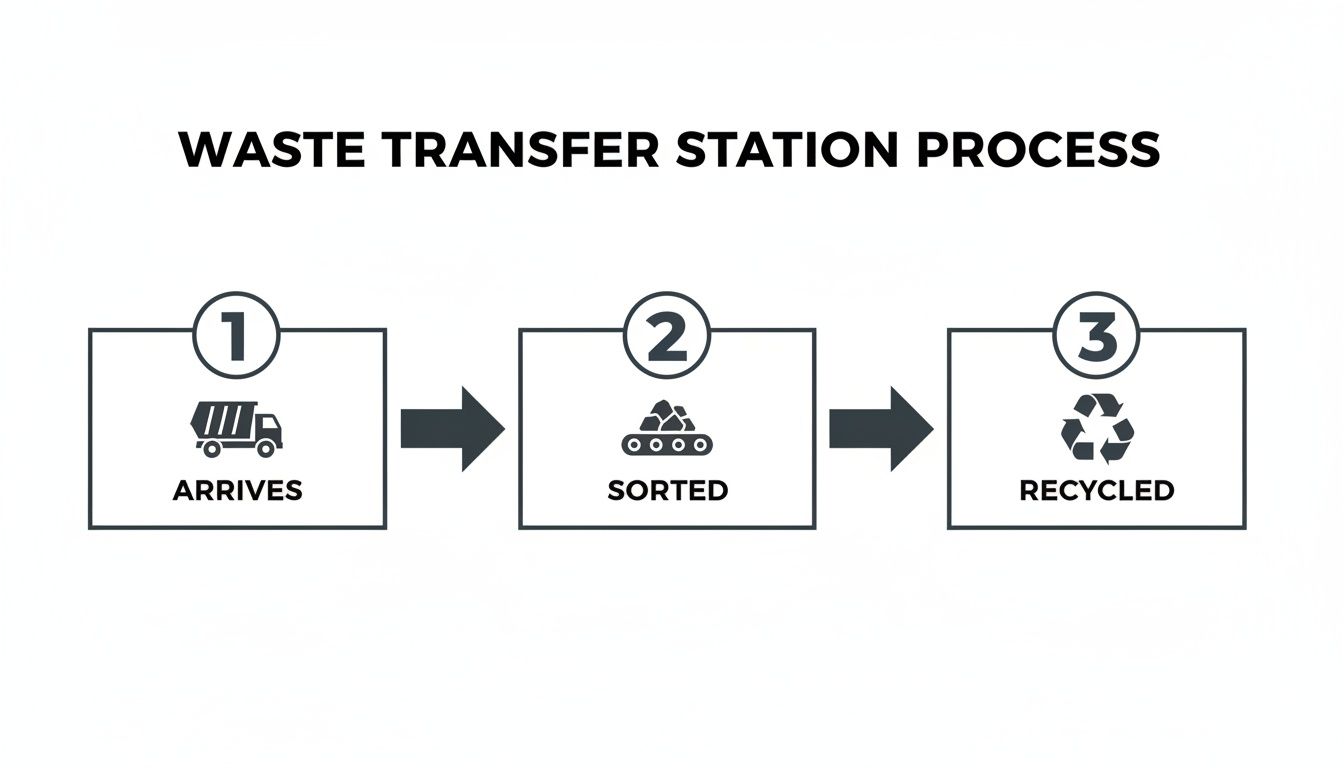
As you can see, the main goal is to transform one big, jumbled load into several distinct, much more valuable streams of material.
Preparing Materials for Their Next Destination
Just because everything's been sorted doesn't mean the job is done. The final step inside the transfer station is all about processing and consolidation. Essentially, it’s about getting these materials ready for their onward journey in the most efficient way possible.
Wood, for instance, might be fed into massive shredders that turn bulky timber into uniform woodchips, perfect for biomass fuel or making new composite boards. Materials like cardboard, paper, and plastics head to industrial balers. These machines use incredible hydraulic force to squash everything down into dense, tight cubes.
Baling waste is a game-changer for logistics. A single bale can contain a huge volume of compressed material, meaning far more can be loaded onto a single lorry. This dramatically reduces the number of vehicles needed for transport.
Finally, the separated and processed materials are ready to go. Bales of cardboard, piles of scrap metal, or containers of hardcore are loaded onto large articulated lorries. From here, they head off to their final destinations, whether that's a recycling plant, an energy-from-waste facility, or—only as a last resort—a licensed landfill.
For businesses looking for a reliable and compliant way to dispose of waste, you can learn more about how The Waste Group’s tipping facilities manage this entire process. This intricate system is designed to make sure your waste is handled responsibly, recovering as much as possible and keeping its environmental footprint to an absolute minimum.
It’s easy to get these terms mixed up. In the world of waste management, though, they represent three completely different destinations for your rubbish.
Confusing a waste transfer station with a landfill or your local recycling centre is a bit like mixing up a Royal Mail sorting office with a postbox or the final delivery address. Each one has a specific, vital role to play in the journey of what we throw away.
Getting your head around these differences is key for anyone managing a project, whether you're a homeowner finally clearing out the garage or a contractor on a major building site. Knowing where your waste should go—and where it actually ends up—is fundamental to disposing of it responsibly, legally, and without spending more than you need to.
Let's break down exactly what sets them apart.
The Waste Transfer Station: A Sorting Hub
A waste transfer station is a busy, industrial facility that acts as a temporary pit stop for rubbish. It's not the kind of place you can just turn up to with a car boot full of junk; it's designed exclusively for licensed waste carriers, like the lorries collecting skips and big commercial bins.
Its main job is to take in large volumes of mixed waste, sort through it to pull out anything that can be recycled, and then pack the leftover, non-recyclable stuff together for the next leg of its journey. Think of it as a processing hub focused entirely on sorting and logistics.
- Who uses it? Only licensed waste management companies and commercial waste carriers.
- What's its purpose? To sort mixed commercial waste, maximise recycling rates, and bulk up loads to make transport more efficient and eco-friendly.
- Is it a final destination? Not at all. It’s a crucial middle step in the waste journey.
The Landfill Site: The End of the Line
A landfill site is the final, permanent resting place for waste that can’t be recycled or recovered for energy. These aren't just holes in the ground; they are highly engineered sites designed to contain waste safely and stop it from harming the surrounding environment.
Thanks to strict environmental laws and hefty taxes, sending waste to landfill is now the absolute last resort in the UK. The whole point of modern waste management, supported by facilities like transfer stations, is to divert as much material as possible away from landfills. This saves natural resources and reduces the long-term environmental headache of burying rubbish.
A landfill is a one-way ticket for waste. Once something goes in, its value is lost forever, and it becomes a long-term environmental liability that has to be carefully managed for decades.
The Household Recycling Centre: Your Local Tip
You probably know this place as "the tip" or, more officially, a Household Waste Recycling Centre (HWRC). This is a public facility run by your local council. It’s where residents can take household items that are too big or bulky for their regular kerbside bins, like old furniture, garden cuttings, electricals, and extra recycling.
The key difference is that HWRCs are strictly for domestic use. You’re expected to sort your own waste into the designated containers for wood, metal, cardboard, and so on. They simply aren’t set up to handle the large, mixed commercial loads that a waste transfer station deals with every day.
- Who uses it? The general public, for their own household waste.
- What's its purpose? To give residents a free and easy way to drop off and recycle a wide range of materials.
- Can businesses use it? Absolutely not. Commercial or trade waste is strictly prohibited.
So, to bring it all together, a waste transfer station is the engine room of commercial recycling, a landfill is the final stop for unrecoverable rubbish, and a recycling centre is the public’s go-to for household clear-outs.
How Different Waste Facilities Compare
To make it even clearer, here’s a simple breakdown of how these three facilities stack up against each other.
| Feature | Waste Transfer Station | Landfill Site | Household Recycling Centre |
|---|---|---|---|
| Primary Purpose | Sort, recycle, and consolidate commercial waste for onward transport. | Permanent, final disposal of non-recyclable waste. | Public drop-off point for residents to recycle household items. |
| User Access | Licensed waste carriers only. Not open to the public. | Licensed waste carriers. Generally not open to the public. | Open to the general public (residents of the local area). |
| Accepted Materials | Large volumes of mixed commercial and construction waste. | Only residual waste that cannot be recycled or recovered. | A wide range of separated household materials (e.g., wood, garden waste, electronics). |
| Environmental Role | To maximise recycling rates and divert waste from landfill. | To safely contain waste that has no other destination. | To encourage household recycling and responsible disposal. |
Understanding these distinctions ensures your waste ends up in the right place, handled by the right people, and processed in the most environmentally sound way possible.
Why Transfer Stations Are Essential for the UK
Waste transfer stations are the unsung heroes of the UK's waste management system. They work quietly behind the scenes, making waste disposal more efficient, affordable, and much better for the environment. Their impact goes far beyond just sorting rubbish; they are a critical link in the chain that connects our homes and businesses to a greener future, playing a central role in driving the circular economy.
Think of a waste transfer station as a smart logistical hub. Without them, you'd have dozens of smaller skip lorries making long, separate journeys to a distant landfill. It would be slow, expensive, and create a massive amount of traffic and pollution. Instead, these facilities allow lots of smaller vehicles to drop off their loads locally, which is a total game-changer for efficiency.
Reducing Carbon Footprints and Traffic
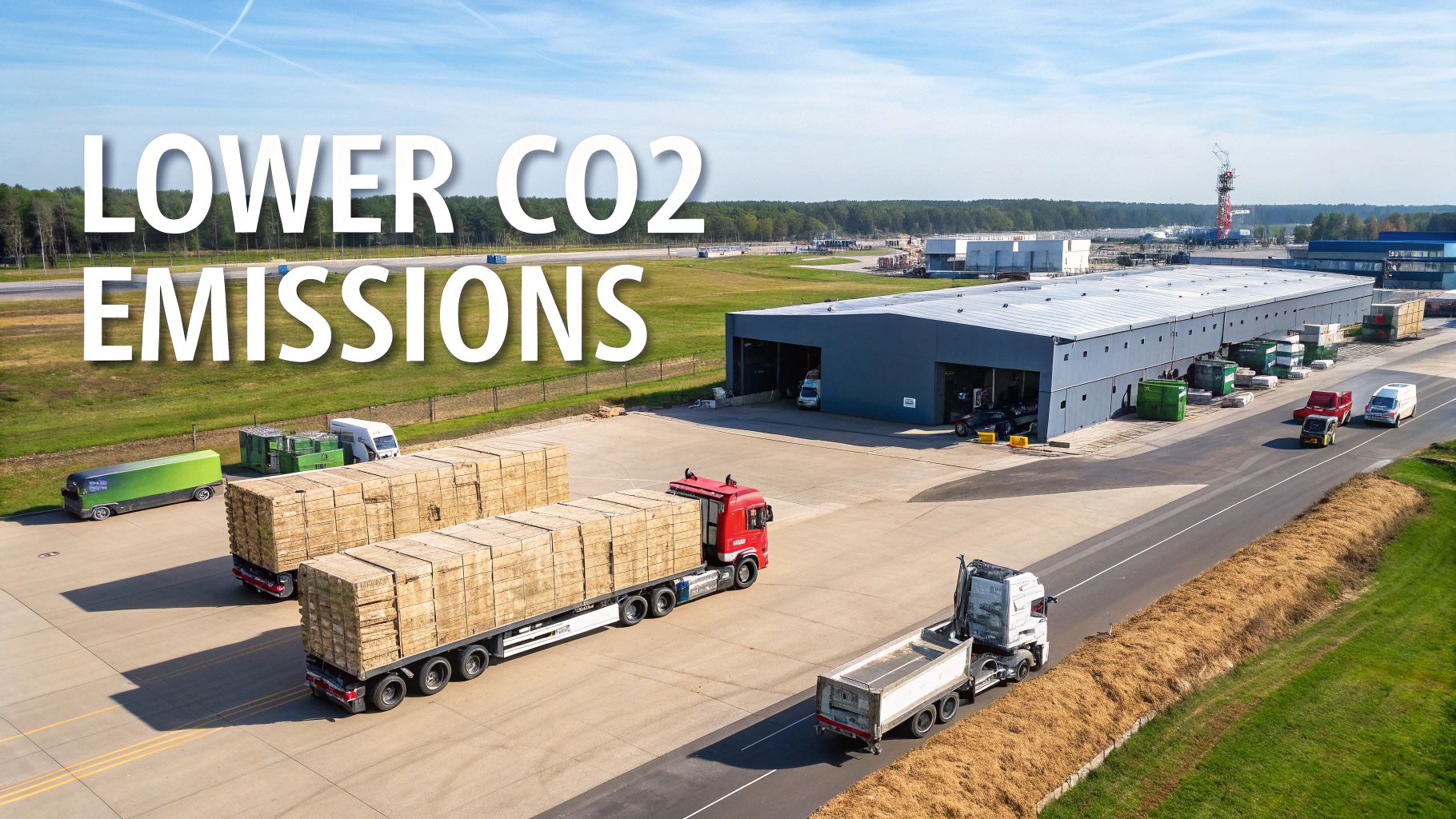
By bringing waste from many small collection vehicles together into fewer, larger lorries, transfer stations slash the number of "waste miles" travelled. A single articulated lorry can carry the same amount as three or four full skips, which means far fewer vehicles on the road.
This simple change delivers a triple environmental win:
- Lower Fuel Consumption: Fewer journeys mean less diesel gets burned. Simple as that.
- Reduced CO2 Emissions: Less fuel being used directly cuts the carbon footprint of the whole process.
- Less Traffic Congestion: Taking unnecessary heavy goods vehicles off our roads helps ease traffic, especially around towns and cities.
This clever logistics doesn't just help the planet; it helps keep disposal costs down. Fewer lorry journeys mean lower running costs for waste management companies, a saving that can then be passed on to customers. It’s a system that makes perfect sense, both ecologically and economically.
Powering the UK’s Recycling Efforts
Beyond the logistics, the biggest contribution of a waste transfer station is its role as an engine for modern recycling. When mixed waste arrives, it’s just a jumble of different materials. The detailed sorting and separation that happens inside these facilities is what unlocks its hidden value.
Without this crucial step, huge amounts of reusable resources would be lost forever in a landfill. Instead, skilled teams and advanced machinery work together to separate everything into clean, distinct piles.
At a transfer station, waste isn't seen as rubbish but as a resource. The goal is to rescue every possible kilogram of wood, metal, soil, and hardcore, getting it ready for a second life in manufacturing and construction.
This recovery process is absolutely vital for the UK's circular economy. By feeding a steady stream of high-quality recycled materials back into production, we reduce our reliance on digging up, quarrying, and chopping down new resources. This protects natural habitats, saves energy, and cuts the pollution that comes with extracting raw materials.
Diverting Waste from Landfill
The positive impact of this system is clear when you look at the national numbers. In the UK, waste transfer stations have become essential in easing the pressure on our landfills. Official UK government statistics show that in 2023, total municipal waste sent to landfill stood at 11,184 thousand tonnes—a big drop from 13,973 thousand tonnes in 2021. This progress shows just how important facilities like The Waste Group's tipping services in Dorset are, prioritising smart disposal and recycling as much as possible. You can explore the full government report and learn more about UK waste statistics.
Ultimately, every skip load that passes through a transfer station is supporting a more sustainable way of doing things. It's a system designed to keep the materials we use in circulation for as long as possible, building a stronger, resource-efficient economy for the future.
Navigating Costs and Legal Requirements
For any business, contractor, or even a homeowner tackling a big project, getting to grips with the costs and rules of waste disposal is a must. Using a waste transfer station isn't just a matter of dropping off your rubbish; it's a regulated process with fees and legal checks designed to make sure everything is handled responsibly.
The first thing you'll encounter are the ‘gate fees’. Think of them as the entry ticket for your waste. These charges are usually worked out per tonne, and the price can change quite a bit depending on what you’re tipping. A lorry full of clean, inert hardcore, for example, will cost less to dispose of than a skip brimming with mixed commercial waste simply because it requires far less sorting.
Understanding Landfill Tax and Its Impact
A huge factor pushing up these costs is the UK Landfill Tax. It’s a hefty government levy slapped on any waste that gets buried in the ground, and it's deliberately set high to make landfill the most expensive, last-resort option. This creates a powerful financial reason for waste companies to recover and recycle as much as they possibly can at the transfer station.
And that pressure is only getting stronger. The UK waste management market, which was valued at USD 40.22 billion in 2024, is expected to soar to USD 66.24 billion by 2033. A big part of that is the landfill tax, which is set to rise again to £126.15 per tonne in April 2025. For a company handling 10,000 tonnes of waste a year, that hike alone could add £400,000 to their annual bill. Transfer stations are the key to fighting back against these rising costs by sorting waste for recycling or energy recovery instead.
Your Legal Duty of Care
The whole journey of your waste, from your site to its final destination, is wrapped in strict legal frameworks to stop things like fly-tipping. Anyone who produces or handles commercial waste has a legal ‘Duty of Care’. In simple terms, this means you are responsible for your waste from the moment you create it until it’s properly disposed of at an authorised facility.
To prove you're meeting this duty, you'll need a couple of key things:
- Waste Carrier's Licence: Any business that transports waste as part of its operations must be registered with the Environment Agency and hold a valid licence. It's proof that they are a legitimate, professional outfit authorised to handle waste.
- Waste Transfer Note (WTN): This is the single most important piece of paper in the whole process. A WTN has to be filled out for every single load of waste that changes hands. It’s your legal receipt, spelling out exactly what the waste is, where it came from, and who is taking it away.
This paperwork creates a complete, unbroken audit trail. It ensures that if your waste were ever found dumped illegally, it could be traced right back to its source, holding the right people accountable.
To get a better handle on this crucial document, you can learn more about what a Waste Transfer Note is and why it’s so vital for keeping you on the right side of the law.
With such strict rules in place, staying on top of environmental and safety compliance is non-negotiable. Businesses can find great information on how ISO 45001 standards help businesses meet legal requirements. Of course, when you partner with a service like The Waste Group, all this complex compliance is handled for you. We make sure every disposal is fully documented, completely legal, and totally hassle-free.
Handling Hazardous Waste And Ensuring Site Safety
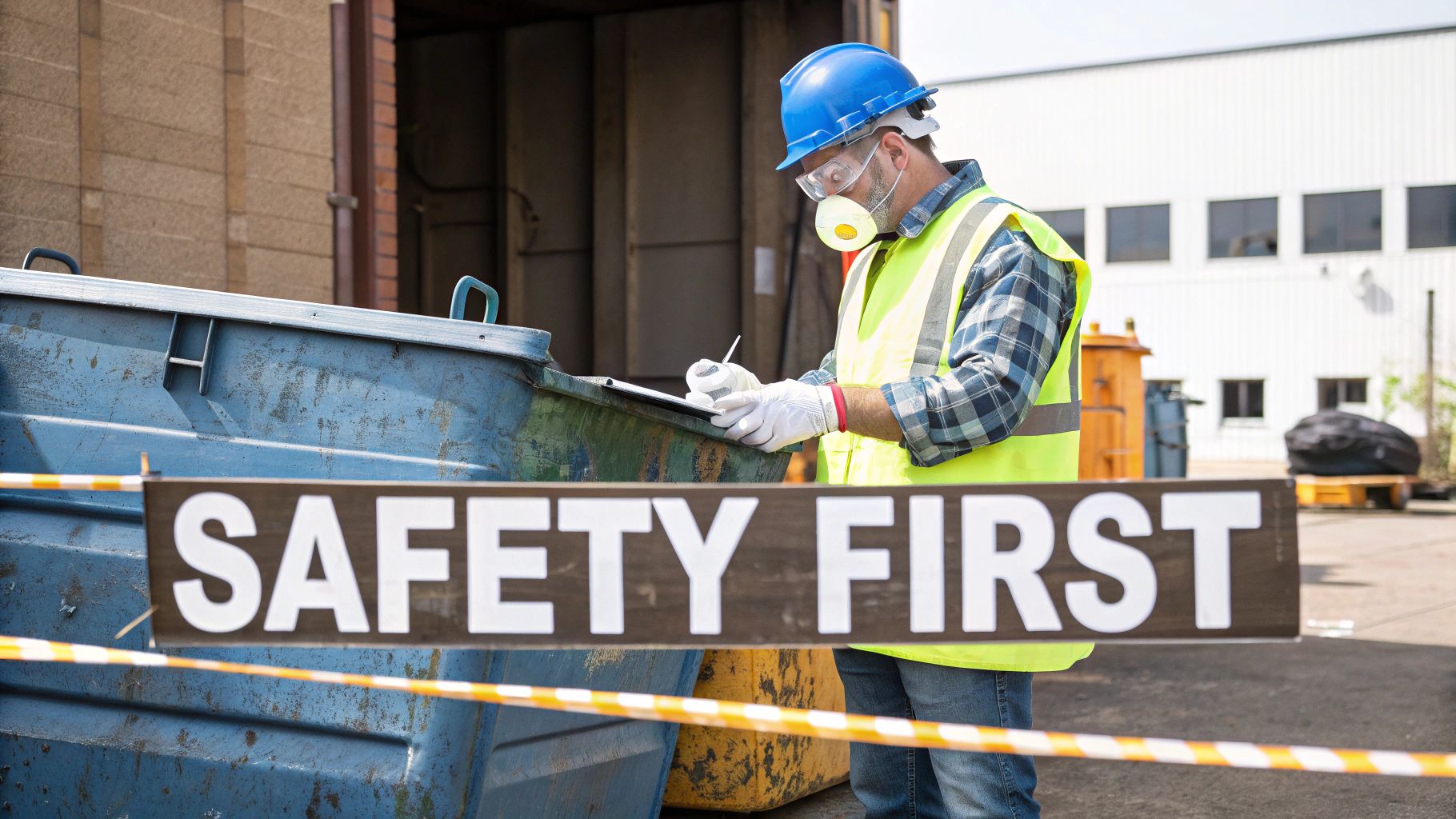
Safety isn't just a tick-box exercise at a waste transfer station; it’s the absolute foundation of the whole operation. Picture a busy industrial site, with heavy machinery moving about and a constant flow of vehicles. It’s a dynamic environment, and to keep everyone safe, strict protocols are rigorously enforced.
This means everything from mandatory personal protective equipment (PPE) for all staff to carefully mapped-out traffic management systems that keep people and plant machinery at a safe distance from each other.
It's not just about the obvious physical risks, either. Environmental controls, like dust suppression systems, are essential for keeping the air quality safe for workers and the local community. For any reputable facility, implementing an effective environmental management system (EMS) is non-negotiable. These measures create a controlled, professional space where waste can be handled safely and efficiently.
Dealing With Dangerous Materials Like Asbestos
A massive part of site safety is having an iron-clad process for hazardous materials. Some substances are completely forbidden from general waste skips simply because they pose a severe threat to people's health and the environment.
Asbestos is the classic example. Its tiny fibres can cause devastating, life-threatening diseases, which is exactly why it can never be tipped and processed at a standard waste transfer station.
If asbestos is found lurking in a mixed waste load, the entire load will be rejected on the spot. This isn't just an inconvenience; the person who produced the waste could face some pretty hefty penalties. The legal rules for asbestos are black and white and involve a very specific process:
- Specialised Containment: Asbestos has to be double-bagged or wrapped up in heavy-duty polythene, then put into its own dedicated, sealed skip.
- Direct Transport: It travels directly to a specially licensed hazardous waste facility, completely bypassing the normal transfer station system.
- Legal Documentation: Every step of its journey is tracked with a Hazardous Waste Consignment Note, creating a legally compliant audit trail from start to finish.
Getting this right isn't just best practice—it's a legal requirement. Cutting corners with hazardous waste can lead to prosecution and eye-watering fines, which really drives home how important it is to work with a waste partner who knows the rules inside-out.
The non-hazardous waste sector, which relies heavily on these transfer stations, is a huge part of the UK economy. It's set to include 3,311 businesses in 2025, having grown at a rate of 4.1% each year since 2020, with revenues expected to hit a massive £12.6 billion. This growth just makes robust safety and compliance across the board even more critical.
Choosing a waste management provider who truly understands these complex regulations is essential. It protects everyone involved and guarantees you’re staying on the right side of the law. To get a better handle on these crucial rules, check out our guide to hazardous waste disposal regulations.
Common Questions About Waste Transfer Stations
When you hire a skip or book a commercial collection, it’s natural to have questions about where your waste is actually going. Knowing how a waste transfer station works helps you understand the whole process and your own responsibilities. Let's dig into some of the most common queries we get.
Can I Take My Own Waste to a Transfer Station?
This is probably the number one question people ask, and it’s a fair one. The answer, however, is a straightforward no. Waste transfer stations are strictly commercial sites, licensed only for registered waste carriers to tip large volumes of waste. They simply aren’t open to the public for drop-offs from your car or van.
Think of them as busy industrial yards full of heavy machinery and massive lorries constantly on the move—it’s just not a safe or practical environment for the general public. If you’ve got household waste, your local council’s recycling centre (what most of us still call ‘the tip’) is the right place to go. For anything bigger, like renovation debris, hiring a skip is the correct and compliant way to get it handled professionally.
What Happens If I Put Banned Items in My Skip?
Putting things you shouldn’t into a general waste skip is a recipe for hassle and unexpected costs. Items like asbestos, batteries, liquids, tins of paint, and plasterboard (if mixed with other stuff) are big no-nos. They're banned because they're hazardous or need very specific handling to be disposed of safely.
When your skip arrives at the waste transfer station and gets tipped out, the sorting line will spot these forbidden items almost immediately. This can go one of two ways, and neither is great for you. Your entire load might be rejected and sent back to you, or you’ll get hit with extra charges to cover the specialist disposal of the problem items. Always double-check what you can and can’t put in your skip before you start filling it.
Following the rules isn't just about avoiding fees; it's a crucial part of ensuring the safety of waste operatives and protecting the environment from hazardous contamination.
How Does Using a Transfer Station Help the Environment?
Choosing a waste company that uses a proper transfer station is one of the most eco-friendly decisions you can make for your project. It’s a core part of a modern, circular approach to waste management, and it helps in two major ways.
First, the detailed sorting process makes sure every last bit of recyclable material is pulled out. Things like wood, metal, soil, and rubble are all separated and sent off to be reused, which drastically cuts down on how much waste ends up buried in a landfill.
Second, it makes transport far more efficient. Instead of dozens of small skip lorries all making long trips to distant landfills, the waste is bundled together at the transfer station. It’s then loaded onto a few, much larger articulated trucks for the final leg of the journey. This simple step slashes the number of road miles travelled, saving huge amounts of fuel and shrinking the carbon footprint of the entire operation.
At The Waste Group, we take care of all of this for you, making sure your waste is managed legally, safely, and with a real commitment to recycling. To find out more about our skip hire and waste management solutions, head over to https://www.thewastegroup.co.uk.