What Can You Recycle? what can you recycle – UK Guide to Easy Recycling
What Can You Recycle? what can you recycle – UK Guide to Easy Recycling
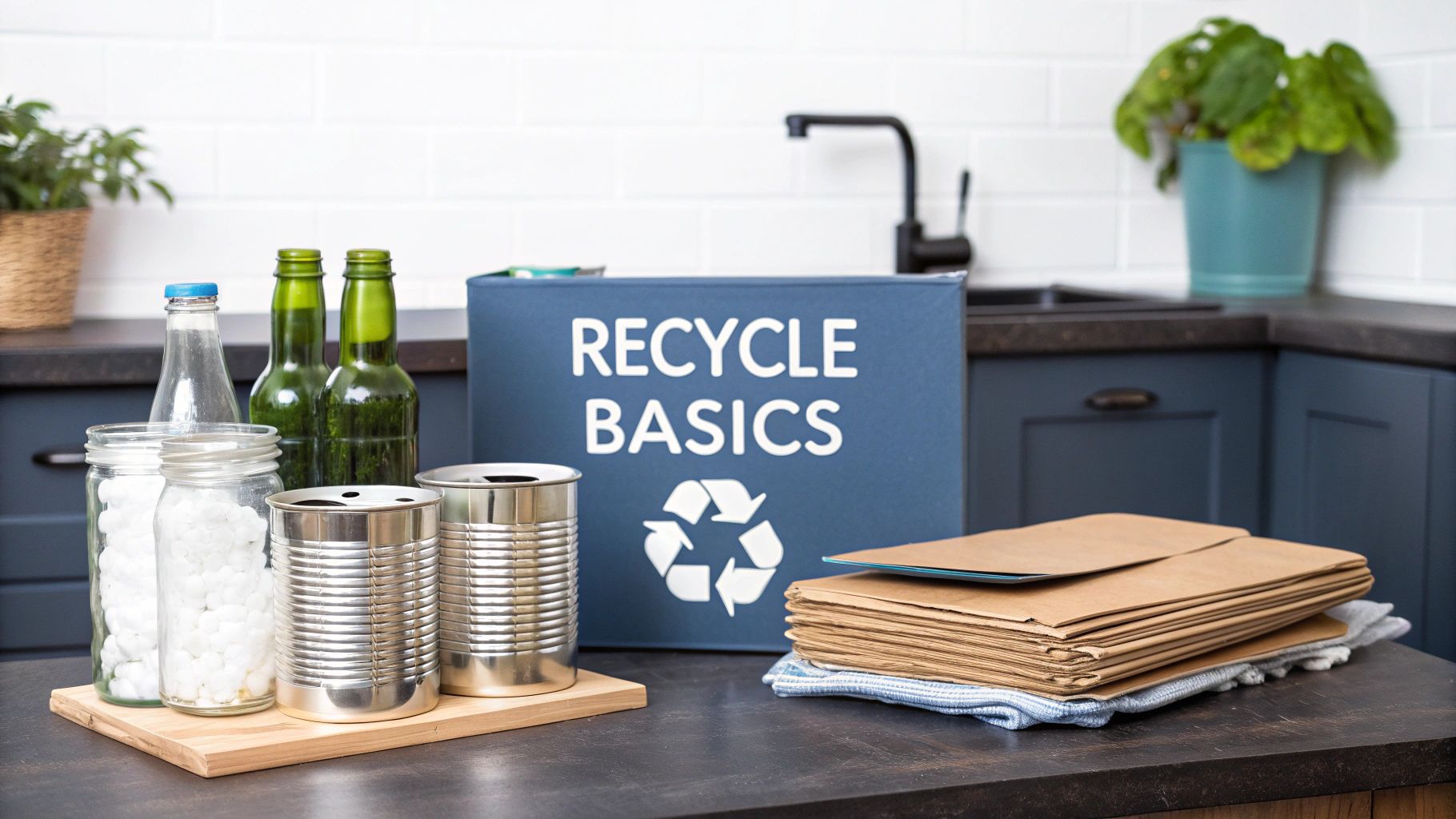
If you're trying to figure out what you can and can't recycle, the best place to start is with the core materials that most UK councils accept in their kerbside collections. It all boils down to what I call the "big five."
This group usually includes paper and cardboard, plastic bottles, glass bottles and jars, and metal food and drink cans. Honestly, if you can get these basics right, you're already making a huge difference.
What You Can Recycle at Home Right Now
Think of successful recycling like following a good recipe. Just as a chef needs clean, quality ingredients for a delicious meal, a recycling facility needs clean, correctly sorted materials to create new products.
When we toss the wrong items into our bins or leave food residue on containers, it contaminates the entire batch—a bit like adding salt instead of sugar to a cake. This is why getting to grips with the core recyclables is so crucial.
The Golden Rule of UK Recycling
Before you toss anything in the bin, remember the one golden rule: always check your local council’s specific guidelines. This is so important. Rules can change quite a bit from one area to another. What your friend can recycle in Manchester might not be accepted down in Dorset.
A quick visit to your council’s website is the smartest way to confirm exactly what's accepted in your kerbside collection.
This local-first approach is key to improving our national figures. The UK’s household recycling rate recently hit 44.6%, with Wales leading the charge at an impressive 57%. Every correct decision you make at home contributes directly to this progress. You can read more about how the UK's recycling rates are improving and see how different nations compare.
Preparing Your Core Recyclables
To make sure your items actually make it through the recycling process, a little bit of prep goes a very long way. These simple steps stop contamination and help the sorting machinery at the plant work as it should.
- Rinse: Give bottles, jars, and cans a quick wash to get rid of any food or liquid. No need for a deep clean, just a rinse will do.
- Squash: Flatten cardboard boxes and plastic bottles. It saves a surprising amount of space in your bin and on the collection lorries.
- Lids On or Off: This one varies, so check your local rules for bottle tops. Some councils want them left on (so they get recycled too), while others ask for them to be removed.
Mastering these fundamentals builds a solid foundation for your recycling habits, making every bit of effort count.
Your Quick Guide to Common Home Recyclables
To make things even clearer, here’s a straightforward table breaking down the most common household items and the simple steps to get them ready for recycling.
| Material Type | Common Items | How to Prepare It |
|---|---|---|
| Paper & Cardboard | Newspapers, magazines, letters, cardboard boxes, cereal boxes | Flatten boxes. Keep it clean and dry – no greasy pizza boxes! |
| Plastic Bottles | Drinks bottles (water, fizzy drinks), milk bottles, shampoo bottles | Rinse, squash, and put the lids back on (check local rules first). |
| Glass Bottles & Jars | Wine bottles, beer bottles, jam jars, sauce jars, coffee jars | Rinse out any residue. Lids can often be recycled separately. |
| Metal Cans & Tins | Food tins (beans, soup), drink cans, pet food tins, aerosols | Give them a quick rinse. For aerosols, make sure they're empty. |
Getting these basics right is the first—and most important—step. It's how we turn our everyday waste into something genuinely useful again.
Right then, you've got the basics down. You're separating your cardboard, rinsing your tins, and feeling pretty good about your recycling efforts. But now it's time to venture into the two rooms where good intentions often go astray: the kitchen and the bathroom.
These areas are hotspots for recycling confusion. They're filled with all sorts of tricky packaging that can easily end up in the wrong bin, contaminating a whole batch of otherwise perfectly good materials.
It's a more common problem than you might think. While nearly 89% of us in the UK say we recycle regularly, many also admit to tossing recyclable items into the general rubbish bin. In fact, UK households miss out on recycling an average of 2.5 items every single collection, usually just down to uncertainty. It's a fascinating snapshot of our collective habits, and you can discover more insights from this UK recycling behaviour survey to see the common trip-ups we all face.
Navigating Kitchen Recycling Dilemmas
The kitchen might be the heart of the home, but it's also ground zero for recycling mistakes. Think about greasy pizza boxes or curry-stained takeaway tubs – these are major culprits. The food residue and oils can't be separated from the paper and card fibres, meaning they can spoil an entire lorry-load of recycling.
It's a similar story with soft plastics. Those flimsy film lids on yoghurt pots, crisp packets, and plastic carrier bags are a nightmare for recycling machinery. They get tangled in the sorting equipment, causing breakdowns that cost time and money. The good news is that many larger supermarkets now have special collection points just for these flexible plastics, so it's worth saving them up for your next weekly shop.
Here are a few other common kitchen offenders and how to deal with them:
- Food Pouches: Most pouches for baby food, pet food, and sauces are a mix of plastic and metal foil, so they can't go in your kerbside bin. Check the packaging for special instructions or look for schemes like TerraCycle that specialise in these hard-to-recycle items.
- Greasy Takeaway Containers: Any paper or cardboard that's soaked in grease or caked in food has to go. The oil contaminates the paper fibres, making them impossible to recycle. Pop these in your general waste, or your food waste caddy if your local council accepts them.
- Cooking Oil: Whatever you do, don't pour old cooking oil down the sink! It solidifies in the pipes and causes serious blockages. For those tricky items found in your kitchen, learning how to recycle cooking oil the right way is a crucial step towards better home waste management.
Tackling Bathroom Recycling Challenges
The bathroom throws its own unique set of recycling puzzles at us, usually involving mixed materials in things like cosmetic bottles and aerosol cans. Getting these right can make a huge dent in your household's landfill waste.
Key Takeaway: Lots of bathroom plastics can be recycled, but only if they're empty and clean. A quick rinse to get rid of any leftover shampoo or soap makes a world of difference to the quality of the final recycled material.
One of the most common points of confusion is the pump-action dispenser on your hand soap or moisturiser. The bottle itself is usually a recyclable plastic, but the pump mechanism is a mix of different plastics and a metal spring. That makes the pump itself a no-go for the recycling bin.
Just follow these simple steps for your bathroom items:
- Separate Components: Unscrew and remove any pumps or trigger sprays from your plastic bottles. The bottle can go straight into your recycling, but the pump or trigger part usually has to go in the general waste.
- Empty Aerosols: Deodorant, hairspray, and air freshener cans are made from steel or aluminium, both of which are widely recycled. The crucial thing is to make sure they are completely empty before you put them in the recycling. Never try to pierce or crush them.
- Check Medicine Packaging: The cardboard box that your toothpaste or medicine came in is fine to recycle. However, the blister packs – the plastic and foil sheets that hold the pills – are made of mixed materials and can't be recycled at home. Some pharmacies run take-back schemes, so it's always worth asking.
Recycling Items Beyond Your Kerbside Bin
Once you’ve mastered your kerbside collection, it’s time to tackle the items that need a little more effort. Plenty of everyday objects can’t go into your home recycling bin, but they can still be given a new life if you know where to take them. Think of this as the next level of your recycling journey, where you actively find the right drop-off points.
This includes things like old clothes, unwanted electronics, used batteries, and even bulky garden waste. These items need special handling that your standard recycling facilities just aren’t set up for. Fortunately, there’s a whole network of alternative recycling routes across the UK to help you dispose of them responsibly.
Where to Take Your Non-Kerbside Items
Your local Household Waste Recycling Centre (HWRC), often just called ‘the tip’, is your best friend for a huge range of materials. These centres are specifically designed to accept items that are too bulky or complex for your regular collection service.
Here's a quick look at what you can typically take:
- Textiles and Clothing: While charity shops are always the best first stop for clothes in good condition, your local HWRC can often take torn or stained textiles for recycling.
- Batteries: From the small AAAs to the bigger ones, all batteries contain harmful chemicals and must never be put in your household bins. Most supermarkets have dedicated battery collection points, and so do all HWRCs. For specific advice, you can learn more about where to dispose of car batteries safely.
- Electronics (WEEE): Waste Electrical and Electronic Equipment covers anything with a plug, battery, or cable – from a broken toaster to an old laptop. These items contain precious materials that can be recovered. For things like old gadgets and appliances that need special handling, you might find a friendly guide to recycling electronic equipment really helpful.
This flowchart offers a simple visual guide for some of those common recycling questions that pop up at home.
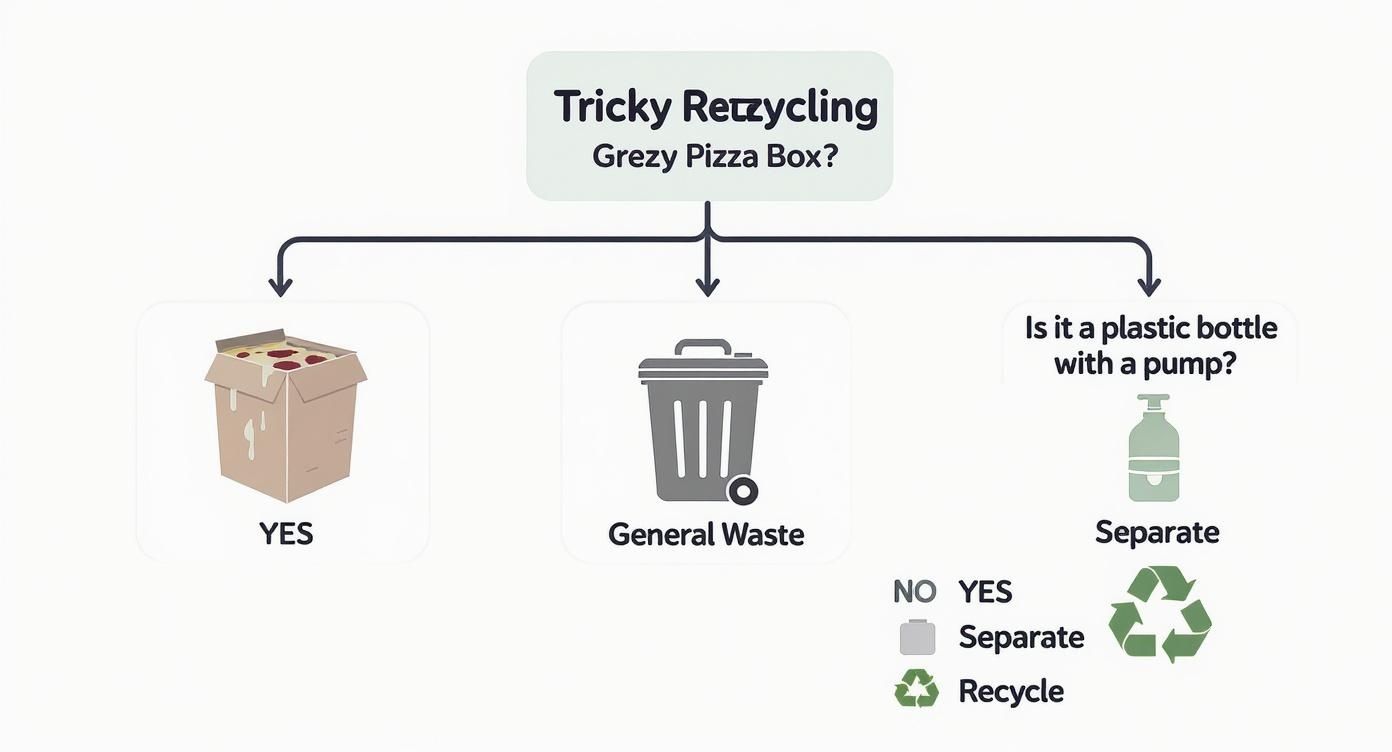
It’s a great reminder of how one wrong item, like a greasy pizza box, can disrupt the whole process, reinforcing why sorting correctly from the get-go is so important.
The Power of Reuse
While recycling is fantastic, giving an item a second life through reuse is even better for the environment. It takes zero energy to reprocess the material and directly cuts down the demand for new products.
The Ultimate Form of Recycling: Before you recycle, always ask yourself, "Can someone else use this?" Donating things like furniture, books, and clothing to charity shops not only keeps them out of landfill but also supports great causes in your community.
For larger items like sofas or wardrobes, many charities offer a free collection service, making it an easy and impactful choice. By embracing reuse, you extend the life of your possessions and take your commitment to sustainability one step further.
A Guide to Business and Construction Recycling

When you clock in for work, whether at a desk or on a building site, the recycling game changes completely. It’s not just about popping a milk bottle in the right bin anymore. Businesses and construction projects generate waste on an entirely different level, and with that comes a legal 'duty of care' to manage it properly. This isn't just a nice-to-have; it's a legal requirement to make sure all waste is stored, moved, and disposed of correctly, without causing harm to the environment.
This duty of care basically means you have to know exactly what waste you’re creating and take real, practical steps to recycle as much as you can. For an office, that could be as simple as getting dedicated bins for paper and used toner cartridges. On a construction site, it’s a much bigger operation, involving the separation of heavy-duty materials like timber, metal, and rubble right from the get-go.
Home vs Business Recycling Compared
While the goal is the same—sending less to landfill—the methods and scale of recycling for a household versus a business are worlds apart. What you might pop in your council bin at home often needs a completely different, more structured solution in a commercial setting.
| Waste Type | Common Household Solution | Common Business or Construction Solution |
|---|---|---|
| Paper & Cardboard | Kerbside recycling bin | Dedicated commercial bins, balers for large volumes |
| Food Waste | Food caddy, composting | Specialised food waste collection services |
| Glass & Plastic Bottles | Kerbside recycling bin | Large, separate wheelie bins for collection |
| Old IT Equipment (WEEE) | Local recycling centre drop-off | Specialist WEEE collection and data destruction services |
| Bricks & Rubble | Small amounts at local tip, "hippo" bags | Segregated skip hire, on-site crushing for reuse |
| Wood & Timber | Council green waste (if accepted) | Dedicated wood skips for recycling into chipboard/biomass |
The key takeaway is that commercial waste requires a more formal, often legally mandated, approach. You can't just mix it all and hope for the best.
Recycling in the Office Environment
The average office is a goldmine of recyclable materials, but all too often, they end up in the general waste out of sheer convenience. The secret to fixing this? A clear, simple system that everyone can get on board with.
Most of the stuff we throw away at work falls into a few key categories that are easy to recycle if they’re kept clean and separate.
- Paper and Cardboard: This is the low-hanging fruit. Think printer paper, old envelopes, and all those cardboard boxes from deliveries. Placing clearly marked bins around the office is the simplest and most effective way to capture it all.
- Printer Cartridges: Ink and toner cartridges are a mix of plastic, metal, and leftover ink that has no business being in a landfill. Most suppliers are happy to help and offer free take-back schemes or mail-in recycling bags.
- IT Equipment (WEEE): Old computers, monitors, keyboards, and phones fall under the category of Waste Electrical and Electronic Equipment. They’re full of valuable and sometimes hazardous materials, so you'll need a specialist service to collect and handle them correctly.
Managing Waste on Construction Sites
Construction and demolition sites are a whole different ball game, churning out huge volumes of bulky, heavy waste. Getting your team to separate materials on-site isn’t just good for your green credentials; it’s a savvy financial move. When you keep different waste streams apart, you prevent contamination and slash your disposal costs. Mixed waste is always far more expensive to get rid of.
Crucial Insight: On a construction site, separating waste isn't just about recycling. It's about cost control. A skip filled with mixed, unsorted waste can cost significantly more to dispose of than skips containing segregated materials like wood, metal, or soil.
Here are the key materials you'll want to separate:
- Wood: Offcuts from timber and old pallets can be given a new life as chipboard or even used as biomass fuel.
- Metals: Steel beams, copper pipes, and old aluminium window frames are all highly valuable. They can be melted down and forged into something new.
- Plasterboard: The gypsum inside plasterboard can be recovered and used to make new boards, but it’s vital to keep it separate from everything else to avoid contamination.
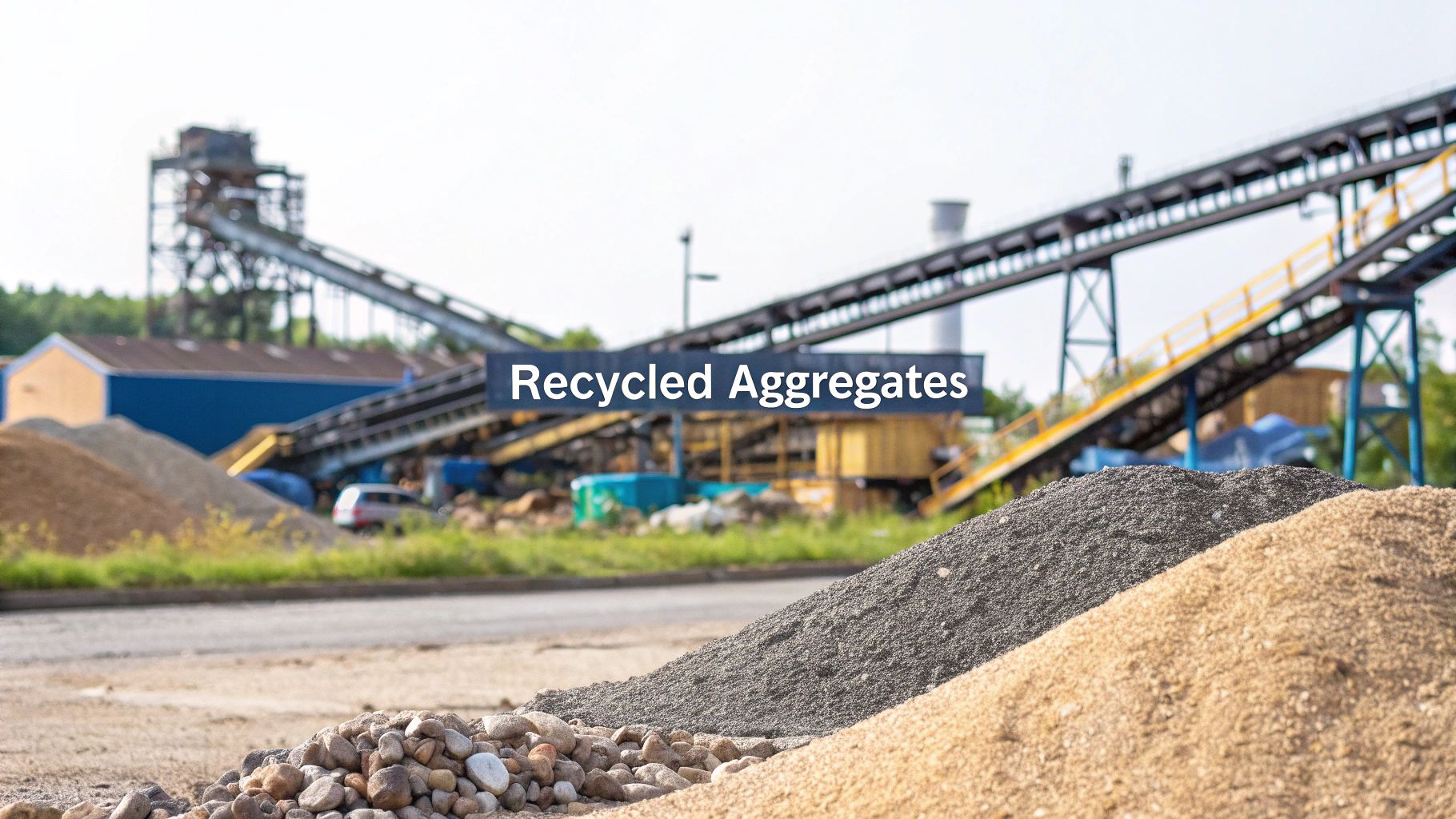
- Rubble and Soil: Concrete, bricks, and soil can be crushed down and used as aggregate in new construction projects, closing the loop.
This push to divert materials away from landfill is really starting to make a difference. For example, the amount of biodegradable municipal waste sent to UK landfills recently fell from 6.3 million tonnes to 5.3 million tonnes in just one year—a huge step in the right direction. You can discover more insights on UK waste reduction and see how various regions are playing their part.
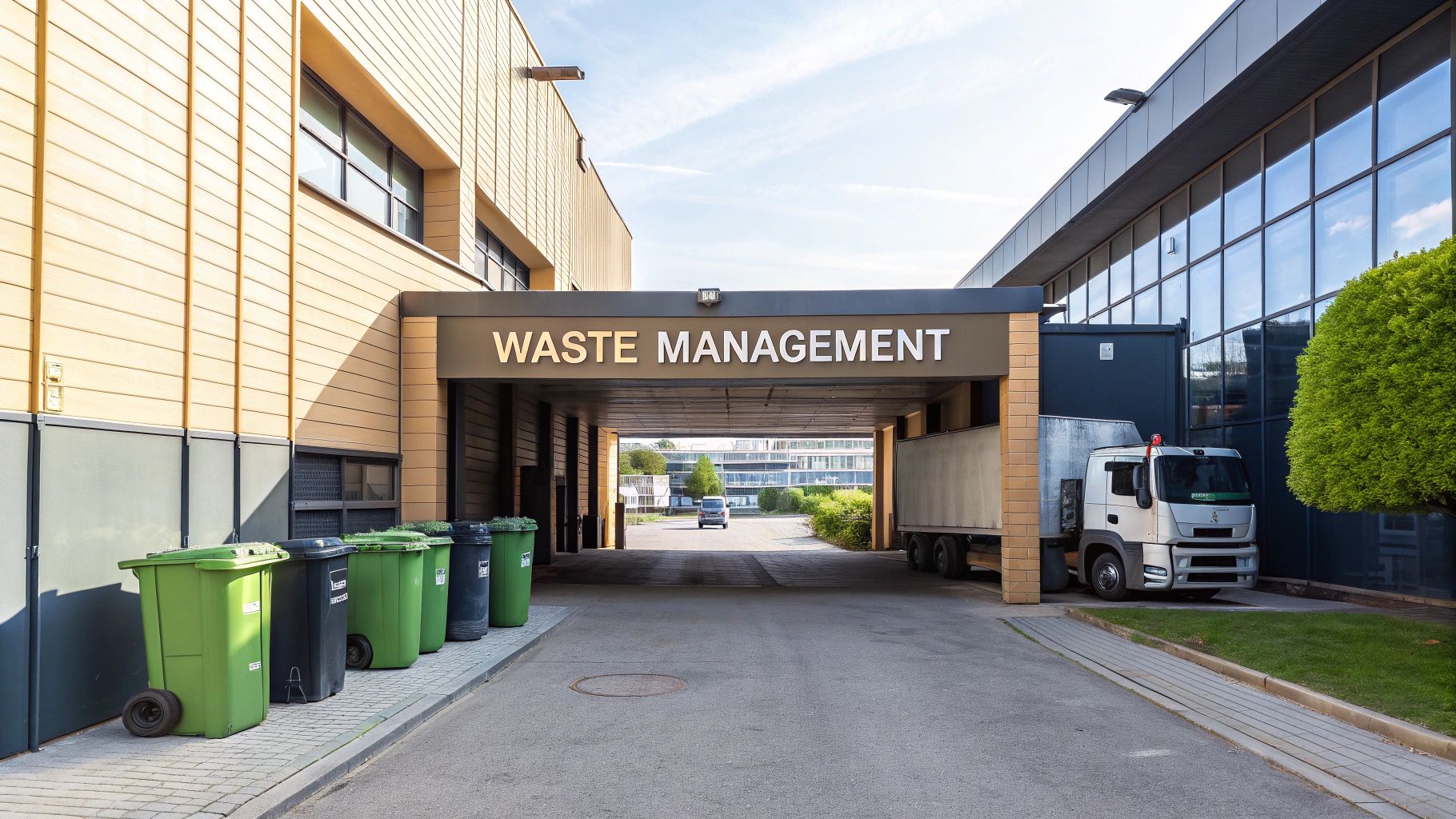
For any business or construction site, using professional waste management services like skip hire and other specialised collections is the most efficient way to meet both your environmental and legal obligations.
How to Handle Hazardous Materials Safely
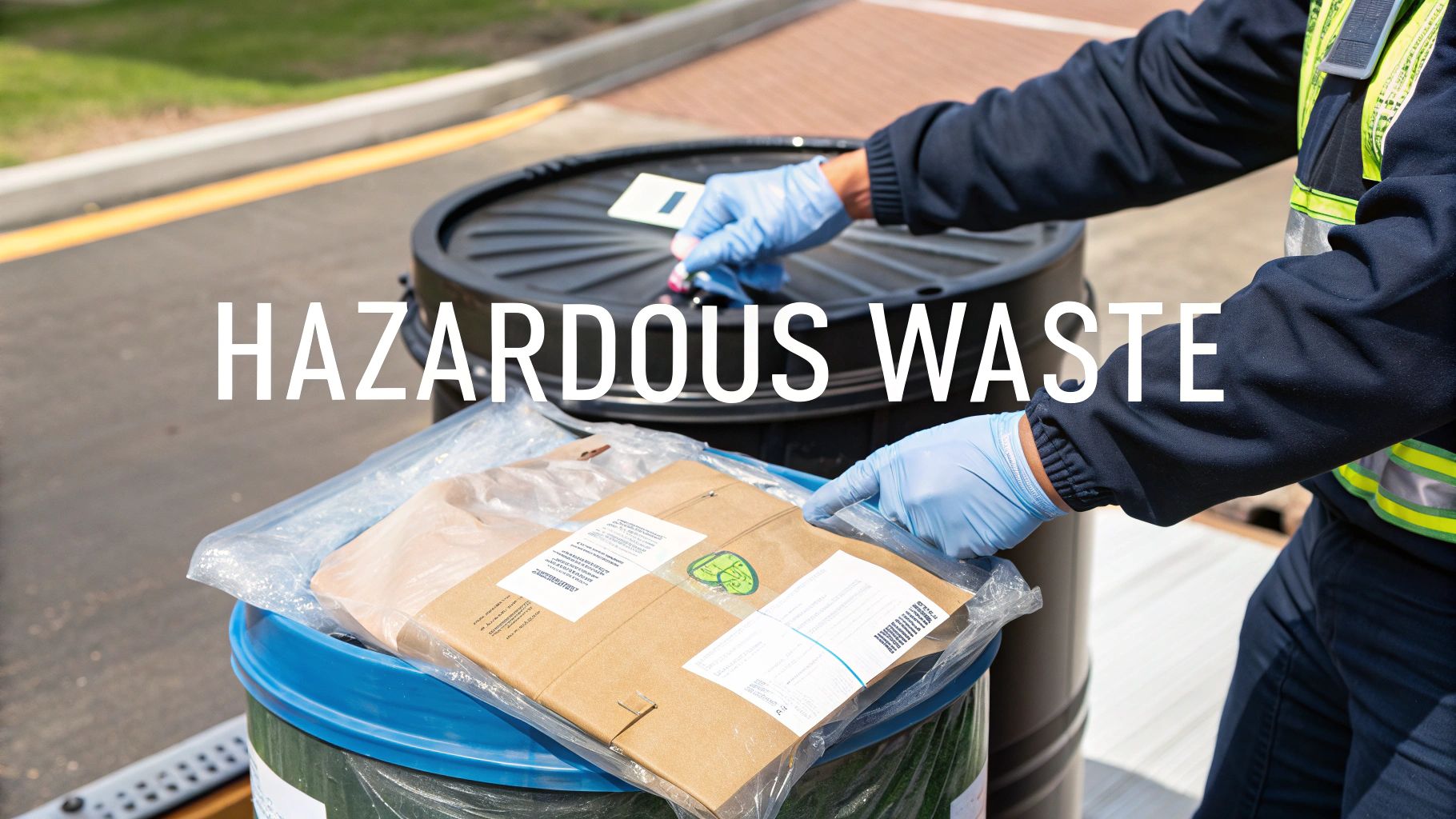
Some items simply have no place in your kerbside bin or a standard skip. These are hazardous materials, and they pose a genuine risk to human health and the environment if not managed with extreme care. Think of them as the red-alert items of the waste world; they demand a completely different disposal route.
This category includes more common household items than you might realise. Leftover paint, garden chemicals, engine oil, and old gas canisters all contain substances that can pollute soil and waterways or release harmful fumes. Putting them in your general waste bin isn't just bad practice; it’s dangerous and often illegal.
These materials require specialist handling because standard recycling and landfill facilities just aren't equipped to process them safely. Correct disposal ensures their harmful components are neutralised or contained, protecting our local environment from serious harm.
Identifying Common Hazardous Waste
Knowing what to look for is the first step. Many products will have warning symbols on the label—like a skull and crossbones or an exclamation mark inside a red diamond—indicating they are hazardous. If you’re ever unsure, it’s always safest to assume an item is hazardous and seek specialist advice before you do anything else.
Common hazardous items you might find at home or in the shed include:
- Paints and Solvents: Leftover tins of paint, thinners, and wood treatments.
- Garden Chemicals: Pesticides, herbicides, and old fertilisers.
- Automotive Fluids: Used engine oil, antifreeze, and brake fluid.
- Asbestos: Found in older building materials like insulation, roofing, and floor tiles.
Critical Safety Warning: Asbestos is extremely dangerous when disturbed. Its fibres can cause serious and fatal lung diseases. It is not a DIY job. Asbestos waste must only be handled and disposed of by a licensed, qualified professional.
Safe and Legal Disposal Options
For most common hazardous items like paint or old oil, your local Household Waste Recycling Centre (HWRC) usually has a designated section for safe disposal. It's crucial to check your local council's website first, as they will have specific instructions on what they accept and how it should be transported.
Navigating the rules is essential for both safety and compliance. You can learn more about the specific legal requirements in our guide to hazardous waste disposal regulations. This is particularly important for businesses, which have a very strict duty of care to follow.
Unfortunately, even with clear guidance, confusion can lead to low recycling rates in some areas. London, for example, has one of the country's lowest household recycling rates, which has remained around 32.7% for over a decade, well below the national average. You can discover more insights about London's recycling challenges and see how it compares to other regions. For high-risk materials like asbestos, professional services are the only safe and legal route.
Simple Habits for Better Recycling Today
Knowing what you can and can't recycle is the first step, but turning that knowledge into simple, repeatable habits is what creates real, lasting change. It’s all about making the right choice the easy choice in your day-to-day life.
A great place to start is by setting up a dedicated recycling station in your home. This doesn't need to be fancy; a few clearly labelled boxes or bins in your kitchen or utility room can make sorting materials like paper, glass, and plastics an automatic part of your routine. This simple system takes the guesswork out of it.
Another powerful habit is getting familiar with packaging labels. The On-Pack Recycling Label (OPRL) system is designed to give you clear, at-a-glance instructions on whether something is actually recyclable. Checking these labels before you bin an item helps you avoid 'wish-cycling'—that well-intentioned but harmful practice of tossing non-recyclable items into the recycling, which can contaminate entire batches.
It's also worth looking beyond just recycling. A recent survey highlighted a strong public appetite for reuse and refill schemes, with around 87-89% of people willing to participate. This shift suggests a growing desire to reduce waste right at the source. You can read the full survey on recycling behaviours for more details.
By adopting these small changes, you can make a significant impact. For even more practical ideas, check out our essential tips for recycling more effectively at home and at work.
Frequently Asked Questions About Recycling in the UK
Even with the best intentions, recycling can sometimes feel like a pop quiz you haven't revised for. To help you sort fact from fiction, we’ve put together clear answers to some of the most common questions we hear. Think of this as your go-to guide for those everyday recycling dilemmas.
Do I Really Need to Wash My Recycling?
In a word, yes. Giving your jars, pots, and trays a quick rinse is a crucial step. Leftover food and drink, like that last smear of sauce in a jar or yoghurt in a pot, can contaminate a whole batch of otherwise perfect recyclables. This is especially true for paper and cardboard, which are completely ruined by grease and liquids.
You don't need to get them sparkling clean – just make sure they're empty and reasonably free of residue. This simple act massively boosts the quality of the materials collected, meaning they can actually be turned into something new instead of getting rejected at the sorting facility.
What Do I Do with Plastic Bags and Soft Plastics?
This is a big one. Most local councils can't take soft plastics like carrier bags, film lids from food trays, and crisp packets in your kerbside recycling bin. The reason is purely mechanical: this flimsy material gets tangled in the complex sorting machinery, causing massive breakdowns and expensive delays. They need a totally different recycling process.
But that doesn't mean they're destined for landfill. Many larger supermarkets now have dedicated collection points for all these soft plastics, usually found near the entrance. Simply keep a bag at home for them and drop it off when you do your weekly shop.
Top Tip: Keep an eye out for the "Recycle with bags at large supermarket" symbol on packaging. That’s your green light to take it to one of these special collection points.
Can I Put Shredded Paper in My Recycling Bin?
This is a classic recycling grey area, and the answer often depends on where you live. Some councils will accept it, but they usually ask you to pop the shreds inside a paper bag or a small cardboard box first. This stops the tiny pieces from blowing all over the street on collection day or clogging up the sorting machines like confetti.
On the other hand, some councils don't accept it at all. The shredding process shortens the paper fibres, which can lower the quality of the new paper products being made. Before you start shredding your old documents, the best thing to do is check your local council's website. A quick search will tell you their exact rules and make sure your good intentions don't go to waste.
From a small garden clearance to a large-scale construction project, The Waste Group offers the reliable, responsible waste management solutions you need. Whether you require skip hire, grab lorry services, or specialist asbestos disposal, we ensure your waste is handled safely and sustainably. Get your free, no-obligation quote online and see how we can help keep your project on track. Book your skip today!