What Is Non Hazardous Waste A Complete UK Guide
What Is Non Hazardous Waste A Complete UK Guide
When you hear the word "waste," it’s easy to picture overflowing bins or hazardous industrial chemicals. The reality, though, is that most of the waste we all produce is actually classified as non-hazardous.
In the simplest terms, non-hazardous waste is any material that doesn't pose an immediate or direct threat to our health or the environment. It’s the everyday stuff generated from homes, offices, and even construction sites that isn't corrosive, toxic, or flammable.
Defining Non Hazardous Waste In Simple Terms
Think of it as the standard clutter from a home renovation or the clear-out after a big garden project. It might be bulky, and it definitely needs sorting, but it isn’t inherently dangerous on its own.
This is a world away from hazardous waste, like a leaking car battery or asbestos, which presents a very real threat and demands specialist handling. Non-hazardous waste is defined by what it lacks—those dangerous properties that require extreme caution.
This visual helps break down the core idea.
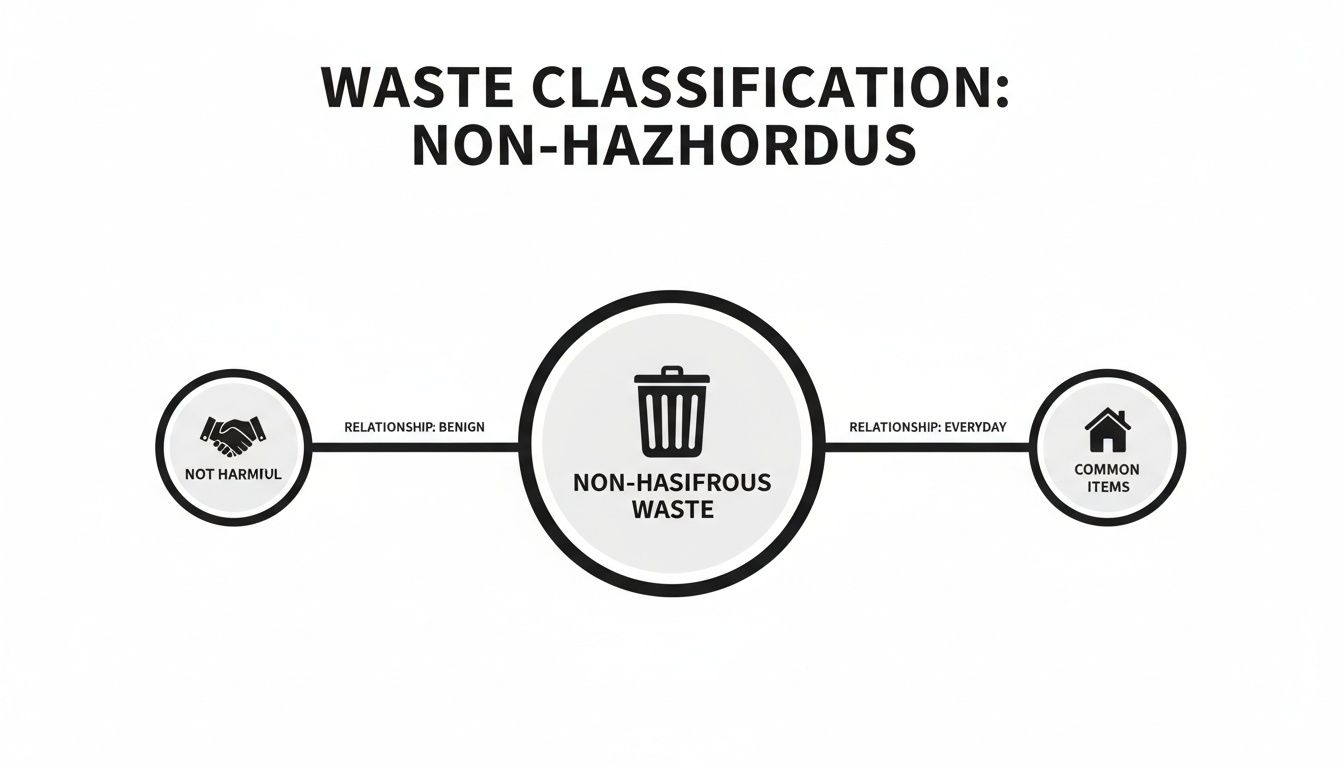
As you can see, these materials are basically defined by what they are not—they're not harmful or reactive, and they're typically the common bits and pieces we dispose of every day.
To make things even clearer, let's put them side-by-side. This quick table should help you distinguish between the two at a glance.
Non Hazardous vs Hazardous Waste At a Glance
| Characteristic | Non Hazardous Waste | Hazardous Waste |
|---|---|---|
| Immediate Threat | No direct threat to health or environment. | Poses a direct, immediate, or long-term risk. |
| Properties | Inert, non-toxic, non-corrosive, non-flammable. | Can be toxic, flammable, corrosive, reactive, or infectious. |
| Examples | Paper, wood, soil, bricks, food scraps, plastic. | Asbestos, batteries, chemicals, pesticides, medical waste. |
| Handling | General handling procedures are usually sufficient. | Requires specialised handling, transport, and disposal. |
This comparison highlights why getting the classification right is so important from the get-go.
The Scope of Non-Hazardous Materials
The category of non-hazardous waste is incredibly broad, covering everything from the rubbish in your kitchen bin to large-scale construction debris. It’s this variety that makes understanding the term so vital for proper waste management.
Common examples you'll definitely come across include:
- General Household Waste: Food scraps, packaging, paper, and old clothes.
- Garden Waste: Grass clippings, leaves, branches, and soil.
- Construction Debris: Wood, bricks, concrete, metal, and plasterboard (when handled correctly).
- Office Waste: Paper, cardboard, plastics, and old, non-electrical equipment.
A big chunk of household and garden rubbish is organic. It’s well worth learning about what organic waste is and how to manage it to get a better handle on a key part of the non-hazardous waste stream.
Why Correct Identification Matters
Properly identifying what is and isn't hazardous waste is the absolute first step towards responsible disposal. It dictates everything that follows: how you should store it, how you transport it, and ultimately, how you get rid of it.
Getting it wrong isn't just a simple mistake. Misclassifying waste can lead to environmental harm, create serious safety risks, and even land you with legal penalties under the UK's Duty of Care regulations.
By correctly identifying your waste, you can ensure it's managed in the most efficient, cost-effective, and environmentally friendly way possible. This prevents valuable recyclable materials from ending up in landfills and ensures dangerous substances are kept out of the general waste stream.
Ultimately, getting this foundational knowledge right sets the stage for everything else. It allows you to manage these materials correctly and sustainably, often with the help of professional services that make the whole process straightforward and fully compliant.
The Critical Difference Between Hazardous and Non Hazardous Waste
Getting your head around the line between hazardous and non hazardous waste is a must for anyone dealing with rubbish. It’s vital for safety, for staying on the right side of the law, and for looking after the environment. At its heart, the difference is pretty simple: non hazardous waste isn't going to cause immediate harm, while hazardous waste has properties that make it actively dangerous.
Think of it like sorting your laundry. Most of your clothes can get chucked in the same wash—that’s your non hazardous waste. But that one delicate woolly jumper? It needs a special, cold wash all on its own, otherwise it’s ruined. That’s your hazardous waste. It’s not about how much you have, but about what the stuff is actually made of.
The Defining Properties of Hazardous Waste
In the UK, waste gets officially tagged as hazardous if it shows one or more specific dangerous traits. These are the characteristics that legally separate it from your everyday general waste and mean it needs a specialist disposal route.
These hazardous traits include:
- Toxic: Can cause serious injury, illness, or even death if swallowed, inhaled, or it touches your skin.
- Flammable: Catches fire easily and can burn fast, creating a major fire risk.
- Corrosive: Can eat through other materials, including human tissue, via chemical reactions.
- Ecotoxic: Harmful to the environment, especially fish and aquatic life, if it gets out into the ecosystem.
- Carcinogenic: Is known to cause or help cancer develop.
It’s these official classifications that take an item out of a standard skip and put it into a category that needs professional care. For a deeper look at the rules, our guide to hazardous waste disposal regulations breaks down your legal responsibilities. This is crucial stuff for anyone producing waste, from a household clear-out to a major construction site.
When Non Hazardous Waste Becomes Hazardous
Sometimes, that clear line can get a bit blurry, especially when a normally safe material gets contaminated. Grasping this is so important because it changes everything about how you have to manage the waste. A classic example is soil from a garden, which is usually just inert, non hazardous waste.
But if that same soil gets soaked with engine oil from a spill, it has to be treated as hazardous waste. The oil has introduced toxic and ecotoxic properties, transforming the whole lot.
There’s a key principle here called the "Mixture Rule": if you mix a hazardous substance with a non-hazardous one, the entire mixture is legally classed as hazardous waste. Think about using a chemical solvent to clean a tool—the rag you use is now contaminated and becomes hazardous waste itself.
This rule is a big deal. It means you can't just water down a hazardous material to make it "safe" for a normal skip. A few tins of old, wet paint tipped into a skip full of rubble legally makes the entire load hazardous waste, landing you in some serious trouble.
Clear Examples for Practical Understanding
To really put this into context, let's compare some common items you might come across during a renovation or a big clear-out. Seeing them side-by-side makes the difference crystal clear.
Typical Non Hazardous Waste Examples:
- Clean wood, timber, and sawdust
- Bricks, concrete, and rubble
- Cardboard and paper packaging
- Most plastics and metals
- Uncontaminated soil and garden cuttings
Common Hazardous Waste Examples:
- Asbestos sheeting or insulation
- Liquid paints, solvents, and adhesives
- Pesticides and chemical weed killers
- Car batteries and fluorescent tubes
- Gas bottles and aerosols
Knowing the difference gives you the power to sort your waste properly. This isn't just about ticking boxes; it's the foundation of good waste management and the first step in meeting your legal Duty of Care. Getting it right keeps people safe, protects the planet, and makes sure your project stays compliant.
Common Types of Non Hazardous Waste You Will Encounter
Now that we’ve drawn a line in the sand between hazardous and non-hazardous waste, let's look at what that means in the real world. Non-hazardous waste isn't some technical term for scientists; it's the stuff you handle every day, whether you're clearing out a garage, running a shop, or working on a building site.
Knowing where this waste comes from is the first step to figuring out the best way to get rid of it. Think of it like sorting out your shed. You’ve got a corner for garden tools, a box for old paint tins, and another for general junk. In the same way, we can group non-hazardous waste by its source to make managing it a whole lot simpler.
From Your Home and Garden
This is the category we’re all familiar with. Domestic waste is everything that comes out of a typical household's day-to-day life. If you’re tackling a DIY project or finally getting around to that garden clearance in Dorset, you're going to create non-hazardous waste that needs to go somewhere.
Some of the most common examples include:
- Old Furniture: That saggy sofa, the wobbly dining table, or the wardrobe that’s seen better days.
- General Clutter: Things you'd find in a loft or garage clear-out, like old books, unwanted toys, and worn-out carpets.
- Garden Waste: Soil, turf, branches, leaves, and rubble from an old patio.
- Renovation Debris: Bits of non-structural wood, old kitchen cupboards, and bathroom suites.
Picture this: you're ripping out your old kitchen. The laminate flooring you pull up, the wooden cabinets you take down, and any plasterboard offcuts are all perfect examples of non-hazardous waste. The challenge is dealing with these bulky items without endless trips to the tip, which is where services like skip hire really come into their own.
Waste from Commercial and Retail Spaces
Offices, shops, and other businesses generate a steady stream of non-hazardous waste. It might be less varied than what you’d find in a home, but the sheer volume can be huge. For any business, having a solid waste plan is non-negotiable for keeping things running smoothly.
Unlike a one-off home renovation, businesses tend to produce predictable types of waste on a regular schedule. This consistency is key, as it allows for structured collections that keep the premises clean, tidy, and compliant with regulations.
This category often includes:
- Packaging Materials: The mountain of cardboard boxes, plastic wrap, and polystyrene that comes with stock and deliveries.
- Office Waste: Large amounts of paper, old files, and general office supplies that aren't electrical.
- Retail Waste: Unsold or damaged stock, old shop fittings, display units, and general rubbish.
- Catering Waste: Packaging from staff canteens or kitchens (food scraps often need a separate collection).
For a clearer picture of what can be handled through standard disposal routes, it's helpful to look at lists of common items accepted for recycling and disposal. This gives you a practical idea of how different materials are sorted and processed once they leave your site.
Materials from Construction and Demolition
By far the heaviest and bulkiest category is construction and demolition (C&D) waste. This is all the material generated when you build, renovate, or knock down a structure. Most of it is inert and completely non-hazardous, but its weight and size mean you need proper muscle to manage it—think large skips or even bigger roll-on/roll-off bins.
A typical building site will produce a mix of materials that are squarely non-hazardous, as long as they haven’t been contaminated by anything nasty.
- Rubble and Masonry: Bricks, concrete, tiles, and stone.
- Soil and Earth: Spoil from digging foundations or landscaping work.
- Wood: Offcuts from untreated timber, old floorboards, and joists.
- Metals: Scrap metal like old pipes, wiring (without the plastic coating), and steel beams.
- Plasterboard: This one’s important. While it's non-hazardous, plasterboard must always be kept separate from other waste. Its gypsum content can release toxic gas if it mixes with other materials in a landfill.
Imagine a builder in Bournemouth putting an extension on a house. They'll have piles of excavated soil, broken bricks from making a new doorway, and timber offcuts from the roof. Each is a non-hazardous waste stream. If they segregate them properly on-site, recycling becomes much more efficient, which is not only better for the planet but can also cut down on their disposal costs.
Your Legal Responsibilities and the UK Duty of Care
If you’re producing waste – whether it's from a small DIY job at home or a major commercial project – you have legal obligations you simply can’t ignore. In the UK, this is all wrapped up in what’s called the Duty of Care, a framework laid out in the Environmental Protection Act 1990. It's not just a bit of bureaucratic red tape; it’s a crucial system designed to stop fly-tipping and prevent damage to our environment.
Think of it like being a responsible pet owner. You're accountable for what your pet does from the moment you bring it home. In the same way, the Duty of Care makes you responsible for your waste from the moment you create it right up until a licensed professional takes it away for proper disposal or recycling.
This applies to everyone. From a homeowner clearing out the garden to a huge construction firm dealing with tonnes of rubble, understanding these rules is key to avoiding some very hefty fines.
The Core Principles of Your Duty of Care
When you boil it down, the Duty of Care is based on a few straightforward, common-sense principles. Getting these right is the absolute minimum you need to do to stay on the right side of the law.
Here’s what you must do:
- Store it securely: Your waste has to be kept contained so it can’t escape. That means using proper containers, like a skip or sealed bags, to stop it from blowing away, leaking, or becoming a hazard to anyone.
- Prevent illegal dumping: You have to take all reasonable steps to stop someone else fly-tipping your waste. This means not leaving it unattended on public land where it could be picked up by rogue operators.
- Use a licensed carrier: This is the most critical part. You can only hand your waste over to a person or company holding a valid Waste Carrier Licence, which is issued by the Environment Agency.
- Get the paperwork right: For any commercial waste, you need to complete a Waste Transfer Note for every single load that leaves your site. This document is your legal proof of the transfer.
Failing to check if your waste carrier is licensed isn’t a valid excuse. If your waste is found dumped somewhere, you could be held responsible and face serious penalties—even if you paid someone to take it away. Always, always ask for their licence number and check it's genuine.
The Importance of the Waste Transfer Note
For any business producing non-hazardous waste, the Waste Transfer Note (WTN) is a non-negotiable legal document. It creates a clear paper trail, showing what the waste is, who produced it, and who collected it. This makes the whole process transparent and accountable from start to finish.
A properly filled-out WTN is your proof that you’ve met your legal duty by passing your waste to a licensed carrier. For households, you won't fill this out yourself, but the invoice you get from a reputable skip hire company does a similar job, acting as your proof of legitimate disposal. To get a better handle on this, check out our guide on what is a Waste Transfer Note and why it is so important.
Consequences of Non-Compliance
Ignoring your Duty of Care can land you in serious trouble. Local authorities and the Environment Agency can issue on-the-spot fixed penalty notices for smaller offences, with fines hitting up to £400.
For more serious incidents, like large-scale fly-tipping that gets traced back to you, the consequences are much worse. You could face prosecution in court, which can lead to unlimited fines and even a prison sentence. These rules are there to protect our communities and countryside, and they are enforced properly.
The non-hazardous waste collection industry is a huge professional sector in the UK, showing just how much demand there is for compliant disposal services. In 2025, it's estimated there will be around 3,311 businesses in this space, with industry revenues hitting approximately £12.6 billion. This growth just highlights how important it is to use licensed, professional services that know the rules inside and out. When you partner with a reputable company, you ensure every legal box is ticked, giving you total peace of mind.
Smart Disposal and Recycling Options for Your Waste

Once you’ve worked out that your waste is non-hazardous, the next step is actually getting rid of it responsibly. It’s time to move from theory to action, choosing smart disposal and recycling options that are good for the planet and efficient for your project.
The real key to success here is thinking about disposal right from the very beginning.
A common mistake is just throwing everything into one big pile. A much better approach is to segregate, or separate, your different materials at the source. Keeping wood separate from metal, or soil from general rubble, makes a massive difference. This simple act maximises what can be recycled and can often bring down your overall disposal costs.
Think of it like sorting your shopping. You wouldn’t put the bread in with the frozen peas, would you? In the same way, keeping your waste streams clean ensures each material can be sent down the right processing route, turning something you’ve thrown away into a valuable resource.
Maximising Recycling Through Smart Segregation
Segregation really is the cornerstone of effective waste management. When different materials are all mixed up, it becomes much harder for recycling facilities to process them efficiently. A bit of contamination can downgrade high-quality recyclables or, in the worst-case scenario, mean the entire load has to go to landfill.
For a DIY renovator, this could be as simple as having one corner of the garden for old timber and another for broken bricks. If you're a business clearing out a stockroom, it means flattening cardboard boxes and keeping them separate from plastic packaging.
These small habits have a huge impact. When your skip is collected, it’s taken to a Materials Recovery Facility (MRF). Here, the waste you've already sorted can be processed far more efficiently, letting machines and people separate everything else with greater accuracy and speed. This is exactly how we give waste a second life.
What Happens After Collection
Once your skip leaves your property, it enters a surprisingly sophisticated system designed to recover as much value as possible. At the MRF, the contents are tipped out and sorted through a combination of manual picking and advanced machinery.
- Large Items: Bulky materials like big pieces of wood and metal are often pulled out first.
- Screening: The rest of the waste passes over huge screens that separate smaller items like soil and rubble from the larger ones.
- Magnets: Powerful overhead magnets pull out any ferrous metals, like steel nails or pipes.
- Air Classifiers: Jets of air are used to cleverly separate light materials like paper and plastic from heavier ones like stone and brick.
Each sorted material is then baled up and sent on to reprocessing plants to be made into new products. That old timber from your shed could become chipboard, and the rubble from a demolished wall might be crushed and used as hardcore for a new road. It's a vital part of the UK’s circular economy.
Our guide on practical tips for recycling provides more great ideas on how you can contribute effectively.
The Impact of Your Choices
Every single choice you make adds up and contributes to the bigger picture of our national recycling efforts. We're making progress, but there's always more to do.
In 2023, the UK household recycling rate reached 44.6%, a small but important increase from the previous year. At the same time, efforts to reduce landfill are paying off, with England seeing a 14.5% cut in biodegradable municipal waste sent to landfill from 2022 to 2023. These figures show that every effort to recycle non-hazardous waste correctly helps move the UK towards its national target of 65% municipal recycling by 2035. You can explore more detailed insights on the UK's recycling performance and progress on Letsrecycle.com.
When you partner with a responsible waste management company, you ensure your non-hazardous waste is handled in a way that supports these national goals. It turns your legal Duty of Care into a positive action, proving that responsible disposal is a win for both the environment and the economy.
When to Call Professionals for Waste Management
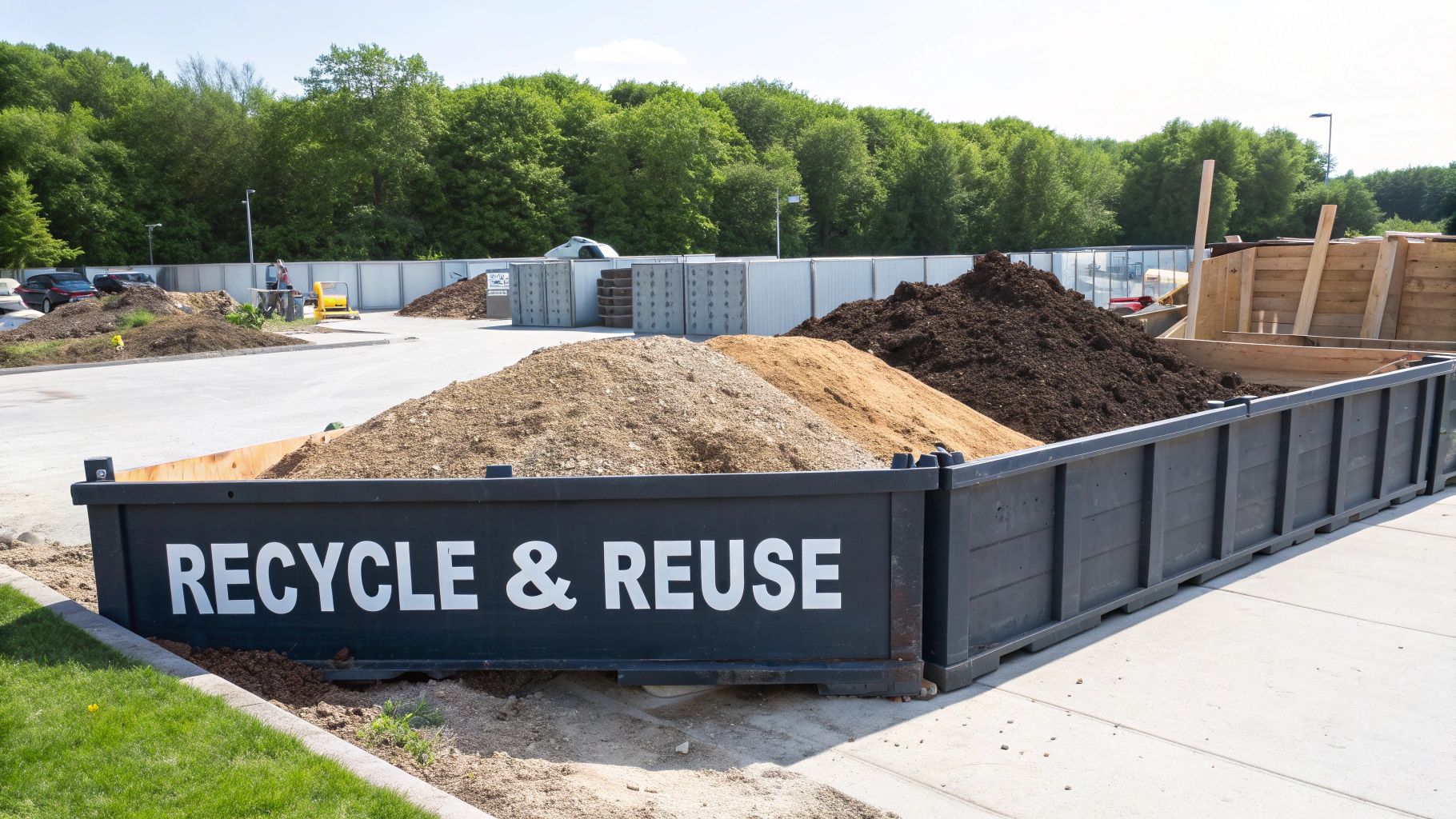
Managing a few bags of garden cuttings is one thing, but how do you know when your project has crossed the line into needing professional help? Knowing when to make that call is key to keeping your project on track, staying compliant, and avoiding a lot of unnecessary stress.
Think of it like this: you can probably fix a dripping tap yourself, but you’d call a plumber for a full bathroom installation. The same logic applies to waste management. Once the volume, weight, or sheer awkwardness of your non-hazardous waste goes beyond what you can comfortably stuff into your car for a few trips to the local tip, it’s time to call in the experts.
Scenarios That Demand Professional Expertise
Certain projects are almost guaranteed to generate waste on a scale that screams for a professional service. Trying to handle these jobs on your own can quickly become a logistical nightmare, not to mention inefficient and potentially non-compliant.
Here are some clear signs you need to ring up a professional waste management company:
- Large-Scale Renovations: Any project like a kitchen or bathroom rip-out, an extension, or a loft conversion will produce tonnes of mixed rubble, wood, old plasterboard, and other debris.
- Major Garden Clearances: Big landscaping jobs that involve shifting huge quantities of soil, turf, old patios, or multiple trees generate incredibly heavy, bulky waste.
- Commercial Fit-Outs or Clearances: Businesses updating their shops or offices, or clearing out old stock, produce significant volumes of packaging, old fittings, and general waste.
- Construction and Demolition Work: Any project involving structural changes will create heavy-duty materials like concrete, bricks, and metal that need proper, safe handling.
Engaging a professional service isn’t just about convenience; it’s a smart move that guarantees legal compliance, safety, and efficiency. Professionals have the right gear and the know-how to handle your non-hazardous waste correctly from start to finish.
Benefits of Using a Licensed Waste Carrier
Partnering with a licensed company like The Waste Group brings some serious advantages over a DIY approach. It turns waste disposal from a major project headache into a simple, streamlined process, saving you time, effort, and potential legal grief.
You get access to:
- The Right Equipment: From compact 4-yard skips perfect for small domestic jobs to massive 40-yard roll-on/roll-off bins for major construction sites, professionals have the ideal container for any amount of waste.
- Guaranteed Legal Compliance: A licensed carrier makes sure all your legal responsibilities, including your Duty of Care, are completely covered. They manage the transport and disposal according to strict regulations.
- Time and Effort Savings: Professionals handle the logistics of delivery, collection, and disposal, freeing you up to focus on the actual project you're working on.
Construction and demolition (C&D) waste is a perfect example of this in action, making up a huge chunk of the UK’s non-hazardous waste stream. In 2022, England alone generated 63.0 million tonnes of non-hazardous C&D waste. Thanks to professional management, an impressive 59.4 million tonnes of this was recovered—a recovery rate of 94.3%. You can learn more about these national efforts from the UK government statistics on waste, which show just how vital professional services are for hitting these ambitious recycling targets.
Got Questions About Non-Hazardous Waste?
Even after getting to grips with the basics, it’s completely normal to have a few specific questions pop up. Here are some quick, clear answers to the queries we hear most often from both homeowners and businesses on the ground.
Can I Mix Different Types of Non-Hazardous Waste in One Skip?
For the most part, yes. You can absolutely mix common non-hazardous materials like wood, soil, metal, and general rubble together in a single skip. This is what’s known as a mixed waste skip, and it’s perfectly fine for the majority of projects.
However, there are a couple of crucial exceptions to keep in mind. Plasterboard must always be kept separate from everything else. Due to its chemical makeup, it can release harmful gases if it mixes with other waste in a landfill. Similarly, items like mattresses, tyres, and fridges need special handling and can't just be tossed into a standard mixed waste skip. It's always best to check with your waste provider first – sometimes, pre-sorting your materials can boost recycling rates and might even save you a bit of money.
The golden rule is simple: when in doubt, just ask. A quick phone call to your waste management company can prevent any contamination headaches and keep your disposal fully compliant.
What Is a Waste Transfer Note and Do I Need One?
A Waste Transfer Note (WTN) is a legal document that acts like a paper trail for your waste. It tracks the journey of any commercial waste from where it was produced right through to a licensed disposal facility.
If you’re a business generating waste of any kind, you are legally required to have a WTN for every single collection. For household waste, you don't need to fill one out yourself. That said, your Duty of Care still means you must use a licensed waste carrier. The invoice or receipt from a professional skip hire company is your proof that you’ve disposed of your waste responsibly. Always make sure your provider has a valid Waste Carrier Licence.
Is Soil from My Garden Considered Non-Hazardous Waste?
Yes, in almost every single domestic or standard building scenario, the soil you dig up from your garden or an excavation site is classed as non-hazardous inert waste. "Inert" is just a simple way of saying it’s a material that doesn't decompose or have any chemical reactions.
The only time this isn't the case is if the soil is contaminated. For example, if your land was previously used for industrial purposes, there's a chance the soil could contain pollutants like oil or heavy metals. If so, it would then be classified as hazardous. But for a typical garden clear-out or home extension, you can confidently treat your soil as non-hazardous and pop it in a general skip with other materials like bricks and rubble.
Handling your waste the right way is a critical part of any project, big or small. For a hassle-free, compliant, and environmentally friendly solution for your non-hazardous waste in Dorset, you can trust the experts at The Waste Group. Whether you need a small skip for a weekend garden blitz or a large roll-on/roll-off bin for a major construction site, we have you covered. Get a quote and book online today at https://www.thewastegroup.co.uk.