
What Is Sharp Sand Used For in Construction and Gardening
What Is Sharp Sand Used For in Construction and Gardening
If you’re tackling a job that needs real strength and good drainage, sharp sand is almost certainly going to be on your materials list. Its coarse, angular particles are the secret sauce for everything from concrete and paving slabs to floor screeds, while also being a gardener's best friend for breaking up heavy soil.
Understanding the Role of Sharp Sand
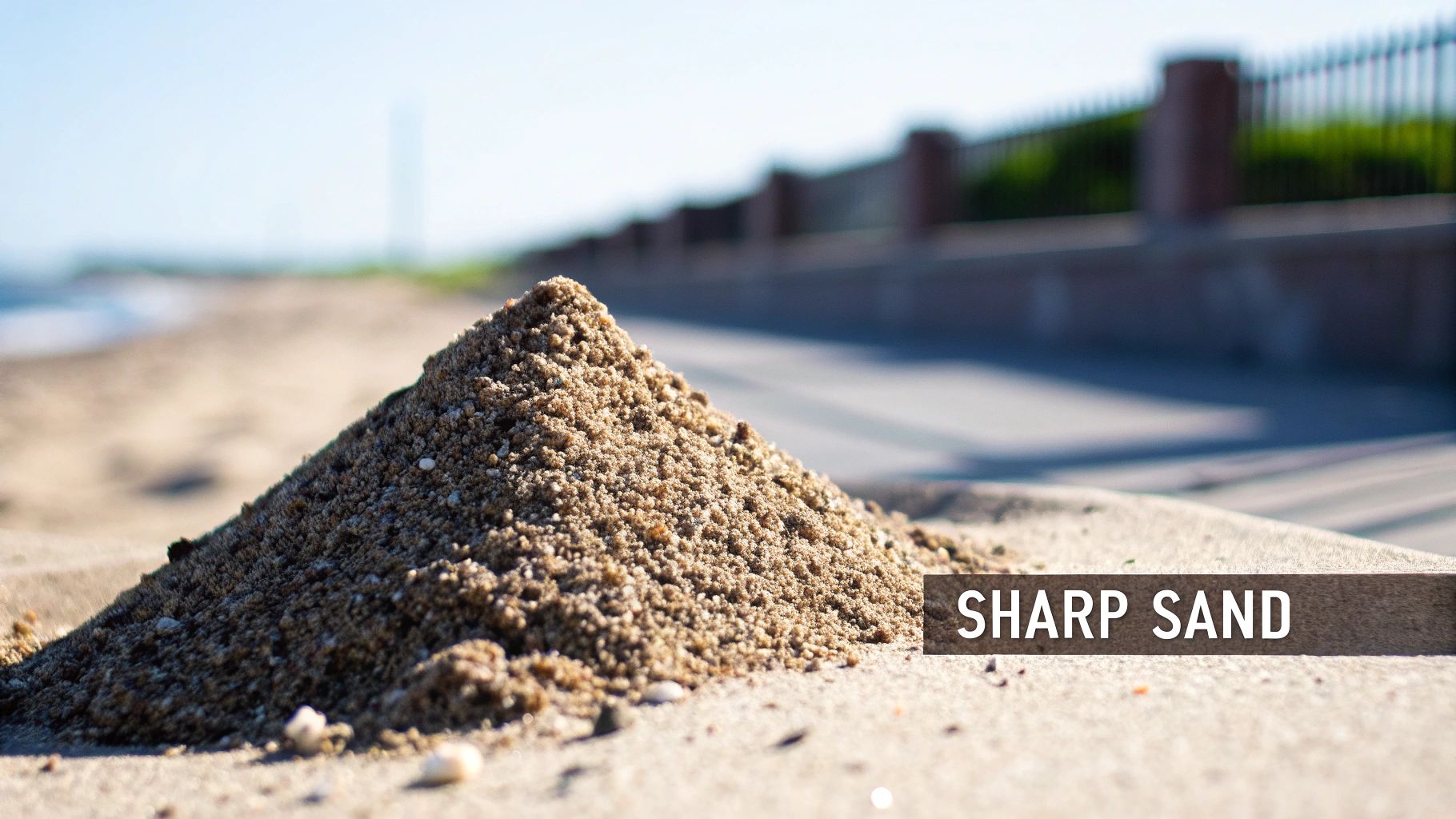
Think about trying to build a solid wall with smooth, round pebbles from a riverbed. What would happen? They’d just slide and shift under any real pressure. Now, imagine using jagged, interlocking stones instead—they would lock together tightly, creating a stable structure. That simple idea is exactly what makes sharp sand so effective.
Unlike the soft, fine grains you find in building sand, sharp sand is all about its larger, angular particles. This gritty, coarse texture is its biggest strength. When it's mixed into concrete or laid as a sub-base, those particles bind together, forming a seriously robust and durable foundation.
The Power of Particle Shape
The secret to sharp sand’s versatility comes down to its physical makeup. Its coarse nature gives it two critical functions that make it a must-have for builders and gardeners alike.
- Strength and Interlocking: The jagged edges of each grain create friction, allowing them to lock together and resist being compacted or shifted. This is precisely why it’s the go-to aggregate for bedding block paving or mixing strong concrete.
- Excellent Drainage: The gaps between these coarse particles create natural pathways for water to drain away freely. This prevents waterlogging, which is vital for making sure your patio lasts and for keeping plant roots healthy in heavy clay soils.
At its core, sharp sand is all about those angular particles. They interlock for strength and create channels for water to escape, making it the perfect solution for tasks like figuring out how to improve yard drainage.
You might also hear sharp sand called ‘grit sand’ or ‘concrete sand’. It contains very little silt or clay, and that's important. Clay holds onto moisture, which can seriously weaken structural mixes and lead to problems down the line.
A Cornerstone of UK Construction
This aggregate is a huge player in the UK’s construction industry, particularly for making concrete and mortar mixes for new housing developments. That coarse texture ensures a strong bond in concrete, a material that accounts for an estimated 37% of total sand and gravel used in home building. Its role is fundamental to getting projects off the ground, a fact you'll see reflected in any regional aggregate assessment.
Right, so we know what sharp sand is. Now let's get to the interesting part: what you can actually do with it. This is where those gritty, angular grains really come into their own on building sites and in garden projects all over the country.
Sharp sand isn’t just a cheap filler material. It’s a proper workhorse, bringing strength, stability, and crucial drainage to some of the most fundamental parts of any construction job. Its uses are incredibly varied, but they all hinge on those unique physical properties. From pouring a solid foundation to laying a perfectly level patio, sharp sand is often the unsung hero of the job.
Crafting Strong Concrete and Mortar
When you need a mix with some real backbone, sharp sand is your go-to. Its biggest role in construction is as a core ingredient in concrete and mortar. Think of cement as the glue; sharp sand and gravel are the structural skeleton that this glue holds together.
The angular, sharp-edged shape of the sand particles is what makes all the difference. They lock together tightly with each other and with larger aggregates, creating a dense, solid matrix that can take a serious amount of pressure. This is why it’s a non-negotiable component for critical jobs like creating the strong concrete mixes needed for underpinning in construction, where structural integrity is everything.
A classic, all-purpose concrete mix for jobs like shed bases or setting fence posts usually follows a 1:2:4 ratio. That’s one part cement, two parts sharp sand, and four parts coarse aggregate (like gravel). This recipe gives you excellent strength but is still workable. For mortar that needs to be extra tough, like the bed for paving slabs, a sharp sand and cement mix is far better than one made with softer building sand.
Building a Reliable Sub-Base for Paving
Ever seen a patio with dipping slabs or a driveway where the block paving has sunk into ruts? Nine times out of ten, the problem is a failed sub-base. A solid, well-draining sub-base is the hidden foundation of any paved area, and sharp sand is the star of the show.
Before you even think about laying slabs, blocks, or even artificial grass, putting down a compacted layer of sharp sand is an absolute must. Its angular grains interlock when compacted, forming a firm bed that still lets water pass through. This does two very important things:
- It creates a firm, level surface: You can rake and compact the sand to get a perfectly flat bed, which is the key to an even, professional-looking finish.
- It allows for brilliant drainage: Rainwater drains away freely through the gaps between the particles. This stops water from pooling, which prevents the frost damage that can wreck a patio over winter.
A single tonne of sharp sand, which is around 0.63–0.71 cubic metres, is often enough to create a solid base for a standard garden patio. If you need a hand figuring out quantities, you can learn more about calculating your sand requirements for similar projects.
Creating Durable Floor Screeds
Before you can lay tiles, laminate, or wood flooring, you need a perfectly smooth and level surface to work on. That's the job of a floor screed—a thin layer of material that goes over the main concrete subfloor. Sharp sand is a vital part of this mix.
When combined with cement and water, it produces a strong, workable screed that can be trowelled to a beautifully flat finish. The coarse texture of the sand gives the screed its body and strength, helping to stop it from cracking as it cures. It creates the ideal durable canvas for whatever final flooring you choose.
A standard screed mix is typically one part cement to three or four parts sharp sand. This ratio hits the sweet spot between strength and workability, making sure the finished floor is tough enough to handle years of foot traffic. Without sharp sand, the screed would just be weak and crumbly.
Choosing the Right Sand for Your Project
Using the wrong sand for your project can be a recipe for disaster. Think crumbling mortar, a waterlogged lawn, or a patio that shifts after the first winter. It’s a common mistake to think all sand is the same, but understanding the crucial differences is the secret to getting a professional, long-lasting result. Swapping one type for another is rarely a good idea.
Each type of sand has a specific job it excels at, and this all comes down to the size and shape of its particles. Sharp sand has coarse, angular grains that lock together to create strength and allow water to pass through. In contrast, soft building sand has much finer, more rounded particles that make for a smooth, workable mix perfect for bricklaying. It’s like choosing between gravel and flour for a cake—they are fundamentally different ingredients for different outcomes.
This decision tree gives you a quick visual guide to help you pick the right material for some of the most common jobs around the garden and home.
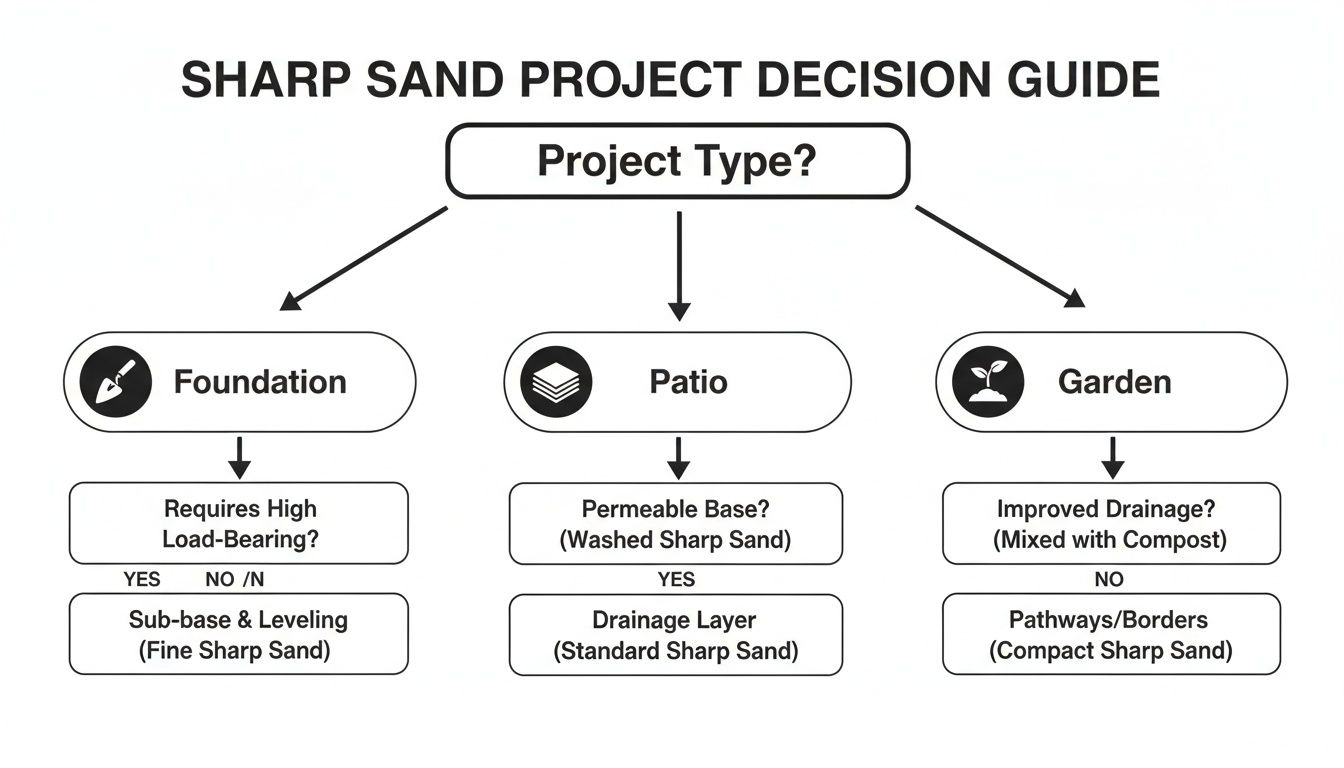
As you can see, sharp sand is the go-to choice for any foundational work where strength and good drainage are non-negotiable. For other tasks, different materials step up to the plate.
Sharp Sand vs Building Sand
The most common point of confusion for DIYers and even some trades is the difference between sharp sand and building sand. Think of sharp sand as the structural powerhouse in your toolkit. Its gritty, coarse texture is exactly what you need for mixing strong concrete, durable floor screeds, and creating a solid base for laying paving slabs.
For a really robust sub-base, you might also look at other materials; you can learn more about the properties of Type 1 aggregate in our detailed guide.
Building sand, on the other hand, is the finishing artist. Its fine, soft texture is perfect for bricklaying mortar and rendering, where you need a smooth, cohesive mix that’s easy to work with and gives a clean finish. Using building sand for a patio base would be a massive mistake—its fine particles would compact too tightly, trapping water and leading to poor drainage and almost certain frost damage in winter.
Key Takeaway: Sharp sand is for strength and drainage. Building sand is for smoothness and bonding. Never use them interchangeably if you want your work to last.
Other Common Sand Types
Beyond the two main players, there are a couple of other specialist sands designed for very specific jobs. Getting to know them can save you a lot of headaches down the line.
- Play Sand: This is a special type of sand that has been thoroughly washed and graded to make sure it’s non-toxic and soft to the touch. Its fine, rounded grains make it safe for children's sandpits, but it’s completely useless for construction because it offers zero structural strength.
- Kiln-Dried Sand: This is a very fine, completely dry sand with one main purpose: brushing into the joints of block paving after it’s been laid. It works its way into all the tiny gaps and locks the blocks together, preventing them from shifting. It’s not a mixing sand and must be kept bone-dry to work properly.
Comparing Common Sand Types at a Glance
To make things even clearer, here’s a quick comparison table. Use this to quickly identify the right sand for your job by comparing their characteristics and best uses.
| Sand Type | Particle Shape and Size | Feel and Texture | Best Used For |
|---|---|---|---|
| Sharp Sand | Large, coarse, and angular (0-4mm) | Gritty and sharp | Concrete, screed, paving bases, improving soil drainage |
| Building Sand | Fine and rounded | Soft and smooth | Bricklaying mortar, rendering, pointing |
| Play Sand | Very fine and sub-rounded | Extremely soft, non-staining | Children's play areas, sandpits |
| Kiln-Dried Sand | Very fine and uniform | Dry and powdery | Brushing into paving joints to lock blocks |
This table should help you see at a glance why picking the right sand isn't just a detail—it's fundamental to the success of your project.
Unlocking Specialist Uses in the Garden and Beyond
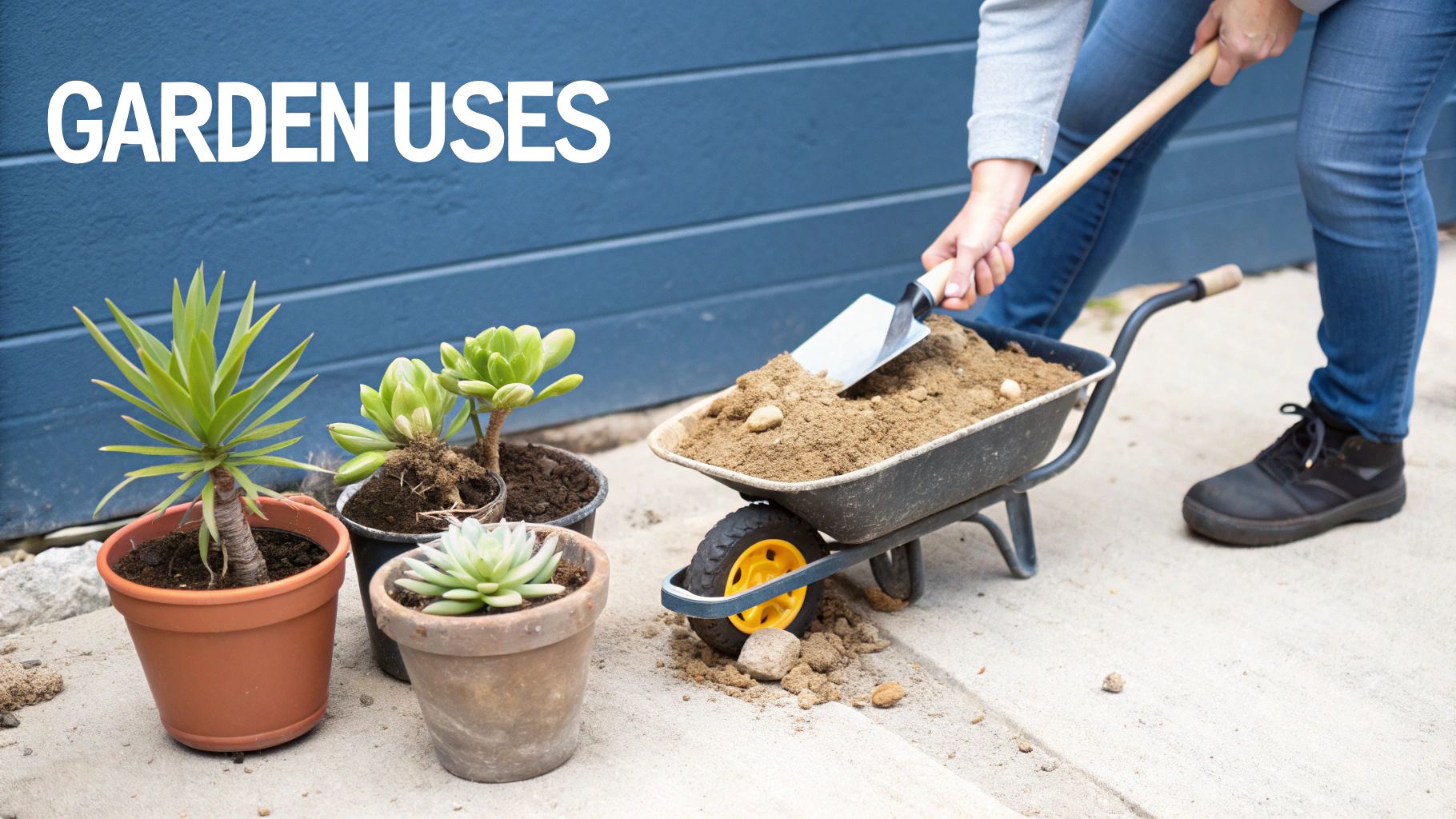
While sharp sand is a real hero on the construction site, its usefulness stretches right into the garden and other specialist areas. For gardeners, it’s a secret weapon for tackling one of the most common frustrations: heavy, compacted clay soil.
Clay soil is notorious for holding far too much water, which quickly leads to waterlogged roots and some very unhappy plants. By digging a generous amount of sharp sand into the top layer of your soil, you physically break up those dense clay particles. This creates tiny air pockets and drainage channels, a process known as improving aeration. The result is a much lighter, more workable soil structure that lets excess water drain away freely.
Creating the Perfect Growing Environment
This improved drainage is non-negotiable for certain plants that simply can't tolerate sitting in wet soil. For these varieties, sharp sand isn't just helpful—it’s a basic requirement for survival.
- Alpine Plants: These mountain-dwellers are adapted to rocky, free-draining conditions and will quickly rot in heavy, wet ground.
- Succulents and Cacti: Famous for their drought tolerance, these plants need a gritty growing medium that mimics their native arid environments.
- Mediterranean Herbs: Think lavender and rosemary. These herbs thrive in poor, sandy soil and will really struggle in rich, water-retentive ground.
You can also mix sharp sand into your compost to create your own custom potting mixes. A ratio of one part sharp sand to two parts compost is a fantastic blend for growing plants that demand excellent drainage. This is a far more effective approach than just adding it to a path; you can learn more about creating durable, attractive walkways by reading our guide on designing a self-binding gravel pathway.
Sharp sand is also a favourite in horticulture for ‘top dressing’ lawns and sports pitches. A thin layer is spread across the surface to level out bumps, improve drainage, and encourage healthy grass growth. It’s what keeps surfaces like golf greens and football pitches in prime condition.
Winter Safety and Other Applications
Beyond the garden, sharp sand has another important seasonal job as a winter grit. When you spread it on icy paths and driveways, its coarse texture provides brilliant grip underfoot, instantly making surfaces safer to walk on.
Unlike rock salt, it isn't corrosive to concrete or harmful to most plants. This makes it a much gentler alternative for protecting your property and garden edges from damage when the frost sets in.
How to Source and Calculate Your Sharp Sand Needs
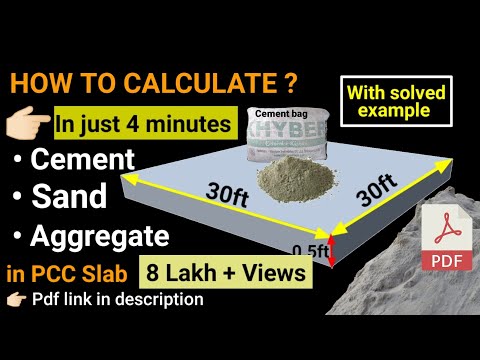
Once you’ve settled on using sharp sand, the next hurdle is getting the right amount of the good stuff delivered to your site. Getting your materials sorted correctly is every bit as important as the mixing and laying. It’s what gives your project the strength and longevity it needs, right from day one.
First things first: quality is king. The best sharp sand for any job will be clean and free from muck and other contaminants. You need to be wary of any sand that has noticeable amounts of silt, clay, or organic bits like roots and soil. These impurities will seriously weaken a concrete mix and clog up drainage, completely defeating the purpose of using sharp sand in the first place. A trustworthy supplier will always provide washed sand that meets proper standards.
Calculating How Much You Need
Working out how much sharp sand you need is pretty straightforward. A quick calculation can save you from overspending or, even worse, running out halfway through the job. You just need to figure out the volume and then convert that into the tonnage you'll need for ordering.
Just follow these simple steps:
- Measure Your Area: Grab a tape measure and get the length and width of the space you need to fill, like a patio base or a new driveway path.
- Decide on the Depth: Figure out how deep the sand needs to be. For a sub-base under paving, you’re typically looking at somewhere between 30mm and 50mm.
- Calculate the Volume: Multiply the length by the width by the depth. Make sure all your measurements are in metres to get the final volume in cubic metres (m³).
A Quick Example
Let's say you're laying a patio that's 5 metres long by 4 metres wide, and you need a sand depth of 50mm (which is 0.05m):
5m (Length) x 4m (Width) x 0.05m (Depth) = 1.0 m³ of sharp sand.
Once you have the volume, you need to turn that into tonnes for your supplier. As a rule of thumb, one cubic metre of sharp sand weighs about 1.5 tonnes, although this can shift a bit depending on how damp it is. To get a really accurate figure, you can check out our detailed guide on how much sand is in a tonne to help nail your calculations.
Bags or a Bulk Delivery?
Finally, how are you going to get the sand to your project? Your choice here really comes down to the size of the job and your budget.
- Small Bags (25kg): Perfect for tiny repair jobs, mixing up some potting soil, or just topping up a few spots. You can grab these from any DIY shop, but be warned – it’s by far the most expensive way to buy sand per kilogram.
- Bulk Bags (approx. 850kg): This is the go-to option for most home projects like patios, shed bases, and smaller driveways. Getting a bulk bag delivered from an aggregate supplier is much more cost-effective than buying loads of little bags.
- Loose Tipped Loads: If you’re tackling a massive construction job or a huge landscaping project, ordering a loose load tipped from a lorry is the cheapest way to go. This only works if you’ve got plenty of space to store it and a big job ahead of you.
Common Questions About Using Sharp Sand
Once you're ready to get stuck into your project, a few practical questions always seem to pop up. Getting them answered upfront can save you a lot of headaches later on and let you get on with the job, confident you’re building on a solid foundation.
Here are a few of the queries we get asked all the time, along with some straight-to-the-point, practical answers to help you out.
Can I Use Sharp Sand for Rendering?
While sharp sand is brilliant for strength, it’s generally too coarse to give you a nice, smooth finish on a final render coat. Its gritty texture creates a rough, almost harsh surface that most people don’t want on their external walls.
What the pros often do is use a mix with sharp sand for the first "scratch" coat. This gives the wall a fantastic, strong key for the next layer to grip onto. But for the top coat, they’ll almost always switch over to a finer building or plastering sand to get that much smoother, easier-to-work-with finish. Using only sharp sand for the entire job just isn't the way to go.
What Is the Best Mix Ratio for Concrete?
A great all-rounder concrete mix, perfect for things like shed bases or popping in fence posts, is the classic 1:2:4 ratio. It’s a simple recipe to remember:
- 1 part cement
- 2 parts sharp sand
- 4 parts coarse aggregate (like 20mm gravel)
If you're tackling something that needs a bit more muscle, like a driveway or a structural slab, a 1:2:3 ratio is usually the better choice. The most crucial step, no matter the ratio, is to mix all your dry ingredients together thoroughly before you even think about adding water. Then, add the water gradually until you have a consistent, workable mix that isn't too wet or sloppy.
Key Takeaway: You’ll hear the terms ‘grit sand,’ ‘sharp sand,’ and ‘concrete sand’ thrown around in the UK. For all practical purposes, they're the same thing – a coarse, angular aggregate that does the same jobs in construction and landscaping.
Is Sharp Sand an Eco-Friendly Choice?
As a naturally occurring material, sharp sand has to be quarried, which does have an environmental footprint. The industry is heavily regulated to manage this impact, but there’s no getting around the fact that quarrying requires energy and land.
However, for some jobs where you don't need maximum structural strength – say, creating a sub-base for a garden path – recycled aggregates can be a much more sustainable option. Reputable waste management companies can process materials from construction and demolition sites into high-quality recycled aggregates. This reduces the need for quarrying fresh sand and helps create a more circular economy in the building trade.
At The Waste Group, we provide a full range of high-quality aggregates, including sharp sand, delivered right to your site. Whether you need a single bulk bag for a patio or a loose load for a bigger construction job, we’ve got you covered. Order your aggregates online today or give our team a call for some expert advice.