
What Materials Can Be Recycled A Practical UK Guide
What Materials Can Be Recycled A Practical UK Guide
Trying to figure out what can and can't be recycled can sometimes feel like a bit of a minefield, but the good news is that the basics are actually quite simple.
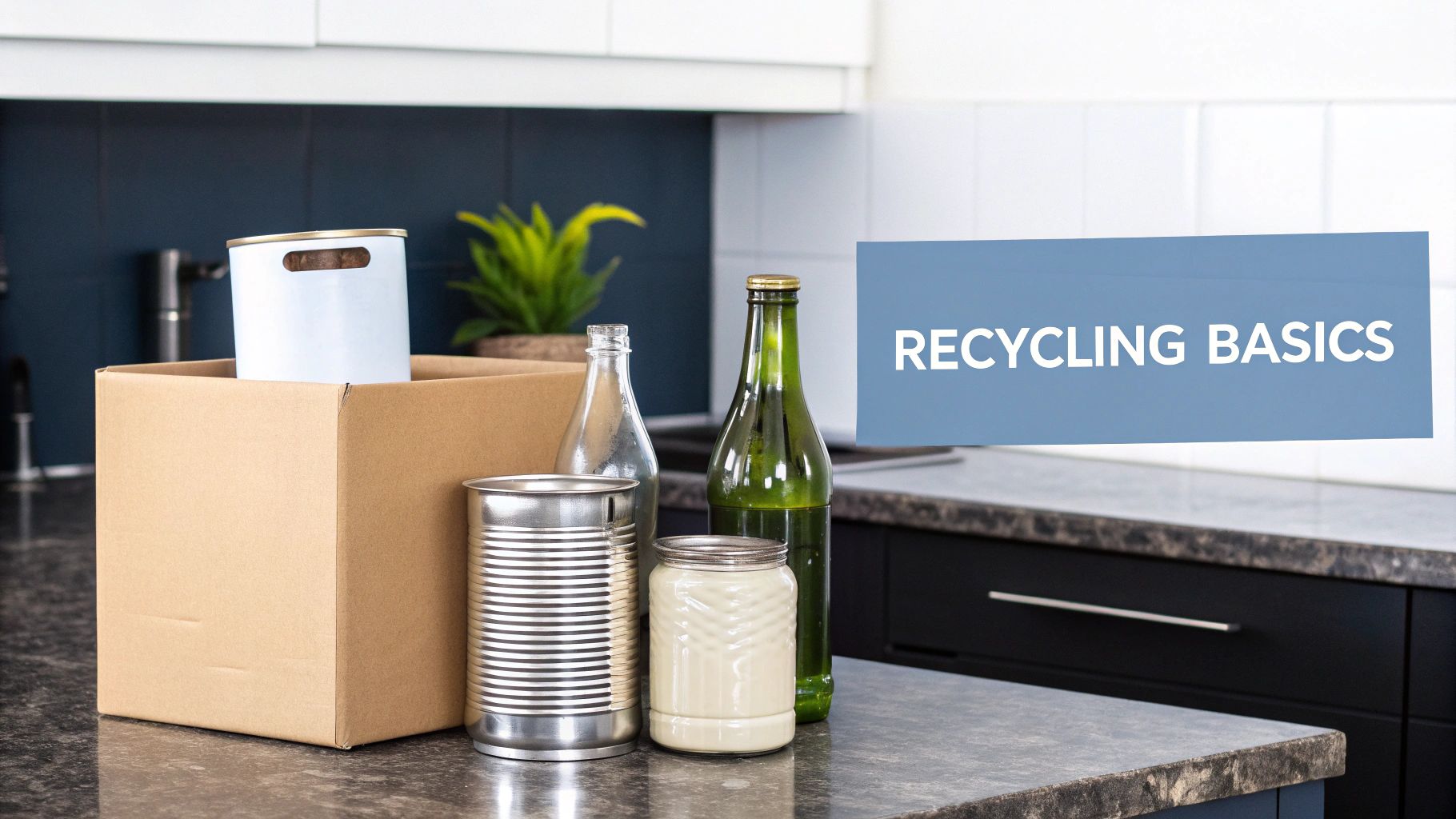
Across the UK, you can be confident that things like paper, cardboard, glass bottles and jars, metal food tins, and most plastic bottles and trays are good to go. These everyday items are the bread and butter of household recycling collections up and down the country.
Your Quick UK Recycling Cheat Sheet
Let's be honest, recycling can sometimes feel like a puzzle, with different rules for different items and areas. But a massive chunk of your daily waste is widely recyclable. Think about the things you handle every single day: the cardboard cereal box at breakfast, the glass pasta sauce jar from dinner, or the aluminium can from a soft drink. These are the true recycling heroes of your home.
The journey to becoming a recycling pro starts by getting these common materials right. While the specifics can change slightly from one local council to another, the main categories are pretty consistent. Nailing these basics is the single most important step you can take to reduce your environmental footprint. It turns what was once rubbish into a valuable resource, ready to be transformed into something brand new.
Common Recyclable Materials at a Glance
To make it even easier, here's a quick summary of the most common items accepted in UK kerbside collections. Getting these right is what makes the biggest difference to your recycling rates.
| Material | What to Recycle | How to Prepare It |
|---|---|---|
| Paper | Newspapers, magazines, letters, office paper, and junk mail. | Keep it dry and flatten any large pieces. |
| Cardboard | Cereal boxes, delivery boxes, and food packaging sleeves. | Remove tape and flatten to save space. |
| Glass | Jars from food and bottles from drinks (all colours). | Rinse out residue and remove lids (recycle separately). |
| Metals | Steel food tins, aluminium drink cans, and clean foil. | Rinse well and crush cans if possible. |
| Plastics | Drink bottles, milk jugs, shampoo bottles, and food pots. | Rinse, squash, and replace lids to keep them contained. |
Just by focusing on these five key groups, you can make sure the vast majority of your household waste gets sorted correctly. This simple habit helps the entire recycling system run smoothly by preventing contamination, turning your efforts into real, tangible environmental benefits.
When you think about recycling, what springs to mind? For most of us, it’s paper, glass, and metal. These materials are the backbone of almost every household recycling scheme in the country and represent some of our biggest wins in the move towards a circular economy. Getting these three right is the simplest way to make a massive impact.
But here’s the thing: even with these everyday items, simple mistakes can cause chaos for recycling plants. It’s not just what you recycle, but how you do it. A few small tweaks at home or in the office can make all the difference to the quality of the material collected, whether it’s from a kerbside bin or a large commercial skip.
The Power of Paper and Cardboard
From the morning paper to the mountain of delivery boxes, paper and cardboard are a constant in our lives. The good news is they’re also incredibly recyclable. Most of what you have is good to go: junk mail, magazines, office paper, and food packaging like cereal boxes can all go straight in the recycling.
However, not all paper is created equal. The biggest enemy here is contamination, especially from food and grease. That greasy pizza box? It’s a recycling plant’s worst nightmare. The oil soaks into the paper fibres, making them impossible to process and potentially ruining an entire bale of perfectly good cardboard. The same goes for anything with glitter, foil, or a plastic coating – think shiny wrapping paper or fancy greeting cards.
Think of paper fibres like a sponge. When they’re clean, they can be pulped down and turned into new products. But once they soak up grease or get mixed with non-paper bits like glitter, they’re ruined for the machinery.
Another common slip-up is shredded paper. While it’s technically recyclable, the tiny strips act like confetti in the sorting facilities. They clog up the machinery, get blown about, and often just get lost in the process. Many councils ask you to keep it out of your main bin unless it's bundled up in a paper bag.
Getting Glass Right Every Time
Glass is a fantastic example of a closed-loop system. This means a glass bottle can be melted down and reformed into a brand-new bottle an infinite number of times, without ever losing its quality. That’s why recycling your glass jars from sauces, jams, and drinks is such a powerful act.
The key is to know your glass. Jars and bottles are made to be recycled. Other types of glass, however, are not.
- Drinking Glasses and Pyrex: These are treated with chemicals to handle high temperatures, giving them a different melting point. If they get mixed in with bottles and jars, they can ruin the whole batch.
- Window Panes and Mirrors: This glass is often treated or laminated, making it totally incompatible with standard container glass recycling.
- Light Bulbs: These are a mix of glass, metal, and sometimes hazardous materials. They need to be taken to a proper recycling centre for special handling.
All your bottles and jars need is a quick rinse to get rid of any food residue. This simple step stops mould from growing and prevents leftover liquids from contaminating other recyclables in your bin, like paper.
Making the Most of Metals
Metal is another recycling superstar. Materials like aluminium and steel can be recycled again and again, saving a huge amount of energy compared to making them from scratch. Your food tins (steel) and drink cans (aluminium) are the perfect candidates.
Just like with glass, a quick rinse is all it takes. Leftover baked beans or tomato sauce can easily contaminate a whole load of other materials. When it comes to aluminium foil and trays, a handy tip is the scrunch test. If you can scrunch it into a ball and it holds its shape, it’s usually good to recycle. Just make sure it’s clean!
It’s clear that paper and cardboard are recycling champions. In fact, they lead the way in UK packaging waste recycling, boasting a very high success rate. This achievement is a major reason why the UK's overall packaging waste recycling has reached impressive levels, with paper and cardboard performing exceptionally well. You can discover more insights on UK recycling statistics to see the full picture.
Cracking the Plastic Recycling Code
Of all the materials we handle, plastics are hands down the biggest source of recycling confusion. From bottles and tubs to films and bags, it's not always easy to know what belongs in the recycling bin. Getting to grips with plastic recycling is the best way to stop contamination in its tracks and make sure your efforts actually count.
Think of the seven types of plastic like different kinds of fabric. You wouldn't wash a delicate silk blouse with a pair of rugged denim jeans, and the same logic applies here. Each type of plastic, marked with a number inside a triangle, has a unique chemical makeup and needs to be processed on its own.
This diagram gives a great visual of the core materials that make up most household recycling programmes.
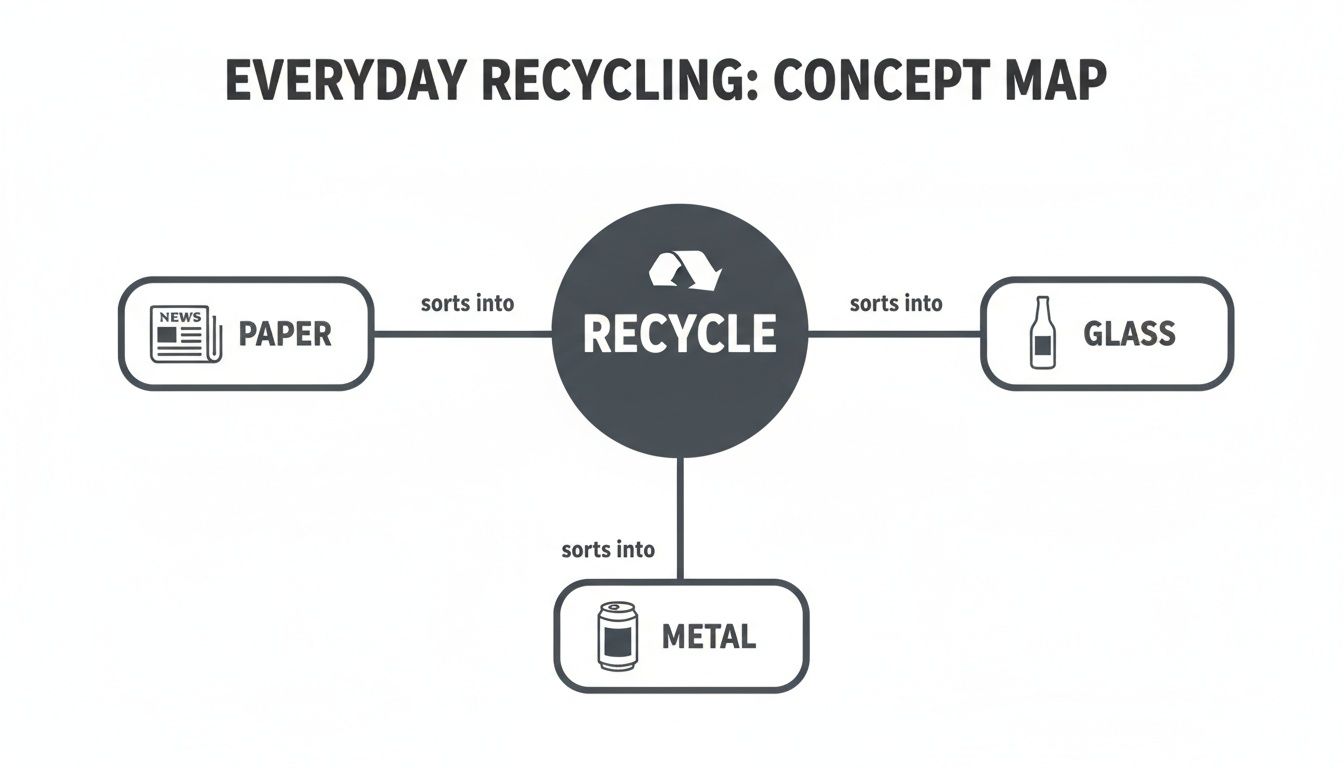
It shows how paper, glass, and metal are the fundamental streams feeding the recycling system. Each one just needs a bit of simple but specific prep work to be recycled successfully.
A Simple Guide to Plastic Resin Codes
To really understand what can and can't be recycled, you need to know about the plastic resin codes. These are the small numbers from 1 to 7 stamped on plastic items, usually inside a triangle of arrows. They identify the type of plastic polymer the item is made from.
Here's a quick breakdown of what those codes mean and which ones are most likely to be accepted by your local council.
| Code | Plastic Type | Common Examples | Typically Recyclable Curbside? |
|---|---|---|---|
| 1 | PET/PETE (Polyethylene Terephthalate) | Fizzy drink bottles, water bottles, peanut butter jars | Yes, widely accepted. |
| 2 | HDPE (High-Density Polyethylene) | Milk jugs, shampoo bottles, cleaning product containers | Yes, widely accepted. |
| 3 | PVC (Polyvinyl Chloride) | Cling film, pipes, window frames | No, rarely accepted. |
| 4 | LDPE (Low-Density Polyethylene) | Plastic carrier bags, bread bags, squeezable bottles | No, but many supermarkets have collection points. |
| 5 | PP (Polypropylene) | Yoghurt pots, margarine tubs, microwaveable trays | Sometimes, check your local council's rules. |
| 6 | PS (Polystyrene) | Foam takeaway containers, disposable cups, packaging foam | No, almost never accepted. |
| 7 | Other (Miscellaneous Plastics) | Some food containers, certain reusable bottles | No, very rarely accepted. |
As you can see, just because an item has a recycling symbol doesn't automatically mean it can go in your household bin. The number inside is what really matters.
Why Some Plastics Cause Problems
While codes #1 and #2 are usually a safe bet, other plastics are a real headache for recycling facilities. This is where "wishcycling"—tossing something in the bin hoping it's recyclable—causes serious issues.
Things like thin plastic bags, cling film, and crisp packets are known as flexible films. These are notorious for getting tangled in the machinery at recycling plants, jamming the equipment and bringing the whole sorting process to a grinding halt. Not only does this cost a fortune to fix, but it can also ruin entire batches of good recyclables.
Contamination is the single biggest threat to an effective recycling system. When non-recyclable items get mixed in, they can downgrade the quality of the final recycled material or, in the worst cases, force an entire truckload to be sent to landfill instead.
Another tricky one is Polystyrene (PS), better known as code #6. This includes things like foam takeaway boxes and the big white blocks used for protective packaging. It's incredibly light and bulky, which makes it uneconomical to collect and transport in large enough quantities to be recycled effectively.
Practical Tips for Plastic Recycling
The best way to become a confident recycler is to focus on what your local council definitely accepts. Always check their specific guidelines, but a few universal rules will set you on the right path.
- Check the Number: Get into the habit of looking for the resin code on the packaging. If it’s a #1 or #2 bottle, pot, or tray, it’s almost certainly good to go.
- Rinse and Squash: Give containers a quick rinse to get rid of any food bits. Squashing bottles saves loads of space in your bin and on the collection lorry.
- Lids On or Off?: This varies from council to council. Some want lids left on (so they get recycled too), while others ask for them to be separate. A quick look at your local rules will clear this up.
- Avoid the "Tanglers": Keep plastic bags, films, and other soft plastics out of your kerbside bin. Many larger supermarkets now have special collection points for these items, so save them up and drop them off on your next shop.
By cracking this plastic code, you move from just hoping to actually knowing. Every correct choice you make reduces contamination and helps create a more efficient system that turns our household waste into a valuable resource.
Handling Items That Don't Go in Your Recycling Bin
We’ve covered the everyday stuff that goes into your kerbside bin, but what about all the other things? You know, the old batteries, worn-out clothes, or the toaster that finally gave up the ghost. These items are a massive source of confusion, and tossing them in the wrong place can cause serious problems right down the line.
It's not just about being different; these items often need special handling because they can be genuinely hazardous. A single lithium-ion battery from an old vape or mobile phone can easily spark a fire in a recycling lorry or at a sorting facility. Old electronics often contain heavy metals that can contaminate the environment, and textiles are notorious for jamming up expensive sorting machinery.
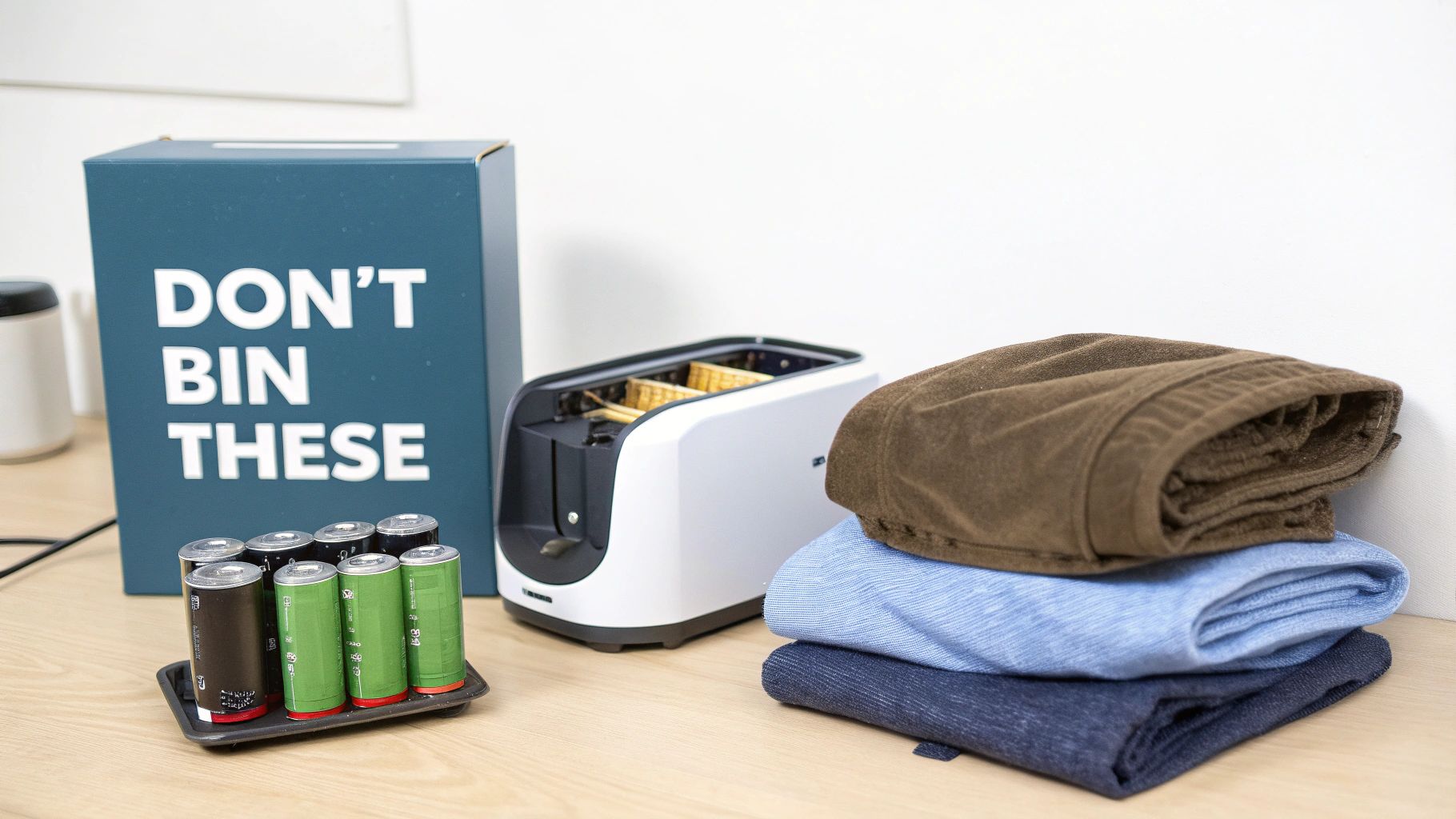
Knowing what can be recycled is only half the battle; knowing where it needs to go is just as crucial. Thankfully, there are dedicated routes for these tricky items to make sure they're managed safely and responsibly.
Dealing With Electronics and Batteries
That old kettle, broken laptop, or the tangled mess of charging cables you've got in a drawer all fall under one category: Waste Electrical and Electronic Equipment (WEEE). These items must never go into your household recycling or general waste bins because of the hazardous bits and pieces inside them.
Batteries are a particular menace. When they get crushed or damaged in a collection vehicle, they can short-circuit and ignite. This can lead to major fires that endanger workers and destroy tonnes of valuable recyclables. Even tiny 'button' batteries can cause serious issues.
Here’s where these items should go instead:
- Council Recycling Centres: Your local household waste recycling centre (HWRC) will have specific containers for small electricals, large appliances, and all types of batteries.
- Supermarket Take-Back Schemes: Many large retailers that sell electronics and batteries have to offer a take-back service. You'll often find collection points for old batteries and small electricals near the entrance.
- Specialist Collectors: For certain electronics, it pays to use a dedicated service. For instance, if you want to know how to recycle your mobile phone in the UK, specialist recyclers will make sure it’s done correctly.
Giving Textiles a Second Life
Old clothes, worn-out bedding, and tired towels are another group of materials that have no business being in your recycling bin. While the fibres are technically recyclable, the technology to do it on a large scale just isn't there yet. In fact, less than 1% of the material used to make clothing is currently recycled into new garments.
Tossing textiles into your kerbside recycling bin is a common mistake. They can get caught in sorting machinery, causing breakdowns and contaminating other clean recyclables like paper and glass.
Instead of binning them, here are some far better options:
- Charity Shops: If the items are still in good, wearable condition, donating them is the best choice. It supports great causes and gives the clothes a new home.
- Textile Banks: You'll find these at most supermarkets and local recycling points. Items collected here are sorted for reuse or recycled into things like industrial cloths and stuffing.
- Take-Back Schemes: Some clothing brands now offer programmes where you can return old garments (often their own brand) and get a discount on a future purchase.
Managing Larger Waste Streams
What about the waste from bigger projects, like a garden overhaul, a room renovation, or a major clear-out? These jobs often create waste that's too bulky or specialised for your regular bins – think soil, rubble, wood, or old plasterboard.
This is where professional waste management becomes essential. Hiring a skip allows you to safely contain all these materials in one place, ready for a licensed carrier to collect. A reputable company will ensure your waste is taken to a proper facility where it can be sorted and processed correctly. For example, specific rules apply to building materials, and knowing how to recycle plasterboard ensures you stay compliant and environmentally responsible.
For these larger, more complex waste streams, relying on expert services is the safest and most efficient way to handle disposal, making sure that as much material as possible is recovered and kept out of landfill.
Recycling for Construction and Business Sites
While household recycling bins handle the usual suspects like milk bottles and cardboard boxes, the world of commercial and construction waste is a different beast entirely. On a busy building site or during a major business clear-out, the materials you're dealing with are heavier, bulkier, and need a specialised approach to be recycled properly. This isn't just about putting things in the right bin; it's about seeing demolition rubble and site offcuts as the valuable resources they truly are.
Think of materials like concrete, bricks, soil, timber, and scrap metal – the heavyweights of the waste world. Instead of being condemned to landfill, these are the very building blocks of a circular economy, where old resources get a new lease of life. This mindset turns what looks like rubbish into something valuable, cutting down our reliance on brand-new raw materials and saving a huge amount of energy in the process.
The Heavy-Duty Recyclables
Any construction or demolition site produces a massive amount of material. The secret to successful recycling here is simple: segregation. Keeping materials separate from the get-go is crucial.
- Aggregates (Concrete, Bricks, Rubble): Old concrete and broken bricks aren't junk. They can be crushed and screened to create recycled aggregate, which then gets used in new projects for things like road bases, foundations, and general fill.
- Soil and Stones: Earth and stones dug up during excavation can often be cleaned up and reused right there on-site for landscaping. If not, they can be processed for use elsewhere, which helps avoid landfill tax and preserves natural topsoil.
- Wood and Timber: Untreated timber from demolition or offcuts from new builds can be chipped and repurposed for all sorts of things, from animal bedding and garden mulch to biomass fuel. You'll often come across specific types like various Timber Cladding products, each with its own recycling path.
- Scrap Metal: Steel beams, copper pipes, aluminium frames, and rebar are all incredibly valuable. They can be melted down and reformed into new metal products using far less energy than it takes to create metal from raw ore.
This is an area where the UK construction industry really shines. Construction and demolition waste is one of our nation’s biggest recycling success stories. An incredible 74.3 million tonnes of recycled and secondary aggregates are produced annually in Great Britain, making up 31% of the total demand.
Professional Logistics for On-Site Recycling
Managing these heavy materials requires a bit more than a few wheelie bins. It calls for a proper logistical plan to handle the sheer volume and to stay on the right side of environmental regulations. This is where professional waste management services become absolutely essential.
Proper on-site segregation isn't just a nice-to-have; it's a legal and financial imperative. Getting waste management wrong can lead to hefty fines and project delays, while getting it right can slash disposal costs and boost a company's green credentials.
Services like roll-on/roll-off (RoRo) bins are a game-changer for large-scale projects. These massive containers can hold huge volumes of a single waste stream, like wood or metal, making it easy to keep things separate from the start. For sites with mixed heavy waste or tricky access, a grab lorry hire is the perfect answer. These vehicles can swoop in and collect large piles of soil, rubble, or green waste quickly and efficiently, without needing a permanent skip taking up space. You can dive deeper into how these services work in our guide on the recycling of aggregates.
By using the right tools for the job, businesses can make their waste management a smooth, compliant process and play a vital role in building a more sustainable future. Every tonne of concrete recycled or scrap metal recovered is a direct win for our natural resources.
Common Recycling Mistakes and How to Fix Them

Even when we have the best intentions, it's incredibly easy to make small mistakes that can throw a spanner in the works for the entire recycling process. This happens when the wrong things, or items that haven't been prepped properly, find their way into the recycling bin. In the industry, we call this contamination, and frankly, it's the single biggest headache for recycling facilities today.
Picture a recycling plant as a highly specialised kitchen. It has very specific recipes for turning glass, paper, and plastic back into usable materials. When a rogue ingredient—like a greasy pizza box or a plastic carrier bag—gets tossed into the mix, it can spoil the whole batch. The result? Tonnes of otherwise good material get rejected and sent straight to landfill.
Debunking Common Recycling Myths
Let’s clear up a few of the most common misunderstandings. Once you know why certain items cause such a problem, it's much easier to break the habit for good. You might be surprised by what can and can't be recycled.
- Myth 1: Coffee Cups are Paper. They certainly look and feel like paper, but most takeaway cups have a secret: a thin plastic lining to stop them from going soggy. This plastic is bonded so tightly to the paper fibres that it’s almost impossible to separate, making the cups a no-go for standard paper recycling.
- Myth 2: Any Plastic with the Symbol is Recyclable. That little triangle of arrows doesn't automatically mean "pop me in your kerbside bin." It's just there to identify the type of plastic resin. Things like crisp packets and black plastic food trays, for instance, are rarely accepted by UK councils.
- Myth 3: You Should Bag Your Recyclables. This is probably one of the most damaging habits. Plastic bags are the arch-nemesis of sorting machinery, getting tangled in the equipment and causing long, dangerous shutdowns. Your recyclables should always go into the bin loose.
Getting these distinctions right is a massive step. For more hands-on advice, our guide has some brilliant tips for recycling that can help you dodge these common slip-ups.
"Wishcycling"—the act of putting an item in the recycling bin hoping it will be recycled—is a major source of contamination. While well-intentioned, it often does more harm than good. When in doubt, check your local council's specific guidelines.
Simple Preparation Habits That Make a Huge Difference
Getting your items ready for the bin is just as vital as choosing the right ones in the first place. These simple steps take mere seconds but have a massive impact on the quality of the materials we collect.
- Rinse Your Containers: Leftover food and liquid from jars, tins, and bottles can leak onto paper and cardboard, completely ruining them for recycling. A quick rinse is all you need – they don't have to be sparkling clean.
- Lids On or Off? This one can be confusing as rules do vary. For plastic bottles, the general rule is to empty, rinse, and squash them, then pop the lids back on. This stops the small lids from getting lost during sorting. For glass jars, metal lids should be taken off and put in the bin separately.
- Flatten Cardboard: This is a simple one but it's so effective. Breaking down boxes saves a huge amount of space in your bin and on the collection lorries, and it makes them much easier to process at the facility.
By steering clear of common myths and adopting these easy habits, you ensure your efforts really do count. You’re not just tossing things in a bin; you’re helping to create a clean, high-quality stream of materials ready for a new lease of life.
Your Recycling Questions Answered
We’ve covered a lot of ground on what can and can’t be recycled, from everyday packaging to leftover construction materials. But even with the best intentions, a few common questions always seem to pop up. Let's tackle these head-on to clear up any confusion and help you recycle with total confidence.
Getting these details right can be the difference between your recycling efforts helping the planet or accidentally causing problems down the line. It’s all about turning good intentions into genuinely positive outcomes.
Do I Really Need to Wash Jars and Bottles?
Yes, absolutely. Giving your recyclables a quick rinse is crucial. You don’t need to scrub them until they sparkle, but getting rid of leftover food and drink is a must.
Food residue doesn't just grow mould and attract pests; its biggest crime is contamination. A smear of pasta sauce or the last drops of milk can easily leak onto clean paper and cardboard in your bin, ruining their value. This one simple step ensures a whole batch of perfectly good material doesn't get rejected and sent to landfill.
Is Shredded Paper Recyclable in My Bin?
This is a tricky one, and the answer is generally no. While the paper itself is recyclable, shredding it creates tiny fibres that are a complete nightmare for sorting machinery.
Think of it like throwing confetti into a complex system of filters and screens. The small strips fall through the gaps, clog up the equipment, and get mixed in with other materials, causing chaos. Some councils might accept it if you contain it all in a paper bag, but often it’s better to add it to your home compost pile. When in doubt, always check your local council’s specific rules first.
Wishcycling is the practice of putting an item in the recycling bin hoping it can be recycled, even if you're not sure. While well-intentioned, this is one of the biggest causes of contamination, as it can damage machinery and spoil clean materials. When in doubt, leave it out.
How Should I Dispose of Hazardous Waste Like Paint?
Hazardous items like paint, chemicals, and engine oil must never go in your household bins or be poured down the drain. These materials contain toxic substances that can pollute soil and waterways, posing a serious risk to the environment.
Your local Household Waste Recycling Centre (HWRC) will have a dedicated, safe area for this kind of waste. For commercial projects or large amounts of hazardous materials, such as asbestos, you are legally required to use a licensed waste carrier. This is non-negotiable and ensures the waste is handled safely and in full compliance with environmental regulations.
At The Waste Group, our goal is to make waste management straightforward and sustainable. Whether you need skip hire for a home clear-out or a comprehensive waste plan for a commercial site, we provide compliant, reliable, and eco-conscious solutions. To find out how we can help with your project, visit us at https://www.thewastegroup.co.uk.