
where can i dispose car battery: UK disposal guide
where can i dispose car battery: UK disposal guide
When your car battery finally gives up, you can’t just toss it in the household bin. Not only is it illegal, but it's also incredibly dangerous. These things are packed with lead and corrosive acid, making them hazardous waste.
So, where can you take it? Your main options are your local council's recycling centre, an auto parts retailer or garage (especially if you're buying a new one), or a licensed scrap metal yard.
Your Guide to Car Battery Disposal Options
Knowing the right way to get rid of an old car battery is a must for staying safe and on the right side of the law. Because it's classed as hazardous material, it needs special handling. Luckily, there are a few simple and easy-to-find options across the UK for doing it responsibly.
This guide will give you a quick rundown of your choices. Each one has its pros and cons, whether you're looking for convenience, a free drop-off, or a more specialised service for a tricky situation. Getting your head around these options from the start will save you a lot of hassle.
Comparing Your Main Disposal Routes
The most common and legally sound ways to dispose of a car battery fall into three main camps: council-run tips, retail take-back schemes, and specialist collectors. Each one is designed for a slightly different scenario, but they all ensure your battery gets properly recycled, keeping those harmful chemicals out of the environment.
If you're looking for local options, a quick search for a guide on "waste disposal near me" can point you towards authorised facilities in your area.
To make things even clearer, this little decision tree breaks down the choices.
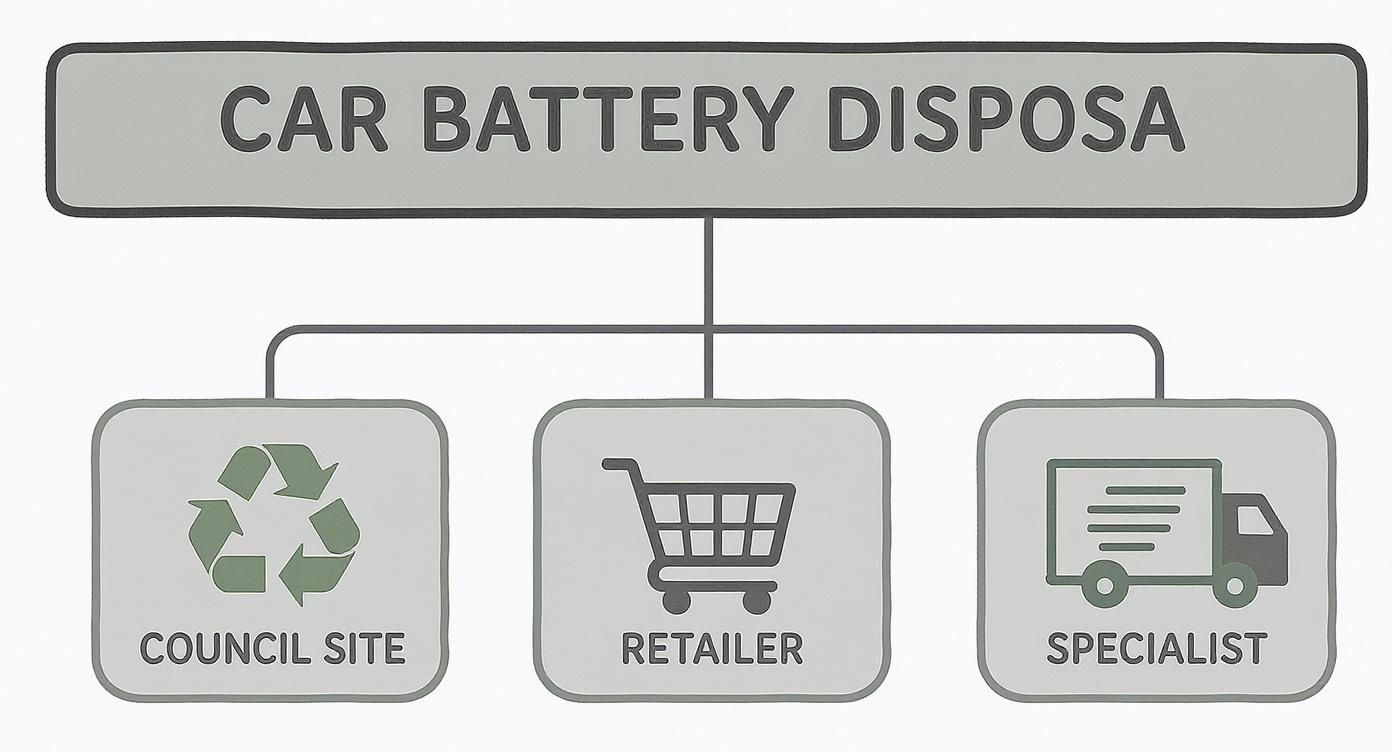
As you can see, for a straightforward, free drop-off, your local council site is usually the best bet. Retailers are great for convenience when you’re buying a replacement, while specialists are the go-to for bulk disposals or damaged batteries.
UK Car Battery Disposal Options at a Glance
To help you weigh it all up, here’s a quick comparison of the most common and legally compliant methods for disposing of your old car battery in the UK.
| Disposal Method | Best For | Potential Cost | Accepted Batteries |
|---|---|---|---|
| Local Recycling Centre | Free, straightforward drop-off for individual batteries. | Usually Free | Standard lead-acid batteries from personal vehicles. |
| Auto Retailers & Garages | Ultimate convenience when purchasing a new battery. | Often Free with Purchase | Standard lead-acid batteries, typically on a one-for-one basis. |
| Scrap Metal Yards | Potentially earning a small payment for the lead. | May Pay You | All types of lead-acid batteries, including from cars and vans. |
| Specialist Collectors | Businesses or individuals with multiple or damaged batteries. | Varies by Service | All types, including damaged units requiring safe handling. |
Each of these routes ensures your old battery is handled correctly, preventing pollution and allowing valuable materials like lead and plastic to be recovered and reused.
Why You Can’t Just Bin Your Old Car Battery
It might feel like the simplest solution—just tossing that old, dead car battery into your regular household rubbish. But what seems easy is actually both illegal and incredibly dangerous. A car battery isn't just a hunk of plastic; it’s basically a self-contained chemical power plant, and its contents are seriously nasty.
Think of it as a heavy box packed with lead plates swimming in a bath of highly corrosive sulphuric acid. When that casing inevitably gets crushed in the back of a bin lorry or at the tip, all those hazardous materials escape straight into the environment. It’s not just a small leak; it’s a major contamination event just waiting to happen.
The Environmental Dangers of Improper Disposal
The lead and acid from just one car battery can cause an astonishing amount of damage. If they soak into the ground, they can poison the soil for decades, killing off plants and harming local wildlife.
Worse, rainwater can wash these toxins into our drains, rivers, and eventually, the groundwater we rely on. Lead is a powerful neurotoxin, and having it in our water system is a direct threat to public health and the entire aquatic ecosystem. The environmental price for one binned battery is far too high.
A standard lead-acid car battery holds around 9-10kg of lead and several litres of sulphuric acid. When chucked away carelessly, these components become major pollutants, posing a severe risk to soil health and water purity.
Understanding Your Legal Responsibilities
Because of these very real dangers, car batteries are legally classified as hazardous waste in the UK. This isn't just a friendly suggestion; it's a strict legal requirement that dictates how they must be thrown away. Putting one in with your general waste is against the law and can land you with a hefty fine.
These rules exist to make sure these materials are only handled by licensed professionals who know how to safely neutralise the acid and recover the valuable metals inside. If you want to get into the specifics, you can explore the UK's official hazardous waste disposal regulations to get a full picture of the legal side of things.
Ultimately, knowing where to take an old car battery is about more than just ticking a legal box—it’s about doing your bit for the environment. By choosing the right route, whether that's your local council recycling centre, a garage, or a specialist collector, you're making sure that the battery's harmful contents are dealt with safely. It’s a small choice that protects our shared environment and ensures valuable materials like lead and plastic get a second life. A little effort for a big impact.
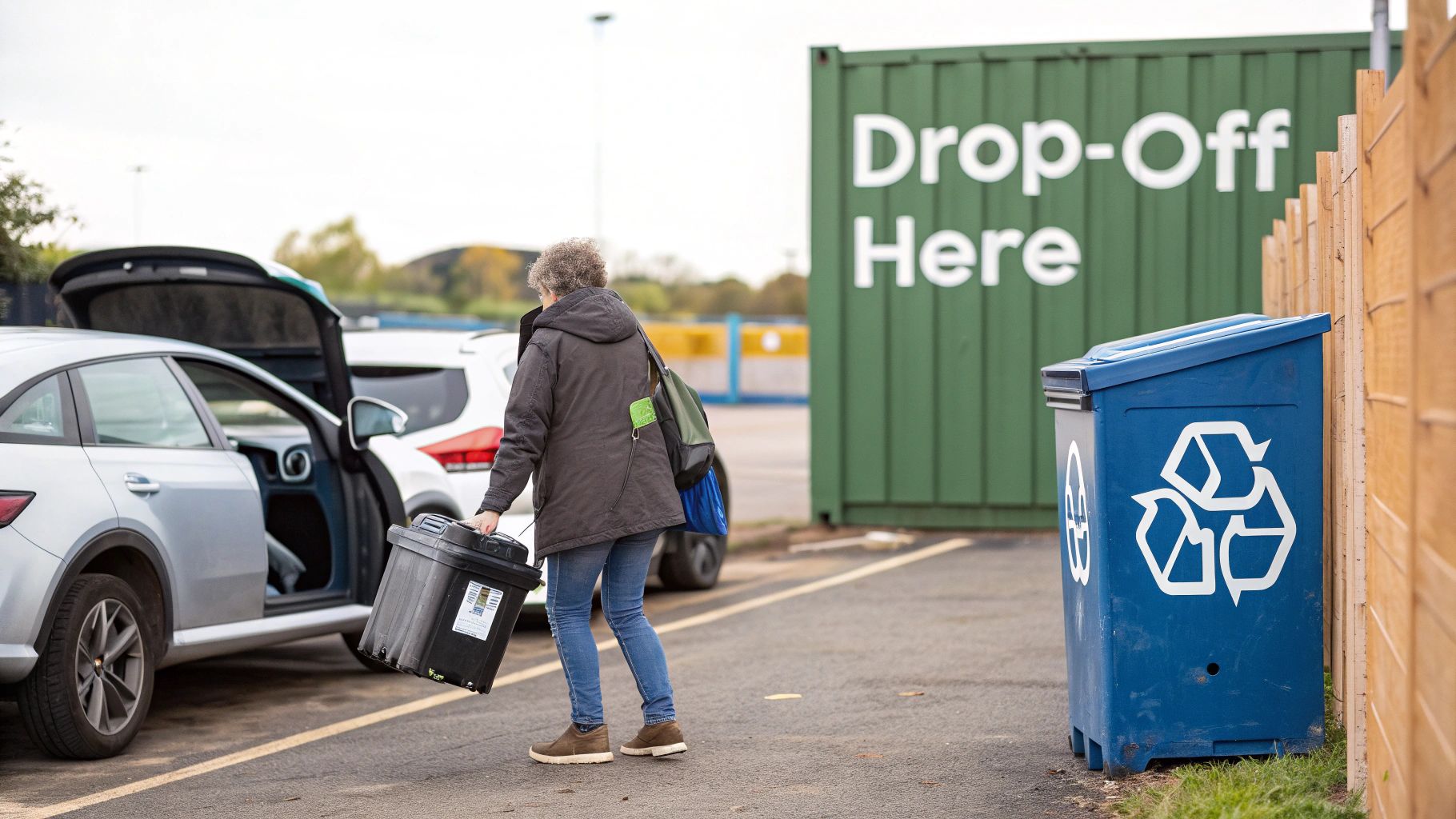
For many of us, when an old car battery finally gives up the ghost, the first thought is often the local tip. And you’d be right. Your local council’s Household Waste Recycling Centre (HWRC) is usually the simplest, most direct place to take it. These facilities are set up to safely handle hazardous items like car batteries, making it a free and straightforward choice for most households.
These centres are a critical part of how the UK manages its waste. They're designed to pull hazardous materials out of the general waste stream, stopping them from ending up in landfill where they can cause real environmental damage. Think of your local HWRC as a community hub for responsible recycling, where everything from old paint tins to dead car batteries has a designated spot.
Finding and Using Your Local Centre
Don't know where your nearest centre is? It’s easier than you think to find out. A quick search on your local council's website or the main Gov.uk site will bring up a postcode checker. This will show you the closest options, their opening times, and any specific rules you need to be aware of before you head over.
Once you get there, just keep an eye out for the signs. There will be a dedicated area for car batteries or hazardous waste, usually a separate container or a caged-off section. This is to stop any nasty leaks from contaminating other recyclables. If you’re not sure where to go, the site staff are always on hand to point you in the right direction.
It’s also a good idea to check if they have limits on how many batteries you can drop off. Most centres are perfectly happy to take one or two from your personal car, but if you’ve got a small mountain of them, it’s best to ring them up first. For more general advice, you can also check out our handy tips for recycling which cover all sorts of household items.
The Bigger Picture of Battery Recycling
When you drop off that old battery, you're doing more than just clearing out your garage. You’re plugging into a massive, and growing, recycling industry. The UK’s car battery recycling market is booming, thanks in no small part to the surge in electric vehicles.
To give you an idea of the scale, in 2023, the UK's EV battery recycling market was valued at USD 11.9 million. By 2030, it’s predicted to rocket to USD 347.2 million – a clear sign of just how much recycling capacity is coming online.
Key Takeaway: Your local HWRC isn’t just a drop-off point; it’s the very first link in a circular economy. The lead, plastic, and acid from your old battery don’t go to waste. They are recovered and processed, ready to be turned into brand-new products, which cuts down on pollution and the need to mine for fresh materials.
Returning Old Batteries to Garages and Retailers
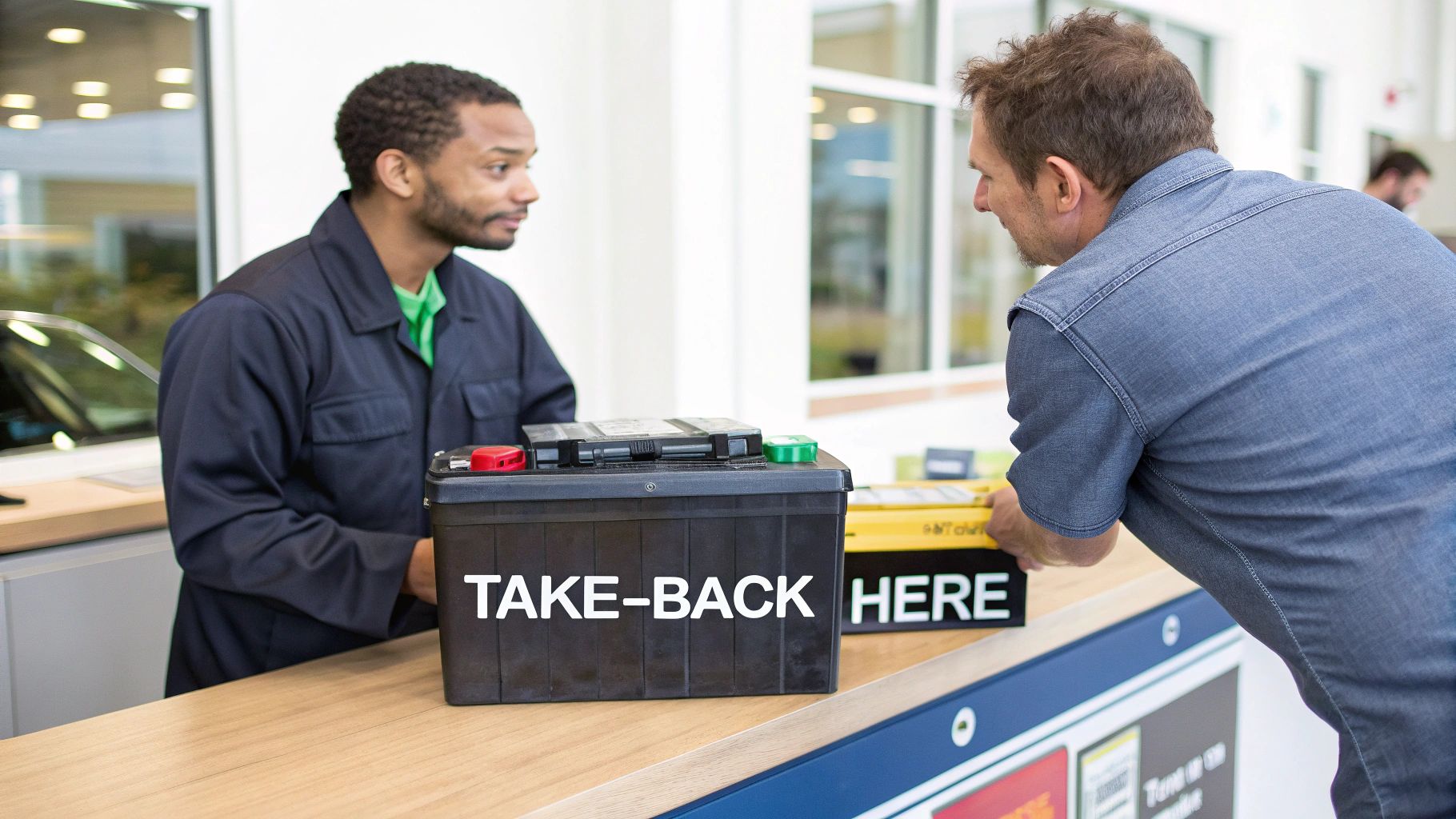
When you're wondering, "where can I dispose of a car battery?", one of the simplest answers is often right where you’re buying its replacement. This turns what could be a hassle into a straightforward, one-stop exchange, saving you a special trip to the recycling centre.
This isn't just about good customer service; it's actually backed by UK law. Thanks to "producer responsibility" regulations, any business selling new car batteries has a legal duty to offer a take-back service for your old one. This clever system creates a closed loop, ensuring old units are collected and sent for proper recycling.
The best part? This service is usually free of charge when you're purchasing a new battery from them. It's a simple swap: you buy the new one, and they take the old one off your hands there and then.
What to Expect From Retailers and Garages
Whether you're popping into a big chain like Halfords or visiting your trusted local garage, the process is pretty much the same. If your car is already in for a new battery or a dedicated car battery service, this is definitely the most practical way to hand over the old unit.
Most garages have a designated, safe spot to store spent batteries before they're picked up by a licensed waste carrier. It’s a seamless part of their operation, making it the go-to choice if a professional is already fitting your new battery.
Pro Tip: Always call ahead. While the take-back scheme is a legal requirement, a quick phone call confirms how they handle it and makes sure there are no surprises when you turn up. It's a tiny step that guarantees a smooth exchange.
This take-back rule applies to any distributor selling over 32kg of portable batteries a year, which covers virtually every automotive retailer and garage you can think of.
Making the Process Seamless
To make your return as easy as possible, just follow these quick pointers. A little preparation makes things quicker for both you and the staff.
- Handle with Care: Always keep the old battery upright. This is crucial to stop any battery acid from spilling out while you're transporting it.
- Check for Damage: Give the battery a once-over to make sure the casing isn't cracked or leaking before you try to move it.
- Inform the Staff: As soon as you arrive, just let the staff know you have an old battery to get rid of. They'll point you in the right direction.
By using this take-back scheme, you're not just getting a convenient service. You're playing an active part in a responsible recycling chain, guaranteeing your old battery is handled safely and its valuable materials, like lead and plastic, get recovered and reused.
How to Prepare and Transport a Car Battery Safely
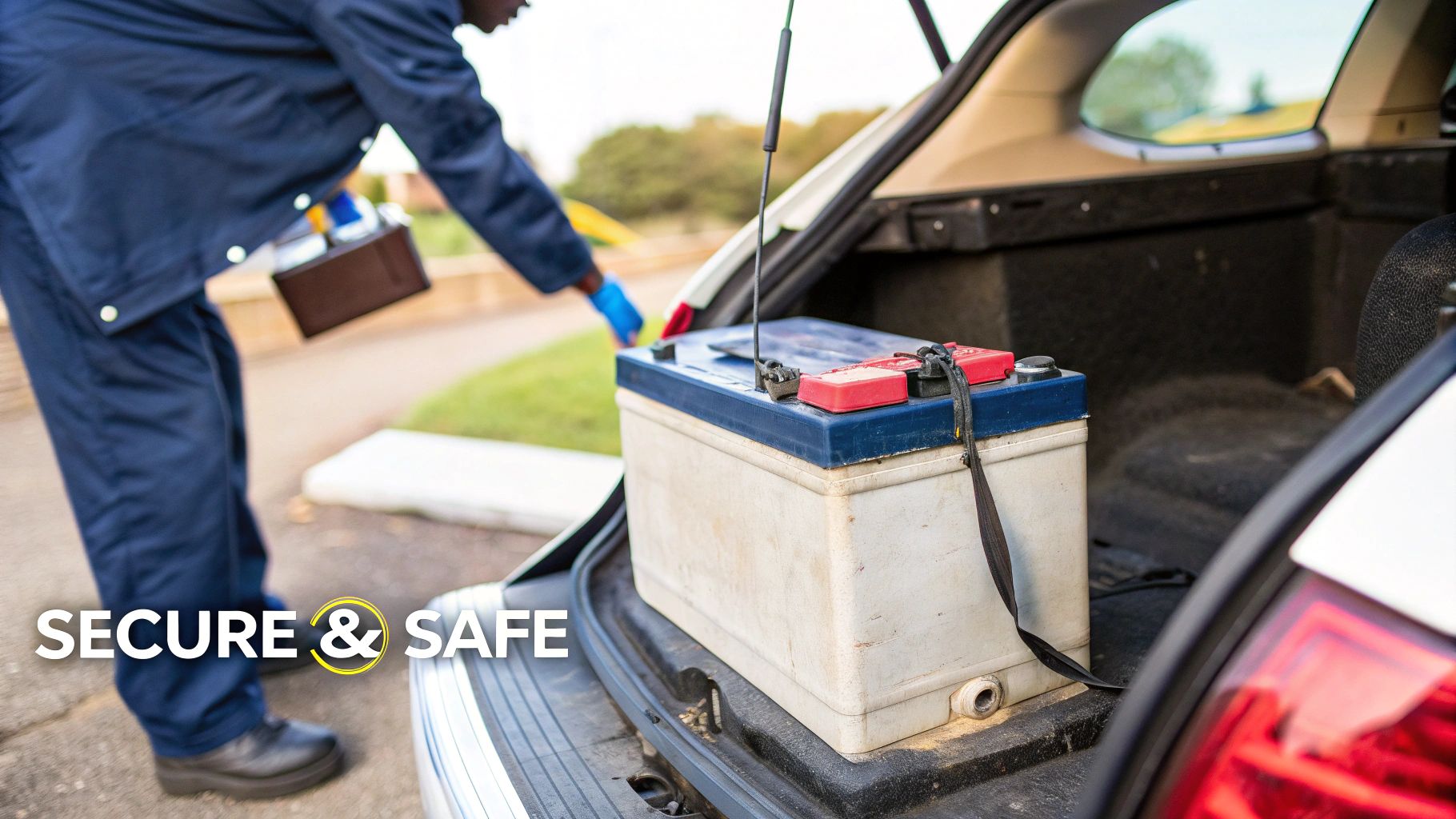
Before you even think about where your old car battery is heading, the first step is getting it there safely. It’s easy to forget that a battery is basically a heavy box filled with lead and corrosive acid. Handling it with care isn't just a suggestion—it's absolutely essential to avoid injuries or a nasty spill.
Think of it like moving a full bucket of hazardous liquid. You wouldn’t just sling it in the boot and hope for the best, would you? The whole game is about stability and containment. A little preparation goes a long way in keeping you, your car, and the environment safe.
Your Essential Safety Checklist
Just follow these straightforward steps to get your old battery ready for its last ride. Nailing these basics will give you complete peace of mind.
-
Gear Up for Safety: First things first, always put on a pair of thick gloves and some safety goggles. Battery acid can cause serious chemical burns to your skin and eyes, so this is your non-negotiable first line of defence.
-
Inspect for Damage: Before you even try to lift it, give the battery a quick once-over. Are there any obvious cracks, weird bulges, or signs of a leak? If the casing looks damaged, you’ll need to be extra careful.
If you spot a crack or a leak, don't panic. Just place the battery inside a tough, leak-proof plastic container or a heavy-duty bag before moving it. Tossing a bit of baking soda in the bottom of the container is a great trick to help neutralise any acid that might escape.
- Keep it Upright: This one is crucial. A car battery must always be kept level. If it tips, the sulphuric acid inside can easily spill out of the vent caps, and that’s a mess nobody wants to deal with.
Secure Transport for a Safe Journey
Once you’ve got the battery prepped, the final piece of the puzzle is securing it properly in your vehicle. An unsecured battery can tip over, slide about, or even become a dangerous missile if you have to brake suddenly.
Here’s how to transport it safely:
- Use a Sturdy Box: Pop the battery into a strong cardboard or plastic box. This just adds another layer of protection and makes it much easier to handle.
- Secure in the Boot: The boot is the best and safest place for it. Shove the box right up against a side wall and wedge it in with other items to make sure it cannot move or tip over while you're driving.
- Avoid the Cabin: Whatever you do, never put a car battery inside the passenger area. It can release harmful gases, and a spill would be a complete disaster for your car’s interior.
Understanding Specialist Recycling and Collection

While popping down to the local tip or using a retailer's take-back scheme works for most of us, some situations call for a more specialised approach. This is where professional collectors and licensed scrap metal yards step in, offering a helping hand for trickier or commercial jobs.
These services are perfect if you're dealing with a whole batch of batteries, a damaged one, or you simply want an expert to take the entire problem off your hands. Think of them as the heavy-duty specialists in the battery disposal world. They’re fully equipped to handle situations that are a bit more complex than a simple drop-off, making sure everything is done safely and by the book. They’re a vital part of the UK's recycling infrastructure, especially for businesses.
Exploring Licensed Scrap Metal Yards
If you're wondering where to take an old car battery and maybe make a few quid in the process, a licensed scrap metal yard is a brilliant option. Car batteries are surprisingly heavy with lead—weighing around 9-10kg on average—so many yards will actually pay you for them based on the day's scrap value.
It's absolutely crucial, however, to make sure you’re dealing with a reputable, licensed operator. Look for a yard that's an Authorised Treatment Facility (ATF). This means they have the proper permits to handle hazardous waste, so you can be confident the battery will be processed correctly. A quick check for their environmental permit on their website (or just asking them) gives you that peace of mind. This route not only puts a bit of cash back in your pocket but also gets that valuable lead back into the circular economy.
When to Call a Professional Collection Service
Let's be honest, sometimes lugging a heavy, potentially leaky battery around isn't practical or even safe. A professional collection service is the ideal solution in a few key scenarios:
- Damaged or Leaking Batteries: If the battery casing is cracked or leaking acid, it’s a serious hazard. Experts have the right gear to contain and transport it safely without any risk.
- Multiple Batteries: Garages, fleet operators, or even farms can end up with a pile of old batteries. A collection service can handle these bulk quantities efficiently, saving you a massive headache.
- Sheer Convenience: If you can't get to a disposal point yourself, a collection service offers a hassle-free, door-to-door solution.
These services will also provide you with all the necessary paperwork, proving you've disposed of your hazardous waste correctly and are fully compliant with regulations.
As vehicle technology moves forward, so does the challenge of recycling. The rules for disposing of batteries from electric vehicles (EVs) are especially strict. By 2025, a dedicated network of facilities is being set up just to manage this growing stream of waste. For instance, the Recyclus facility in Wolverhampton can process a staggering 8,300 tonnes of EV batteries every year, recovering crucial materials like lithium and cobalt to be used all over again.
This shift to EVs really shines a light on the need for specialist knowledge, particularly when you consider the eye-watering EV battery replacement costs that reflect their complexity. Whether it’s a classic lead-acid battery or a modern EV pack, specialist collectors are essential for managing these valuable and hazardous items responsibly.
Common Questions About Car Battery Disposal
Even after laying out all the options, you might still have a few questions rattling around. That’s perfectly normal. To help clear up any last bits of confusion, we’ve put together answers to the most common queries we hear about getting rid of old car batteries.
Can I Get Paid for My Old Car Battery?
Yes, you often can! While your local council tip and the take-back schemes at retailers are usually just free drop-off points, licensed scrap metal yards will nearly always pay you for an old car battery.
The price you’ll get is based on the weight of the lead inside, which does change with the daily market rates. Don’t expect to retire on it, but you can definitely walk away with a few quid for your trouble. It’s a nice little bonus for doing the right thing.
What About Electric Vehicle (EV) Batteries?
Now, disposing of an EV battery is a completely different ball game. These aren't your average lead-acid units; they are huge, complex lithium-ion packs and are classed as industrial hazardous waste. You can never take one to your local HWRC or a standard scrap yard.
Disposing of an EV battery is a highly specialised job that can only be handled by certified professionals. If you're having an EV battery replaced, the garage or dealership doing the work is legally required to manage the safe, compliant disposal of the old one.
The whole process is tightly regulated to make sure all the valuable and hazardous materials are recovered safely. The UK is serious about this, with ambitious targets to recycle 75% of lead-acid batteries and 65% of lithium-ion batteries by 2026. You can learn more about the UK's advanced approach to EV battery recycling and the specific recovery goals for materials like lithium and cobalt.
What Happens If a Car Battery Ends Up in My Bin?
Putting a car battery in your household bin is not just a bad idea—it’s illegal and incredibly dangerous. The moment it gets tipped into the bin lorry, it's likely to be crushed, splitting the plastic case wide open. This unleashes corrosive sulphuric acid and toxic lead dust everywhere.
This hazardous gunk can leak from the lorry onto the roads, contaminate all the other waste, and create a serious health risk for waste collection crews. If it makes it to a landfill or incinerator, those toxins can seep into the soil and groundwater, causing environmental damage for years to come. On top of all that, you could face hefty fines for improper disposal of hazardous waste. It’s a risk that is simply not worth taking.
For any waste management needs, from a simple garden clearance to complex commercial site waste, The Waste Group offers reliable, compliant, and environmentally responsible solutions. Find out how we can help at https://www.thewastegroup.co.uk.