Where Can We Recycle Batteries in 2026? 12 Best UK Schemes and Drop-Off Points
Where Can We Recycle Batteries in 2026? 12 Best UK Schemes and Drop-Off Points
Used batteries, from the common AAs in your TV remote to the powerful lithium-ion packs in your laptop, pose a significant fire and environmental risk if they end up in general waste. With millions discarded annually, knowing where and how to recycle them safely is crucial for both households and businesses across the UK. Disposing of them correctly prevents hazardous materials from contaminating soil and water, and it allows for the recovery of valuable resources like lithium, cobalt, and lead. This guide directly answers the question: where can we recycle batteries?
We have compiled a definitive list of 12 accessible and reliable recycling options, ranging from national locator tools and supermarket drop-off points to specialised business collection services. Understanding the various battery types, such as the different types of electric car batteries, is the first step towards proper disposal. This resource provides clear, practical steps to ensure you can recycle everything from household cells to vehicle batteries responsibly and safely. Each entry includes detailed information and direct links to help you find the most convenient solution, whether you have a small bag of spent batteries or need a compliant solution for commercial waste.
1. Recycle Now – UK Recycling Locator (WRAP)
For anyone in the UK wondering, "where can we recycle batteries near me?", the official Recycle Now website should be your first port of call. Backed by the government’s Waste and Resources Action Programme (WRAP), this free tool offers a simple yet powerful postcode search function. Just enter your location and the item you want to recycle (in this case, "batteries") to get an instant map of your nearest options.
The platform excels at providing quick, trusted, and localised information. It consolidates data from local councils and major retailers, showing you everything from supermarket drop-off bins for household AAAs to your nearest Household Waste Recycling Centre (HWRC) that accepts car batteries. The user interface is clean and straightforward, focusing on getting you the answer you need without any fuss.
While it won't handle collections or bookings, its strength lies in its comprehensive and reliable database. For businesses needing to understand their legal obligations, it’s a great starting point before exploring the specifics of hazardous waste disposal regulations.
Website: recyclenow.com
2. Recycle Your Electricals – Material Focus Locator
For households and small businesses looking for answers on where we can recycle batteries alongside old gadgets, the Recycle Your Electricals campaign is a fantastic resource. Run by the non-profit Material Focus, its powerful locator tool is specifically designed to find drop-off points for both batteries and small electrical items. Simply enter your postcode to reveal a map of nearby recycling options, covering nearly 30,000 sites across the UK, from major retailers to local authority facilities.
The platform’s real strength lies in its clear, user-friendly safety guidance. It provides excellent educational resources on the fire risks associated with lithium-ion batteries, including practical advice on how to handle and prepare them for disposal. This focus on public awareness makes it an invaluable tool for preventing battery-related incidents. The website also offers campaign materials for councils and businesses aiming to promote responsible e-waste recycling in their communities.
While it is locator-focused and doesn't handle collections, its comprehensive database is one of the largest and most frequently used in the UK for this specific waste stream. For anyone wanting to brush up on best practices, it’s a great companion to general tips for recycling that help ensure safety and compliance.
Website: recycleyourelectricals.org.uk
3. Recycle-More (Valpak) – Bank Locator
Another excellent resource for those in the UK wondering, "where can we recycle batteries," is Recycle-More's bank locator. Powered by Valpak, a leading environmental compliance scheme, this tool features a vast national dataset that is widely referenced by local councils and major retailers. Its postcode search specifically includes a ‘Batteries – domestic’ category, making it simple to find nearby bring-banks and recycling points.
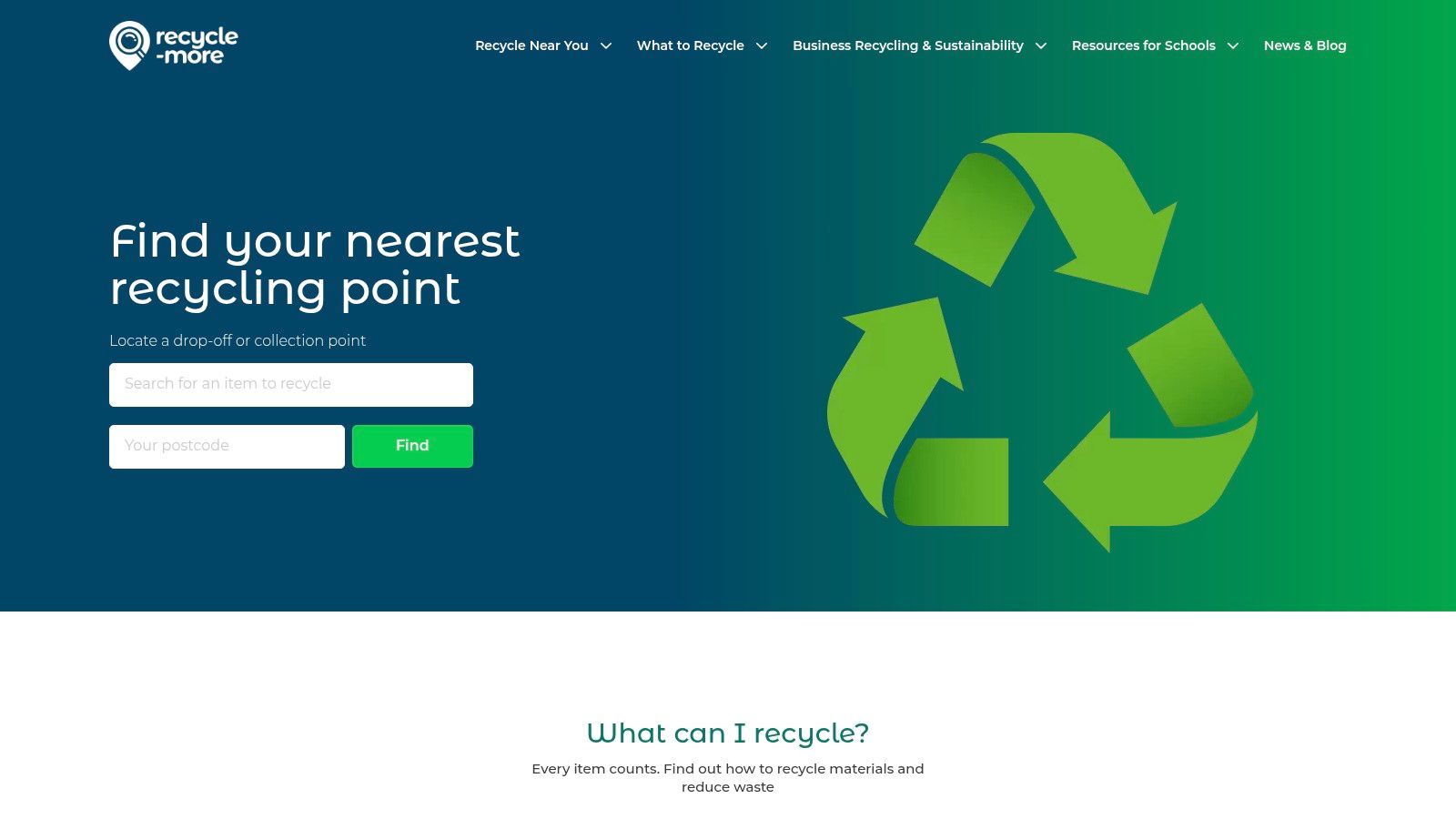
The platform provides deep national coverage that effectively complements other locators, offering a reliable alternative if you need to cross-reference options. While its interface is more utilitarian and less consumer-focused than others, its strength lies in the quality and breadth of its data. It's particularly useful for both households and workplaces looking for dependable bring-bank locations for standard batteries.
Similar to other directory services, Recycle-More does not handle collections or bookings directly. However, it's a completely free and accessible tool that provides crucial information for responsible battery disposal. It also features a business section explaining national collection schemes, offering a good starting point for commercial compliance enquiries.
Website: www.recycle-more.co.uk
4. Valpak Battery Box
For businesses, schools, or community hubs asking, "where can we recycle batteries in bulk?", Valpak offers a fantastic, free solution. This service provides dedicated battery collection boxes and handles the collection once they are full, creating a simple, zero-cost recycling point. It's designed specifically for organisations, not individual households, allowing them to offer a valuable recycling facility to employees, customers, or students.
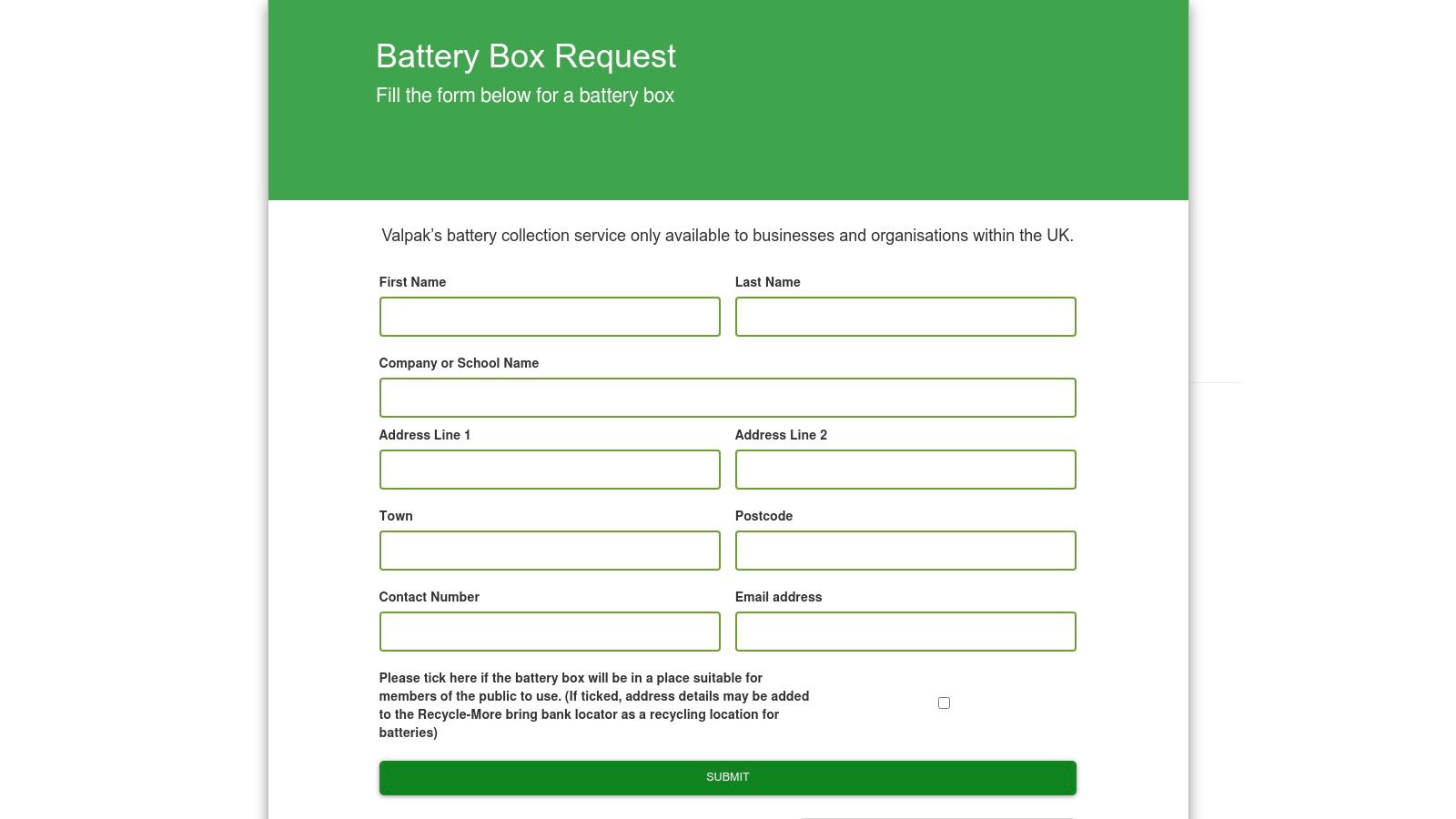
The process is incredibly straightforward. Eligible organisations can fill out a simple online form to request their free box and promotional materials like posters. Once the box is full, Valpak organises a scheduled collection or swap. This turnkey approach is perfect for creating new, convenient public drop-off points in areas that might otherwise lack them, such as office buildings or local libraries.
While its primary strength is providing a free, managed service for workplaces, it's important to note it isn’t for private home collections. There may also be some coverage limitations in remote areas like certain UK islands. However, for most UK businesses, it is an excellent way to promote sustainability and meet their producer responsibility obligations without any direct cost.
Website: batterybox.valpak.co.uk
5. Battrecycle – UK Battery Drop-off Finder
For those specifically looking for a quick and easy place to drop off household batteries, Battrecycle offers a dedicated solution. This free, UK-focused platform specialises in locating the familiar yellow battery bins found in thousands of supermarkets, retailers, and local authority sites. If you’re wondering “where can we recycle batteries” like the AAs from your remote control or the button cells from a watch, this is an excellent, purpose-built tool.
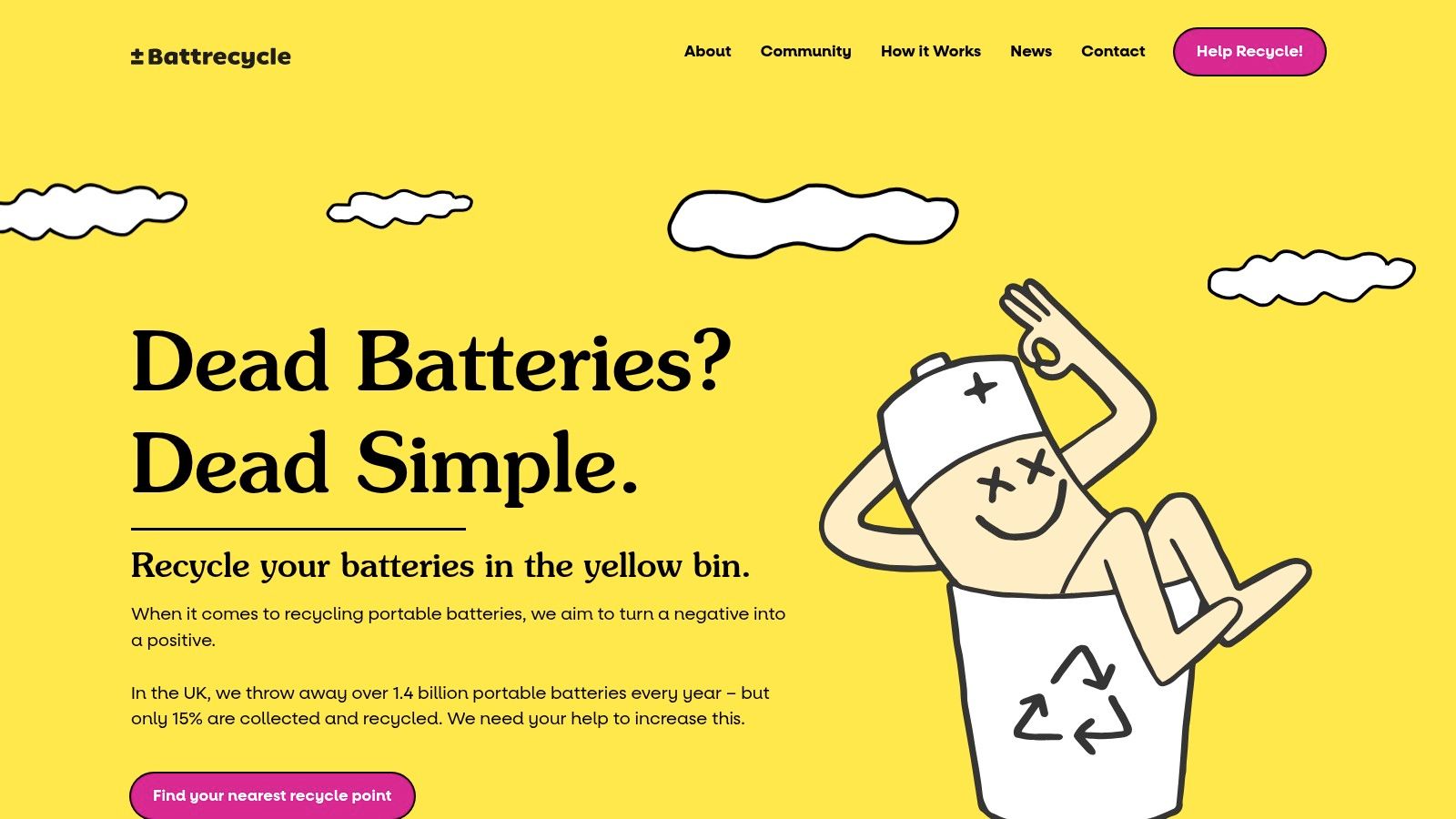
The website features a simple map-based search, allowing users to quickly find their nearest collection point without any distractions. Its biggest strength is its laser focus on portable batteries, making it faster to use than more comprehensive locators if that’s all you need to dispose of. Its extensive network within mainstream retail locations means you can easily combine your recycling errand with your weekly shop. A unique community give-back feature also adds a rewarding element to the process.
While it is exceptionally good for everyday battery recycling, its specialisation is also its limitation. The service does not cover automotive, industrial, or specialist batteries, so for those items, you will need to consult a local HWRC or a more comprehensive service.
Website: battrecycle.org
6. Currys – In-store Battery Recycling
High-street electronics retailer Currys offers a convenient and accessible solution for anyone asking, "where can we recycle batteries?". With a presence in almost every town centre, their free in-store recycling bins provide an excellent drop-off point for common household batteries. You can simply bring your old batteries from remote controls, toys, laptops, mobile phones, or watches and deposit them in the designated bins, usually found near the store entrance.
The scheme excels in its simplicity and ubiquity. No purchase is necessary to use the battery bins, making it an easy add-on to a shopping trip. While primarily focused on small, portable batteries, Currys also provides a broader e-waste take-back scheme. This allows you to recycle any electrical item in-store for free, provided it’s of a similar size to one they sell, and they offer paid collection services for larger appliances, often including the batteries within them.
This service is ideal for householders needing to dispose of everyday batteries, but it does not cater to industrial or vehicle batteries. It’s a purely drop-off service, requiring a physical visit, but its nationwide network makes it one of the most practical options available.
Website: currys.co.uk/services/delivery-installation/recycling.html
7. Argos (incl. Sainsbury’s) – WEEE & Battery Take-back
For household convenience, the take-back schemes offered by major retailers like Argos and Sainsbury’s provide an incredibly accessible answer to the question, "where can we recycle batteries?". As part of their commitment to WEEE (Waste Electrical and Electronic Equipment) regulations, most larger stores have dedicated collection points, usually near the entrance or customer service desks, where you can drop off used household batteries (e.g., AA, AAA, C, D) and small electrical items for free.
This option is perfect for integrating recycling into your regular shopping trip. The Argos help page is particularly useful, providing clear guidance on preparing batteries for disposal, such as taping the terminals on lithium-ion or button cells to prevent short circuits. It’s a straightforward, no-fuss solution that leverages an extensive retail footprint across the UK, making it one of the easiest ways to handle common battery waste.
While ideal for domestic batteries, these schemes are not designed for larger types, such as those from vehicles. For guidance on those, it is important to understand the specific rules regarding where to dispose of car batteries safely. The main limitation is that availability is tied to store opening hours, but for everyday battery recycling, it’s an excellent and reliable service.
Website: help.argos.co.uk/help/weee
8. B&Q / TradePoint – In-store Battery & Small Electricals Recycling
For those tackling DIY projects, B&Q and its trade arm, TradePoint, provide an incredibly convenient answer to the question, "where can we recycle batteries?". Most larger stores have clearly marked battery recycling bins, typically located near entrances or checkouts. This makes it easy to drop off old household batteries from power tools, smoke alarms, or torches while picking up supplies for your next job. The service is free and requires no purchase.
The scheme’s real strength is its integration into the DIY shopping trip, turning a separate chore into a simple, two-minute task. B&Q also accepts small waste electrical and electronic equipment (WEEE) for free in-store, such as old drills or sanders. For larger appliances like washing machines, they offer a paid collection service when you purchase a like-for-like replacement, with clear terms and fees outlined on their website.
While the paid collection for large items is a limitation, the accessibility of in-store drop-off points for common battery types (AA, AAA, C, D, 9V, and button cells) makes it an excellent option for both the general public and trade professionals. It simplifies the process by combining recycling with routine shopping.
Website: diy.com/services/weee
9. Morrisons – WEEE & Battery Recycling in Stores
Integrating your battery recycling into the weekly shop is one of the easiest ways to stay on top of your responsibilities, and Morrisons provides a straightforward solution. The supermarket chain offers free in-store collection points for used household batteries, making it incredibly convenient for anyone wondering where to recycle standard AA, AAA, or button cell batteries. These drop-off boxes are typically located near the store entrance or customer service desks.
What sets Morrisons apart is its expanding commitment to consolidating hard-to-recycle items. Through partnerships like Podback, many stores are introducing larger foyer recycling units that accept batteries alongside other materials. The supermarket also adheres to WEEE regulations by offering a like-for-like take-back service for electrical items, which is useful when purchasing a new battery-powered device.
While a fantastic option for everyday portable batteries, remember that these services are not designed for larger automotive or industrial types. For those, a dedicated local recycling centre remains the best choice.
Website: my.morrisons.com/weee-regulations/
10. Dorset Council – Kerbside Battery Bag & HWRCs
For households in Dorset, the council offers an exceptionally convenient and safe way to recycle used batteries. The website provides residents with the ability to order a free, reusable battery bag, which can be placed on top of their recycling or rubbish bin for kerbside collection. This hyper-local approach answers the "where can we recycle batteries" question directly at your doorstep, making it incredibly easy for residents to participate and prevent batteries from ending up in general waste.
This initiative stands out for its simplicity and direct impact on reducing fire risks in waste collection vehicles and processing facilities. By providing a dedicated, visible bag, the council makes safe battery disposal a seamless part of the regular recycling routine. The website is clear and straightforward, providing all the necessary details on what types of household batteries are accepted and how to present them correctly.
While the kerbside service is perfect for standard household batteries like AA, AAA, and button cells, the council’s website also directs users to their Household Waste Recycling Centres (HWRCs) for larger items like car batteries or those contained in electricals. This dual-system ensures there’s a local, council-approved solution for nearly every type of battery a resident might have.
Website: dorsetcouncil.gov.uk
11. BCP Council (Bournemouth, Christchurch & Poole) – Battery Recycling & HWRCs
For residents in the Bournemouth, Christchurch, and Poole area, the BCP Council website is the essential resource for understanding local battery recycling rules. It provides clear, actionable guidance on how and where to recycle batteries correctly within the conurbation. The site details the council's kerbside collection scheme, which allows residents to place household batteries in a small, sealed, clear bag on top of their recycling bin on collection day.
The platform's strength is its hyper-local focus. Beyond kerbside collections, it provides addresses, opening times, and accepted materials for its Household Waste Recycling Centres (HWRCs), which take a wider range including car batteries and waste electricals. This is particularly useful for those who miss a collection or have larger items to dispose of. The information is presented clearly, ensuring residents can find what they need quickly.
While the service is free and convenient, it's vital to check the website for the latest updates, as policies can change based on safety reviews and operational requirements. It serves as a great example of how local authorities are tackling the challenge of providing safe and accessible battery recycling options for their communities.
Website: bcpcouncil.gov.uk
12. G&P Batteries (Ecobat Group) – Commercial Battery Collections & Recycling
For businesses, contractors, or facilities managers asking "where can we recycle batteries in bulk?", G&P Batteries provides a specialised, industrial-scale solution. As part of the global Ecobat Group, it operates as a dedicated UK collector and recycler for portable, automotive, and industrial batteries, moving far beyond the scope of household collection points. This service is designed specifically for organisations generating significant volumes of waste batteries.
The platform excels at providing compliant, nationwide collection services for commercial clients. It handles a vast range of battery chemistries, including lead-acid, lithium-ion, NiCd, and NiMH, offering everything from battery boxes for offices to bulk transport for industrial sites. Unlike public drop-off schemes, its services are contract-based and tailored to business needs, ensuring full traceability and adherence to hazardous waste regulations.
While it is not a resource for individual households, its strength lies in its comprehensive B2B infrastructure. It’s the go-to option for SMEs, public sector bodies, and large enterprises needing a reliable, legally compliant partner for their battery waste streams.
Website: ecobatgroup.com/ecobat/companies/gandp.html
12 Battery Recycling Locations Compared
| Service | Access & UX (★) | Cost / Value (?) | Target (?) | Unique selling point (✨/?) |
|---|---|---|---|---|
| Recycle Now – UK Recycling Locator (WRAP) | ★★★★☆ Trusted gov-backed postcode search | ? Free, no signup | ? Households & general public | ✨ Official WRAP/council dataset ▸ ? national coverage |
| Recycle Your Electricals – Material Focus Locator | ★★★★☆ Clear safety-led postcode tool | ? Free | ? Households & SMEs | ✨ Strong battery safety guidance & education |
| Recycle-More (Valpak) – Bank Locator | ★★★☆☆ Utilitarian but comprehensive search | ? Free | ? Households & workplaces | ✨ Large national bank dataset used by councils |
| Valpak Battery Box | ★★★★☆ Turnkey box + scheduled swaps for orgs | ? Free for eligible organisations | ? Schools, businesses, public buildings | ? Zero-cost collections + awareness materials |
| Battrecycle – UK Battery Drop-off Finder | ★★★★☆ Very focused, quick bin lookup | ? Free | ? Households | ✨ Extensive retail “yellow bin” network + QR give-back |
| Currys – In-store Battery Recycling | ★★★★☆ High-street convenience & guidance | ? ? Free small drops; paid uplift for large items | ? Shoppers/consumers | ✨ Nationwide store drop-off + paid home uplift option |
| Argos (incl. Sainsbury’s) – WEEE & Battery Take-back | ★★★★☆ Wide retail footprint; safety tips | ? Free small battery drops | ? Consumers | ✨ In-store bins + clear safety presentation guidance |
| B&Q / TradePoint – In-store Battery & Small Electricals Recycling | ★★★★☆ Convenient for DIY and trade users | ? Free small drops; paid home collection | ? DIYers & trade professionals | ✨ Trade counters and home collection for large WEEE |
| Morrisons – WEEE & Battery Recycling in Stores | ★★★★☆ Supermarket access; expanding foyer units | ? Free small battery drop-off | ? Supermarket shoppers & households | ✨ Podback foyer units for hard-to-recycle streams |
| Dorset Council – Kerbside Battery Bag & HWRCs | ★★★★★ Very convenient local kerbside + HWRC acceptance | ? Free for Dorset residents | ? Dorset households | ✨ Orderable battery bag + HWRC acceptance (incl. car batteries) |
| BCP Council – Battery Recycling & HWRCs | ★★★★☆ Localised instructions & HWRC listings | ? Free for BCP residents | ? Bournemouth, Christchurch & Poole residents | ✨ Multiple HWRCs + safety-driven service updates |
| G&P Batteries (Ecobat Group) – Commercial Battery Collections & Recycling | ★★★★☆ Professional B2B collections & compliant handling | ? Paid/contract pricing (quotes) | ? Contractors, FM teams, SMEs | ? Accepts portable, automotive & industrial batteries; nationwide treatment facilities |
Making Responsible Battery Disposal Part of Your Routine
Navigating the landscape of battery recycling has become remarkably straightforward. Gone are the days of uncertainty; a comprehensive network of tools and drop-off points now makes responsible disposal accessible to everyone, from individual households to large commercial enterprises. The most critical takeaway from this guide is the non-negotiable rule: never place any type of battery in your general waste or mixed recycling bins. The fire risk to waste collection vehicles and processing facilities is severe and entirely avoidable.
Key Takeaways for Households and Businesses
For households, the journey to finding where we can recycle batteries often ends at the local supermarket. Retailers like Currys, Argos, B&Q, and Morrisons have integrated battery collection points into their stores, making it simple to drop off old AAs or button cells during a routine shopping trip. For those seeking more localised options, online locators from Recycle Now and Recycle Your Electricals are invaluable, pointing you to the nearest drop-off bank or Household Waste Recycling Centre (HWRC). Some proactive local authorities, like Dorset and BCP Council, are even offering dedicated kerbside collections, removing another barrier to proper disposal.
For businesses, the stakes are higher, with legal obligations under the Duty of Care for hazardous waste. The challenge is not just disposal but compliant, documented disposal. Services like the Valpak Battery Box provide a straightforward mail-back solution for low volumes, while specialised collectors such as G&P Batteries offer robust, scalable services for industrial-level battery waste, ensuring full compliance and peace of mind.
Actionable Next Steps for Safe Disposal
The right recycling solution depends entirely on your specific needs. Before you head out, remember the simple but vital preparation steps: tape the terminals of lithium-ion, button cell, and 9V batteries to prevent short circuits, and store them in a cool, dry, non-conductive container.
Your choice of tool will be guided by convenience and battery type:
- For Everyday Household Batteries: Use the Recycle Now or Recycle Your Electricals locators to find the most convenient supermarket or library drop-off point. Make it part of your weekly shop.
- For Small Business & Office Batteries: Consider a mail-back service like the Valpak Battery Box for a simple, low-touch solution.
- For Vehicle, Industrial, or Damaged Batteries: Do not use public drop-off points. Contact a professional, licensed waste carrier like G&P Batteries to arrange a specialist collection.
By embedding these small habits into our routines, we collectively contribute to a safer, more circular economy. We prevent hazardous materials from polluting our environment and enable the recovery of precious resources like lithium, cobalt, and nickel. This process is becoming even more critical as we transition towards electrification. Understanding the lifecycle of all power sources, including the role of EV batteries and the future of sustainable energy, is key to adopting a truly responsible approach to battery disposal. Taking a moment to use the right service ensures these valuable materials are kept in circulation, powering our future sustainably.
If your business needs a comprehensive and compliant solution for all your waste streams, including batteries and other hazardous materials, contact The Waste Group. Their expert team can provide a tailored waste management plan that ensures you meet your legal obligations while supporting your sustainability goals. Find out more at The Waste Group.