Where to Dispose of Car Batteries A Complete UK Guide
Where to Dispose of Car Batteries A Complete UK Guide
Figuring out where to dispose of a car battery? For a simple, legal, and often free solution, your best bets are your local automotive retailer (like Halfords), a nearby garage, or your council's Household Waste Recycling Centre. These places are all set up to handle this kind of hazardous waste safely.
Your Quick Guide to Disposing of Car Batteries
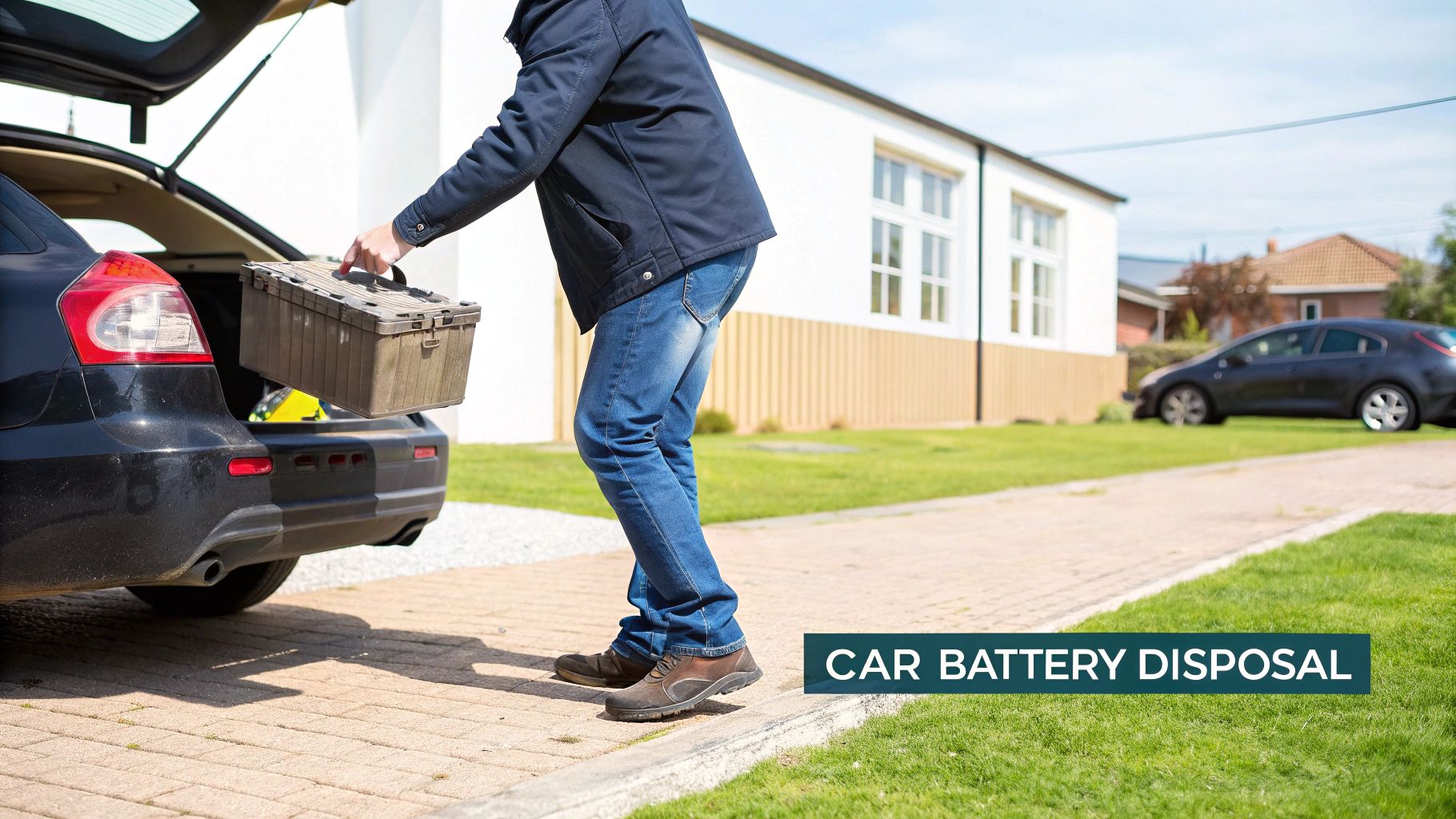
It helps to think of a used car battery not as regular rubbish, but as a small, contained box of chemicals. It's packed with lead and corrosive sulphuric acid, which is exactly why you can't just toss it in your household bin. Doing so isn't just dangerous—it's also illegal under UK law.
Getting disposal right is a legal must-do, designed to stop these harmful substances from poisoning our environment. If those materials leak out in a landfill, they can pollute the soil and groundwater, creating some serious health risks down the line. This guide will walk you through the correct, safe, and simple ways to handle this common task.
Car Battery Disposal Options at a Glance
For most of us in the UK, finding somewhere to take an old car battery is pretty straightforward. The main thing is picking the option that’s most convenient for you. To make it easier, we've put together a quick summary table of the most common and legally compliant methods.
| Disposal Location | Who It's For | Potential Cost | Key Benefit |
|---|---|---|---|
| Automotive Retailers | DIY car owners, people buying a new battery | Usually free (especially with a new purchase) | Convenient one-stop-shop when replacing a battery |
| Local Garages | Anyone, but especially regular customers | Often free, but best to ask first | Great local option; they handle this waste daily |
| Household Recycling Centres | UK residents (households) | Free | A reliable, council-provided service for locals |
| Licensed Waste Carriers | Businesses, tradespeople, large clear-outs | Varies (quote-based) | Fully compliant, documented commercial disposal |
This table should give you a clear idea of where to start, whether you're a homeowner with a single battery or a business needing a more robust solution.
Breaking Down Your Choices
Let's take a closer look at the most popular options available.
- Automotive Retailers: Places like Halfords or your local motor factors often have a "take-back" scheme. In fact, when you buy a new battery from them, they are legally required to accept your old one free of charge. It’s the perfect swap.
- Local Garages: Many independent garages will happily take old car batteries off your hands, particularly if you’re a regular customer. They already have established collection services for their own hazardous workshop waste, so adding one more is no trouble.
- Household Waste Recycling Centres (HWRCs): Your local council tip will have a specific, designated area for car batteries. This service is free for residents, but it's always a good idea to check their website beforehand for any specific rules or opening times.
For businesses here in Dorset or individuals with more complex waste needs, a professional service is the way to go. The Waste Group offers fully compliant hazardous waste collections, making sure everything is handled correctly from start to finish. We provide the right documentation and transport for commercial and large-scale domestic projects, taking all the guesswork out of the process for you.
Why You Can’t Just Bin a Car Battery
It might feel like the simplest solution, but chucking an old car battery into your household bin is one of the worst things you can do. It’s not just another piece of rubbish; a car battery is a compact power station, jam-packed with some seriously toxic stuff. The best way to think of it is as a small, sealed container of industrial chemicals.
Inside that tough plastic casing, you've got a nasty cocktail of lead plates and highly corrosive sulphuric acid. If that casing gets crushed or cracked on its way to a landfill, those hazardous materials will inevitably leak out. This isn't just a bit of a mess—it's a direct threat to the environment, contaminating soil and seeping into the groundwater that eventually becomes our drinking water.
Understanding the Risks and Rules
This isn't just friendly environmental advice; it's the law. The UK's Hazardous Waste Regulations 2005 aren't just bureaucratic red tape. They were created for this exact reason: to stop toxic pollution before it starts. Under these rules, car batteries are officially classified as hazardous waste, which means they must be handled by authorised facilities.
Ignoring these regulations comes with some hefty consequences. For an individual, getting caught disposing of a car battery improperly can lead to a fine of up to £5,000. That penalty really drives home why using the proper channels isn’t just a good idea—it’s a legal must. For a deeper dive into the legal side of things, check out our complete guide on hazardous waste disposal regulations.
By treating car batteries as hazardous from the start, we prevent long-term environmental damage. The lead and acid they contain are too dangerous to be left to chance in a standard landfill site.
The Environmental Impact of Improper Disposal
The potential for harm is massive. In the UK, every car battery has to be sent to a licenced facility to prevent leaking acids and heavy metals from poisoning the environment. When we get it right, the results are incredible; an impressive 95% of battery components are recycled, turning what was toxic waste back into valuable resources like new lead.
This high recycling rate is precisely why just dumping them is illegal. Mismanaged lead from batteries could contaminate up to 20% of UK groundwater. If you’re curious about the numbers, you can find detailed battery waste statistics online.
All this context is vital for understanding where to dispose of car batteries. The designated drop-off points we'll cover next aren't just random suggestions—they are the critical first step in a powerful recycling system that protects our health and saves precious resources. Knowing the 'why' makes the 'how' a whole lot clearer.
Right, so you know you can't just chuck an old car battery in the bin. But what are you supposed to do with it? Thankfully, knowing where to dispose of car batteries is pretty simple once you know the right places to look. The UK actually has a solid network of spots that will take them off your hands, often for free.
First things first, let’s tackle the question everyone asks. Can it just go in with the weekly rubbish?
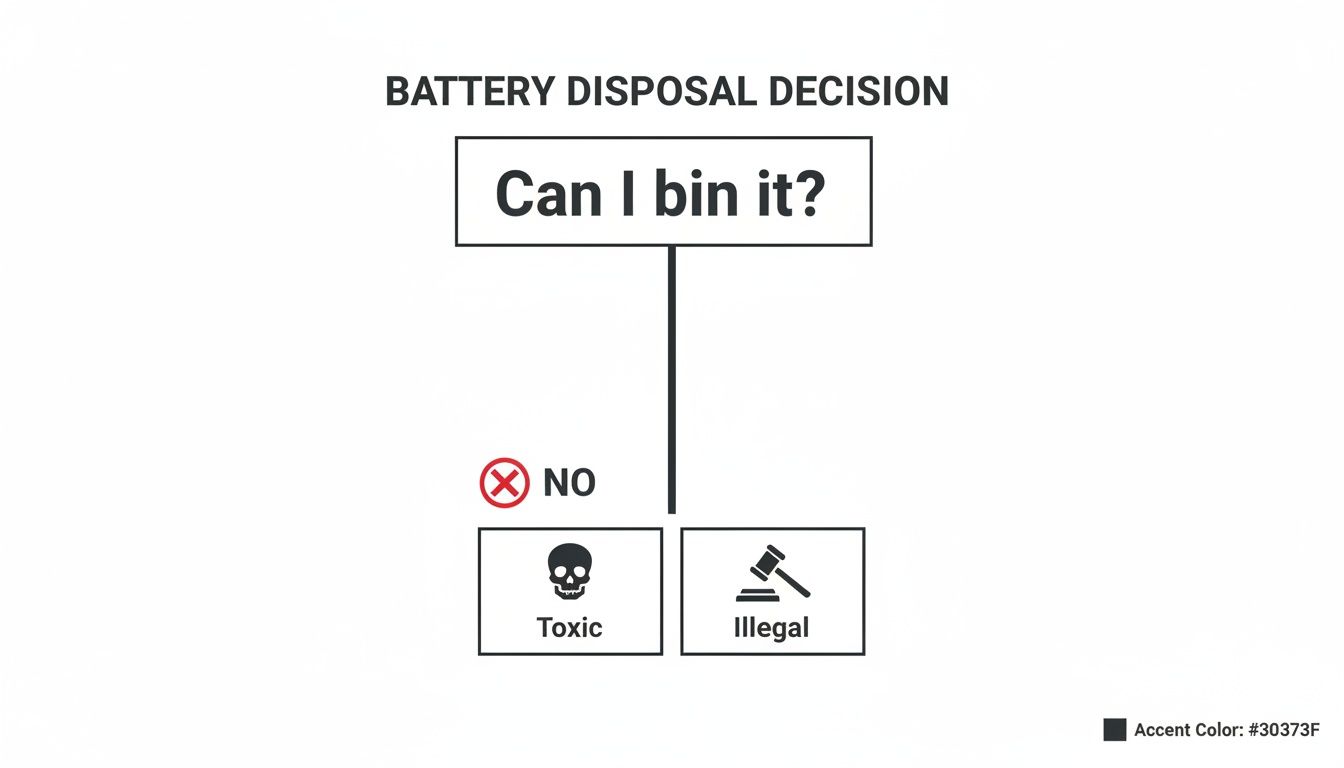
As you can see, that’s a hard no. It’s illegal, and for good reason – those things are packed with toxic stuff. So, let’s look at the proper, hassle-free alternatives.
Your Local Automotive Retailer or Garage
Honestly, one of the easiest ways to sort this is to head back to where you’d buy a new battery in the first place. Most big car parts shops, like Halfords, and your local independent garage will have a 'take-back' scheme. It’s part of their responsibility as a supplier, meaning they have to accept your old one, especially if you're buying a new one from them.
This is a brilliant two-birds-one-stone solution. You can pick up the new battery and drop off the dead one in the same trip. Garages are perfect for this as they deal with hazardous materials every day and have professional waste collection services already set up.
Council-Run Household Waste Recycling Centres
Your local tip – or Household Waste Recycling Centre (HWRC) as it's officially known – is another fantastic, free option for householders. Every single HWRC has a special, designated spot just for car batteries, making sure they’re kept safely away from everything else.
Before you load up the car, it’s always worth a quick check on your local council's website. You’ll want to look for:
- Opening hours: They can change, especially around bank holidays.
- Proof of residence: Most sites will want to see a utility bill or your driving licence to prove you’re a local.
- Specific drop-off locations: The battery bin is usually well-signed, but knowing where you're headed on site saves a bit of time.
Licensed Scrap Metal Yards
If you’re often working on cars or dealing with scrap, a licensed scrap metal yard is another good shout. The key word here is licensed. You have to be sure they are properly authorised to handle hazardous waste like car batteries. Don't be afraid to ask to see their environmental permit or waste carrier licence.
A proper, authorised yard will do the right thing and get the battery into the correct recycling system. Never, ever leave a battery with some chap who offers to take it for a few quid. If it gets fly-tipped, you could still be the one facing a fine.
Specialised Hazardous Waste Collection Services
For businesses, garages, or even homeowners in Dorset with a pile of hazardous stuff to get rid of, calling in the professionals is the only way to go. The boom in electric vehicles is making everyone more aware of battery disposal, but the same principles apply to old-school lead-acid ones. When handled by specialists, up to 95% of the materials in a car battery can be recycled.
While the law makes retailers offer take-back schemes for the public, businesses need a proper, documented paper trail for their waste disposal. That's where a service like The Waste Group comes in, handling everything from asbestos to car batteries. We can provide the right containers, like roll-on/roll-off bins for commercial sites in places like Dorchester. With waste crime fines hitting a staggering £300 million in 2023, getting it done professionally isn't just convenient—it's a very smart investment. You can discover more about the evolving landscape of battery recycling on The Eco Experts.
How to Handle a Car Battery Safely
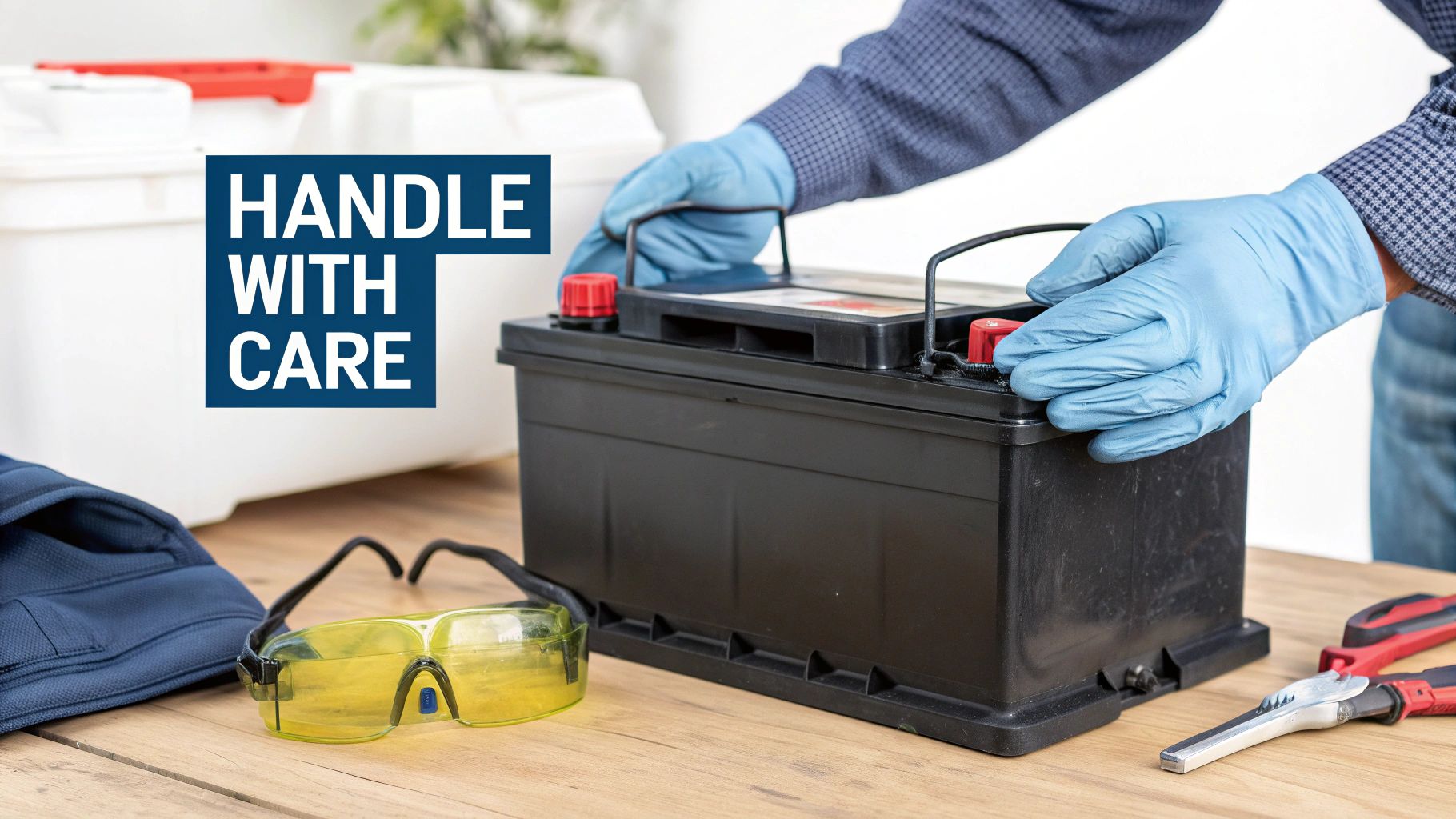
Before you can even think about where to drop off an old car battery, you’ve got to get it out of the vehicle. Doing this safely isn't just a good idea—it's absolutely essential. A car battery is more than just a heavy lump; it’s packed with corrosive sulphuric acid and can still pack a serious electrical punch. One wrong move could lead to nasty chemical burns, an electrical shock, or a hazardous spill.
Your first job is to gear up. Before you lay a finger on the battery, get yourself a pair of protective gloves (alkali-resistant ones are ideal) and some safety glasses. A tiny splash of battery acid can cause severe damage to your eyes, so this is one step you can’t afford to skip.
Disconnecting and Removing the Battery
Always start by turning off the ignition. It’s also a good idea to have a quick look at your car’s manual. Modern cars have pretty complex electronics, and the manual will have specific advice to help you avoid accidentally triggering the anti-theft system or causing other electrical headaches.
When you’re ready to go, follow this exact order:
- Disconnect the Negative (-) Terminal First: Grab a wrench and loosen the nut on the negative terminal. This is usually marked with a minus sign (-) or has a black cap. Give the clamp a little wiggle and lift it straight off the battery post.
- Disconnect the Positive (+) Terminal Second: Now, do the same thing for the positive terminal, which you'll recognise by its plus sign (+) or red cap. It's a good habit to tuck the cables safely out of the way so they can't accidentally touch the battery posts.
- Remove the Battery: Undo any clamps or brackets holding the battery in its tray. Using a firm grip with both hands, lift the battery straight up and out. The key here is to keep it completely level at all times.
Always disconnect the negative terminal first and reconnect it last. This simple rule is a lifesaver—it prevents accidental short circuits if your metal wrench happens to touch the car’s frame while you’re working on the positive terminal.
Safe Transport and Storage
With the battery out, give the casing a good look-over for any cracks, bulges, or signs of a leak. A damaged battery is a much bigger hazard and needs to be handled with extra caution.
If the battery is intact: Carry it with both hands, keeping it upright to stop any acid from spilling out. Find a cool, dry place to store it that’s well away from children, pets, and anything flammable. It's best to place it on a piece of wood or plastic, not directly onto a concrete floor.
If the battery is leaking: You need to be extremely careful. Place it upright inside a heavy-duty, leak-proof plastic container or a sturdy bucket. This will contain the leaking acid and make it much safer to move to a proper disposal point.
The Journey of a Recycled Car Battery

Ever wondered what actually happens to your old car battery after you drop it off? It doesn’t just vanish into thin air. Instead, it starts a fascinating journey, transforming hazardous waste into valuable new materials and playing a key part in what’s known as the circular economy.
Once your battery lands at a specialised UK recycling facility, its new life truly begins. It’s fed into a hammer mill – a powerful machine that smashes the entire unit into small, manageable chunks. It might sound a bit crude, but it's a brilliant first step for separating the core components.
Breaking Down the Components
From this jumble of crushed materials, a clever separation process kicks off. The fragments are tipped into a vat where the heavier bits, like lead and other metals, sink to the bottom. Meanwhile, the lighter plastic pieces float on the surface. This simple principle allows each material to be skimmed off and sent down its own unique recycling path.
Every single part of that old battery is accounted for and given a new purpose:
- Lead: The lead grids and plates are melted down in huge smelters, purified, and then cast into fresh ingots. This reclaimed lead is virtually identical to brand-new lead and is used to manufacture the next generation of batteries.
- Plastic: The polypropylene casing is thoroughly washed, dried, and melted into pellets. These pellets become the raw material for making new battery casings, neatly closing the manufacturing loop.
- Sulphuric Acid: The acid is carefully neutralised, which turns it into sodium sulphate. This safe, stable compound is surprisingly common and finds its way into products like glass, textiles, and even laundry detergents.
This isn't just about getting rid of waste; it’s about smart resource recovery. By recycling a single car battery, we conserve around 20kg of raw materials and slash the energy needed for production by a whopping 75%.
From Old Battery to New Resource A Recycling Breakdown
The table below breaks down exactly how each piece of your old battery is transformed. It’s a great illustration of the circular economy in action, where waste is simply a resource in the wrong place.
| Original Component | Recycling Process | New Product/Use |
|---|---|---|
| Lead Plates & Grids | Smelting and purification | New lead ingots for battery manufacturing |
| Plastic Casing | Shredding, washing, and melting into pellets | New battery casings and other plastic products |
| Sulphuric Acid | Neutralisation with a caustic substance | Sodium sulphate for detergents, glass, and textiles |
| Metal Terminals | Smelting alongside lead components | Recycled into new metal products |
This highly efficient, closed-loop system ensures that almost nothing is wasted, turning potential pollutants into valuable commodities for UK industries.
The Bigger Picture of Battery Recycling
This whole process is incredibly efficient, with up to 95% of a traditional lead-acid battery being fully recyclable. That’s a recovery rate most other industries can only dream of, and it’s vital for a sustainable future. When you consider rising UK EV battery replacement costs, it’s clear just how important these established recycling pathways are for all vehicle types.
On a national scale, the impact is huge. Projections show that with robust recycling, secondary materials could meet 22% of the UK's demand for key metals like nickel and cobalt by 2040. This would also prevent over 339,000 tonnes of battery waste from ever reaching a landfill each year.
Your simple act of responsible disposal feeds directly into this smarter, more sustainable manufacturing cycle. For more practical advice on making a difference, take a look at our other tips for recycling.
Professional Waste Solutions in Dorset

While the advice so far covers the usual routes for getting rid of a single battery, what happens when your waste situation is a bit more complex? For residents and businesses across Dorset, this is where a professional, local solution really proves its worth. Knowing where to dispose of car batteries is just one piece of the puzzle when you're tackling a major clear-out or managing a commercial site.
The Waste Group provides a clear, compliant, and refreshingly straightforward service for these bigger jobs. Our deep understanding of the waste regulations in Poole, Bournemouth, and the surrounding areas means you don’t have to waste time worrying about getting it wrong.
Services Built for Every Project
We get it – waste management isn't a one-size-fits-all problem. That’s why our services are designed to meet different needs, whether you're a homeowner clearing out the garage or a large contractor managing a building site.
- For Homeowners: A big garage clear-out often turns up more than just an old car battery. Our smaller skips are perfect for handling a mix of household and garden waste, while we make sure any hazardous items are managed separately and correctly.
- For Businesses: Contractors and commercial clients need robust, reliable solutions they can count on. We offer large roll-on/roll-off bins and grab lorry hire to handle complex waste streams from construction sites, ensuring every single item is disposed of in full compliance with UK law.
Choosing a trusted local partner means you get more than just a bin; you get peace of mind. With a 4.9-star reputation built on reliability, we handle all the logistics so you can focus on your project.
And our commitment to Dorset goes beyond just handling waste. For every skip we deliver, we plant a tree, helping to keep our local environment healthy for years to come.
This professional approach takes all the guesswork out of the equation. Instead of juggling multiple trips to different disposal points, you have one trusted partner who can manage everything safely and legally.
If you're planning a project in the area, you can learn more about how our flexible skip hire in Dorset can support your needs. By combining expert knowledge with a genuine local focus, we make sure your waste is handled the right way, every time.
Common Questions About Car Battery Disposal
We’ve covered the main ways to get rid of an old car battery, but a few specific questions always seem to pop up. Let's run through the most common queries to make sure you've got everything you need.
Does It Cost Money to Dispose of a Car Battery in the UK?
For most people, the answer is no—it's usually free. When you buy a new battery, car part retailers like Halfords or your local garage will typically take your old one off your hands at no extra cost. This is all part of their legal responsibility as producers.
Likewise, dropping a single battery off at your local Household Waste Recycling Centre (HWRC) is a free service for residents. You'll only really see costs if you're a business needing to dispose of multiple batteries and require a fully documented, compliant collection service.
Can I Put a Car Battery in a Skip?
Absolutely not. You must never toss a car battery into a general waste skip. It’s legally classed as hazardous waste for good reason and has to be kept separate to prevent dangerous acid leaks, environmental contamination, and even fires.
If you’re hiring a skip for a bigger job, you need to let the skip hire company know about the battery beforehand. Any reputable provider will tell you the correct way to handle it, ensuring its separate and compliant collection so you stay on the right side of the law.
What Should I Do If My Car Battery Is Leaking?
A leaking battery is no joke—the sulphuric acid inside is extremely corrosive and dangerous. If you find a leak, your safety has to come first.
Before you even think about touching it, put on protective gloves and safety glasses. Lift the battery carefully, keeping it upright, and place it inside something tough and leak-proof, like a heavy-duty plastic bucket.
Never, ever transport it inside your car’s cabin. Your next step should be to call your local HWRC or a hazardous waste specialist for urgent advice on how to handle and move it safely for disposal.
Do I Need Paperwork to Dispose of a Car Battery?
If you're a private individual dropping off a single battery at a shop or the council recycling centre, you won't need any paperwork. However, for any kind of commercial disposal, a Hazardous Waste Consignment Note is a legal must-have.
This document is the official paper trail, tracking the waste from the moment it leaves your site to its final recycling or disposal point. Professional waste services provide these notes as standard, which guarantees your business stays fully compliant with UK regulations.
For a hassle-free, fully compliant solution for all your waste needs in Dorset—from single hazardous items to large-scale commercial clear-outs—trust The Waste Group. We provide the expertise and services to get the job done right. Get in touch with our team today.