Where to Get Rid of Car Batteries: 12 Safe UK Options for 2025
Where to Get Rid of Car Batteries: 12 Safe UK Options for 2025
A dead car battery isn’t just an inconvenience; it's a piece of hazardous waste that needs careful, legal, and environmentally sound disposal. Simply leaving it in a shed, or worse, putting it in your household bin, is dangerous and illegal. The lead, acid, and plastic components are highly toxic but also incredibly valuable when recycled correctly, with over 98% of a typical lead-acid battery being recoverable.
Yet, finding the right place can be confusing. Are local council recycling centres the best bet? Do garages take them back for free? Can you get paid for your old battery at a scrap yard? This guide provides clear, practical answers to the question of where to get rid of car batteries.
We'll walk you through 12 verified UK options, from national recycling locators and government portals to high-street retailers and specialist scrap merchants. For each entry, you'll find a direct link and a breakdown of how it works, what to expect, and key considerations to help you choose the best route for your situation. Many service centres that offer professional battery replacement services will also handle the disposal of your old car battery responsibly, often making it the simplest option.
Whether you're a DIY mechanic changing your own battery, a homeowner with a one-off dead unit from a garden tractor, or a business managing multiple vehicles, this resource will show you exactly how and where to dispose of car batteries safely and correctly across the UK.
1. Recycle Now – Car batteries
For UK homeowners and DIY car enthusiasts, the Recycle Now website is arguably the best starting point for finding where to get rid of car batteries safely and legally. Backed by the government-funded charity WRAP (Waste and Resources Action Programme), it offers a neutral, trusted, and user-friendly recycling locator.
The platform's primary feature is its postcode search tool. Simply enter your postcode, and it generates a map and list of the nearest approved disposal points, including household waste recycling centres (HWRCs), council-run facilities, and participating garages. This makes it incredibly efficient for comparing local options without having to individually search for each one.
It also provides essential guidance on the legalities, explaining why car batteries are classified as hazardous waste. This is crucial for understanding why they can't be put in your regular bins, a topic we explore further in our guide on what not to put in a skip.
Key Features and User Experience
- National Recycling Locator: Covers England, Wales, Scotland, and Northern Ireland.
- Clear Guidance: Explains the hazardous nature of lead-acid batteries and the importance of correct disposal.
- Ease of Use: The interface is clean and intuitive, focusing solely on getting you the information you need quickly.
However, remember it's a directory, not a booking service. You still need to contact the facility directly to confirm opening times, any potential charges (though most HWRCs are free for household waste), and specific drop-off procedures.
Website: https://www.recyclenow.com/recycle-an-item/car-batteries
2. GOV.UK – Find a local hazardous waste disposal service
For those needing official, council-specific information, the GOV.UK portal is the authoritative source. Rather than a direct recycling locator, this government gateway functions as a routing service, directing you to your local council’s dedicated hazardous waste page based on the postcode you enter. It is the definitive place to find the formal rules for your specific area.
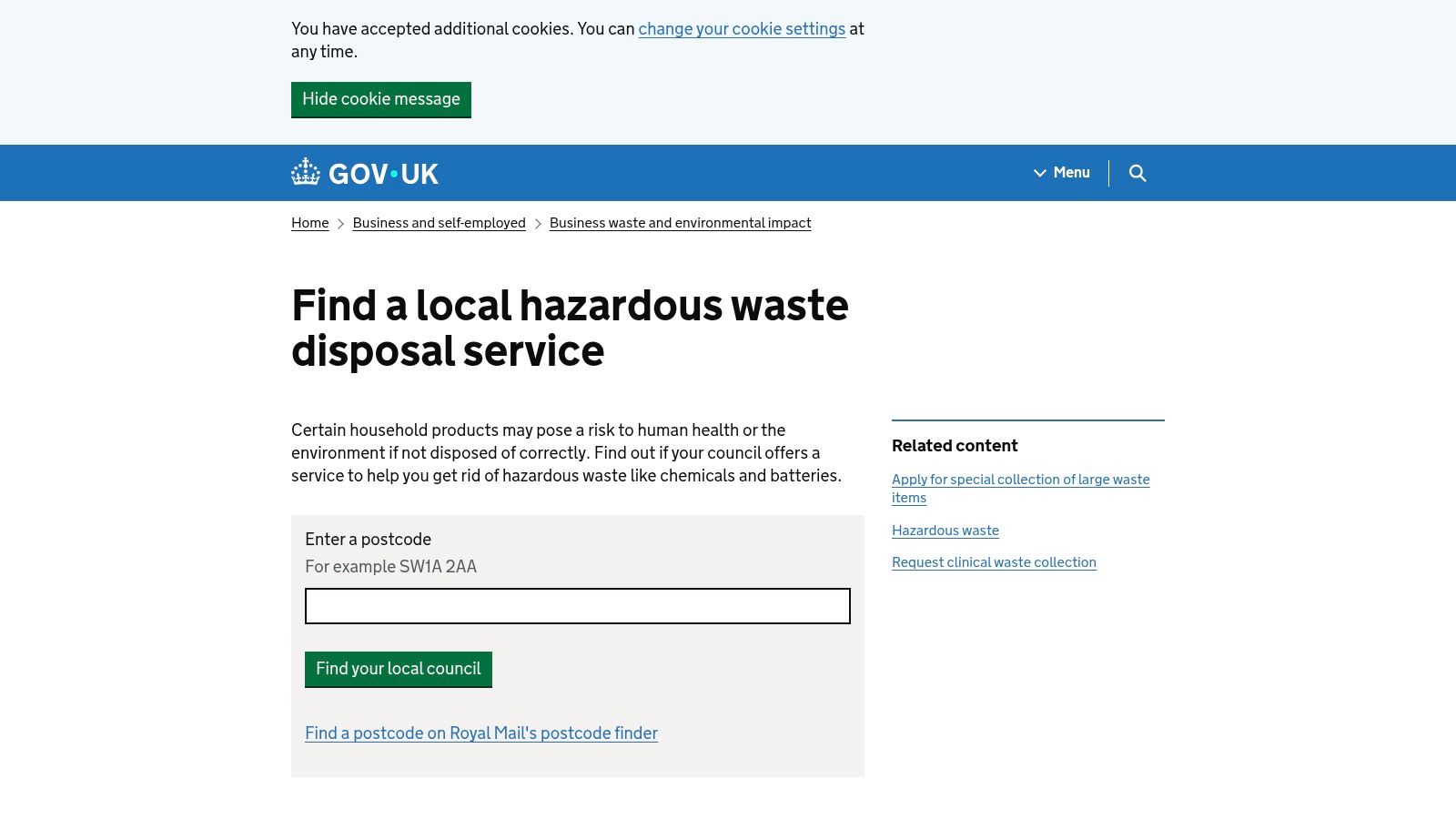
This tool is invaluable for checking whether your local household waste recycling centre (HWRC) accepts car batteries, what booking systems are in place, and if any size or quantity restrictions apply. It confirms the precise procedures you must follow, ensuring you comply with local regulations. Understanding these rules is a key part of responsible disposal, a topic covered in detail by the UK's hazardous waste disposal regulations.
Its primary purpose is to connect you directly with your local authority, making it the best option for verifying official policies before you travel to a disposal site.
Key Features and User Experience
- Official Council Routing: Uses your postcode to send you to the correct local authority page for England and Wales.
- Authoritative Information: Provides access to the most up-to-date and legally binding local disposal rules.
- Service Linkage: Often connects to other council services like HWRC appointment booking or special collection requests.
The main limitation is the inconsistency between council websites. Once redirected, the user experience can vary significantly; some council pages are clear and helpful, while others may be difficult to navigate. You are leaving the standardised GOV.UK interface for a local one that may have its own quirks.
Website: https://www.gov.uk/hazardous-waste-disposal
3. Halfords – Car battery disposal and recycling
As one of the UK's most recognised motoring retailers, Halfords provides an exceptionally convenient and accessible option for where to get rid of car batteries. Their nationwide network of stores makes them a go-to for many car owners, offering a straightforward take-back scheme that simplifies the recycling process for the general public.
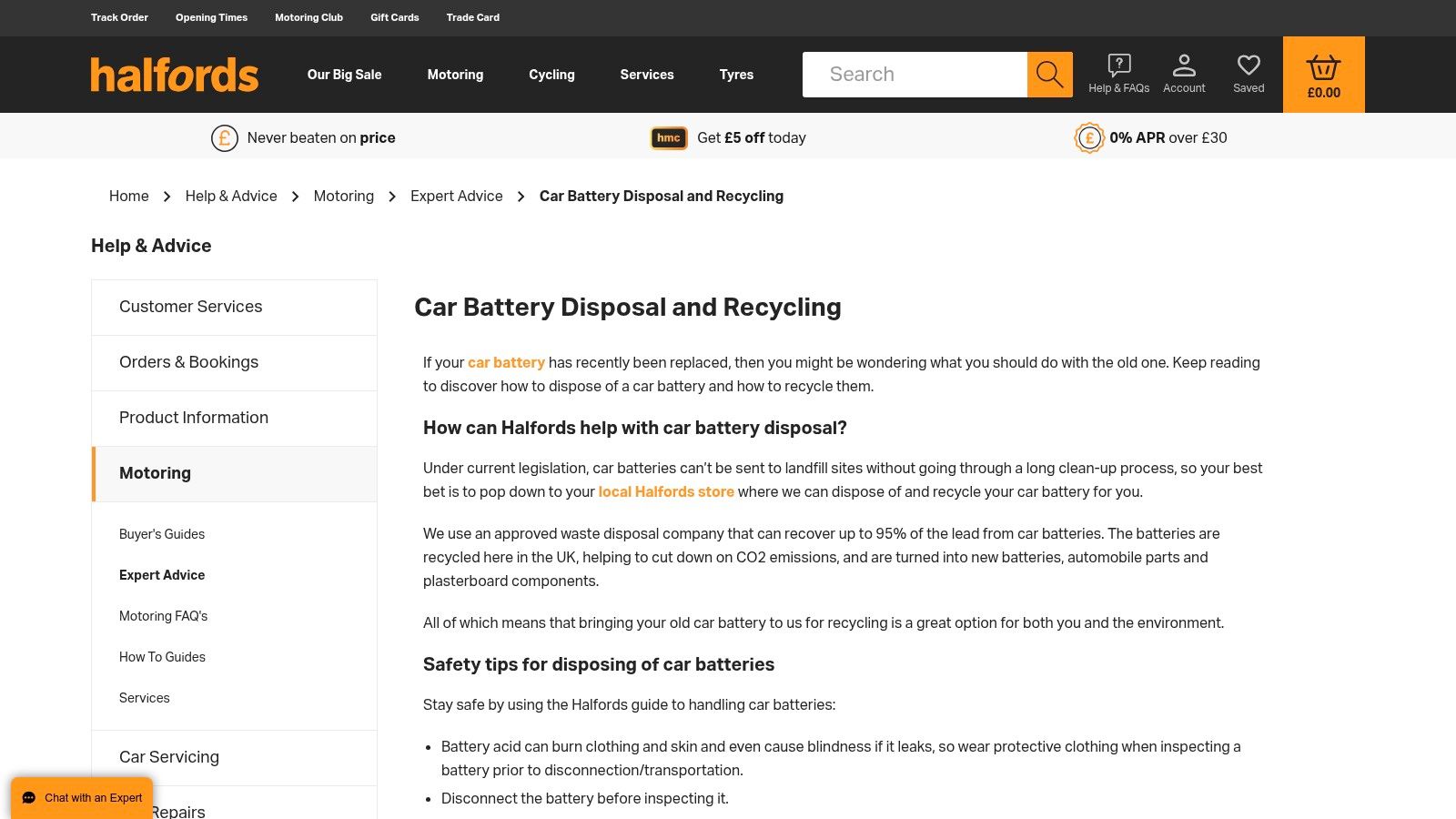
The primary advantage of Halfords is their free, no-purchase-necessary drop-off service. You can simply walk into any of their stores with your old car battery, and they will take it for recycling through their approved waste management partners. This removes the hassle of finding a designated recycling centre, which may be further away or have more restrictive opening hours.
Their website also offers clear safety guidance on how to handle and transport old batteries, a crucial resource for anyone unfamiliar with the risks. This practical advice, combined with their extensive physical presence, makes them a standout choice for convenience and reliability.
Key Features and User Experience
- Free In-Store Recycling: Walk-ins are accepted at hundreds of UK locations, even if you are not buying a new battery.
- Battery Fitting Services: They offer both in-store and mobile fitting, where they will take away your old battery as part of the service.
- Clear Safety Guidance: The website provides practical tips for safely handling and transporting hazardous lead-acid batteries.
It is important to note that this service is intended for household waste, not for commercial or trade businesses disposing of multiple units. While the process is simple, it's always wise to call your local store beforehand to confirm they can accept your battery, particularly during busy periods.
Website: https://www.halfords.com/motoring/advice/battery-disposal-and-recycling.html
4. Kwik Fit – Battery replacement and disposal
For those who need to get rid of a car battery as part of a replacement, Kwik Fit offers a highly convenient, all-in-one service. As one of the UK's largest autocentre chains with over 600 locations, it combines professional fitting with responsible disposal, making it a seamless solution for drivers who prefer not to handle the replacement themselves.
The primary benefit of using Kwik Fit is the integrated service. When you purchase a new battery from them, they will fit it for you and take your old one away for recycling through their licensed waste partners. This removes the hassle of finding a separate disposal point and ensures the old unit is handled correctly from the moment it leaves your vehicle. They also offer free battery health checks, which can help you determine if a replacement is even necessary.
While this service is incredibly practical, it’s designed for customers buying a new battery. It is not typically a standalone drop-off point for old batteries you already have lying around. Always confirm any potential disposal fees when booking, though it is often included in the fitting cost.
Key Features and User Experience
- Integrated Service: Combines battery testing, sales, fitting, and disposal in one visit.
- UK-Wide Network: With hundreds of centres, finding a local Kwik Fit is usually straightforward.
- Convenience: Ideal for drivers who want a quick, professional solution without the DIY effort.
This option is less suited for individuals simply looking for a free place to drop off a spare battery. However, for a hassle-free replacement where the old unit is taken care of instantly, Kwik Fit is a leading commercial choice.
Website: https://www.kwik-fit.com/batteries
5. ATS Euromaster – Car battery fitting and disposal
For motorists who prefer a full-service solution, national autocare chains like ATS Euromaster offer a convenient way to handle a dead battery from start to finish. Rather than just being a place to get rid of car batteries, their service integrates disposal into the process of purchasing and fitting a new one, making it an ideal option for those who are not comfortable performing the replacement themselves.
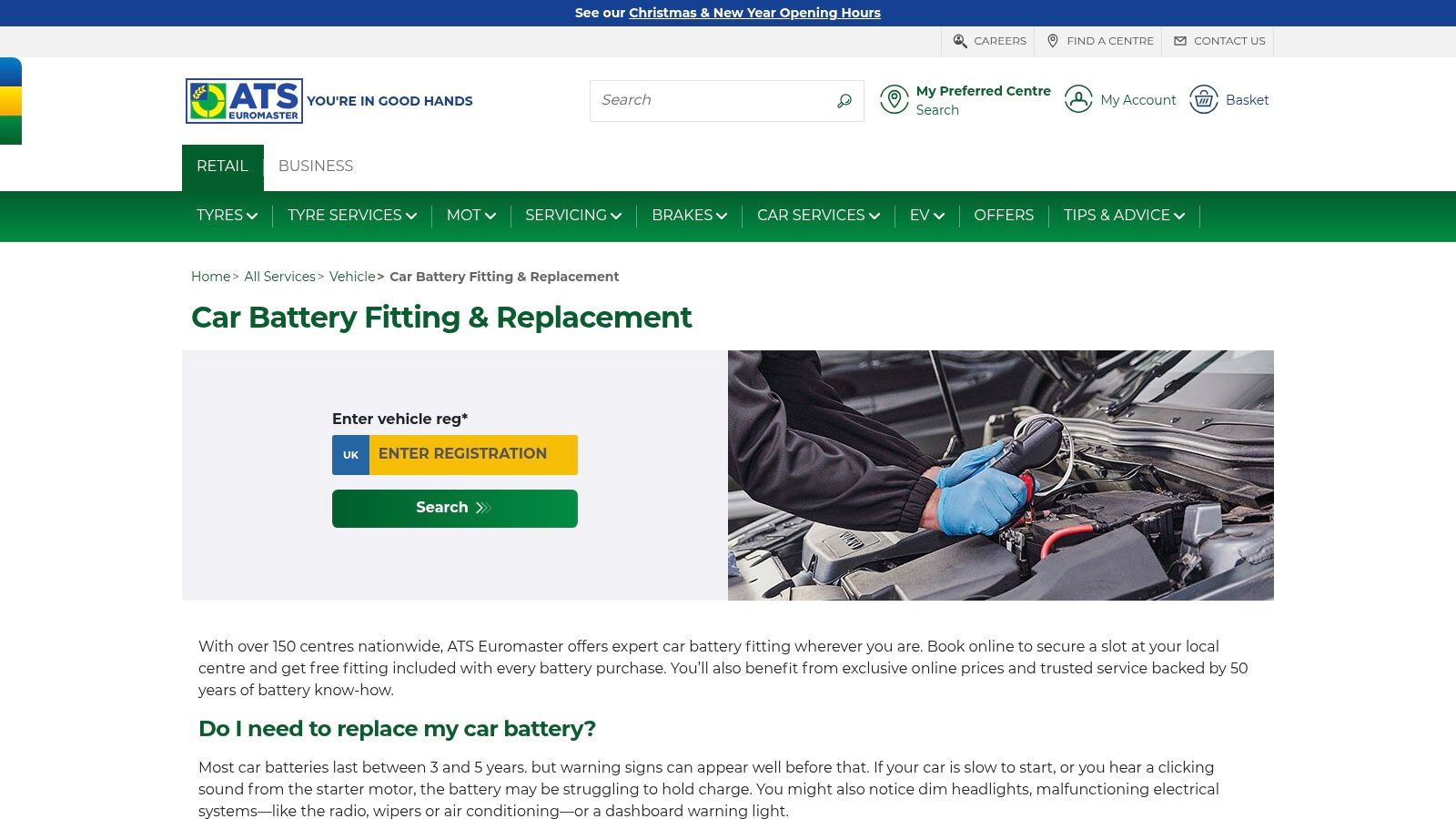
The platform allows you to enter your vehicle registration to find the correct replacement battery and book an appointment online for fitting. The key benefit here is that when their technicians fit your new battery, they will take the old one away for compliant recycling as part of the service. This removes the hassle and responsibility of having to find a separate disposal point for your old, hazardous unit. They also offer free battery checks, which can help diagnose if a replacement is even needed.
Key Features and User Experience
- Integrated Service: Combines battery purchase, professional fitting, and old unit disposal in one transaction.
- Vehicle Lookup: Simplifies finding the correct battery for your specific car model using your registration number.
- UK-Wide Network: With hundreds of centres across the UK, finding a local branch is usually straightforward.
It is important to note that this is not a standalone drop-off service for the general public. Disposal is typically conditional on purchasing a new battery and having it fitted by them. Always confirm with your local branch that they will take the old unit as part of the fitting service before booking.
Website: https://www.atseuromaster.co.uk/services/vehicle/batteries/car-batteries
6. EMR Metal Recycling – Vehicle batteries accepted (multiple UK yards)
For those looking to potentially get paid for their old car battery, a large, reputable metal recycler like EMR (European Metal Recycling) is an excellent choice. As one of the UK’s leading specialists in vehicle recycling, their nationwide network of depots is well-equipped to handle hazardous items like lead-acid batteries, making them a reliable option for where to get rid of car batteries professionally.

Unlike a simple drop-off point, EMR is a commercial operation that often pays for scrap metal based on weight and current market prices for materials like lead. This means you might receive a small payment for your battery, turning a disposal task into a minor financial gain. The website provides a depot locator and clear guidance on yard safety procedures, including the need for ID and appropriate personal protective equipment (PPE).
It is crucial to phone your local EMR yard before visiting. Acceptance policies and payment rates for single car batteries can vary between sites, and confirming their specific process will ensure a smooth visit. This step is vital as their primary focus is often larger-scale commercial and vehicle recycling.
Key Features and User Experience
- Potential for Payment: You may receive money for your battery, dependent on fluctuating scrap metal market prices.
- Nationwide Depots: With numerous locations across the UK, there's likely a yard within a reasonable distance.
- Professional Handling: EMR sites are licensed and operate to strict environmental and safety standards for handling hazardous materials.
While the prospect of payment is attractive, remember these are industrial sites, not consumer-focused recycling centres. You must adhere to their safety rules, and the process may be more involved than a simple drop-off at a council facility.
Website: https://uk.emrlocal.com
7. ASM Auto Recycling – Authorised Treatment Facility (ATF)
For those looking to scrap an entire end-of-life vehicle (ELV), an Authorised Treatment Facility (ATF) like ASM Auto Recycling is the most comprehensive solution. As a fully licensed ATF, their primary service involves the complete depollution and recycling of cars, which includes the safe and compliant removal of hazardous components like the battery. This makes them an ideal choice if your battery is still inside the vehicle you're getting rid of.
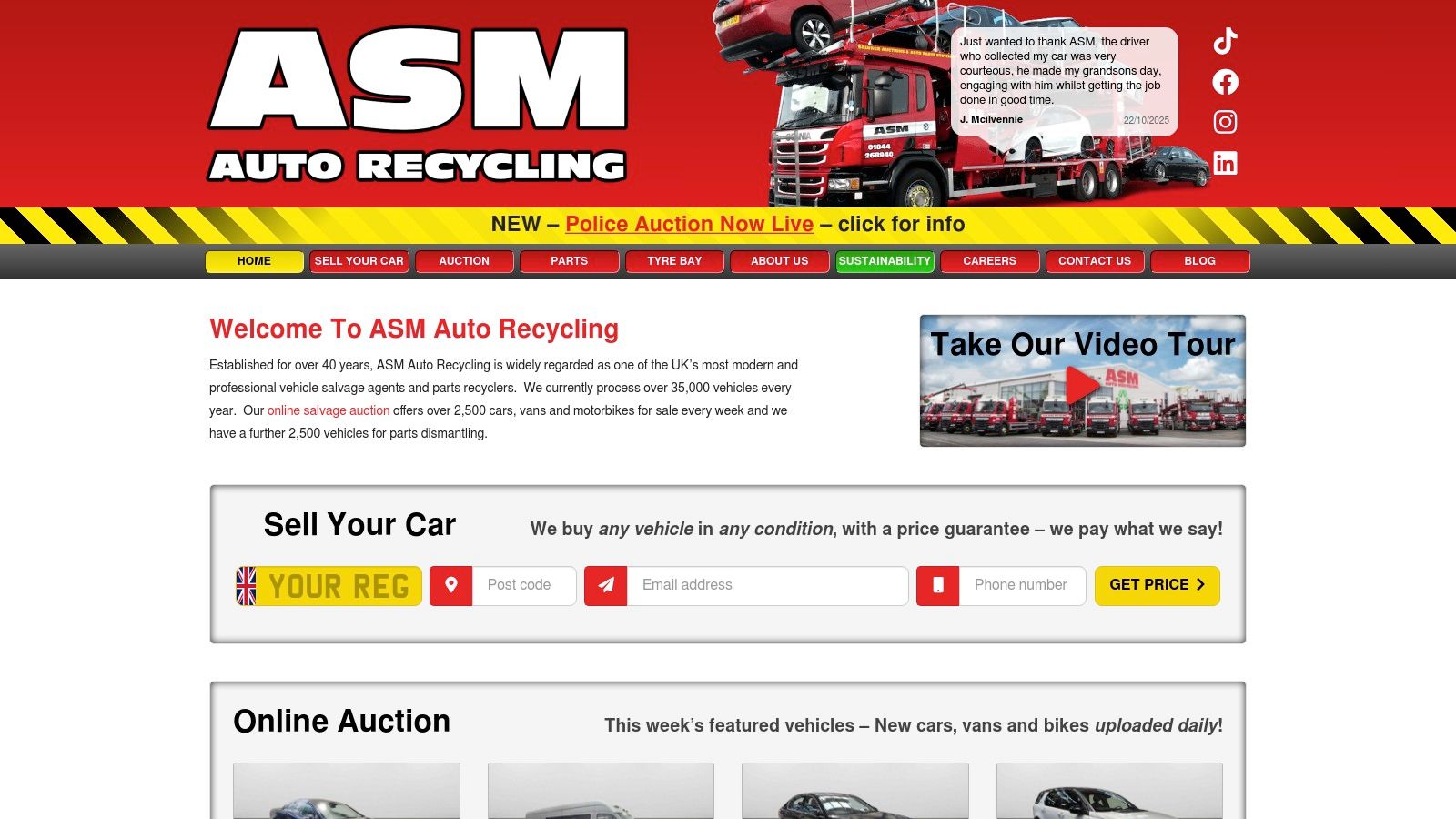
The platform offers both vehicle collection and drop-off services, providing a streamlined process for motorists. Instead of having to find separate disposal routes for the battery, fluids, and metal chassis, an ATF handles everything in one go. They issue an official Certificate of Destruction (CoD), which legally proves you are no longer responsible for the vehicle, a crucial step many people overlook.
While their core business is whole-vehicle recycling, some ATFs may accept standalone car batteries from the public. However, this is not their main function, so it's essential to check their policy beforehand.
Key Features and User Experience
- Licensed ATF Services: Ensures compliant depollution, including battery, fluid, and tyre removal.
- Vehicle Collection: Offers a convenient service to collect your end-of-life vehicle directly.
- Certificate of Destruction: Provides the necessary legal paperwork to deregister your vehicle with the DVLA.
The main limitation is that this service is geared towards whole cars, not individual parts. If you only have a loose battery, you must contact them to confirm if they accept single units for recycling, as policies can vary between their different sites. This option shines when you need a one-stop solution for a vehicle that has reached the end of its road.
Website: https://www.asm-autos.co.uk
8. Recycle Your Electricals (Material Focus)
Recycle Your Electricals is a nationwide campaign run by the non-profit Material Focus. While its primary goal is to stop people binning small electricals and batteries, its extensive locator tool is a valuable resource for finding where to get rid of car batteries. The platform's core message focuses on the fire risk posed by batteries in general waste, a message strongly supported by fire services across the UK.
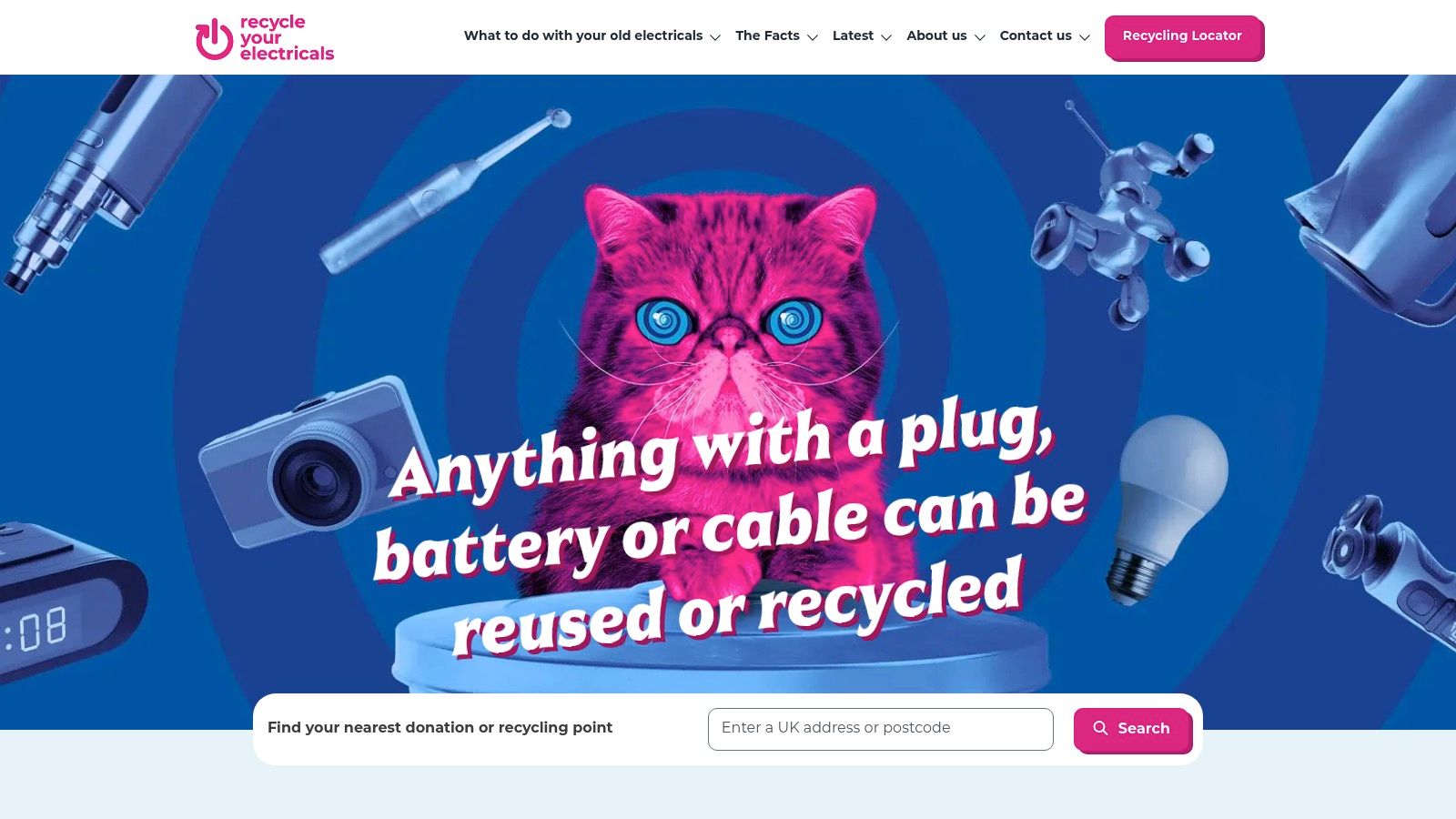
The website features a simple postcode search that taps into a database of around 30,000 drop-off points. This vast network includes household waste recycling centres and retail take-back schemes that may accept automotive batteries. It provides a quick way to find multiple potential locations nearby, serving as another excellent tool for cross-referencing options.
Its strength lies in its powerful public safety messaging, which educates users on the dangers of improper battery disposal. This reinforces the importance of using certified routes and understanding the principles of how to safely manage hazardous waste in the UK.
Key Features and User Experience
- Massive Location Database: The locator includes approximately 30,000 drop-off points across the country.
- Strong Safety Focus: Provides clear, authoritative guidance on the fire risks associated with all battery types.
- Simple Interface: The postcode search is straightforward, making it easy for anyone to find local recycling points.
The main consideration is that the locator isn't exclusively for car batteries. You'll need to filter the results mentally and confirm with the suggested locations (like HWRCs or garages) that they specifically accept larger, lead-acid batteries from vehicles.
Website: https://www.recycleyourelectricals.org.uk
9. Veolia Birmingham – Household Recycling Centres (example operator page)
While local council websites provide the primary route for finding your nearest tip, the pages run by the actual facility operators, like Veolia for Birmingham, offer a deeper layer of practical detail. These sites are excellent examples of where to find specific, on-the-ground rules for how to get rid of car batteries and other hazardous materials. They serve as a crucial second step after identifying your local centre.
This type of operator-run page moves beyond general advice and provides the essential operational specifics. You can quickly see a definitive list of accepted items, confirming that car batteries are welcome, alongside other tricky waste streams like engine oil, tyres, and gas bottles. Crucially, they also detail any access requirements, such as pre-booking systems, vehicle size restrictions, and the need for proof of residency (like a council tax bill).
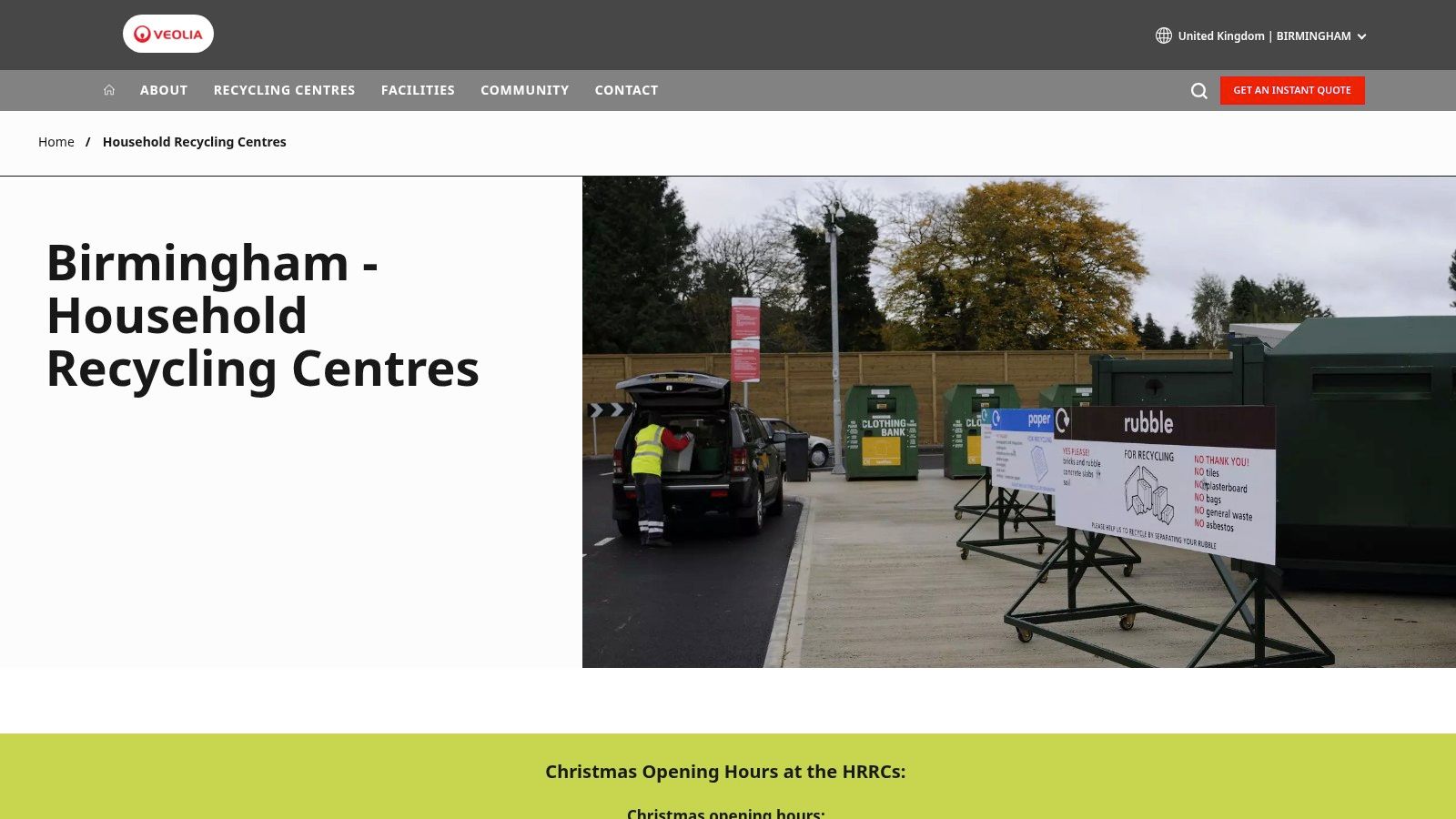
This direct information prevents wasted journeys, ensuring you arrive with the right documentation and awareness of any quantity limits. Checking the operator’s page is a vital step before you load up the car.
Key Features and User Experience
- Definitive Accepted Items List: Clearly states that car batteries are accepted, often with details on quantity limits.
- Site-Specific Rules: Provides essential information on booking requirements, ID needed for entry, and other operational rules.
- Multiple Site Details: Often lists all centres managed by the operator in the area, with individual maps and opening hours.
The main limitation is that this information is hyper-local; Veolia's rules for Birmingham may differ from another operator's rules in a neighbouring county. However, it perfectly illustrates the importance of looking beyond the main council website for the operator-specific details that govern your visit.
Website: https://www.birmingham.veolia.co.uk/household-recycling-centres
10. Euro Car Parts (LKQ) – Surcharge return / old unit take-back
For DIY mechanics, a fantastic and financially savvy way to get rid of car batteries is through the retailer you buy the replacement from. Euro Car Parts (owned by LKQ) operates a common industry practice known as a surcharge system, which incentivises customers to return their old, dead batteries for proper recycling.
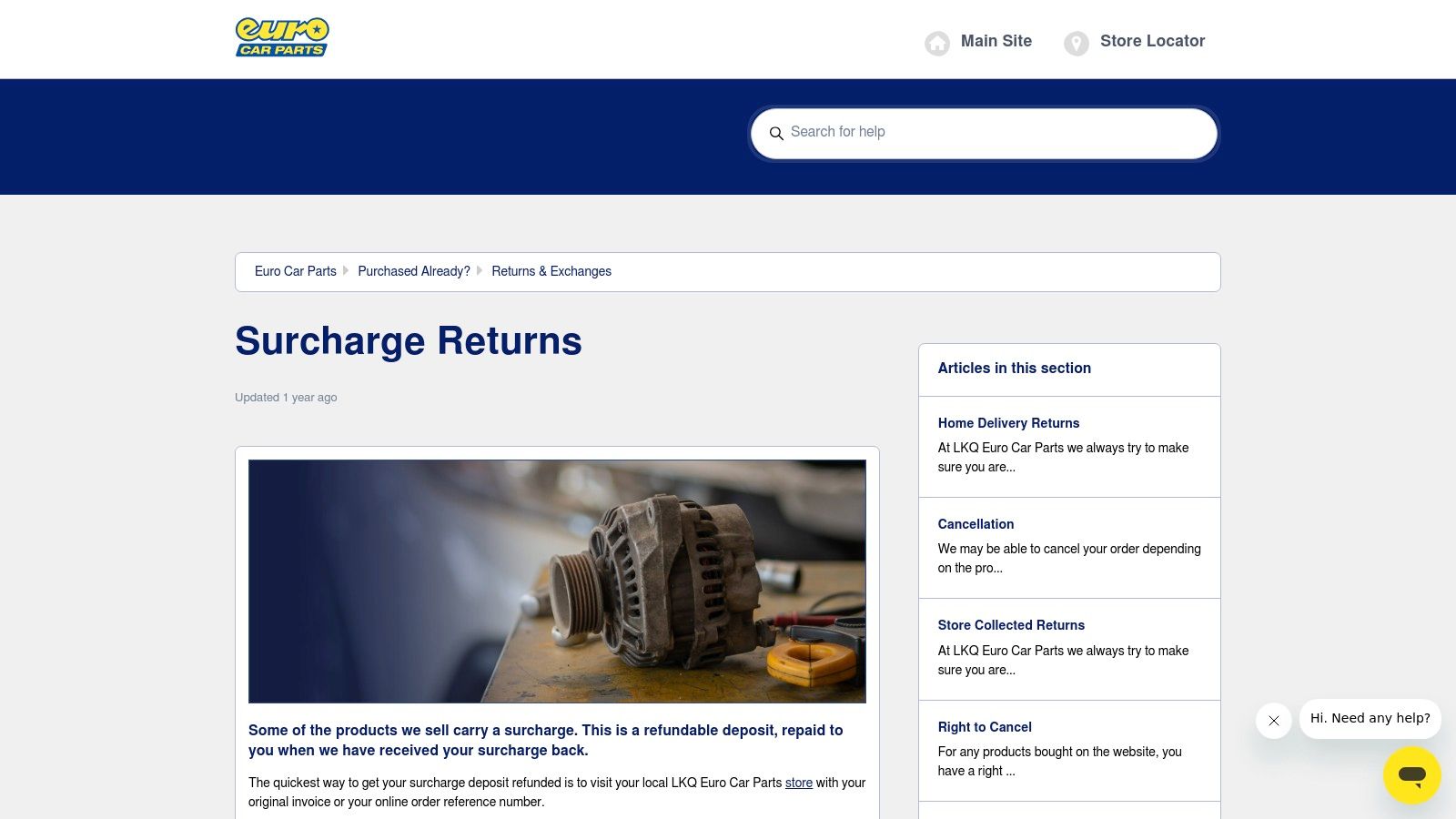
When you purchase an eligible new car battery, a surcharge is added to the price. This surcharge acts as a deposit that is fully refunded to you when you return the old unit within a specified timeframe. This closed-loop system ensures the old battery is immediately routed into the correct recycling stream, making it a highly convenient and responsible disposal method.
This approach effectively combines the task of buying a new battery with disposing of the old one. With a huge network of physical branches across the UK, you can simply drop off the old unit when you collect the new one or return it later. This convenience makes it a top choice if you are already a customer.
Key Features and User Experience
- Refundable Surcharge System: Provides a direct monetary incentive to ensure your old battery is returned and recycled.
- In-Store Returns: A UK-wide network of branches makes it easy to drop off the old unit in person.
- Convenience: Integrates the disposal process directly into the purchase of a replacement part, saving time.
The key limitation is that this service is tied to a purchase. You must check the specific terms, as surcharge amounts and return windows can vary. It’s a brilliant system for customers, but not a standalone disposal service for a battery you already have lying around.
Website: https://help.eurocarparts.com/hc/en-gb/articles/14258164039185-Surcharge-Returns
11. ECOBAT Logistics / G&P Batteries – Nationwide battery collections
For businesses, garages, and fleet operators asking where to get rid of car batteries in bulk, ECOBAT Logistics (incorporating G&P Batteries) is a leading trade-focused solution. Unlike public drop-off points, this service provides a fully compliant, nationwide collection infrastructure designed specifically for commercial and industrial battery waste, including specialist high-voltage and EV units.
This platform is not for the individual homeowner with a single dead battery. Instead, it caters to organisations that accumulate multiple batteries and require formal documentation to prove legal and safe disposal. ECOBAT handles everything from small 5 kg consignments up to full 28-tonne lorry loads, using ADR-compliant vehicles and providing all necessary hazardous waste paperwork. This end-to-end service ensures businesses meet their environmental obligations without logistical headaches.
Their specialist facilities also segregate batteries by chemistry, a critical step for modern automotive waste which can include lead-acid, lithium-ion, and NiMH types. This makes them a crucial partner for businesses navigating the complexities of varied battery disposal regulations.
Key Features and User Experience
- Trade-Focused Collections: Designed for garages, fleets, vehicle dismantlers, and other businesses.
- Full Compliance: Provides ADR-compliant logistics and all required hazardous waste transfer notes.
- Specialist Capability: Equipped to handle high-voltage and electric vehicle (EV) batteries.
- Scalable Service: Manages collections from small boxes to multiple pallets and full lorry loads.
As a B2B service, pricing is based on contracts or specific enquiries, so it isn't a pay-as-you-go option for the public. The user experience is geared towards account management and scheduled logistics rather than a simple online locator.
Website: https://ecobatgroup.com/ecobatgroup-en/facilities/uk/gandp/index.html
12. The Waste Group (Dorset) – Where can I dispose of a car battery?
For those in the Dorset area, The Waste Group provides a practical, plain-language guide on where to get rid of car batteries. As a local waste management specialist, their advice is grounded in regional realities while aligning with national regulations, offering a trustworthy resource for residents and tradespeople alike.

The platform’s strength is its directness. It clearly outlines the primary local disposal channels: council-run household waste recycling centres (HWRCs), retailers offering take-back schemes, garages, and scrap metal yards. A key focus is reinforcing compliance, particularly the critical rule that car batteries must never be placed in a general waste skip due to their hazardous nature. This emphasis is invaluable for preventing illegal and unsafe disposal.
Key Features and User Experience
- Region-Specific Advice: Tailored guidance that points Dorset residents towards the correct, compliant local options.
- Compliance Focus: Clearly states what not to do, helping users avoid potential fines and environmental harm.
- Practical Pointers: Offers actionable advice for both homeowners with a single battery and tradespeople handling waste more frequently.
It's important to note this is an informational resource, not a physical drop-off location for batteries. While it provides excellent guidance, users will still need to check the specific opening times, acceptance policies, and any potential scrap payments with their chosen disposal site.
Website: https://www.thewastegroup.co.uk/news/where-can-i-dispose-of-a-car-battery/
12 Car Battery Disposal Resources Compared
| Provider | ✨ Core features | ? Target audience | ★ Quality / Coverage | ? Price / Value |
|---|---|---|---|---|
| Recycle Now – Car batteries | ✨ WRAP-backed postcode locator; HWRC/garage map | ? Homeowners | ★★★★☆ national guidance | ? Free (directory only) |
| GOV.UK – Find a local hazardous waste disposal service | ✨ Official routing to council HWRC & hazardous-waste pages | ? Residents & businesses (England & Wales) | ★★★★☆ authoritative but redirects | ? Free (official info) |
| Halfords – Car battery disposal and recycling | ✨ Free in‑store take-back; fitting services; many branches | ? Household motorists | ★★★★ convenient retail network | ? Free drop-off; paid fitting |
| Kwik Fit – Battery replacement and disposal | ✨ Battery checks, same‑day fitting; disposal with fit | ? Drivers replacing batteries | ★★★★ large national network | ? Paid service (may include small disposal fee) |
| ATS Euromaster – Car battery fitting and disposal | ✨ Online lookup/booking; free checks; disposal with fitting | ? Vehicle owners & garages | ★★★★ broad footprint, trade-friendly | ? Paid (service-led) |
| EMR Metal Recycling – Vehicle batteries accepted | ✨ Licensed metal-recycling yards; ELV depollution; possible payment | ? Trade & public (yard access rules) | ★★★★☆ professional/licensed sites | ? Varies — possible payment (site-dependent) |
| ASM Auto Recycling – Authorised Treatment Facility (ATF) | ✨ ATF depollution & vehicle scrapping; battery removal | ? Scrappers & trade | ★★★★ compliant ATF processes | ? Varies (vehicle recycling) |
| Recycle Your Electricals (Material Focus) | ✨ ~30,000 drop-off locator; strong fire-risk education | ? Public & safety-conscious users | ★★★★☆ wide coverage, safety focus | ? Free (locator/resources) |
| Veolia Birmingham – HWRC operator page (example) | ✨ Site-level accepted items, booking & contact details | ? Local HWRC users | ★★★★ clear operator guidance | ? Free (local HWRC rules may apply) |
| Euro Car Parts (LKQ) – Surcharge return / old unit take-back | ✨ Refundable "old unit" surcharge; in-store/courier returns | ? DIY customers buying replacements | ★★★★ incentive-backed returns | ? Refundable surcharge (conditions apply) |
| ECOBAT Logistics / G&P Batteries – Nationwide collections | ✨ ADR-compliant pickups; EV/high-voltage & bulk handling | ? Garages, fleets, businesses | ★★★★★ trade-grade compliance | ? Contract/enquiry pricing (trade) |
| The Waste Group (Dorset) – Where can I dispose of a car battery? ? | ✨ Local plain‑language disposal advice; compliance focus; contactable team | ? Homeowners & businesses in Dorset | ★★★★★ (4.9 reputation; regional expertise) | ? Free guidance; competitive services & price-match |
Choosing the Right Option and Staying Safe
Navigating the various avenues for car battery disposal can seem complex at first, but as we've explored, the UK offers a robust and accessible network of recycling options. The decision of where to get rid of car batteries ultimately hinges on your specific situation, balancing convenience, cost, and compliance. By understanding the pros and cons of each resource, from national retailers to local council facilities, you can make an informed choice that is both responsible and straightforward.
Recapping Your Best Disposal Routes
For the majority of individuals, the path of least resistance is often the best. Let's quickly summarise the most practical choices:
- For Ultimate Convenience: If you're buying a new battery and having it fitted professionally, the problem solves itself. Garages like Kwik Fit and ATS Euromaster, or retailers like Halfords, will take your old battery as part of their service. This is the most hassle-free method, requiring no extra trips or planning on your part.
- For the DIY Enthusiast: If you've replaced the battery yourself, your two primary free options are your local Household Waste Recycling Centre (HWRC) or a major automotive retailer. Using tools like Recycle Now or the GOV.UK hazardous waste locator will pinpoint your nearest council-run facility, which is legally obligated to accept household hazardous waste. Alternatively, walking into a Halfords store with your old battery is a simple and reliable drop-off solution.
- For Potential Financial Gain: For those with multiple batteries, perhaps from project cars or a small-scale trade operation, a licensed scrap metal merchant like EMR Metal Recycling or an Authorised Treatment Facility (ATF) such as ASM Auto Recycling is the logical choice. While you won't get rich, you can receive a small payment based on the lead weight. Always phone ahead to confirm they accept batteries from the public and to check their current rates and identification requirements.
Key Principles for Safe and Legal Disposal
Regardless of the route you choose, the core principles of safety and legality remain constant. The single most important takeaway is that car batteries must never be placed in your general household waste or a standard skip. Doing so is illegal, environmentally catastrophic due to lead and acid contamination, and poses a severe fire risk in collection vehicles and at processing facilities.
Always handle the battery with care. Wear protective gloves and eyewear, keep it upright to prevent acid spills, and transport it securely in a sturdy, leak-proof container, such as a strong plastic box. These simple precautions protect you, your vehicle, and the environment.
Making the Final Decision
Choosing the right disposal method is about matching the available resources to your personal circumstances. Are you simply looking for a quick, free drop-off point? Your local HWRC is ideal. Do you need a new battery fitted and want the old one gone at the same time? Head to a trusted garage. Are you a business needing a compliant, auditable trail for your hazardous waste? A specialist collection service like ECOBAT is essential. By referencing the tools and services detailed in this guide, you can confidently identify the perfect solution, ensuring your old car battery is managed responsibly from the moment it leaves your hands.
While The Waste Group cannot accept car batteries in our skips due to their hazardous nature, we are experts in managing other forms of commercial and construction waste. If your project involves more than just a battery, visit The Waste Group to see how our compliant and efficient waste management solutions can help keep your site clear and your business on the right side of the law.