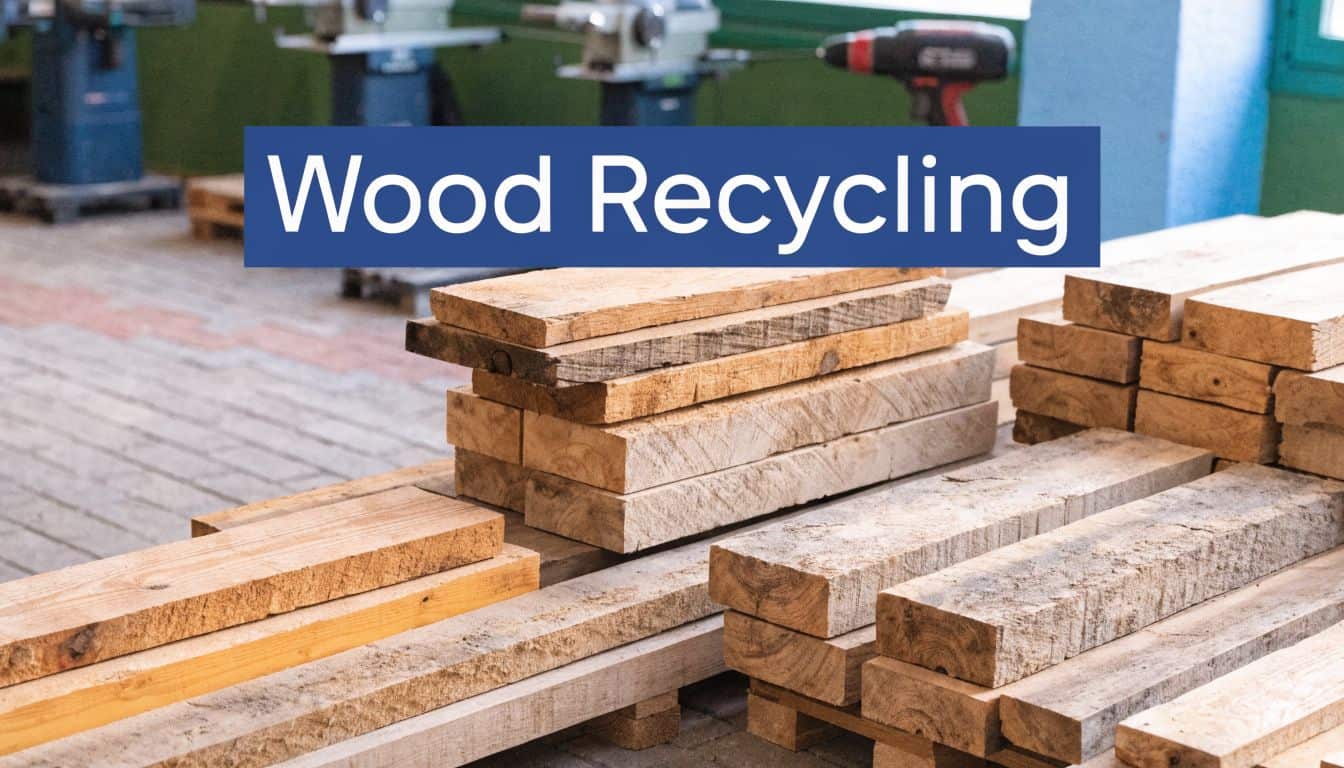
You’ve finished a garden clearance, stripped out a tired shed, or pulled timber out of a renovation. Now it’s sitting in a heap. Some of it looks reusable, some of it is full of nails, and some of it may have come from an older building that you’re no longer confident about.
That’s where most wood recycling problems start. Not with disposal, but with uncertainty.
In Oxford, that matters because wood waste isn’t a small side issue. The UK generates over four million tonnes of waste wood annually, while recycling capacity is still limited in many areas, which makes proper sorting and routing far more important than commonly understood, as noted in Oxford Wood Recycling’s impact report PDF. For a householder, that means avoiding rejected loads and wasted trips. For a contractor, it means staying compliant, keeping sites moving, and not paying for the wrong service.
Good wood recycling oxford decisions usually come down to four things. What type of timber you’ve got, how clean it is, how much of it there is, and whether reuse is still possible.
Your Guide to Wood Waste in Oxford
A pile of old fencing, chipboard offcuts, pallets, skirting, decking boards, and a dismantled gate all look like “wood”. In practice, they don’t belong in the same stream. Some can be reused. Some can be recycled efficiently. Some need separate handling because of treatment, age, or contamination.
That’s why the first job isn’t booking a van or ordering a skip. It’s identifying the material properly. If you get that right early, the rest gets easier. Transport is simpler, costs are easier to control, and the chance of a load being turned away drops sharply.
The problem most people run into
DIYers usually underestimate volume. Contractors usually underestimate sorting time.
A few loose boards become a van load quickly once you add fence panels, pallet wood, and broken sheet material. On building jobs, mixed timber often gets thrown together with plastics, packaging, plasterboard residue, or metal fixings. That slows down disposal and can push recyclable wood into a more expensive route.
Practical rule: Treat wood like a material stream, not general rubbish. The cleaner it is, the more options you keep open.
What actually works
For small domestic jobs, the best result often comes from separating reusable timber first, then breaking the remaining waste into clear groups. Clean timber, treated timber, sheet wood, and suspect older building wood should not all travel together unless the collector has agreed to take them that way.
For larger projects, the strongest approach is to decide the disposal method before strip-out starts. That means your team knows what goes in a pile for reuse, what goes in a collection stack, and what needs isolating for compliance.
Use this guide as a practical filter. If you sort properly, prepare the load well, and choose the right outlet, wood recycling oxford becomes far less frustrating and far more cost-effective.
Understanding Wood Waste Grades and Types
Wood waste is priced and handled by grade. Get the grade wrong, and the load can shift from a straightforward recycling job to a higher-cost disposal route.
That matters whether you are clearing a shed at home or running a strip-out contract. A DIYer in Oxford might save money by keeping clean timber separate and taking reusable pieces to a local social enterprise, while a contractor comparing that route with skip hire across South England, including Dorset, needs to look at labour, haulage, contamination risk, and the chance of rejection. The cheapest option on paper is not always the cheapest once sorting failures and mixed loads are factored in.

The grades in practical terms
Grade A is clean, untreated wood. Pallets, crates, and clean joinery offcuts usually fall into this group. It has the best reuse and recycling options, so it is often the cheapest material to move if kept separate.
Grade B is mixed non-hazardous wood. It may include light surface contamination, fixings, or worn timber that is still suitable for recycling. This is common on renovation jobs where material is usable for processing but not clean enough for direct reuse.
Grade C is treated non-hazardous wood. Painted timber, coated boards, and pressure-treated fencing often sit here. It can still be accepted through the right outlet, but processing options are narrower and costs are usually higher than for Grades A and B.
Grade D is hazardous wood, or wood that has to be treated as hazardous until assessment or testing says otherwise. Mismanaging its disposal results in significant costs.
The compliance point that affects cost
A key compliance point is often overlooked: since the withdrawal of RPS 250 in September 2023, wood from buildings constructed before 2007 may need to be handled as Grade D hazardous waste unless it has been properly assessed or tested. It should not be mixed into a standard recyclable wood load on assumption alone.
For contractors, this changes skip strategy. If pre-2007 strip-out timber is mixed into a general wood skip, the whole load can become harder and more expensive to deal with. For DIYers clearing older fencing, outbuildings, or joinery, the same rule applies on a smaller scale. Age of material and likely treatment history matter more than how clean the timber looks.
Appearance is a poor guide.
Old joists, floorboards, roof timbers, exterior joinery, and fence posts often look reusable or recyclable at first glance. If they come from older building stock, pause before loading them with clean offcuts or pallet wood. One mixed stack can wipe out the savings you expected from a low-cost collection or a general skip.
Sorting decisions that save money
The practical question is not just "can this wood be recycled?" The better question is "what route gives the best balance of compliance, labour, and disposal cost?"
Use these checks before the load leaves site:
Where did the wood come from?
Pallets, internal second-fix timber, fencing, demolition timber, and sheet material carry different risks and values.Has it been painted, preserved, or pressure treated?
Coatings and treatment often move wood out of the cleanest grades.Is it from a pre-2007 building or structure?
If yes, keep it isolated until you confirm the right route.Is any of it reusable rather than waste?
Good boards, doors, and lengths of timber can be worth separating first, especially in Oxford where reuse outlets may beat the economics of throwing everything into a skip.
For a householder, the practical split is usually reusable timber, general recyclable wood, and older or treated wood for separate checking. For a contractor, the same principle applies at scale. The difference is that bad segregation costs more, because labour, container space, and failed collections all add up fast.
How to Prepare Wood for Recycling
Most rejected wood loads aren’t rejected because the timber is impossible to recycle. They’re rejected because the load arrives mixed, awkward, or unsafe to handle.
Preparation saves time at both ends. It also helps you get more material into a vehicle or collection stack without turning the job into a mess.

Before you book a collection
Start with separation. Put clean timber in one area, treated timber in another, and anything from older building stock in its own clearly marked pile. Don’t wait until loading day. By then, people rush and everything gets mixed.
Then remove the obvious non-wood items. Hinges, handles, brackets, long screws, and bulky fittings should come off where practical. A few embedded nails usually aren’t the issue. Whole door furniture sets, metal straps, and attached plastic aren’t worth leaving in place.
What makes a load easier to accept
A well-prepared wood load usually has three characteristics:
It’s stacked flat
Loose heaps waste space. Flat stacking makes collection more efficient and safer to load.Bulky items are broken down
Fence panels, shed sides, and old cupboards should be dismantled if possible.Suspect items are isolated
If you’re unsure about treated or older timber, keep it out of the main recyclable pile.
A simple site checklist
Use this before you call anyone:
Pull out reusable lengths first
Straight boards, decent studs, and solid timber sections are often worth keeping.Remove contamination you can reach quickly
That includes plastic edging, foam, fabric coverings, and heavy metal fixtures.Flatten awkward pieces
Knock pallets apart only if it can be done safely and without wasting labour. Sometimes stacked whole pallets are still acceptable. Damaged sheds and fencing usually benefit from dismantling.Keep the stack dry if you can
Waterlogged timber is heavier, dirtier, and less pleasant to handle.Photograph the load before booking
Any decent collector will give a better steer if they can see the mix.
A ten-minute sort on site often avoids an hour of argument at the tip or a failed collection.
For householders, the goal is acceptance. For contractors, it’s consistency. If every operative on site follows the same preparation standard, wood recycling oxford becomes a routine process rather than a last-minute disposal problem.
Using Oxfordshire's Council Recycling Centres
For residents with manageable volumes, Oxfordshire’s council recycling centres can be the most straightforward route. They’re useful when the timber comes from a shed clear-out, small garden job, or one-room refurbishment and you can transport it yourself without turning the trip into a logistics exercise.
Their value goes beyond convenience. Around 1.3 million tonnes of waste wood, or 35% of the UK’s total, still goes to landfill annually, which is why local authority sites remain an important part of diversion, as highlighted by the Postcode Innovation Trust profile on Oxford Wood Recycling.
When a council site is the right option
Council sites tend to work best when:
You’re a householder with domestic quantities
A few runs in a car, trailer, or permitted van can make sense.The wood is already sorted
Staff are far more likely to direct you smoothly if the load is clearly timber and not mixed building waste.You don’t need collection
If labour is available and transport isn’t the issue, a self-delivery option can be practical.
What doesn’t work well is treating a household recycling centre like a trade waste outlet. If the load looks like a contractor strip-out, includes mixed site waste, or arrives in a way that breaches local vehicle rules, expect questions.
What to check before you drive
Rules vary by site, and that’s where people lose time. Before loading the vehicle, confirm:
Vehicle access rules
Vans, trailers, and sign-written vehicles often face tighter controls than cars.Residency requirements
Some sites only accept waste from local residents.Material restrictions
Treated or suspect timber may need separate handling, and mixed waste is more likely to cause problems.Booking requirements
Some centres operate with access controls or timed systems.
If you’re comparing household recycling routes with private disposal options in other parts of the South, it helps to understand how local access rules affect real disposal time. This guide to waste disposal options near you is useful for that broader comparison.
If you need multiple trips, loading time, queue time, and fuel can make a “free” option less attractive than it first appears.
The trade-off most people overlook
Council centres are strong on access for straightforward domestic waste. They’re weaker when the load is bulky, mixed, or clearly commercial in nature.
That matters for wood recycling oxford because timber volumes expand fast. A dismantled deck or full shed replacement can move from “car boot job” to “private collection job” very quickly. Once repeat trips enter the picture, the practical cost rises even if the disposal gate fee doesn’t.
Commercial and Large-Scale Disposal Options
A contractor clearing timber from a shop fit-out in Oxford and a householder stripping out an old deck in Headington often face the same question. Pay for a skip and load it gradually, or book a wood-focused collection and keep the material separate from the start.
The right answer depends on volume, access, labour, and what else is in the waste stream. For wood recycling oxford jobs, local social-enterprise collection can be a good fit where timber is the main material. Across the wider South of England, including Dorset, skip hire still suits mixed clearances and sites that need a container on hand for several days.

Oxford has the advantage of a well-known local reuse and recycling route for timber, and that changes the maths. If the load is mostly pallets, fencing, decking, sheet timber, or dismantled joinery with limited contamination, a specialist wood collection often beats skip hire on material recovery and can reduce site labour. Crews stack and remove the load in one visit, which matters on tight urban sites where skip permits, blocked access, or neighbour complaints add cost.
Skip hire still has a clear role. If wood is mixed with plasterboard, packaging, metal, rubble, and general strip-out waste, one container is often the simpler and cheaper option overall. That is usually the case on larger refurbishments across Oxfordshire and on contractor-led jobs further south where teams need constant access to a container rather than a timed uplift.
Where specialist collection usually gives better value
Specialist wood services are strongest where timber is already segregated or can be separated without slowing the job down. That applies to:
- Timber-heavy clearances
- Pallets, crates, fencing, decking, and shed dismantling
- Sites with limited space for skip placement
- Projects where reuse and higher-value recycling matter
- DIY jobs where repeated trips would cost more in time and fuel than a single collection
There is a labour trade-off. A wood-only collection works best when someone on site keeps the timber clean. If the crew throws treated boards, plastic-wrapped offcuts, and general rubbish into the same pile, the collection becomes slower, the recycling outcome drops, and the quote usually reflects that.
Where skip hire still earns its place
Skip hire is practical when the project is producing mixed waste all day and no one has time to sort every item as it arises. It also gives contractors a simple workflow on multi-day jobs.
For many builders in Oxford, Banbury, Bicester, and further afield into Dorset, the deciding factor is not the headline hire rate. It is the full job cost. That includes permit requirements, the space available for delivery, how many operatives are needed to load the skip, and whether poor segregation will turn recyclable timber into a mixed-waste charge.
Wood Disposal Options Compared Van Collection vs Skip Hire
| Feature | Specialist Van Collection (e.g., OWR) | Traditional Skip Hire |
|---|---|---|
| Best for | Segregated wood waste | Mixed project waste |
| Space needed on site | Lower footprint | Requires skip placement space |
| Loading approach | Collected and stacked for efficiency | Loaded by site team over time |
| Cost position | Often stronger on wood-only loads | Often stronger where several waste streams are combined |
| Material focus | Timber-specific | Broader waste handling |
| Compliance benefit | Simpler to describe and transfer as a single material stream | Works well if segregation is controlled properly |
| Operational downside | Poor fit for mixed debris | Timber value drops once mixed with other waste |
What I’d advise a client
For a DIYer, the question is simple. If the timber fits into one well-sorted pickup and access is easy, a wood-focused collection can save multiple trips and keep usable material out of the mixed waste stream. If the job also produces carpet, broken plasterboard, old kitchen units, and general rubbish, one skip may be the more efficient buy.
For contractors, I advise pricing both routes at tender stage, not after the strip-out starts. On a timber-heavy job, ask for a wood-specific collection quote first and compare it against the actual skip cost, including permits, loading time, and the risk of contamination charges.
Keep the paperwork right as well. If waste leaves site, the description needs to match the load, and your carrier records need to be in order. This waste transfer note template guide is useful for site files and subcontractor checks.
The cheapest option at booking stage is often not the cheapest by the end of the job. In practice, clean timber, clear access, and a disposal route matched to the waste type are what keep costs down and compliance straightforward.
The Journey of Recycled Wood What It Becomes
Many clients ask the same question after collection. What happens to the timber, and was the extra effort to keep it separate worth it?
In Oxford, that answer matters because the cost comparison is real. A DIYer deciding between a social enterprise route such as OWR and a general skip, or a contractor comparing segregated timber collection against mixed waste disposal across Oxfordshire or further afield in South England, including Dorset, needs to know whether clean wood keeps its value downstream. In practice, it does.
Once wood reaches a legitimate processor, the load is checked, sorted, and broken down. Clean timber can be chipped, screened, and cleaned to remove metal, plastic, and other residues before it goes into manufacturing or panel-board supply chains. One established route turns recovered wood into new MDF through a high-heat process, as shown in this overview of how recycled wood is processed into MDF.
That end market is what makes segregation pay.
A clean load gives processors options. A mixed or dirty load usually loses value fast, and some of it may be pushed into lower-grade recovery routes instead of being turned back into a useful wood product. That difference affects price, rebates, and handling costs long before the material leaves site.
For household clear-outs, the trade-off is straightforward. If you keep old boards, shelves, and offcuts free from rubble, plasterboard dust, and general rubbish, a specialist wood route can make more financial and environmental sense than paying for a larger mixed skip. For contractors, the same rule applies at scale. Clean timber is a usable feedstock. Contaminated timber is a harder, more expensive waste stream.
The environmental benefit is real, but it only follows good sorting. Recycling wood reduces demand for virgin material and supports material recovery instead of sending timber into lower-value disposal routes. If you need the wider compliance and recovery picture, this guide on whether wood is recyclable sets it out clearly.
There is also a practical point that often gets missed. Some timber arriving at a processor is technically recyclable, but still better suited to direct reuse if it is sound, dry, and in decent lengths. That matters for joinery timber, floorboards, and old furniture components. In those cases, repair or salvage can outperform recycling on both value and carbon, which is why it helps to understand basic assessment standards such as how to restore wooden furniture.
The lesson is simple. If you want the best outcome from wood waste, protect the material before collection. Keep it clean, keep grades separated where possible, and choose the route that matches the load. That is what keeps costs under control for DIY jobs and commercial work alike.
Reuse and Upcycling Finding New Life for Old Timber
The best wood waste is the wood that never becomes waste in the first place. Before you book disposal, check whether the timber still has a direct use. Solid floorboards, scaffold planks, old doors, pallet timber, and framing timber often have more value in reuse than in recycling.
That applies to both homes and sites. A householder might turn sound boards into shelving or raised planters. A contractor might keep usable timber aside for temporary protection works, workshop storage, or secondary joinery jobs.

Reuse ideas that are actually practical
Garden timber projects
Old decking boards and pallet sections can become compost bays, planters, or bench tops.Workshop and garage storage
Offcuts are useful for shelving, jigs, sacrificial tops, and tool racks.Furniture restoration
Old hardwood pieces are often worth saving if the structure is sound. If you’re assessing whether a tired item can be brought back properly, this guide on how to restore wooden furniture is a useful reference.Donation or resale
Usable timber can often be passed to community projects, makers, or local buyers rather than thrown into disposal immediately.
When reuse isn’t the right answer
Not every piece is worth saving. Timber that is rotten, heavily contaminated, structurally compromised, or questionable from a compliance standpoint shouldn’t be pushed into informal reuse just to avoid disposal.
The sensible hierarchy is simple. Reuse good timber. Recycle suitable timber. Isolate risky timber. That approach keeps wood recycling oxford practical instead of idealistic.
If you’re managing wood waste in Dorset or across the wider South and need a compliant, straightforward solution for domestic or commercial projects, The Waste Group can help with skip hire, larger site waste services, and responsible disposal support. The right setup depends on the material, access, and volume, so it’s worth getting advice before the waste piles up.