A Complete Guide to General Waste Skips in the UK
A Complete Guide to General Waste Skips in the UK
Thinking about hiring a skip? You’re in the right place. They're a fantastic solution for all sorts of projects, from garden makeovers and garage clear-outs to big commercial refits.
General waste skips are your all-rounders, built to handle a mix of the usual rubbish these jobs create. Think old furniture, wood, soil, plastics, and general clutter. They save you countless trips to the tip, giving you one simple place to put everything. But there's a crucial catch: they are strictly for non-hazardous waste.
Decoding General Waste Skips: Your Essential Starting Point
Imagine the scene: you're finally tackling that kitchen renovation. Out comes the old worktop, the knackered cupboards, the broken tiles, and piles of packaging. Or perhaps you're clearing a garden that's been left to its own devices for years. You’re going to have a real mix of stuff to get rid of.
This is exactly where a general waste skip comes into its own. It’s a single, convenient collection point for most of the non-hazardous materials that domestic and commercial projects generate across the UK.
But that word "general" can sometimes trip people up. It definitely doesn't mean anything and everything can be tossed in.
At its heart, a general waste skip is for mixed, non-hazardous materials that can be safely handled and processed together. Getting this right from the start is the key to a smooth, hassle-free hire.
What This Guide Covers
To make sure your project goes off without a hitch, we've put together this complete guide. We’ll walk you through everything you need to know, from picking the right skip to waving it goodbye.
Here’s what we’ll cover:
- Choosing the Right Size: We'll break down the different skip dimensions, from mini skips for small weekend jobs to massive containers for major clear-outs. This is all about making sure you don't pay for space you don't need or, even worse, run out of room halfway through.
- Permitted and Prohibited Items: We’ll give you a crystal-clear list of what can and can't go in your skip. Following this is the best way to avoid unexpected fines and ensure your waste is dealt with responsibly.
- Legal Requirements: We’ll explain the essentials like skip permits (when you need one and why) and the all-important level-load rule to keep your project fully compliant and safe.
- Booking and Pricing: You'll get a transparent look at what affects the cost of hiring a skip and a simple step-by-step guide to booking, delivery, and collection.
By the time you've finished reading, you'll have all the know-how to choose, book, and fill your skip like a pro, keeping your project on track and doing your bit for the environment.
Choosing the Right Skip Size for Your Project
Picking the right skip size feels a bit like choosing a suitcase for a holiday—go too small, and you'll be struggling to stuff everything in. Go too large, and you're just paying for empty space you don't need.
Getting this right from the start is the secret to keeping your project's waste management cost-effective and straightforward. The aim is always to hire a skip that can handle all your waste in one go, saving you the extra cost and hassle of ordering a second one.
Skips are measured in cubic yards, which isn't a measurement most of us use every day. A much easier way to picture the capacity is to think in terms of standard black bin bags. This simple comparison makes it much clearer what each of our general waste skips can actually hold, helping you match the skip to the scale of your job.
From Mini Skips to Builder's Skips
For smaller jobs around the house, a mini or midi skip is usually the perfect solution. They're the go-to choice for weekend clear-outs and minor home improvements.
- 2-Yard 'Mini' Skip: This is your best bet for those very small clear-outs. It holds around 20-30 black bin bags, making it ideal for a seasonal garden tidy-up or decluttering a spare room.
- 4-Yard 'Midi' Skip: With a bit more room, the 4-yarder can take approximately 30-40 bin bags. It's a great option for a small kitchen or bathroom refit, or a more serious garden clearance.
As we move up in size, we get to the builder's skips. These are the real workhorses of the skip hire world, and for good reason. They offer a versatile capacity that's spot-on for a huge range of renovation and construction projects, making them a firm favourite with tradespeople and ambitious DIYers alike.
- 6-Yard 'Small Builder's' Skip: This size is perfect for getting rid of bulky waste from moderate-sized projects, holding roughly 50-60 bin bags. It's a popular choice for home extensions or full house clearances.
- 8-Yard 'Large Builder's' Skip: As the most common skip size hired in the UK, the 8-yarder is built for larger renovation jobs and can handle significant amounts of construction debris. It fits approximately 70-80 bin bags.
The real challenge isn't just estimating the volume of your waste, but its type. Bulky but light items like old furniture can take up just as much space as heavy, dense materials like soil or rubble. That's why having a clear plan of what you're throwing out is so important.
This decision tree helps simplify things, guiding you from your project type to the best waste management choice.
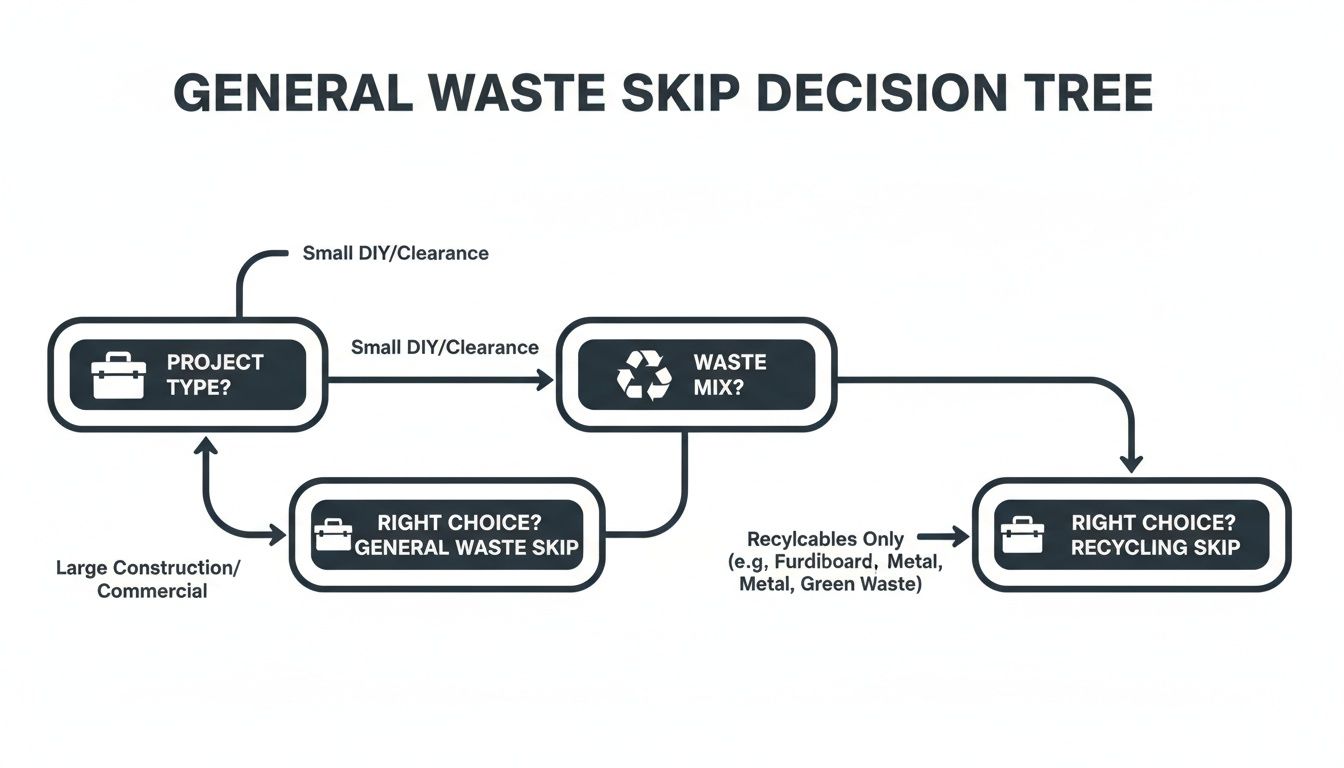
As you can see, thinking about both the scale of the job and the mix of materials you'll be producing is key before you book anything.
General Waste Skip Sizes and Common Uses
To help you visualise your options, here’s a quick breakdown of the most common skip sizes, their dimensions, and the types of projects they're best suited for. This side-by-side comparison should give you a much clearer picture of what will work for you.
| Skip Size (Cubic Yards) | Approximate Capacity (Bin Bags) | Typical Dimensions (L x W x H) | Ideal For |
|---|---|---|---|
| 4 Yard | 30 – 40 | 1.8m x 1.3m x 1.0m | Small kitchen refits, minor garden clearances. |
| 6 Yard | 50 – 60 | 2.6m x 1.5m x 1.2m | Bulky waste, medium renovations, house clearances. |
| 8 Yard | 70 – 80 | 3.6m x 1.7m x 1.2m | Large residential projects, construction debris. |
| 12 Yard | 100 – 120 | 3.7m x 1.8m x 1.7m | Large house clearances with bulky, light items. |
Comparing the options like this makes it easier to see how a seemingly small increase in yardage can make a big difference in capacity, especially for bulky items.
Making the right choice from the outset saves time, money, and a lot of stress. If you’ve looked through the options and are still not sure, our expert team is always on hand to help.
You can also check out our detailed guide for more tips on what size skip do I need?
What Can and Cannot Go into General Waste Skips
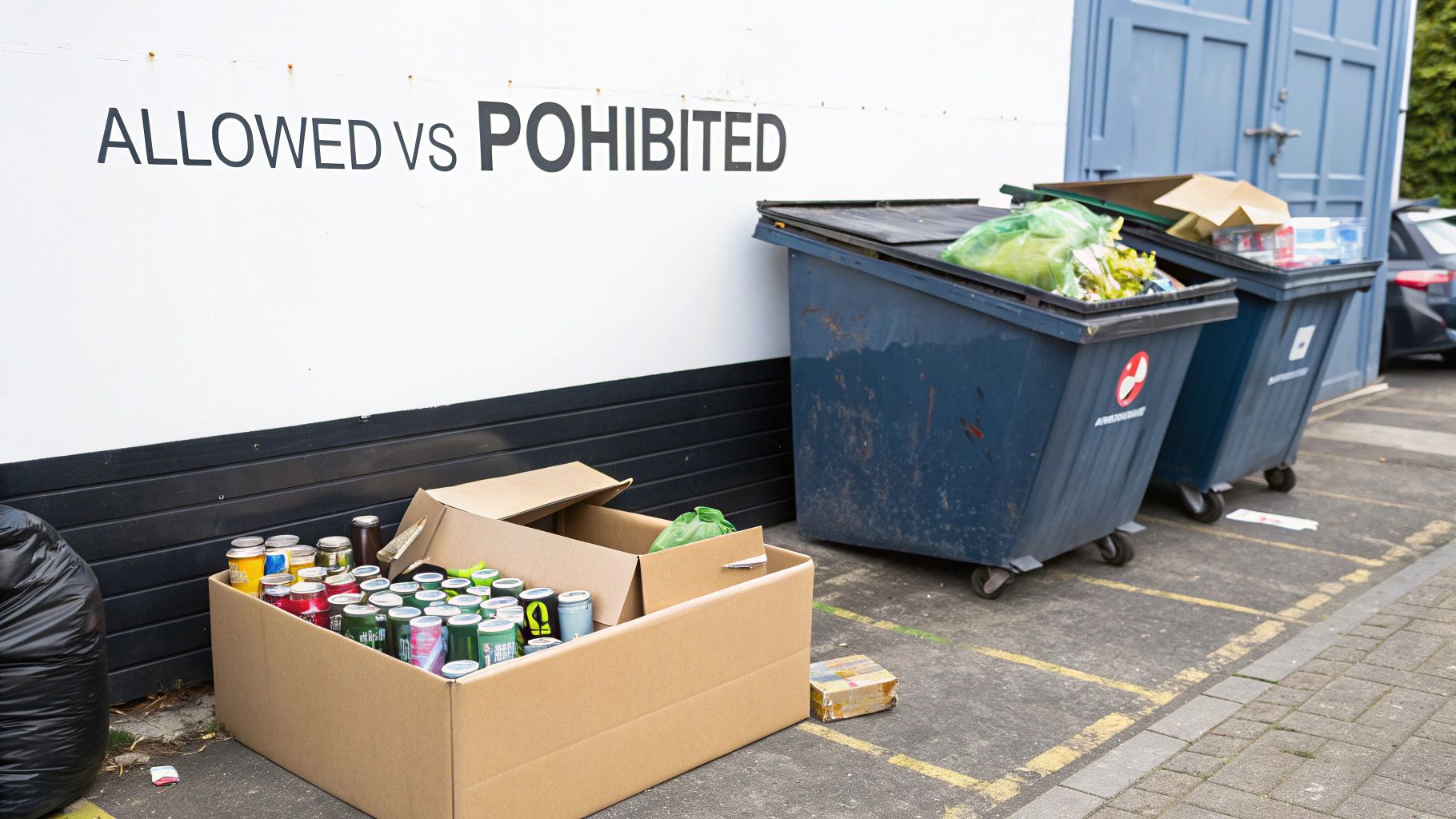
Figuring out what you can and can't toss into a general waste skip is probably the most crucial part of hiring one. It’s a bit like posting a letter – you can't just shove anything in the postbox and hope for the best. Getting it right ensures your waste is handled legally and safely, helping you avoid rejected collections, surprise fines, and environmental harm.
Nailing this from the start keeps your project running without a hitch. It's simply about separating everyday rubbish from items that need a specialist touch because of what they're made of.
Permitted Items for Your Skip
General waste skips are your versatile workhorse, designed for a real mix of common stuff from household clear-outs, garden jobs, and commercial refits. As a rule of thumb, if it's non-hazardous, it's usually good to go.
Here’s a quick rundown of what you can definitely put in:
- Wood: Think old floorboards, fence panels, dismantled sheds, and any wooden furniture.
- Soil and Rubble: Bricks, concrete, stones, and soil are all fine. Just be conscious of the weight, especially with the bigger skips.
- Furniture: Old sofas, chairs, tables, and wardrobes can all go in.
- Plastics: Most hard plastics are acceptable, like old kids' toys, piping, and garden furniture.
- Metal: Any non-electrical scrap metal is welcome – things like old radiators, shelving, or pipes.
- Cardboard and Packaging: All types of cardboard and general packaging materials are permitted.
- Garden Waste: Cuttings, branches, leaves, and other green waste from the garden are perfect.
Basically, if it's a standard, non-toxic material from a renovation, clear-out, or landscaping project, you're almost certainly in the clear. The ability to mix all these items is what makes general waste skips so incredibly useful.
Prohibited Items You Must Exclude
Now for the really important bit: the things that must never end up in a general waste skip. Getting rid of these materials properly isn't just good practice; it's a legal requirement. Each one is banned for a good reason, usually because it's a danger to people or the planet.
For example, items like old TVs or computers are strictly forbidden. For clear advice on how to dispose of electronic waste safely, it's best to look for a dedicated recycling service that knows how to handle them.
Here are the main culprits to keep out and why:
- Asbestos: A seriously toxic material that can cause fatal lung diseases. It requires specialist, licensed professionals for removal and disposal.
- Plasterboard: When plasterboard gets wet and mixes with other waste, it can release hydrogen sulphide – a toxic gas. It always has to be disposed of separately.
- Electrical Items (WEEE): Anything with a plug or batteries is classed as WEEE (Waste Electrical and Electronic Equipment). Fridges, kettles, phones – they all contain harmful things like lead and mercury and need recycling at special facilities.
- Batteries: Whether from a car or a TV remote, batteries contain corrosive acids and heavy metals that can leak into the ground and contaminate water sources.
- Tyres: Tyres are a nightmare to process and are banned from landfill sites. They must go to a specialist recycling plant.
- Liquids: This covers paint, solvents, oil, and any other chemicals. These can pollute rivers and cause chaos for waste processing equipment.
- Medical Waste: Anything from a clinical setting, like needles or dressings, is a biohazard and needs specialist disposal.
- Gas Cylinders: These pressurised containers are a real explosion risk at sorting facilities.
Crucial Reminder: Asbestos is the single most dangerous prohibited item. It is illegal to put it in a skip and the penalties are severe. If you even suspect you've found asbestos, stop what you're doing and call a certified removal expert immediately.
If you're ever in doubt about an item, it’s always better to ask than to guess. For a more exhaustive list of no-go materials, check out our full guide on what can’t you put in a skip.
Navigating the Legal Side of Skip Hire
Hiring a skip is usually pretty straightforward, but it’s vital to get the legal side of things right to keep your project hassle-free and avoid any nasty surprises. Think of it like parking your car—if you leave it on your own driveway, no problem. But if you need to pop it on the public road, there are rules you have to follow.
It's exactly the same principle with general waste skips. Where you intend to put your skip will dictate what you need to do next. Getting this sorted from the very beginning means a smooth hire, without the risk of fines or hold-ups from your local council.
Do You Need a Skip Permit?
The first question on most people’s minds is whether they need a permit. Thankfully, the answer is simple and it all comes down to one thing: location.
- Private Property: If your skip will be sitting entirely on your own land—like a driveway, garden, or a private building site—then you do not need a permit.
- Public Land: If even a small part of the skip has to go on public land—which includes the road, pavement, or a grass verge—you must have a skip permit from your local council.
Applying for a permit is something your skip hire company, like The Waste Group, will handle for you. Councils need a few days' notice to get the paperwork processed, so it's a good idea to factor this into your project timeline. Permit costs and how long they last vary from council to council, but they typically cover a set period, often for one or two weeks.
A skip permit isn’t just a bit of red tape; it’s a legal necessity that ensures public roads and pavements remain safe and accessible. Placing a skip on a public highway without one can lead to hefty fines and an order for its immediate removal.
Safety Rules for On-Road Skips
Once your permit is sorted and the skip is delivered to a public road, a few safety regulations kick in. These are legal requirements under the Highways Act, designed to make sure the skip is clearly visible to drivers, cyclists, and pedestrians, especially when it gets dark.
Your skip must have:
- Safety Lights: Amber lights need to be fixed to each corner of the skip to make it visible at night. These usually switch on automatically as daylight fades.
- Reflective Markings: The skip must have reflective markings on its corners and down its sides, helping it to stand out when caught in vehicle headlights.
- Traffic Cones: You'll need cones placed around the skip to help guide traffic safely past the obstruction.
These aren't optional extras; they're mandatory safety measures. Any reputable skip hire company will make sure your skip arrives with all the required safety kit, taking that responsibility completely off your hands.
The Law of the Level Load
Finally, one of the most critical legal rules to remember is the level load. You absolutely cannot fill your skip higher than the level of its sides. This isn't just a friendly suggestion from the hire company; it’s a legal requirement for safe transport.
An overfilled skip is a serious hazard, as items can easily fall out while the lorry is on the move, potentially causing accidents or injuring someone. Skip lorry drivers are legally forbidden from collecting overloaded skips and will have to leave it behind until you've removed the excess waste. This can cause delays and might even lead to extra charges for a wasted trip.
Every skip has a clear "fill line" marked on its side. Stick to it, and you’ll ensure the skip can be covered securely with a net and transported safely, keeping you, the driver, and everyone else on the road safe. This legal compliance is also tracked through key paperwork, and you can learn all about it in our guide explaining what is a waste transfer note.
Understanding Skip Hire Pricing and Booking Your Service

Figuring out the cost of hiring general waste skips and sorting out the booking is much simpler than most people think. There isn't a one-size-fits-all price tag, but the final quote is a straightforward sum of a few key parts. Once you know what they are, you can budget properly and avoid any nasty surprises down the line.
The price of hiring a skip isn’t just a number plucked out of thin air. It’s a reflection of everything needed to get the skip to you, take it away, and deal with your waste responsibly. It’s better to think of it as a complete service package, not just renting a big metal box for a week or two.
Key Factors That Influence Your Skip Hire Cost
Several things come together to determine the final cost of your skip. Being aware of them means you can see exactly what you're paying for and how your specific needs shape the price.
- Skip Size: This is the big one. A little 4-yard skip for a weekend garden clear-out will, of course, cost a lot less than a big 8-yard builder's skip needed for a major extension.
- Hire Duration: Most people hire a skip for around one to two weeks, which is the standard period. If your project is likely to drag on and you need it for longer, this might nudge the final price up a bit.
- Your Location: Where you are in the country matters. Delivery costs, local council permit fees, and even regional recycling charges can vary, which all gets factored into the hire price.
- Permit Fees: If the skip has to live on public land, like the road outside your house, we'll need to arrange a council permit. We handle all the paperwork, but the cost of the permit itself gets added to your total bill.
The skip hire world has certainly seen some big changes over the years. When skips first became popular, you might have paid just £5! More recently, things like the 2022 red diesel ban and soaring fuel prices have hit operational costs hard for every waste company, which inevitably has an impact. It's a reminder of how wider economic shifts affect service prices, a topic you can learn more about in this industry analysis.
What Is Included in Your Quote?
When you get a price from a reputable company like The Waste Group, you should expect total clarity. We're big believers in upfront pricing with no hidden charges, so you know exactly where your money is going from the very start.
Your standard skip hire fee is an all-inclusive price that covers the entire service from start to finish. This includes the delivery of the skip to your chosen location, its collection once you're finished, and the responsible sorting, recycling, and disposal of all the waste inside.
Your Simple Booking Journey with The Waste Group
We've worked hard to make booking your general waste skip as painless as possible. Our process is designed to get you the right skip for your job with minimal fuss, with our friendly team on hand to help at every stage.
- Get an Instant Quote: Pop your postcode into our online booking system, choose the skip size you need, and tell us where it’s going. You’ll get an immediate, transparent price right there and then.
- Schedule Your Delivery: Pick a delivery date that works for your project. We have flexible time slots and can often offer next-day service to keep your job moving.
- Arrange Collection: Once your skip is full (don't forget the level load rule!), just give us a call or drop us a line to arrange a collection day that suits. Our team will take it from there, making sure your waste is handled the right way.
Maximising Your Skip Maximising Recycling
Hiring a skip is a big part of getting any project off the ground, but getting the most out of it involves more than just chucking everything in. If you're strategic about how you load it and think about recycling from the word go, you'll save space, ensure a safe collection, and do your bit for the environment. It's about turning that skip from a simple container into a smart part of your waste management plan.
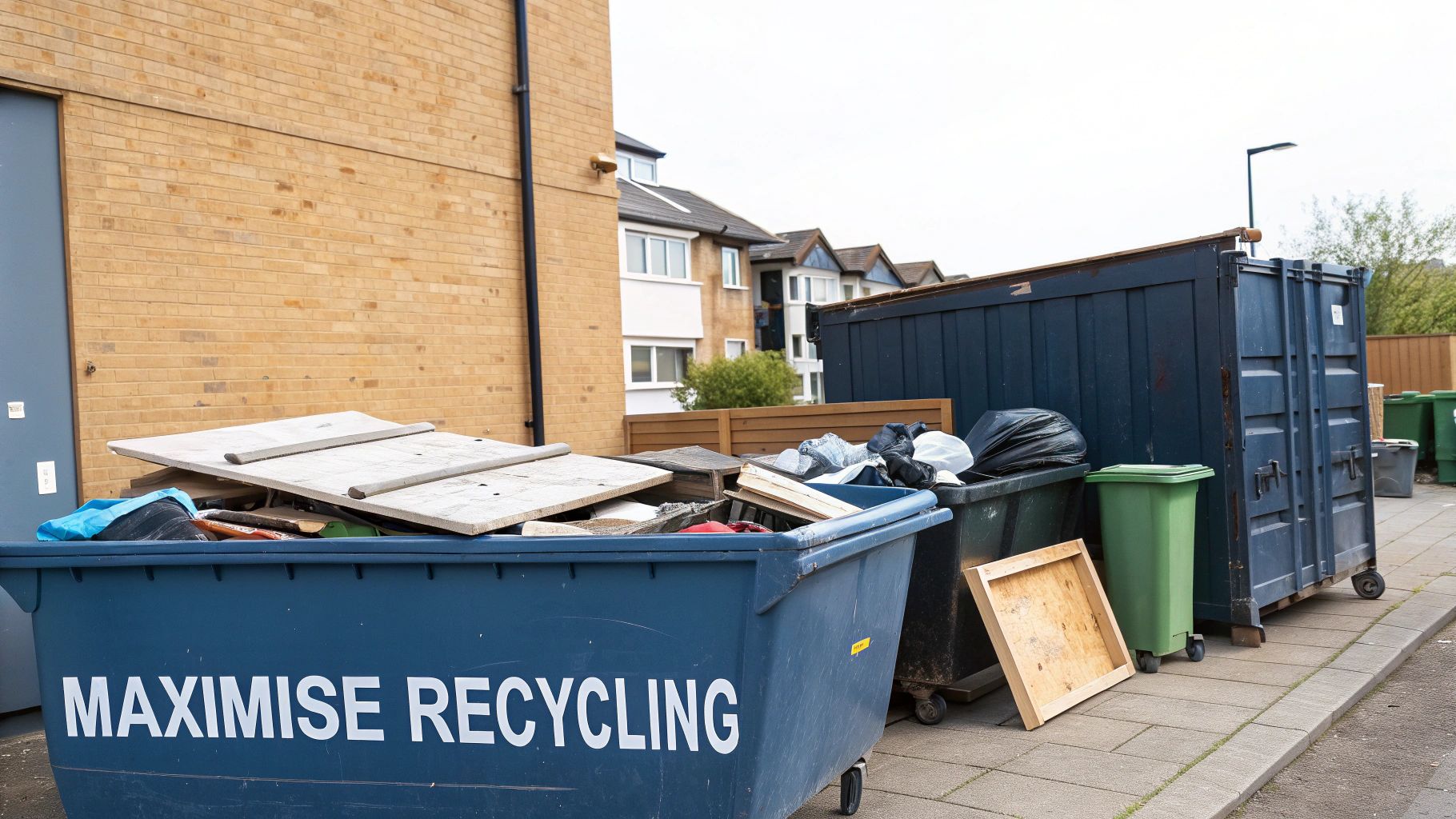
This all starts with how you load your general waste skips. A little organisation goes a long way. Instead of a random free-for-all, a methodical approach can dramatically increase how much you fit inside, making sure you get real value for your money.
Loading Your Skip Like a Pro
Think of loading your skip as a game of Tetris. The aim is to slot everything together, leaving as few empty gaps as possible. A badly loaded skip is mostly just pockets of air, which means you'll probably run out of space long before your clear-out is actually finished.
Follow these simple steps for a perfectly packed skip:
- Start with Flat Items: Get things started by laying flat materials like old doors, fence panels, or sheets of wood at the bottom. This creates a solid, level base to build on.
- Add Bulky Waste Next: Now for the big stuff. Dismantle any large items you can – break down that old wardrobe or cabinet into smaller, flatter pieces. This one trick can save a surprising amount of room.
- Fill in the Gaps: Use smaller, heavier items like bricks, rubble, and soil to fill in the crevices and gaps. This also helps to weigh down the lighter materials underneath.
- Finish with Light Debris: Top it all off with any loose, lightweight waste like garden cuttings to fill the last remaining spaces.
Just remember to keep everything below the level load line. It's not just a suggestion; it’s a legal requirement to make sure it can be transported safely.
The Power of Sorting Before You Skip
While smart loading gets you the most space, the real game-changer for sustainable waste management is sorting your rubbish before it even sees the inside of the skip. This is what we call waste segregation, and it’s the single most effective way to boost recycling rates. To really make a difference, it's worth understanding the importance of proper waste segregation.
By separating materials like wood, metal, and garden waste from genuine rubbish, you make the recycling process at our end faster, more efficient, and far more effective. It's a small step on-site that has a huge environmental impact.
Here at The Waste Group, we're passionate about diverting as much waste from landfill as we possibly can. When your skip arrives at our facility, our team gets to work meticulously sorting through the contents. By pre-sorting your waste, you give us a massive head start.
We process the materials you’ve already separated, sending them on for recycling and recovery. It’s a team effort that ensures your project plays a positive role in the circular economy. When you hire one of our general waste skips, you’re not just clearing a site; you’re partnering with a company committed to turning your waste into a resource, one skip at a time.
Got Questions About Your Skip Hire? We’ve Got Answers
Even the best-laid plans can leave you with a question or two, especially if you’re hiring a skip for the first time. To help make sure your project goes off without a hitch, we’ve answered some of the queries we hear most often about general waste skips.
Getting these details right from the start means you can get on with the job, feeling completely confident.
How Long Can I Keep the Skip?
The standard hire period for our skips is usually between 7 and 14 days. That’s plenty of breathing room for most projects, whether you’re tackling a weekend garden clear-out or a week-long renovation.
But that timeline isn’t set in stone. If you get the job done quicker than expected, just give us a call and we can arrange an earlier collection. On the flip side, if your project overruns and you need it for a bit longer, we can usually sort that out for you, though it might come with a small extra charge. The best bet is to chat with us about your timeline when you book, and we’ll find a solution that works for you.
What Happens If I Put Prohibited Items in My Skip?
Putting banned items into a skip is a definite no-go and can cause some real headaches. If our driver spots a prohibited item during collection, they are legally not allowed to take the skip until you’ve removed it.
If the item is only discovered later at the sorting facility, you’ll likely face extra charges. These fees cover the specialist costs of disposing of that item safely and correctly. For really nasty stuff like asbestos, you could even be looking at hefty fines from environmental agencies. It’s always worth double-checking the prohibited list to stay on the right side of the rules.
Remember, these rules aren't there to make life difficult—they’re in place to protect the environment and keep the waste management professionals who handle your skip's contents safe.
Do I Need to Be Home for Delivery and Collection?
Not always. If we're dropping the skip on private land, like your driveway, you don't need to be there. Just make sure you’ve given us clear instructions on where to place it and that the access is totally clear for our lorry.
However, if access is a bit tight, or if the skip is going on a public road where a permit is needed, it’s a good idea to be on-site. This way, you can make sure it’s positioned perfectly. For collection, as long as the skip is easy to get to and hasn't been overfilled, you don’t usually need to hang around.
Can I Move a Skip After It Is Delivered?
You should never try to move a skip yourself once it’s been placed. They are incredibly heavy, even when they’re empty, and trying to shift one is a serious injury risk. Our drivers are trained to place them in a spot that’s safe and accessible for the collection vehicle.
If the skip is on a public road, moving it could also invalidate your council permit and create a hazard for traffic. If you absolutely need the skip relocated, you must contact us. We’ll come out with the proper equipment to move it for you, safely and legally.
Ready to get your project started with a waste solution that just works? The Waste Group offers reliable, next-day delivery on a huge range of general waste skips across Dorset. Get your instant online quote and book today at https://www.thewastegroup.co.uk.