
Hiring a Skip for the Day: Quick Guide to the Right Size and Permits
Hiring a Skip for the Day: Quick Guide to the Right Size and Permits
Hiring a skip for the day is the perfect solution for a rapid garden clear-out, a quick room renovation, or any single-day project that’s going to generate a hefty amount of waste. But here's the crucial bit: you need to choose the right size skip for your specific job. Get this right, and you'll avoid paying for empty space, keeping your project efficient and on budget.
Your Essential One-Day Skip Hire Checklist
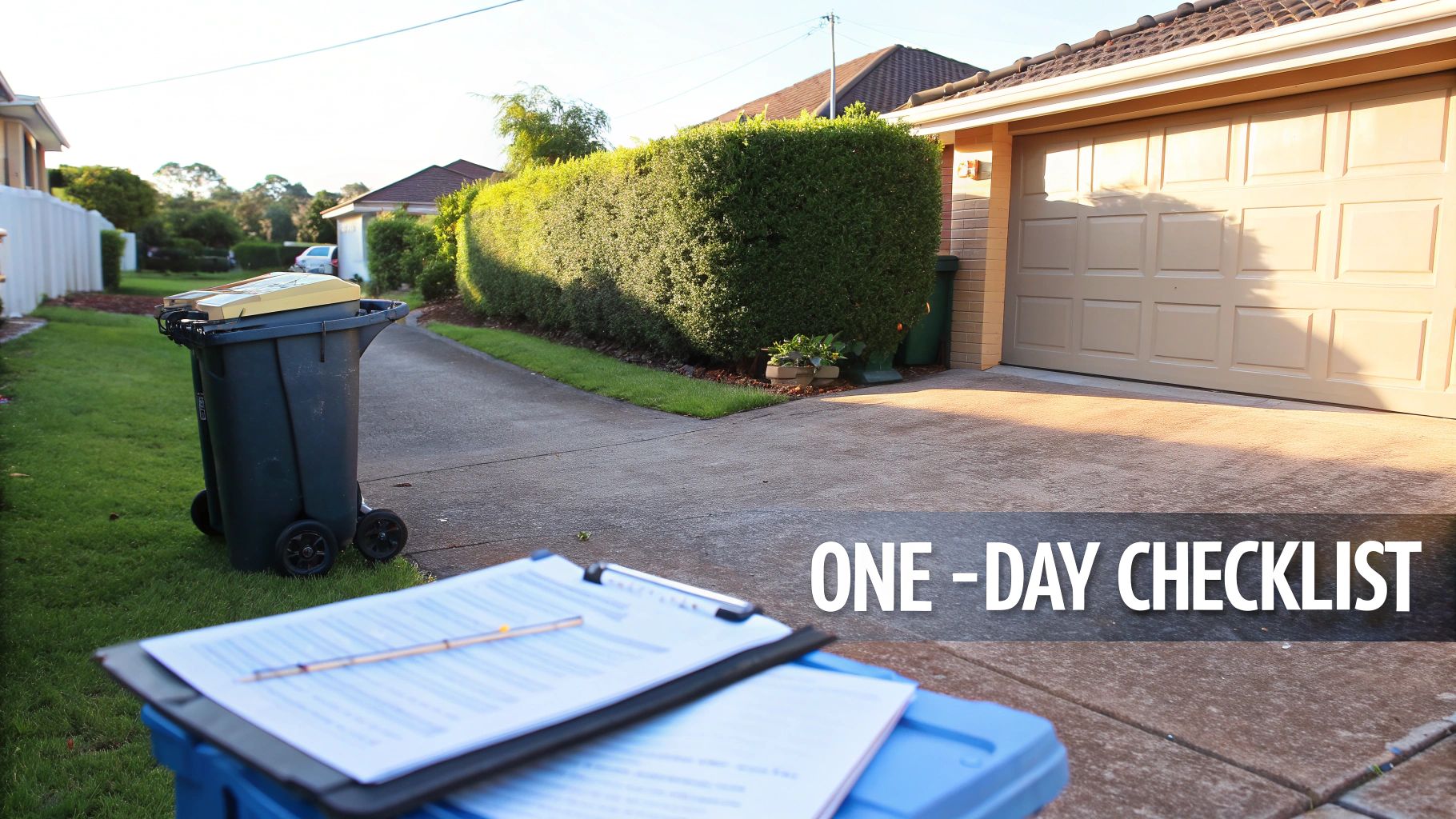
Let’s be honest, a bit of planning goes a long way. Before you even think about booking, the very first thing you need to do is get a realistic idea of the amount and type of waste you'll be creating. A simple garden tidy-up might only need a small 4-yard skip, but a full bathroom rip-out will almost certainly demand something bigger.
My advice? Make a quick list of the main items you'll be tossing out—old turf, broken tiles, timber offcuts, that ancient armchair. This simple prep work gives you a much clearer picture of the volume you're dealing with and prevents that last-minute panic when you realise the skip is already overflowing.
Understanding Costs and Logistics
The price of hiring a skip isn't just about its size. Your postcode plays a big part; for example, prices in the South East are often higher due to regional operating costs. It's a huge market – across the UK, over 17 million skips are hired for domestic projects every single year. A typical midi 4-yard skip for a day can set you back anywhere from £180 to £300.
Good, reputable local companies can often give you more competitive rates. They're usually brilliant at maximising their recycling efforts, which in turn reduces their landfill taxes – a saving they can pass on to you. If you're curious, you can find more details on UK skip hire trends to get a better feel for the market.
At its core, the process is pretty straightforward. It really just boils down to three simple stages.
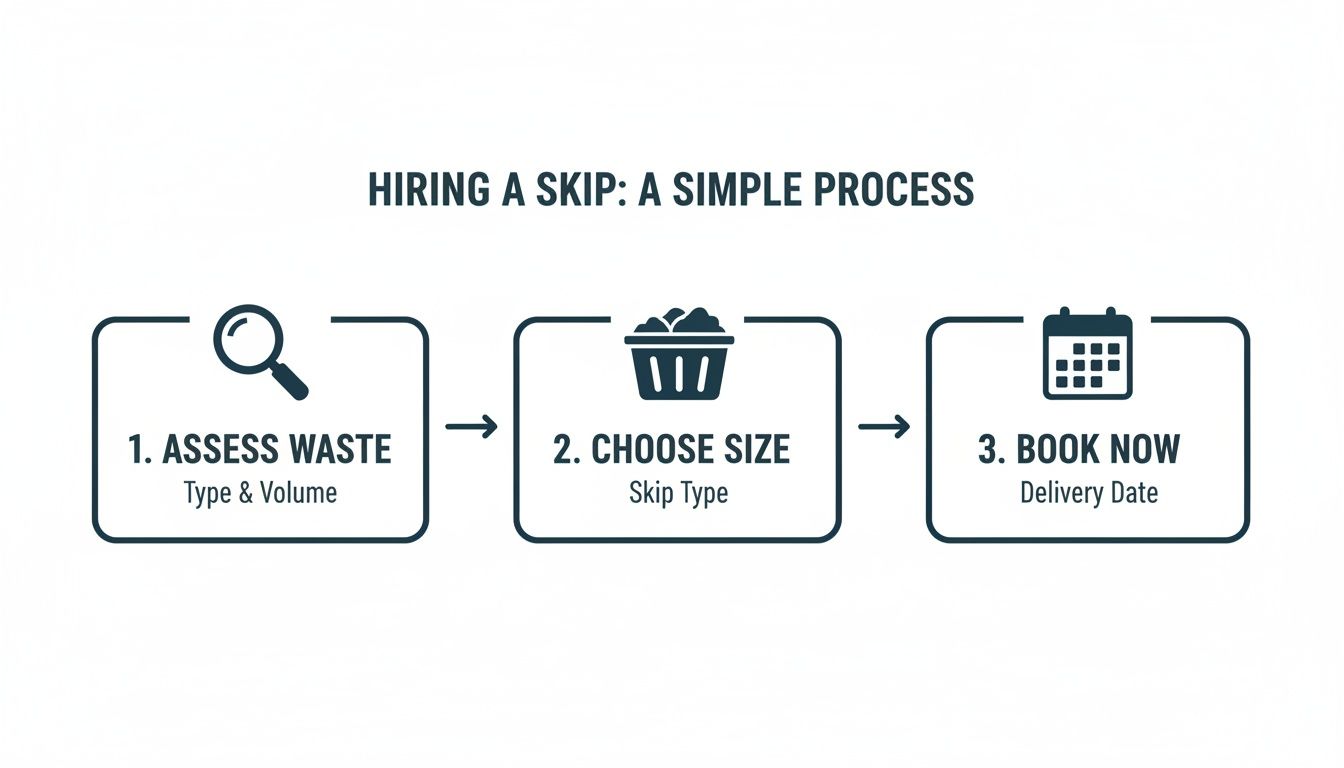
This little guide really breaks it down, from initial planning to the final booking, making sure you’ve got all your bases covered. By preparing properly, you can have a skip dropped off and collected without a hitch, keeping your project right on schedule.
Choosing the Perfect Skip for Your Project
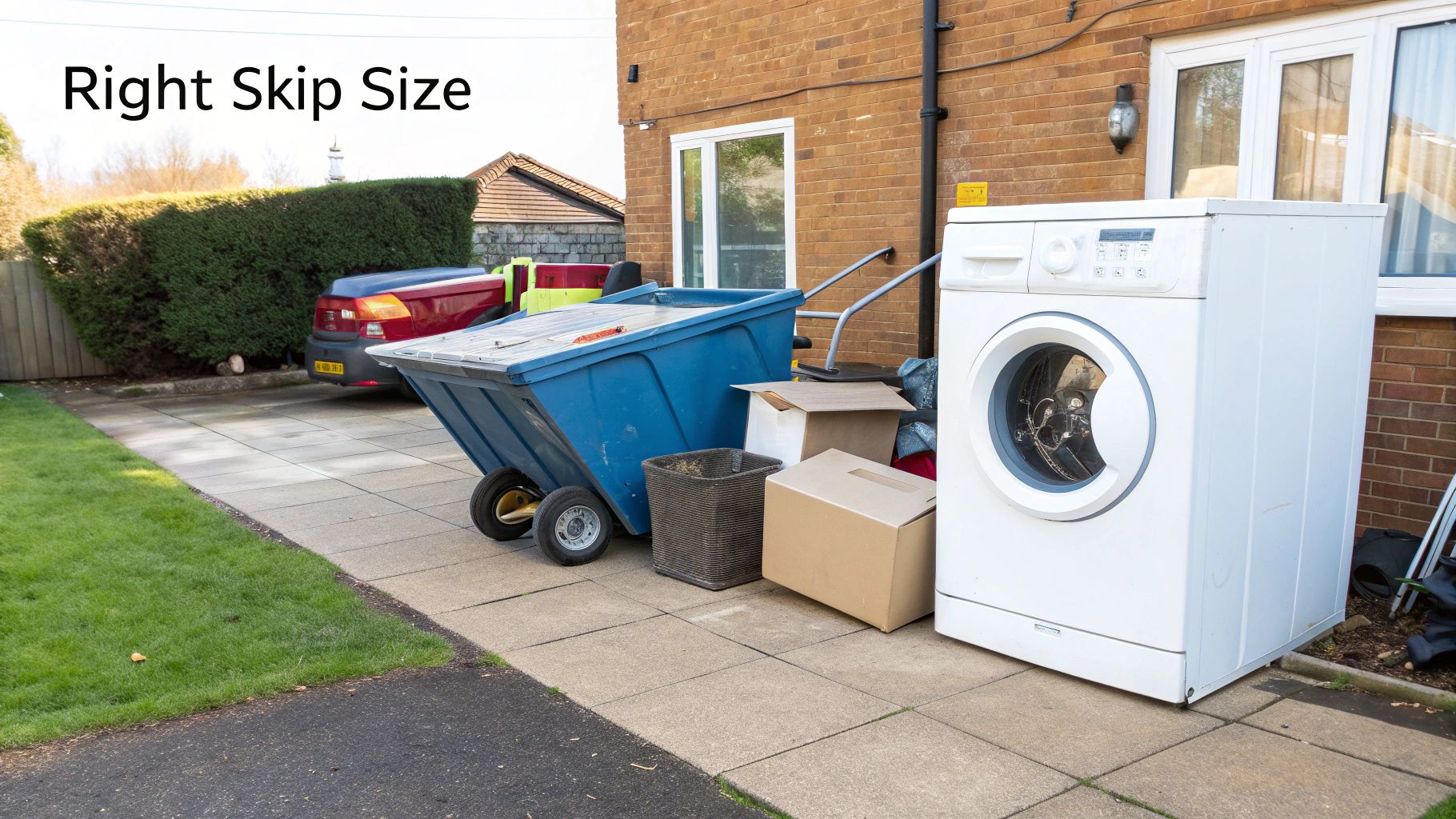
Getting the right skip size is probably the biggest decision you'll make when you hire one for the day. If you get it wrong, you’re either paying for empty space or, even worse, having to down tools halfway through because you’ve run out of room. A bit of planning here goes a long way to making your day hire smooth and cost-effective.
So, let's talk real-world scenarios. Say you're tackling a garden clearance in Bristol this weekend. For that kind of job, a 4-yard 'midi' skip is usually spot on. It's small enough to fit on most drives but has plenty of room for all that soil, old paving slabs, and branches.
But what if you're ripping out a small bathroom in Manchester? The type of waste is completely different. You’ve got bulky things to get rid of, like an old bathtub, a toilet, and piles of broken tiles. For that, you’d be much better off with a 6-yard 'builder's' skip to handle those awkward, heavy materials.
Visualising Your Waste Volume
Trying to guess how much waste you have can be tricky. It often feels a bit abstract. So, let’s put it in terms that make more sense. A standard 6-yard skip, which is one of the most popular sizes for home projects, holds about 60 standard bin bags. That’s roughly what you could cram into a small family car.
Here’s a simple way to think about it:
- 4-Yard Midi Skip: Ideal for smaller DIY tasks or garden clear-outs. It holds around 40 bin bags, which is roughly the volume of four standard washing machines.
- 6-Yard Builder's Skip: This is the go-to for most kitchen or bathroom refits. Its capacity is about 60 bin bags, perfect for a mix of heavy and light waste.
- 8-Yard Large Builder's Skip: Best for bigger renovation jobs, like a full house clearance. This can take about 80 bin bags of waste.
Our best advice? Always book a skip that’s slightly larger than you think you’ll need. It's far better to have a bit of extra space left over than to run out of room with hours of your project still to go.
Picking the right size from the start saves a lot of potential frustration and extra costs down the line. It's a bit like choosing a storage unit – getting the fit right is crucial. For a similar perspective on estimating space, you might find a guide to choosing the right unit size useful.
And for a really detailed look at skips for different jobs, our own guide on what size skip you might need has loads more project-specific examples.
Taking just a few minutes to think about your project's needs properly will make sure your single day of skip hire is as productive and stress-free as it can be. It’s all about matching the skip to the job.
Navigating Permits and Placement Laws
Before you book anything, you need to answer one crucial question: where is the skip going to live? It’s a bigger deal than you might think.
If you’ve got a driveway, a patch of garden, or any other private land where it can sit comfortably, you’re golden. No permit, no fuss. But if the only place for it is on a public road or pavement, you absolutely must get a skip permit from your local council.
Trying to dodge this can land you with some eye-watering fines, so it’s a step you really can’t skip. The good news? You don't have to wrestle with the paperwork yourself. Any reputable skip hire company, like us here at The Waste Group, will handle the entire application process for you. It saves you a massive headache and ensures everything is done by the book.
Securing Your On-Road Skip Permit
When you arrange for your skip to be placed on the road, your provider will need a few key details to get the permit application rolling. This usually just involves confirming the exact location, how long you’ll need it for, and the size of the skip.
Just be aware that this isn't an instant process, so a bit of forward planning is essential. Most councils take around 3-5 working days to give a permit the green light, which is vital to remember if you’re working to a tight deadline. The cost varies from council to council, but you can typically expect it to be somewhere between £30 and £60.
It’s a bit like any major home project, where understanding the rules is key. For instance, anyone embarking on a big renovation needs to look into the permit requirements for significant home alterations to stay on the right side of the law.
If you want to get into the nitty-gritty of it all, we’ve put together a handy guide that answers the question: if you need a skip permit. It covers all the essential details you might be wondering about.
Crucial Safety Note: Any skip placed on a public highway must have safety lights and traffic cones. This isn’t optional—it’s a legal requirement to make sure it's clearly visible to drivers and pedestrians, especially after dark. Your skip hire company should provide these as standard.
Failing to meet these safety rules doesn’t just risk a fine; it creates a serious hazard. By working with a professional service, you can be sure your day hire is fully compliant, safe, and won’t cause any trouble with the neighbours or the local authorities.
How to Load Your Skip Like a Pro
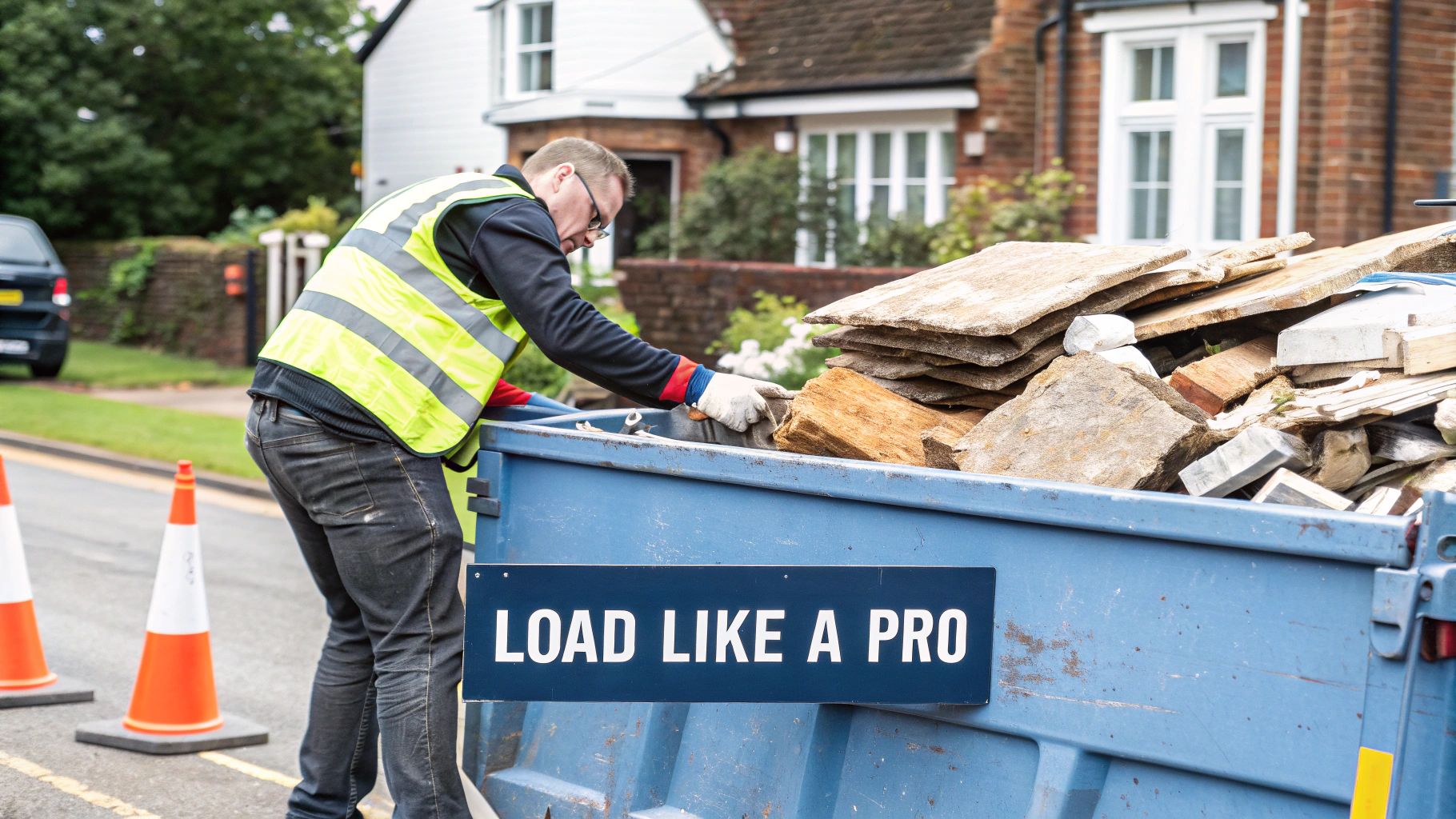
Getting your money's worth from a day hire isn't just about picking the right size skip—it's about how you fill it. A bit of clever packing can make a world of difference, letting you fit in far more than if you just chuck everything in randomly. More importantly, loading your skip correctly is a must for safety.
The golden rule is to keep a level load. This means all your waste has to stay below the height of the skip's sides. If it’s piled up high, it becomes a real hazard on the road, with the risk of items tumbling out and causing an accident. Skip lorry drivers are legally not allowed to collect an overfilled skip, which will leave you facing extra costs and annoying delays.
The Art of Strategic Skip Packing
So, how do the experts do it? Think of it like a game of Tetris. You want to start with a solid, flat base.
Look for items like:
- Old doors
- Sheets of wood or MDF
- Fence panels
- Cardboard boxes you've broken down
Laying these down first gets rid of those awkward empty pockets that always seem to form at the bottom. Once you've got that flat foundation, it's time for the heavy hitters.
Next up, get your bulkiest and heaviest objects in there. This could be anything from old bits of furniture and broken-up concrete to soil and rubble. Place them carefully on your flat base, and try to keep the weight spread out as evenly as you can. A lopsided skip can be unstable and difficult for the lorry to lift safely.
Finally, use all your smaller, loose bits and pieces to fill in the gaps. This is your chance to be really smart with the space. Pour things like soil, rubble, or wood offcuts into every nook and cranny you can find between the bigger items. This trick really compacts the load, making sure you use every last inch you've paid for.
For an even more detailed look at this, check out our guide on how to fill a skip for maximum efficiency.
What You Cannot Put in a Skip
While skips are incredibly useful, there are some pretty strict rules about what can and can't go inside. Some materials are classed as hazardous or need to be disposed of in a special way to protect people's health and the environment. Getting this wrong can lead to some hefty fines.
Always remember that if you're unsure about an item, it's far better to ask your skip hire provider than to risk putting it in. A quick phone call can save you a lot of trouble later on.
Here’s a straightforward list of common items that are strictly forbidden in a general waste skip:
- Asbestos: This is a seriously hazardous material that requires specialist removal and disposal. Never, ever put it in a skip.
- Plasterboard: Because of its chemical makeup, plasterboard has to be disposed of separately from other waste.
- Electrical items (WEEE): Anything with a plug or batteries—think TVs, fridges, microwaves, and computers—needs to be recycled at a proper facility.
- Tyres: These are banned from landfill and have to be recycled.
- Batteries: Whether from a car or your TV remote, batteries contain harmful chemicals and need special disposal.
- Gas canisters: These are a real explosion risk and must not be put in a skip.
- Liquids: This covers a lot of things, including leftover paint, engine oil, and chemical solvents.
Knowing these rules from the start will make sure your day hire is simple, safe, and completely hassle-free.
Understanding the Real Cost of Skip Hire
Everyone wants a fair price, but what really goes into the final quote for hiring a skip for the day? It’s a lot more than just the metal box that turns up on your drive; several key factors dictate the bill you'll actually pay.
The price tag is a blend of logistics, legislation, and your location. Once you get your head around these elements, you can see where your money goes and how to find genuine value without settling for a dodgy, unreliable service.
Breaking Down the Core Costs
The most obvious factor is the skip's size—bigger skips simply cost more to hire, transport, and process. Your postcode also plays a huge role, as fuel costs and local operational expenses can vary quite a bit across the UK.
If you need to place the skip on a public road, a council permit fee will be added to your invoice. This is a non-negotiable cost passed straight on from the local authority, so there's no way for a legitimate company to get around it.
What you’re throwing out matters, too. A skip full of mixed general waste is usually more expensive to process than one containing just soil and rubble. Why? Because mixed waste needs a lot more sorting back at the recycling facility.
Landfill tax is one of the biggest hidden costs in waste management. This government levy, which currently stands at over £100 per tonne, is designed to make sending waste to landfill as painful as possible. A company with high recycling rates avoids this tax, and those savings often get passed on to you.
How Recycling Rates Affect Your Wallet
Choosing a skip hire company that genuinely cares about recycling isn't just an eco-friendly decision; it’s a financially savvy one. Companies that invest in proper sorting technology can divert a huge percentage of waste away from landfill, slashing their tax bill.
The UK skip hire market is growing steadily, between 2.6% and 3.3% each year. While material costs have gone up, diligent recycling efforts that divert up to 75% of waste help keep prices stable for customers. For sectors like manufacturing, which contributes 9.1% to UK GVA, this stability is vital for projects relying on day-hire services. You can dig into more skip hire market trends and their economic impact if you're interested.
Smart Tips for Saving Money
Getting a great price doesn’t have to be complicated. Here are a few practical tips to keep your costs down when hiring a skip for the day:
- Be Ready for Delivery: Make sure the spot where the skip is going is clear and accessible before the driver arrives. Waiting charges for delays can add up fast and are easily avoided with a little prep.
- Separate Your Waste: If you've got loads of a single material like soil or hardcore, ask about a dedicated skip. It’s often cheaper than chucking it in with general waste.
- Ask About Price Matching: Don't be afraid to ask if a company offers a price-match guarantee. Reputable firms like The Waste Group are confident in their pricing and will often match a like-for-like quote to earn your business.
Making Your Waste Removal Eco-Friendly
Ever wondered where all that rubbish actually goes once the skip lorry drives off? It doesn't just disappear. If you're trying to make more environmentally responsible choices, understanding what happens next is the key to making a truly green decision.
The journey for your waste begins at a materials recovery facility (MRF). Here, the mixed contents of your skip get tipped out and meticulously sorted. It’s a fascinating mix of high-tech machinery and sharp-eyed workers who pull out everything from wood and soil to metals, rubble, and plastics. Each material is then cleaned up and prepped for its next life, diverting a huge amount of waste that would otherwise be buried in a landfill.
The Power of Recycling in Skip Hire
When you choose a skip hire company that's serious about recycling, you're making a direct, positive impact. By sorting all those materials, they ensure valuable resources are recovered and put back to use.
For example:
- Wood can be chipped down for biomass fuel or even used as landscaping mulch.
- Soil and rubble are often screened and repurposed as aggregate for new construction projects.
- Metals are sent off to be melted down and forged into brand-new products.
This circular approach is becoming the standard in the UK skip hire industry. Sustainability isn’t just a buzzword anymore; it’s reshaping how things are done. Efficient recycling now diverts an impressive 70-75% of skip waste from landfills. This shift is partly driven by rising landfill taxes, which give companies a real financial incentive to sort waste properly. You can learn more about how eco-practices are influencing the UK skip hire industry and helping keep costs down for everyone.
By picking a provider that puts recycling first, you're doing more than just clearing out your clutter. You're actively taking part in a system that reduces our reliance on landfills and conserves precious natural resources. Your one-day project can be a small but meaningful part of a much bigger environmental win.
This commitment to sustainability means the convenience of a day hire doesn't have to come at the planet's expense. Your project can be tidy and have a minimal environmental footprint.
Common Questions About Hiring a Skip for the Day

Even with the best-laid plans, a few questions always seem to pop up when you’re looking to hire a skip for the day. Getting the right answers upfront helps make sure your project runs without a single hitch.
Let's run through some of the most common queries we get from our customers.
How Much Notice Do I Need for a Next-Day Skip Hire?
For a next-day delivery, your best bet is to book at least 24 hours in advance. This pretty much guarantees your slot. While some companies might be able to squeeze in a same-day delivery if a driver happens to be in your area, you can't bank on it. It all comes down to availability on the day.
The biggest hurdle, however, is the permit. If your skip needs to sit on a public road, you’ll have to factor in extra time. Most councils take around 3-5 working days to process a permit application, which makes last-minute bookings for on-road skips a no-go.
Pro Tip: My advice is always to book as far ahead as you can, especially if your project date is locked in. It gives you the best chance of securing the skip you need and avoids any last-minute stress with council paperwork.
What if I Finish With the Skip Early?
Finished your clear-out faster than you thought? That's no problem at all. If you fill your skip ahead of schedule, just give the hire company a ring.
Most professional outfits are flexible and will gladly arrange for a driver to collect it earlier if their schedule allows. It all comes down to clear communication – a quick phone call is usually all it takes to get the skip out of your way so you can wrap things up.
Can I Mix Different Types of Waste?
Yes, for the most part, mixing different types of waste is absolutely fine. It's perfectly okay to throw heavy stuff like soil, bricks, and rubble in with general household junk or garden waste. This is especially true for smaller skips up to 8 yards.
But, if you've got a massive pile of a single heavy material (like all the soil from digging new foundations), it’s often cheaper to hire a dedicated "inert waste" skip just for that. It’s always worth double-checking with your provider when you book to get the final word on their specific rules for mixed waste.
Ready to get your project started without any hassle? The Waste Group offers reliable next-day skip hire across Dorset with a price-match guarantee. Book your skip online in minutes or give our friendly team a call for some expert advice.