How Do You Dispose of a Television The Right Way in the UK
How Do You Dispose of a Television The Right Way in the UK
That old telly gathering dust in the corner? Thinking of just dragging it out to the kerb with the weekly rubbish? It might seem like the easiest solution, but doing so is a big mistake – and it's against the law.
Televisions are classed as Waste Electrical and Electronic Equipment (WEEE). This means they can't go into your household bin and must be handled by specialist recycling facilities to stop hazardous materials from causing real damage to our environment. It’s not just a friendly suggestion; it’s a legal requirement.
Why You Cannot Just Bin Your Old Television
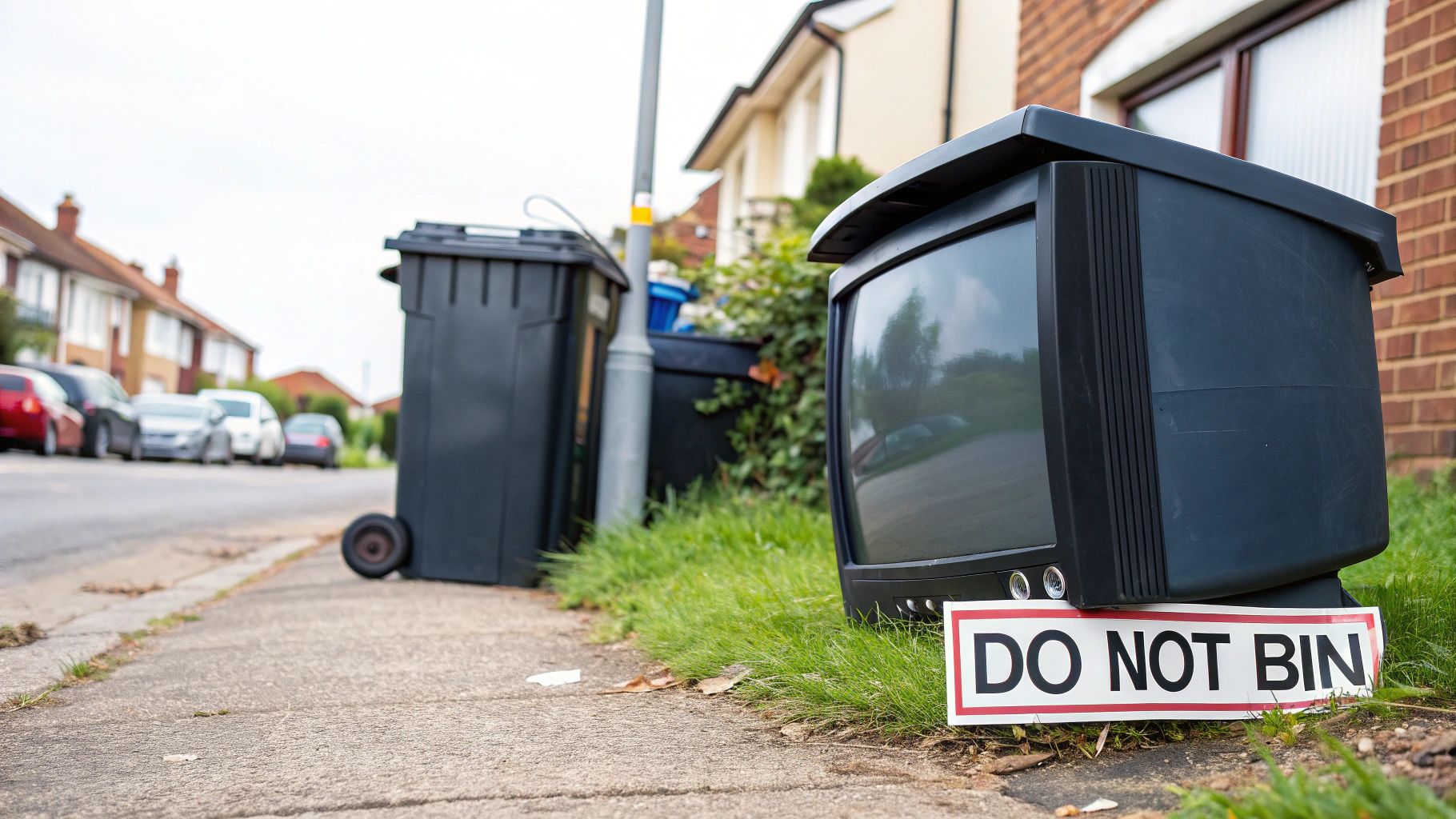
We get it. It’s tempting to just leave a bulky old TV out for the bin lorry, but that simple act has some pretty serious knock-on effects. Here in the UK, how we dispose of all electronic items is strictly managed by the WEEE Regulations 2013. These rules are in place to make sure the growing mountain of e-waste is managed safely, pushing for more recycling and less pollution.
When you leave a TV out with the general waste, you're not just breaking the law; you're adding to a huge environmental problem. Televisions are complex bits of kit, filled with a cocktail of materials that are perfectly fine when the TV is working, but can be incredibly toxic when they start breaking down in a landfill.
The Hidden Dangers Inside Your TV
What’s lurking inside your old television really depends on its age and type. Each model brings its own set of environmental headaches if it isn't dismantled properly.
- Older CRT Televisions: You know the ones – those big, boxy sets. Their cathode ray tubes can contain several pounds of lead. Lead is a potent neurotoxin that can leach into the soil and groundwater from landfill sites, causing long-term contamination.
- Modern Flat Screens (LCD, LED, Plasma): While much sleeker, these TVs have their own nasty secrets. Many contain mercury in their backlights, another highly toxic heavy metal. On top of that, their circuit boards often contain harmful elements like cadmium and brominated flame retardants.
This mix of valuable and toxic materials is exactly why specialist recycling is so vital. It allows experts to safely remove the dangerous components while recovering precious metals like copper and aluminium, which reduces the need to mine for new resources.
The scale of the problem is massive. Improper disposal is fuelling a global e-waste crisis, with discarded electronics being one of the fastest-growing waste streams on the planet. Handling it responsibly is a job for all of us.
Understanding the Environmental Consequences
When a TV gets dumped in a landfill, its protective casing will eventually break down. As rainwater trickles through, it mixes with the exposed chemicals inside, creating a toxic soup known as leachate. This contaminated liquid can seep deep into the earth, polluting local water supplies and damaging entire ecosystems. To get the full picture, it's worth reading up on the wider environmental impact of electronic waste.
The sheer volume of this waste is staggering. In the UK, display equipment like TVs and computer monitors is a major contributor to our e-waste problem. In fact, display equipment alone accounted for 47,095 tonnes of collected e-waste, making it one of the five largest categories.
Ultimately, understanding why you can't just bin a TV is the first crucial step. It highlights just how important it is to choose a legal and ethical disposal route. By treating your old television as the hazardous waste it is, you’re not only protecting the environment but also making sure you’re complying with UK law. This mindset is key as we explore the proper disposal options available to you.
Getting Your Old TV Ready to Go
Before you wave goodbye to your old telly, a few quick prep steps are an absolute must. It’s not just about unplugging it. Taking a few minutes now will protect your personal data and make sure whoever handles it next – whether that’s you or a collection crew – can do so safely.
Think about it: a trailing cable is a classic trip hazard, and a smart TV that still has your Netflix login is a serious privacy risk. A bit of prep work ensures a smooth, secure handover, no matter which disposal route you choose.
Wipe Your Personal Data First
These days, a smart TV is basically a big computer sitting in your living room. It holds your Wi-Fi password, your Amazon Prime account, your BBC iPlayer details… everything. Just switching it off won’t clear any of that.
This is why the very first thing you need to do is a factory reset. This wipes the slate clean, taking the TV back to the state it was in when it first came out of the box.
- Head to the Settings Menu: Grab the remote and look for the settings, usually a little gear or cog icon.
- Find the Reset Option: You’ll need to poke around a bit, but look for menus labelled "System," "Support," or "General." Inside one of those, you should spot "Factory Reset," "Reset to Initial Settings," or something similar.
- Confirm You Want to Reset: The TV will probably ask for a PIN (the default is often 0000) to make sure you’re serious. Once you confirm, it’ll restart, and all your personal information will be gone for good.
Honestly, this is the most critical step. Not doing it is like selling your laptop without wiping the hard drive – you’re leaving your digital life wide open.
It's a surprising fact, but studies on second-hand smart devices have found a huge number still contain personal data from their previous owners. A factory reset is your best defence against your accounts being misused.
Disconnect and Secure Everything Safely
With your data wiped, it's time to deal with the physical side of things. The goal here is to make the TV safe to move and prevent any damage. A cracked screen isn’t just a pain; it can actually release some nasty materials and makes the whole unit much harder to handle.
Start by unplugging the power cord from the wall socket, then from the TV. After that, pull out all the other cables – HDMI, aerial, soundbar connectors, the lot. A good tip is to use a cable tie or even just some tape to bundle them up neatly. You can either tape the bundle to the back of the TV or pop them in a bag so they don’t snag on anything or trip someone up.
Next, you need to protect that screen. It's easily the most delicate part of a modern TV. If you’ve still got the original box and all the polystyrene inserts, brilliant – use them! If not, don't worry, you can easily improvise.
Just wrap the whole TV in an old blanket, or even a few layers of bubble wrap. Pay special attention to the corners and, of course, the screen. Use plenty of packing tape to hold your wrapping in place so it doesn’t shift about. It might seem like a small thing, but it makes the telly much safer to carry and massively reduces the risk of it getting broken on its way to the recycling centre.
Where to Take Your Old TV: A Rundown of Your Options
Right, so your old telly is disconnected, wiped of any personal data, and safely wrapped up. The big question now is, where does it actually go? Thankfully, you’re not short on options. Knowing the ins and outs of each will help you get rid of it in a way that works for your schedule, budget, and conscience.
Your decision will probably come down to a trade-off between convenience and cost. Some routes are completely free but mean you'll have to put in a bit of legwork, while others offer a handy door-to-door service for a fee. Let's walk through the most common ways to dispose of an old TV so you can figure out what’s best for you.
This little decision tree gives you a quick visual on getting any TV ready, whether it’s a modern smart one or an older, simpler model.
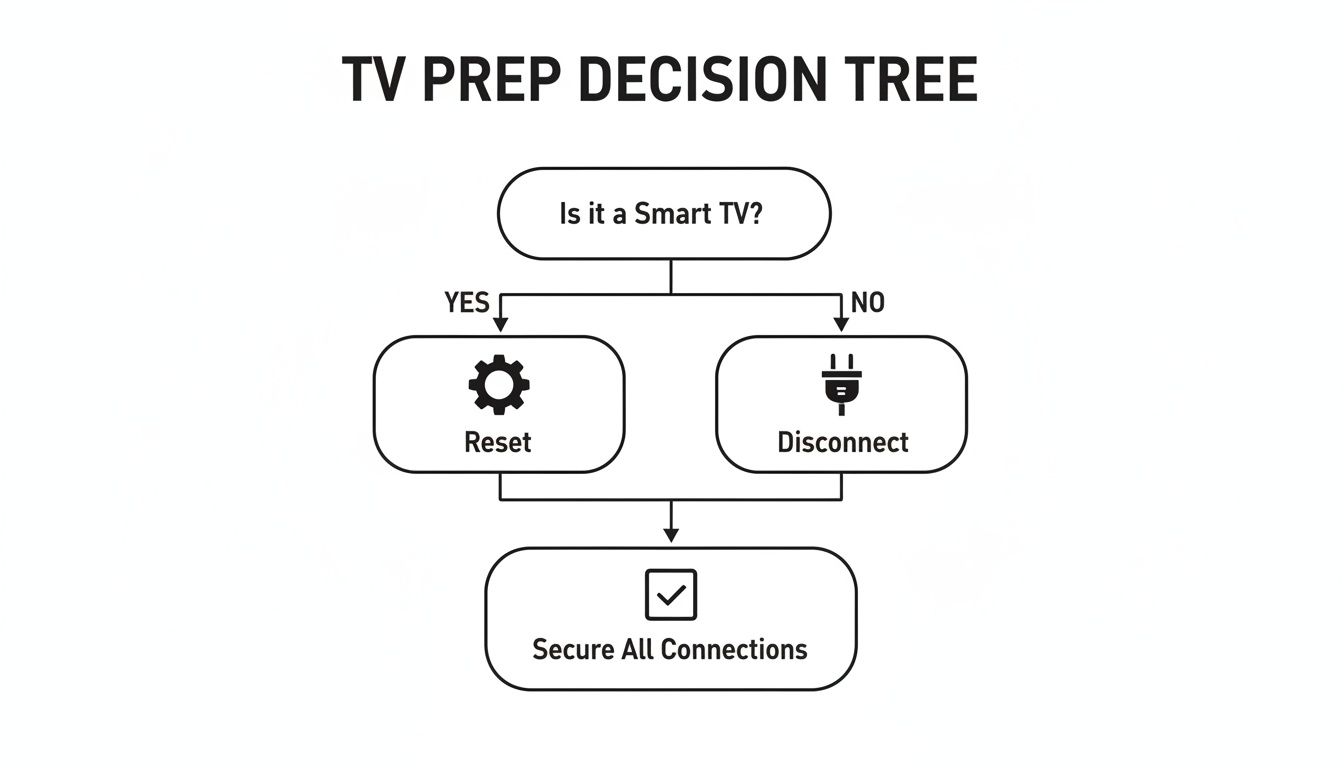
The main point is clear: every TV needs some prep work, from protecting your data on smart models to making sure all types are safely unplugged and ready for transport.
The Local Tip (Household Waste Recycling Centre)
For most of us, the local council tip—or Household Waste Recycling Centre (HWRC) as it's officially known—is the go-to choice. It’s a dependable and, crucially, free service for local residents. Every HWRC has a designated section for electricals (WEEE), making sure your TV gets sent to the right place for recycling.
But hold on, it's not always as simple as just turning up. Many councils now ask you to book a slot online beforehand, and you’ll likely need to show proof that you live in the area, like a recent bill or your driving licence. You also need a car big enough to get the TV there. That 55-inch flat screen looked great on your wall, but you’d be surprised how awkward it is to squeeze into the back of a hatchback.
Council Bulky Waste Collections
If you can't make it to the recycling centre yourself, don't worry. Your local council will almost certainly offer a bulky waste collection service. It’s a brilliant alternative where they come and collect large items like TVs directly from your property, though there is a charge for it.
The fee for this usually falls somewhere between £20 and £50, depending on where you live and what else you need them to take. You'll have to book it in advance and they'll give you a collection day. In most cases, you need to leave the item outside your home, so make sure it's accessible and covered if the weather looks a bit dodgy.
This is the perfect middle-ground option if you don't have a suitable car or can't lug a heavy, awkward telly around yourself. It bridges the gap between a DIY trip to the tip and hiring a private waste company.
Retailer Take-Back Schemes
Here's a handy tip: when you buy a new TV, the shop you buy it from is legally required to help you get rid of the old one. Under the UK's WEEE Regulations, retailers have to offer a free in-store take-back service, meaning you can drop off your old TV when you buy a similar new one.
Many of the big retailers make it even easier by offering to collect your old set when they deliver the new one. This is often the most painless method of all, as their delivery team just takes the old unit away. They might add a small charge for this, but it saves you all the hassle. It's always worth asking about this when you're at the checkout.
Donating to a Charity or Someone in Your Community
If your old television still works perfectly, please don't be so quick to recycle it. The greenest option is always to give something a second life. Plenty of local charities and community groups would be thrilled to take a working TV off your hands.
- Charity Shops: Larger shops, especially the ones that sell furniture, often accept electricals. Just give them a quick call first to check their policy.
- Community Projects: Think about local community centres, youth clubs, or even shelters. They might be in desperate need of a TV.
- Online Platforms: Websites like Freecycle or local Facebook Marketplace groups are fantastic for passing things on directly to people nearby who could use them.
Of course, for this to work, the TV must be in good working order, ideally with its remote and power cable. It's a brilliant way to help a good cause and stop a perfectly good item from ending up as waste.
When you're looking into these different routes, you’ll see that most fall under the big umbrella of responsible recycling. For a more detailed look at handling all your old gadgets, check out A Friendly Guide to Recycling Electronic Equipment.
Ultimately, the right choice comes down to a bit of research into what's available in your area. For anyone in Dorset trying to weigh up their options, our guide on finding waste disposal near you is a great place to start.
Comparing Your TV Disposal Methods
To make things a bit clearer, here’s a quick comparison of the most common ways to get rid of an old television. This table lays out what to expect in terms of cost, convenience, and who each option is really best for.
| Disposal Method | Typical Cost | Convenience Level | Best For |
|---|---|---|---|
| Local HWRC (The Tip) | Free | Low to Medium | People with a suitable vehicle who don't mind a bit of DIY. |
| Council Bulky Collection | £20 – £50 | Medium | Those without transport or who can't lift heavy items. |
| Retailer Take-Back Scheme | Free to £25 | High | Anyone buying a new TV and looking for maximum convenience. |
| Charity Donation | Free | Medium | Getting rid of a fully working TV while helping the community. |
| Private Waste Collector | Varies | Very High | Urgent disposals or clearing out multiple large items at once. |
As you can see, there's a solution for every situation. Whether you prioritise saving money, saving time, or helping others, there's a responsible way to say goodbye to your old TV.
Using a Skip for a Larger Clear-Out
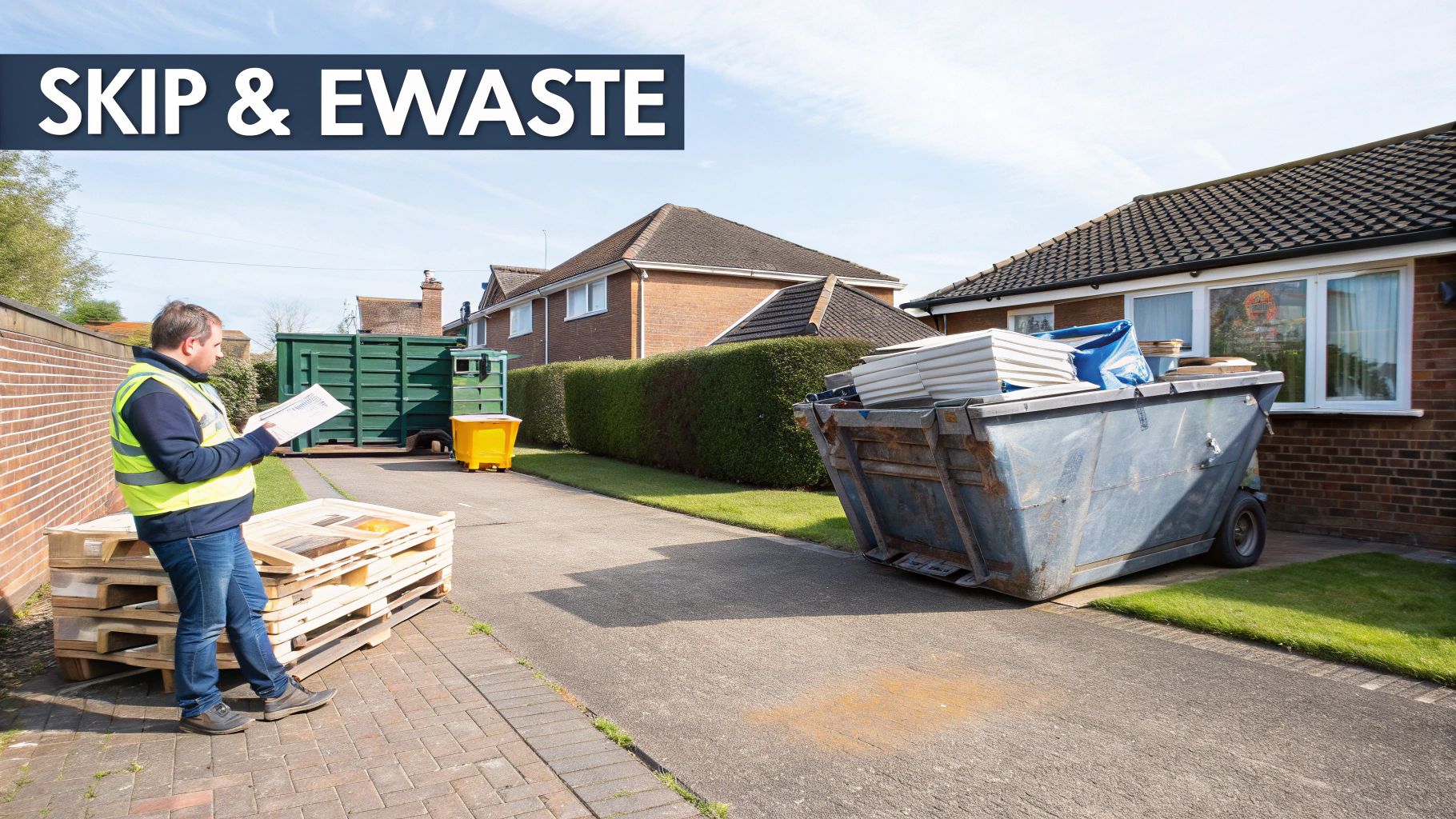
Sometimes, getting rid of an old television is just one small part of a much bigger job. You might be clearing out the garage, tackling a couple of rooms during a renovation, or handling a full house clearance. When you’re dealing with that much stuff, hiring a skip often feels like the most practical solution.
But there’s one golden rule you need to know right from the start. You absolutely cannot legally toss a television, or any other electronic item, into a skip with your general waste. TVs are classified as WEEE (Waste Electrical and Electronic Equipment) and have to be handled separately to stop hazardous materials from spoiling everything else in the skip.
It sounds like a headache, but it’s actually a really simple process with the right waste partner. The best way to handle it is to coordinate everything together. You hire the skip for all your general waste—things like old furniture, timber, and rubble—and arrange a separate, compliant collection for your WEEE items at the same time. This keeps the whole job legal, safe, and surprisingly efficient.
Why Separate Collections Are So Important
The reasoning behind keeping electronics out of skips is simple but crucial. A skip full of general waste usually goes to a materials recovery facility to be sorted. If an old TV gets crushed amongst bricks and wood, its screen can easily shatter, releasing lead dust or mercury vapour and contaminating the entire load. This not only makes recycling the other materials a nightmare but also puts workers at risk.
By booking a separate collection for your electronics, you tick two very important boxes:
- You stay on the right side of the law. You're correctly following the WEEE Regulations, which means no risk of fines and you’re fulfilling your 'duty of care' for the waste you create.
- You're doing the right thing for the environment. The TV is guaranteed to go to a specialist facility where it can be safely dismantled, hazardous bits removed, and valuable materials recovered for reuse.
Just think of it as having two different waste streams for your project: one for all the bulky, non-hazardous stuff, and another for the specialist items that need a bit of extra attention.
It's a common myth that "all waste is the same." The truth is, sorting different materials correctly right from the beginning is the single most important step to achieving high recycling rates and preventing pollution.
A Real-World Clear-Out Scenario
Let's walk through a situation we see all the time. Imagine a family in Bournemouth is clearing out their late grandfather's garage. Inside, they find an ancient CRT television, a broken lawnmower, piles of rotting timber, and heaps of general clutter that's been gathering dust for decades.
Their first instinct is to hire one big skip for everything, but they soon find out about the restrictions. Here’s how a coordinated service makes their job a breeze:
- Booking the Service: They give a local waste company a call and explain what they're dealing with. They book an 8-yard skip for the wood and general junk, and at the same time, they schedule a 'man and van' style collection for the WEEE – the old TV and the lawnmower.
- Sorting on Site: As they clear out the garage, they simply make two piles. All the general waste goes straight into the skip as they work. The TV and lawnmower are put to one side in a safe, dry spot, ready for their dedicated collection.
- A Smooth Collection Day: The skip is delivered and filled over the weekend. Then, on the arranged day, the company collects the full skip and, using a separate vehicle, the team picks up the WEEE items. The family gets a single invoice and the correct paperwork, including a Waste Transfer Note that covers every single item.
This approach turns what could be a complicated and stressful job into a straightforward one. The family avoids multiple trips to the tip or worrying about what can go where. It's all handled for them, making sure every last bit is disposed of correctly and legally.
If you’re ever in doubt about skip rules, it's always a good idea to check out what you can't put in a skip before you begin. A quick check can save you a world of hassle later on.
Understanding the Paperwork for Waste Disposal
When you arrange for a professional to collect your old television, it might feel like the job is done once the van drives away. But there’s one crucial last step that protects both you and the collection company, and it’s all about the paperwork. This isn’t just getting a receipt; it’s a legal requirement that creates a clear, traceable record of your TV's journey from your home to its final destination.
For any waste removal in the UK, this process is formalised by a document called a Waste Transfer Note (WTN). Think of it as the official record proving you’ve passed your waste—in this case, your old telly—to a licensed carrier.
What Is a Waste Transfer Note?
A Waste Transfer Note is basically a passport for your rubbish. It’s a legally binding document that logs the transfer of waste from one party to another, capturing all the key details. It notes what the waste is, who created it, and who is collecting it for disposal or recycling.
This document is a cornerstone of the UK’s environmental regulations. It ensures every piece of waste can be tracked from start to finish, which helps prevent illegal fly-tipping and makes sure hazardous items like TVs are handled correctly.
The legal responsibility for this is known as your 'Duty of Care'. This principle applies to everyone, from huge businesses generating tonnes of waste to a homeowner simply getting rid of an old television. It means you are legally responsible for your waste right up until it’s in the hands of a licensed professional. The WTN is your proof that you’ve fulfilled this duty properly.
Key Information Included on a WTN
A proper Waste Transfer Note isn't just a simple bit of paper; it must contain specific details to be valid. Any reputable provider will sort this out for you, but it’s always good to know what you’re looking for.
- A Clear Description of the Waste: It will list exactly what’s being collected, something like, '1 x LCD Television (WEEE)'.
- Quantity and Containment: It specifies how much waste there is and how it’s contained (e.g., as a single item).
- Your Details: The name and address of the person or business that produced the waste.
- Collector's Details: The name, address, and crucially, the waste carrier license number of the company taking it away.
- Transfer Location and Date: The address where the collection happened and the exact date.
Both you and the waste carrier must keep a copy of the signed WTN for at least two years. It’s your official evidence that you handed your television over to an authorised company. For a deeper dive into the specifics, you can learn more about what a waste transfer note is and why it’s so important.
Any legitimate waste collection service will provide a Waste Transfer Note as standard. If a company seems hesitant to offer one or can't produce a valid waste carrier license, consider it a major red flag.
Ultimately, this piece of paper gives you complete peace of mind. It’s your guarantee that your old television is being handled legally, ethically, and responsibly from the moment it leaves your home. It confirms you’ve done your part, protecting you from any potential trouble down the line.
Partnering with a Responsible Waste Specialist

Figuring out how to dispose of a television often leads to one simple conclusion: getting it wrong can be risky and bad for the environment. After you've weighed up all the options, from a trip to the local tip to hoping a retailer will take it back, sometimes the simplest and safest route is to just call in the experts.
A specialist waste management service takes all the guesswork out of the equation. Instead of you having to worry about transport, opening times, and the right legal paperwork, a professional team handles every last detail. This is particularly true if your old TV is part of a bigger house or office clear-out, where you need to know every item is being handled correctly.
The Benefits of a Professional Service
Choosing a dedicated partner like The Waste Group means you’re not just getting rid of rubbish; you’re making sure it’s managed responsibly from start to finish. Our entire service is built around compliance and sustainability.
- Guaranteed Compliance: As a licensed waste carrier, we provide a Waste Transfer Note as standard. This gives you a complete audit trail and total peace of mind that your legal 'duty of care' is met.
- High Recycling Rates: Any reputable company worth its salt is committed to diverting as much waste from landfill as possible. Your old television will be sent directly to a certified WEEE facility where it can be safely dismantled and recycled.
- Convenience and Safety: Let's face it, old TVs can be heavy and awkward. Our professional teams are equipped to handle these items safely, saving you the physical strain and the hassle of trying to haul it yourself.
By partnering with a specialist, you are actively choosing a solution that puts the environment first. It’s the only way to be certain that the hazardous materials inside your old TV are neutralised and any valuable components are recovered for reuse.
At the end of the day, a professional waste service provides a straightforward and ethical solution. Whether you need a single bulky item collected or a full skip for a major clear-out, we ensure the entire process is handled correctly.
If you’re in Dorset and ready to dispose of your television or any other waste with confidence, contact The Waste Group today for some expert advice and a fast, reliable collection.
Your TV Disposal Questions Answered
When it comes to getting rid of an old television, a few questions always crop up. It’s not something you do every day, so it’s perfectly normal to be a bit unsure of the rules. We get asked these all the time, so here are some quick, straightforward answers to give you a bit of clarity.
Can I Chuck a Small TV in My Normal Bin?
Absolutely not. It doesn’t matter if it’s a tiny portable or a massive flat screen – you can never put a television in your household waste or recycling bin.
TVs are classed as Waste Electrical and Electronic Equipment (WEEE), and binning them is illegal. They’re full of nasty stuff like lead and mercury that has to be dealt with properly to avoid damaging the environment. You could even face a fine for doing it.
What’s This Going to Cost Me?
The price for disposing of a TV can vary quite a bit, depending on how you go about it.
- Your Local Tip: Taking it to your local Household Waste Recycling Centre (HWRC) is usually free for residents. The only catch is you have to get it there yourself.
- Council Bulky Collection: If you can’t get to the tip, most councils offer a collection service. You’ll typically pay a fee somewhere between £20 and £50.
- Donating It: If the TV still works, giving it to a charity or finding it a new home is completely free. It’s also the best option for the planet.
- A Professional Service: Using a specialist waste collector like us will vary in price, but it's often the most convenient choice, especially if you have a big TV or a few other bulky items to get rid of at the same time.
Do I Really Need to Wipe My Smart TV First?
Yes, and this is a big one. Don't ever skip this step. Smart TVs are like computers – they hold a surprising amount of your personal data. We’re talking login details for Netflix and Amazon Prime, your Wi-Fi password, and even your browsing history.
Before it leaves your house, dig into the settings menu and find the 'factory reset' option. This will wipe all your personal information clean and put the TV back to how it was when it came out of the box.
Think of it like selling an old phone or laptop. You wouldn't hand it over with all your accounts still logged in, would you? The same logic applies to your smart TV.
What Actually Happens to My TV When It's Recycled?
When you send your old telly off for recycling at a proper WEEE facility, it doesn't just get crushed. It's a careful process.
Trained technicians start by dismantling it and safely removing the hazardous bits – things like the mercury-filled lamps in LCD screens or the leaded glass from old-school CRT TVs.
Once the dangerous parts are out, the rest is separated into different materials: plastics, metals like copper and aluminium, and the circuit boards. These valuable resources are then processed and sent back into the manufacturing chain to be used in new products. It’s a much better alternative to mining for new raw materials.
For a hassle-free, fully compliant, and environmentally sound solution for your old television or any other waste in Dorset, The Waste Group is here to help. Our professional services ensure your items are handled correctly from start to finish.
Visit us at https://www.thewastegroup.co.uk to book a collection or get expert advice.