
How Much Does Skip Hire Cost? A UK Pricing Guide
How Much Does Skip Hire Cost? A UK Pricing Guide
When you’re planning a project, whether it's a garden clear-out or a major renovation, one of the first questions that comes to mind is "how much will it cost?" For skip hire, the price isn't a simple one-size-fits-all figure. It’s a bit like booking a taxi – the fare changes based on the size of the car you need and how far it has to go.
The cost of hiring a skip in the UK generally falls between £75 and £450 per week. The final price really comes down to the skip's size and your location. A small mini skip for a weekend DIY job might set you back around £125, whereas a standard builder's skip for bigger projects averages closer to £320.
Your Quick Guide To UK Skip Hire Costs
To help you get a handle on your budget, we've broken down the average costs for the most popular skip sizes. This should give you a quick and clear idea of what to expect, so you can see where your project might land on the pricing scale.
Average Prices For Common Skip Sizes
The single biggest factor that will shape your quote is the size of the skip you need. Getting this right is so important. If you go too small, you'll end up needing a second skip, which is a real pain. But if you go too big, you're just paying for empty space you don't need.
Key Takeaway: It’s pretty straightforward – as the skip size (measured in cubic yards) goes up, so does the price. This reflects the greater amount of waste it can hold and the costs involved in transporting and processing it.
This bar chart gives you a simple visual of what you can expect to pay for the three most common skip sizes.
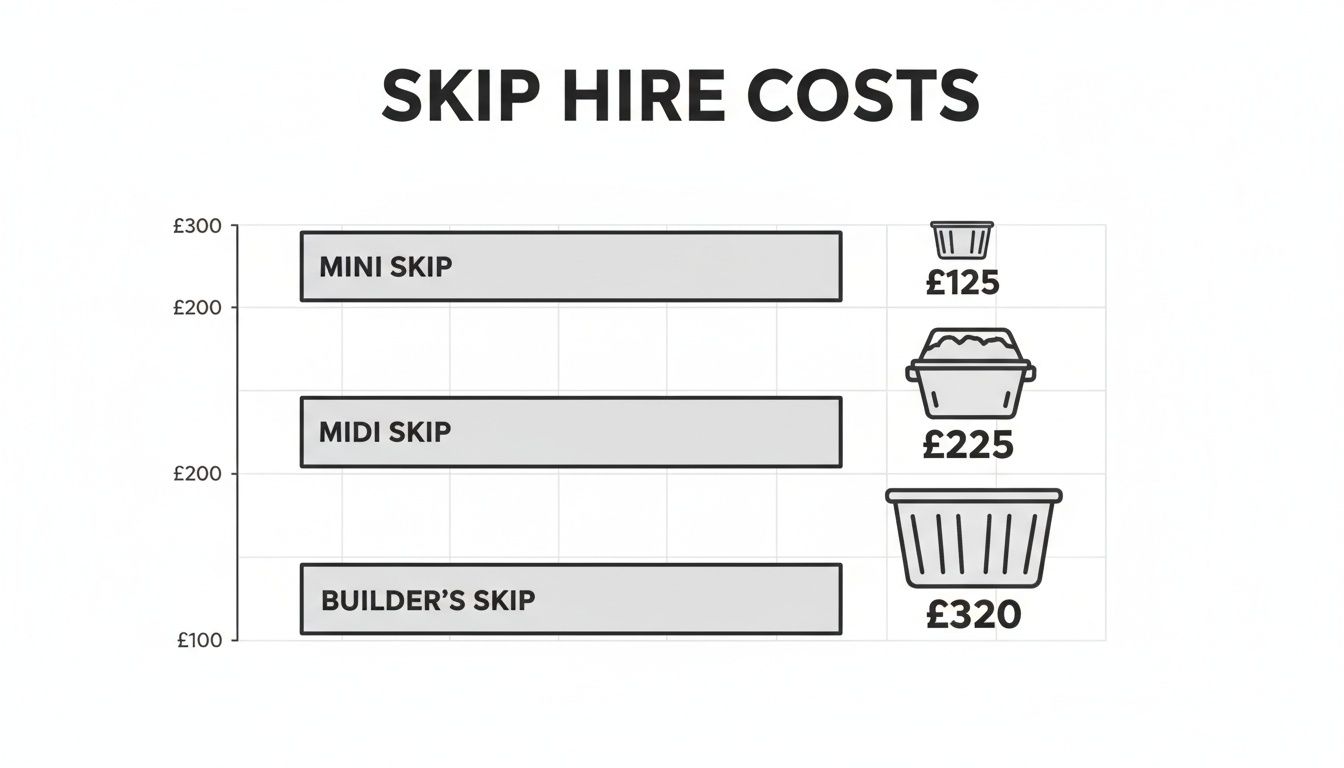
As you can see, the price steps up logically from the Mini to the Builder's skip, making it easier to match your budget to the scale of your job.
UK Skip Hire Cost Examples
To give you some more concrete numbers, let's look at a few examples based on recent weekly hire rates.
Here’s a quick overview of what you can expect to pay for some of the most common skip sizes.
Average UK Skip Hire Costs At A Glance
This table provides estimated weekly hire costs for popular skip sizes across the UK, giving you a quick reference for budgeting your project.
| Skip Size (Cubic Yards) | Common Uses | Average Weekly Cost Range |
|---|---|---|
| 2-3 (Mini Skip) | Small garden tidy-ups, minor DIY projects | £90 – £150 |
| 4-5 (Midi Skip) | Kitchen or bathroom refits, larger clearouts | £180 – £250 |
| 6-8 (Builder's Skip) | Construction waste, full house clearances | £280 – £350 |
These prices should give you a reliable starting point for your budget. For example, a big garden overhaul often needs a skip, and fully understanding garden clearance costs can help you plan everything out properly.
Of course, picking the right container is the first step. If you're not sure, it’s always worth checking out a guide on what size skip you might need to make sure you get it just right.
Decoding The True Cost Of Skip Hire
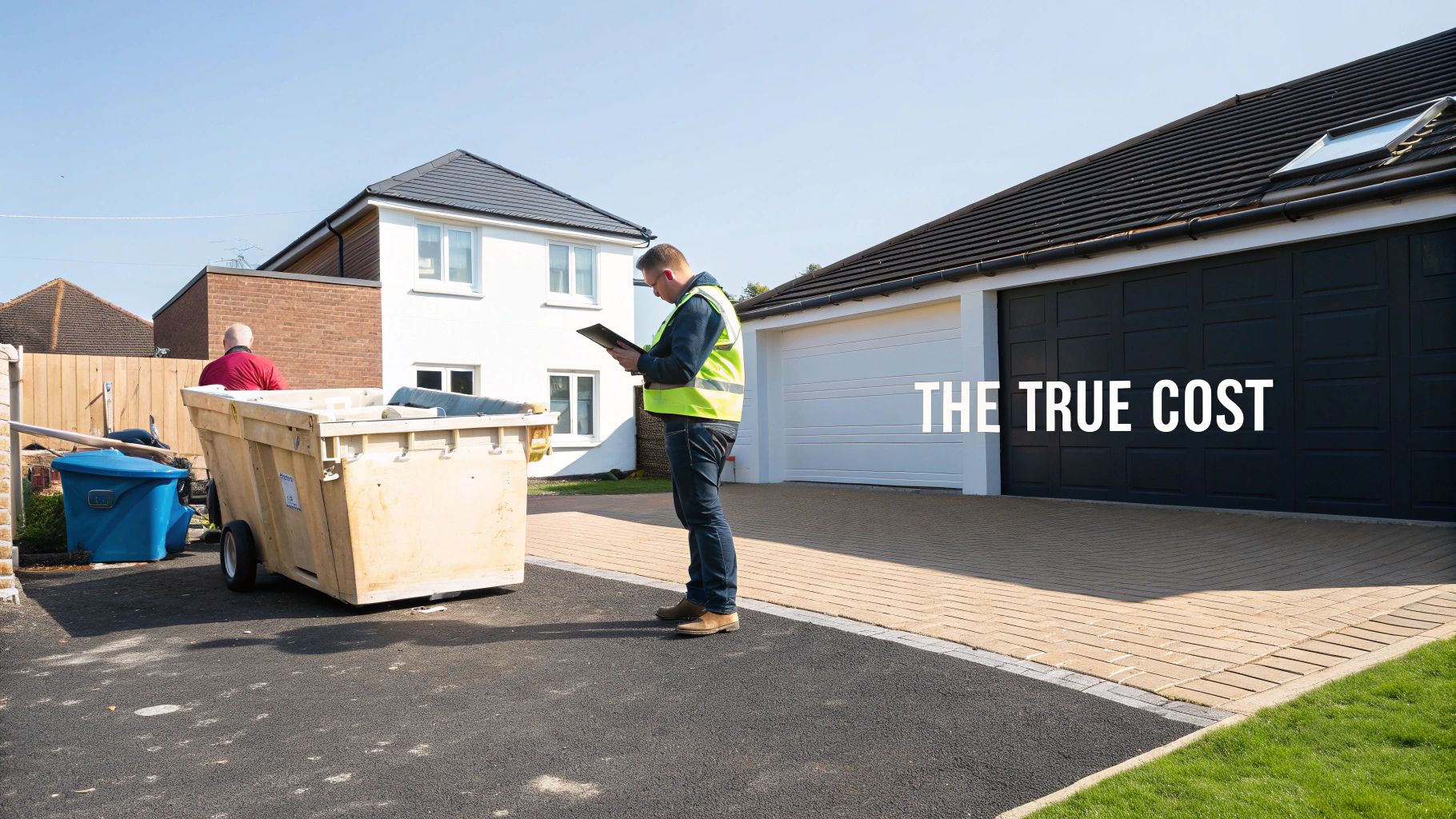
Ever wondered why two quotes for the same size skip can be miles apart? It’s a common question, and the answer is a bit like ordering a takeaway pizza. The price you pay isn't just for the dough and cheese; it covers the ingredients, the chef's time, delivery, and all the kitchen's running costs.
Skip hire pricing works much the same way. The figure on your quote isn’t just for the steel box—it’s a carefully calculated sum of several interconnected costs that every waste management company has to juggle. Getting your head around these factors helps to demystify the price and shows you what a fair quote really looks like.
The Landfill Tax Effect
One of the biggest players driving the cost of skip hire is something most customers never see: the UK Landfill Tax. This is a government levy slapped on every tonne of waste that gets buried in the ground, designed to push everyone towards recycling and more sustainable options.
And this tax is no small fee. It’s one of the main reasons skip hire prices have steadily climbed and why two similar-sized skips on the same street can differ in price by over 300%. The Landfill Tax alone has shot up by a staggering 680% since 2010. With all the surcharges included, the standard rate now sits at over £130 per tonne, making landfill a painfully expensive option for waste companies.
A higher Landfill Tax directly translates to higher operational costs for the skip provider. Therefore, a company that invests heavily in recycling isn't just being eco-friendly—it's actively working to reduce the amount of waste sent to landfill, which in turn helps keep your final bill lower.
The Role Of Modern Recycling Facilities
This brings us straight to the next key piece of the puzzle: recycling infrastructure. A skip hire company's commitment to recycling has a real, tangible impact on how it prices its services. Companies that run their own sorting facilities can process mixed waste efficiently, pulling out valuable materials like wood, metal, soil, and hardcore.
These recycled materials can often be sold or repurposed, creating an extra revenue stream that helps to offset the cost of disposal. This financial upside is then passed on to you, the customer, through more competitive pricing. On the flip side, a company that simply picks up your skip and tips the whole lot into a landfill has to swallow the full force of the Landfill Tax—and their prices will inevitably show it.
Factoring In Transport And Labour Costs
Beyond getting rid of the waste, the simple logistics of getting the skip to your property and taking it away again is a major part of the overall cost. Just think about the resources involved:
- Fuel: The price of diesel has a direct impact on the cost of every single trip the skip lorry makes.
- Vehicle Maintenance: These are big, specialised vehicles that need regular, expensive servicing to run safely and reliably.
- Driver Wages: You need skilled and licensed HGV drivers to operate these lorries, and their wages are a core operational expense.
These transport costs are exactly why your postcode is so important when you ask for a quote. A provider based miles away from your address will naturally have higher fuel and time costs to cover, which will be built into your price.
Operational Overheads And Business Costs
Finally, just like any other business, a skip hire company has general overheads that have to be factored into its pricing. These are all the day-to-day costs needed to run a professional and compliant operation.
This covers everything from yard rent and business rates to insurance, staff training, and the admin costs of managing bookings and permits. It also includes the investment in the equipment and technology needed to provide a reliable service. A reputable company invests in these areas to guarantee safety, compliance, and a smooth experience for you. Understanding how a company handles a general waste skip gives you a better appreciation of all the processes going on behind the scenes.
Navigating Permits And Potential Extra Fees
The price you’re first quoted for a skip is your starting point, but it's not always the final figure. Think of it like booking a flight – the base fare gets you on the plane, but extras like baggage can bump up the total. Getting your head around these potential extra fees is the key to keeping your project on budget and avoiding any nasty surprises.
The most common addition to the bill is a council skip permit, a fee that often catches people off guard. Beyond that, there are a handful of other charges that are almost always avoidable if you know the rules. By understanding these costs upfront, you can manage your waste disposal without a hitch and make sure the price you see is the price you pay.
Do You Need A Council Skip Permit?
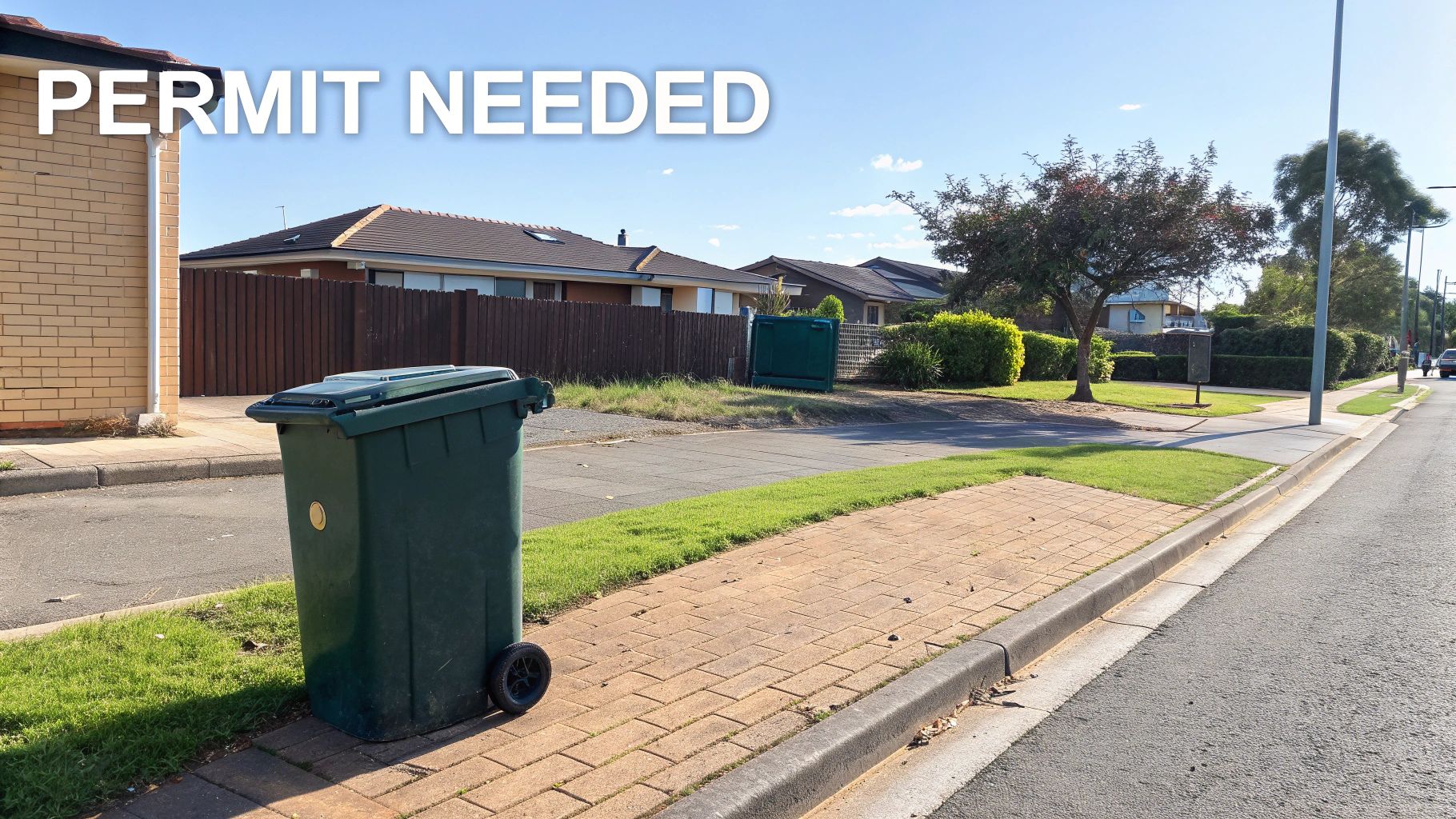
Whether you need a permit boils down to one simple question: where is the skip going to live? If you’ve got a private driveway, a front garden, or any other patch of private land where the skip can sit without touching public ground, you’re in the clear. No permit necessary.
But the moment any part of that skip needs to be placed on public land – like the road, a pavement, or even a grass verge – you will legally need a permit from your local council. This is non-negotiable, as it’s all about making sure public access and safety are maintained.
Good news, though. Reputable skip hire companies, like The Waste Group, handle the entire permit application for you. It saves you the headache of council paperwork, and we just add the cost to your total invoice.
The cost of a skip permit varies wildly across the UK because each council sets its own fees. You can expect to pay anywhere from £15 to over £60, and some London boroughs charge a fair bit more. These permits are also time-sensitive, usually lasting for one or two weeks. If you need the skip for longer, you might have to pay a renewal fee. For bigger commercial projects, it's also worth being aware of other site regulations like permit to work systems.
Common Charges You Can Easily Avoid
While a permit is sometimes a must, several other extra fees are completely within your control. Knowing these common pitfalls is the best way to stop them from bumping up your skip hire costs.
1. Overloading The Skip
Every skip has a maximum fill line clearly marked on its side, often called a ‘level load’ line. Piling waste above this isn't just bending the rules; it’s a serious safety hazard. Overloaded skips are illegal to transport on public roads because items can fall off and cause accidents.
- The Consequence: The driver will flat-out refuse to collect the skip until you’ve removed the excess waste. This usually means you’ll get hit with a wasted journey charge and have the hassle of sorting out the extra rubbish yourself.
2. Putting Prohibited Items In The Skip
You can't just chuck anything and everything into a general waste skip. Certain materials are banned because they need specialist disposal to protect the environment.
Commonly banned items include:
-
Asbestos
-
Plasterboard
-
Fridges and freezers
-
Tyres
-
Batteries and electronics (WEEE waste)
-
Paint, solvents, and other liquids
-
The Consequence: If these items are found mixed in with your general waste, you'll face extra disposal charges to cover the cost of their safe and legal removal. Always tell us about any hazardous materials when you book.
3. Wasted Journey Fees
A massive skip lorry needs clear and safe access to drop off and pick up your skip. If the driver turns up and can't do the job because something is in the way, you’ll likely be charged a wasted journey fee to cover their fuel and time.
Common reasons this happens include:
-
Blocked driveways or access roads
-
Parked cars preventing the lorry from getting close enough
-
Locked gates
-
Soft or unsuitable ground that could cause the lorry to get stuck
-
The Consequence: You’ll be charged a fee, and you’ll have to reschedule the delivery or collection once you’ve cleared the access issue, which can cause real delays to your project.
How Your Location Impacts Skip Hire Prices
Your postcode is one of the biggest factors in what you'll end up paying for a skip. It’s not as simple as North vs South, either; prices can change dramatically even between neighbouring towns. This geographical lottery all comes down to a mix of local running costs and regional rules.
Think of it like the delivery fee on a big online order. The further a lorry has to travel from its depot to your doorstep, the more it costs in fuel and time. This simple bit of logistics means a local company with a base nearby will almost always be able to offer a better price than one trekking in from two counties away.
Why Prices Vary Across The UK
A few key things create these price differences from one area to the next. A big one is how close the skip company is to a waste processing facility. If they're just around the corner from a recycling centre or landfill, their transport and tipping fees are lower, and you'll often see those savings passed on.
On the flip side, a company in a more remote spot might have to travel a fair distance to legally get rid of your waste. That bumps up their costs, and your quote along with it. It’s the main reason that asking how much does skip hire cost can feel a bit like a postcode lottery.
You can really see this in the North-South divide. Recent figures show a small 2-3 yard skip might cost you £65–£110 in the North, but that jumps to £90–£150 in the South. In London, you could be looking at £135–£175. That means a mini skip in the capital can be 60–100% more expensive than the same one up north.
Local council permit fees play a massive part too. As we've mentioned, the price of a permit to place a skip on a public road is set by the local authority. These fees can range from as little as £15 in some places to over £100 in others, adding a hefty chunk to your final bill.
Local Knowledge Makes A Difference In Dorset
For anyone needing a skip in Dorset, choosing a genuinely local provider like The Waste Group brings real advantages that go beyond just a shorter delivery drive. Our deep-rooted knowledge of the area translates directly into a smoother, more cost-effective service for you.
Our team knows the roads around Poole, Bournemouth, and Weymouth like the back of their hand. This means we can:
- Plan smarter routes: We know how to dodge the local traffic blackspots and navigate around roadworks to get your skip to you on time, avoiding delays and wasted fuel.
- Handle local rules: We have great relationships with the local councils, which makes sorting out permits a quick and painless process.
- Use local facilities: Being right here in Dorset helps us keep our disposal costs down by using nearby waste management sites, which helps keep our prices competitive.
This focus on our local area ensures we’re providing more than just a skip; we’re offering a reliable, fairly priced service that understands the needs of the Dorset community. It’s this understanding that lets us offer pricing that reflects genuine value. You can find out more by exploring our guide to local skip hire prices and how they are calculated.
Actionable Strategies To Lower Your Skip Hire Bill

Knowing how skip hire is priced is the first step, but the real power comes from knowing how to actively bring that final bill down. With a bit of forward planning and a few smart moves, you can seriously reduce what you spend, all without cutting corners on your project.
These aren't complicated tricks. They're simple, practical strategies focused on getting you the best value for your money. It’s not about just finding the cheapest sticker price, but about dodging unnecessary fees and making your waste disposal as efficient as possible. From picking the right size to prepping your site, every little bit helps.
Choose The Right Skip Size First Time
One of the most common—and expensive—mistakes people make is getting the skip size wrong. It's a classic Goldilocks problem. Order one that’s too small, and you'll be forced to hire a second one, basically doubling your cost. Go too big, and you’re literally paying for empty space.
Before you book, take a moment to properly estimate the amount of waste you'll have. A good rule of thumb is that one cubic yard holds about 10 standard bin bags. Being honest with yourself about how much rubbish you’re going to generate is the key to avoiding a second delivery or paying for air.
Separate Your Waste To Save Money
Not all waste is created equal, and some materials are much cheaper for us to process than others. While a standard skip is for ‘mixed general waste’, you can often find savings by sorting certain items before they get tossed in.
Materials that are easy to recycle can sometimes get you a lower disposal fee. Think about separating out:
- Inert Waste: This is stuff like soil, rubble, bricks, and concrete. A skip filled with only inert waste is often cheaper to hire.
- Green Waste: If you're doing a massive garden clearance, a dedicated green waste skip might be more cost-effective.
- Metal or Cardboard: For big projects creating heaps of these materials, some companies will offer a better price if they’re kept separate.
Just be sure to check with your skip provider first. Letting them know you have a large amount of a single recyclable material could lead to a welcome discount on your quote.
Prepare The Drop-Off Site Properly
This is a simple one, but it's crucial. Make sure the delivery spot is completely ready before the lorry shows up. A failed delivery attempt nearly always results in a ‘wasted journey’ charge – an easily avoidable fee that covers the driver’s time and fuel.
To avoid this, just run through a quick pre-delivery checklist. Is the access road clear of parked cars? Are there any low-hanging branches or locked gates in the way? Making sure the driver has clear, easy access guarantees a smooth drop-off and keeps those extra charges off your bill.
And if you’re putting the skip on your driveway, think about protecting the surface. Laying down a few wooden planks can help spread the weight and prevent cracks or marks, saving you from a costly repair bill down the line.
Keep Your Skip On Private Property
Whenever you possibly can, have the skip placed on your own land, like a driveway or front garden. The second it touches a public road or pavement, you're going to need a council permit. That permit can add anywhere from £15 to over £60 to your final cost.
By keeping the skip off-road, you completely sidestep this extra expense. It's one of the quickest and easiest ways to shrink your overall skip hire bill.
Getting Your Accurate Skip Hire Quote

Now that you have a better idea of the different factors that go into skip hire pricing, you’re ready to get a quote tailored to your specific project. Making sure you get an accurate, no-nonsense price is pretty straightforward, as long as you have the right information handy. This ensures the price you’re given is the price you actually pay, with no nasty surprises down the line.
Think of it a bit like getting a quote for your car insurance. The more accurate the details you provide upfront, the more reliable the final figure will be. Any reputable skip hire company will use these specifics to give you a transparent price that reflects genuine value, great service, and a solid commitment to disposing of your waste responsibly.
Key Information You Will Need
To get a quick and precise quote, it helps to have a few key bits of information ready to go. Whether you're booking online or giving us a call, gathering these details first will make the whole process much smoother and ensure your quote is spot on.
Here’s a simple checklist of what you’ll need:
- Your Full Postcode: This is the most crucial detail. It tells us everything we need to know about delivery costs and any local permit fees that might apply.
- Type of Waste: Be as clear as you can about what you’re getting rid of. Is it general household junk from a clear-out, heavy builders' rubble from a renovation, or just green waste from the garden?
- Skip Placement Location: You'll need to know if the skip will sit on private land (like your driveway) or on a public road, as the latter requires a council permit.
Having these three details ready is the foundation for getting a quote you can trust.
At The Waste Group, our goal is to make this process as simple as possible. Our online booking system and expert team are here to guide you, turning your information into a clear, fixed price that includes delivery, collection, and responsible disposal.
The Quoting Process Explained
Once you provide your details, the process of getting a quote is designed to be quick, easy, and completely transparent. You've got a couple of options, depending on what works best for you and your project.
1. Use Our Online Booking System
For a fast, instant price, our online booking tool is the easiest way to get started. Just pop in your postcode, choose the skip size you need, and tell us the type of waste you have. The system will immediately calculate your all-inclusive price.
2. Speak Directly With Our Team
If you’re not quite sure what size skip you need, or if your project is a bit more complex, our friendly team is just a phone call away. We can offer personalised advice, talk through any special requirements, and give you a detailed quote over the phone, making sure you feel completely confident in your choice.
Frequently Asked Questions About Skip Hire Costs
Even after you've got the basics down, a few questions always seem to crop up when you're on the verge of hiring a skip. We get it. To help clear up those last-minute queries, we've pulled together the most common questions we hear from customers, with some clear, no-nonsense answers.
Is It Cheaper To Hire A Skip Or Use A Man And Van Service?
This is a classic question, and the answer really boils down to the type of job you're tackling.
A 'man and van' service can sometimes work out cheaper if you've got a small, neat pile of waste that’s already bagged and good to go. The price usually includes the labour, which can be handy.
But for bigger projects? A skip is almost always the more cost-effective choice. If you're doing a clear-out or a renovation that will create waste over a few days, a skip gives you the freedom to work at your own pace. And when it comes to heavy stuff like soil, rubble, or bricks, a skip is miles cheaper by weight and definitely the way to go.
Can I Put Plasterboard In A Skip?
This is a big one: No, you can't mix plasterboard with general waste in a standard skip. It's a really important rule to remember.
Because of environmental regulations, plasterboard has to be dealt with separately. When it gets mixed up with other rubbish in landfill, it can release nasty hydrogen sulphide gas. Any good skip hire company can sort you out with a dedicated skip or special bags just for plasterboard. Just make sure you mention it when you book to avoid any surprise fines and to make sure it's handled properly.
How Long Can I Keep The Skip For?
Your standard hire period is usually for one to two weeks, and that's all included in the price you're first quoted. For most people, that's plenty of time to get the job done without feeling rushed.
Need it for a bit longer? Most companies are pretty flexible. You can usually hang on to the skip for a small extra daily or weekly fee. The best thing to do is chat about your timeline when you book, so you can sort out a hire period that's perfect for you.
On the flip side, if you're a whirlwind and finish early, you don't have to wait around. Just give your provider a call and they'll arrange to collect it sooner, usually without any extra cost.
Ready to get a fast, accurate quote for your project in Dorset? The team at The Waste Group is here to help you find the perfect, cost-effective waste solution. Get your instant price online today at https://www.thewastegroup.co.uk.