How Much for a Skip in the UK? A Complete Pricing Guide
How Much for a Skip in the UK? A Complete Pricing Guide
So, how much for a skip, really? The honest answer is it depends, but you can typically expect to pay anywhere from £120 for a small 4-yard skip to over £350 for a large 8-yard builder's skip. Prices can swing quite a bit depending on where you are in the UK and exactly what you're throwing out. Still, this gives you a decent ballpark figure to start planning your project budget.
Your Quick Guide to UK Skip Hire Prices
Getting a handle on typical skip hire costs is the first proper step for any home renovation, garden clear-out, or building job. A single, fixed price just doesn't exist because so many things can affect the final cost. However, knowing the average prices for different sizes is key to making a smart choice and not paying over the odds.
Think of it like this: the skip's size is the biggest single factor in what you'll pay. A mini skip is absolutely perfect for a weekend garden tidy-up, but you’ll need a much larger builder's skip for something hefty like a full kitchen renovation.
To get a true comparison, always look at the size in cubic yards. This is the standard industry measurement and it means you’re comparing apples with apples, no matter what a company calls their skips (like "midi" or "maxi").
To make things simple, we’ve put together a quick guide covering the most popular skip sizes and what you can generally expect them to cost.
Estimated Skip Hire Prices in the UK
Here’s a handy table to give you a rough idea of the costs you're looking at for different projects.
| Skip Size (Cubic Yards) | Common Uses | Typical Price Range (£) |
|---|---|---|
| 4 Yard 'Mini' Skip | Small kitchen refits, garden waste, bathroom renovations | £120 – £180 |
| 6 Yard 'Small Builder's' | Household clear-outs, bulky waste, moderate renovations | £220 – £280 |
| 8 Yard 'Large Builder's' | Major renovations, construction projects, large clearances | £270 – £360 |
Just remember, these figures are national averages. Prices can vary quite a bit from one town to the next. For a closer look at how costs change by area, check out our guide to local skip hire prices.
It's almost always true that hiring a skip in a busy city centre will cost more than in a rural village, mainly down to different operating costs. We'll dig into what causes these price differences next.
What Actually Determines Your Skip Hire Cost

When you ask, "how much for a skip?", the answer you get isn't just a number pulled out of thin air. It’s a carefully calculated figure based on a few key ingredients that every skip hire company, including us at The Waste Group, factors into your final quote. Getting your head around these core factors helps you see exactly where your money is going.
Think of it a bit like ordering a pizza. The base price gets you a simple Margherita, but adding extra toppings, going for a larger size, or asking for it to be delivered will each nudge the final bill up. Skip hire works in much the same way, with four main "toppings" that shape the price.
The Four Pillars of Skip Pricing
The price you pay is a direct reflection of the real-world logistics and resources needed to handle your job. It’s a blend of operational costs that can be boiled down into these four main areas:
- Skip Size: As we've already touched on, this is the single biggest driver of cost. A larger skip doesn't just hold more waste; it needs a bigger, heavier lorry for transport, which guzzles more fuel and has higher running costs.
- Your Location: Where the skip needs to go is a huge factor. Delivering to a congested town centre involves more time, fuel, and tricky access issues compared to a straightforward drop-off in a quiet Dorset suburb.
- Waste Type: What you plan on putting in the skip matters immensely. Some materials are far easier and cheaper to recycle or dispose of than others.
- Hire Duration: How long the skip stays with you can also influence the price, especially if you need it for longer than the standard period.
Your final invoice is really just a simple sum of these core components. By understanding how each one works, you can start to see why quotes vary and how you can potentially tweak things to better suit your budget.
Decoding Waste Types and Their Impact
Not all rubbish is created equal in the eyes of a waste management company. A skip filled with a single, "clean" material like soil or hardcore (think bricks and rubble) is often cheaper for us to process. This is because it can be recycled easily without needing a lot of sorting.
On the other hand, a skip loaded with mixed general waste—a jumble of old furniture, packaging, broken toys, and general household clutter—has to be taken to a waste transfer station for significant manual and mechanical sorting. This labour-intensive process is essential to separate out the recyclables from the non-recyclables, which pushes up the overall disposal cost. That extra work is naturally reflected in what you pay.
It can be interesting to see how other industries approach this; exploring different service pricing models shows how common this component-based approach is.
How Hire Period and Location Affect the Price
Most skip hire companies, including us, offer a standard rental period, which is typically between 7 and 14 days. This is usually baked into the initial quote. If your project overruns and you need to hang on to the skip for longer, you might find additional weekly rental charges are added, so it always pays to plan your project timeline as best you can.
Finally, your postcode plays a crucial role. Day-to-day operating costs, like fuel, staff wages, and even what the local council charges for disposal, vary significantly across the UK. It’s the simple reason why a skip in central London can cost considerably more than the exact same one delivered to a customer right here in Dorset.
Navigating the Hidden Costs of Hiring a Skip
You've got your quote for the skip hire, and it all seems straightforward. But sometimes, extra charges can creep onto the final bill, throwing a well-planned budget completely off course.
Understanding these potential fees is the key to keeping your project's finances on track. These aren't sneaky tactics from hire companies; they're genuine costs that come up in specific situations. Knowing about them beforehand puts you firmly in control.
The most common extra you'll come across is the council skip permit. If your skip needs to sit on any public land — think a pavement or the road outside your house — you legally need one. This is absolutely non-negotiable.
A skip permit is required by law to ensure public safety and manage road access. Placing a skip on public land without one can lead to significant fines from your local authority.
The good news is, your skip hire company handles the whole application process for you. The cost can vary quite a bit depending on your local council but typically falls somewhere between £30 to over £100. This fee is passed directly on to you, so if you’ve got a driveway or other private land to place the skip on, you'll dodge this charge completely. To get the full picture, you can learn all about whether you need a skip permit in our dedicated guide.
Common Charges to Avoid
Beyond permits, a few other things can lead to surprise fees. Being aware of these common pitfalls is the best way to keep your costs down and make sure the whole process is hassle-free.
Here are the top three charges to watch out for:
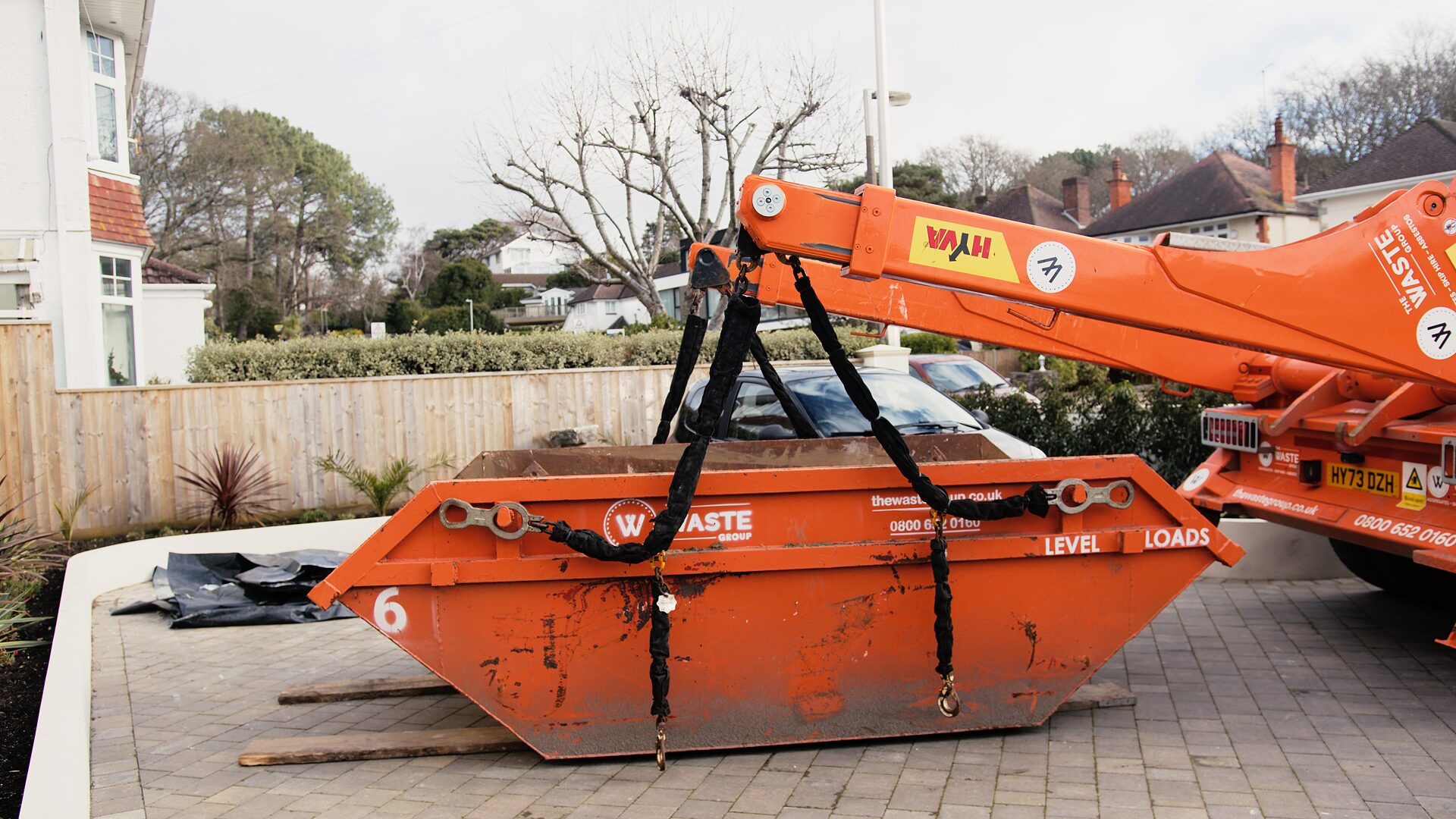
- Overloading the Skip: You'll see a "level load" line painted on the side of the skip. Don't fill your waste past this mark. Overfilled skips are a serious safety hazard on the road, and drivers can be fined for transporting them. You’ll be asked to take out the extra waste before they can collect it, and this could come with a penalty.
- Prohibited Items: Some materials are strictly banned from general skips because they're hazardous. Things like plasterboard, asbestos, car batteries, old electronics (known as WEEE waste), and tyres need a special kind of disposal. Chucking them in your general skip will lead to extra charges for their safe and proper removal.
- Wasted Journeys: If the driver turns up to deliver or collect the skip but can't get to the spot — maybe a car is blocking your drive — you might be charged a fee for the wasted trip.
A little bit of planning makes all these extras completely avoidable. And remember, it's not just skip hire where costs can sneak up on you. To make sure you're aware of other project pitfalls that could 'cost you big time', take a look at these helpful gardening tips to avoid hidden costs. By thinking ahead, you can make sure your final bill holds no nasty surprises.
Why Are Skip Prices Going Up?
When you ask for a skip hire quote, the price you get isn't just a number plucked out of thin air. Have you ever noticed prices creeping up over the years and wondered what’s going on? The truth is, skip hire companies are right in the middle of some powerful economic forces that directly shape the cost passed on to you.
Understanding these factors helps explain why a quote today might be higher than it was a few years back. It’s not an arbitrary hike; it's a direct response to the rising costs of doing business. Think of it like the price of a loaf of bread. When the cost of flour, energy for the ovens, and fuel for the delivery lorries goes up, the price on the shelf has to follow. It's the same principle in the waste industry.
The Soaring Cost of Steel and Fuel
A skip has a tough life. It’s a heavy-duty steel box that needs to be built, maintained, and eventually replaced. One of the biggest drivers of price is the cost of manufacturing and looking after these skips. In recent years, the cost of raw materials, especially steel, has shot up in the UK. This immediately affects how much we have to pay to add new skips to our fleet or repair the ones we already have.
And it’s not just a small increase. On top of that, the fuel needed to get the skip to you and take it away has also become more expensive, along with the general costs of vehicle maintenance. You can find more insights into these manufacturing impacts at easyskip.uk. When these basic, unavoidable business expenses rise, they have a knock-on effect on the final hire price.
It's a simple chain reaction: when the price of steel, fuel, and labour increases for us, the cost of hiring a skip for your project has to adjust. That's what keeps the service running sustainably.
Government Taxes and Recycling Rules
Another major factor pushing up prices comes directly from government policy, specifically the Landfill Tax. This is a tax the government charges for every tonne of waste sent to a landfill site. The whole idea is to make landfilling so expensive that it encourages everyone to recycle more and manage waste better. The standard rate for this tax has been rising steadily, year after year.
This means every skip company in the country faces much higher bills for getting rid of any non-recyclable waste. To keep these costs down (and avoid passing them all on to you), we have to invest heavily in our sorting facilities. This is where we separate out materials like wood, metal, soil, and plastics from a mixed waste skip. This whole sorting process requires a huge investment in specialised machinery and the skilled people to run it.
- Landfill Tax: A direct, government-imposed tax that makes burying rubbish incredibly expensive.
- Recycling Infrastructure: The cost of buying and running the machinery needed to sort waste properly and avoid those landfill taxes.
- Environmental Compliance: Following all the strict rules for handling waste adds to our day-to-day operational costs.
At the end of the day, these economic and regulatory pressures create a really challenging climate for waste management. The price of hiring a skip is simply a reflection of these real-world costs—from the steel used to build the skip itself to the government taxes levied on what you put inside it.
Choosing the Right Skip Size for Your Project
Picking a skip size can feel like a bit of a guessing game, but getting it right is the first step to keeping your project on budget. It’s a classic mistake: ordering a skip that’s too small, only to realise you have to pay for a second one to finish the job. On the flip side, going too big means you’re just paying for empty space.
There’s a direct link between the skip’s dimensions and the price you’ll pay, so matching the container to your project is key. Trying to picture what a "cubic yard" actually looks like is tough for most of us, so it’s much easier to think in terms of something more familiar, like standard black bin bags.
The most common pitfall we see is people underestimating just how much waste they actually have. A pile of rubbish has a funny way of expanding the second you start loading it into a skip, so it’s always a smart move to go one size up if you're unsure.
With an estimated over 17 million skips hired by UK households every year, it's clear a lot of people are tackling these kinds of projects. This highlights just how common this decision-making process is up and down the country.
Matching Skip Size to Your Job
To avoid paying more than you have to, the trick is to think about the job itself. A small garden clear-out or a bathroom refresh? A mini or midi skip will probably do the trick. But if you're ripping out an entire kitchen or clearing a house, you’re going to need a much bigger solution.
Below is a simple breakdown of the main things that affect skip hire prices, from the cost of diesel to government taxes.
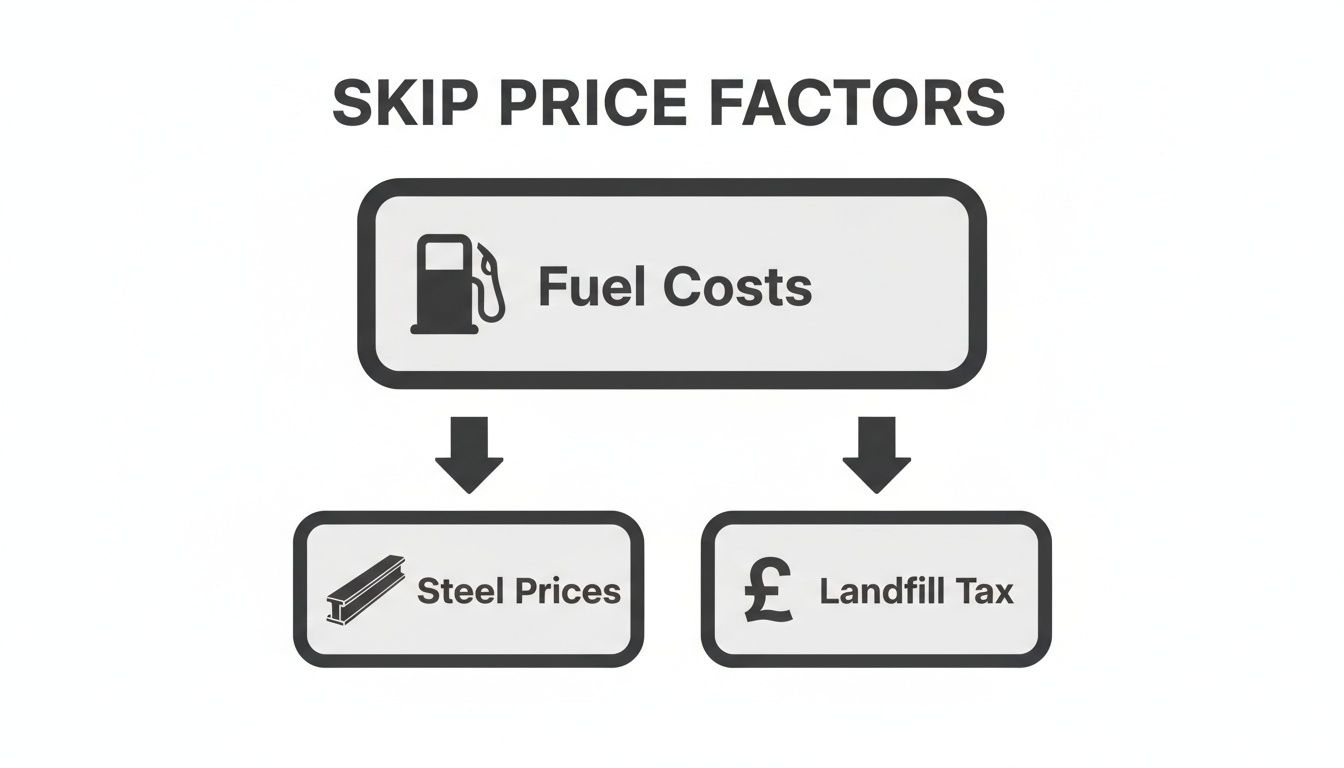
As you can see, it's not just the skip itself. Day-to-day operational costs like fuel, the global price of steel needed to make the skips, and government-set landfill taxes all play a part in the final quote. For a more detailed look at the different options, check out our guide on what size skip you might need.
Skip Size and Project Matchmaker
To help you visualise what you need, we've put together this quick-reference table. It matches common skip sizes to the kinds of jobs they're perfect for.
| Skip Size (Cubic Yards) | Approx. Bin Bags | Ideal For | Best For Waste Type |
|---|---|---|---|
| 4 Yard 'Mini' Skip | 30-40 | Small kitchen or bathroom refits, garden tidy-ups | Mixed general waste, soil |
| 6 Yard 'Small Builder' | 50-60 | Modest building projects, bulky waste, house clear | Mixed general waste, rubble |
| 8 Yard 'Large Builder' | 70-80 | Full house clearances, larger renovation projects | Bulky items, construction |
| 12 Yard 'Maxi' Skip | 100-120 | Large-scale projects with light, bulky waste | Furniture, light waste |
Remember, this is just a guide. If your waste is particularly heavy, like soil or rubble, you'll need to stick to the smaller builders' skips (6 or 8 yard) to avoid making the lorry dangerously overweight.
Smart Strategies to Save Money on Skip Hire
Knowing what drives skip hire prices is one thing, but actually finding ways to lower them is where you can make a real difference to your budget. The good news is that a few smart decisions can seriously trim down your final bill. The secret often lies in planning ahead and being a bit clever with your logistics.
One of the best ways to save is by carefully sorting your waste before it even touches the skip. Lots of companies offer a better rate for skips containing just one type of material, like soil and hardcore, or clean wood. Why? Because this "clean" waste is much cheaper and easier for them to process and recycle, and they can pass those savings on to you. It takes a little extra effort on your part, but the payoff is often well worth it.
Thinking about where your skip will live during the hire period is another crucial step. If you can place it on private property, like your driveway, you’ll completely avoid the council permit fee, which can save you anywhere from £30 to over £100.
Honestly, this simple logistical choice is often the single biggest cost-saving move you can make. It requires no extra work, just a bit of suitable off-road space.
More Proven Money-Saving Tips
Beyond sorting your rubbish and picking the right spot, a few other tried-and-tested strategies can help you keep spending under control and get the best possible value.
- Book Well in Advance: Leaving your booking to the last minute can sometimes mean paying a premium for an urgent delivery. Planning ahead gives you more choice and access to standard, more competitive pricing.
- Share with a Neighbour: If you and a neighbour are both planning a clear-out, why not team up? Hiring one larger skip and splitting the cost is almost always cheaper than getting two smaller ones separately.
- Choose the Right Size: As we’ve mentioned, picking the correct size is vital. Take the time to properly estimate how much waste you have to avoid paying for empty space or, even worse, having to hire a second skip later on.
By combining these simple, practical tips, you can take direct control over how much you pay for a skip, making sure your project stays on budget without skimping on convenience.
Common Questions About Skip Hire Costs
To wrap things up, here are a few of the most common questions we get asked when people are trying to budget for a skip. Getting these practical details sorted will help you hire with total confidence, knowing you’ve covered all the bases for a smooth, hassle-free job.
Can I Put a Mattress or Fridge in a Skip?
This is a big one, and the short answer is no. Typically, you can’t put mattresses, fridges, freezers, or other electrical items (often called WEEE waste) into a general waste skip. These items are full of materials that need to be disposed of carefully and can't just be chucked in with everything else.
Most skip hire companies will either refuse to take them or will charge a hefty extra fee to handle them separately. It’s always best to check with your provider beforehand to avoid any nasty surprises on collection day.
A 'level load' means the waste inside the skip must not rise above the height of its sides. This is a legal requirement for safe transportation and is non-negotiable.
Don’t be tempted to pile things high! Overfilled skips are a real hazard, as items can fall out onto the road during transport, and drivers face huge fines. If your skip is overloaded, the company will probably refuse to collect it until you've removed the excess waste, leading to frustrating delays and maybe even a penalty charge for a wasted journey.
How Much Notice Do I Need to Give?
It's always a good idea to give at least 24-48 hours' notice when booking a skip. That’s usually plenty of time for a company to schedule a delivery that fits in with your plans.
However, things change if you need a permit to place the skip on a public road. Don't leave this to the last minute! Local councils can take anywhere from 3 to 7 working days to process a permit application, so you’ll need to book much further in advance.
During busy periods like bank holidays or the summer months, booking a week ahead is a smart move. It guarantees you'll get the skip you need, right when you need it, and avoid any disappointment.
For straightforward, reliable skip hire across Dorset with no hidden fees, The Waste Group is here to help. Get your instant quote and book online today at https://www.thewastegroup.co.uk.