Hiring a skip really boils down to a few key decisions: picking the right size for your waste, getting your head around the true cost, including any permits, and sorting out a convenient delivery and collection time. Get these things right, and the whole process will be smooth and cost-effective, whether you're just tidying the garden or tackling a major renovation.
Your Essential Guide to Hiring a Skip
Diving into the world of skip hire for the first time can feel a bit much. With all the different sizes, talk of permits, and varied pricing, it’s easy to get overwhelmed. But honestly, a skip is often the most practical, efficient, and eco-friendly way to handle a large amount of rubbish. It saves you endless trips to the local tip and gives you peace of mind that your waste is being handled properly.
This guide is here to cut through the confusion. We'll walk you through every single stage, from the initial thought to the final collection, so you can feel confident you’re booking the perfect skip for your job.
Key Stages of the Hiring Process
You can simplify the whole journey of hiring a skip into three main actions. Thinking about it this way from the start helps you plan your project's budget and timeline much more effectively. It's the best way to avoid common headaches, like ordering a skip that’s way too small or forgetting you need a permit until the lorry is outside your house.
This simple overview breaks down the main steps: choosing your size, checking the costs, and booking it in.
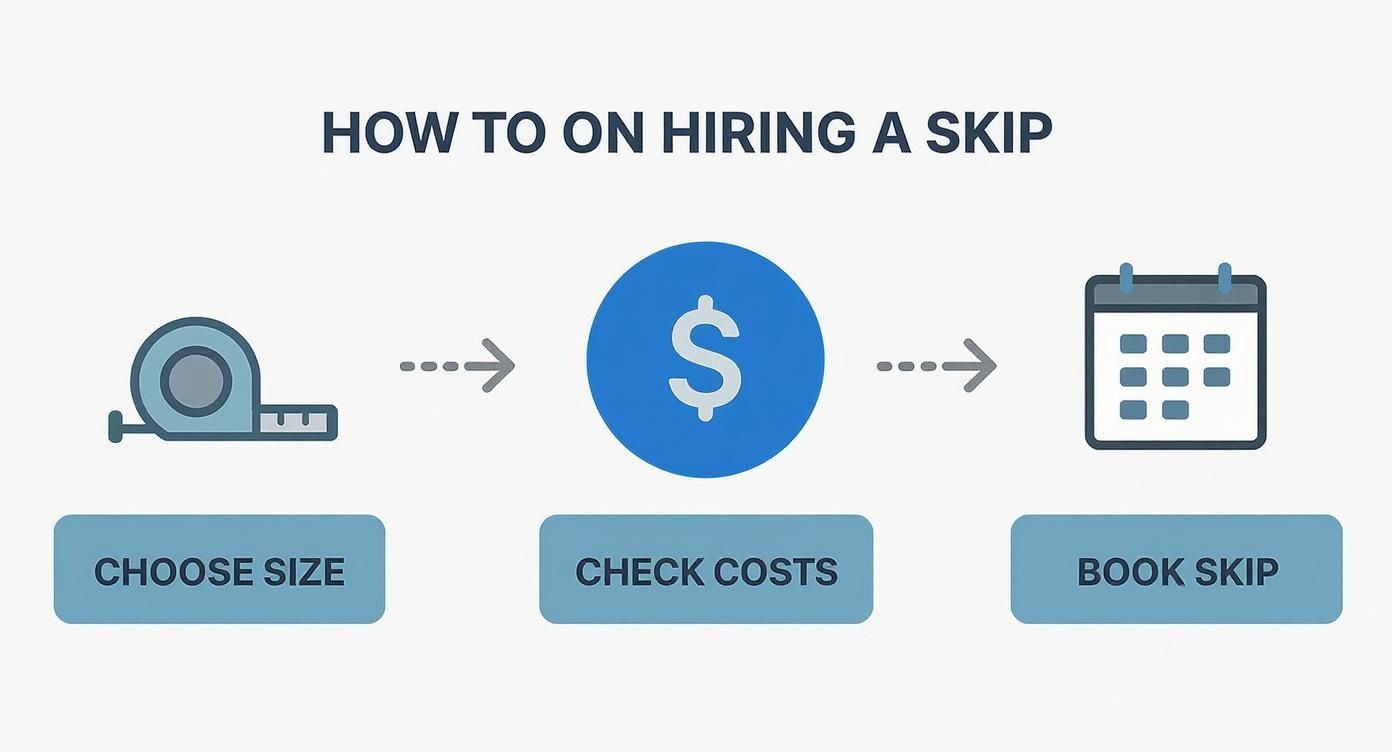
Thinking about it in these manageable chunks makes the whole thing feel far less daunting and makes sure you’ve covered all your bases before you commit.
To make it even clearer, here’s a quick-glance table summarising what you need to think about.
Skip Hire At a Glance: Key Considerations
| Consideration | Key Action | Why It Matters |
|---|---|---|
| Waste Volume | Estimate how much rubbish you have. Think in terms of bin bags or wheelie bins. | This directly determines the skip size you need, preventing you from overpaying for a huge skip or underestimating and needing a second one. |
| Location | Decide where the skip will go. Is it on your driveway or on a public road? | If it's on a public road, you'll need a council permit. This adds time and cost to the process. |
| Waste Type | Know what you're throwing away. Is it general junk, garden waste, or heavy rubble? | Certain items are prohibited (like asbestos or fridges), and heavy waste might have weight limits. Knowing this avoids issues later. |
| Budget & Quotes | Get a clear, all-inclusive quote. Check if it includes delivery, collection, and permit fees. | Hidden costs can be a nasty surprise. A transparent quote lets you budget accurately for your project. |
| Timeline | Plan your delivery and collection dates around your project's schedule. | A well-timed skip means it's there when you need it but not taking up space for longer than necessary. |
This table covers the essentials, but let's dive into why a skip is such a smart choice in the first place.
Why Choose a Skip for Your Project?
Going for a skip isn't just about making life easier; it's a genuinely smart move for managing waste properly. For home renovations, big garden clearances, or commercial site clear-ups, having a skip gives you one central, safe spot to contain all the mess.
Just think about the alternative for a second: loading up your car again and again, queuing at the recycling centre, and racking up fuel costs – not to mention the risk of scratching up your vehicle's interior. A skip hire service takes care of all that transport and disposal hassle for you.
This solution is incredibly popular for a reason. Here in the UK, hiring a skip is a core part of waste management, with industry data showing that over 17 million skips are hired for domestic use alone each year. This shows just how vital they are for everything from DIY projects to full-on household clear-outs. You can find more details on these skip hire trends and costs.
This widespread use really highlights how efficient and reliable skips are as a waste solution. And when you choose a reputable local provider like us at The Waste Group here in Dorset, it also means your waste will be sorted by professionals, with a huge percentage being recycled instead of just ending up in a landfill. That responsible approach is a massive plus for any homeowner or project manager who cares about the environment.
Choosing the Right Skip Size and Type
Getting the right skip is probably the most important decision you'll make when hiring one. Nail this, and your project will run like clockwork. Get it wrong, and you're either paying for thin air or frantically trying to book a second skip when the first one is overflowing. It really is all about matching the container to the job.
It’s just like packing a moving van – you wouldn’t hire a massive lorry to clear out a studio flat. The same logic applies here. The aim is to find that sweet spot where you have just enough space for all your waste without wasting a penny on unused capacity.
Visualising Common Skip Sizes
Let’s be honest, "cubic yards" isn't a measurement most of us use every day, so it can be hard to picture what you're actually getting. To make it easier, let's break down the most popular options with some real-world examples.
-
2-Yard 'Mini' Skip: This is your best bet for those small-scale jobs. It can hold around 20-30 bin bags, making it perfect for a weekend garden tidy-up or clearing out a single small room, like a downstairs loo.
-
4-Yard 'Midi' Skip: A hugely popular choice for home projects. With enough space for about 30-40 bin bags, it’s just the ticket for a small kitchen or bathroom renovation. If you're ripping out old units and tiles, this size often hits the mark.
-
6-Yard 'Small Builder's' Skip: Now we're getting into more serious jobs. This skip can handle roughly 50-60 bin bags. It's the ideal size for clearing a small house, tackling a bigger garden project, or managing the waste from a modest extension.
-
8-Yard 'Large Builder's' Skip: This is the largest skip you can usually put on a public road if it's filled with heavy mixed waste. It takes about 60-80 bin bags, making it the standard choice for major renovation work, full house clearances, and bulky construction debris.
Pro Tip: It's always, always better to go a little bigger than you think you'll need. The price difference between one size and the next is far less than the cost and hassle of hiring a second skip. If you're on the fence, sizing up is the smart, more economical move.
For an even more detailed comparison to help you finalise your choice, feel free to check out our full guide on what size skip you might need.
Thinking Beyond Just the Size
While the volume is key, the type of skip and its features can make a massive difference to how smoothly your project goes. They aren't all just simple open-top boxes; some have clever designs to make your life much easier.
One of the most useful features is a drop-down door. This is an absolute game-changer if you’re shifting heavy stuff like soil, rubble, or broken concrete. Instead of straining your back lifting heavy items over the high sides, you can just wheel a barrow straight inside. It saves a lot of effort and speeds up the whole loading process.
Considering Different Skip Types
Beyond the standard open skips, you might come across other types designed for specific jobs, especially on commercial sites.
-
Enclosed Skips: These come with a lockable lid, which is great for security. They're ideal for stopping others from adding their rubbish to your skip and for keeping light materials contained so they don't blow away in the wind.
-
Roll-On/Roll-Off (RoRo) Bins: For seriously large-scale commercial or industrial projects, RoRo bins are the only way to go. These are enormous containers, often 20 to 40 yards in size, built for huge volumes of waste.
When selecting your skip, matching the volume to your waste is critical, similar to how different large containers have specific dimensions for various uses. For a broader understanding of large industrial container measurements, you might explore the dimensions of a 20-foot shipping container.
For most domestic jobs here in Dorset, a standard 4, 6, or 8-yard skip will be exactly what you need. The trick is to take a moment to properly assess how much waste you're likely to produce before you book. A little bit of planning at this stage ensures you hire the right skip, first time.
Navigating Skip Permits and Placement Rules
One of the first questions people usually ask us is, "So, where can I actually put the skip?" It’s a great question, because getting the placement right isn’t just about making life easy for yourself; it’s about staying on the right side of the local council. The rules are pretty straightforward, but getting them wrong can lead to fines and delays you just don't need.
The golden rule is this: if the skip is going to live entirely on your own private property – think driveway, garden, or a bit of private land you own – you won't need a permit. This is the ideal scenario. It saves you time, money, and paperwork. As long as no part of it touches public land like the pavement or a grass verge, you’re good to go.
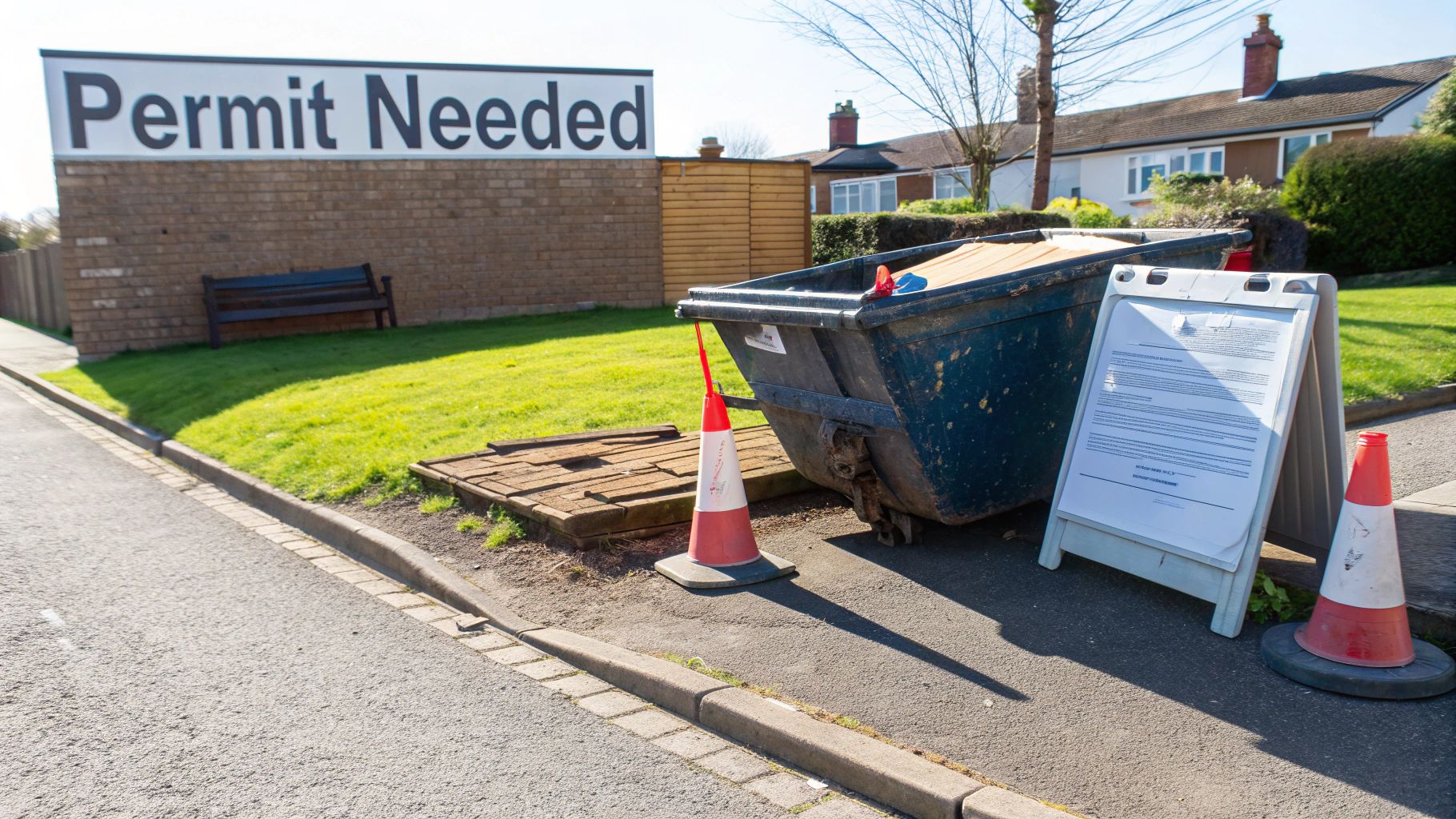
But what if you don't have a driveway? The moment any part of that skip has to sit on public land—the road, pavement, or a council-owned verge—a permit becomes essential. There are no two ways about it. This is a legal requirement to keep everyone safe and the traffic moving smoothly.
Securing a Skip Permit
If you don't have suitable private land, don't sweat it. Arranging a skip permit is a standard part of the job for us. When you hire a skip from The Waste Group, we handle the entire application process for you. We’ll talk directly to the local authority, whether that’s Dorset Council or BCP Council, to get everything sorted.
Here's what you need to keep in mind:
- Timeline: Councils don't work overnight. They typically need a few working days to process a permit. It's best to plan ahead and allow at least 3-5 days before you need the skip to arrive.
- Cost: The permit fee is set by the local council, so it can vary depending on where you are. This cost is passed directly on to you and will be clearly itemised on your skip hire quote.
- Information Needed: We’ll just need the exact address for the skip placement. We'll double-check the details with you to make sure the application is spot on.
It’s absolutely vital to get this sorted in advance. Dropping a skip on a public road without a valid permit can land you a hefty fine from the council, and they’ll demand it's removed immediately. We can walk you through the specifics for your area, and we’ve also put together a complete guide on whether you need a skip permit with more detail.
Public Placement Safety Rules
When a skip is placed on a public road, safety is the number one priority. To comply with the law and the conditions of your permit, there are a few safety measures that have to be in place. Don't worry, as your skip hire provider, it’s our job to make sure the skip is correctly equipped.
These measures are non-negotiable and are there to protect pedestrians, cyclists, and drivers.
- Traffic Cones: The skip must be clearly marked out with traffic cones to guide people safely around it.
- Safety Lights: If it's dark or visibility is poor, the skip needs to have safety lights or lamps on it. This makes sure it’s plain as day to anyone using the road.
- Reflective Markings: The skip itself will have reflective markings on its corners, making it much more visible in headlights after dark.
If you're managing a larger project, it's also worth thinking about how your skip fits into the broader site safety plan. This includes things like the relevant construction site signage requirements. A bit of forward planning on permits and placement will make sure your skip arrives exactly when and where you need it, legally and safely.
Decoding Skip Hire Costs and Finding Fair Quotes
Working out the cost of hiring a skip can feel like a bit of a guessing game, but the price isn't just plucked out of thin air. Several key factors come together to determine your final quote, and understanding them is the first step to finding a fair deal. It’s about more than just the size of the box; it's a combination of logistics, labour, and legislation.
The most obvious factor is, of course, the skip size. As you'd expect, a small 4-yard skip for a garden tidy-up will cost less than a huge 8-yard builder's skip needed for a full renovation. But your location plays a massive role, too. Skip hire prices in central London, for example, will be significantly higher than they are for us here in Dorset, reflecting differences in operational costs like fuel and local disposal fees.
The length of the hire period also influences the price. A standard hire is typically for one or two weeks, but if you need to keep the skip for longer, be prepared for the cost to increase. Finally, if you need a permit to place the skip on a public road, the council's fee for that will be added to your bill.
Understanding Price Variations and Surcharges
Beyond the base hire cost, certain types of waste can attract extra charges. This isn't the skip company trying to catch you out; it's because these items require special handling and disposal methods to comply with environmental regulations.
Common items that often carry a surcharge include:
- Mattresses: These are bulky and notoriously difficult to process at recycling facilities.
- Plasterboard: It has to be disposed of separately from other waste to prevent the release of harmful gases in landfill.
- Tyres: These are banned from landfill and need specialist recycling.
It's always best to be upfront about what you plan to throw away. A good skip hire company will advise you on any potential extra costs from the start, ensuring there are no nasty surprises on your final invoice.
Why Skip Hire Prices Are Changing
If you've hired a skip before, you might have noticed that prices have been on the rise. This is a nationwide trend driven by factors often outside of a skip company's direct control. The cost of hiring a skip in the UK has been pushed up by rising landfill taxes, higher fuel and labour costs, and the general economic climate.
To give you a rough idea, here are some typical price ranges you might see across the country.
Typical UK Skip Hire Price Guide
| Skip Size (Cubic Yards) | Typical Capacity (e.g., Black Bags) | Estimated Price Range (£) |
|---|---|---|
| 2 Yard ('Mini') | 20-30 | £170 – £210 |
| 4 Yard ('Midi') | 30-40 | £220 – £260 |
| 6 Yard ('Small Builder') | 50-60 | £250 – £300 |
| 8 Yard ('Large Builder') | 60-80 | £280 – £350 |
Keep in mind these are just ballpark figures. Prices in Dorset can vary, so it's always best to get a specific quote for your project.
When getting quotes, the single most important thing to check is that the price is all-inclusive. A transparent quote should cover delivery, collection, the agreed hire period, waste disposal, and any VAT. If it seems too good to be true, it probably is.
How to Get Accurate and Comparable Quotes
To budget effectively, you need quotes you can trust. The best way to do this is to provide as much clear information as possible when you make an enquiry.
Be ready to confirm:
- The exact delivery postcode. This helps calculate transport costs.
- Where the skip will be placed. Specify if it's on a private driveway or a public road.
- The main types of waste you'll be disposing of. Mention any potentially tricky items like old furniture or rubble.
- How long you expect to need the skip for.
With this information, a reputable provider like The Waste Group can give you a firm, all-in quote. For more guidance on budgeting for your project, our article on the cost of skip hire near you offers a detailed local breakdown. By asking the right questions and providing clear details, you can confidently compare quotes and find a service that offers genuine value.
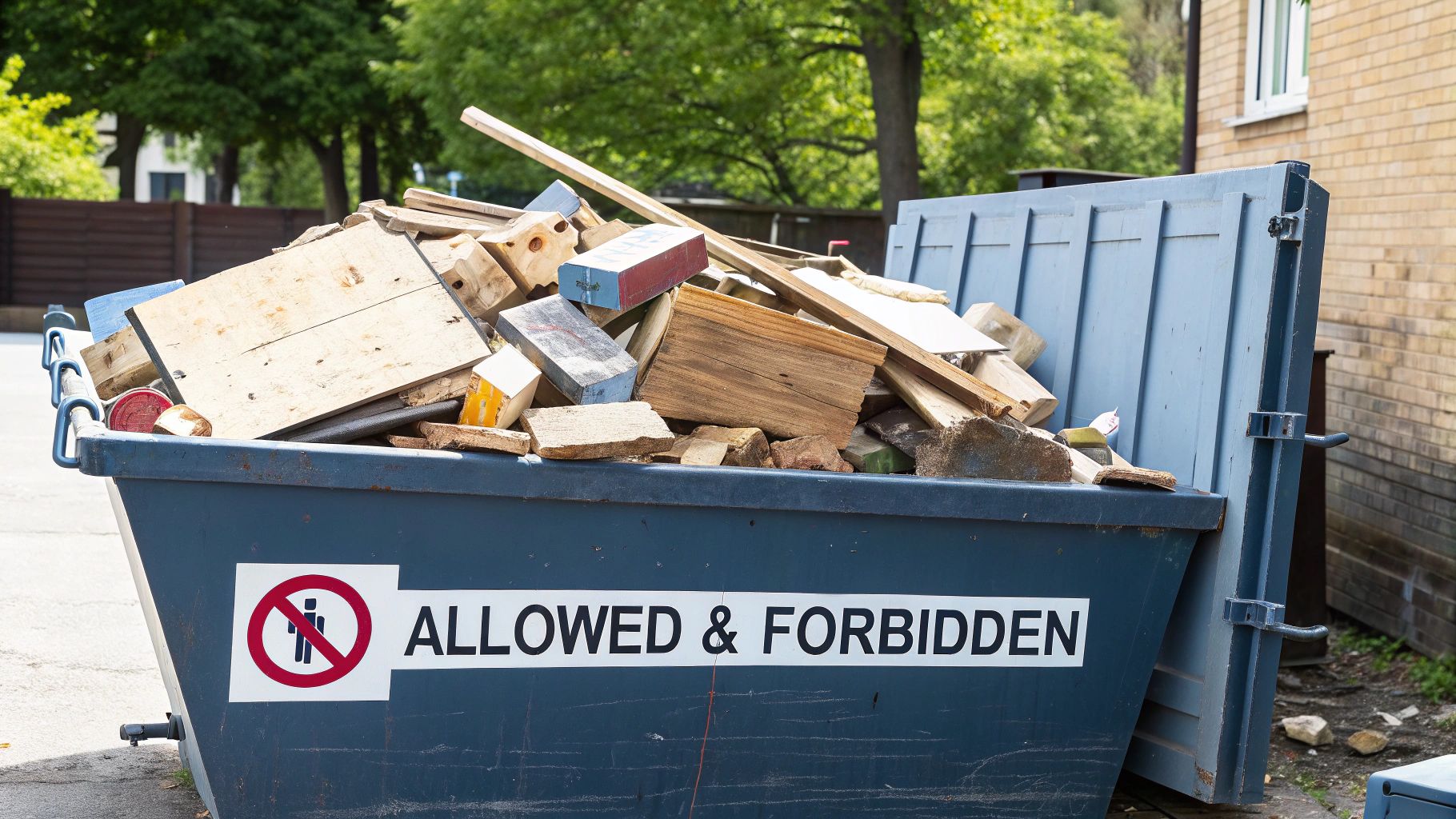
What You Can and Cannot Put in a Skip
Once your skip arrives, it’s tempting to start filling it with anything and everything you want gone. But hold on a moment. Knowing exactly what’s allowed isn't just about following the rules—it’s crucial for safety, staying on the right side of the law, and being environmentally responsible.
A skip is designed for general and inert waste, but it is definitely not a free-for-all for hazardous materials.
Getting this wrong can cause real headaches. Your skip could be refused for collection, leaving you with a pile of waste you still need to deal with. Worse, you could be hit with extra charges for the safe removal of prohibited items, or even face significant fines for improper disposal of hazardous waste. It really is about protecting people and the planet.
The Definitive "Do Not Skip" List
To keep it simple, here's a good rule of thumb: if an item is flammable, toxic, explosive, or needs specialist disposal, it has no business being in a general waste skip. Reputable companies like The Waste Group are legally obliged to refuse skips containing these materials to ensure they are handled correctly.
Here’s a clear list of items you must never put in your skip:
- Asbestos: This is extremely hazardous material and requires a specialist, licensed service for removal and disposal. Never, ever handle or try to break up anything you suspect contains asbestos.
- Electrical Items (WEEE): This is anything with a plug or a battery, officially known as Waste Electrical and Electronic Equipment (WEEE). Think TVs, fridges, computers, and even smaller things like kettles and toasters.
- Batteries: From car batteries to the little AAs in your remote, all batteries contain harmful chemicals and pose a serious fire risk in a skip.
- Gas Cylinders: Even if you think they’re empty, they can contain residual gas and are an explosion risk.
- Tyres: These are banned from landfill sites and need to be sent to a specialist recycling facility.
- Solvents and Chemicals: This is a broad category covering things like paint, oil, fuel, pesticides, and any other chemical-based liquids.
- Medical Waste: Any type of clinical or medical waste is strictly forbidden and must be disposed of through specialist channels.
- Plasterboard: While not always classed as 'hazardous', plasterboard can't be mixed with other waste. If you've got a lot of it from a project, just let us know. We can arrange a dedicated skip just for plasterboard.
Crucial Takeaway: Remember, the responsibility for what goes into the skip lies with you, the hirer. If you're unsure about an item, always ask. A quick phone call can save you a world of trouble and unexpected costs later on.
So, What Do You Do with Prohibited Items?
Just because you can't put something in a skip doesn't mean you're stuck with it. Thankfully, there are safe and compliant ways to dispose of everything.
Most local council tips—or Household Waste Recycling Centres (HWRCs)—have specific drop-off points for things like batteries, small electrical items, and used engine oil. For bigger or more hazardous items, you'll need a specialist service. For asbestos, you must use a licensed contractor. For large amounts of electrical waste or chemicals, there are dedicated collection services that ensure everything is handled safely and recycled correctly.
More Than Just Rubbish Removal: Recycling and Responsibility
When you hire a skip from a provider who takes their environmental duties seriously, you're doing more than just clearing out your clutter. You're becoming part of a vital recycling process.
The days of just hauling everything to a landfill are long gone. Stricter environmental laws and hefty landfill taxes have pushed the skip hire industry to invest heavily in recycling. As industry data from Plimsoll shows, the focus on responsible waste handling has never been stronger.
After we collect your skip, it's taken to a licensed waste transfer station where the real work begins. The contents are meticulously sorted:
- First, large items like wood, metal, and chunks of rubble are separated out.
- The rest of the waste goes through machinery that sorts materials by type and size.
- Materials like soil, hardcore, plastics, and cardboard are segregated into their own streams.
This thorough process means a huge percentage of your waste—often over 90%—is diverted from landfill and sent for recycling or recovery. By choosing a company committed to this, you're making a positive environmental choice and ensuring your project's waste is managed as sustainably as possible.
Your Final Skip Hire Checklist
So, you’ve picked your skip size, worked out the costs, and found the perfect spot for it to live. Before you make that final call or hit the "book now" button, it’s worth running through a quick final checklist. Think of it as a last once-over – it’s the best way to catch any small details that could turn into a headache later on.
Taking a few minutes now makes sure everyone, from the delivery driver to you, is on the same page. It just solidifies the plan and gets rid of any last-minute doubts.
Logistics and Access Confirmation
First things first, let's talk about the physical drop-off. Getting this right is the key to avoiding any drama on delivery day.
-
Delivery Date and Time Window: Have you got the delivery date locked in? Most skip companies will give you an AM or PM slot rather than an exact time, so just make sure that window works for you and your project.
-
Site Access: Go and take one last look at the route the delivery lorry will take. Are there any low-hanging branches, tight gates, or neighbours' cars that could get in the way? Remember, these are big vehicles.
-
Placement Spot: Is the ground where the skip is going completely clear? It's down to you to ensure the spot is level and free from any obstructions before the driver arrives.
Honestly, a quick five-minute walk around your property can save a world of hassle.
Double-checking access isn't just a tick-box exercise. If our driver can't complete the delivery because the way is blocked, you might be charged a wasted journey fee. A quick look around protects your budget and keeps things moving.
Paperwork and Payment Clarity
Next up, let's get the money and admin side of things sorted. You need to be 100% confident that the price you've been quoted is the price you'll actually pay.
-
All-Inclusive Price: Double-check that your quote includes the delivery, collection, the hire period you agreed on, and VAT. Nobody likes surprise fees, so it never hurts to ask, "Is that the final price?"
-
Permit Status: If your skip is going on a public road, confirm the permit has been applied for or is already approved. You should see its cost broken down on your quote.
-
Collection Day: Do you have a collection date agreed upon? It's also a good idea to ask what the process is if you finish early or, more likely, if the job overruns and you need the skip a little longer.
-
Waste Types: Finally, if there are any items you're still a bit unsure about, now is the time to ask. Being upfront about everything you plan to throw in—even if it's just a tatty old armchair or some rubble—ensures you're playing by the rules and avoids any problems when we come to collect.
Taking a moment for this final review is the last step to hiring a skip like a pro. It gives you peace of mind and sets your project up for a smooth, stress-free run.
A Few Common Questions About Skip Hire
Even with the best-laid plans, a couple of questions always seem to crop up just before you commit to a skip. Getting these sorted will give you the peace of mind that you’ve got everything covered.
How Long Can I Keep the Skip For?
Most of our customers find the standard one to two-week hire period is more than enough time for their project. But we know things don’t always go to plan.
If you get the job done quicker than you thought, just give us a ring. We can often arrange an earlier collection. On the flip side, if you're running behind, extending the hire is usually no problem at all. The key is to let us know as soon as you can so we can juggle our schedules and let you know if any extra weekly hire charges will apply.
Do I Need to Be Home for Delivery or Collection?
Not necessarily. If the spot where the skip is going is completely obvious and accessible – like an open driveway with no locked gates – you don't need to hang around for us.
However, if our driver might need specific instructions on where to place it or needs you to unlock a gate, it's best to be there. For collection, as long as the skip is easy to get to and isn't overfilled, we can grab it without you needing to be home.
Speaking of filling it, this is crucial: your waste must not go above the "level load" line marked on the side. Overfilled skips are a massive safety hazard for our drivers and other road users. Legally, we can't transport them, which could mean a wasted journey fee and a delay in getting your project finished.
What if I Fill the Skip Quicker Than Expected?
It happens all the time, especially on bigger jobs where you unearth more waste than you anticipated. If you fill your skip but still have more to clear, the simplest solution is to arrange an "exchange."
This just means we'll come and collect your full skip and drop off a fresh, empty one in the same visit. It’s the best way to keep your project moving without any major interruptions.
Ready to book your skip with a team that makes the whole process simple? The Waste Group offers reliable, competitively priced skip hire across Dorset. Get your instant quote online or give us a call today!