Where to Dispose Car Battery: A Practical UK Recycling Guide
Where to Dispose Car Battery: A Practical UK Recycling Guide
When your car battery finally gives up, you can get rid of it for free at most automotive shops (like Halfords), your local garage if you're getting a new one fitted, or at the nearest council tip (often called a Household Waste Recycling Centre, or HWRC). These places make sure it’s handled safely and legally.
Your Quick Guide to UK Car Battery Disposal
Figuring out what to do with a dead car battery can feel like a bit of a chore, but UK rules actually make it pretty simple—and usually free.
The main thing to remember is that your old battery is classed as hazardous waste. That’s because of the lead and corrosive acid tucked away inside, which means it can never, ever go in your household bin. Following comprehensive vehicle maintenance schedules can often give you a heads-up that your battery is on its last legs, leading you to this final, important step.
The good news? There’s a solid network already in place for recycling them. In fact, over 95% of the materials in a standard lead-acid battery can be recovered and turned into something new, making proper disposal a massive win for the environment.
Comparing UK Car Battery Disposal Options
To help you figure out the best place to go, here’s a quick comparison of the most common and legally compliant spots to drop off your old car battery in the UK.
| Disposal Location | Typical Cost | Convenience Level | Best For |
|---|---|---|---|
| Automotive Retailers | Free | High | Customers buying a new battery on the spot. |
| Local Garages | Free | High | Anyone getting their battery replaced by a mechanic. |
| Council HWRCs | Free | Medium | DIY car owners who aren't buying a replacement immediately. |
| Scrap Metal Yards | Variable (may pay you) | Low | Those willing to travel for a potential small payment. |
Each option has its pros and cons, and your best bet often just depends on whether you're buying a new battery at the same time.
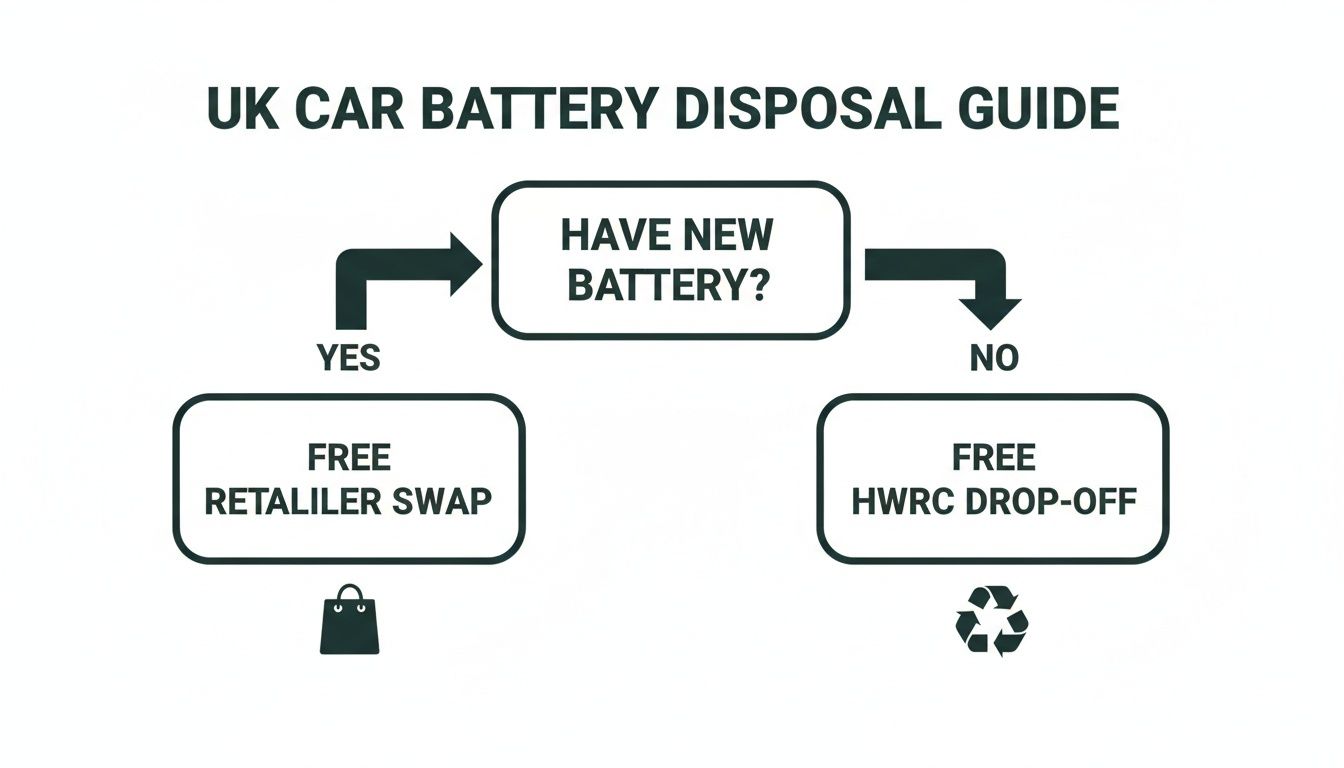
As you can see, the decision often boils down to whether you're getting a replacement. The easiest routes are usually the retailer take-back schemes or a quick trip to the local council recycling centre.
Why You Can Never Just Bin a Car Battery
It might feel like the simplest solution to just chuck an old car battery into your wheelie bin, but this is genuinely one of the most dangerous and illegal things you can do with your waste. A car battery isn't like the AAs you put in the telly remote; it's a sealed box packed with a nasty cocktail of hazardous materials.
Think of it as a small, self-contained chemical plant. Inside a typical lead-acid battery, you'll find lead plates submerged in a highly corrosive sulfuric acid solution. If that ends up in a landfill, it's only a matter of time before the battery casing breaks down.
When that happens, the toxic sludge inside leaches into the ground. This contaminates the soil and can poison groundwater, posing a serious threat to local wildlife and even our own health. It’s a slow-motion environmental disaster with consequences that last for years.
The Legal Consequences of Improper Disposal
Beyond the environmental harm, chucking a car battery in with your general rubbish is flat-out illegal in the UK. Car batteries are officially classified as hazardous waste, and their disposal is tightly controlled by specific laws designed to prevent pollution.
Putting a car battery in a standard bin isn't just irresponsible—it's illegal. UK law mandates that these items must be handled by authorised facilities to ensure the harmful substances within are neutralised and recycled safely.
These regulations, including the Landfill Regulations, are there for a very good reason. They make sure the valuable (and toxic) lead, acid, and other heavy metals are recovered and reused, not left to seep into the environment. If you want to get into the nitty-gritty of your legal duties, it's worth getting your head around the UK's hazardous waste disposal regulations. You can check out our guide on hazardous waste disposal regulations for a full breakdown.
The Push Towards a Circular Economy
Dealing with old batteries properly is also a huge part of the UK’s shift towards a circular economy. Instead of the old "take, make, and bin" approach, recycling gives these valuable materials a new lease of life.
The materials inside are just too useful to be buried in the ground. In fact, UK regulations now require new batteries to contain a minimum amount of recycled content. The targets for reusing materials like cobalt, lithium, and nickel are set to jump significantly by 2036, pushing the whole industry to become more sustainable.
This approach doesn't just protect the environment; it also means we're less reliant on digging new materials out of the earth. Every single battery you recycle is a direct contribution to this greener, smarter system.
Right then, you know why you can't just chuck an old car battery in the bin, so let's get down to the nitty-gritty: where can you actually take it?
The good news is, you've got plenty of straightforward, and often free, options dotted all over the UK. Each one is designed to be simple, making sure that doing the right thing is also the easiest thing.
We'll walk through the most common spots, from high-street shops to your local tip, so you can figure out what works best for you.
Automotive Retailer Take-Back Schemes
This is probably the most convenient route if you're buying a new battery and fitting it yourself. Big retailers like Halfords are legally required to take your old one when you buy a replacement. It’s a simple, direct swap.
The whole process is usually free and incredibly efficient. The shop sorts out all the hazardous waste paperwork and makes sure the battery gets into the proper recycling system. It’s a brilliant way to solve the problem in a single trip.
Your Local Garage or Mechanic
If you're having a mechanic fit the new battery for you, this is a no-brainer. Garages deal with dead batteries all day, every day. They have well-oiled systems in place with certified waste carriers who collect hazardous stuff on a regular basis.
Just leave the old unit with them. The cost of disposal is almost always rolled into the fitting service, so it’s a completely hassle-free choice where you don't even have to touch the old battery.
Key Takeaway: Both retailers and garages operate a "one-in, one-out" system. It's part of their responsibility under UK waste regulations, ensuring that for every new battery hitting the road, an old one is safely taken out of circulation.
Council Household Waste Recycling Centres
But what if you've just got a spare battery lying around and aren't buying a new one? Your local Household Waste Recycling Centre (HWRC) – or the "tip," as we all call it – is the perfect place. Every council facility is set up to handle hazardous household items like car batteries.
It's dead simple:
- Check your local council's website first for opening times and any specific site rules.
- Transport the battery safely (we'll cover exactly how in the next section).
- Let the staff know you have a car battery when you arrive. They'll point you to a dedicated, clearly marked container for it.
This service is completely free for household waste. It’s crucial to remember that a car battery is a very specific type of hazardous waste and must never, ever be thrown into a general waste skip. If you want to learn more about skip rules, check out our guide on what you can't put in a skip.
Certified Scrap Metal Yards
Another solid option is your local licensed scrap metal yard. These places are experts in recovering valuable materials. Because the lead inside a car battery has a decent scrap value, they will almost always be happy to take it off your hands.
Depending on the current market prices for lead, some yards might even give you a few quid for it, though this is never a guarantee.
Beyond the usual spots, some private companies offer professional junk removal services that can handle special types of waste. Just make sure that any service you consider is fully licensed to handle hazardous materials – you don't want to get caught out by any legal headaches down the line.
The Future Is Electric: EV Battery Recycling Explained
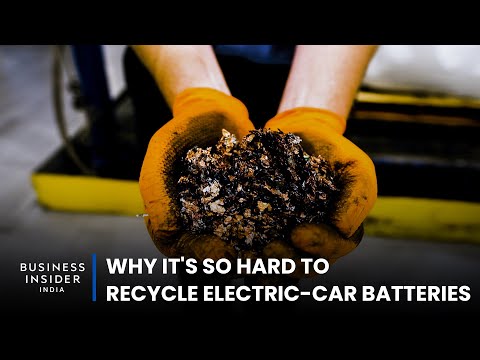
The good old lead-acid battery has served us well, but its days are numbered. A new generation of high-performance lithium-ion packs, the kind that power electric vehicles (EVs), is taking over. This shift is completely changing the game for car battery disposal and recycling, and it's a change for the better.
While lead-acid batteries have a great recycling track record, EV batteries present a totally different challenge—and a much bigger opportunity. They don't have the same toxic lead content. Instead, they're packed with incredibly valuable and finite resources like lithium, cobalt, and nickel.
Simply chucking these materials into landfill isn't just wasteful; it's like throwing treasure in the bin. To build a truly sustainable future, we need to recover these precious metals, creating a circular economy where old batteries provide the raw ingredients for new ones.
The New Generation of Battery Waste
Recycling an EV battery is a much more delicate operation than dealing with a traditional lead-acid unit. It’s a complex process that involves carefully dismantling the battery pack, making sure any leftover charge is neutralised, and then using advanced chemical techniques to separate and purify the valuable metals locked inside.
The UK is racing to build the infrastructure needed to handle this coming wave of battery waste. Specialist recycling plants are popping up, designed to create a "closed-loop" system. This means we can cut down our reliance on mining these critical materials from halfway across the world. When you make the effort to dispose of any car battery properly, whether it's electric or not, you're feeding directly into this vital national effort.
Your decision to recycle an old car battery—whether it's from a petrol car today or an EV tomorrow—directly supports a greener automotive future and helps secure the UK’s supply of essential resources.
This isn't just good for the planet; it's a smart strategic move for the UK economy. In fact, experts predict that by 2035, recycled materials sourced from UK car batteries could fulfil up to 20% of our nation's needs for making new lithium-ion batteries. You can dive deeper into the numbers in the APCUK Battery Recycling Insights Report.
Why Your Contribution Matters
As more and more electric vehicles hit our roads, the number of old EV batteries needing a new home is set to explode. Making sure they are properly recycled is the only way to prevent environmental contamination while securing a rich source of materials for future manufacturing.
Here’s a quick rundown of what this means for you:
- Supporting Sustainability: Recycling slashes the need for destructive, energy-guzzling mining operations.
- Strengthening the UK Economy: It builds a secure domestic supply chain and creates skilled jobs right here at home.
- Driving Innovation: It pushes British companies to develop new, world-leading technologies in material recovery.
Every single battery that ends up at a licensed facility becomes another building block for a more sustainable transport system. It’s a simple action on your part, but it has a powerful, long-lasting impact on our environment and our industry.
How to Safely Handle and Transport Your Old Battery
Before you can think about where to drop off your old car battery, you need a plan to get it there in one piece. Handling an old battery isn't like lifting any other bit of scrap; it's a hefty object packed with corrosive acid and heavy lead. You've got to treat it with respect to avoid any nasty accidents.
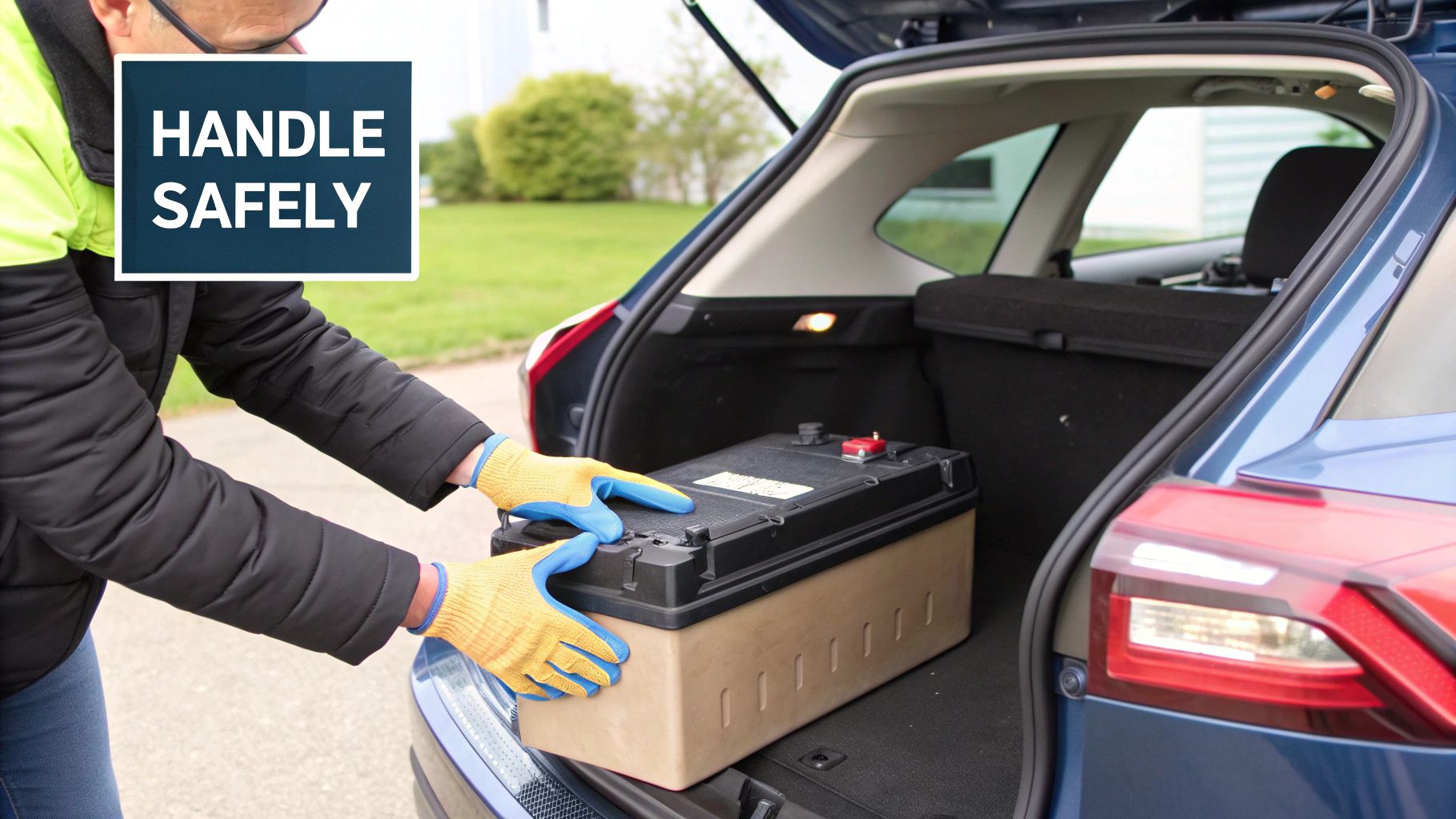
The absolute first rule? Protect yourself. Think of it less like an old car part and more like a hazardous chemical, because that's exactly what it is. Before you even lay a finger on the battery, get your safety gear on.
- Protective Gloves: Heavy-duty, acid-resistant gloves are a must. Your standard washing-up gloves just won't cut it if you spring a leak.
- Safety Goggles: The sulphuric acid inside can cause serious, irreversible eye damage. A pair of goggles is crucial protection against any accidental splashes.
Once you’re kitted out, give the battery casing a good look-over for any cracks or leaks. If you spot any damage, you need to be extra cautious. A leaking battery is a serious hazard, plain and simple.
Preparing the Battery for the Journey
After you’ve successfully removed the battery from your vehicle, the next job is getting it ready for transport. The main goal here is simple: stop it from tipping over and spilling acid all over your car, which would cause an incredible amount of damage.
Always, always keep the battery upright. Never lay it on its side. Doing so massively increases the risk of acid leaking out through the vent caps.
For the best possible security, pop the battery inside a strong, leak-proof container. A tough plastic storage box or one of those specialised battery carriers works a treat. This gives you a second line of defence, containing any spills and keeping your car interior safe and clean.
Important Safety Note: If you do get battery acid on your skin or clothes, you need to act fast. Neutralise it straight away with a solution of baking soda and water, then rinse the area thoroughly. If it gets in your eyes, flush them with clean water for 15 minutes and get immediate medical attention.
Loading and Securing It in Your Vehicle
Right, you’re ready to load it into the car. The safest spot is either the boot or the footwell of the back seat – somewhere it’s less likely to slide about when you're on the move.
Make sure the battery is secured firmly so it can't tip or slide around when you brake or go around a corner. Bungee cords are great for this, or you can wedge it in place with other solid, heavy objects to keep it completely stable for the whole journey. A secure battery is a safe battery, protecting both you and your car on the way to the recycling point.
Finding Your Local Dorset Battery Disposal Point
National advice is all well and good, but knowing exactly where to go in your local area saves a huge amount of faff. For anyone living in Dorset, the process is actually pretty straightforward. We have a great network of well-equipped recycling centres ready to take your old battery off your hands, completely free of charge.
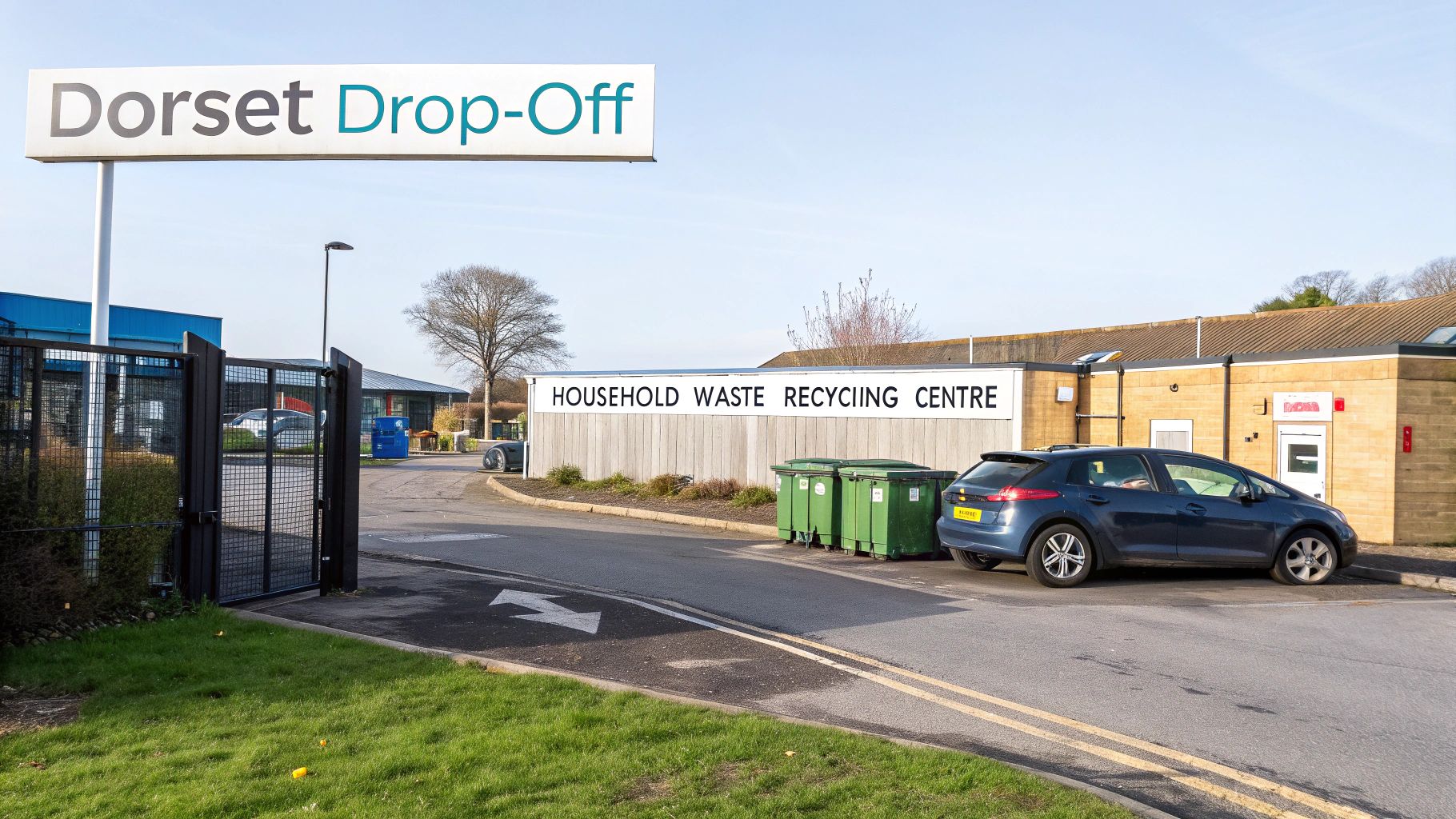
Your main ports of call are the Dorset Council Household Waste Recycling Centres (HWRCs), often just called 'the tip'. These sites are specifically set up to handle hazardous items like car batteries, making sure they get into the correct recycling stream instead of causing harm.
You don't need to be a waste management expert. Just drive in, let the on-site staff know what you've got, and they'll point you straight to the designated battery drop-off point. Simple as that.
Key Dorset HWRC Locations
Several centres across the county accept car batteries, so you should have one that's convenient no matter where you live. While this list gives you a good starting point, it's always smart to check the official website before you head out.
- Poole HWRC: Found on Nuffield Road, this is a major hub for the area.
- Wimborne HWRC: Situated over on Brook Road, it serves the eastern part of Dorset.
- Dorchester HWRC: Located on Lubbecke Way, this site covers the county town and its surroundings.
- Weymouth HWRC: Down on Preston Beach Road, it's a key facility for the south coast.
Before setting off, always visit the Dorset Council website. A quick check confirms opening times, lets you know if you need to book a slot, and fills you in on any site-specific rules. It can save you a completely wasted journey.
Getting to grips with local rules is also vital, as they all tie into the bigger picture of responsible waste handling. To better understand your obligations, it's worth having a read of the key waste management regulations in Dorset. Following these local guidelines means your battery disposal is not only safe but also fully compliant with the law.
Common Questions About Car Battery Disposal
To make sure you're completely confident about what to do next, we've answered some of the most common questions people have about getting rid of old car batteries. This should clear up any final bits of uncertainty.
Can I Get Paid for My Old Car Battery?
Sometimes, yes – but it’s not a given. The value is in the lead, which is a commodity that can be recycled and sold on. Your best bet for getting a bit of cash is to take it to a certified scrap metal yard. They are the most likely to offer you a small payment.
Just don't expect a windfall. We're talking a few pounds at most, and the price fluctuates daily with the scrap metal market. For most people, the sheer convenience of a free and easy drop-off at a local garage or the council tip easily outweighs the tiny cash gain from a trip to the scrapyard.
What’s the Penalty for Disposing of a Car Battery Illegally?
The penalties for fly-tipping hazardous waste like a car battery are no joke. If you're caught dumping one, you could be hit with a hefty on-the-spot fine. For more serious or repeat offences, the consequences get much worse.
Under UK environmental law, individuals can face unlimited fines and even a prison sentence for the illegal disposal of hazardous materials. It's a massive risk that simply isn't worth taking when there are so many free and legal ways to do it right.
Do Supermarkets or High Street Shops Take Old Car Batteries?
In short, no. Your local Tesco or Sainsbury's won't accept an old car battery. The recycling points you see in supermarkets are only for small household batteries, like AAs or AAAs, and are absolutely not equipped to handle heavy-duty vehicle batteries.
The only retailers that will accept them are automotive specialists like Halfords. Even then, they typically only take your old one as part of a take-back scheme when you're buying a new battery from them.
Why Is Recycling Car Batteries Such a Big Deal?
Getting this right is a vital part of building a more sustainable, circular economy here in the UK. By 2040, it's estimated the UK will be dealing with 203,000 tonnes of car battery waste every single year. Recycling that mountain of material isn't just about preventing pollution; it's about recovering incredibly valuable metals.
Effective recycling can supply a huge chunk of the UK's demand for raw materials, which supports our own manufacturing industries and means we have to rely less on mining new materials from the earth. To see the bigger picture of how your small action contributes, you can read the full WMG Battery Recycling Report.
At The Waste Group, we're committed to making responsible waste disposal straightforward for everyone in Dorset. If you need reliable skip hire or professional advice on waste management for your next project, explore our services and get an instant quote online. Find out how we can help at https://www.thewastegroup.co.uk.