How Much to Hire a Skip Unpacking All UK Costs
How Much to Hire a Skip Unpacking All UK Costs
Figuring out the cost of hiring a skip can feel a bit like guesswork, but it’s actually more straightforward than you might think. Generally, in the UK, you're looking at a price range from around £120 for a small mini skip to over £400 for a large builder's skip.
The final price tag really boils down to three key things: the skip size you need, where you are in the country, and what kind of rubbish you're tossing out.
Your Quick Guide to UK Skip Hire Prices
When you’re planning any project, from a simple garden tidy-up to a full-blown extension, knowing your waste disposal costs upfront is a game-changer for your budget. Think of skip hire as a complete service package. You aren't just renting a big metal box; you're paying for its delivery, its collection when you're done, and the responsible, legal disposal of everything inside.
The biggest single factor that moves the price needle is the skip's size. Skips are measured in cubic yards, and the rule is simple: the bigger the skip, the higher the cost. This is because a larger skip holds more waste, which costs more for us to sort and recycle, and it needs a bigger lorry to get it to and from your property.
Common Skip Sizes and Their Costs
To give you a clearer picture, let's break down the most popular choices for homes and smaller trade jobs. These sizes cover pretty much everything, from a weekend declutter to a serious construction project.
- Mini Skips (2-3 yards): Perfect for those small-scale garden jobs or clearing out a single room. You can fit about 20-30 standard bin bags in one of these.
- Midi Skips (4-5 yards): This is the go-to for bigger jobs like a kitchen or bathroom renovation. A 4-yarder will hold roughly 40-45 bin bags of waste.
- Builder's Skips (6-8 yards): The undisputed champion for construction waste and major home renovations. An 8-yard skip is usually the largest you can get for heavy waste like soil, rubble, and bricks.
To make things easier, here's a quick look at how those prices stack up.
Average Skip Hire Prices by Size
This table gives you a handy reference for typical skip hire prices across the UK, helping you match the right skip to your job.
| Skip Size | Typical Price Range (£) | Best For (Example Projects) |
|---|---|---|
| Mini Skip (2-3 yd) | £120 – £200 | Small garden clear-outs, single room decluttering |
| Midi Skip (4-5 yd) | £180 – £300 | Kitchen & bathroom refits, larger garden projects |
| Builder's Skip (6-8 yd) | £250 – £400 | Construction debris, full house clearances, bulky waste |
As you can see, the costs scale logically with the size and capacity of the skip.
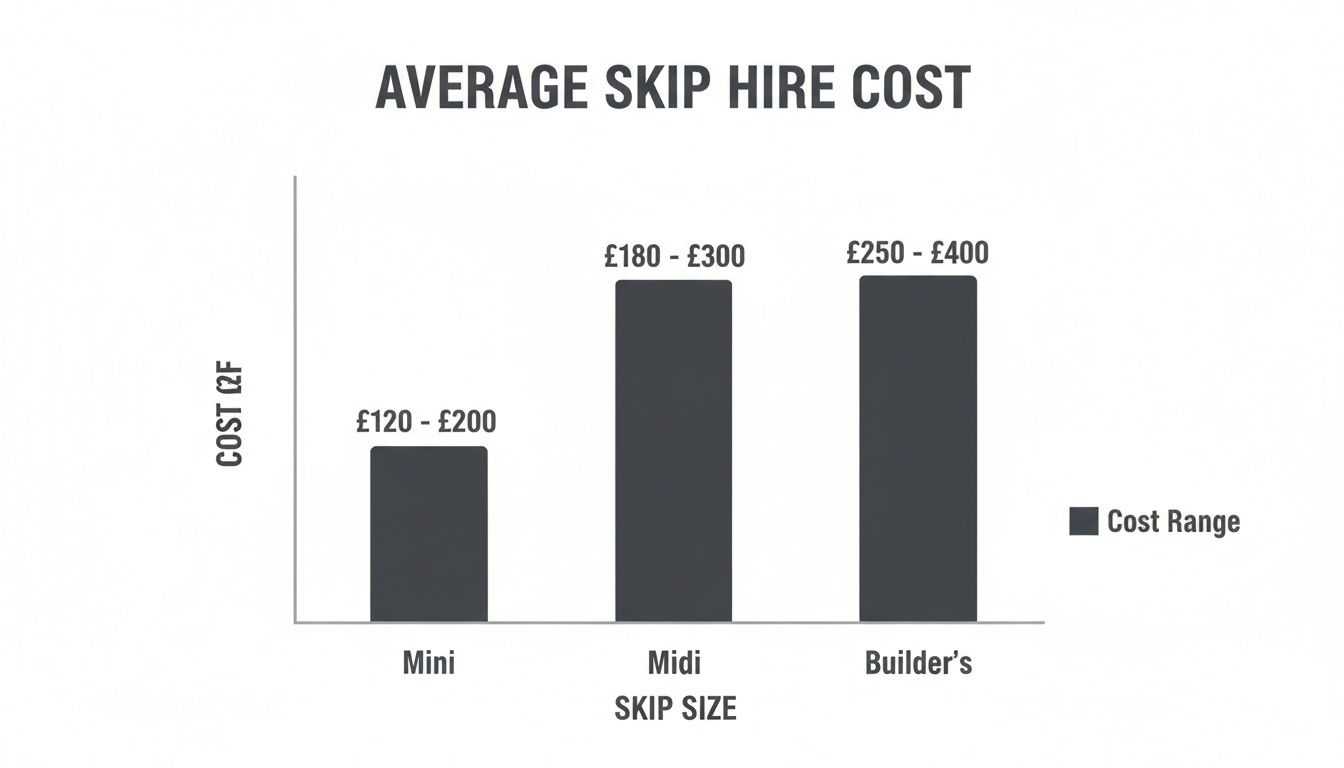
This chart really drives home how the cost increases with the skip’s volume, helping you see exactly where your project might fit in.
A Closer Look at Average UK Prices
While your specific postcode will cause prices to vary—thanks to local competition and landfill/recycling centre fees—there are some solid industry averages you can count on.
Across the UK, a mini 2-yard skip will typically set you back somewhere between £120 and £200. Step up to a 4-yard midi skip, and you're looking at £180 to £300. For the ever-popular 6-yard builder's skip, the price is usually in the £250 to £400 bracket.
A bit of friendly advice: It’s always better to slightly overestimate your needs. Choosing a skip that’s too small often means you have to hire a second one, which is guaranteed to be more expensive than just getting the right size from the start.
Ultimately, use these prices as a reliable starting point. Just remember that other things like how long you need the skip for, whether you need a council permit (for placing it on a public road), and the specific types of waste you have can tweak the final quote. For a more detailed look at how your area affects the numbers, you can learn more about local skip hire prices and what to expect.
What Really Determines Your Skip Hire Cost?
So, you’ve seen the price lists, but what actually goes into the final figure on your skip hire quote? Think of it like booking a flight – the base fare is just the starting point. The final price depends on your destination, how much luggage you have, and when you want to fly. Skip hire works in much the same way.
Once you get a handle on these factors, you’ll know exactly what you’re paying for. It’s the difference between just asking "how much to hire a skip?" and truly understanding why the cost is what it is. This knowledge is key to budgeting properly and dodging any nasty surprises down the line.
The Big Three Cost Factors
While lots of little things can nudge the price up or down, there are three main players that have the biggest say in what you’ll pay. Nail these, and you’re on your way to a smart, cost-effective hire.
-
Skip Size: This is the big one. A larger skip doesn't just need a bigger lorry to deliver it; it holds a lot more waste. That means higher disposal and recycling costs for the skip company, which get passed on to you. Choosing the right size from the get-go is vital – have a look at our guide on what size skip you might need to get it right first time.
-
Your Location: Where you are in the country really matters. Skip hire prices vary across the UK because of things like local competition, how far the skip has to travel to the recycling centre, and what the local council charges for permits and tipping fees. You can bet that a skip in central London will cost more than one in a quiet rural town.
-
Waste Type: What you’re chucking out has a direct impact on the cost. General mixed household waste is fairly standard, but if you're only getting rid of heavy stuff like soil and rubble, it can sometimes work out cheaper. On the other hand, certain items like plasterboard or old mattresses need special handling and will add extra fees to your bill.
Other Key Price Influencers
Beyond the big three, a few other logistical bits and bobs can affect your final quote. It’s easy to overlook these, but they can definitely add up if you’re not prepared.
Hire Duration
Most companies offer a standard hire period of one to two weeks. If your project takes a bit longer and you need to hang onto the skip, that’s usually fine, but you’ll likely face an extra weekly charge. It’s always best to ask about the standard hire time upfront.
Permit and Parking Fees
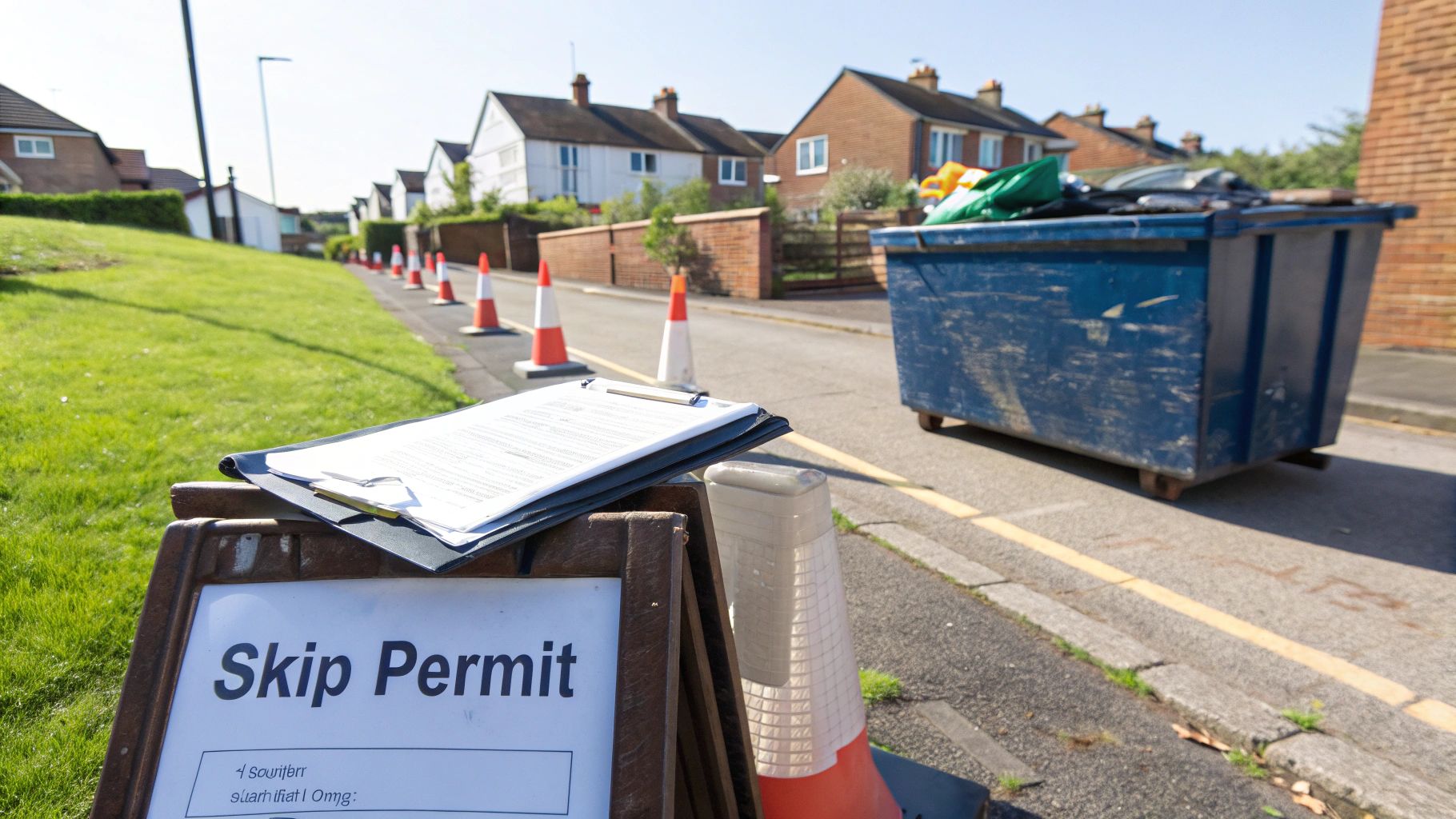
If you don't have a private driveway and the skip has to go on a public road, you legally need a permit from the council. The skip company normally sorts this out for you, but they'll pass the cost on. This can be anything from £15 to over £60, depending on your local authority.
Top Tip: The easiest way to save a decent chunk of money is to have the skip placed on your own land, like a driveway. No permit, no fee. Simple as that.
Getting a sense of how costs break down in related home improvement projects can also help you manage your budget. For example, understanding how much landscaping costs can put your waste disposal budget into a clearer context.
Lastly, it’s worth remembering that the skip hire industry has its own pressures. A busy construction sector has led to recent 4.3% sales growth. At the same time, supply chain problems have driven the cost of skip steel up by 31% between 2022 and 2025, and that increase inevitably filters down to the price you pay.
Getting to Grips with Skip Permits and Waste Rules
If you can place a skip on your own property, like a driveway or garden, life is simple. That’s the easiest and cheapest route. But what if you don’t have the space? If your skip needs to go on public land—think the road, pavement, or a grass verge—you’ll have to play by the council's rules to keep everything above board.
This is where a skip permit comes in. Think of it as an official licence from your local council that gives you the green light to place a skip on public property for a set amount of time. Trying to skip this step is a bad idea. Dropping a skip on a public road without a permit can land you with a hefty fine and an order to get it moved, pronto.
The good news is that any decent skip hire company will sort this all out for you. When you book, they’ll ask where you plan to put the skip. If you say it's going on the road, they'll handle the council application, sort the paperwork, and just add the permit fee to your bill. Simple.
How Much Do Permits Cost and How Long Do They Last?
There’s no one-size-fits-all price for a skip permit; it really does change depending on your local council. As a rough guide, you can expect to pay anywhere from £15 to over £60. This fee will usually cover you for one or two weeks, but it’s always best to double-check the exact duration with your hire company because some councils are stricter than others.
If your project runs longer than expected, don’t panic. You can usually extend the permit, but it will cost you an extra fee. A bit of careful planning upfront can help you nail down your timeline and avoid those extra charges, keeping your hire stress-free from start to finish.
Why Separating Your Waste is Non-Negotiable
Beyond the paperwork, what you actually chuck in the skip is just as important. Getting this wrong can be a costly mistake, leading to your entire load being rejected or facing extra charges for "contamination." This is becoming a massive deal as waste regulations get tighter.
Big changes are sweeping through the UK waste industry, and a surprising 73% of operators aren't ready for them. Sorting waste properly can increase vehicle movements by a staggering 180%, and contaminated loads now get turned away, hitting an estimated 68% of clients who don't even know the new rules. You can learn more about the impact of evolving waste regulations on skip hire here.
What this means for you is simple: you can't just throw everything in together anymore. Things like plasterboard, old TVs, batteries, and any hazardous materials have to be kept separate. If you mix prohibited items with your general waste, you've created a 'contaminated' skip. It’ll get flagged at the recycling centre, and you'll be on the hook for the cost of safely sorting it all out. What should have been a straightforward job just became a very expensive problem. Always check what's allowed before you start filling.
Practical Ways to Save Money on Skip Hire
Knowing the typical cost of a skip is one thing, but actively finding ways to lower that price is where you can really help your budget. With a few clever moves, you can make sure you're getting the absolute best value. It all just comes down to a little bit of planning.
Honestly, the easiest way to save cash is simply choosing the right skip size from the get-go. If you hire one that’s too big, you’re literally paying for empty air. But get one that's too small, and you’ll likely end up needing a second one – which is always a more expensive way of doing things.
Smart Strategies for a Cheaper Skip Hire
Getting a better price often boils down to good timing and a bit of teamwork. Thinking ahead can stop you from making a last-minute panic purchase and even opens up the chance to split the cost.
-
Book in Advance: Whatever you do, don't leave it until the day before your project starts. Booking your skip early gives you far more choice and usually a better price, helping you dodge the premium rates that come with urgent, last-minute requests.
-
Share with a Neighbour: If you know someone down the street is also planning a clear-out, why not go in on a skip together? Splitting the cost of one larger skip is almost always cheaper than hiring two smaller ones.
-
Place it Off-Road: Got a driveway or some private land? Use it. Popping the skip on your own property means you completely sidestep the need for a council permit, which can add anywhere from £15 to £60 (or more!) to your final bill.
Reduce Your Waste, Reduce Your Costs
It’s a simple equation: the less you throw away, the less you'll have to spend. Before you even think about lobbing things into the skip, take a moment to consider what could be repurposed, recycled, or even sold.
Before you just chuck everything out, think about what you can do to shrink the pile. A great way to do this is to turn clutter into cash by selling unwanted items. This doesn’t just mean less waste for the skip; it could put a bit of money back in your pocket, too.
By sorting your waste beforehand, you can sometimes get a better price. Materials like clean soil, hardcore, or metal are often cheaper to get rid of because they're much easier to recycle. It's always worth asking your skip provider if they offer a discount for this kind of single-stream waste.
That simple act of pre-sorting means less work for the waste facility, and often, those savings can be passed straight on to you.
Choosing the Right Skip Hire Service in Dorset

Getting your head around the factors that influence skip costs is the first step. But the next, and just as crucial, is finding a reliable local company you can trust. For anyone with a project in Dorset, from Poole right across to Bournemouth, this means picking a company that’s upfront, dependable, and offers genuine value for money.
Knowing what you’ll pay for a skip is about more than a price list. It’s about the whole service you get for that price. A truly great local provider makes the entire experience feel effortless. They’ll have a full range of skip sizes for any job, the option for next-day delivery when you’re in a tight spot, and a simple online system to get it all booked. This is what separates the average from the exceptional.
What to Look For in a Dorset Skip Hire Company
When you’re ready to book, there are a few tell-tale signs of a quality service that should give you real peace of mind. You’re not just looking for someone to drop off a metal box; you want a partner who delivers on their promises.
Here are a few key things to look out for:
- A Proven Reputation: Check out their customer ratings. A consistently high score, like The Waste Group's 4.9-star reputation, is a clear sign they’re trusted by people in the local community.
- Competitive and Transparent Pricing: A price-match guarantee is a massive green flag. It shows the company is confident in the value it provides and ensures you won’t be hit with nasty hidden charges later on.
- A Commitment to the Environment: The best companies don’t just chuck your waste in a hole. They actively work to recycle as much as they possibly can. Initiatives like planting a tree for every single skip hired show a real, tangible commitment to the local environment.
The Value of a Trusted Local Partner
Choosing a local specialist like The Waste Group means you’re working with a team that gets the lay of the land in Dorset. They know the ins and outs of local council permit rules in places like Weymouth and Dorchester and have the logistics sorted for quick, reliable service across the whole county. That local expertise makes for a much smoother hire.
You can find out more about how local factors can affect your final quote in our detailed guide on Dorset skip hire prices.
The right partner makes sure your project runs without a hitch, from start to finish. They don’t just provide the skip; they offer the expert advice and support you need to handle your waste responsibly and affordably, taking all the stress out of it.
At the end of the day, the best value comes from a company that balances fair prices with brilliant service and a promise to do things properly. When you prioritise these qualities, you can be sure your project is backed by a team that’s as invested in its success as you are.
Common Questions About Skip Hire Costs

Even when you've got a solid plan, a few questions always seem to pop up when you're sorting out waste removal. To help you lock in your decision with complete confidence, we’ve put together the answers to the most common queries we get about skip hire costs and the rules you need to know.
Getting these details right from the start is the difference between a smooth, hassle-free project and one that’s full of unexpected delays or surprise charges.
What Can't I Put in a Skip?
This is probably the single most important rule to get your head around. Skips are perfect for general and inert waste, but there's a strict ban on hazardous materials. Tossing the wrong thing in can lead to your entire load being rejected or, worse, landing you with hefty fees for specialist disposal.
You absolutely must not put any of the following items in a standard skip:
- Hazardous Materials: This covers things like asbestos, paint tins (unless they're bone-dry and empty), solvents, oils, and other chemicals.
- Electricals (WEEE): Old fridges, freezers, TVs, computers, and microwaves all need to be recycled by specialists.
- Batteries and Tyres: These are banned from landfill altogether and have to go to dedicated recycling facilities.
- Gas Cylinders: These pressurised containers are a serious safety hazard and can never be placed in a skip.
If you do have any of these items to get rid of, have a chat with your hire company. They can often sort out a separate, compliant collection for you.
How Long Can I Keep the Skip?
The standard hire period for most skips is between 7 and 14 days. For the vast majority of jobs at home, like garden clear-outs or small renovations, this is plenty of time.
If you find the project is dragging on a bit longer than you thought, don't panic. Most companies are pretty flexible and can arrange an extension. Just be aware that this will usually come with an extra weekly rental charge. Your best bet is always to discuss your timeline when you book to avoid any last-minute surprises.
Here's a pro tip: try to schedule your skip collection for a day or two before you absolutely need it gone. This gives you a nice little buffer for any unforeseen delays and makes sure your drive or garden is clear right when you need it to be.
Do I Need to Be Home for Delivery?
Not always. As long as you've paid upfront and the spot where the skip is going is totally clear and accessible, you don't need to be there to meet the driver.
The key words here are "clear access." This means no parked cars in the way, no locked gates, no low-hanging branches, or anything else that would stop the lorry from safely dropping the skip. Just give clear, specific instructions for placement when you book, and the driver will take care of the rest.
How Full Can I Fill My Skip?
This is a critical safety rule you must stick to: do not overfill your skip. All your waste needs to be kept within the walls of the skip, creating what we call a 'level load'. Nothing should be poking out over the top.
It's actually illegal to transport an overfilled skip on public roads because it's so unsafe. The driver will have to refuse to collect it, and you'll be asked to take out the excess waste before they can try again. This doesn't just cause delays; it can also lead to extra charges for a wasted journey. If you're ever in doubt, it’s always smarter to go for a slightly larger skip.
Ready to get your project moving with a reliable, local team? The Waste Group offers a full range of skip sizes with next-day delivery across Dorset, a price-match guarantee, and a solid commitment to responsible waste management. Book your skip online today or give us a call for some expert advice.