What does asbestos insulation look like? A concise guide.
What does asbestos insulation look like? A concise guide.
Asbestos insulation often brings to mind a fluffy, almost cotton wool-like substance that’s typically greyish-white. You might think of it as looking like stringy, forgotten clumps of fluff. But honestly, its appearance can be a real chameleon. It was used in so many different forms, from loose-fill insulation poured into loft spaces to rigid boards and fabric-like wrappings for pipes.
A Quick Visual Guide to Asbestos Insulation
When you’re trying to spot potentially hazardous materials in your home, having a clear visual idea of what to look for is the best place to start. While plenty of materials have been used for insulation over the years, asbestos was a go-to choice in UK homes built before 2000, mainly because it was brilliant at resisting fire. The trouble is, its appearance changes dramatically depending on what form it's in and where it was installed.
A classic example is asbestos pipe lagging, which was incredibly common in UK homes from the 1950s right through to the 1980s. This often looks like a greyish-white, fibrous material wrapped tightly around pipes and boilers. It can resemble aged cotton wool and sometimes has a slight sheen from the chrysotile fibres within it.
Just how widespread is this issue? A 2022 report that analysed over 128,000 buildings found that a staggering 86% of domestic properties contained asbestos. That statistic alone shows why it’s still such a relevant concern for homeowners. You can dig deeper into the numbers in the full analysis of asbestos in UK properties.
To help you out, this visual guide breaks down the key things to look for.
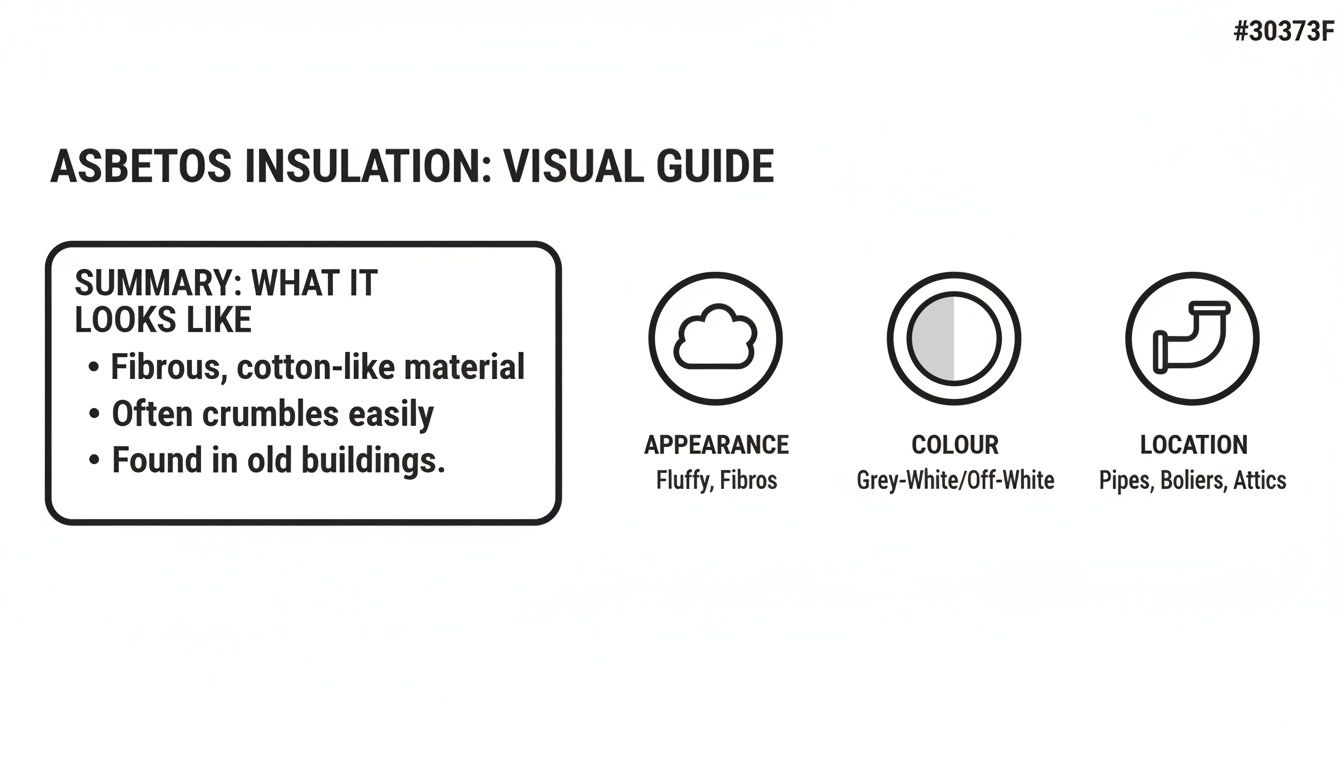
As you can see, the most common clues are its fluffy texture and grey-white colour, especially when found around pipework. But this is by no means an exhaustive list, and asbestos can lurk in many other forms.
Common Forms and Locations
To give you a clearer idea of what you might come across, here’s a quick rundown of the most common types of asbestos insulation you could find in a UK home. Think of this as a starting point to help you know when to be suspicious.
Quick Visual Guide to Potential Asbestos Insulation
This table summarises what to look for and where you're most likely to find these materials.
| Insulation Type | Common Appearance | Typical Colours | Where to Find It |
|---|---|---|---|
| Loose-Fill Insulation | Fluffy, granular, or pellet-like material that looks like it's been poured into place. | Grey, white, bluish-grey, or sometimes a silvery-gold colour (vermiculite). | Loft spaces, between floor joists, and inside cavity walls. |
| Pipe Lagging | A fibrous wrapping that might look like corrugated paper, cloth, or even a hard, plaster-like shell. | White, off-white, or grey. It's often been painted over, hiding its true nature. | Around boilers, hot water pipes, and heating systems, especially in basements or airing cupboards. |
| Insulating Boards (AIB) | Flat, rigid sheets that can look a lot like plasterboard or cement board, but are usually softer. | Grey, beige, or off-white. | Partition walls, ceiling tiles, soffits, and panels behind fireplaces or boilers. |
Remember, while these descriptions and locations are good indicators, they are not a substitute for professional identification.
Critical Safety Note: While these visual clues are helpful, they are not definitive. Many modern, safe insulation materials can look identical to asbestos. The only certain way to know is through professional testing.
A Closer Look at the Different Types of Asbestos Insulation
To get a real handle on what asbestos insulation looks like, you can't just think of it as one single material. It's more like a family of different products, and each one has its own look, feel, and level of risk. Some are pretty obvious once you know the signs, but others are masters of disguise.
There’s no single rulebook for how asbestos insulation appears. Its form completely depends on what it was made for – whether it was meant to be poured into a gap, wrapped around a pipe, sprayed onto a surface, or pressed into a solid board. This is exactly why it’s so tricky to identify without calling in the professionals.
Loose-Fill Asbestos Insulation
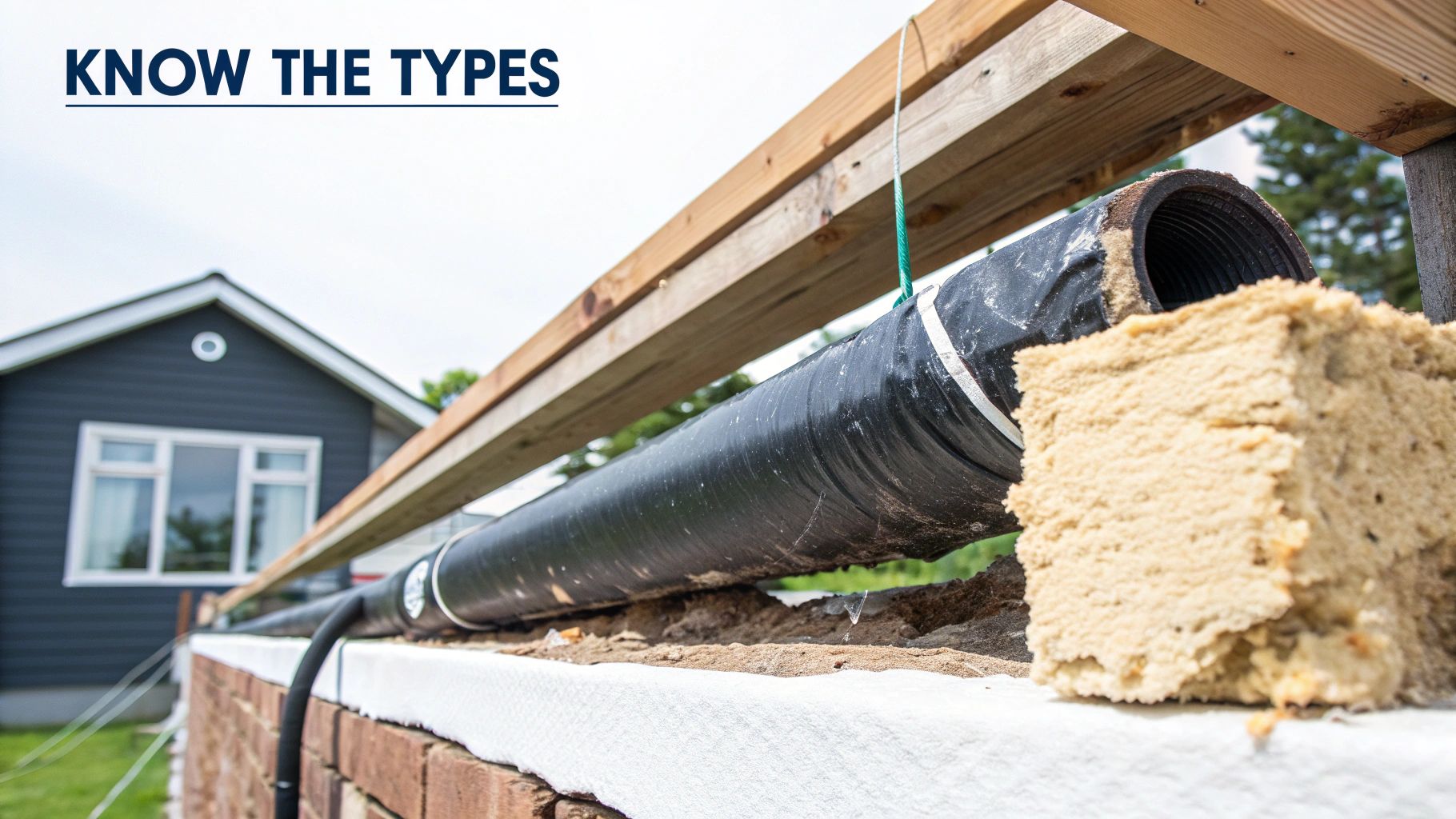
One of the most instantly recognisable—and dangerous—types is loose-fill insulation. Picture something that looks like greyish fluff, dirty cotton wool, or maybe even lightweight, crumbly pellets. It was designed to be simply poured between joists in a loft or blown straight into cavity walls.
Because its fibres aren't locked into a solid material, it is extremely friable. This is a crucial term. It means the insulation can release dangerous fibres into the air with the slightest nudge, like a draft from an open door or someone walking nearby. Its colour can vary from white to grey and sometimes even has a bluish tint.
Asbestos Pipe Lagging
Another common culprit you'll find in older UK homes is asbestos pipe lagging. This insulation was wrapped around hot water pipes, boilers, and just about any part of a heating system to stop heat from escaping.
Visually, it can show up in a few different forms:
- Fibrous Wrap: It might look like a fabric or cloth-like material, usually white or off-white, that has become brittle and powdery over time.
- Corrugated Paper: Some lagging looks like a thick, chalky corrugated paper that has been wrapped in layers.
- Hard Plaster Shell: It could also be a hard-set, plaster-like casing. This is often painted over, completely hiding the hazardous material underneath.
Over the years, this lagging becomes incredibly fragile. Any damage or attempts to remove it without professional equipment can release a huge number of fibres.
Asbestos Insulating Board (AIB)
Asbestos Insulating Board, or AIB, is one of the most deceptive forms out there. At first glance, you could easily mistake it for standard plasterboard or a cement board. It was used all over the place for partition walls, ceiling tiles, and as fire-proof panels behind boilers.
The main clue is often only visible when the board is broken. A snapped edge of AIB will typically look soft and fibrous, which is a world away from the hard, granular edge of normal plasterboard. AIB is considered highly dangerous because it contains a high percentage of asbestos fibres that can be released if you drill, saw, or damage it in any way.
Textured Coatings like Artex
Finally, there are the textured coatings that were applied to ceilings and walls before the mid-1980s, which very often contained asbestos. You’ll know them by brand names like Artex. These coatings created those popular decorative patterns like stipples, swirls, or a rough 'popcorn' effect. The asbestos was simply added to make the plaster mix stronger.
While these coatings are generally safe if left alone and in good nick, drilling into them or scraping them off for removal can be extremely hazardous. According to one report, an estimated six million tonnes of asbestos still remain in around 1.5 million UK buildings, with these decorative coatings being a major contributor.
If you’re keen to learn more about the different mineral forms, you can also explore our guide on how many types of asbestos there are.
Where Asbestos Insulation Hides in Your Home
Knowing what asbestos insulation looks like is a solid first step, but understanding where it typically hides is just as important for keeping you and your family safe. In UK properties built before 2000, asbestos-containing materials (ACMs) were incredibly common and often used in very predictable places. Think of it as a house map, but instead of finding treasure, you’re pinpointing potential hazards that need to be left well alone.
This guide will walk you through the most common hotspots, room by room. But remember, this is for a visual-only, hands-off check. The golden rule is simple: look, but never, ever touch, disturb, or damage any material you suspect could contain asbestos.
Up in the Loft or Attic
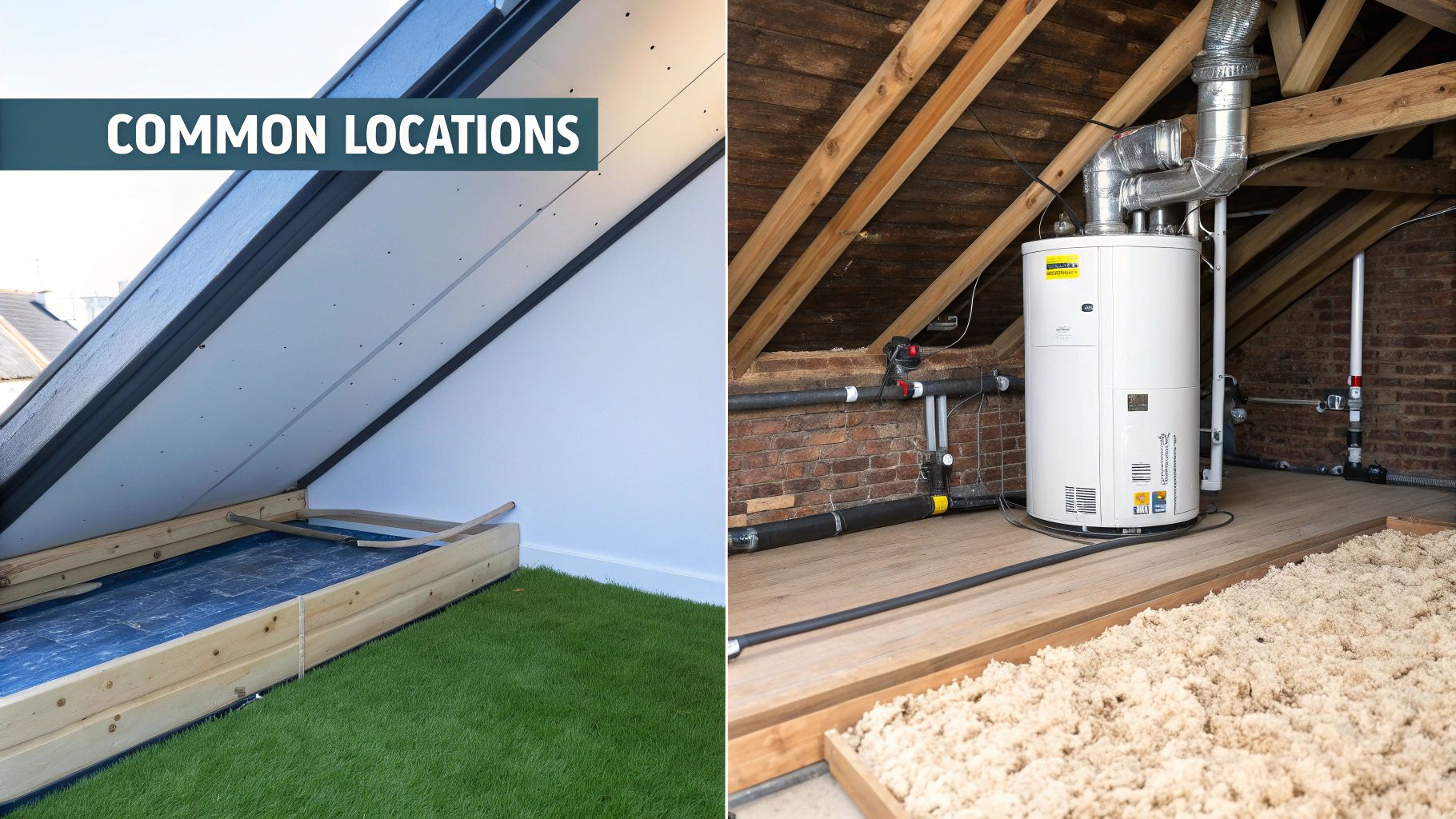
The loft is, without a doubt, the most common hiding place for asbestos insulation. It was a cheap and effective way to keep homes warm, and the easiest method was often just to pour loose material straight into the cavities.
When you peek into your loft, cast your eyes between the joists on the floor. You’re looking for:
- Loose-Fill Insulation: This stuff is exactly what it sounds like—loose. It can look fluffy, almost like dirty cotton wool, or have a more crumbly or granular texture. It’s often a greyish-white or blue-grey colour and was simply poured into place. This is one of the most dangerous forms because it’s highly ‘friable’, meaning its fibres can become airborne with the slightest draught or disturbance.
- Vermiculite Insulation: A specific type of loose-fill, vermiculite has a more distinct look. It’s made up of small, silvery-gold or brownish-grey pebbles that almost glitter in the light. While not all vermiculite contains asbestos, a huge amount of it was contaminated at its source, making it a very high-risk material.
Around the Boiler and Pipework
Your home's heating system was a prime candidate for asbestos treatment. Thanks to its incredible fire and heat resistance, it was the go-to material for insulating boilers, hot water tanks, and pipes. Have a careful look in basements, cellars, or airing cupboards.
Asbestos pipe lagging often looks like a fibrous, fabric-like wrap or a hard, plaster-like shell encasing the pipes. Over the decades, this material becomes extremely brittle and can crumble into a fine powder at the slightest touch. It was frequently painted over, so you might just see a painted pipe, but the danger lies just beneath the surface.
Important Takeaway: Even if pipe lagging looks solid and has a coat of paint, the asbestos underneath can be fragile. Any cracks, flakes, or signs of wear and tear are red flags that mean fibres could already be escaping.
Less Obvious (But Common) Hiding Spots
Asbestos wasn’t just used for obvious insulation roles; it was also mixed into everyday building materials all over the house. These spots are easy to overlook but just as critical to be aware of.
- Partition Walls and Ceilings: Asbestos Insulating Board (AIB) was a popular choice for partition walls, ceiling tiles, and soffits. It looks a lot like modern plasterboard, but if you see a broken edge, it often appears softer and more fibrous.
- Behind Fireplaces and Heaters: To create a fireproof barrier, builders often installed AIB panels behind fireplaces, boilers, and old storage heaters.
- Textured Coatings: Remember those swirled or stippled "popcorn" ceilings? If your home was decorated before the mid-1980s and has a textured coating like Artex, there's a good chance asbestos was mixed into the plaster to strengthen it.
Common Asbestos Hotspots in a UK Home
To make things easier, here's a quick checklist of the most common places asbestos turns up in a typical UK home. Use this as a guide for your visual check, but never disturb these materials yourself.
| Location in Home | Potential Asbestos Material | What to Look For |
|---|---|---|
| Loft / Attic | Loose-fill insulation, Vermiculite | Fluffy, grey/blue fibres; silvery-gold pebbles |
| Pipes & Boilers | Pipe lagging, Insulation panels | Fibrous wrap, hard plaster shells, boards behind heater |
| Ceilings | Textured coatings (e.g., Artex), Ceiling tiles | "Popcorn" or swirled patterns, square tiles (pre-2000) |
| Walls | Asbestos Insulating Board (AIB) | Panels similar to plasterboard, often near heat sources |
| Flooring | Vinyl floor tiles, Backing paper | 9×9 inch tiles, old lino with a fibrous paper-like backing |
| Exterior | Soffits, Roofing sheets, Guttering | Corrugated cement sheets, hard boards under the eaves |
| Garage/Shed | Cement roof panels, Wall sheets | Corrugated or flat grey cement-like boards |
This list isn't exhaustive, but it covers the main culprits. If your home was built before 2000 and you spot anything that matches these descriptions, the next step is to call in a professional for advice.
Why You Can't Rely on Sight Alone for Identification
This is a point I really can't stress enough: when it comes to asbestos, your eyes will play tricks on you. While knowing what asbestos insulation might look like is a decent starting point, it is absolutely not a guarantee. Trying to identify it visually is a famously unreliable method and can create a dangerous false sense of security.
The big problem is that many modern, completely harmless insulation materials look almost identical to their hazardous asbestos cousins. A fluffy, greyish-white clump of fibreglass in your loft could easily be mistaken for friable asbestos, and vice versa. Materials like mineral wool and cellulose insulation often share similar colours and textures, making a confident visual verdict pretty much impossible for anyone.
The Hidden Nature of Asbestos
Another major issue is that asbestos was often mixed into other building materials, which makes it totally invisible to the naked eye. It was a popular additive used to strengthen products like cement boards, textured ceiling coatings (you might know it as Artex), and even old vinyl floor tiles.
In these forms, there are no fibres to spot. You can't see the asbestos in a cement roof sheet any more than you can see the individual grains of sugar in a cake. It's just part of the mixture. This hidden nature is exactly why a purely visual check is never enough and could put you at serious risk.
Key Takeaway: You can suspect a material contains asbestos based on its age and where you find it, but you can never, ever be certain without a professional getting involved. Think of suspicion as a signal to stop and be cautious, not as a confirmation.
To really drive home why a visual check falls short, it’s worth looking at an expert guide on how asbestos is identified. It just reinforces why you need a proper scientific approach, not guesswork.
The Only Way to Be Sure
The one and only definitive way to know if you're dealing with asbestos is through professional testing. This isn't something you do yourself. It involves a qualified surveyor taking a small, controlled sample of the material in a specific way that prevents any dangerous fibres from being released into the air.
That sample is then sealed and sent off to a UKAS-accredited laboratory, where they analyse it under a microscope. This scientific check isn't an over-the-top expense; it's an essential safety measure. Before you even think about starting a renovation, demolition, or any DIY job that could disturb materials you're unsure about, getting an asbestos survey is the only responsible thing to do. It protects you, your family, and anyone else who sets foot on your property from a very serious health hazard.
What To Do If You Suspect You Have Found Asbestos
Finding something in your home that looks like it could be asbestos insulation is a genuinely unnerving moment. The first reaction for most people is a flash of panic, but the absolute best thing you can do is stay calm and follow a safe, methodical plan. What you do in the next few minutes is crucial for keeping everyone safe and preventing dangerous fibres from getting into the air.

First things first, stop all activity immediately. If you're in the middle of a renovation or DIY job, just put your tools down. Don't touch, poke, scrape, or even think about cleaning up the material. Any disturbance, no matter how minor it seems, can be enough to release those microscopic asbestos fibres into the air you breathe.
Your next priority is to lock down the area to stop anyone else from being accidentally exposed.
- Isolate the Space: Shut any doors leading to the room or area where you found the material. For an even better seal, you can run some tape along the door seams.
- Keep Everyone Out: Make sure family, visitors, and even pets stay well clear of the area until a professional gives the all-clear.
- Turn Off Air Systems: If you have any heating, ventilation, or air conditioning (HVAC) systems running through that part of the house, switch them off. This prevents the system from picking up fibres and circulating them everywhere else.
Taking Professional Action
Once you’ve made the area safe, it’s time to get a proper answer and a professional solution. This is absolutely not a job for a DIY enthusiast; it requires certified experts. Your first port of call should be a UKAS-accredited asbestos surveyor. They have the training to take samples safely without releasing fibres, which are then sent to a lab for testing. This is the only way to know for sure if you're dealing with asbestos.
If the test result is positive, you must bring in a licensed asbestos removal specialist. Trying to remove asbestos yourself is not just incredibly dangerous, but it can also be illegal for certain high-risk materials like pipe lagging or loose-fill insulation.
These specialists have the right training, specialist protective gear (RPE and PPE), and containment procedures to handle and get rid of the material according to the UK’s strict regulations. You can find out more about the proper procedures here: https://www.thewastegroup.co.uk/news/how-to-remove-asbestos-safely/. Handling these situations correctly is a vital part of looking after a property. For more guidance on home safety and identifying risks during general upkeep, checking resources on essential home maintenance practices is a smart move. Acting responsibly is the only way to solve the problem without putting anyone's health on the line.
Your Asbestos Insulation Questions Answered
Even with a visual guide, it's completely normal to have questions when you're dealing with something as tricky as asbestos. We get asked a lot of the same things by concerned homeowners, so this final section tackles those common queries head-on, giving you clear answers to help you move forward safely.
Does All Old Insulation Contain Asbestos?
Not necessarily, but it’s a major red flag in any UK property built before the ban in 2000. Plenty of older insulation materials, like some types of fibreglass or rock wool, are perfectly safe and asbestos-free.
The problem is, asbestos was so popular for its fire-resistant and insulating qualities that it's often impossible to tell just by looking. Any insulation that looks old, fibrous, or is starting to crumble should be treated with extreme caution. Things like loose-fill in the attic or old thermal paper wrapped around pipes are particularly high-risk. The only way to be 100% certain is to get a sample professionally tested in a lab.
Can I Just Paint Over Asbestos Ceilings or Insulation?
Painting over asbestos-containing materials (ACMs) is a method called encapsulation. It's sometimes used as a short-term management fix, but it's only ever an option if the material underneath is in absolutely flawless condition.
Honestly, it's not a real solution and it comes with serious risks. The simple act of preparing the surface for paint—like light sanding or scraping—is enough to disturb the asbestos and send dangerous fibres into the air. Plus, the paint only protects you as long as it remains perfectly sealed. Any future scuff, crack, or drill hole will break that seal and expose the hazard all over again.
For high-risk materials like pipe lagging, encapsulation is simply not a safe or recommended approach. You should always talk to a certified professional to come up with a proper, long-term removal plan.
How Much Does Asbestos Testing and Removal Cost?
The cost of dealing with asbestos can vary quite a bit. It all depends on the type of asbestos you have, where it is, how much of it there is, and how difficult it is for a team to access it safely.
To give you a rough idea of what to expect in the UK:
- Sampling: For a surveyor to take a single sample for lab testing, you're typically looking at £50-£100.
- Surveys: A full asbestos survey for a standard house can range from £250 to over £800, depending on the size of your property and how in-depth the survey needs to be.
- Removal: This is where the costs really add up. Removing a small textured ceiling might cost £1,000-£3,000, while a bigger job like taking out all the pipe lagging throughout your home could be significantly more.
It's always a smart move to get a few different quotes from licensed asbestos removal contractors. This helps ensure you're getting a fair price for a service that's safe, compliant, and done right.
What Is the Difference Between Friable and Non-Friable Asbestos?
Getting your head around this difference is key to understanding the immediate risk a material poses. It all comes down to how easily the material can crumble and release those dangerous fibres.
Friable Asbestos
This is the really nasty stuff. A material is "friable" if you can easily crush or crumble it into a powder with just your hands. It's incredibly dangerous because the fibres can become airborne with the slightest disturbance.
- Examples: Loose-fill attic insulation, old pipe lagging that has started to degrade, and sprayed-on coatings.
Non-Friable Asbestos
This is often called bonded asbestos. In this case, the asbestos fibres are locked tightly within a solid, rigid material like cement or vinyl.
- Examples: Asbestos cement sheets, old vinyl floor tiles, and some roofing panels.
While non-friable materials are generally safer if left untouched, they are far from harmless. The moment they are cut, drilled, sanded, or broken, they will release fibres. Both types are hazardous and must be handled by professionals. Understanding the different health conditions they can lead to really drives home the importance of safety; you can learn more about asbestos-related diseases and health risks in our detailed guide.
Trying to figure out waste disposal, especially for hazardous materials like asbestos, means you need a partner you can trust. At The Waste Group, we provide fully compliant and safe asbestos disposal services, alongside our complete range of skip hire and waste management solutions for both homes and businesses. For professional advice and a service you can count on, visit our website. https://www.thewastegroup.co.uk